LAMAR SMITH 2
SEE MAIN 5/16
1219 capt bak
RETIRED 2017 (dems have majority as of 2018, so chair is Bernice J?)
7/18 tag not implemented lamr
see sci suppress
SEE LEGAL SUPPRESSION HEALEY AG
house sci comm chair
promoted evil 7/16 on SAB, just volume not principled reason
pension plan akin gump
politico
Former Rep.Lamar Smith(R-Texas), meanwhile, who also joined Akin Gump after leaving Congress in January, reported lobbying for four clients. They include HerdX, a ranching logistics company; Otis Eastern Service, an oil-and-gas pipeline company; Pebble Limited Partnership, which is trying to develop an open-pit mine in Alaska; and Pfizer, the giant pharmaceutical company.
===
--
ref
...With Exxon CEO In Trump Spotlight, A Primer On The Company's Climate Court Fight
[
By David Halperin, Contributor
Attorney, advocate, writer at RepublicReport.org
Dec 12, 2016, 05:24 PM EST
|Updated Dec 13, 2017
This post was published on the now-closed HuffPost Contributor platform. Contributors control their own work and posted freely to our site. If you need to flag this entry as abusive, send us an email.
Donald Trump's public contemplation of picking ExxonMobil CEO Rex Tillerson to be U.S. Secretary of State raises a range of controversies, including Tillerson's dealmaking with Russia and close ties to Vladimir Putin. It also intensifies attention on ExxonMobil's escalating court battle with the attorneys general of New York and Massachusetts over the question of whether the company improperly concealed information about climate change.
Just today, a federal judge in Texas, Ed Kinkeade, cancelled his controversial order directing the Massachusetts AG, Maura Healey, to come to his Dallas courtroom tomorrow morning to be questioned by ExxonMobil's lawyers.
Here's a summary of ExxonMobil's legal dispute with the attorneys general, so far:
Investigative reporting in the past year demonstratedthat Exxon scientists have known and had told Exxon management for decades that burning fossil fuels was heating up the planet. But rather than educate the public on the dangers and change its business strategy, Exxon instead spent millions supporting efforts to question and deny the science of climate change. There also are questions as to whether ExxonMobil has properly accounted for its oil reserves in the wake of global price drops and evidence of global warming.
Responding to those reports and other evidence, New York attorney general Eric Schneiderman issued a subpoena to ExxonMobil in November 2015. ExxonMobil has produced more than 700,000 pages of documents to Schneiderman in response to his subpoena. On October 26, 2016, a New York judge ordered ExxonMobil and its auditor, PwC, to comply with a subpoena issued by Schneiderman seeking additional information regarding PwC's auditing of the oil company.
A group of state attorneys general met in New York on March 29, 2016, and consulted with several outside lawyers and experts on climate change issues. Following the meeting, the AGs, along with former Vice President Al Gore, held a press conference under the banner "AGs United for Clean Power" and announced they had formed a coalition to investigate ExxonMobil's conduct. The coalition included the attorneys general of California, Connecticut, Illinois, Iowa, Maine, Maryland, Massachusetts, Minnesota, New Mexico, New York, Oregon, Rhode Island, Virginia, Vermont, Washington, the District Of Columbia, and the U.S. Virgin Islands.
Soon after, in April 2016, Massachusetts attorney general Maura Healey issued a civil investigative demand (CID) to ExxonMobil. U.S. Virgin Islands attorney general Claude Walker issued a subpoena to the company the same month.
ExxonMobil promptly sued Walker in Texas state court in Fort Worth to block the Virgin Islands subpoena.
Then, on June 15, 2016, ExxonMobil sued Healey in federal court in Dallas to block her civil investigative demand.
On June 29, Walker, facing expensive litigation against ExxonMobil's legal team, agreed to withdraw his subpoena, and Exxon dropped its suit. Walker said then that he planned to continue to investigate ExxonMobil and would keep his eye on Healey's effort.
ExxonMobil argues in its suit against Healey that the Massachusetts AG is acting out of political motivation, and there is no legitimate basis for the AG probes, and that the First Amendment shields the company from scrutiny for its public statements -- a claim that leading constitutional law experts sharply dispute, because it is a settled legal principle that the First Amendment doesn't protect fraud.
In August 2016, fourteen attorneys general -- from Maryland, New York, Illinois, Iowa, Maine, Minnesota, Mississippi, New Mexico, Oregon, Rhode Island, Vermont, Washington, the District of Columbia, and Virgin Islands -- filed a friend-of-the-court brief supporting Healey, while eleven AGs -- Texas, Louisiana, South Carolina, Alabama, Michigan, Arizona, Wisconsin, Nebraska, Oklahoma, Utah, and Nevada -- filed a brief supporting ExxonMobil.
On October 13, citing ExxonMobil's arguments, U.S. District Judge Ed Kinkeade issued an order permitting ExxonMobil to take limited discovery regarding attorney general Healey's comments and actions, in order to examine whether Healey served the CID in bad faith. Armed with this ruling, ExxonMobil, on October 24, served on attorney general Healey more than a hundred discovery requests.
Exxon also asked Judge Kinkeade for permission to add New York attorney general Schneiderman as a defendant in the case, a motion the judge granted. On November 4, ExxonMobil sought depositions of Healey, Schneiderman, and two assistant attorneys general in each of their offices.
On November 17, Judge Kinkeade issued an order directing Healey and Schneiderman to come to his courtroom in Dallas on December 13 to face depositions from ExxonMobil's legal team.
On November 29, Exxon withdrew its deposition notice for Schneiderman; it continues to seek other discovery from Schneiderman's office, including depositions of two top environmental enforcement officials in that office.
ExxonMobil also has subpoenaed in the Texas lawsuit some of the non-profit organizations and lawyers who have provided Healey and Schneiderman with information and expertise regarding the matter.
Healey said she would "vigorously oppose" Judge Kinkeade's order for her to be deposed. "Our position in this ligation is that the authorities in Texas, and specifically the federal court down there, has no jurisdiction over state attorneys general and the work of their offices," Healey told reporters in Boston on November 21. "It's been disappointing to see Exxon fight the request for basic information. Our job as attorneys general is to be able to ask questions."
Healey filed amotion asking the judge to reconsider his rulings. On December 6, 2016, Healey petitioned the United States Court of Appeals for the 5th Circuit for a writ of mandamus to reverse the order.
Schneiderman, as well as the outside groups and lawyers, are also opposing Exxon's efforts to take discovery in the Texas case. (Disclosure: I have advised some of these groups.)
On December 9, Judge Kinkeade denied Healey's motion to suspend Exxon's discovery in the case pending review by the 5th Circuit and also denied Schneiderman's motion to quash discovery.
On December 9, Schneiderman filed a motion with Judge Kinkeade to stay discovery against him pending appellate review -- the same type of motion that Kinkeade had denied Healey earlier that same day. In his papers, Schneiderman said that he intended to seek mandamus before the 5th Circuit on December 12.
On December 12, Judge Kinkeade issued a one-line order cancelling his prior order that Healey be deposed on December 13. The judge did not block any other discovery or indicate whether or when he would revisit the issue of deposing Healey.
ExxonMobil's lawsuit is a virtually unprecedented effort by a corporation to sue and investigate state prosecutors who are conducting an investigation of that corporation. Although Judge Kinkeade stated that he found sufficient grounds for ExxonMobil to investigate whether the AGs had acted in bad faith, in fact the AGs have been engaged in activities that are commonplace and entirely appropriate for state prosecutors: (1) cooperating with AGs from other states, (2) consulting with experts about possible unlawful activity, (3) seeking documents to investigate that activity, and (4) speaking in public about the matters under review.
To the extent that ExxonMobil has substantive and procedural objections to the attorneys general demands for information, it has every right to raise those objections in the Massachusetts and New York state courts, and indeed ExxonMobil is already doing just that.
ExxonMobil now also faces an investigation from the U.S. Securities and Exchange Commission, initiated in August 2016, examining a similar set of issues. In addition, in January 2016, the U.S. Department of Justice, responding to a congressional request to investigate ExxonMobil, referred the matter to the FBI.
Meanwhile, U.S. Representative Lamar Smith (R-TX), chairman of the House Science Committee, has subpoenaed documents from Healey, Schneiderman, and other state attorneys general, as well as lawyers and outside groups connected to the ExxonMobil matter. Over the summer, Smith held a committee hearing regarding his demands. For the most part, the AGs, groups, and attorneys have declined to provide any information in response to the subpoenas.
UPDATE 12-14-16: The U.S. Court of Appeals for the 5th Circuit yesterday dismissed Healey's mandamus petition and motion for a stay of Judge Kinkeade's orders as moot, meaning overtaken by events. It's unclear how the 5th Circuit judges think Healey's claims are moot, when all Judge Kinkeade did was cancel the deposition of Healey set for December 13; he didn't expressly stop all the other discovery that was part of Healey's motion. However, when he cancelled the Healey deposition, Judge Kinkeade issued a separate order directing all parties to submit new briefs by January 4 on the issue of whether his court has personal jurisdiction over the two AGs -- suggesting he might be reconsidering issues in the case.
UPDATE 12-15-16: This morning Judge Kinkeade has issued a one-line order: "The Court hereby stays all discovery pending further order from this Court." Coupled with his order Monday cancelling Exxon's deposition of Attorney General Healey, this represents a dramatic reversal by Judge Kinkeade of his unusual prior rulings favoring ExxonMobil. The reversal came after Healey had petitioned the U.S. Court of Appeals to block Kinkeade's orders (and of course after Trump's nomination of Tillerson increased public scrutiny of the matter). But this could be only a temporary reversal while Judge Kinkeade reconsiders some of the legal issues, including whether he has jurisdiction over the AGs in the first place.
*This article also appears on Republic Report.
===
===
https://scorecard.lcv.org/moc/lamar-s-smith
clean energy $ for? windmills?
2018472Border Wall FundingOther
2018420Blocking Protections for Gray WolvesWildlife
2018392Undermining NEPA Review in Liquefied Natural Gas ProjectsClimate Change, Dirty Energy, Drilling
2018390Minimizing Methane PollutionClimate Change, Clean Air
2018365Anti-Environmental Spending BillOther
2018363Anti-Climate Solutions ResolutionClimate Change
2018357Undermining Access to the CourtsEnvironmental Justice
2018356Eliminating Environmental Justice GrantsEnvironmental Justice
2018355Attack on Ironwood Forest National MonumentWildlife
2018354Blocking Protections for the Lesser Prairie ChickenWildlife
2018353Blocking Protections for the New Mexico Meadow Jumping MouseWildlife
2018351Undermining Protections for the Chesapeake BayOceans, Clean Water
2018350Blocking Protections for Preble's Meadow Jumping MouseWildlife
2018348Undermining Safeguards for Safe Seafood ConsumptionOceans
2018347Ignoring the Costs of Climate ChangeClimate Change
2018346Methane Pollution SafeguardsClimate Change, Clean Air
2018341Undermining the Land & Water Conservation FundLands/Forests
2018328Attack on Public ProtectionsClean Air
2018325Privatizing Federal InfrastructureClean Water
2018321Attack on Oceans and Fisheries ManagementOceans
2018284Anti-Environmental Farm BillClean Air and Clean Water
2018282Border Wall Funding & Anti-Immigrant PolicyOther
2018257Assault on Clean Energy & Clean WaterClean Energy, Clean Water
2018250National Ocean PolicyOceans
2018246Gutting Clean Energy FundingClean Energy
2018243Anti-Environmental Rescission PackageOther
2018223Gutting Environmental Review for Mining ProjectsOther
2018203Eliminating Clean Water SafeguardsClean Water
2018199Attack on Alaska’s National ForestsLands/Forests
2018198Undermining Environmental Review for Forestry ProjectsLands/Forests
===
july 2016 subpoena AG Healey MA, told to stuff it many letters rank member eddie bernice j eg p c 385, 410 of 500 re exxon:
https://www.mass.gov/files/documents/2016/11/vn/exxon-first-amended-complaint-appendix.pdf
===
aha: the fact that X testified to congress is presented as credential tho idiots and shills can invite anyone they like, Crichton, monckton?!
michaels WE BS got pulled from facebook after fact check by climate ___legit, worked refs and zuck made loophole for opinion?!
retaliate walker and team red for exxon subpoenas:
ref 3 aLSO 404
https://science.house.gov/news/letters/gop-member-letter-state-attorneys-general-coordinated-efforts-deprive-scientists-first
https://web.archive.org/web/20161223154928/https://science.house.gov/news/letters/gop-member-letter-state-attorneys-general-coordinated-efforts-deprive-scientists-first
doz states
https://web.archive.org/web/20161222210749/https://science.house.gov/sites/republicans.science.house.gov/files/documents/05.18.16%20SST%20Letter%20to%20USVI%20AG.pdf
no cut txt, thus DL pdf, nor in adobe but cites wfb, wsj and WT on conspir.
===
putin dirty $ to green ngo gets used 3x, last in ukraine war?
june 29 2017 ltr munchkin:
ref BS chain enviro command epw rept 113tth congress 2014
18 USC 2386 req for orgs that lobby to register? 1995 lobby disclosure act
sleight of hand: suggests russian $ then asserts/assumes it; klein wakefield Quin IPOC reiman
quite nato "so-called env orgs"
staffer drew colliatie, refs WFB lachlan markay WT, WE batasch
GUK fiona harvey
===
:{
}:
sieg heil
:{
}:
forget about allegations of Russian interference in U.S. presidential elections for a moment,
or even“collusion” between Russian officials and Trump campaign operatives.
The real action is in the European and U.S. energy markets, according to a letter from two Texas congressmen to Treasury Secretary Steven Mnuchin that details what they call “a covert anti-fracking campaign” with “little or no paper trail.”
The Daily Signal obtained a copy of the June 29 letterto Mnuchin from Reps. Lamar Smithand Randy Weber, both Republicans who chair energy-related House panels. (See the full letter below.)
Smith and Weber quote sources saying the Russian government has been colluding with environmental groups to circulate “disinformation” and “propaganda” aimed at undermining hydraulic fracturing. Commonly called fracking, the process makes it possible to access natural gas deposits.
The sources include a former secretary-general of NATO, who is quoted by the GOP congressmen as saying:
Russia, as part of their sophisticated information and disinformation operations, engaged actively with so-called nongovernmental organizations—environmental organizations working against shale gas—to maintain dependence on imported Russian gas.
This anti-fracking campaign seizes upon environmental issues and health concerns that could be used to constrain U.S. drilling and fracking exercises, the letter explains.
Gazprom, a large Russian oil company, stands to benefit if Russian-funded environmental activism results in reduced levels of fracking and natural gas production in the United States, Smith and Weber tell Mnuchin. They write:
It is easy to see the benefit to Russia and Gazprom that would result from a reduction in the U.S. level of drilling and fracking—a position advocated for by numerous environmental groups in the U.S.
Smith, chairman of the House Committee on Science, Space, and Technology, joined Weber, chairman of that panel’s energy subcommittee, in calling on the treasury secretaryto investigate whether Russia works with American environmental activists to prevent the U.S. from developing its natural gas resources.
Top U.S. government officials who have acknowledged the connection between Russian and environmental groups include former Secretary of State Hillary Clinton, the Democratic nominee for president in 2016.
In 2014, Clinton delivered a “private speech” in which she discussed Russia’s financial support for environmental groups, the letter says. The speech was included in documents released by WikiLeaks, it says.
An Oct. 10, 2016, report in TheWashington Times quoted Clinton as saying:
We [the State Department and the U.S. government] were up against Russia pushing oligarchs and others to buy media. We were even up against phony environmental groups, and I’m a big environmentalist, but these were funded by the Russians to stand up against any effort, ‘Oh that pipeline, that fracking, that whatever will be a problem for you,’ and a lot of that money supporting that effort was coming from Russia.
Contrary to what Russia’s propaganda machine and its environmental allies have told news consumers in Europe and America, fracking is safe, effective, and enormously beneficial, Nick Loris, an economist and energy policy analyst with The Heritage Foundation, said in an email to The Daily Signal.
“If successful, an anti-fracking campaign is depriving Americans of good-paying jobs and affordable, dependable energy,” Loris said. “Despite smears and outright lies from environmental activists, smart drilling and energy extraction technologies have been proven to be safe.”
“It feels like every week a new study is published, confirming what we already know,” he said. “Hydraulic fracturing does not contaminate drinking water. The facts and history of hydraulic fracturing, a history that dates back more than half a century and over 1 million fracked wells, indicate that many of the fears associated with the process are grossly exaggerated or flat-out unsubstantiated.”
Loris added:
The good news, however, is that the anti-fracking campaign really hasn’t been all that successful in ‘keeping it in the ground.’ The U.S. is the world’s largest petroleum and natural gas producer, and we can thank fracking and American energy companies for it.
The result is that money is going back into bank accounts of hardworking families through lower energy bills, and American businesses are more competitive because of lower input costs. And we’re in a position to supply our allies with power, significantly reducing the ability of any one nation’s ability to manipulate energy markets for political gain.
In their letter to the treasury secretary, Smith and Weber also say the Russians have been able to advance their strategy without “a paper trail.”
They pass along reports that Russia apparently funnels the money through a Bermuda-based “shell company” known as Klein Ltd.
Tens of millions of dollars are moved from Russia through Klein “in the form of anonymous donations” to a U.S.-based nonprofit called the Sea Change Foundation.
The money, the congressmen write, then is moved in the form of grants to U.S. environmental organizations.
Here is their complete letter to Mnuchin:
:{
}:
===
orig?
the great failure of the climate models
by Patrick Michaels and Caleb Stewart Rossiter
| August 25, 2019
https://www.washingtonexaminer.com/opinion/op-eds/the-great-failure-of-the-climate-models
computer models of the climate are at the heart of calls to ban the cheap, reliable energy[COAL] that powers our thriving economy and promotes healthier, longer lives. For decades, these models have projected dramatic warming from small, fossil-fueled increases in atmospheric concentrations of carbon dioxide, with catastrophic consequences.
Yet, the real-world data aren’t cooperating. They show only slight warming, mostly at night and in winter. According to the United Nations' Intergovernmental Panel on Climate Change, there has been no systematic increase in the frequency of extreme weather events, and the ongoing rise in sea level that began with the end of the ice age continues with no great increase in magnitude. The constancy of land-based records is obvious in data from the National Oceanic and Atmospheric Administration.
Should we trust these computer models of doom?Let’s find out by comparing the actual temperatures since 1979 with what the 32 families of climate models used in the latest U.N. report on climate science predicted they would be.
Atmospheric scientist John Christy developed a global temperature record of the lower atmosphere using highly accurate satellite soundings. NASA honored him for this achievement, and he was an author for a previous edition of the U.N. report. He told a House Science Committee hearing in March 2017 that the U.N. climate models have failed badly.
===
https://www.govtrack.us/congress/members/lamar_smith/400381
==
https://www.huffpost.com/entry/chip-roy-texas-21-election-lamar-smith_n_5be265e2e4b0769d24c69b14
Texas Republican Chip Roy, who has said there is public “hysteria” about the threat of global climate change, defeated his Democratic opponent to fill a seat vacated by retiring GOP Rep. Lamar Smith, an oil industry ally and one of Washington’s most stalwart deniers of climate science.
Roy, the former chief of staff for Sen. Ted Cruz (R-Texas), defeated Joseph Kopser (D), an aerospace engineer and Army veteran from Austin, to win Texas’ 21st Congressional District.
Smith, the 14th-longest-serving member of the U.S. House and controversial chair of the House Committee on Science, Space, and Technology, announced last year that he would not seek re-election. The San Antonio native has a long history of harassing federal climate scientists and dismissing the threat of climate change, recently going so far as to say that pumping the atmosphere full of carbon dioxide is “beneficial.”
Roy, who received Smith’s endorsement, told the San Antonia News-Express in May that he and the outgoing congressman agree about “the hysteria around climate change” and said there is an abundance of “misinformation out there about the extent of man’s impact on temperatures on the Earth.”
“I don’t know,” Roy said when asked if he believes there’s any link between human activity and climate change. “What I know is that our lives are made so immeasurably better by the availability of affordable, abundant energy.”
Left-leaning voters had high hopes of electing a Democrat in the heavily gerrymandered and historically Republican district.
==
https://www.latimes.com/business/hiltzik/la-fi-hiltzik-lamar-smith-20171103-story.html
see below
Column: Good riddance to Rep. Lamar Smith (R-Texas), the most obnoxious climate change denier in Congress
==
gannet not tbcw BS montana fake paper
https://www.statesman.com/opinion/20181228/lamar-smith-as-i-retire-heres-my-advice-for-new-science-committee-members
Austin American-Statesman
Opinion
Lamar Smith: As I retire, here’s my advice for the new Science Committee members
Never Miss A Story
Subscribe to Austin American-Statesman
UPCOMING EVENTS
By Lamar Smith
Posted Dec 28, 2018 at 2:08 PM
Updated Dec 28, 2018 at 2:08 PM
Democrats are preparing to take the gavel in the 116th Congress, establishing policy priorities and focusing their message for the next two years. As a retiring member and the outgoing chairman of the House Science, Space, and Technology Committee, I can no longer set that agenda, but I can recommend the issues that still need Congressional attention and action.
Headlines claiming that Congress is making a “return to science” are ignoring years of progress on policies advancing research, STEM education, and space exploration. America’s continued success in technology, innovation, and energy development depends on a Science Committee that commits to working toward these goals.
Nuclear power has been a proven source of safe and emission-free electricity for over half a century and its continued development is critical to diversifying America’s energy production. This year, the president signed the Nuclear Energy Innovation Capabilities Act into law, which enables the American nuclear power industry to conduct civilian nuclear energy research and development that will advance our leadership in nuclear technology. Any hearings or legislation on “new” or “green” energy sources should include nuclear energy.
The committee also should continue its focus on expanding STEM education and promoting diversity in STEM fields. A large, well-trained, and diverse STEM workforce is crucial to maintaining our country’s technological competitiveness.
In the past few years the House passed a number of STEM bills and three were signed into law, including the STEM Act which strengthens ongoing STEM education efforts and includes computer science in STEM fields. The IMT Apprenticeships Act builds the workforce pipeline in STEM fields through apprenticeships. And the Women in Aerospace Education Act helps more women to get aerospace experience while they’re training to be science and math teachers.
Next on the committee’s agenda should be furthering space explorationand increasing private sector access to space. When the Republicans were in the majority, this was one of our top priorities. American commercial space policy bills were enacted to spur private aerospace competitiveness and establish NASA’s permanent priority missions as space science research and deep space human exploration.
It’s time for humans to return to the Moon and to begin preparations to travel to Mars and beyond. The Science Committee must meet these challenges head-on.
Finally, the Science Committee should maintain a commitment to open, transparent science that is accountable to taxpayers, which the committee has promoted in the past years. There are two sides to this coin. The first is transparency. The science behind regulatory decisions should be open to public review and replication to be sure policymaking is based on data instead of politics.
Scientific research should be fact-driven and not manipulated to support an agenda.This goes hand-in-hand with ensuring that federally-funded research is accountable to taxpayers, who are the source of those funds. Our oversight of the National Science Foundation led to legislation that requires transparency and accountability in taxpayer-funded science, with a focus on basic research. This should continue to be National Science Foundation policy.
Instead of touting a fictional “return to science,” my hope is that the new committee will emphasize a continued commitment to transparent, open, and forward-looking science. It was this focus that allowed the bipartisan passage of 31 of the 35 committee bills sent to the House floor this Congress, and it is this focus that will empower American scientific progress.
U.S. Rep. Lamar Smith, R-San Antonio, is chairman of the House Science, Space, and Technology Committee.
===
https://www.desmogblog.com/2016/09/12/who-are-rep-lamar-smith-s-expert-witnesses-house-science-committee-exxonknew-subpoenas
in July, the chairman of the House Committee on Science, Space, & Technology, Rep. Lamar Smith, issued subpoenas to two state attorneys general who are currently investigating what ExxonMobil knew about climate science, when they knew it, and if the company misled investors.
The attorneys general of New York and Massachusetts both refused to turn over any information or communications about their investigations. Each AG's office argued the Committee had no authority to issue such a request, calling the subpoenas a violation of states' rights under the 10th amendment.
In a response last month, Smith, a Republican from Texas, announced a hearing to “affirm” that his Committee did have the legal authority to issue such subpoenas. The legal issue the September 14 hearing will address is whether a Congressional committee has subpoena power over state attorneys general and non-profit advocacy organizations. The subpoena was called “an unprecedented effort to target ongoing state law enforcement 'investigations or potential prosecutions'” by Leslie Dubeck, an attorney in the Office of the New York State Attorney General.
Smith has called three legal experts to bolster his claim — two with direct ties to the same Exxon-funded groups who have pushed climate science denial and inaction to cut greenhouse gas emissions.
Why Would Republican Rep. Lamar Smith Put Aside Principles of Federalism to Protect Exxon?
According to Oil Change International's Dirty Energy Money database, Rep. Smith has taken $24,770 in campaign contributions from Exxon over his career, with $17,500 of that coming in the last five years.
All told, according to the Center for Responsive Politics' OpenSecret.org database, Rep. Smith has received $684,947 from the oil and gas industry since 1998 — making oil and gas his most generous industry contributor throughout his career.
On top of the subpoenas sent to the New York and Massachusetts attorneys general, Rep. Smith issued subpoenas to eight non-profit advocacy organizations, foundations and a private law firm that have drawn attention to what Exxon knew about climate science and when the company knew it.
The Union of Concerned Scientists, which received such a subpoena, offered to meet with the Committee but refused to turn over internal records. Their meeting request was refused.
“From the outset, Chairman Smith has overstepped his authority with this investigation,” said USC President Ken Kimmell. “He has consistently mischaracterized our work in repeated, convoluted attempts to justify his efforts. It is telling that after issuing broad, unilateral subpoenas, he is now holding a hearing to figure out if his actions are legitimate…We will continue to stand firm against this abuse of power and defend our First Amendment rights.”
“However Chairman Smith stacks this hearing with friendly witnesses, it's clear that he's on shaky legal ground,” Kimmell continued.
...
Who are Chairman Lamar Smith's Hand-Picked Witnesses?
So who are these “friendly witnesses”? All three are law professors. Two currently hold positions at major conservative think tanks that are known recipients of funding from the fossil fuel industry. The other, Jonathan Turley, is a respected law scholar and civil liberties expert with no potential conflicts of interest.
Ronald Rotunda
Ronald Rotunda is a law professor and the Doy and Dee Henley Chair and Distinguished Professor of Jurisprudence at Chapman University, and is a widely published expert on legal ethics.
In 2000, Rotunda was a visiting legal scholar at the Cato Institute, a think tank co-founded by oil and gas billionaire Charles Koch that is heavily funded by the Koch brothers.
Currently, Rotunda is a Policy Expert at the Heartland Institute, which describes itself as “the marketing arm of the free market movement,” but is most well known for its decades of climate change denial. A vocal critic of renewable energy and a cheerleader for fossil fuels, the Heartland Institute is notoriously secretive about its donors.
But many of the organization's largest known donors are fossil fuel industry companies and organizations with direct ties to the oil and gas industry.
Heartland has received at least $676,500 directly from Exxon since 1998, including $140,000 in grants that were earmarked for climate change work. It has received hundreds of thousands from various branches of the Koch brothers' donor networks, through family foundations and directly from Koch Industries. Heartland has also received more than $17.5 million in anonymous money through Donors Capital Fund and more than $600,000 from Donors Trust including numerous grants with climate related titles.
Donors Trust and Donors Capital Fund are dark money organizations that allow donors to give privately, and are known to receive millions from the Koch brothers' various entities.
Rotunda has recently criticized the state AGs for using their unquestionably legal subpoena power to request records from Exxon. Rotunda wrote for the Verdict blog and Heartland Institute's blog, “The marketplace of ideas, not the subpoena power of government, should decide what is true or false.” However, at the September 14 hearing, he is expected to argue for a Congressional subpoena power that critics argue is without precedent.
Elizabeth Price Foley
Elizabeth Price Foley is law professor at the Florida International University College of Law. Foley also serves on the Editorial Board of the Cato Institute's Supreme Court Review. The Cato Institute was co-founded by oil and gas billionaire Charles Koch, and also receives funding from various Koch affiliated organizations, including the David H. Koch Charitable Foundation.
Foley is also a Research Advisory Board member of the James Madison Institute for Public Policy. The James Madison Institute is funded in part by the Donors Capital Fund, a supporting affiliate of Donors Trust for donors of more than $1 million. The Donors funds are advertised as a way for very wealthy conservatives to remain hidden when “funding sensitive or controversial issues,” creating a lack of transparency and accountability.
Donors Trust and Donors Capital Fund have been exposed as a “dark money” channel for the Koch brothers to donate to fossil fuel-friendly front groups, through their Knowledge and Progress Fund.
Finally, Foley is listed as an “Expert” at the Federalist Society, an influential conservative group that has published numerous essays and articles claiming the lawsuits against ExxonMobil and related requests for records from denialist groups are a threat to free speech, a “chilling campaign to establish ‘consensus’ through intimidation”, a “witch hunt” and a “fishing expedition.”
In 2015, the Federalist Society received funding directly from ExxonMobil, and received nearly $1 million from Donors Capital Fund in 2010.
In short, Foley currently holds positions at three influential public policy groups funded by oil and gas interests, two of which receive funds directly from ExxonMobil.
Foley also is of counsel to the law firm BakerHostetler and she collaborates with a BakerHostetler partner, David Rivkin, on articles criticizing the Obama Administration. Rivkin, also affiliated with Cato and the Federalist Society, is actively engaged in litigation and advocacy opposing efforts by the Administration to address climate change and toxic pollution. Rivkin is also known to DeSmog readers for his role in launching the Free Speech in Science Project to defend fossil fuel interests and the Competitive Enterprise Institute in the ongoing attorneys general investigations.
Full Committee Hearing Scheduled for Wednesday
The Democrats of the House Science Committee, led by ranking member Eddie Bernice Johnson, were allowed under committee convention to invite one expert witness. They selected Charles Tiefer, a professor of law at the University of Baltimore, and former Acting General Counsel for the U.S. House of Representatives.
Tiefer testified in 2014 that his 15 years litigating for the House has yielded him “more experience than anyone else” with regards to “what kinds of House roles in litigation do or do not get accepted by the courts as legitimate.” Tiefer has bipartisan bonafides—having testified for Republican committee chairs Issa and Sensenbrenner, but has also published a book about the George W. Bush administration's subversion of law in pursuit of conservative causes.
On Wednesday, September 14, all four expert witnesses will testify to the full committee at a 10am hearing. You can watch the hearing here.
A group of legal experts sent a letter to Rep. Smith today arguing that his subpoenas are “invalid and constitutionally impermissible” because they exceed Congressional authority and violate the separation of powers and the fundamental principles of federalism.
==
Search Results
Web results
Lamar Smith Seeks to Affirm Exxon Climate Subpoenas With ...
https://insideclimatenews.org › news › lamar-smith-calls-science-committee...
2.
Lamar Smith Hearing Attempts to Bolster Legal Argument for ...
https://insideclimatenews.org › news › lamar-smith-hearing-witnesses-attem...
2.
Are Subpoenas on Exxon Mobil Inquiries Valid? Experts Say ...
https://www.nytimes.com › 2016/09/15 › science › are-subpoenas-on-exxo...
1.
Lamar Smith Holds Hearing to Justify the ExxonMobil Climate ...
https://www.houstonpress.com › news › lamar-smith-holds-hearing-to-justi...
1.
A 'Red Scare' tactic or standing up for ExxonMobil on climate ...
https://www.washingtonpost.com › business › economy › 2016/09/14
1.
Lamar Smith to hold hearing over Exxon climate fight | Fuel Fix
https://fuelfix.com › blog › 2016/08/31 › smith-to-hold-hearing-over-exxon...
Aug 31, 2016 - Lamar Smith to hold hearing over Exxon climate fight ... Jonathan Turley, J.B. & Maurice C. Shapiro Professor of Public Interest Law, The ...
Who Are the Expert Witnesses Hand Picked by Lamar Smith to ...
https://www.desmogblog.com › 2016/09/12 › who-are-rep-lamar-smith-s-e...
2.
https://www.nytimes.com/2019/12/04/us/politics/jonathan-turley.html
==
POW
http://www.dailykos.com/story**/2016**/05/20/1528932/-**Republicans-write-sad-letters-saying-investigations-into-Exxon-are-First-Amendment-rights-violations**
House Republicans on the House Science Committee sent a series of letters to 17 state attorneys general and eight climate change organizations, from Greenpeace to the Rockefeller Family Fund, that accuses them of a:
[...] coordinated attempt to deprive companies, [exxon] nonprofit organizations [CEI?] , and scientists [who Happer, Hacks?]of their First Amendment rights and ability to fund and conduct scientific research free from intimidation and threats of prosecution.
This is in response to the 17 attorneys general who announced that they will be going after ExxonMobil and others for perpetuating a fraud on every single person on the planet.
"The First Amendment, ladies and gentlemen, does not give you the right to commit fraud," saidSchneiderman, who in Novemberissued a subpoena to ExxonMobil under the state's far-reaching securities and consumer protection statutes.
"Every attorney general does work on fraud cases, and we are pursuing this as we would any other fraud matter. You have to tell the truth, you can't make misrepresentations of the kinds we've seen here," he said on Tuesday. "The scope of the problem we are facing, the size of the corporate entities and their alliances, the trade associations and other groups, is massive and it requires a multistate effort."
Schneiderman had this to say about the do-nothing Congress:
"It is remarkable that a do-nothing Congress that has refused to take any action on climate change is now attempting to disrupt this important investigation into potential corporate malfeasance," New York Attorney General Eric Schneiderman's spokesman Eric Soufer said in a statement.
"The irony of this letter is breathtaking, as its signatories appear to be part of a multi-pronged media campaign funded by the fossil fuel industry aimed at suppressing the free exchange of ideas among scientists, academics, and responsible law enforcement. New York will continue to work with and collaborate with its colleagues across the country, and those with expertise in this area, to protect its citizens from fraud," said Soufer.
Pathetic. The globe is burning and there is clear evidence that companies like ExxonMobil were well aware of the dangers companies like themselves posed to the climate, and not only did they hide that information for decades, they actively worked to cast doubt on the very facts they themselves suspected.
You can go here to find the letters and the idiots writing them.
404 https://web.archive.org/web/20180205174242/https://science.house.gov/news/press-releases/committee-scrutinizes-motive-green-20
Committee Scrutinizes Motive of “Green 20”
May 18, 2016
Press Release
Washington, D.C. –Today, 13 Science, Space, and Technology Committee Republicans sent letters to 17 state attorneys general and eight environmental activist organizations. The letters request documents related to the groups’ coordinated efforts to deprive companies, nonprofit organizations, scientists and scholars of their First Amendment rights and their ability to fund and conduct scientific research free from intimidation and threats of prosecution.
Americans are entitled to express their views on matters of science and public policy even if certain groups disagree.
“On March 29, 2016, you and other state attorneys general – the self-proclaimed ‘Green 20’ – announced that you were cooperating on an unprecedented effort against those who have questioned the causes, magnitude, or best ways to address climate change,” the letter states. “The Committee is concerned that these efforts to silence speech are based on political theater rather than legal or scientific arguments, and that they run counter to an attorney general’s duty to serve ‘as the guardian of the legal rights of the citizens’ and to ‘assert, protect, and defend the rights of the people.’”
Former Vice President Al Gore spoke at the March 29 press conference and addressed the need to prosecute fossil fuel energy companies for engaging in fraud. Gore and the Green 20’s efforts are part of a larger strategy to achieve the president’s sweeping, job-killing climate change agenda.
Reports show 14 green-tech firms that Gore invested in benefited from over $2.5 billion in loans, grants and tax breaks as part of the administration’s push to fund U.S. renewable energy industry with taxpayer funds.
In testimony before the Committee, scientists projected the cost of the administration’s carbon dioxide regulations at $39 billion to American consumers and businesses annually. However, senior administration officials themselves have admitted that these regulations will have a negligible effect on global temperatures.
Since the March 29 press conference, members of the Green 20 have rapidly expanded their legal actions against those who question the administration’s climate change agenda. These legal actions include subpoenas for documents, communications and research that would capture the work of more than 100 academic institutions, scientists and nonprofit organizations.
The Committee has a responsibility to protect the First Amendment prerogatives of academic institutions, scientists and nonprofit organizations and will continue to do so.
The letter(s) to the attorneys general can be found HERE.
The letter(s) to environmental organizations can be found HERE.
Issues:
114th Congress
==
ref tag https://web.archive.org/web/20180122041625/https://science.house.gov/issues/chilling-scientific-debate
no lnx
Chilling Scientific Debate
More on Chilling Scientific Debate
Getting to the Bottom of a Climate Crusade
Mar 9, 2017 In The News
By Lamar Smith
Full Committee Hearing - Affirming Congress’ Constitutional Oversight Responsibilities: Subpoena Authority and Recourse for Failure to Comply with Lawfully Issued Subpoenas
Sep 14, 2016 Hearing
Affirming Congress’ Constitutional Oversight Responsibilities: Subpoena Authority and Recourse for Failure to Comply with Lawfully Issued Subpoenas
Hearing Charter
Smith Letter to Attorney General Healey on objections to subpoena
Aug 24, 2016 Letter
The letter can be found HERE.
Smith Refutes Attorney General Healey’s Objections to Subpoena
Aug 24, 2016 Press Release
WASHINGTON – Science, Space, and Technology Committee Chairman Lamar Smith (R-Texas) today sent a letter to Massachusetts Attorney General Maura Healey in response to her objections to the committee’s validly-issued subpoena served on July 13 and accepted on July 14. Today’s letter, sent one day after Chairman Smith’s similar letter to New York Attorney General Eric Schneiderman, states the committee finds Attorney General Healey’s objections without merit.
Smith Letter to Attorney General Schneiderman on objections to subpoena
Aug 23, 2016 Letter
The letter can be found HERE.
Smith Refutes Attorney General Schneiderman’s Objections to Subpoena
Aug 23, 2016 Press Release
WASHINGTON – Science, Space, and Technology Committee Chairman Lamar Smith (R-Texas) today sent a letter to New York Attorney General Eric Schneiderman in response to his objections to the committee’s validly-issued subpoena served and accepted on July 13. Today’s letter states the committee finds Attorney General Schneiderman’s objections without merit.
Panel devoted to protecting scientific inquiry
Aug 4, 2016 In The News
Re: “AGs fighting Smith’s latest climate change crusade,” Rick Casey, Other Views, Saturday:
This opinion piece attacked the Committee on Science, Space and Technology’s oversight of the effects of Massachusetts Attorney General Maura Healey’s and New York Attorney General Eric Schneiderman’s climate change investigations. Mr. Casey’s piece included a number of incorrect assertions that I write to correct.
Smith Subpoenas MA, NY Attorneys General, Environmental Groups
Jul 13, 2016 Press Release
WASHINGTON – Science, Space, and Technology Committee Chairman Lamar Smith (R-Texas) today issued subpoenas to New York Attorney General Eric Schneiderman, Massachusetts Attorney General Maura Healey, and eight environmental organizations to obtain documents related to coordinated efforts to deprive companies, nonprofit organizations, scientists and scholars of their First Amendment rights.
Committee Ramps Up Investigation, Threatens Use of Compulsory Process Against Members of Green 20
Jul 6, 2016 Press Release
Smith Letter to NY, MA Attorneys General Reiterating Requests, Threatening Use of Compulsory Process
Jul 6, 2016 Letter
Letter to Attorney General of Massachusetts
Letter to Attorney General of New York
from wayback
==
==
Column: Good riddance to Rep. Lamar Smith (R-Texas), the most obnoxious climate change denier in Congress
https://www.latimes.com/business/hiltzik/la-fi-hiltzik-lamar-smith-20171103-story.html
HILTZIK BUSINESS COLUMNIST
NOV. 3, 2017
1:35 PM
To our knowledge, Rep. Lamar Smith never brought a snowball onto the House floor like Sen. James Inhofe (R-Okla.), to “prove” that climate change was a hoax.
But once you’ve said that, you’ve said everything. In all other particulars, Smith has been the preeminent climate change denier in Congress. That’s a problem, because he also has been serving as chairman of the House Committee on Science, Space and Technology, the last place where someone devoted to undermining scientific research belongs. From that perch, he’s harassed government officials, Earth scientists and other academics whose work refutes his position that the human role in climate change is a myth.
On Thursday, Smith announced that he will be retiring when the congressional term, his 16th, ends in 2018. He didn’t give much detail on his reasons, although he noted that he’ll be term-limited out of his chairman’s post then.
Good riddance. May we never see his like again.
I have not and will not allow anyone to manipulate the science or coerce the scientists who work for me.
NOAA ADMINISTRATOR KATHRYN SULLIVAN TELLS REP. LAMAR SMITH TO TAKE A HIKE, NOVEMBER 2015
As chairman of the science committee, Smith waged a war on scientists, research administrators and even state officials whose offense was to establish the human role in climate change. He has used his congressional authority to try to shield big oil companies such as Exxon Mobil from accusations that they connived in undermining public understanding of the climate crisis. Smith’s legacy will be long-lasting and entirely discreditable. Our generation and those that follow will be paying the price of obstructionism like his, into the limitless future.
As we’ve observed, Smith’s credentials as a climate change denier long have been unassailable. He dismissed the 2014 report by the United Nations’ Intergovernmental Panel on Climate Change, which stated that “human interference with the climate system is occurring” and causes negative “impacts on natural and human systems on all continents and across the oceans” as “nothing new” and “more political than scientific.”
Of a White House report in May 2014 citing the urgency of taking steps to address climate change, Smith said it was designed merely “to frighten Americans into believing that any abnormal weather we experience is the direct result of human CO2 emissions. In reality, there is little science to support any connection between climate change and more frequent or extreme storms.”
In 2015, Smith spent months throwing a conniption fit over a report published by several government climate experts in the June 26 issue of the widely respected journal Science.He demanded emails and other correspondence from the scientists involved in the study, purportedly to ferret out evidence that they manipulated their data. In a Thanksgiving Day op-ed in theconservative Washington Times, he called the work of dedicated government researchers “not good science, [but] science fiction.” Strong pushbacks came from the American Assn. for the Advancement of Science, the publisher of Science, among other research organizations. They upbraided Smith for implying scientific misconduct “despite a lack of public evidence” and all but labeled him an irresponsible ideologue.
Meanwhile Kathryn D. Sullivan, a former astronaut who headed the National Oceanic and Atmospheric Administration, Smith’s prime target, rejected his demand for internal emails. “I have not and will not allow anyone to manipulate the science or coerce the scientists who work for me,” she told Smith.
---
Earlier this year, Smith could be found carrying water for Exxon Mobil by trying to bully state attorneys general investigating allegations that the company fraudulently undermined public understanding of climate change while possessing scientific evidence that the problem is real. The investigations stem in part from reporting by The Times and InsideClimate News into the company’s decades-long misinformation and disinformation campaign, to cast doubt on climate change science.
Playing the role of Exxon Mobil’s marionette, Smith issued subpoenas to Eric Schneiderman and Maura Healey, the attorneys general of New York and Massachusetts, for documents of their contacts with climate activists, scientists and legal experts — among them former Vice President Al Gore and California billionaire Tom Steyer. On the deadline day, Smith’s inbox was bare, except for messages from the attorneys general crisply advising him that his request was grossly out of line and, in fact, unconstitutional, since he was out to breach state sovereignty enshrined in the Bill of Rights.
What really motivates Smith? As we’ve observed in the past, the attack on climate change research isn’t rooted so much in science but economics. The campaign exploits the vocabulary of science, but it’s really designed to protect the profits of the fossil fuel industry. Surprise, surprise: If one adheres to the precept to “follow the money,” one discovers that pantsfuls of it flow from the oil and gas industry into Smith’s campaign accounts. Oil and gas contributors have directed nearly $760,000 in Smith’s direction over his three-decade career in Congress. Since 2013, when he became chairman of the science committee, the oil and gas industry has topped the roster of his campaign donors.
During his subpoena campaign against Schneiderman and Healey, we asked, “How long does Lamar Smith intend to embarrass himself, his committee and Congress in this ridiculous quest to shut down investigations that could harm his patrons in the petroleum industry?” Finally, we have the answer: Until to the end of next year. Then, thankfully, he’ll be gone.
==
===
Earlier this year, Smith could be found carrying water for Exxon Mobil by trying to bully state attorneys general investigating allegations that the company fraudulently undermined public understanding of climate change while possessing scientific evidence that the problem is real. The investigations stem in part from reporting by The Times and InsideClimate News into the company’s decades-long misinformation and disinformation campaign, to cast doubt on climate change science.
Playing the role of Exxon Mobil’s marionette,Smith issued subpoenas to Eric Schneiderman and Maura Healey, the attorneys general of New York and Massachusetts, for documents of their contacts with climate activists, scientists and legal experts — among them former Vice President Al Gore and California billionaire Tom Steyer. On the deadline day, Smith’s inbox was bare, except for messages from the attorneysgeneral crisply advising him that his request was grossly out of line and, in fact, unconstitutional, since he was out to breach state sovereignty enshrined in the Bill of Rights.
What really motivates Smith? As we’ve observed in the past, the attack on climate change research isn’t rooted so much in science but economics. The campaign exploits the vocabulary of science, but it’s really designed to protect the profits of the fossil fuel industry. Surprise, surprise: If one adheres to the precept to “follow the money,” one discovers that pantsfuls of it flow from the oil and gas industry into Smith’s campaign accounts. Oil and gas contributors have directed nearly $760,000 in Smith’s direction over his three-decade career in Congress. Since 2013, when he became chairman of the science committee, the oil and gas industry has topped the roster of his campaign donors.
During his subpoena campaign against Schneiderman and Healey, we asked, “How long does Lamar Smith intend to embarrass himself, his committee and Congress in this ridiculous quest to shut down investigations that could harm his patrons in the petroleum industry?” Finally, we have the answer: Until to the end of next year. Then, thankfully, he’ll be gone.
==
https://www.latimes.com/business/hiltzik/la-fi-hiltzik-lamar-smith-20170303-story.html
MICHAEL HILTZIK BUSINESS COLUMNIST
MARCH 3, 2017
2:45 PM
Rep. Lamar Smith (R-Texas) long has reigned as Congress’s preeminent climate change denier. From his perch as chairman of the House Committee on Science, Space and Technology, he’s harassed government officials, Earth scientists and other academics whose work refutes his position that the human role in climate change is a myth.
Lately, he’s moved on from trying to bully scientists by issuing subpoenas for their data and emails, to trying to bully state attorneys general investigating Exxon Mobil over allegations that it fraudulently undermined public understanding of climate change while possessing scientific evidence that the problem is real. The investigations stem in part from reporting by The Times and InsideClimate News into the company’s decades-long campaign, via misinformation and disinformation, to cast doubt on climate change science.
Two weeks ago, Smith subpoenaed Eric Schneiderman and Maura Healey, the attorneys general of New York and Massachusetts, respectively, for documents of their contacts with 25 climate activists, scientists and legal experts — among them former Vice President Al Gore and California billionaire Tom Steyer. The subpoenas were returnable on Thursday, but on that day Smith’s inbox was bare, except for messages from the attorneys general advising him, essentially, to stuff it.
The Subpoena oversteps the boundaries imposed by federalism, separation of powers, Committee jurisdiction, and pertinency requirements.
NEW YORK ATTY. GEN. ERIC SCHNEIDERMAN SENDS REP. LAMAR SMITH PACKING
Smith didn’t need Schneiderman or Healey to tell him that his quest to defend Exxon Mobil from legitimate government investigations was more than quixotic, but idiotic: His committee received testimony to that effect back in September from the Congressional Research Service and from Charles Tiefer, a former legal advisor to the House and Senate. Tiefer told the committee that the House had never issued a subpoena “in two hundred years to a State Attorney General.” With good reason: The action signaled a potential breach of state sovereignty as enshrined in the Bill of Rights.[so much for states rights]
Here’s some background on Smith, whose credentials as a climate change denier are unassailable. He has dismissed a 2104 report by the United Nations’ Intergovernmental Panel on Climate Change, which stated that “human interference with the climate system is occurring” and causes negative “impacts on natural and human systems on all continents and across the oceans” as “nothing new” and “more political than scientific.”
Responding to a White House report in May 2014 about the urgency of taking steps to address climate change, Smith said it was designed merely “to frighten Americans into believing that any abnormal weather we experience is the direct result of human CO2 emissions.” He added: “In reality, there is little science to support any connection between climate change and more frequent or extreme storms.”
In 2015, Smith presided over a move to slash NASA’s Earth science budget, a move disguised as a gift for space exploration. I described Smith’s announcement of the vote as “a model of misdirection and deceit.” It mentioned “space” and “space exploration” a couple of dozen times. Earth science got one mention, and that one was an undisguised political slam: “The Obama administration has consistently cut funding for ... human space exploration programs, while increasing funding for the Earth Science Division by more than 63 percent.”
Smith’s motivation for dismissing established climate change science and protecting fossil fuel companies such as Exxon Mobil isn’t hard to discern. If one adheres to the precept to “follow the money,” one discovers that pantsfuls of it flow from the oil and gas industry into Smith’s campaign accounts. Oil and gas contributors have directed nearly $700,000 in Smith’s direction since he entered in Congress in 1987; in the two congressional election cycles since 2013, when he became chairman of the science committee, oil and gas has been his top industrial source of campaign funding.
Smith’s efforts to protect Exxon Mobil from state investigators began in May, when he issued identical letters to 17 state attorneys general, including Schneiderman, Healey and California’s Kamala D. Harris (now a U.S. senator). The letter, signed by Smith and nine Republican colleagues on the committee, denounced the states’ cooperative “unprecedented effort against those who have questioned the causes, magnitude or best ways to address climate change.”
The letter said their “efforts to silence speech are based on political theater rather than legal or scientific arguments” on how to combat climate change. Smith demanded that they turn over within 12 days documents dating back to 2012 having to do with their contacts related to climate change with such organizations as the Union of Concerned Scientists and the Rockefeller Family Fund, as well as with the U.S. Department of Justice, the Environmental Protection Agency and the Obama White House. The attorneys general told him then to stuff it, too.
New York and Massachusetts are the only states to actually issue subpoenas thus far to Exxon Mobil, which may be what inspired Smith’s February subpoena. Schneiderman, in refusing to comply, delivered the back of his hand to Smith’s assertion that he had narrowed the scope of his demand to make things easier for the states. In fact, Schneiderman observed, the new subpoena is broader than the original demand — it targets not merely New York’s investigation of Exxon Mobil, but all communications with other attorneys general and the 25 named individuals. “The Subpoena oversteps the boundaries imposed by federalism, separation of powers, Committee jurisdiction, and pertinency requirements,” he wrote. Worse, Smith appears to be trying to do Exxon a big favor by demanding documents that the company itself has sought to obtain from Schneiderman in court, “so far to no avail.”
How long does Lamar Smith intend to embarrass himself, his committee and Congress in this ridiculous quest to shut down investigations that could harm his patrons in the petroleum industry? That’s hard to know, but what’s clear is that the interest he’s protecting in this quest isn’t the public interest, but Exxon Mobil’s.
==
==
===
One of the most consequential changes happened at the House Science, Space and Technology Committee, whose chairman for the last six years, Texas Rep. Lamar Smith, retired at the end of the last session. During his tenure, Smith—who has mademillions of dollarsfrom oil and gas leases on his Texas property—rejected mainstream climate science, harassed federal climate scientists and tried to sabotage the EPA’s ability to carry out its mission.
==
https://www.eenews.net/stories/1060076559
. EPA chief Scott Pruitt is expected to roll out plans soon to restrict the agency's use of science in rulemakings, pitting him against critics who say it would threaten public health and environmental protections.
In a closed-door meeting at the Heritage Foundation on Monday, Pruitt told a group of conservatives that he has plans for additional science reform at the agency, according to multiple attendees. EPA hasn't formally shared details of the plan, but it's widely expected to resemble an effort that Republican lawmakers and conservative groups have been pushing for years. It's been met with staunch resistance from Democrats and many scientists.
The plan could come "sooner rather than later," said Steve Milloy, who served on Trump's EPA transition team and attended the meeting at the Heritage Foundation.
EPA did not respond to a request for comment. And Milloy cautioned that he did not know the specifics of the plan and said he was not authorized to discuss the meeting.
The initiative is expected to require EPA — when issuing rules — to rely only on scientific studies where the underlying data are made public. It's an idea that House Science, Space and Technology Chairman Lamar Smith (R-Texas) has been championing for years. He and others argue that EPA has been crafting regulations based on "secret science" to advance its regulatory agenda.
Smith, one of the leading opponents of mainstream climate science in Congress, has repeatedly accused federal climate scientists of engaging in a massive conspiracy to falsify climate data. And he has repeatedly introduced bills that would require EPA to publicize data it uses when crafting regulations.
Those efforts died when President Obama was in the White House, and Smith's newest legislative push doesn't appear to be moving even though Republicans control both chambers of Congress. The House passed a bill dubbed the "Honest and Open New EPA Science Treatment (HONEST) Act" — requiring that EPA rules be based on science for which underlying data is publicly available and reproducible — last March. But the measure has gone nowhere since it was referred to the Senate Environment and Public Works Committee.
Smith has tried to push the idea elsewhere, too. In comments on the 2019 budget proposal, the GOP majority on the Science panel led by Smith suggested that EPA's funding should be contingent on the administrator's "requiring that all scientific and technical information and data relied on to support a risk, exposure, or hazard assessment; criteria document; standard; limitation; regulation; regulatory impact analysis; or guidance issued by the EPA is made publicly available."
Smith did not respond to a request for comment.
Critics on the left and in the scientific community see the effort as an attempt to hinder EPA from issuing rules.
"A lot of the data that EPA uses to protect public health and ensure that we have clean air and clean water relies on data that cannot be publicly released," said Yogin Kothari with the Union of Concerned Scientists.
Many scientific studies rely on data that can't be made public for reasons like patient privacy concerns or industry confidentiality.
"If EPA doesn't have data to move forward with a public protection for a safeguard, it doesn't have to do that at all," said Kothari. "It really hamstrings the ability of the EPA to do anything, to fulfill its mission."
Publishing raw data also opens scientists up to attacks from industry, which can twist or distort data to shape a deregulatory agenda, said Betsy Southerland, a former senior EPA official in the Office of Water who worked on a staff analysis of the "HONEST Act."
Southerland, who left EPA last summer, said the effort is deceptive and is not about transparency, but about sidelining peer-reviewed science that supports regulation of pollution. She said there are numerous examples of groundbreaking studies that are not replicable, such as human health studies after the dropping of atomic bombs in Hiroshima or the ecological effects of the BP PLC Gulf of Mexico oil spill. In many of the older studies, there are a plethora of people, including some who are dead, who could no longer be tracked down.
"This is just done to paralyze rulemaking," she said. "It's another obstacle that would make it so hard and so difficult to go forward with rulemaking that in the end, the only thing that would happen — in the best case you would greatly delay rulemaking; in the worst case you would just prevent it. It would be such an obstacle you couldn't overcome it."
Publicizing the data in some EPA actions, which often come after years of research, could be extensive. For example, risk assessments for certain chemicals sometimes cite hundreds or even thousands of studies, all of which would have to be tracked down for data collection, according to the EPA analysis of the "HONEST Act."
Requiring data transparency would cost hundreds of millions of dollars because it would require EPA staff to track down data from study authors and create an online management system to store and present those data, the analysis found. In addition, EPA staff would have to spend time redacting personally identifiable information in the studies, and study authors would likely require payments for preparing and sending their data.
EPA career staff estimated that Smith's legislation would add $250 million in costs annually for the first few years after it was implemented, Southerland said. That estimate was dismissed by senior EPA officials who said those costs were inflated and that the agency would not use many studies to which the rule would apply, but they did not provide evidence, she said. EPA's analysis of Smith's bill was published by the radio program "Marketplace."
Milloy, who has long pushed for EPA to stop issuing regulations unless the underlying scientific data are made public, said the science reform effort could be done through a directive, in the same way that Pruitt reshaped EPA's science advisory panels.
The overhaul of those committees is another area where Pruitt came through on one of Smith's longtime priorities.
In October, Smith was seated front and center at an event where Pruitt announced that he would reform the advisory panels to bar researchers who take government funding. Critics said that move skewed the advice EPA is getting by making it tough for researchers who rely on public funding to participate, but keeping industry-funded scientists on board.
Pruitt then appointed as science advisers a number of researchers whose work is funded by industry, energy lobbying groups and conservative think tanks, while forcing out academics from major research institutions.
"Pruitt did a great job in cleaning up the science advisory boards, and if he does that kind of work on this, that's fantastic," Milloy said of the expected science data reform effort. "My goal is to make sure EPA does not rely on scientific studies unless the data is made available for replication by somebody."
Kothari of the Union of Concerned Scientists called it "alarming" that the Trump administration's science agenda "is being run by the chairman of the Science Committee, given that he has continued to not care about how science informs policymaking."
"This is the second thing now that this administrator will be implementing based on legislation that was never enacted," Kothari said. "It's just another excuse for Pruitt's EPA to really abrogate EPA's responsibility to protect human health and the environment."
==
https://insideclimatenews.org/news/05122017/lamar-smith-congress-climate-change-fossil-fuel-industry-house-science-committee
no link pix grafic
FREDERICKSBURG, Texas—It's midway through fall, and cold has yet to settle over the Eckhardt family orchard. So, Diane Eckhardt waits with rising apprehension.
Cold is the switch that triggers the growing sequence that by summer has limbs sagging with ripe, juicy peaches. The reliable chill season in Texas Hill Country allowed Eckhardt's grandfather, Otto, to start the family business here in the 1930s.
But last year, with temperatures the warmest since 1939, Eckhardt's trees produced just 10 percent of their usual yield. And the year before, warm weather reduced production between 60 and 70 percent. Now, Eckhardt worries not only about the next crop, but about the future of a business she hopes will be passed on to her niece and nephews.
"We know climate change is happening," she said.
But while the Eckhardts face that certainty, their congressman sows uncertainty, casting doubt on the consensus science that greenhouse gases are the dominant cause of rising global temperatures, and opposing government action to curb them.
Sixteen-term Republican Lamar Smith has used his power as chairman of the House Science, Space and Technology Committee for the past five years to do battle on behalf of the fossil fuel industry.Embracing the arguments of a small group of climate contrarians, Smith acknowledges that warming is happening but says more research is needed to determine the amount and causes, and whether it does more good than harm.
Smith's critics say he misrepresents facts, cleverly casts doubt on legitimate studies by claiming they are based on "secret data" and uses his subpoena power to help industry battle state and federal regulators and environmental groups. The result is that a panel with vast jurisdiction over all government non-military science, research and development has become an instrument of attack on mainstream climate science.
"Anyone stating what the climate will be in 500 years or even at the end of the century is not credible," Smith said at a hearing he chaired in March. "In the field of climate science, there is legitimate concern that scientists are biased in favor of reaching predetermined conclusions. This invariably leads to alarmist findings that are wrongly reported as facts."
Things weren't always this way. Under both Democratic and moderate Republican leadership, the science committee since the late 1970s had educated lawmakers and the public about the threats posed by rising temperatures caused by human activity and the need for decisive action.
But in a case study of the power of fossil fuel interests to shape government policy, the industry's money and alliances with conservative think tanks and advocacy groups transformed the committee's membership and supported the rise of Smith, son of an old oil and ranching family in South Texas.
Choke Hold: House Science
Today, "we're in total denial," says the highest-ranking Democrat on the panel, fellow Texan Eddie Bernice Johnson. Instead of looking at the evidence and making policy recommendations on climate—as once happened—the committee is "pretending to be oblivious."
"When you look at the [campaign] contribution list, it becomes very clear" that the forces that oppose regulation are calling the shots, she said.
Smith, 70, has announced he will retire after his term as chairman ends next year. But many believe his legacy will be lasting.The committee under Smith has "contributed to the sort of diminishment of science in public policy," said Andrew Rosenberg, of the Union of Concerned Scientists, an organization that has been one of Smith's targets. "It has reinforced the view that everything must be partisan, and you've got to choose sides. It sends a message that science is partisan, too."
The Science Committee Transformed
:{
}:
The House Science Committee held Congress' first hearings on climate science in 1976, and it resulted in passage of bipartisan legislation to establish a National Climate Program Office. Five years later, Al Gore, then a congressman and committee member, co-chaired another set of hearings on "Carbon Dioxide and Climate: The Greenhouse Effect."
With fidelity to its nonpartisan tradition, the committee championed scientists who found themselves under fire during President George W. Bush's administration. The Republican chairman at the time, Sherwood Boehlert of New York, faced off against Bush officials and GOP colleagues on Capitol Hill, armed, he says now, with what he learned about global warming during 24 years on the committee. "I [witnessed] a parade of some of the most distinguished scientists...from around the world testify that climate change is for real, it has serious and negative consequences, and we damn well better do something about it," Boehlert said.
:{
}:
But by 2013, Republican moderates like Boehlert who accepted climate science were eliminated. Redistricting by both parties—to make red districts redder and blue districts bluer—was partly to blame. But much of the change was due to a systematic effort by conservatives, with significant help from fossil fuel interests that were seeking to stave off policies that might cut into their profits.
The Senate Science Committee's Disappearing Center
Helping the effort was the 2010 Supreme Court decision in Citizens United v. the Federal Election Commission, which opened the door to unlimited political spending. The decision empowered hugely wealthy donors like the oil billionaire Koch brothers seeking to shape politics in America. Between 2010 and 2012 alone, individuals and companies in the fossil fuel industry spent an unprecedented $90.5 million to elect friendly Republicans, an increase of 66 percent over the previous two election cycles (compared with $15.7 million they gave to Democrats), according to Center for Responsive Politics data.
Sherwood Boehlert
In the end, nearly a third of the Republicans who sat on the committee in 2006—seven of 24, including Boehlert—were defeated or retired over the next six years in the wake of primary challenges from the right.
The conservative advocacy group, the Club for Growth,financed many of the challenges. The group has a broad low-tax, less-government agenda, but its victims saw the hand of fossil fuel interests at work.
"My most enduring heresy was saying that climate change was real," said Bob Inglis of South Carolina, who became convinced of climate reality on a science committee trip to Antarctica. He lost in 2010 to Rep. Trey Gowdy, who was endorsed by the Club for Growth. "It had appeared that I had crossed to the other side and had become unfaithful to the tribe."
Wayne Gilchrest of Maryland, a science committee Republican defeated in the 2008 primary, believed the conservative activists had a deeper objection than his stand on climate issues. "The foundation upon which their enterprise was built was to select members of Congress that could be told what to do," Gilchrest said. "They wanted a puppet."
The Club for Growth, which spent between $6 million and $22 million each election cycle between 2004 and 2016, did not have to disclose its donors until it established a Super PAC in 2010. But at least $3 million came into the club from the labyrinth Koch network between 2009 and 2015, according to the tax returns of their various nonprofit advocacy groups. And the club's Super PAC disclosures show that its wealthy donors include some heavily invested in the fossil fuel industry and connected to the Koch brothers, like hedge fund manager Paul Singer of Elliott Management, and Quantum Energy, a Houston private equity and venture capital firm specializing in oil and gas.
Meanwhile, the fossil fuel industry became the biggest contributor to science committee members, according to Center for Responsive Politics data.
House Science Committee: Follow the Money
The oil and gas industry has been Smith's biggest contributor, with $764,000 in donations over the course of his career in Congress. Smith points out that the industry's share is just a small portion of his overall contributions—about 5 percent of the $14 million he has raised since the 1989 election cycle.
:{
}:
Lamar Smith's Campaign Contributions
:{
}:
"I'm supported by a wide variety of individuals and industries, including the energy sector, which employs 400,000 Texans statewide," Smith told InsideClimate News.
:{
}:
After the 2012 election, with GOP moderates on the science committee wiped out, the House Republican leadership chose Smith from among three climate deniers vying for the chairmanship. He had raised four times more money that election cycle than his competitors, F. James Sensenbrenner of Wisconsin and Dana Rohrabacher of California, and had doled out more than $147,000 to help other Republican candidates.
'Secret Science' Charge Returns
Even before Smith took over the committee, he co-signed a letter in December 2012 calling on the Environmental Protection Agency (EPA) to release the "secret data" behind proposed air pollution regulations. On the letter with him was Rep. Andy Harris (R-Md.), a conservative who had unseated Gilchrest and who then chaired the panel's energy subcommittee. "It is likely that the majority of benefits from all federal regulations are grounded in data sets that have never been available to the public," the letter said.
The "secret science" charge was false. At issue was a large, long-term federally funded study published by Harvard researchers in 1993 showing that fine soot pollution, largely from burning fossil fuels, shortened lives. The researchers had obtained personal health information from 22,000 participants on the promise of confidentiality. Fossil fuel interests and advocacy groups they funded rebranded this common health research privacy measure as sinister. In 1997, when the Clinton administration was finalizing the first-ever air quality standards on fine soot, protesters in white lab coats appeared on Capitol Hill holding signs that said, "Harvard, release the data!" The protesters were hired by a group called Citizens for a Sound Economy, which was founded by the Koch brothers and which also received funding from the Exxon Foundation that year.
The oil and gas industry has been Rep. Lamar Smith's biggest campaign contributor. The Texas Republican was first elected to Congress in 1986.
Since that time, hundreds of studies have affirmed that fine soot causes respiratory and cardiovascular disease and death. And a panel jointly funded by the EPA and the auto industry received access to the Harvard study's raw data for a reanalysis in 2001 that validated the original study.
But 16 years after the white lab coat protests, Smith was reviving the "secret science" charge just as the Obama administration was finalizing a plan to tighten the fine soot regulations, a move vehemently opposed by coal-fired power generators and oil refiners.
:{
}:
Eight months after assuming the chairmanship, Smith slapped the EPA with the first subpoena that the House science committee had issued in 21 years. The subpoena demanded the EPA release data from the Harvard study and a separate American Cancer Society study in sufficient detail "to allow one-to-one mapping of each pollutant and ecological variable to each subject." The EPA worked to obtain the data without personal information, and the agency ultimately released some to Smith, but he was not satisfied. "What is EPA Hiding From the Public?" was the title of a Smith op-ed in the Wall Street Journal in June 2014.
Smith drafted legislation called the Secret Science Reform Act to require that the EPA base its regulatory decisions only on scientific data that is publicly available and reproducible. Science advocacy groups say the restriction would curb all regulation to protect public health because health research routinely relies on confidential patient information. It also would rule out regulations based on studies of natural disasters or human-caused events—like spills of oil or fracking wastewater—since they could not be reproduced. And it might put at risk EPA's 2009 finding that carbon pollution was an endangerment to health—the underpinning of all Obama administration action on climate change. The bill is "based on a misunderstanding of how science works," said Rush Holt, the CEO of the American Association for the Advancement of Science, at a hearing earlier this year.
Smith's legislation, which passed the House twice in the Obama era but died in the Senate, was approved by the House again in March with a new name: the HONEST ACT (the Honest and Open New EPA Science Treatment Act of 2017).
"Our goal has been to rely on good science, the facts and reliable data in an effort to discover the truth," Smith told InsideClimate News, when asked to sum up the role he has tried to play. "It is my responsibility to ensure that federal agencies rely on science that has integrity and is free from political influence."
Political Operatives Replace Scientists
Smith's first subpoena came only after a contentious debate and party-line vote in the committee. But his powers were greatly expanded in 2015, when the House leadership allowed him unilateral subpoena power. Smith said it was necessary because, under Obama, "federal agencies often stonewalled the committee's constitutional obligations to conduct oversight." He would issue 25 subpoenas over the next two years, against scientists, regulators, environmental groups and even state attorneys general.
Smith also hired seven staffers from the aggressive House Oversight and Government Reform Committee, which had provided fodder for Republican attacks on the Obama administration with its probes on Benghazi, IRS treatment of conservative groups, solar manufacturer Solyndra's bankruptcy and other issues. "In 2015, it became increasingly apparent that the Obama administration was advancing a one-sided, unconstitutional agenda," Smith told InsideClimate News. "We needed to bring in staff who had strong backgrounds in conducting oversight of government agencies and getting them to answer questions."
Feeling Climate Impacts in Texas' 21st District
:{
}:
The science committee majority staff, which had more than a dozen Ph.D. scientists during the Boehlert era, now was loaded with political operatives like Mark Marin, who had been deputy staff director for Rep. Darrell Issa (R-Calif.) and Joe Brazauskas, who had been a law clerk for the National Mining Association before serving as a counsel on Issa's House Oversight committee.
Warming 'Pause': Smith Investigates NOAA
In June 2015, Smith and his team targeted research published by scientists from the National Oceanic and Atmospheric Administration (NOAA). The paper in the peer-reviewed journal Science undercut a key talking point of climate science deniers: It found that there had been no pause in global warming over the past two decades.
In response to Smith's subpoenas and letters, NOAA provided the science committee with its raw data and methodology, and its scientists gave briefings on their research for committee staff. But Smith wanted the researchers' emails.
He said an agency whistleblower had alleged that the paper had been rushed to publication despite the concerns and objections of a number of agency employees. The purported whistleblower, a NOAA scientist named John Bates, later said his complaint had been mischaracterized; he disagreed with how the scientists stored and archived their climate data, but he did not dispute the study's findings or allege data manipulation. "I knew people would misuse this," he told Science magazine's website.
Eddie Bernice Johnson fired back at her committee's chairman in a letter: "The only thing you accused NOAA of doing is engaging in climate science—i.e., doing their jobs."
Smith's NOAA investigation provoked an unusual rebuke from the American Association for the Advancement of Science and six other major scientific groups, who accused him of chilling scientific inquiry.
Since the NOAA paper's publication, several studies as well as a reanalysis of the original NOAA work have affirmed the finding that there has been no hiatus in global warming.
But Smith continued to accuse the scientists of wrongdoing. In a March hearing, Smith reiterated that the committee heard from whistleblowers that NOAA employees "put their 'thumb on the scale' during the analysis of data." And in an April speech at an annual conference of climate deniers sponsored by the Heartland Institute, Smith said both NOAA and EPA during the Obama administration had been "complicit in furthering a one-sided partisan agenda focused on climate change."
MIT atmospheric scientist Kerry Emanuel believes he gained insight into Smith and his approach after an exchange a couple of years ago. It began with a discussion on a topic on which they agreed—how the U.S. had fallen behind Europe in numerical weather prediction. Emanuel took the opportunity to give Smith a copy of a primer he had written for non-scientists on climate science and risk.
:{
}:
Lamar Smith on the Science
:{
}:
A few days later, Emanuel got a call from Smith, who wanted to talk about the book. "He struck me as a very astute man," Emanuel said. "Clearly he had read the book very thoroughly or had been thoroughly briefed on it.
:{
}:
"He proceeded politely to ask sharp questions. Could this be wrong? Could it be not as bad? A lot of the questions were about uncertainty," Emanuel recalled. At first the scientist felt he was making headway with the congressman, a hope that was quashed the next time he heard Smith publicly dismissing climate science. "In hindsight, I think I was unwittingly a coach, helping him armor himself against reasonable arguments."
"There's nothing stupid about Lamar Smith," said Emanuel. "He's not uniformly anti-science. It's not that he doesn't understand the science. He struck me as a lawyer for the defense, who knows his defendant is guilty, but is bound by law or honor or legal code to defend."
Subpoena Power Unleashed
Smith's tactics to defend fossil fuel energy created legal worries for the EPA, which was battling the industry in court. Officials feared that the constant document requests by Smith would help industry lawyers obtain otherwise confidential material that could be used against the agency in court.
:{
}:
In one instance, Smith acted with a like-minded Republican committee chairman, Jason Chaffetz of House Oversight, to demand internal documents on one of the Obama administration's most contentious regulations, intended to protect thousands of waterways and marshlands. After Chaffetz obtained memos showing an interagency dispute over the rule, he released them. EPA's foes, including the oil industry, which would not normally have had access to the records, sought to introduce them in a court challenge to the new clean water regulation. "Once documents have been disclosed and widely disseminated, an agency has waived any deliberative process or other privilege that may have applied," argued North Dakota's attorney general, the lead litigant.
In letters to Smith, EPA repeatedly raised its concern about the risk of releasing documents in cases involving the Clean Water Act, the regional haze pollution standards, a decision over a controversial copper mine decision in Alaska, and others.
Rep. Lamar Smith, speaking here with John Holdren, director of the White House Office of Science and Technology Policy under President Barack Obama, strongly opposed the Obama administration's efforts to reduce power plant emissions.
foto
Smith's most dramatic rush to the legal defense of the fossil fuel industry was his unprecedented move last year to issue subpoenas to two state attorneys general and several nongovernmental advocacy groups over the states' climate change fraud investigation of Exxon. He accused the attorneys general of colluding with environmentalists, violating Exxon's free speech rights and chilling private sector science funding.
New York Attorney General Eric Schneiderman, a Democrat, refused to comply with the subpoena, which he said "oversteps the boundaries of federalism, separation of powers, and the committee's own jurisdiction."
Smith disagreed. "The science committee has jurisdiction over all non-military, non-medical research and development," he said in the email to InsideClimate News. "We had an obligation to the scientific community and the American people to find out whether the attorneys general have intentionally intimidated researchers who disagree with them."
Legal experts see another possible outcome of Smith's inquiry. If he were to obtain and make public internal documents like correspondence among the attorneys general—material that Exxon would have trouble obtaining as a litigant—the company could use it in court.
:{
}:
"It sure looks like he is acting on behalf of Exxon," said Maryland Attorney General Brian Frosh, a Democrat who is part of a coalition supporting the investigation by New York and Massachusetts. "It's hard to understand why he thinks that it's an appropriate role for a congressman and Congress to get involved on behalf of an entity like Exxon. It's not like ExxonMobil is incapable of defending itself."
And, indeed, even though Smith did not obtain documents, Exxon cited the mere fact of his inquiry to give weight to its effort last year to derail the probe. Exxon picked up Smith's argument that the attorneys general were appointing "themselves to decide what is valid and what is invalid regarding climate change." For that reason and on multiple constitutional grounds, Exxon lawyers asked a federal judge in Texas to dismiss the investigations.
Although the Texas judge declined to rule, he embraced Exxon and Smith's contention that the New York and Massachusetts investigations were intended to "squelch public discourse by a private company that may not toe the same line as these two attorneys general." The case has been transferred to New York federal court, where a judge has yet to rule.
Back Home in the 21st District
For the most part, Smith hasn't had to address the climate issue back home, even though polls show that a majority of his adult constituents believe human activity is causing global warming and Texas has suffered more severe climate and weather disasters since 1980 than any other state.
Diane Eckhardt's peach farm. Credit: David Hasemyer/InsideClimate News
With their peaches at risk from warmer winters, Diane Eckhardt and her family are looking for ways to diversify their Texas farm's offerings. Credit: David Hasemyer/InsideClimate News
Only last year did a Democratic opponent, Tom Wakely, try to make climate change a major campaign issue. Smith won with 57 percent of the vote—the first time he had fallen below the 60 percent mark. Boehlert believes voters don't care as urgently about climate change as they do about jobs, health care and the economy. "People don't think the environment touches them dramatically and personally, but it does," he said.
Diane Eckhardt has seen the impact warming temperatures have on her Texas peach orchard, in Rep. Lamar Smith's Congressional district. She worries about the business she hopes to pass on to the next generation. Credit: Dave Hasemyer/InsideClimate News
For Diane Eckhardt, it's hard to ignore what's happening. She kicks up an orange cloud of dust as she walks through her family's orchard at sunset with her 85-year-old father, Donald, and her 9-year-old nephew, Quentin.
Eckhardt, 43, who has a degree in biology, tries to keep politics and peaches separate. But it's clear she disagrees with policymakers like Smith whose distrust of the science imperils her family business and its future.
"We have to pay attention to climate science because the science is there," she said. "We have to extend outside of our ideologies to protect what we have."
===
https://www.ecowatch.com/clovis-lamar-smith-2505889566.html
'Victory for Science' as 'Comically Bad' Sam Clovis Withdraws and Climate-Denying Lamar Smith Plans to Retire
===
see PM holocaust secret sci bs
https://www.nrdc.org/experts/john-walke/political-vendetta-against-health-safeguards-founded-shocking-falsehoods
Political Vendetta Against Health Safeguards Founded on Shocking Falsehoods
August 01, 2013 John Walke
Some Congressional Republicans have mounted a feverish campaign against long-established science showing a clear causal association between fine soot pollution (PM2.5) and premature death. Their all-too-transparent agenda is to attack clean air health safeguards that are projected to save tens of thousands of lives and avoid hundreds of thousands of asthma attacks and heart attacks annually, while delivering health benefits to Americans that outweigh costs to polluters by tens of billions of dollars. Republicans have failed in numerous prior attempts to eliminate these safeguards legislatively.
So now they have revived and ramped up a political tactic from the late 1990's that already has been discredited, when Republicans and industry lobbyists unsuccessfully challenged EPA's 1997 smog and soot standards. (Query: where were Republican members of Congress with their indignation and assaults when the George W. Bush administration relied upon these same studies and science for 8 years?)
Congressman Lamar Smith (R-TX ) has vowed to subpoena EPA to seize confidential patient data underlying a subset of the medical studies showing this soot-death linkage. Smith took to the pages of the Wall Street Journalthis week to level a fusillade of charges against EPA that was as notable for its cascade of misrepresentations and omitted facts, as it was for its vehemence.
In this post I will examine some of the facts you would never know from hearing just the politicized Republican view of soot pollution, as well as crucial information that these politicians are misrepresenting, selectively misquoting and ignoring.
Misrepresenting the Full Body of Scientific Evidence: Republican lawmakers pretend that the massive body of scientific evidence showing a causal association between soot pollution and mortality comes down to “secret” data from just two studies. This pretense is flat out false. The most basic investigation of public resources reveals a much broader body of scientific studies examining and reaffirming the causal association between fine soot pollution and mortality. These studies post-date the so-called "Harvard Six Cities" and "American Cancer Society" studies, some of them independently re-analyze the studies, and they consistently find the same causal soot-mortality relationship.
- In revising and updating National Ambient Air Quality Standards (NAAQS) for fine particulate matter, EPA devotes an entire chapter of its Regulatory Impact Analysis (RIA) to cataloguing and reviewing updated health effects studies, and explaining how they were incorporated into the agency's 2012 standards review. See, e.g., here (at pp. 5-7 to 5-8 listing 5 updates from the proposed 2012 RIA; fig 5-4 at p. 5-73; pp. 5-31 to 5-35).
- In 2009, Dr. C. Arden Pope published “Fine-Particulate Air Pollution and Life Expectancy in the United States,” reaffirming past studies and finding “improvements in life expectancy during the 1980s and 1990s were associated with reductions in fine-particulate pollution across the study areas, even after adjustment for various socioeconomic, demographic, and proxy variables.”
- In 2013, Dr. Andrew W. Correia published “Effect of Air Pollution Control on Life Expectancy in the United States: An Analysis of 545 U.S. Counties for the Period from 2000 to 2007.” This study found increases in mean life expectancy with decreases in PM2.5 concentrations, with stronger associations “in more urban and densely populated counties.” The study concludes that “[r]eductions in PM2.5 were associated with improvements in life expectancy for the period from 2000 to 2007. Air pollution control in the last decade has continued to have a positive impact on public health.”
I could go on and on listing individual studies. But the first bullet above contains some of those studies for readers wishing to dive deeper than Congressman Smith has.
Misrepresenting Independent Scientific Reanalysis: Congressman Smith charges in his Wall Street Journal op-ed that the data in the Harvard and American Cancer Society studies “have not been subjected to scrutiny and analysis by independent scientists.” This is an especially outrageous falsehood.
In December 2012, a seminal report [pdf] entitled the 2010 Global Burden of Disease "estimate[d] over 2.1 million premature deaths and 52 million years of healthy life lost in 2010 due to ambient fine particle air pollution, fully 2/3 of the burden worldwide." Drawing upon a broad body of data and studies from around the world, the report examined the risks of premature mortality linked to soot pollution and independently affirmed the results of the Harvard Six Cities study. The Global Burden of Disease researchers found significant mortality impacts from fine particulate pollution. They concluded that “[t]he magnitude of disease burden from particulate matter is substantially higher than estimated in previous comparative risk assessment analyses.”
As explained in a release by the esteemed Health Effects Institute, a contributor to the report, "[t]he 2010 [Global Burden of Disease report] was produced by a rigorous scientific process involving over 450 global experts and led by the Institute of Health Metrics and Evaluation (IHME) at the University of Washington along with its partner institutions: the World Health Organization, the University of Queensland, Australia, Johns Hopkins University, and Harvard University."
Similarly, in July 2000, the Health Effects Institute issued a special report entitled “Reanalysis of the Harvard Six Cities Study and the American Cancer Society Study of Particulate Air Pollution and Mortality.” The explicit goal of that study was “to conduct a rigorous and independent assessment of the findings of the Six Cities and ACS Studies of air pollution and mortality.” (p.ii) To accomplish this goal, the team of researchers had “access to the original data” once they entered into contractual agreements and a Memorandum of Understanding to ensure that confidentiality was protected. (p.4). The report concluded that “reanalyses assured the quality of the original data, replicated the original results, and tested those results against alternative risk models and analytic approaches” (pp.iii-iv).
(For those unfamiliar with HEI, it is "a nonprofit corporation chartered in 1980 as an independent research organization to provide high-quality, impartial, and relevant science on the health effects of air pollution." Funded jointly by the federal government and industry, it is an honest broker that has garnered widespread respect for its scientific expertise, integrity and research excellence.)
EPA's Integrated Science Assessment for the PM2.5 standards explained (p. 7-95) that the Harvard and ACS studies have "undergone extensive independent reanalysis," and "were based on cohorts that were broadly representative of the U.S. population." Reviewing this assessment and the broader body of epidemiological and toxicological studies, EPA's official Clean Air Science Advisory Committee (CASAC) recommended “'upgrading' the causal classification for PM2.5 and total mortality to 'causal' for both the short-term and long-term time frames." CASAC further found "[t]here are epidemiological studies showing a positive association of all-cause mortality with PM2.5.”
A 2010 American Heart Association study, entitled "Particulate Matter Air Pollution and Cardiovascular Disease: An Update to the Scientific Statement From the American Heart Association," concluded that "intensive independent reanalyses corroborated the original findings of both [the Harvard and ACS] studies and resulted in innovative methodological contributions that demonstrated the robustness of the results to alternative modeling approaches." "Since 2004, there have been further reanalysis of both studies."
So even if the entire body of soot-mortality causation evidence did rest on the solid foundation of the Harvard and American Cancer Society studies—a cramped view that is demonstrably false—those studies have been independently and repeatedly reanalyzed and reaffirmed by other peer-reviewed scientific studies and initiatives.
Misrepresenting Views of the National Academy of Sciences: Congressman Smith's op-ed took further aim at the scientific data EPA has relied upon for its clean air health standards with this oblique, abbreviated claim: "The National Academy of Sciences declared in 2004 that the data EPA is using is of 'little use for decison-making.'"
This claim is immediately puzzling, since a more recent 2010 report from EPA's Science Advisory Board, which includes members of the Academy, concludes that the soot-related mortality "benefit estimates that EPA derives for [particulate matter] are based on two well-researched and highly respected cohort studies of air pollution health effects, the Harvard Six Cities Study and the American Cancer Study (ACS) Cancer Prevention Study. These are good foundations for the health benefits estimates for PM and these studies are supported by other recent studies and expert evidence gathered by the EPA project team."
The puzzle is cleared up by a must-read, devastating letterto Chairman Smith from Congresswoman Eddie Bernice Johnson (D-TX)that I will simply quote in relevant part:
This is a gross mis-characterization of what the National Academy of Sciences (NAS) report says. What is most remarkable about this mischaracterization is that you actually provided the original NAS document in one of your previous letters which you attached to the July 22 letter. The relevant sentence you purport to paraphrase reads in full:
"Although these cohorts have provided critical evidence for long-term effects, evidence from further follow-up of these two U.S. cohorts alone will have little use for decisionmaking." (emphasis added)
I assume that the mis-characterization in your July 22 letter is due to a misunderstanding between a research finding and a cohort. However, if this is a case of misunderstanding then it gives me great pause in considering the prospect of you and your staff receiving the underlying data being sought.
An especially intemperate July 22 letter from Congressman Smith to EPA Administrator Gina McCarthy repeats the selectively misquoted snippet above while continuing to ignore the broader body of supportive scientific studies. Then Congressman Smith's letter actually has the gall to accuse EPA of "practice[s] border[ing] on scientific misonduct" in his own missive that commits serial violations of scientific misconduct.
One could also add, as amply demonstrated above, that EPA is not relying upon these two cohorts or the Harvard and ACS studies alonein the agency's decionmaking or rulemakings.
Misrepresenting With Salacious “Secrecy” Charges: The Republican political campaign against clean air health standards has settled on a "secret data" talking point that owes more to an overarching, conspiratorial political narrative to characterize the current administration (think IRS, NSA) than it does to any truth. EPA has flat out rejected this secrecy charge:
The EPA is transparent with regard to the scientific bases of agency decision making and disagrees with assessments and your assertion that the agency relies on "secret" data in regulatory actions and of health benefits. In setting the National Ambient Air Quality Standards (NAAQS)in assessing health benefits anticipated from air pollution regulations, the EPA relies on the scientific studies that are published in the peer-reviewed literature. The EPA provides the information used in regulatory decisions, including the epidemiological studies, in the publicly available docket accompanying each rulemaking.
As EPA already has explained to Senator David Vitter (R-LA) in April and July, 2013 letters that Congressman Smith's office either is unaware of or ignores:
- "The complete, linked set of data underlying these studies is held by the scientific researchers that conducted the relevant research, not the EPA."
- "With regard to your request for the underlying raw data from the relevant studies, the EPA has requested from the relevant researchers the research data required to be provided under the Shelby Amendment, consistent with applicable protections for private medical and similar information. As indicated in the enclosed letters, this request has been made for the two remaining studies that are the subject of your request that are subject to the Shelby Amendment."
So why is Congressman Smith preparing to subpoena data from EPA that the agency does not have; that EPA has told Congress it does not have; and that the agency has requested from the researchers that do have the data? Who knows, but it's hard not to conclude that the House GOP subpoena enterprise is politically motivated and publicity-driven.
The truth is there is a basic difference between secrecy and confidential patient data subject to confidentiality agreements. The researchers and reanalysis initiatives that committed to the confidentiality policies of the relevant research institutions, as HEI and the GBD teams did, were able to access the data.
Congresswoman Johnson's letter offered a searing commentary with one possible, indeed obvious, motivation behind the Republican subpoena:
Others may suggest that these are efforts to supply outside parties with data that they otherwise could not obtain. I would also strongly object to obtaining this data for outside parties, who would not otherwise be given access to this sensitive data. That is not our job. ....
I am forced to question the scientific legitimacy of groups which cannot already obtain this data. They must not be legitimate scientists or must be untrustworthy with human research subject data, or they could simply apply to the American Cancer Society directly. I certainly don't think Congress should be obtaining confidential human research data to supply to outside groups that can't pass ethical muster, and I sincerely hope that is not the goal of this endeavor.
The Congresswoman's letter asks the simple question: "And for what purpose?"
It is noteworthy that industry attorneys challenging EPA’s various ambient air quality standards have not even bothered or deigned to waste words in their legal briefs on the salacious “secret data” charge because it is demonstrably false and lacks any legal weight. These highly capable industry attorneys know that EPA has more than enough studies, data and support in the publicly available rulemaking records to justify stronger clean air standards. And they are right, with federal courts upholding every one of EPA’s air quality standards in the face of industry lawsuits.
Some Congressional Republicans have chosen to manufacture a false political controversy over the clear scientific evidence, precisely because there is no serious legal or scientific dispute about the validity of the evidence.
Misrepresenting White House Statements: Congressman Smith’s op-ed also asserts that “President Obama's Office of Management and Budget recently acknowledged that ‘significant uncertainty remains’ about the EPA's claims based on its data sets, saying that the claims ‘may be misleading’ and should be treated with caution.” This misrepresentation rivals the outrageous falseness of the independent reanalysis claim.
The OMB report snippets quoted in the congressman’s op-ed were not directedat the causal association between fine soot pollution and mortality found in the Harvard and American Cancer Society studies. The passage from the OMB report (p.15) makes abundantly clear that the Congressman's selectively (mis)quoted characterizations of the report concerned entirely different issues: (1) “the ranges of benefits and costs” that OMB believed should be “treated with some caution”; and (2) “aggregating high and low-estimates” of benefits and costs that could “result in totals that may be misleading.”
I suspect EPA would readily admit the uncertainties associated with the ranges, high-end and low-end estimates of avoided premature deaths, along with other health endpoints and cost projections. But this is wildly different from charging that OMB agrees with contentions that the causal association between soot and death is itself uncertain or EPA’s findings are misleading. What is shockingly misleading, instead, is the way that Congressman Smith’s op-end misrepresents the OMB report.
And what of uncertainty? Scientists would be the first to acknowledge that uncertainty is a perennial feature of scientific inquiry and research. A 2002 National Research Council report, aptly entitled “Estimating the Public Health Benefits of Proposed Air Pollution Regulations,” makes the following sensible points that some politicians willfully ignore:
Even great uncertainty does not imply that action to promote or protect public health should be delayed. Decisions about whether to act, when to act, and how aggressively to act can only be made with some understanding of the likelihood and consequences of alternative courses of action. The potential for improving decisions through research must be balanced against the public health costs incurred because of a delay in the implementation of controls. Complete certainty is an unattainable ideal. (pp.126-127)
There is a common misperception that a high degree of certainty is required for regulatory actions to take place to protect public health. As a result, primary health benefits analyses that more fully and accurately portray the uncertainties might not be considered useful. It is unrealistic for EPA to defer decisions until it can make them on the basis of perfect science. A careful and deliberate balancing of the benefits and costs is required, and this balancing must be informed by a fair assessment of the current levels of uncertainty and a realistic evaluation of the likely reductions in uncertainty attainable through further research. (p.148)
So even the OMB report’s statements about uncertainty in benefit-cost totals and ranges must be understood in light of the NRC’s sensible commitment to public health.
Misrepresenting EPA’s Responsiveness to Congress: While this is more political theatrics than scientific insult, Congressman Smith’s recent letter to EPA attempts to paint the agency as unresponsive to legitimate congressional inquiries, by cataloguing a series of correspondence to which EPA allegedly has failed to respond. The problem with this, as Congresswoman Johnson’s letter points out, is that “EPA has responded on at least two occasions with detailed information pertaining to the studies you requested.” And EPA has responded separately to similar inquiries by Senator Vitter leading up to EPA Administrator Gina McCarthy’s confirmation. It’s one thing if those responses have not satisfied Congressman Smith; but it just seems petty and sensationalist to imply wrongly that the agency has not responded to earlier inquiries.
This is not new, this politicized campaign against clean air health safeguards founded on attacking and misrepresenting established science. As I wrote in a June 2012 blog postfollowing a House committee hearing where I testified:
Rep. Joe Barton (R-TX), while noting helpfully that he was not a “medical doctor,” nonetheless asserted at a congressional hearing that there was no “medical negative” to mercury and soot pollution. He went on to claim that EPA’s numbers on premature deaths that the mercury and air toxics standards helped avoid were “pulled out of the thin air.” Unsurprisingly, real doctors at the American Lung Association, American Public Health Association and American Academy of Pediatrics wrote Barton expressing that they “were shocked at such statements.” [pdf]. These actual doctors responded to Barton’s outrageous statements as “professionals that treat patients who are impacted by lung, cardiovascular and neurological impairments” linked to air pollution. These doctors “see in the patients we treat what [] the scientific literature lets us know to expect: that air pollution makes people sick and cuts lives short.”
The doctors’ letter included an attachment listing dozens of studies showing the “medical negatives” from soot pollution, including premature death. To my knowledge, Congressman Barton never did respond to the doctors’ letter.
If Congress establishes the practice through legislation or subpoenas or political gamesmanship in which any American can expect their most private medical information to fall into the hands of lawyers and lobbyists and corporations or even the Internet, more thoughtful elected leaders will have to ask themselves how we are going to conduct these health studies in the future. Why would anyone sensibly participate in studies knowing that confidential patient data could become the play thing of politicians and industry?
As Congresswoman Johnson put it in her letter to Chairman Smith: "The truth is that there is no reason to warrant violating the trust of hundreds of thousands of American citizens who volunteered their personal information to make everybody's lives better."
==
http://www.alternet.org/environment/house-science-committee-russia-secretly-backed-anti-fracking-campaigns
a pair of House Republicans are hoping to inspire a Russia investigation of their own.
Reps. Lamar Smith and Randy Weber, both of Texas, say the Kremlin funneled money to environmental groups with the aim of undermining U.S. oil and gas interests.
In a six-page letter dated June 29, the GOP lawmakers asked Treasury Secretary Steven Mnuchin to investigate whether Russia secretly backed American environmental campaigns against fracking, a technology that helped the U.S. overtake Russia in gas production. They argue the Kremlin intended to distribute “propaganda” and “misinformation” about fracking to prop up its own natural gas sector in the face of increasing U.S. exports, Politico reported in July.
Short for hydraulic fracturing, fracking is a method of injecting high volumes of chemical brine into rock formations to extract oil or natural gas. The method is over 60 years old, but as it became more widespread, American communities and green groups began to wonder about negative consequences.
While some scientists remain concerned about fugitive methane emissions and their contribution to climate change, the most publicized qualms centered not around fracking itself but the disposal of fracking chemicals and wastewater. By 2014, hundreds of complaints had rolled in from small-town residents who said their well water was fouled by fracking chemicals.
Most of the early opposition to fracking came from local coalitions, but Smith and Weber directed their accusations to larger green groups. Their letter alleges that Russia used a Bermuda-based shell company to direct funds to nonprofits in the U.S., which eventually made their way to big-name groups like the Sierra Club and the League of Conservation Voters.
Caught in the fray
The groups dismissed the allegations as a cheap ploy to distract the public from Mueller’s ongoing investigation. "If Congressional Republicans are so concerned about Russian influence, they should start seriously investigating that country's interference in our election, not attacking long-standing environmental organizations,” Melinda Pierce, legislative director of the Sierra Club, said in a statement, as cited by Mashable.
“This is false,” David Willett, a spokesman for the League of Conservation Voters, told Politico. “We have no connections to Russia and have been an effective advocate for environmental protection for over 45 years. This seems like nothing more than an attempt at distraction away from the Trump campaign’s well-publicized interactions with Russian interests to influence the election.”
Smith and Weber both have longstanding ties to the oil and gas sector. Smith received more than $736,000 in campaign contributions from the industry during his 30-year Congressional career, over $200,000 of which came after he took the seat as chair of the House Committee on Science, Space and Technology. Weber, who also serves on the committee, raked in over $200,000 from oil and gas companies since 2011, and the sector remains his largest campaign backer.
If you believe campaign contributions can sway a lawmaker’s behavior, this isn’t a bad tactic for Smith and Weber: By stoking fears about a Russian connection at a time when U.S.-Russia relations are at their lowest point since the Cold War, the pair can discredit environmental groups and bolster their buddies in the gas sector. Their campaign financing alone isn’t enough to dismiss their theory as bogus, but proving such a money train exists takes facts, not conjecture.
A few days after Trump’s inauguration, Smith said Americans should get their news “directly from the president” and derided the media’s use of anonymous sourcing, so it’s worth taking a look at the sources he and Weber use for their flagrant claim.
Consider the source
“We were even up against phony environmental groups, and I’m a big environmentalist, but these were funded by the Russians,” the alleged transcript reads. The context of this statement is murky, as journalists including Ben Lefebvre of Politico and Matthew Sheffield of Salon pointed out.The most controversial source cited in the letter is a speech attributed to 2016 Democratic presidential candidate Hillary Clinton. The transcript excerpt, said to be from a paid speech Clinton gave to a Canadian marketing firm in 2014, is part of the document dump published by WikiLeaks in the run-up to the election.
Clinton promoted shale drilling in Europe as secretary of state, so it is unclear whether she was referring to environmental groups in Europe or the U.S. It’s also unlikely that Clinton would use the term “phony environmental groups” to describe well-established organizations such as the League of Conservation Voters, regardless of any questions about unknowing receipt of Russian funds.
And the authenticity of the transcript remains in question, as the campaign “has refused to confirm or deny the content of any of the leaked materials,” wrote Lefebvre of Politico.
The letter also cites Anders Fogh Rasmussen, a former secretary-general of NATO. “I have met allies who can report that Russia, as part of their sophisticated information and disinformation operations, engaged actively with so-called non-governmental organizations — environmental organizations working against shale gas — to maintain European dependence on imported Russian gas,” Rasmussen said in a speech that strangely came one day after Clinton’s alleged remarks.
As Sheffield of Salon pointed out, “He did not present any evidence for his allegation.” And the Congressmen’s connection to the United States is even weaker: “Other officials have indicated the same scheme is unfolding in the U.S.,” they wrote simply.
To whom they are referring is unclear, but they also cite the January intelligence report that formally accused Russia of hacking the Democratic National Committee and the Clinton campaign. The report notes anti-fracking coverage on Russia’s international television station, RT, but the unclassified versionmakes no mention of a money-laundering scheme involving green groups.
A deeper dive into the footnotes reveals that the bulk of the Congressmen’s theory relies on a 2015 report from a right-wing think tank called the Environmental Policy Alliance. The Alliance has positioned itself as a watchdog that seeks to expose the “hidden agendas” behind environmental organizations, though Sourcewatch calls it a “front group.”
The report highlights $23 million that Bermuda-based Klein Ltd. donated in 2010 and 2011 to the American nonprofit Sea Change Foundation, which distributes funds to groups like the Sierra Club and the Natural Resources Defense Council. It goes on to present a tangled web that allegedly connects Klein and its co-founders to Russian businessmen, but the Alliance notes that it can’t prove anything and admits, “It is unclear who is funding Klein.”
In their letter, Smith and Weber argue that although “the source of Klein’s capital has not been documented,” these business connections are enough to “strongly suggest” Klein is being funded by Russia’s oil and gas sector.
Representatives from both Klein and Sea Change vehemently denied receiving Russian funds. An attorney representing Klein decried the allegations as “completely false and irresponsible” in an interview with Salon and seemed to threaten legal action. And a Sea Change spokesperson told Politico that its grants were not earmarked for anti-fracking campaigns.
The bottom line
On its face, it appears that Smith and Weber are using decontextualized and circumstantial evidence to equate Klein and Sea Change—and, by extension, environmental groups—with fraudsters and money launderers. But it’s important to understand this letter for what it is: a petition for the start of an investigation.
As one House Science Committee aide who requested anonymity told Politico, “The chairman is saying there’s data points pointing to this theory, and he’s saying the Treasury secretary can shine some light on this.” That being said, the use of phrases like “covert anti-fracking campaigns” are clearly used to sensationalize the argument when really it relies on evidence that is shoddy at best.
The Sierra Club has already said it can confirm its grant money from Sea Change came from a private American donor. And although Energy Secretary Rick Perry indicated he expects Mnuchin to take up the investigation, whether or not he will remains unclear. Given the ongoing discussions about tax reform and the debt ceiling, he may very well have bigger fish to fry.
Mary Mazzoni is a freelance environmental journalist and editor based in Philadelphia
==
==
sab
https://www.nytimes.com/2017/06/26/us/politics/epa-official-pressured-scientist-on-congressional-testimony-emails-show.html
cf trms intrview
The Environmental Protection Agency’s chief of staff pressured the top scientist on the agency’s scientific review board to alter her congressional testimony and play down the dismissal of expert advisers, his emails show.
Deborah Swackhamer, an environmental chemist who leads the E.P.A.’s Board of Scientific Counselors, was to testify on May 23 before the House Science Committee on the role of states in environmental policy when Ryan Jackson, the E.P.A.’s chief of staff, asked her to stick to the agency’s “talking points” on the dismissals of several members of the scientific board.
“I was stunned that he was pushing me to ‘correct’ something in my testimony,” said Dr. Swackhamer, a retired University of Minnesota professor. “I was factual, and he was not. I felt bullied.”
Dr. Swackhamer’s testimony came two weeks after the dismissals, which were met with fierce pushback from a scientific community that saw it as evidence that the Trump administration is seeking to weaken the role of academic science in environmental policy. That criticism has sharpened in recent weeks, after the E.P.A. administrator, Scott Pruitt, and the energy secretary, Rick Perry, openly questioned the established science of human-caused climate change, and as the E.P.A. has taken down websites about climate change. Scientists have also expressed concern that Mr. Pruitt has staffed his senior offices with several former senior staff members of Senator James Inhofe of Oklahoma, a prominent denier of human-caused climate change. Mr. Jackson also came from Mr. Inhofe’s staff.
Among other requests in his May 22 emails, Mr. Jackson asked Dr. Swackhamer to note that “a decision had not yet been made” about whether to dismiss her colleagues on the agency’s scientific review board. However, at that time, several scientists on the board had already received notices that their terms would not be renewed. Since that testimony, the E.P.A. has sent out dozens more notices to academic scientists that their terms on the board will not be renewed.
“The Board of Scientific Counselors had 68 members two months ago. It will have 11 come Sept. 1,” Dr. Swackhamer said. “They’ve essentially suspended scientific activities by ending these terms. We have no meetings scheduled, no bodies to do the work.”
Newsletter Sign Up
James Thurber, the founder and former director of the Center for Congressional Studies at American University, said he had never heard of an administration pressuring a witness, particularly a scientist, to alter testimony already submitted for the official record.
“It’s shocking and insulting to be told before you go in to alter your testimony to what the administration wants,” he said. “This just shows a certain amount of amateurishness about how these hearings work. They’re supposed to be places where you get objective views. You don’t go around telling people what to say.”
Mr. Jackson and the E.P.A. communications office did not respond to emailed questions about Mr. Jackson’s communications with Dr. Swackhamer.
Representative Lamar Smith of Texas, the chairman of the committee, dismissed the accusations.
“It’s disappointing that the minority is politicizing what seems to be nothing more than a federal agency making sure that information provided to Congress is accurate,” he said in a statement. “Dr. Swackhamer and the Minority have repeatedly stated that she was testifying in her personal capacity and not in connection with her role as chair of the E.P.A. Board of Scientific Counselors. However, it is clear that the Minority invited her in an attempt to hijack the stated purpose of the Committee’s hearing on states’ role in E.P.A. rulemaking and shift the focus to recent E.P.A. actions involving the” Board of Scientific Counselors.
“Any attempt by E.P.A. to ensure that what Congress heard in testimony about official E.P.A. matters included the full breadth of information seems entirely appropriate,” Mr. Smith continued. “Unfortunately, the Minority has made the choice to waste taxpayer dollars as part of a politically motivated agenda.”
Dr. Swackhamer said she had already submitted her testimony to the congressional committee by the time she received Mr. Jackson’s email. She had also told the Science Committee and the E.P.A. that she planned to speak in her role as an independent scientist rather than an E.P.A. employee, and that she would make this plain at the outset of her testimony.
Dr. Swackhamer made her emails with Mr. Jackson available to the committee’s Democrats. On Monday, the panel’s Democrats, led by the ranking member, Eddie Bernice Johnson of Texas, sent a letter to Mr. Pruitt expressing concern that Mr. Jackson’s attempt to shape Dr. Swackhamer’s testimony may have been improper or even illegal. The Democrats requested that the agency’s inspector general investigate the matter.
“We contend that Mr. Jackson, and perhaps other senior E.P.A. employees, attempted to interfere with the testimony of an independent scientist to the Science Committee and may have sought to mislead Congress,” they wrote
==
==
wow bond villains def of prop rightswise use
==
Three top Democrats have urged a libertarian think tank to stop mailing climate change skeptical classroom materials to teachers across America.
The ranking Democrats on the House committees overseeing education, natural resources and science condemned the group’s mass-mailing campaign and counseled teachers to throw away the materials when they arrive.
But the Heartland Institute said it has no intention of desisting: It has continued to send books and DVDs rejecting the human role in global warming to public school science teachers in all 50 states. Heartland project manager Lennie Jarratt said packages are also being distributed to science teachers at private and charter schools and to college professors.
An initial batch of 25,000 books was mailed out in early March, and two additional batches have been sent since, Jarratt said. In total, he said, more than 200,000 packages will be sent, with the goal of getting the materials into the hands of every science teacher in the country.
The packages contain a book titled “Why Scientists Disagree about Climate Change” and a related DVD; both dispute the scientific consensus that climate change is a crisis. Accompanying them is a cover letter from Jarratt, who leads Heartland’s Center for Transforming Education. The letter points teachers to an online guide to using the DVD in classrooms.
The campaign was first reported by FRONTLINE in collaboration with The GroundTruth Project.
“Lying to children about the world we live in to further corporate polluter profits is cruel,” said Rep. Raúl M. Grijalva (D-Ariz.), ranking Democrat on the Committee on Natural Resources in a statement released last week.
Rep. Bobby Scott (D-Va.) of the Committee on Education and the Workforce told educators, “Public school classrooms are no place for anti-science propaganda, and I encourage every teacher to toss these materials in the recycling bin.”
“Is this a belated April Fools’ Day joke?” wrote Heartland executive director and CEO Joe Bast in response to the lawmakers’ statement. “If not, it should be. This is hilarious.”
Distributing materials on matters of public policy is part of Heartland’s mission, he said, “And no, we’re not going to stop because you happen to disagree with us.”
In an interview, Rep. Eddie Bernice Johnson (D-Texas), the ranking Democrat on the House Committee on Science, Space and Technology, said that besides drawing attention to the issue, lawmakers have few options.
“It’s unfortunate that they are willing to skew information and put it in the minds of young people,” she said. “But in a free society, you can spread your information as you see fit, so there’s hardly anything we can do.”
Heartland has spent decades promoting doubt about climate change, and it embraces a variety of arguments to that end. At its 12th annual climate change conference last month in Washington, D.C., some speakers claimed that climate change isn’t happening. Others conceded it is happening, but that humans aren’t at fault. Others still argued that even if humans are the cause, change won’t be so bad for the planet.
The organization has long had allies in the Republican party, but its influence has grown with the election of President Donald Trump, who has called climate change a hoax. Trump chose Myron Ebell, a longtime ally of Heartland, to run his transition efforts for energy and the environment. Trump’s appointed administrator of the Environmental Protection Agency, Scott Pruitt, has also expressed doubts about the human role in climate change, and as attorney general of Oklahoma sued the very agency he now runs 14 times, including over a plan to regulate climate-warming emissions.
Among Heartland’s most influential allies in Congress is Rep. Lamar Smith (R-Texas), chairman of the House science committee and a keynote speaker at Heartland’s climate conference last month.
Asked about the mailing campaign, Smith’s spokeswoman, Kristina Baum, defended Heartland’s right to distribute what it wants.
“The Heartland Institute is welcome to send materials to schools, at no cost to taxpayers, whenever they want, just as environmentalist organizations routinely do,” she said.
The executive director of the National Science Teachers Association (NSTA), David Evans, said he was not aware of any such mailings from environmental groups. And representatives for a number of leading environmental groups, including Greenpeace, the Nature Conservancy, the Sierra Club and Climate Reality, said that while they have created educational materials, they have never blanket-mailed them to schools.
Heartland spokesman Jim Lakely said in an email that the organization’s mass mailing campaign is its “attempt to counter the wholly one-sided, alarmist presentation of climate science ” that is currently “deeply embedded in the curriculum of our public schools.”
Despite the scientific consensus around the human role in rising temperatures, there is no uniform national standard for how to teach global warming — each state sets its own science standards. Some of those guidelines are clear about how to teach climate change to children, while others send mixed messages about it.
To help guide teachers after Heartland’s packages began arriving in schools, Evans sent a memo to all 55,000 NSTA members reinforcing that scientists do not disagree about the causes of climate change, and referring educators to curricula supported by established climate science.
Evans said he first heard about the materials on a discussion board for science teachers. The comments were overwhelmingly negative, he said. “One person’s recommendation was to shred it. ‘I would hate for someone to find it and think it was reputable,’” Evans said, quoting a message on the board.
The discussion continued in the hallways of the NSTA’s annual conference in late March, Evans said, where teachers discussed who had received the Heartland material. He said there were several sessions on teaching climate science, and they were “largely standing room only.”
Bob Farrace, spokesman for the National Association of Secondary School Principals, said principals will tend to advise their staff on how to handle climate change education depending on their political leanings.
“The lines are already drawn on climate change, and frankly, with last fall’s election, those lines are only becoming clearer and firmer,” he said. “For educators who are skeptical of what the climate science is telling us, this package will likely reinforce their views. But for the vast majority of educators who believe in science, it’s the kind of thing they won’t even give a second look.”
This story was produced as part of a collaboration between FRONTLINE and*The GroundTruth Project*examining climate change and its impact on women and children.
==
http://www.ecowatch.com/derrick-crowe-lamar-smith-seat-2398417851.html
Can This 36-Year-Old Unseat the Biggest Climate Denier in Congress?
A climate activist and organizer is hoping to put "the worst climate denier in Congress" out of his job.
Derrick Crowe, a 36-year-old former staffer for senior Democrats in Congress, announced his bid for the 21st Congressional District of Texas last month. He hopes to unseat U.S. Rep. Lamar Smith (R-Texas), the notorious climate-denying chairman of the House Committee on Science, Space and Technology.
"Our message is simple," the Austin-based challenger said. "We will replace a Trump-backing, climate change denier with a progressive who fights for constituents against the corporate interests ruining our future."
Smith has served Texas's 21st congressional district, which includes most of the wealthier sections of San Antonio and Austin, since 1987. In February, Smith held a hearing on that featured a line-up of industry voices. Smith, who has a history of writing op-eds for Breitbart, has accused NOAA of altering climate data "to get politically correct results." The congressman also thinks you should get your news "directly" from President Trump over "the national liberal media."
Environmentalists have long expressed concerns about the Texas Republican's financial ties to the fossil fuels sector. Records show he has received more than $700,000 from the oil and industry since 1989.
"Smith has held his seat for 30 years, and in that time he's benefitted from an outrageously gerrymandered map, corporate PAC money, and the patronage of groups like Exxon and the Koch brothers," Crowe said. "The people of this district are wise to the game now. Anti-Trump energy is evident everywhere you look. It's clearly time for a change."
The Trump administration's indifference on climate change, firing of scientists, purging of data and continued efforts to slash environmental regulations has inspired many scientists and science advocates to run for office. Other Democrats are considering a bid in the historically Republican district in 2018.
"When you have been in Congress for over 30 years and you have no formidable challenger, you have no reason to work hard," Joseph Kopser, another potential Democrat considering a run, told Smith's hometown paper, The San Antonio News-Express. "Just like any company in a private sector that would gain a monopoly, and they would then have no reason to innovate."
Kopser, a West Point graduate with a degree in aerospace engineering, added that he is also concerned about climate change and is baffled by Smith's positions due to Texas' abundance of wind, solar and natural gas.
In an editorial last month, Crowe highlighted the perils of our warming climate and political inaction.
"I've felt increasing alarm at how the escalating warnings from climate scientists about how bad the indicators are for our planet have been met with escalating denialism from people like Trump and Lamar Smith, the congressman who currently holds this seat," Crowe wrote. "To cut right to the chase, if we don't have carbon emissions slashed to nearly zero by the time my son graduates high school, we will virtually guarantee that we'll see catastrophic climate changes in our lifetimes."
Crowe is not a scientist but the self-proclaimed science "nerd" and told the Huffington Post he agrees with the vast majority of climate scientists who say that human activity is the primary cause of climate change.
"If 97 percent of doctors told you that you were going to die without a surgery, you would have that surgery, no problem," Crowe said. "And you would be a very unwise person to say that those 97 percent of doctors are engaged in a conspiracy against you."
So what are the chances that the longtime incumbent could lose his seat? As Fusion pointed out, the San Antonio News-Express withdrew its longstanding endorsement for Smith last year over what was described as an "abuse of his position as chairman of the House Science, Space and Technology Committee."
"Specifically, it is his bullying on the issue of climate change that should concern all Americans," wrote the paper's editorial board.
Smith went on to win the election but with only 57 percent of the vote, the first time it dropped below 60 percent.
Smith's loss of the newspaper's endorsement, his slip in votes as well as more Democrat-voters moving into the heavily gerrymandered district are all optimistic signs for Crowe.
As Crowe told the Huffington Post, "there's a lot of indicators in this race to show that it's winnable and that [Smith] has finally gone too far in this anti-climate change science crusade."
===
http://www.alternet.org/environment/how-political-theater-congress-threatening-science-and-climate
As the Trump administration embarks on a deregulatory frenzy aimed at weakening federal climate action, Congress is matching his enthusiasm.Dozens of GOP-sponsored bills have been introduced that seek to hamstring the government’s ability to protect the environment, cut greenhouse gas emissions and consider peer-reviewed science in its decisions.
Legislation introduced since January includes a bill to undermine science used by the EPA, one to prevent the treatment of CO2 as a pollutant, a measure to end federal oversight of fracking and even one that abolishes the EPA altogether.
Some bills are revived versions from factions in Congress who have long opposed federal action on climate change and environmental regulation. With the Trump administration’s stated mission to roll back regulations of all kinds, Republican lawmakers are seizing the moment.
“I would still put long odds on any of them making it through the Senate,” said Michael Wara, an environmental law professor at Stanford Law School, noting the Republicans have only a 52-48 edge in that chamber. “So in some sense, not much has changed, and we should not put too much weight on legislation that has been introduced or even passed in the House until there is strong Senate sponsorship of a parallel bill.”
“These bills are aimed at making it more difficult for policymakers to use solid science in policymaking,” said Michael Mann, a Penn State climate scientist who testified before the House Science Committee on March 29. “Great for the fossil fuel industry, the tobacco industry, and the other corporate interests whose bidding they’re doing; bad for the rest of us who bear the brunt of lost protections and safeguards.”Only a few pieces of anti-climate or anti-environmental regulation legislation have gained traction in both houses. Still, climate scientists and watchdogs are alarmed by what they see, and fear that some bills could end up with Trump’s signature on them.
David Archer, a University of Chicago geophysicist who studies the carbon cycle, said the proposed legislation and Trump’s deregulatory efforts show contempt for science and the low-income and minority communities most likely to be harmed by policies that weaken environmental protection.
“I think it’s a kind of institutionally subconscious racially motivated genocide,” Archer said.
Taken together, however, the deregulatory bills amount to little more than political theater and have almost zero bipartisan support, said Michael Burger, executive director of the Sabin Center for Climate Change Law at Columbia University
“To the extent Republicans expect anything to pass into law, it seems they are more interested in advancing special interests than protecting public health and welfare,” he said.
These are among the dozens of such bills — none of them with significant Democratic support — currently being considered by Congress
the honest act
The bills generating the most anxiety in the scientific community are those requiring federal environmental regulations to be based only on research that is fully available to the public, in particular, the Honest and Open New EPA Science Treatment Act. Passed by the House last week, the bill would limit the science used by the EPA to that which is publicly available and reproducible.
The bill, which has failed to pass the House in the past, was revived by climate change denialist Rep. Lamar Smith, R-Texas. He aims to discredit peer-reviewed climate science, including research underlying the Intergovernmental Panel on Climate Change climate assessment reports that he falsely claims was not conducted following the scientific method.
“The goal here is to create the opportunity to better challenge the science underlying agency actions,” Wara said.
The science underlying EPA regulations is vigorously reviewed and transparent, and the bill could prevent the agency from using the best science to substantiate its policies, said Gretchen Goldman, research director at the Center for Science and Democracy at the Union of Concerned Scientists.
The raw data, models and code that form the basis of many studies are often not publicly available because it is proprietary intellectual property or private health data that cannot be legally made public, Goldman said. The EPA would be barred from using research that fell into those categories, she said.
The mandate for the research to be “reproducible” would also prohibit research from being used as the basis of policy, said Ken Caldeira, senior scientist at the Department of Global Ecology at the Carnegie Institution for Science.
“All of the climate science and related environmental science that I read in the peer-reviewed literature is in-principle reproducible,” Caldeira said. “The reason it is not in fact reproducible is that the federal funding agencies rarely provide resources to redo work that someone else has already done.”
The bill is being heard by the Senate Committee on Environment and Public Works.
EPA Science Advisory Board Reform Act
Scientists are also nervous about the EPA Science Advisory Board Reform Act, which passed the House with the support of two Democrats on March 30. The act would prohibit the board from “communicating uncertainties” and making policy recommendations to the EPA, while encouraging dissenting board members to speak out. The board provides scientific advice to the EPA administrator.
Most climate science involves uncertainty. For example, it’s impossible to know precisely when human climate pollution will warm the atmosphere to levels scientists consider dangerous — 2°C (3.6°F) — but it’s likely to happen before 2050.
Understanding the uncertainties around climate pollution is key to many climate regulations because it’s necessary for the federal government to understand how deeply emissions need to be cut for climate regulations to be effective.
But the bill, if passed, would bar the EPA administrator from hearing anything about uncertainties, which means the Science Advisory Board couldn’t discuss much science at all.
“Science is all about communicating uncertainty,” Caldeira said. “Science is about expanding the range of what we know to be false. Truth lies in the range of what we don’t know to be false — that is the uncertainty range. People who don’t want scientists to communicate about the uncertainty range are people who don’t understand what science is all about.”
The bill is being heard by the Senate Committee on Environment and Public Works.
Stopping EPA Overreach Act
The Stopping EPA Overreach Act, if passed, would prevent the federal government from using the Clean Air Act to regulate greenhouse gas emissions — the basis of the Clean Power Plan and other EPA climate regulations.
The bill would overturn the EPA’s “endangerment finding,” a 2009 scientific determination that carbon dioxide pollution is a threat to human health because it causes climate change. The EPA released the finding after a 2007 Supreme Court decision allowing greenhouse gases to be regulated under the Clean Air Act....
Stripping greenhouse gases out of the Clean Air Act would do enormous damage to the prospects of regulating greenhouse gases under a future administration,” Wara said. “This is in part because the Clean Air Act is the only existing tool to do so.”
While the bill has more sponsorship than any climate- or EPA-related bill to pass the House so far — 120 co-sponsors, all of them Republican — legal experts do not expect the bill or any of the others to gain much traction in the Senate if it is passed in the House.
However, the Senate is considering its own limits on federal greenhouse gas regulation.
Sen. Jeff Flake, R-Ariz., and Sen. John McCain, R-Ariz., are among the sponsors of the Agency PAYGO for Greenhouse Gases Act. If a proposed greenhouse gas emissions regulation imposes costs to other federal agencies, the EPA must offset those costs with cuts to its own budget.
The bill is being heard in the Senate Environment and Public Works Committee.
Other billsthat aim to hamstring federal environmental and climate protection, but still have a lot of traction to gain in Congress, include:
• **Fracturing Regulations are Effective in State Hands Act**. This bill, sponsored in the House by seven Republicans and in the Senate by 12 Republicans, would prevent the federal government from regulating any aspect of hydraulic fracturing, or fracking, handing that responsibility to individual states.
Fracking is a method of injecting sand and chemicals to crack open rock formations deep underground to release oil and natural gas. Advances in fracking technology brought about the shale oil and gas boom of the past decade, helping to cause the 2014 crash in oil and gas prices and encouraging electric power plants to switch away from coal. The fracking process also pollutes the atmosphere with methane, a gas about 34 times as strong as carbon dioxide in warming the climate over the span of a century.
The Obama administration attempted to control air and climate pollution from fracking operations, but Trump overturned those efforts with an executive order in March.
• **The Recognizing Protection of Motorsports Act, or “RPM Act.”** This bipartisan bill exempts emissions from cars used in competition, such as stock car racing, from regulation under the Clean Air Act. The legislation has 112 sponsors in the House and a corresponding bill has 27 sponsors in the Senate. Both bills are being heard in committee.
• **The Ozone Standards Implementation Act**. This bipartisan Senate bill, sponsored by six senators from coal-dependent states, amends the Clean Air Act to delay implementation of 2015 ozone pollution standards implemented by the Obama administration. The bill requires the EPA’s Science Advisory Board to provide advice about how meeting the ozone pollution standards would have adverse public health and economic impacts. The bill remains in committee.
• **H.R. 861.** This bill, sponsored by Rep. Matt Gaetz, R-Fla., with six GOP co-sponsors, would terminate the EPA at the end of 2018. The bill is stalled in the House.
• **The Wasteful EPA Programs Elimination Act**. Sponsored by a single Texas Republican congressman, this bill would kill nearly all EPA climate programs, and terminate the EPA’s environmental justice programs and state grant programs. The bill is stalled in committee.
==
12/16 fang intercept
ONE OF NASA’S most high-profile projects has been to track historical average global temperature. In January 2016, the agency released data that showed 2015 had been the hottest year on record. “Today’s announcement not only underscores how critical NASA’s Earth observation program is, it is a key data point that should make policy makers stand up and take notice — now is the time to act on climate,” said NASA Administrator Charles Bolden in a statement at the time. Since then, NASA’s monthly updates on temperature delivered a steady dose of dread as month after month was declared the hottest recorded.
Now Donald Trump’s first NASA transition team pick is Christopher Shank, a Hill staffer who has said he is unconvinced of a reality that is accepted by the vast majority of climate scientists: that humans are the primary driver of climate change. Shank previously worked for Rep. Lamar Smith, a Republican congressman who played a key role in dragging out debates on the basic nature of climate change at a time when the science is settled and action is urgent.
Shank has criticized the type of scientific data NASA regularly releases. As part of a panel in September 2015 at Arizona State University’s Consortium for Science, Policy, and Outcomes, he said, “The rhetoric that’s coming out, the hottest year in history, actually is not backed up by the science — or that the droughts, the fires, the hurricanes, etc., are caused by climate change, but it’s just weather.”
He shrugged off the severity of the climate crisis, criticizing “the rhetoric about, let’s call this climate pollution, which is CO2, which I’m emitting here today.” And he mockingly asked: “is this really about some neo-Malthusian discussion about population control that we’re talking about here?” That was a reference to Thomas Malthus, the late 18th century thinker who predicted a resource crisis if population growth continued unchecked. “What are we trying to solve here?” he asked.
Shank’s appointment dovetails with threats from Trump’s advisors to scrap NASA’s research on climate change. In an October op-ed for Space News, Trump campaign advisors Robert Walker and Peter Navarro stated, “NASA should be focused primarily on deep space activities rather than Earth-centric work that is better handled by other agencies.”
Walker told The Guardian last week, “I believe that climate research is necessary, but it has been heavily politicized, which has undermined a lot of the work that researchers have been doing. Mr Trump’s decisions will be based upon solid science, not politicized science.”
David Titley, director of the Center for Solutions to Weather and Climate Risk at Penn State, wrote in response, “We can measure the Earth as an entire system only from space.”
NASA works with the National Oceanic and Atmospheric Administration (NOAA) to measure climate changes. NASA’s role includes developing observational technologies.
“If they really shut down the satellites, we’d be driving in the dark, in the fog, with no headlights, on a mountain road,” Titley said in an interview. Analyzing the satellite data reveals inconvenient truths, he said. “What they will find is the vast scientific consensus is correct. The earth is warming. We know why it’s warming. And it will continue to warm as we add greenhouse gases into the system.”
“Even in the post-truth world, shouting and screaming in all caps at 3 in the morning is not going to change the physics,” he said.
Shank’s longtime boss Smith, the Republican head of the House Science, Space, and Technology committee, led an effort to slash NASA’s earth science budget this year and in 2011 requested an investigation into the “politicization of NASA.”
Smith is obsessed with combatting what he has called “climate religion.” Among other things, Smith has accused scientists with NOAA of altering peer-reviewed data that challenged a key argument of climate deniers, the notion that the global temperature rises have stalled.
Shank was Smith’s deputy chief of staff from 2011 to 2013, before becoming a senior staffer for the House science committee, which Smith has led since 2012. Before the House, Shank worked at NASA between 2005 and 2009, serving in various roles, including as chief of strategic communications. He did not respond to a request for comment.
At the September 2015 panel, Shank went on to question humans’ role in climate change, repeatedly recommending that attendees read the work of Judith Curry, Roger Pielke Jr., and Roger Pielke Sr. “I find them to be the best source of commentary on climate issues and what to do about it,” he said. At one point he repeated Curry’s blog URL twice, for emphasis.
Pielke Jr., a professor at the University of Colorado, has testified before Smith’s committee arguing, “There exists exceedingly little scientific support for claims found in the media and political debate that hurricanes, tornadoes, floods and drought have increased in frequency or intensity on climate timescales either in the United States or globally.”
Titley chaired a committee of the National Academies of Sciences, Engineering and Medicine that issued a report last March on the science of attributing weather events to climate. The study indicated scientists now have a strong understanding of how climate impacts extreme heat and cold events and a moderate understanding of how it impacts drought and heavy rain. “When I listen to people like Pielke talk about how we can’t show tornadoes have increased, it doesn’t negate fact that seas are rising, temperatures are rising, the magnitude and severity of droughts are increasing, as well as impacting our food and our water systems,” Titley said.
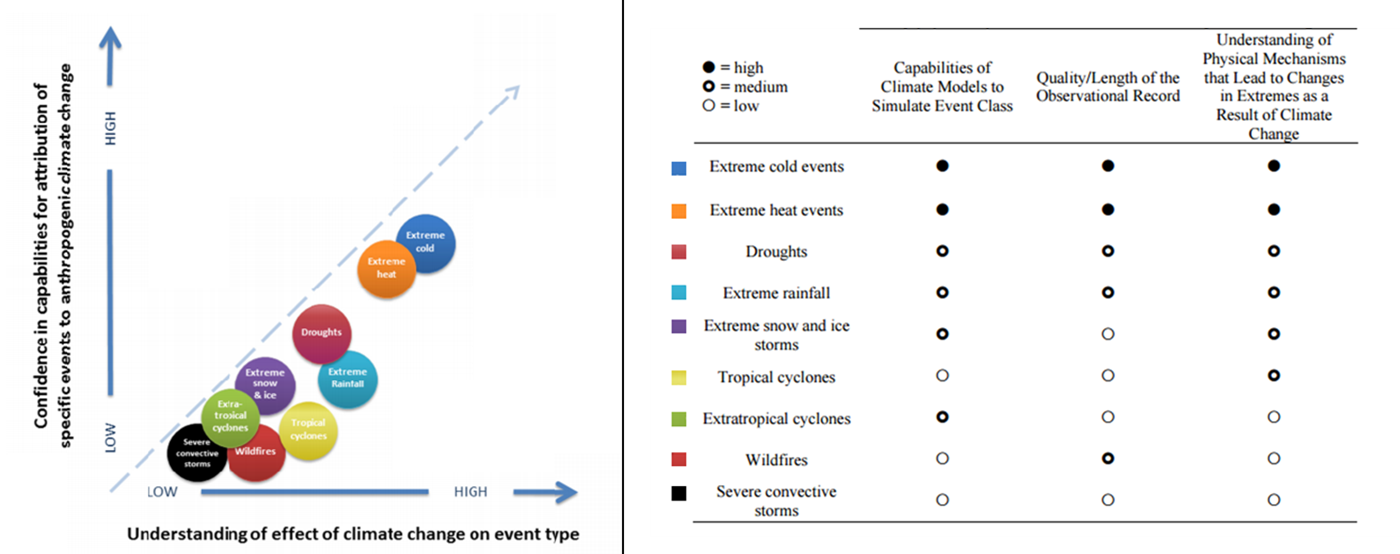
The other scientist Shank mentioned, Curry, is a professor at Georgia Institute of Technology’s School of Earth and Atmospheric Sciences, and is notorious for her view that humans may not be the primary driver of climate change. In a recent blog post, she zeroed in on NASA’s Goddard Institute for Space Studies as the agency’s hub of what she called “politicized climate science.”
Curry noted that NASA has given her more research funding than any other agency. She advocated for continuing support for NASA earth science projects, but added, “This is a welcome opportunity to redirect NASA Earth Science research towards other topics that are not directly related to or motivated by human caused climate change.”
Update: December 2, 2016
This story has been updated to clarify that Shank was talking about Roger Pielke Junior and Senior.
==
http://www.breitbart.com/author/rep-lamar-smith-r-tx/
11/15
...science is clear. For nearly two decades, the satellites that measure global temperature have shown no discernible increase. This fact has been very inconvenient to the Obama administration that wants to promote an extreme climate change agenda at an international meeting next month in Paris.
More conveniently, the National Oceanic and Atmospheric Administration (NOAA) recently published a study in the journal Science that made “adjustments” to global temperature data. The study was conducted in order to refute the notion that there has been any pause in global warming.
The NOAA study claimed to use “new methods” of data collection that changed historical temperatures from both land and oceans. This is beyond suspicious. Just in time for this administration’s final carbon emission regulations and international climate negotiations, NOAA changed the way it has analyzed data for decades to get results that support the president’s agenda.
...
==
http://www.ecowatch.com/lamar-smith-climate-science-2336435692.html
Climate Deniers' Big Day on Capitol Hill
No one thought that Lamar "my career has been funded by fossil fuels" Smith was going to put on an unbiased hearing on climate science. After all, the minority Democrats on Smith's House Committee on Science, Space, & Technology published a report this month, *Much Ado About Nothing*, which details Smith's "crusade to attempt to undermine and invalidate" Tom Karl's pause-buster study. (Yet Smith still can't get NOAA's name right)!
Although little was said about Karl, Wednesday's House Science Committee hearing with Drs. Michael Mann, John Christy, Judith Curry and Roger Pielke Jr. was a quite a circus. Which is exactly why someone who's been through Smith's nonsense, Dr. David Titley, wrote for the Washington Post that scientists should boycott these biased hearings.
That would be nice, if that meant that Smith would stop holding them. But since he shows no sign of slowing his inquisition, someone needs to show up to set the record straight and push back on all the denial packed into the hearing like so many clowns in a tiny car.
And that's exactly what Dr. Mann did, successfully walking the tight-rope between correcting other witnesses and coming off as a jerk. Most notably and most clearly getting under Smith's skin, Mann cited a recent Science Magazine articledescribing Smith's comments at the Heartland conference. Mann read the killer quote about how Smith "acknowledged that the committee is now a tool to advance his political agenda rather than a forum to examine important issues facing the U.S. research community."
In response,Lamar Smith, the esteemed media critic who cited the Daily Mail's bogus Bates story, who has written for Breitbart and said that people should get their news directly from Trump, claimed that Science Magazine is "not known as an objective magazine." As Emily Atkin of the New Republic aptly put it, "The fact that the chairman of the House Science committee doesn't consider that source 'objective' is ACTUALLY MIND BLOWING."
Smith, with pie on his face, also demonstrated his media savvy by citing the never-correct editorial page of the Wall Street Journal on heat records. This opinion is about as solid as cotton candy and has been contradicted by the paper's own reporting.
[img]
Speaking of dumb Wall Street Journal opinions, Mann also did a nice job of calling out Pielke's hypocrisy for whining in the Journal about being harassed, after sending threatening letters to Mann and Kevin Trenberth's bosses when they criticized his awful FiveThirtyEight piece that needed correction.
Also needing correction was John Christy, who trotted out his error-laden graph of models and observations. Again, Mann highlighted the foolishness of his fellow witnesses by pointing out how others have corrected Christy many times on the satellite record vs. the thermometer record. And more importantly, he cited the recent research that totally debunks Christy's false contention that models overestimate warming.
And then there's Judith Curry who, true to form, was there to talk about uncertainty (inappropriately). Again Mann was prepared, pointing out that uncertainty is actually a reason to take stronger action sooner. Uncertainty cuts both ways: while Curry and the GOP would have you believe maybe warming won't be so bad, it could actually be much worse than we fear.
Curry also bristled at being referred to as a "climate science denier" in Mann's written testimony. That's silly: She's teamed up with the Kochs, questioned the validity of the endangerment finding and said in her opening statement that it's time to "make the debate about climate change great again." So it is safe to say that "Judith Curry is absolutely a climate denier."
And she proved it in the hearing, denying the science and claiming we don't know how much is human versus natural. In 2014, NASA's Gavin Schmidt laid out the case for Curry that our best estimate is that humans are causing 110 percent of warming. (It's more than 100 percent because natural forces and particulate pollution cause cooling, which CO2 is overcoming to cause warming).
Curry also questioned ocean acidification science, in a way that Brian Kahn noted "is way out of step with most ocean scientists" that he's talked with.
Other odds and ends that made an appearance include the 1998 documents showing Big Oil's plan to inject uncertainty into the climate debate, the long-debunked 70s cooling myth and Smith's tired denial of the consensus.
So like any good circus, there were plenty of clowns, people lion, tired grr-causing myths and bear-ly believable statements.
Oh my.
Here's the full hearing:
===
https://newrepublic.com/article/141227/republicans-war-science-just-got-frighteningly-real
...An obvious solution, for those seeking to avoid such regulation, would be to prevent that science from seeing the light of day. That’s exactly what Lamar Smith, a Republican congressman from Texas, is trying to do. On Thursday, the House Science Committee passed two of Smith’s bills: The Honest and Open New EPA Science Treatment Act (HONEST Act) and the Science Advisory Board (SAB) Reform Act. Combined, they would significantly change how the Environmental Protection Agency uses science to create rules that protect human health.
The HONEST Act is essentially a re-brand of Smith’s notorious Secret Science Reform Act, a bill that would have required the EPA to only use scientific studies for which all data is publicly available and the results are easily reproducible. The SAB Reform Act would change the makeup of the board that reviews the “quality and relevance” of the science that EPA uses: Scientists who receive EPA grants would be forbidden from serving, while allowing the appointment of industry-sponsored experts who have a direct interest in being regulated—so long as they disclose that interest.
In a press release, Smith said these bills would help promote “an open and honest scientific process” at the EPA. He says past regulations have been “based on hidden science” and that the SAB needs “a more balanced group of scientists to assist EPA in fulfilling its core mission.”
But several scientists, science advocates, and former EPA officials told me this week that these bills are a solution in search of a problem. The bills, while couched in good intention, will add significant expense and delay to the scientific process, effectively preventing the EPA from using the best available science to protect the public from pollution. Worse, they said, the bills would embolden polluters and discourage good scientists from working in government.scientists how to conduct their research,” said Democratic Representative Bill Foster, one of only two scientists in Congress. “Scientists should set the standards for research. Not politicians.”
According to The Intercept, “The small group of lawyers and PR strategists orchestrating the secret science effort are closely tied to those attacking the EPA from within. All have connections to either big tobacco, oil, or both.” And those industries would, of course, benefit financially by killing or delaying regulation. “I’m sure you’ve heard of the ‘Delay Game,’ where clearly it’s in the best interests of certain major stakeholders to delay science so they can in effect delay regulations that may have an impact on their business or industry,” said Thomas Burke, who served as the EPA’s chief science advisor under President Obama. “So one has to be a little skeptical of an intent to a bill like this that might lead to an endless loop of reanalysis of data.”
Burke and others said the HONEST Act would delay or stymie the approval of scientific data at EPA because it requires that the disclosure of private data and that study results be “reproducible,” meaning an outside source must be able to replicate the entire study on their own and get the same results. Scientists say that’s just not possible for many public health studies. Consider a 10-year study of lead exposure in pregnant women and children: How would scientists swiftly replicate the results? Or a study on the BP oil spill’s impact on public health in coastal Gulf communities: How can one reproduce that event?
“It’s really hard to reproduce long term studies because variables change, people grow up,” said Yogin Kothari, a scientific integrity advocate at the Union of Concerned Scientists. “If they can’t use these studies, the EPA’s policy decisions won’t be based on the best available science.”
The HONEST Act’s requirement that all raw data be available is also problematic, scientists say, because many public health studies use private medical data, while other studies—like oil well emission research, for instance—can contain trade secrets and industry data. The HONEST Act does say that type of information must be redacted, but then it says that it can be disclosed to anybody who signs a confidentiality agreement. Kothari said that requiring raw data also fundamentally misunderstands how the scientific process works. “You don’t need to see raw data to actually understand a scientific analysis,” he said. “When a peer reviewer at a journal is looking at a study, a paper that they’re reviewing, they don’t ask for the data. They look at the methodologies and how it connects to the research results.”
Besides, Burke said, there is no reason for reviewers to essentially re-do the entire research process when reviewing the validity of a study. That is what the peer-review process is for—a process that has served science well for nearly 300 years. “This bill really does not honor the scientific process that has been the basis for decision-making in the U.S. and around the world,” he said. “It sets up so many potential road blocks. I am very concerned about the public health implications.”
Opponents of the Scientific Advisory Board bill, which bars scientists who have received money from the EPA in the last three years from serving on the board, say it’s insulting to allege that scientists who receive EPA grants are inherently biased in favor environmental regulation. Most scientific research in the U.S. is funded by government grants. Does that mean every scientist is biased toward government regulation?
“They’re basically saying that people who are experts in environmental science, who have spent their careers working on this and may have received EPA grants to do their work, are inherently conflicted, whereas people who are working in the industry, who would be impacted by the board’s advice, are not conflicted,” Kothari said. “I mean, that’s bananas, right?”
There’s no shortage of outrageous bills in Congress that few people take seriously. Republican Representative Matt Gaetz’s bill to abolish the EPA, for instance, caused widespread internet outrage and inspired hundreds of protesters to show up at a town hall Gaetz hosted. But the bill has absolutely no chance of becoming law.
Quite the opposite is true of the HONEST and SAB Reform acts. Both bills passed the GOP-controlled House in 2014 and 2015, back when the HONEST Act was called the Secret Science Reform Act. In 2015, after Democrats lost the Senate, the secret science bill passed the chamber’s Committee on Environment and Public Works. The Obama White House issued veto threats on both bills, both years.
“I would say it’s more real now than ever before because of the current political situation,” said Kothari. “A lot of people paying attention to this always understood that President Obama would veto this legislation. We don’t have that veto promise anymore.”:{
}:
President Donald Trump has not commented on these bills, but he’s expressed an extreme distrust of science in general, and the EPA specifically. He doesn’t believe in climate change, for instance, and has appointed several climate deniers to cabinet positions. Some of the very people behind these two bills are now serving on Trump’s EPA transition team.
“We now have a president who has attacked mainstream scientific views repeatedly,” Democratic Representative Eddie Bernice Johnson said at Thursday’s House Science Committee hearing. “The threats to the scientific enterprise in America right now are profound.”
===
==
The House “Science” Committee
The House Committee on Science, Space, and Technology is quickly becoming one of the most inaccurately named entities in Washington. For the past several years, Rep. Lamar Smith (R-Texas) has used his position as chair of the committee to harass scientists through congressional investigations. He’s even accused researchers at the National Oceanic and Atmospheric Administration of having “altered historic climate data to get politically correct results” about global warming. As Mother Jones explained in February, “Smith is determined to get to the bottom of what he sees as an insidious plot by NOAA to falsify research. His original subpoena for internal communications, issued last October, has been followed by a series of letters to Obama administration officials in NOAA and other agencies demanding information and expressing frustration that NOAA has not been sufficiently forthcoming.”
Fast-forward to December 2016, when someone working for Smith decided to use the committee Twitter account to promote an article from Breitbart News titled “Global Temperatures Plunge. Icy Silence from Climate Alarmists.” (Breitbart is the far-right website that was formerly run by chief Trump strategist Steve Bannon. In addition to climate denial, Bannon has said the site is “the platform for the alt-right,” a movement that is closely tied to white nationalism.)
Unsurprisingly, actual scientists weren’t pleased.
=
SUNDAY, FEBRUARY 28, 2016
Conspiracy theorising Lamar Smith can't hack change
I see that Lamar Smith hasn't been able to find any evidence for his conspiracy theory yet, so he's asked NOAA for more emails. He complained that he "only" got 301 pages of emails. He figured the search terms were "unnecessarily narrow". If you want to get a feel for Lamar's conspiracy theory that climate change is a Presidential hoax, he now wants NOAA to send him all emails containing any of the following words:
Karl
buoy
ship
Night Marine Air Temperature
temperature
climate
change
Paris
U.N.
United Nations
clean power plan
regulations
Environmental Protection Agency (EPA)
President
Obama
White House
Council on Environmental Quality (CEQ)
He gave them seven whole days. In his next request, he'll no doubt separate words white from house, united from nations, clean from power and plan, Council from quality, and maybe boy as well as buoy, etc. He might also widen temperature to temp, which would allow him to get any emails relating to temporary whatever.
I sincerely hope that he gets sent all emails that include stuff like:
"there's been a change to my mobile phone number"
"can you change the staff meeting to 2:00 pm"
"Lamar Smith is spelt with an "i" not a "y". Change all versions of "Smyth" to "Smith""
"please ship the staplers to our Seattle office"
If he does, then he'll probably spend years trying to work out the coded messages in the above.
This could go on forever. Will Lamar Smith call for NOAA's budget to be expanded to cover the cost of his private army of email searchers? As Gavin Schmidt tweeted:
Follow
Gavin Schmidt @ClimateOfGavin
More abuse of congressional authority for pointless fishing expeditions:
"All email containing the word 'change'" https://twitter.com/sjvatn/status/703367492027195394 …
3:55 AM - 27 Feb 2016
33 33 Retweets 21 21 likes
Nobody makes them like the Republican Party in the USA. Nutty as a fruit cake.
References
Latest demand letter from Lamar Smith to NOAA
Congressman demands more NOAA e-mails about climate study - article by Scott K Johnson at Ars Technica
http://blog.hotwhopper.com/2016/02/conspiracy-theorising-lamar-smith-cant.html
==
===
suppression foia
subpoena'd by lamar and exxon
https://www.democracynow.org/2016/12/8/the_end_of_the_epa_trump
==
==
loss:
https://insideclimatenews.org/news/14102016/sec-refuses-comply-lamar-smith-subpeona-over-exxon-probe-mary-jo-white?utm_source=Inside+Climate+News&utm_campaign=9509905438-Weekly_Newsletter_week_of_9_189_23_2016&utm_medium=email&utm_term=0_29c928ffb5-9509905438-327502713
==
Rep. Lamar Smith, a Texas Republican who has been pursuing documents from the attorneys general of New York and Massachusetts over their climate fraud investigations into ExxonMobil, has now set his sights on the Securities and Exchange Commission.
Smith, chairman of the House Science committee, asked the federal financial regulatory agency to provide documents related to its investigation of Exxon.
Saying the committee was "troubled" by the commission's investigation, Smith requested SEC chair Mary Jo White provide information about the purpose, scope, and origin of the agency's inquiries into Exxon's climate disclosures.
Smith cast a wide net, asking for any documents that may link the White House, the U.S. Department of Justice, the two state attorneys generals and nine non-governmental agencies to the SEC probe. He demanded the documents be delivered by Oct. 13.
"The Committee's jurisdiction over energy and environmental research includes an obligation to ensure that such research advances the American scientific enterprise to the fullest extent possible, free from threat of intimidation or prosecution," Smith wrote in the letter to White.
"The Committee is concerned that the SEC, by wielding its enforcement authority against companies like Exxon for its collection of and reliance on what is perhaps in the view inadequate climate data used to value its assets, advances a prescriptive climate change orthodoxy that may chill further climate change research throughout the public and private scientific R&D sector."
Smith has said his ongoing investigation of the New York and Massachusetts probes has been motivated by his belief that the attorneys general are on a politically motivated witch hunt. But an investigation by the SEC signals non-partisan interest by an agency which ordinarily does not operate under political influence.
Members of Congress including Rep. Ted Lieu, a California Democrat, hadwritten the agency last October, citing news reports in InsideClimate News and the Los Angeles Times, and requesting that the SEC "investigate ExxonMobil's past filings to determine if securities laws were violated by failing to appropriately disclose material risks related to climate change."
The current probe, disclosed by The Wall Street Journal, signals the SEC's interest in whether Exxon fully disclosed the financial risk to its investors posed by climate change.
The SEC requires companies like Exxon to disclose potential decreased demand for goods that produce significant greenhouse gas emissions. Such a decrease could pose a material risk to investors.
Smith has said there is a need to know whether there are any adverse effects related to the New York and Massachusetts attorneys generals' investigations that might hinder scientific research and development. Smith recently held hearings in the face of the refusal by Eric Schneiderman of New York and Maura Healey of Massachusetts to comply with subpoenas to hand over records.
Smith's letter to the SEC echoed that same theme.
Specifically, Smith asked the SEC to provide documents involving:
- Communications between SEC officials referring to the decision to investigate Exxon regarding any of its climate change-related financial disclosures.
- Documents and communications between the SEC and the Department of Justice or the White House relating to a potential investigation of Exxon.
- Documents and communications between the SEC and the office of the attorneys general of New York and Massachusetts relating to a potential investigation of Exxon.
- All documents and communications between the SEC and nine non-governmental organizations that have embraced the science proving climate change is at the hands of humankind.
The request drew a rebuke from Sen. Sheldon Whitehouse (D-R.I.) who has been encouraging the investigations into Exxon and assailing Smith for his subpoenas. "Harassing the SEC, as he's harassed state Attorneys General and the private entities that have petitioned them, is an abuse of the committee's power," Whitehouse said.
PUBLISHED UNDER:
https://insideclimatenews.org/news/29092016/lamar-smith-extends-exxon-subpoena-climate-investigations-new-york-massachusetts-sec
==
https://insideclimatenews.org/news/14092016/lamar-smith-hearing-witnesses-attempt-bolster-argument-subpoenas
ep. Lamar Smith argued on Wednesday that not only does his House Science committee have the authority to subpoena two state attorneys general investigating ExxonMobil, but a constitutional obligation to ensure that science isn't being undermined by such investigations.
But while the committee hearing was ostensibly to address the constitutional issues of Smith's subpoenas, it served as a showcase for scholarly disagreements and political divides.
Looming over the 2½-hour hearing were the questions of whether the committee was abusing its oversight authority to defend the oil and gas industry—and Exxon—against legitimate probes by New York's Eric Schneiderman and Massachusetts' Maura Healey, or whether it was standing up to attempts to suppress dissenting views on climate change.
The genesis of the hearing was the refusal by the two attorneys general to comply with Smith's subpoenas seeking information on their ongoing investigations into whether Exxon misled investors on climate change.
"The documents demanded will allow the committee to assess the breadth and depth of the AG's investigations and inform our understanding of whether their actions have a chilling impact on scientific research and development," Smith said in his opening remarks.
"The question we explore today isn't partisan, it's institutional. Allowing subpoenaed parties to ignore compliance based on the politics of the subject sets a dangerous precedent."
Eddie Bernice Johnson, the ranking Democrat on the committee, called the hearing politically motivated and designed to advance the agenda of the fossil fuel industry.
"The Majority has claimed that their investigation is about protecting the First Amendment rights of ExxonMobil," Johnson said.
"However, the law is clear: fraud is not protected by the First Amendment. If any companies in the oil industry defrauded the public or their shareholders in their well-documented disinformation campaign on global warming, then that is a matter for the state AGs and the courts, not the Committee on Science."
The hearing brought no resolution to the question of the committee's authority and Smith briefly discussed the possibility of going to court to force the AGs' compliance.
Smith called the hearings as part of his escalating hostilities with Schneiderman and Healey.
Smith has charged that their investigations are politically motivated, while absorbing the same criticism for his defense of Exxon, the largest corporation in his home state.
The two attorneys general and eight non-governmental advocacy groups have refused to comply with subpoenas issued by Smith in July. The subpoenas demand documents pertaining to the ongoing investigations and any discussions the agencies have had with the organizations.
Eric Soufer, a spokesman for Schneiderman, called the hearing a "farce."
"No amount of Congressional grandstanding will change the simple fact that the Committee has no lawful basis to interfere with a state law enforcement investigation," he said.
"Attorneys General Schneiderman and Healey have launched a serious fraud investigation into Exxon and will not be intimidated or deterred by Big Oil's friends on Capitol Hill."
Chloe Gotsis, a spokeswoman for Healey, said the hearing did nothing more than add to the unwarranted attack on the Massachusetts investigation.
"This hearing is just another attempt by Congressman Lamar Smith and his colleagues to interfere with our lawful and ongoing investigation into whether ExxonMobil deceived Massachusetts consumers and investors about the impacts of fossil fuels on Exxon's business, assets, and the environment," she said.
To bolster his contention that the subpoenas were legally justified, Smith called three witnesses, including two law professors with connections to think tanks funded by the fossil fuel industry and who have been critical of the attorneys general.
The Democratic minority was allowed to call one witness, who once served as the acting general counsel for the House of Representatives.
The first of Smith's witness, Jonathan Turley, a liberal law scholar and professor of public interest law at The George Washington University Law School, opened by saying he was a firm believer in climate change. He also said that did not factor into his view of the subpoenas.
"This committee clearly has the ability to insist on compliance with its subpoenas," Turley said, because the attorneys general have no absolute privilege to shield them.
"Something may be unprecedented is not unconstitutional," Turley said.
Turley agreed with Smith that the state investigations could have a chilling effect on scientific research.
"This was a step too far. It is delving into the area of differences of opinions," he said.
Ronald D. Rotunda, a law professor of at Chapman University's Dale E. Fowler School of Law, also argued that the committee was within its legal bounds to enforce its subpoenas. Rotunda is associated with the Heartland Institute and a frequent contributor to the organization's policy blog, which often features writings challenging the scientific evidence of man-made climate change.
"The American people have a right to know if Mr. Schneiderman is working on his own, or is he part of a corrupt deal with some of these climate groups," Rotunda said. "People that don't comply with subpoenas have something to hide—that's why they don't comply."
Charles Tiefer, a University of Baltimore law professor and former acting general counsel for the House of Representatives, argued against the legality of the subpoenas.
"No House committee has ever tried—nor should ever try—to enforce subpoenas against state attorneys general," said Tiefer, the lone witness called by the Democratic minority."The committee has failed to identify even one single House subpoena to a state attorney general in 200 years. The reason? It's never happened."
Remarks and questioning of the witness by the members of the committee revealed a deep philosophical gulf between Republicans and Democrats.
Illinois Democrat Bill Foster lamented that the science committee was wasting its time on the issue.
"We are talking about subpoenas and should be focused instead on assuring that the U.S. remains on the leading edge of scientific discovery," he said.
"It is long past time this committee accepts the facts of climate change and takes on the very of important matter of figuring out where we go to address the biggest challenge of our lifetime."
Mo Brooks, an Alabama Republican, said he wanted to "emphasize something about this quote unquote climate change phrase."
"The so-called climate change debate is about the role humanity has played— if any—in today's version of climate," he said.
It ignores "the cost to humanity in terms of depressed economics of implanting so alleged climate cures."
Shortly before Smith gaveled his hearing to order, a number of Democratic leaders joined with environmental organizations near the Capitol to denounce Smith, to show support for Schneiderman and Healy and urge more state attorneys generals to open investigations of Exxon.
Among those were Rep. Ted Lieu and Sen. Sheldon Whitehouse who have been pressing for investigations of Exxon by the U.S. Justice Department and the Securities and Exchange Commission.
Whitehouse called the tactics being employed by Smith "worrisome" and lambasted the committee's majority as acting as the "agent" of Exxon.
"Exxon is using Rep. Smith as a tool to obstruct the investigations and to obstruct the truth," he said.
The attorneys generals' investigations coincide with the publication of aninvestigative series of stories in InsideClimate News last year that disclosed Exxon's executives were warned of the possible catastrophe consequences of greenhouse gas emissions in the late 1970s yet engaged in efforts hinder solutions.
==
In July, the chairman of the House Committee on Science, Space, & Technology, Rep. Lamar Smith, issued subpoenas to two state attorneys general who are currently investigating what ExxonMobil knew about climate science, when they knew it, and if the company misled investors.
The attorneys general of New York and Massachusetts both refused to turn over any information or communications about their investigations. Each AG's office argued the Committee had no authority to issue such a request, calling the subpoenas a violation of states' rights under the 10th amendment.
In a response last month, Smith, a Republican from Texas, announced a hearing to “affirm” that his Committee did have the legal authority to issue such subpoenas. The legal issue the September 14 hearing will address is whether a Congressional committee has subpoena power over state attorneys general and non-profit advocacy organizations. The subpoena was called “an unprecedented effort to target ongoing state law enforcement 'investigations or potential prosecutions'” by Leslie Dubeck, an attorney in the Office of the New York State Attorney General.
Smith has called three legal experts to bolster his claim — two with direct ties to the same Exxon-funded groups who have pushed climate science denial and inaction to cut greenhouse gas emissions.
Why Would Republican Rep. Lamar Smith Put Aside Principles of Federalism to Protect Exxon?
According to Oil Change International's Dirty Energy Money database, Rep. Smith has taken $24,770 in campaign contributions from Exxon over his career, with $17,500 of that coming in the last five years.
All told, according to the Center for Responsive Politics' OpenSecret.org database, Rep. Smith has received $684,947 from the oil and gas industry since 1998 — making oil and gas his most generous industry contributor throughout his career.
On top of the subpoenas sent to the New York and Massachusetts attorneys general, Rep. Smith issued subpoenas to eight non-profit advocacy organizations, foundations and a private law firm that have drawn attention to what Exxon knew about climate science and when the company knew it.
The Union of Concerned Scientists, which received such a subpoena, offered to meet with the Committee but refused to turn over internal records. Their meeting request was refused.
“From the outset, Chairman Smith has overstepped his authority with this investigation,” said USC President Ken Kimmell. “He has consistently mischaracterized our work in repeated, convoluted attempts to justify his efforts. It is telling that after issuing broad, unilateral subpoenas, he is now holding a hearing to figure out if his actions are legitimate…We will continue to stand firm against this abuse of power and defend our First Amendment rights.”
“However Chairman Smith stacks this hearing with friendly witnesses, it's clear that he's on shaky legal ground,” Kimmell continued....
==
nyag push back:
...
The Honorable Lamar Smith July 26, 2016 Page 7 of 10 the vague and shifting statements of purpose by the Chair and Committee members “leave the matter in grave doubt.” See id. at 206. The Subpoena does not describe the investigation’s subject matter or how the material sought might further the Committee’s inquiry. Nor has the Committee pointed to any specific authorizing resolution. Other sources shed minimal light on the inquiry’s true goal: The May 18, 2016 letter professed (at 1) that the Committee was “conducting oversight of a coordinated attempt to deprive companies, nonprofit organizations, and scientists of their First Amendment rights and ability to fund and conduct scientific research free from intimidation and threats of prosecution.” The letter went on to question the state investigators’ “impartiality and independence” and their use of state “taxpayer dollars” (at 4), and whether the investigations “run counter to an attorney general’s duty to serve” the public interest or “amount to an abuse of prosecutorial discretion” (at 1). The letter of June 17, 2016 (at 2) shifted the focus from state to federal taxpayers, relaying a new purpose of “ensuring that all scientists, especially those conducting taxpayer-funded research, have the freedom to pursue any and all legitimate avenues of inquiry.” The letter concluded (at 3–4) by stating that “[t]he Committee’s investigation is intended to determine whether” the various state investigations were “chill[ing] scientific research, including research that is federally-funded.” The letter of July 6, 2016 (at 2) goes farther, calling it “a goal of this Committee” to protect the ability of all scientists “to conduct research uninhibited by the potential adverse effects of investigations by law enforcement”—now apparently without regard for whether the investigation is lawful or chills protected speech, as distinguished from unprotected speech, including speech used to perpetrate fraud. Finally, at a press conference about the Subpoena, the Chair and several Committee members returned to the premise that state officials were abusing their discretion. According to Rep. Darin LaHood (R-IL), “[p]rosecutors shouldn’t be in this business. It really is an abuse of power.” To Rep. Randy Weber (R-TX), the Attorneys General are acting “way beyond the scope of their job duties.” According to Rep. Warren Davidson (R-OH), the Attorneys General “are using taxpayer dollars from their states to manufacture charges to send a political message,” which “demonstrates a clear deviation from the legal duties of an Attorney General and the possible abuse of their judgment.” Chairman Smith likened the investigations “to a form of extortion” to prod settlements, so that the Attorneys General “can obtain funds for their own purposes.”5 As the Supreme Court has held, “an authoritative specification” of the investigation’s subject matter is “necessary for the determination of pertinency.” Gojack, 384 U.S. at 717
...
https://ag.ny.gov/sites/default/files/2016_07_26_nyoag_letter_to_sst_objecting_to_subpoena.pdf
==
Climate Sep. 15, 2016 09:28AM EST
Oil-Backed Lawmakers Hold 'Unusual' Hearing on 'Behalf of Exxon'
Common Dreams
By Deirdre Fulton
The Republican-led House Science Committee on Wednesday held an "unusual" hearing, alleged to have been "orchestrated on behalf of ExxonMobil" and criticized as an abuse of congressional power.
:{
}:
Environmentalists and elected officials alike decried the sideshow event, called by committee chair Rep. Lamar Smith (R-Texas) in an attempt to justify subpoenas he recently issued to New York Attorney General Eric Schneiderman, Massachusetts Attorney General Maura Healey and eight organizations and foundations regarding their investigations into whether Exxon deceived on the public and its investors on the issue of climate change. All of the entities that have been subpoenaed have refused to comply.
Members of Congress, including Rep. Ted Lieu (D-Calif.), spoke out in Washington, DC, on Wednesday against the House Science Committee's hearing.
350.org
Ahead of the hearing on Wednesday morning, climate action group350.org noted that at least two of Smith's witnesses, law professors Ronald Rotunda and Elizabeth Price Foley, have significant ties to fossil fuel industry-funded groups such as the Heartland Institute and the Koch-funded Cato Institute.
What's more, 350.org and others pointed out, Smith himself has received hundreds of thousands in donations from the fossil fuel industry over the years—including $24,770 directly from ExxonMobil—"making oil and gas his most generous industry contributor throughout his career."
That's why it's "no surprise he's willing to trample our First Amendment rights in his mad dash to their defense," 350.org executive director May Boeve said Wednesday. "The bottom line is that this hearing is nothing but Smith's attempt to distract us from the real issue: Exxon knew the truth about climate change and Exxon lied."
"This hearing, orchestrated on behalf of ExxonMobil, is a perversion of this important congressional procedure and a complete distraction," added Tamar Lawrence-Samuel of the group Corporate Accountability International.
"The only thing this hearing will prove is that Rep. Smith is capable of cherry-picking a panel of witnesses that validate his views," Lawrence-Samuel said. "Mr. Smith and his denialist colleagues on the House Science Committee are once again using our government to carry out the head-in-sand agenda of their Big Oil campaign funders and it needs to stop. It's time for Rep. Smith to end this charade and let AGs do what they were elected to do."
Watch the hearing below (starting at minute 26:00):
People were tweeting about the hearing and its implications under the hashtag #ExxonKnew, which itself grew out of dual investigations that showed the oil giant spent decades and millions of dollars misleading the public about the threat posed by global warming.
"But instead of investigating ExxonMobil's decades-long deception on climate change, Republicans in charge of the House Science Committee are attacking attorneys general and nonprofits who are trying to protect the public by holding ExxonMobil accountable for their fraud and deceit," Rep. Ted Lieu (D-Calif.) said on Wednesday. "The American people—who are facing the toll of climate change every single day—deserve leaders in Congress who believe in science. We deserve leaders who will protect the people, rather than ExxonMobil."
This article was reposted with permission from our media associate Common Dreams.
http://www.ecowatch.com/exxon-knew-lamar-smith-2005584790.html
==
ref
http://www.desmogblog.com/2016/09/12/who-are-rep-lamar-smith-s-expert-witnesses-house-science-committee-exxonknew-subpoenas
==
http://www.nationalreview.com/article/434397/barack-obama-paris-climate-change-agenda-will-cost-american-families
==
vittter asked buddy c to pile onto a FOIA of green orgs 2012, adding Fish and Wildlife (wetlands LA?) but i can't find if it ever happened, or what became of original foia)
==
staffers:
http://mediamatters.org/research/2016/06/21/what-media-should-know-about-house-science-committee-members-defending-exxon/210539
http://desmogblog.com/2016/06/21/exxon-koch-lamar-smith-exxon-knew
U.S. Rep. Lamar Smith recently caused a ruckus by targeting environmental groups that are pushing for ExxonMobil to be held accountable for funding climate change denial despite their deep internal corporate knowledge of the role of fossil fuel pollution in global warming. Rep. Smith penned letters to several environmental groups and foundations requesting all of their communications about the ongoing “Exxon Knew” campaign.
Some of the groups and foundations have issued public responses refusing to provide the materials to Smith, who heads up the U.S. House Science, Space, and Technology Committee.
Not yet reported, though, are the extensive ties — monetary and personnel — binding Smith to the crucial corporate funders of climate denial: ExxonMobil and Koch Industries.
According to Oil Change International's Dirty Energy Money database, Smith has taken $22,270 in campaign contributions from Exxon since 1998. And OpenSecrets.org data reveals that $19,500 of the Exxon money has flowed to Smith's campaign since 2008 alone.
OpenSecrets.org data reviewed by DeSmog also shows that Smith has taken $52,000 in campaign contributions from Koch Industries — another key node of the climate denial machine — since 2006.
All told, Lamar Smith — a climate change denier — has received $675,597 from the oil and gas industry since 1998.
Koch-Exxon-Smith Revolving Door
Beyond campaign finance money, the bigger story here is the people working for Smith, both past and present.
Let's start with Jennifer Pett — Smith's communications director — who formerly served as a Charles Koch Institute media relations associate.
Image Credit: LinkedIn
Pett transitioned from that job to work as a communications assistant for U.S. Rep. Tim Huelskamp (R-KS), whose congressional district sits in the same state as Koch Industries' headquarters. Since joining Congress in 2012, Huelskamp has received $40,900 from Koch Industries, his top campaign contributor.
Further, Lamar Smith's senior legislative aide, Scott Ferguson, went on two trips funded by the American Exploration and Production Council, one in 2014 and one in 2015. One of the Council's members is XTO Energy, the hydraulic fracturing (“fracking”)-focused subsidiary of ExxonMobil.
What former Smith staffers have gone on to do with their careers is also telling, emblematic of the government-industry revolving door.
Smith's former communications director, Sally-Shannon Birkel, now serves as senior manager of media relations for the U.S.Chamber of Commerce,which is funded by both the Kochs and ExxonMobil. Karen Harbert, the president of the Chamber’s Institute for 21st Century Energy, has called the ongoing state-level Attorneys General investigation into ExxonMobil and climate denial “un-American.”
“The idea that a group of attorneys general can get together and decide to collaborate and corroborate, to persecute not just a single company now but an industry, because they are ideologically opposed to the product it produces, is un-American,” said Harbert. “It is a threat to the free enterprise system; it is a threat to the rule of law on which the free enterprise system depends; and we’re not going or stand for it.”
Another former Smith communications director, Brad Bennett, left Smith's office and eventually transitioned into gigs at both Hill and Knowlton (a PR firm with roots in tobacco industry denial tactics which did PR on behalf of America's Natural Gas Alliance, ANGA) and DCI Group, the latter of which has key Exxon ties and was subpoenaed in April by the Attorney General of the U.S. Virgin Islands in the Attorneys General probe.
Jennifer Young Brown, Smith's senior advisor for the Science, Space, and Technology Committee and his former long-time chief-of-staff, also has a key Koch link. As a young staffer back in 2000, she attended a retreat hosted and funded by the George Mason University-based Mercatus Center. The Center for Public Integrity has described Mercatus' annual congressional staffer retreats as a key influence-peddling avenue for the Kochs' political agenda.
The Koch-funded Competitive Enterprise Institute, like DCI Group, received a subpoena from the U.S. Virgin Islands in April.
Lastly, Zachary Kurz — Smith's former communications director for the Science, Space, and Technology Committee — now works as a public affairs specialist for Cause of Action, a legal activism group funded by the Koch-linked “dark money ATM of the right,” Donors Trust.
“Campaign…Is Working”
In a blog post published on May 20, Union of Concerned Scientists president Ken Kimmell pointed to the Smith-led Science, Space, and Technology Committee letters to NGOs and their funders as a victory of sorts, a data point displaying that the campaign to hold Exxon and other companies accountable for climate denial has struck a nerve.
“The campaign to hold companies accountable is working,” wrote Kimmell. “Some fossil fuel companies and their allies are no doubt feeling pressure, and they are pushing back. I would hate to think that the House Science Committee is using its governmental powers in aid of this effort. But whatever the motive for the letter, UCS will not be intimidated.”
Given the ties linking Smith's political career to the very companies who have perpetuated and bolstered the climate denial machine like Koch and Exxon, it's safe to say that indeed as Kimmell hinted at, “the House Science Committee is using its governmental powers in aid of this effort.”
==
http://in.reuters.com/article/us-exxon-mobil-climatechange-idINKCN0Z400F
6/18
A Republican-led congressional committee sought on Friday to assert oversight over inquiries that about 20 states are making into Exxon Mobil and climate change, reiterating demands to know more about state attorneys general's consultations with environmental groups.
In a letter, some 17 members of Congress and ranking members of the House Science, Space, and Technology Committee said they have broad jurisdiction that allows them to review investigations carried out by states. The committee was pushing back against state officials who have said they are not subject to federal oversight.
The standoff is the latest in a high-stakes battle between the world's largest publicly traded oil company and a coalition of state attorneys general who have said they would go after Exxon in a bid to force congressional action to tackle climate change.
...
==
extensive 3 part series incl dqa
http://www.huffingtonpost.com/2014/06/24/house-science-committee_n_5525609.html?1403707503
part 1:
http://americanindependent.com/how-one-gop-controlled-committee-waging-war-science
At a March 26 hearing of the U.S. House Committee on Science, Space, and Technology, Republican congressmen took turns attacking President Obama’s top science advisor, John Holdren. On climate change, their statements became increasingly heated, accusatory, and bizarre.
Southern California conservative Rep. Dana Rohrabacher (R-Calif.) challenged Holdren on the fact that about 97 percent of the world’s practicing climate scientists agree that human activity is responsible for climate change. “Why can’t anybody admit that you’ve got a group of people putting out a bogus figure here?” he charged.
Rep. Bill Posey (R-Fla.) noted that the earth had warmed in between ice ages, without any people around. So how could humans be blamed for the current warming?
“Just because we’re alive now,” he reasoned, “the tectonic plate shifts aren’t gonna stop, the hurricanes [and] tsunamis aren’t gonna stop, the asteroid strikes aren’t gonna stop.”
Finally, Rep. Randy Weber (R-Texas), an air-conditioning company founder from Pearland, Texas, noted to Holdren, a climate scientist and MacArthur “Genius Grant” recipient, that “I may want to get your cell phone, because if we go through cycles of global warming and then back to global cooling, I need to know when to buy my long coat on sale.”
Soon after, a Scientific American headline concluded that the committee was becoming “a national embarrassment.”
Since Rep. Lamar Smith (R-Texas) took over as chairman of the House Science Committee in the beginning of 2013, the GOP majority has been waging a war. Its enemies list is long: The Environmental Protection Agency. The National Science Foundation. Rules that prevent industries from polluting the air and groundwater. Climate scientists studying the effects of a warming planet. The very notion of non-politicized, peer-reviewed scientific inquiry.
For years, the House Science Committee was a quiet congressional backwater. Typically, its most contentious battles were over the future of American space exploration.
Smith has changed that. The traditionally collegial committee has been pursuing a more aggressive and party-driven agenda –- one that’s closely aligned with the GOP’s relentless promotion of the fossil-fuel industry. Though critics say Smith’s campaign has been scattershot and at least somewhat dysfunctional, they’re alarmed about what could result from the various bills he’s pushed over the last 18 months.
Stocked with corporate-trained lobbyists in key staff positions, the committee’s majority has repeatedly attacked the EPA from several different vantage points. The committee participated in the congressional GOP’s efforts to block or limit virtually all regulations on coal, oil and natural gas facilities – including a reinvigorated effort to delegitimize and ultimately scrap the most important existing such laws like the Clean Air Act by tarnishing seminal studies conducted by researchers with Harvard University and the American Cancer Society. After encountering resistance to that effort, committee Republicans went much further by pushing a bill that would disallow the EPA from using any confidential data or information – a measure seemingly designed to completely disrupt its ability to protect the public.
The GOP majority likewise has taken the lead in efforts to place tight reins on the National Science Foundation by attempting to exert political control over federally funded scientific research, an effort that has science advocates up in arms.
Through the “EPA Science Advisory Board Reform Act,” the committee’s majority is trying to alter the way the EPA selects and uses its internal Science Advisory Boards, which are meant to provide independent review of the science conducted by the agency. One of the bill’s main consequences, a committee Democrat concluded, would be to ensure “an overrepresentation of industry voices” on the panels.
And at every turn, GOP committee members have been working to deny the reality of global warming –- not surprising, given that at least 20 of the committee’s 22 Republicans are either skeptics or outright deniers of the notion that the world’s climate is steadily warming and that human activity is playing a significant role.
(Smith does have a penchant for at least one branch of science. Late last year, he hosted a hearing that investigated the possibility of life in outer space entitled “Astrobiology: Search for Biosignatures in our Solar System and Beyond.”)
The majority of Smith’s attacks on science use the language of scientific ethics. He recently told the San Antonio Express-News that he employs the gavel to “make sure that the president’s policies are based upon good science – not science fiction.” Smith used the same “science fiction” line in a February email interview about his campaign against what he has dubbed “secret science.” He noted, for example, that “[r]equiring transparency is a basic tenet of good government.”
Yet critics –- and there are many –- take fundamental issue with Smith’s notion of good government.
The pushback from the committee’s top-ranking Democratic, Rep. Eddie Bernice Johnson (D-Texas), has been unusually impassioned, even in this hyper-partisan –- and on the Republican side, extreme –- era in the House. In an email interview, she said she’s noticed a shift even further to the right under Smith, even though he took over from the conservative former GOP chairman, Rep. Ralph Hall (R-Texas). Six of the 22 Republicans on the committee hail from the Lone Star State –- more than one in four.
After Republicans took control in 2011, “the Committee became more partisan and more focused on issues that appeal to the conservative base rather than on the research, technology advancement, and education issues that were the primary focus areas during the four years Democrats controlled the Committee,” Johnson said. “Unfortunately, that change has become even more pronounced in the last year. In particular, the steady drumbeat of attacks against the EPA’s efforts to protect public health and the environment have become louder and louder over this time.”
During an April 28 speech before the National Academy of Sciences, EPA Administrator Gina McCarthy said she believed that by vilifying the work of reputable scientists and the EPA, critics of the agency are “looking to cloud the science with uncertainty – to keep EPA from doing the very job that Congress gave us to do.”
Said McCarthy: “You can’t just claim the science isn’t real when it doesn’t align well with your political or financial interests”
Industry Ties
When the Republican Party rode the Tea Party wave in 2010 to retake control of the House of Representatives, Rep. Ralph Hall (R-Texas), the oldest member of the House at 86, became the new head of the House Committee on Science and Technology. Only two years later, the elderly Hall passed the chairman’s gavel to fellow Texan Smith, the former chair of the House Judiciary Committee who helped found the House Tea Party Caucus. Smith won the chair after a brief but public battle with other senior Republican members of the committee, including Rep. Jim Sensenbrenner (R-Wis.), a former Science Committee chairman, and Rohrabacher of California, the bombastic global-warming denier who has sat on the Science Committee since entering Congress in 1989. (Rohrabacher was also an also-ran against Hall.)
Smith’s previous stint as Judiciary chair was ill-starred, as the long-serving congressman with a reputation as a moderate, corporate-friendly politician became embroiled in the catastrophic collapse of the Stop Online Piracy Act, the bipartisan intellectual-property legislation that led Google, Wikipedia, Reddit, and hundreds of other key Internet players to turn their sites black in protest.
Despite that misstep, there were expectations around Capitol Hill that Smith, whose district includes small pieces of San Antonio and Austin and big parts of Texas Hill Country, would bring an intelligent, sober, and competent –- albeit partisan –- hand to the Science Committee.
Those expectations have been shattered, say numerous lobbyists and committee staffers on both sides of the aisle, most of whom have asked not to be identified by name. The most frequent sentiment, more than dismay or anger, was bafflement, as if their teetotaling, bachelor uncle showed up for Christmas dinner drunk and accompanied by a mail-order bride.
“The Science Committee is totally dysfunctional,” a scientific society lobbyist said on background during a legislative markup in the committee’s formal hearing room. He complained not just of partisanship, but of a lack of competence among the majority staff. A frequent sentiment expressed to me in interviews was exasperation with hasty scheduling, slip-shod legislative drafts, and haphazard research. “They’re too dumb to be evil,” one Democratic staffer told me in his representative’s cramped office.
This internal chaos is a consequence of Smith’s work to establish his imprint on the committee. Over 2013, with Smith’s chief deputy for the science committee, GOP policy director Chris Shank, managing the process, most of the existing Republican staffers left –- some amicably, others considerably less so. Of the 37 staffers on the Republican side under Hall, at least 27 have gone since Smith took over.
Despite Smith’s professed commitment to transparency, this staff shuffle had to be pieced together from a combination of public records and interviews. Under Hall, the full staff listing was published on the committee website. All links to those pages were removed when Smith became chair.
The stonewalling of the public is no problem for those within many of Washington’s already-powerful fossil fuel industry lobby shops — they can just call on former colleagues now working on the committee.
Examples of the revolving door abound: former chief counsel Margaret Caravelli had joined the committee from the National Petrochemical and Refiners Association; she is now on the Senate Environment and Public Works Committee staff. Dan Byers, the Energy and Environment Subcommittee staff director, went to the U.S. Chamber of Commerce’s Institute for 21st Century Energy Institute, its fossil-industry lobbying wing. Before Smith became committee chair, Environment Subcommittee staffer Clinton Woods came from the energy task force of the conservative American Legislative Exchange Council, where he helped the American Gas Association draft a report on “EPA’s hostility to fossil fuels.”
The committee’s majority is now also home to a new generation of lobbyists for the fossil fuel industry. After the Energy and Environment subcommittee was split into two, it gained two new staff directors, Stephen Sayle for Energy and Allyne Todd Johnston for Environment. Given their backgrounds, the subcommittees could more appropriately be named Fracking and Coal.
Sayle is a prominent fossil-industry lobbyist who got his start with Rep. Joe Barton (R-Texas). In the 1990s, he was the chief counsel for Barton’s investigations into EPA fine particle air quality rules. While a top lobbyist at the Dutko and Dow Lohnes lobbying shops, Sayle’s clients included a cavalcade of oil, gas, and coal companies and front groups: Duke Energy, Cinergy, Chevron, Iroquois Gas, National Grid, Calpine, ITC, Tenaska, PSEG, Tesoro, the American Chemical Council, the National Petrochemical and Refiners Association, and the Electric Power Supply Association. (Sayle also represented the Environmental Working Group, an environmental health research and advocacy group, on toxic-chemical regulation in 2010.) Sayle was one of The Hill’s top lobbyists of 2012 for his “background on the House Energy and Commerce Committee.”
Sayle’s return to the committee is somewhat surprising –- the energy subcommittee primarily has jurisdiction over the Department of Energy science labs, which focus on nuclear research, advanced biofuels, battery technology, and climate research -– not well aligned with Sayle’s focus on natural-gas and petrochemical lobbying.
However, the explosive growth of fracking in the nation in the past decade has raised serious new scientific questions about the risks and benefits of this formerly obscure method of extracting natural gas. How the federal government responds to scientific evidence of fracking’s threat to water supplies and our climate is a multi-billion-dollar question. That Republicans would add a fracking lobbyist to the House Science Committee is hardly surprising: Obama’s new Secretary of Energy is Ernest Moniz, a natural-gas-industry-funded scientist expected to steer the agency towards supporting oil and gas development.
Johnston came to the House Science Committee in 2013 from the staff of Sen. Jim Inhofe (R-Okla.), where he was the chief climate policy advisor for the senator, a climate-science conspiracy theorist. Prior to that, Johnston was the Director of Air Quality for the coal industry’s primary trade group, the National Mining Association, from 2005 to 2007. During his tenure, he worked as a representative of the “Coarse Particle Coalition,” a group of gravel, cement and minerals groups that aimed to block scientifically backed soot standards during the George W. Bush administration.
Johnston then joined Sen. George Voinovich’s (R-Ohio) staff, drafting climate legislation in 2007 that supported a continued increase in greenhouse pollution and massive subsidies for the coal industry. In 2011 he moved to Inhofe’s staff, replacing Tom Hassenboehler when that operative moved over to America’s Natural Gas Alliance.
Johnston and Sayle declined comment for this story. According to committee Republican press aide Zachary Kurz, the committee has a policy of not making staffers available for public comment.
Environmentalists say industry groups are taking advantage of the key staff placements to help drive their plans.
“Industrial polluters are using the back rooms of Congress in this traditionally sleepy committee to assert an extreme corporate agenda,” clean-air advocate John Walke of the Natural Resources Defense Council argued in a telephone interview. “If you connect the dots, the agenda is to systematically bias the system, whether by weakening conflict of interest standards when corporations serve on scientific advisory bodies or thwarting regulations that address industrial pollution.”
The ties between the committee’s Republicans and oil, gas and coal groups run deeper than staffing, of course. Press accounts in recent years have noted that fossil fuel interests have donated large amounts to Republicans on the House Science Committee.
Smith has received at least $10,000 from the Kochs, and a whopping $550,000 from the oil and gas industries over the course of his career, for example. Rohrabacher has received $189,444 in campaign contributions from the energy industry, including $91,294 from the oil and gas industry, over his career. And according to data from the Center for Responsive Politics, Weber has received $10,000 from Koch Industries and another $45,000 from the energy sector in campaign contributions, the vast majority -– $39,000 –- coming from oil and gas.
The Republicans have “been unabashed in attacking anyone who points out the negative effects of fossil fuel development,” Eddie Bernice Johnson said in an interview. “It has been obvious since the first day of the 112th Congress that the oil and gas and coal industries have an outsized influence over the Republican agenda.”
In our February interview, Smith took umbrage at the assertion that he or his GOP colleagues are beholden to corporate interests, or that the panel’s majority is somehow anti-science.
“The Committee conducts objective oversight and should not be influenced by either environmental or energy lobbyists,” said Smith. “My goal as Chairman is to promote the discovery of science, exploration of space and development of new technologies. This will increase our nation’s productivity, improve Americans’ standard of living and create new jobs.”
Secret Science
Since taking over as committee chairman, Smith gained the most attention after he subpoenaed the EPA on Aug.1 of last year for data collected from air pollution studies from the 1970s. He argued that the data from the seminal Harvard Six Cities Study and another sponsored by the American Cancer Society, known as the Cancer Prevention Study II, need to be made public so that it can be analyzed again, because of the costs associated with the regulations the studies have helped spur.
Smith tried to preemptively justify his move in a Wall Street Journal op-ed a few days before the committee issued the subpoena, headlined “The EPA’s Game of Secret Science.”
“Virtually every major EPA air-quality regulation under President Obama has been justified by citing two sets of decades-old data from the Harvard Six Cities Study and the American Cancer Society’s Cancer Prevention Study II,” wrote Smith in the July 29, 2013 column.
Yet despite two years worth of letters to EPA administrators, Smith said, President Obama and the EPA were “unwilling” to reveal the underlying personal health data the studies used to justify a multibillion-dollar regulatory agenda. “The federal government has no business justifying regulations with secret information,” he wrote.
Reactions from the committee’s Democrats was impassioned. “You are abusing Congressional power to harass the EPA administrator. You are undermining our legitimate scientific research enterprise. You are violating the trust that hundreds of thousands of research volunteers placed in our country’s premier research institutions,” wrote Johnson in an Aug. 6 letter to Smith. “And for what purpose? To provide human health data to tobacco industry consultants? If you continue on this path, you will cause irreparable harm to our Committee and our country.”
Smith’s campaign against the EPA’s “secret science” has involved multiple hearings, the first subpoenas issued by the Science Committee in living memory, and draft legislation that could shut down the agency.
Smith is challenging the process by which the United States government acts to protect the health of its citizens from industrial pollution, calling into question the consensus position of the nation’s scientific and medical establishment on the risks of smog, soot, and greenhouse pollution. If he’s right, then the era of clean-air regulation that began with the enactment of the Clean Air Act in 1970 has relied on scientific fraud and misconduct on an epic scale.
To gauge the validity of Smith’s assertions, it’s imperative to look at the decade the world kindled to the idea that its air was dirty: the 1950s.
Speizer’s Responsibility
Sometime during Dwight Eisenhower’s second presidential term, a medical student named Frank Speizer pulled up to a stoplight in Los Angeles in his state-issued automobile, emblazoned with a California health agency logo. A pedestrian knocked on his window.
“When are you going to stop air pollution?” the man asked.
The 1950s was the decade of a global awakening about air pollution. In 1952, the Great Smog of London, a pea-soup miasma of polluted air, sickened more than 100,000 people in five days. Medical researchers found that coal and vehicular pollution had caused somewhere between 4,000 and 12,000 deaths in the city. In response, England passed the Clean Air Acts of 1956 and 1958.
Meanwhile, the post-war economic boom in the United States was adding millions of cars to the hundreds of thousands of miles of new freeways and highways. Factories and coal-fired power plants were bringing economic prosperity but also dumping waste products into the nation’s water and air with catastrophic consequences.
Speizer started working on air pollution-related cases in 1958, while treating pulmonary function ailments in veterans in Los Angeles. He would go to hospital wards and see patients dying of respiratory diseases. He saw it as his responsibility not only to offer them treatment, but also find out why these people weren’t part of the population that was aging healthily.
As Speizer told me in his cozy Harvard School of Public Health office, “I’m a doctor and that’s my job -– to take care of people and find out why they get sick.”
Over the next fifty years, Speizer would become one of the most influential epidemiologists in the world. He is renowned not only for his work on air pollution but also for founding the Nurses’ Health Study, the landmark study that uncovered the risks of cigarettes and oral contraceptives to women’s health. His research, combined with that of thousands of other doctors and scientists, has since prevented the suffering and untimely death of millions.
In the late 1950s, smoggy air blanketed Los Angeles. “Our air pollution test was checking if you can see the mountains, which turns out to be a pretty good measure of fine particulate pollution actually.”
Speizer’s work joined a growing body of evidence showing that coal-fired power plants, factories, and vehicles produced pollution that harmed public health.
It was another decade before the United States was to pass the Clean Air of 1970, which established guidelines for the new U.S. Environmental Protection Agency to develop scientifically grounded air pollution limits. A year later, in 1971, EPA administrator William Ruckelshaus announced the first national standards for sulfur oxides, particulate matter (soot), carbon monoxide, photochemical oxidants, nitrogen oxides and hydrocarbons to protect vulnerable Americans.
Ruckelshaus cautioned the standards he established would likely be found wanting, because they reflected “the outer limits of our capability to measure connections between levels of pollution and effects on man.”
In 1973, a blue-ribbon commission of the National Institute of Environmental Health Sciences called for research into the health impacts of the nation’s expected switch from oil to coal in the wake of the Arab oil embargo.
Speizer, by then a Harvard School of Public Health researcher, joined pediatrician Benjamin Ferris to propose to the health sciences agency an ambitious, long-term study comparing the impacts of air pollution in six different American cities. Ferris had done groundbreaking work exposing the deadly impact of the sulfur dioxide emissions of a wood pulp mill in Berlin, New Hampshire, on the health of its residents. (Ferris had initially wanted to study the health impacts on the factory’s workers, but the mill owners refused him access, so he studied the entire community instead.)
It’s unlikely Speizer and Ferris had any idea of the impact their study would generate – or the blowback from an emerging national right-wing power structure and its corporate backers.
Six Cities
The Harvard Six Cities study, as it became known, involved 8,111 participants ages 25 to 74 in six U.S. cities (St. Louis; Topeka, Kansas; Watertown, Mass.; Harriman, Tenn.; Steubenville, Ohio; and Portage, Wisc.) who filled out a detailed medical questionnaire and also underwent a test of their lung vitals. Follow-up questionnaires were sent every year. With parental consent, groups of school-age children were examined in a similar way. The study was funded in part by the health sciences agency, which is a part of the National Institutes of Health, the EPA, and the Electric Power Research Institute, a utility-industry think tank.
Within a dozen years, the Harvard Six Cities researchers found that life expectancy was two years shorter in the dirtiest city than the cleanest, with a linear relationship found between air pollution and mortality in all six cities. They published these results in 1993 in the New England Journal of Medicine.
“After adjusting for smoking and other risk factors, we observed statistically significant and robust associations between air pollution and mortality,” the researchers wrote, adding their findings to the “large and growing body of literature that documents the adverse health effects associated with particulate air pollution.”
The industries that produced the pollution in question quickly struck back. Researchers funded by the Electric Power Research Institute, the American Iron and Steel Institute and American Petroleum Institute immediately demanded access to the medical data for their own re-analysis; using different methodologies, they found little-to-no connection between particulate air pollution and public health. (These same researchers have done work paid for by the asbestos industry questioning the danger of asbestos, and the liquor industry questioning the health risks of alcohol.)
At the time, other long-term medical “cohort” studies –- surveys about the histories of specific population segments -– were already underway, which could be examined independently for the effects of air-pollution on cardiopulmonary disease and mortality. The most comprehensive of these studies, which remains the most thorough, was conducted by the American Cancer Society, starting in 1982.
The study includes confidential questionnaires for about 1.2 million Americans in all 50 states, the District of Columbia, and Puerto Rico, including personal and family medical histories, menstrual and reproductive histories, drug use and dietary habits. The cancer society has collected blood and tissue samples from over half of its survey group, and has also collected mortality and cause of death information for the 491,188 deaths that have occurred between 1982 and 2006 among the participants.
Brigham Young University researcher Arden Pope independently confirmed the Harvard Six Studies findings in 1995, by comparing EPA air pollution data for 151 U.S. cities against the ACS study’s medical records. “Increased mortality is associated with sulfate and fine particulate air pollution at levels commonly found in U.S. cities,” Pope and his co-authors wrote in the American Journal of Respiratory Critical Care Medicine.
Smith’s claim that the EPA air-quality rules are justified solely on these two landmark studies is false. Other researchers from the Health Effects Institute -– an independent research institution jointly funded by EPA and the automotive industry in the 1980s to resolve similar disputes about diesel pollution -– conducted re-analyses of the results in multiple studies, also confirming the Harvard Six Cities findings. Over the following twenty years, there have since been further reanalyses and confirmations of these studies conducted by the health effects group and other institutions.
Meanwhile, laboratory research found cardiovascular effects in animals from inhaled pollutants. Now, the evidence supporting new limits on soot pollution included not only a broad array of epidemiological work but medical proof of how inhaled soot damaged the lungs, heart, and circulatory system.
The toll on American lives was enormous.
“The city-by-city analysis estimates that approximately 64,000 people may die prematurely from heart and lung disease each year due to particulate air pollution. Lives are not just being shortened by days or weeks, but by an average of 1 to 2 years in the most polluted areas,” Deborah Shprentz wrote in report by the Natural Resources Defense Council, published in May 1996.
Finally, the EPA during the Clinton Administration began moving toward establishing limits on sulfur dioxide and fine-particulate pollution based on this research.
It was then that the Koch brothers joined the fray.
This story was supported by The American Independent Institute. It is the first in a three-part series.
==
part 2
http://americanindependent.com/republicans-wage-anti-secret-science-campaign-against-epa
Published by The Huffington Post, June 25, 2014:
The conservative “secret science” campaign harkens back nearly twenty years.
**Forcing a Document Release**
Fifteen years later, Rep. Lamar Smith was ready to go further.
**'I Understand Science Better'**
As the tobacco money dried up, Enstrom switched over to industry-funded studies of air pollution.
Whether or not Enstrom’s views on science are better, many are unusual.
“We don't have a mechanism,” he said.
“I believe there's a lot of evidence supporting the validity of hormesis,” he told me.
But many, including the author of the Six Cities study, argue Smith's position is faulty.
**The Secret Science Reform Act**
On February 6, Smith and Rep. David Schweikert (R-Ariz.) introduced the Secret Science Reform Act.
The potential public health implications go beyond preventing the EPA from regulating air pollution.
The chemical composition of those dispersants was and remains confidential.
Said Walke: "That is ridiculous!"
All five grants were issued by the NSF Directorate for Social, Behavioral, and Economic Sciences.
**Facing Draconian Funding Cuts**
The economy tanked and that didn’t happen. Today, the U.S. scientific enterprise is in retreat.
Smith's war on social science spells doom for his professed goals for American science in general.
**The House Anti-Science Committee**
U.S. lawmakers probe EPA staff over possible bias in herbicide review

June 7, 2016
yahoo news oddly void on names: REUters
By P.J. Huffstutter
CHICAGO (Reuters) - U.S. lawmakers are investigating whether U.S. Environmental Protection Agency staff influenced the World Health Organization's review of glyphosate and its finding that the herbicide probably causes cancer, according to a letter sent to the agency on Tuesday.
The letter from the U.S. House of Representatives Committee on Science, Space and Technology is part of an ongoing investigation into the agency after the EPA posted and withdrew an internal report that said glyphosate was not cancer causing.
One question that lawmakers are trying to answer, according to legislative sources, is whether EPA staff allowed personal bias to color the agency's scientific review of glyphosate, the chemical in Monsanto Co's Roundup herbicide.
Some EPA staff participated in both the U.S. review and the WHO review. While the committee's line of investigation was not clear, lawmakers cited the contradictory findings of the two reviews.
Those reviews were by the EPA's cancer assessment review committee or CARC and the WHO's cancer arm, the International Agency for Research on Cancer or IARC.
“Given the apparent contradictions of the CARC and IARC findings for glyphosate ..., the committee has concerns about the integrity" of the WHO review, the role of EPA officials in that review and their influence on the outcome of the EPA study, the committee's letter to the EPA seen by Reuters said.
According to the letter, lawmakers want congressional staff to interview four top EPA officials who were involved in one or both reviews of glyphosate.
An EPA spokeswoman said Tuesday the agency had received the letter, was reviewing it and would respond.
In an earlier letter EPA sent to the committee, the agency said that publishing the cancer assessment review committee's report was an accident and that the cancer review was still ongoing.
The EPA said it was "currently reviewing our standard operating procedures for the release of documents to avoid the inadvertent release of pre-decisional information in the future."
The congressional committee began its investigation into the EPA last month after the report by the EPA's cancer assessment review committee became briefly public.
The report found that glyphosate was "not likely" to be carcinogenic to humans. It also appeared to dispute the IARC report and questioned its analysis.
The WHO's IARC last year classified glyphosate as "probably carcinogenic to humans."
The House's Agriculture Committee previously said it too was examining the agency's review of glyphosate and atrazine, another chemical used in agricultural herbicides.
The Agriculture Committee also wanted to know what steps still needed to be taken to finalize and issue the glyphosate report, which it had expected in July 2015.
(Reporting By P.J. Huffstutter; Editing by Steve Orlofsky and Cynthia Osterman)
==
https://theintercept.com/2015/11/27/lamar-smith-murray/
fang
In recent remarks Robert E. Murray, the chief executive officer of Murray Energy, the largest privately held coal mining company in America, enthusiastically praised Rep. Lamar Smith, R-Texas, the chairman of the House Committee on Science, Space and Technology, for leading an investigation into prominent climate scientists and environmental officials.
Murray, speaking at a gathering in Austin last week for global warming deniers organized by the Texas Public Policy Foundation, said he wanted to “congratulate” Smith on his subpoena of Kathryn Sullivan, head of the National Oceanic and Atmospheric Administration.
Murray then declared that the American Meteorology Association and Union of Concerned Scientists, two private nonprofits that serve the scientific community, also “need to be investigated.”
“They’re crony capitalists, they’re making a fortune off of you the taxpayer,” said Murray,who stood up to praise the Texas congressman again on the next day of the conference. After receiving the second round of compliments, Smith thanked the coal executive and took a seat next to him.
Watch Murray’s remarks below:
Smith, who gained notoriety for serving as the chief House sponsor of the Stop Online Piracy Act, a bill widely decried for promoting internet censorship, is now leading the charge in Congress against the scientific community.
Since assuming the chairmanship of the House Science Committee, Smith has led a series of attacks on the scientific consensus around global warming, including hearings at which Smith and other GOP lawmakers berated officials involved in creating climate policy. Smith has also proposed legislation to create political criteria for studies funded by the National Science Foundation and to cut the budgets of scientists involved in climate research.
In recent months, Smith has adopted more aggressive tactics. In June, NOAA scientists published a study in the peer-reviewed journal Science that refutes claims that global warming has “paused” or slowed down, a popular argument among climate change deniers, including Smith. In response, Smith issued subpoenas to the scientists who participated in the study, as well as to NOAA director Kathryn Sullivan.
Smith’s subpoena goes beyond scientific data and asks for all “communications between or among employees.” Rep. Eddie Bernice Johnson, D-Texas, the ranking Democrat on the committee, charged Smith of “furthering a fishing expedition.”
Critics say Smith’s investigations are designed to intimidate scientists whose research may pose a financial threat to the fossil fuel industry, which donates heavily to Republican Party politicians. Slate writer Phil Plait notes that Smith’s subpoenas appear “more like politically motivated strong-arm tactics than an actual attempt at oversight.”
“Scientists should not be subjected to fraud investigations or harassment simply for providing scientific results that some may see as politically controversial,” wrote seven leading scientific societies in a tersely worded letter sent to Smith on November 24.
Murray, the founder of Murray Energy, disputes government data on global warming, claiming that regulators are “not telling hardly any truth.” “The earth has actually cooled over the last 17 years,” Murray told a trade publication last year, explaining a lawsuit he has pending against the Environmental Protection Agency.
After discussing climate science, Murray Hillary Clinton’s $30 billion proposal to shore up coal miner pensions and retrain workers who have been impacted by the downturn in the coal industry.
Speaking about “my coal mining families,” Murray said, “30 billion dollars of your money? These people don’t want welfare.” Murray continued to argue that miners “are just people who want to work in honor and dignity” and “will never leave” the coal industry “because economically, they’re forced to never leave.”
This year, Murray Energy announced layoffs of around 1,800 workers, or 21 percent of the company workforce. Murray Energy has reportedly pressured workers to participate in campaign events and to contribute money to Republican politicians. In July, the Labor Department accused the company of intimidating employees who reported safety and fire hazard violations.
The donors to the Texas Public Policy Foundation, the sponsor of the event, were inadvertently disclosed in 2012. In one year alone, Koch Industries donated $159,834 and a Koch-controlled family foundation gave $69,788. Other fossil fuel donors included Crownquest Oil & Gas, AEP Texas, ExxonMobil, VF-Russia, Texas Western Energy Corporation, ConocoPhillips, Devon Energy, Chevron, and Henry Petroleum LP.
Brooke Rollins, the president of the foundation, took a moment during the conference to how the event was conceived.
“About a year and a half ago, a supporter of ours that I know well and is a good friend, said ‘Brooke, I think we really need to pull together the best and the brightest who are debunking the myth of climate change and global warming,'” Rollins said. She then revealed the friend in the audience who helped inspire the event: Bud Brigham, a hydraulic fracturing executive.
==
http://www.motherjones.com/kevin-drum/2015/11/disgrace-lamar-smith-and-house-science-committee
Washington Post writes today about a long-running feud between die-hard climate-denier Lamar Smith and pretty much anyone who says that climate change is real:
The flash point in the feud between House Science Committee Chairman Lamar Smith (R-Tex.) and the National Oceanic and Atmospheric Administration is a congressional subpoena. The congressman, a prominent global warming skeptic, is demanding that the government turn over its scientists’ internal exchanges and communications with NOAA’s top political appointees.
Smith believes this information, showing the researchers deliberative process, will prove that they altered data to fit President Obama’s climate agenda when they refuted claims in a peer-reviewed study in the journal Science that global warming had “paused” or slowed over the last decade.
“These are government employees who changed data to show more climate change,” the chairman said in a statement to The Washington Post. “Americans deserve to understand why this decision was made. Despite what some critics claim, the subpoena is not only about scientists. Political operatives and other NOAA employees likely played a large role in approving NOAA’s decision to adjust data that allegedly refutes the hiatus in warming.”
Over the last few years, harassment of climate scientists via subpoenas and FOIA requests for every email they've ever written has become the go-to tactic of climate skeptics and deniers. The purpose is twofold. First, it intimidates scientists from performing climate research. Who needs the grief? Second, it provides a chance to find something juicy and potentially embarrassing in the trove of emails.
In the case of Lamar Smith vs. NOAA, the key fact is this: Smith has no reason to think the scientists in question have done anything wrong. None. He doesn't even pretend otherwise. He has simply asserted that it's "likely" that politics played a role in "adjusting" the climate data. But at no time has he presented any evidence at all to back this up.
This is a pretty plain abuse of congressional subpoena power, and so far NOAA is refusing to comply. In the case of private critics using FOIA, it's a pretty clear abuse of FOIA—and one of the reasons that I have some reservations about FOIA that might seem odd coming from a journalist. It's one thing to demand private communications when there's some question of wrongdoing. It's quite another when it's just a fishing expedition undertaken in the hope of finding something titillating.
In any case, Smith is a disgrace, and it's a disgrace that Republicans allow him to chair a committee on science. Smith's view of science is simple: if it backs up his beliefs, it's fine. If it doesn't, it's obviously fraudulent. This is the attitude that leads to defunding of climate research or banning research on guns. After all, there's always the possibility that the results will be inconvenient, and in the world of Smith and his acolytes, that can't be allowed to stand. Full speed ahead and science be damned.
==
==
http://www.theverge.com/2012/12/5/3725768/meet-lamar-smith
Meet Lamar Smith: SOPA author, climate change skeptic, and Congress' next science boss
A representative at the helm of America's future
By T.C. Sottek on December 5, 2012 01:00 pm Email @chillmage
You're looking at a man who will soon sit in a powerful chair. His name is Representative Lamar Smith, he’s controversial (especially in internet circles), and he's just been appointed to lead a committee in Congress — making him a key power player in crafting the nation’s science and technology policy. In the days since he was chosen for the job by his Republican colleagues in the House of Representatives, some have condemned the selection, questioning Congress’ preservation of the committee’s status quo and its ability to make appropriate appointments to positions that are considered vital to the nation’s future.
Smith is set to take over his new chairmanship of the House Committee on Science, Space, and Technology next year, but it’s not the veteran lawmaker’s first time sitting at the head of the table in Congress. He’s leaving the chair of the House Judiciary Committee, where in 2011 he proposed a copyright enforcement bill called the Stop Online Piracy Act. (SOPA did not go well for Representative Smith, or for the bill’s corporate backers that wanted some legislative C4 from Congress to blow up the internet.) But while SOPA’s controversy burns bright in recent memory, it’s just one data point of many. Since 1980, for nearly half of his life, Representative Smith has been a professional lawmaker — and most of those years have already been spent on the committee he’s about to lead.
FOR NEARLY HALF OF HIS LIFE, SMITH HAS BEEN A PROFESSIONAL LAWMAKER
As Representative Smith enters his 27th year in Congress, he’s had plenty of time to develop a portfolio of legislation around science and technology. Let’s take a look at what he’s done, where he’s headed, and what it means for America’s future.
House of Committees
I'm just a bill
Yes I'm only a bill,
And I got as far as Capitol Hill.
Well, now I'm stuck in committee
And I'll sit here and wait
While a few key Congressmen discuss and debate
Whether they should let me be a law.
Schoolhouse Rock!
A few words on Congress are necessary to convey the power and opportunity Smith will possess when he takes over as chairman of the science committee in 2013. It starts, simply enough, with how a bill becomes a law — there’s immense power in process. While members of Congress filter down to the chamber floor every now and then, the real business of government happens across the street from the US Capitol building: in the meeting rooms of congressional committees.
COMMITTEES DIVVY UP CONGRESS' DIRTY WORK
Committees divvy up Congress’ dirty work: bill writing, investigating, debating, editing, and the overall stewardship of legislation. And while some committees are more powerful than others, the chairmen of most standing committees or their subcommittees have the ability to set the policy agenda. In short, committees have extensive authority over bills, and can prevent them from making it for a vote on the House floor. Within their own realms of policy, committees and committee chairmen are the primary gatekeepers of law.
The science committee oversees federal energy research and development, astronautical research, space exploration, and other activities. It’s a permanent legislative panel that has jurisdiction over several federal agencies, including NASA, the Environmental Protection Agency, the National Science Foundation, the National Institute of Standards and Technology, the National Oceanic and Atmospheric Administration, the Federal Aviation Administration, and the Department of Energy. It has several subcommittees that further specialize on various issues, including space and aeronautics, energy and the environment, research and science education, and technology and innovation. The committee does not directly fund programs in these areas — that’s a job reserved for the powerful appropriations committee — but it does play an important role in authorizing their ongoing existence and setting their priorities.
THE COMMITTEE PLAYS AN IMPORTANT ROLE IN AUTHORIZING PROGRAMS AND SETTING PRIORITIES
NASA's mission is an example of the science committee's authority. The committee exercised its routine powers in 2010 when it authorized NASA’s activities for fiscal years 2010-2013, shifting NASA’s focus on commercial spaceflight with additional funding, and ordering the agency to spend $11 billion over three years to build a new spacecraft capable of reaching an asteroid by 2020, among other measures. Because agencies and programs are often reauthorized in legislation that covers multiple years, some are susceptible to major shifts when political leadership turns over. And they're sensitive to the individual and party preferences of committee leaders.
While the president plays an important role in the process — he submits a yearly budget along with priorities for federal agencies (like decisions about space exploration) — Congress wields the most power over the government’s purse, and ultimately its policy.
The Representative from Texas
Lamar Seeligson Smith is a Representative for the 21st district of Texas: a stretch of land winding between San Antonio andAustin that’s home to about 700,000 people. His official biography offers just a few personal details: he’s a 5th generation Texan, a native of San Antonio, and a graduate of Yale University and the Southern Methodist University School of Law. A husband, a father of two, and a Christian Scientist. A former family rancher.
Smith’s career path hasn’t taken many turns. He spent two years as a business and financial writer at The Christian Science Monitor, after which he pursued Congress’ favorite trade: law. After being admitted to the State bar of Texas in 1975, he practiced in San Antonio for six years. In 1981 he was elected as a state representative, reaching Congress in 1986. He hasn’t left since.
"I WON THE BAUSCH & LOMB SCIENCE AWARD IN HIGH SCHOOL."
While he’s a lawyer and a lawmaker by training, Smith says he has a soft spot for science. In a statement given to The Hill last month, when he was competing with two Republican colleagues for the committee chair, Smith offered a few anecdotes to sum up his interest in the committee. "Long ago and far away, I won the Bausch & Lomb Science Award in high school, studied astronomy and physics in college, and later earned my pilot’s license," he said. "So I have had a longstanding interest in subjects overseen by the science committee."
In any event, there’s an obvious practical reason for the opportunity. Smith reached a term limit as Judiciary committee chairman, a limit that was reimposed by the GOP in 2010, and he was forced to step down. Since Congress often chooses committee leaders based on seniority (Smith was the senior most member who hadn’t already served as chairman in the science committee), he was already on a short list of potential candidates, regardless of his science credentials. Those credentials are arguably important for the creation of balanced, informed, and effective policy, but Congress’ hat-sorting traditions aren’t designed to appoint leadership based on subject matter expertise.
MOST OF SMITH'S SCIENCE CREDENTIALS COME STRAIGHT FROM CONGRESS
While Smith admits to having studied some science in college, most of his science credentials come straight from Congress: he’s already served on the science committee for the past 26 years. His votes reflect a pattern of opposition to climate change and alternative energy efforts, sympathy to large industry in matters of copyright and patent law, deference to law enforcement on privacy issues, and moral policing of the internet.
Smith’s record on energy and the environmentrepresents one of his most controversial policy arenas. He voted to bar the EPA from regulating greenhouse gases, voted no several times on tax credits for renewable energy and incentives for energy production and conservation, voted against raising fuel efficiency standards, and rejected implementation of the Kyoto Protocol. Opponents of the appointment have observed in recent days that Smith, like his predecessor Rep. Ralph Hall (R-TX), have expressed skepticism about man-made global warming — a question that suffers no serious objection in scientific literature, but has become a contentious topic of debate after conservative groups cast it as a social problem in the 1990s.
Representative Smith’s similarity to fellow lawmakers on global warming, including the former chair, indicate that the committee has already been in the throes of dubious scientific denial. Former chair Rep. Hall drew similar headlines when he took over the science committee in 2011, after he vowed to investigate the White House’s climate policies based on questions of global warming’s scientific validity. "I’ve had people tell me if we had all the money in the world, put it in Texas Stadium, people couldn’t change nature’s future one iota," Hall told Politico outside of a Democrat-sponsored hearing on climate science. It doesn’t stop there: several of Smith’s committee cohorts, including Rep. Dana Rohrabacher (R-CA), Dan Benishek (R-MI), Mo Brooks (R-AL), and Paul Broun (R-GA) are fellow skeptics. Representative Todd Akin (R-MO), master of the female anatomy, was also a committee member before losing his Senate bid in the November election.
SMITH REPRESENTED THE LEAST EXTREME CHOICE FOR COMMITTEE CHAIRMAN
Despite Smith’s reluctance to admit that human behavior is a major factor in climate change, he represented the least extreme choice for committee chairman. As Mother Jones points out, the two alternatives may have been even worse for climate science: Rep. Dana Rohrabacher (R-CA) has said that global warming is a scam that’s part of a "radical agenda to change our way of life," and Rep. Jim Sensenbrenner (R-WI) thinks climate change is a "massive international scientific fraud." In 2009, Smith denounced major news networks for biased coverage of "Climategate" — an alleged fraud involving suppressed temperature data that was eventually debunked by the scientific community. Smith's office did not respond to The Verge's requests for comment.
Lamar_smith_voting_record
Beyond climate science, Smith’s voting record reflects few victories for digital advocates. He voted to kill funding for National Public Radio, voted to offer retroactive immunity for warrantless surveillance by telecommunications companies, rejected net neutrality, voted to increase fines for indecent broadcasting, and voted to ban internet gambling using a credit card.
Bills that members sponsor or introduce themselves carry more weight, and some of Smith’s recent legislative efforts have successfully supported science and tech. Smith introduced the STEM Jobs Act of 2012 — an immigration reform bill that would provide foreigners skilled in science, technology, engineering, or mathematics with more opportunities to obtain residency in the US. Smith wrote of the bill that "regrettably, not enough Americans are getting educated and trained in STEM fields," and that "for America to be the world’s economic leader, we must have access to the world’s best talent." The bill, if passed, would eliminate a program that offered 55,000 visas to immigrants from countries with low levels of immigration to the US, instead offering those visas to STEM candidates.
"THEY WANT A HEART TRANSPLANT, THEY GOT A HAIRCUT AND MAYBE SOME NEW SHOES."
Smith also sponsored the Leahy-Smith America Invents Act, one of the biggest reform bills to pass through the last Congress. Signed by the president in 2011, the act is the biggest change to patent law in a half-century, changing the system to privilege the first inventor to file, and not the first to invent. While the bill was a bipartisan legislative success, it left some patent reform advocates dissatisfied, who argue that the change promotes big business at the expense of small businesses and inventors. As our own patent expert Nilay Patel said in response to the America Invents Act, "it’s like a patent reform bill that didn’t really achieve patent reform. They want a heart transplant, they got a haircut and maybe some new shoes."
And then, there’s SOPA.
The fight against SOPA, led by web advocates and several prominent internet companies, revealed some key facts about Smith’s campaign support and his legislative inspirations. The entertainment lobby laid a heavy hand in the crafting the bill, reaffirming Congress’ revolving door with private industry. Politico reported that former staff of Smith’s office, and the Senate Judiciary Committee, each accepted jobs with two of the lobbying firms backing SOPA and PIPA — helping to write the bills. And Chris Dodd, who served as a senator for thirty years and swore he’d never take money from lobbyists, joined the Motion Picture Association of America as its Chairman and CEO, grabbing a $1.5 million base salary and a $100 million lobbying budget (Dodd and the MPAA were chief supporters of SOPA). By several accounts, the bill is one of the worst internet laws to have been considered by Congress, and would have allowed copyright owners to go after pirates by altering the internet’s fundamental architecture.
Lamar_smith_campaign_finance
While the entertainment industry outspent the tech industry four to one on SOPA sponsors, Smith’s industry ties aren’t isolated to Hollywood. Some of his biggest supporters include major telecoms like Comcast, Time Warner, Verizon, Cox, and AT&T, and tech companies including Dell, Microsoft, Google, and Sony.It’s not clear how these relationships will play out in committee in the coming years, though as SOPA revealed, Smith hasn’t been very shy about appeasing his benefactors.
Center Stage
Vannevar_quote
Science and technology pervades human life across the globe. Its manifestation in consumer life — in the form of things like cellphones, tablets, and internet access — shows a breakneck pace of research, development, innovation, and production. (Several editors at The Verge may disagree on this point, but in the long view, the wait for the next must-have Android update is something considerably less than a blip in the grueling emergence of our species.) To put it mildly, this stuff matters. So why isn’t Congress hiring more scientists and engineers to do the job?
Well, that’s the tricky part. As it stands, there aren’t a ton of non-lawyer nerds serving in Congress, and it’s not an easy feat to insert any particular type of person into the legislative body (well, that is unless you happen to be a middle-aged white male lawyer). Scientists and technologists have to decide it’s worth running for public office, then win on a platform that must necessarily be broader than the area of their own expertise, and then spend some time learning the ropes before gaining a meaningful degree of seniority.
THE QUESTION MANY ARE ASKING OF CONGRESS ISN'T A COMPLETELY FAIR ONE
The question many are asking of Congress — why haven’t you hired more science types? — isn’t a completely fair one. Assuming for a moment that, in a perfect world, Congress was littered with expert scientists and technologists, at some point we’d simply be trading one area of vital expertise for another. That’s not to say the current ratio of experts is suitable, it only asks that a diverse balance be required. A practical, charitable view of Congress accepts that members can’t humanly be experts on every subject.
Unfortunately, such charity does not aid the cause of Lamar Smith or his cohort of skeptics in the House of Representatives. While members are not required or expected to be experts on every imaginable topic, they have the ability, and arguably the responsibility, to rigorously investigate the consequences of the laws they are about to impose. With SOPA, Lamar Smith showed remarkably poor judgement in this area, calling only content industry representatives to testify in support of the bill without hearing meaningful dissent from concerned stakeholders — behavior that is anathema to a democratic institution involved in the enterprise of truth and fairness.
That kind of conduct would be bad enough to stain the integrity of any Congressional committee member. But for one charged with furthering the country’s scientific inquiry, it’s a national disgrace.
===
Jennifer Y. BrownChief of StaffChris ShankDeputy Chief of StaffAshlee VinyardLegislative and Executive DirectorKim Smith HicksCommunications DirectorChrista EdwardsSchedulerAshley SmithLegislative AssistantShannon MooreLegislative AssistantWilliam HendersonLegislative CorrespondentCraig BeanLegislative CorrespondentMatt OrlandoStaff AssistantMike AusmusDistrict Director - San AntonioAnna CasanovaDirector of Constituent ServicesEdwina AndradeConstituent Services LiaisonAnnie GonzalezConstituent Services LiaisonMari HernandezConstituent Services LiaisonMorgan McFallConstituent Services Liaison - AustinSusan HeckmanCommunity LiaisonAnne OverbyConstituent Services Liaison - Kerrville
==
roll call
...
I admit it — I don’t spend a lot of time delving into the rules of the House of Representatives. But this week’s announcement of rules for the new Congress alarmed me.
The Science Committee chairman is now empowered to “authorize and issue subpoenas” and “authorize the staff of the Committee to conduct depositions” in pursuit of investigations — without agreement from the ranking member. That’s a lot of power, and it’s not clear how it’s going to get used. But given the recent history of committee members and their staffs, I’m worried.
I write not only as an observer of science policy, but also from my own experience. I’ve held research grants from the National Science Foundation, National Oceanic and Atmospheric Administration and other agencies; worked as a NOAA scientist; and served as a science advisor for government agencies including NOAA and the U.S. Navy. It’s an honor to carry out science on behalf of the public, and I take very seriously my responsibility to do my best work for taxpayers. That includes sharing my work with the public, and I welcome opportunities to do so.
But these rules are something else entirely. What do they mean for scientists like me? Could I be subpoenaed to appear before the committee, or compelled to give a deposition, to justify in a political setting the decisions I make in my research?
There’s a big difference between being asked to testify, as I have done many times, and getting a subpoena. A subpoena is a legal document literally ordering your presence before a court or committee. It suggests wrongdoing or reluctance to participate, regardless of the substance. Subpoenas and legal depositions are intimidating by their very nature.
That’s why Congress has usually limited subpoena powers, restricting their use to particular committees and often requiring a majority vote or agreement by the ranking member. This new rule signals an intention to ramp up use of subpoenas, with or without bipartisan support.
These new powers raise more questions than they answer.
Last year, for example,the committee attacked the Environmental Protection Agency’s scientific analysis on air pollution, incorrectly claiming the agency was withholding scientific information from the public. Will federal agency scientists be subpoenaed to appear before the committee, or compelled to give a deposition, to justify decisions they made in evaluating research?
What about independent researchers who volunteer to serve on government advisory panels? The committee held several recent hearings calling into question the integrity of the EPA Science Board. If the board’s conclusions are not to the committee’s liking, will individual board members be deposed?
What about university scientists who receive government funding? Committee staff have spent hours scouring National Science Foundation records to find grants they consider “wasteful.” Will those scientists be subpoenaed to explain their work?
Scientists routinely work with datasets that include sensitive information that might not be explicitly protected by law. Could a subpoena require them to turn over unpublished data or private medical records?[Horner e&e epa holocaust BS Harvard 6 cities]
Used indiscriminately, this authority could have a chilling effect on scientific research. Most scientists aren’t paid enough to keep a lawyer on retainer in case they get dragged into a legal proceeding and placed under oath. We’re not really equipped to defend highly technical research against political point-scoring. When scientists know they could get targeted in this way, they might decide researching contentious scientific issues or engaging in public service isn’t worth the trouble — and that’s a big problem.
Science, inside and outside federal agencies, boosts our economy, drives innovation and protects Americans’ health. Scientists take our ethical and legal obligations, and the responsibility we owe to taxpayers, seriously. But we can’t do the job America depends on us to do when we are afraid of the consequences if politicians don’t like the results, or if we have to spend more time and resources protecting ourselves from political attack than testing hypotheses and conducting experiments. And until we know more about how the Science Committee plans to use its new authority, everyone who carries out scientific research at the federal level is going to feel that risk.
That’s not saying the committee will abuse these new powers — but the past behavior of politicians towards scientists gives us reason to be worried. Congressional leaders should do us favor and clarify what these new powers mean, and how they’ll be used, so that scientists can focus on the job they’re supposed to do.
Dr. Andrew A. Rosenberg directs the Center for Science and Democracy at the Union of Concerned Scientists. He is a professor of natural resources and the environment at the University of New Hampshire and a lead author of the National Climate Assessment.
- See more at: http://www.rollcall.com/news/checking_the_house_science_committees_new_subpoena_power_commentary-239722-1.html#sthash.tINql3IX.dpuf - See more at: http://www.rollcall.com/news/checking_the_house_science_committees_new_subpoena_power_commentary-239722-1.html#sthash.tINql3IX.dpuf
==
slate
On Monday, I reported on a slimy attack on the National Oceanic and Atmospheric Administration by Rep. Lamar Smith, R-Texas. Smith is chairman of the House Committee on Science, Space, and Technology, and a man with his head firmly in the sand when it comes to global warming—an issue NOAA studies very carefully.
However, because NOAA understands that global warming is real, and has said so, they have become the target of Smith’s ire. He has used his power of congressional subpoena to coerce the head of NOAA, Kathryn Sullivan, to hand over all data and emails from scientists on their use of global satellite data. This is clearly a fishing expedition; he’s looking for ways to humiliate the agency, and also to tie them up in administrative knots.
In a very harshly worded letter, his co-committee member Eddie Bernice Johnson, D-Texas, accuses him of overreaching and abusing his power, noting (correctly) that neither he nor his staff is qualified to examine the data.
To me, this stinks of McCarthyism.
But now there’s more news.
*Nature* is reporting that NOAA is refusing to comply with Smith’s outrageous demands and “has no intention of handing over documents that reveal its internal deliberations.”
YES. This is precisely how it should be, and Smith’s gross overstepping of bounds is proof of that. If NOAA hands over the documents, then they are acquiescing to political pressure, partisan political pressure, I’ll add, which is completely removed from the scientific process. And given Smith’s clearly anti-science view of global warming, this pressure is antithetical to the scientific process.
I can’t stress enough just how distant from reality Smith is here. His view is literally that NOAA is purposely doctoring results to make it seem as if the planet is warming. After NOAA announced it wouldn't kowtow to such nonsense, Smith’s office released this statement:
It was inconvenient for this administration that climate data has clearly showed no warming for the past two decades. The American people have every right to be suspicious when NOAA alters data to get the politically correctresults they want and then refuses to reveal how those decisions were made. NOAA needs to come clean about why they altered the data to get the results they needed to advance this administration’s extreme climate change agenda. The agency has yet to identify any legal basis for withholding these documents. The Committee intends to use all tools at its disposal to undertake its Constitutionally-mandated oversight responsibilities.
Holy. Wow. For years I have been stressing that belief in anti-science has very real consequences, and now here we are. The chairman of the House Science Committee is attacking a science agency because of a conspiratorial belief that is utterly wrong.
His claim that the world isn’t warming is simply wrong. The so-called pause in warming has been shown not to exist, and it goes well beyond just NOAA data; multiple agencies around the world have data to show this (see, for example, this, andthis, and this). We’ve known this for years now, and in fact not only is there no pause, but warming *hasn’t even slowed*.
 What pause?
Graph by Tamino
As for “altering” data, that’s laughable. Data isn’t some revealed knowledge from scientific instruments; it’s made of measurements and is therefore subject to all sorts of issues that can artificially bias the results. What Smith calls “altering” scientists call “calibrating” or “normalizing” or "removing the bias from." For example, some temperature readings may have been made using different methods, different instruments, and those have to be adjusted to each other to account for the difference. That's precisely what NOAA scientists did in this case.
This is a common, standard, and wholly necessary scientific practice, not some nefarious scheme to cater to the White House’s agenda. Even funnier is that the adjustments made to the data are very small, and do nothing to change the very clear fact that we’re heating up.
 This is the correction made by NOAA that Smith is weaving his conspiracy theory with. Yes, seriously.
Graph from Karl, et al.
The fact that Smith can’t or refuses to understand this very, very basic idea makes me even more upset that he is in charge of congressional oversight for so many scientific agencies. It’s appalling that it’s come to this.
Oh, and by the way? *Those temperature data from NOAA are already public*. Given that this current GOP rails against government waste, this is doubly ironic.
The Union of Concerned Scientists has more about this, as does *Roll Call*.
Mind you, I am all for accountability and oversight (here’s an excellent example, though not one I bet Smith would approve of). That’s not the issue here. The issue is the overreach of such demands from a congressional committee that clearly has no grasp of what it’s asking for, and is therefore grasping at straws.
==
http://insideclimatenews.org/news/02062016/lamar-smith-exxon-information-request-house-science-panel-environmental-groups-climate-change
Several state attorneys general, advocacy groups and philanthropic foundations have refused to comply with a broad request from a group of House Republicans for documents that might be related to state investigations of ExxonMobil Corp. over climate change.
In their letters to Rep. Lamar Smith, the Republican chairman of the House Science, Space and Technology Committee, most of the organizations said the lawmakers were overstepping the panel's jurisdiction in order to conduct a partisan fishing expedition while threatening the groups' First Amendment rights to freedom of speech and association.
Last month, 13 Republican members of the Smith committee issued letters to 17 state attorneys general and eight environmental groups and philanthropies. They demanded records on whether the groups and the state attorneys general worked together in coordinating probes of Exxon or other fossil fuel companies.
"The right to petition government and to disagree with certain government officials is a core value protected by the First Amendment," said lawyers for 350.org, a nonprofit environmentalist group, in a letter to the committee.
"Because your letter does not and cannot provide any legitimate justification for this infringement upon First Amendment rights, our client respectfully declines to provide documents in response," the 350.org letter said.
Prosecutors in New York, Maryland, California and the Virgin Islands are investigating whether Exxon's statements and actions on climate change violated consumer or investor protection laws or racketeering statutes.
InsideClimate News and later the Los Angeles Times, as well as other journalists, have reported on the history of Exxon's emerging understanding of climate change science in the 1970s and 1980s. Those reports also detailed Exxon's subsequent efforts to undermine the scientific consensus that combustion of fossil fuels was leading to potentially catastrophic global warming.
In addition to 350.org, organizations rejecting the Republican lawmakers' request included Greenpeace, the Union of Concerned Scientists, the Rockefeller Brothers Fund, the Rockefeller Family Fund, and the attorneys general offices of New York, Washington, Massachusetts, California,Maryland, Connecticut, New Mexico, Virginia, Oregon, Vermont, Maine and Washington D.C. Smith is a 15-term Texas Republican with a record of challenging the validity of climate science.
Smith's office referred questions to the committee. A committee spokeswoman did not respond to a request for comment. It's unclear whether the other organizations or attorneys general responded.
Schneiderman's office wrote the lawmakers' demands were "premised on a series of incorrect statements and assumptions" and presented "serious constitutional concerns, including the lack of congressional jurisdiction over state law enforcement activities."
In refusing to cooperate, Oregon's Attorney General Ellen Rosenblum made it clear that her office would not be bowed by Smith.
"In sum, the Oregon Attorney General intends to continue to look into possible violations of state law, and she will continue to work, when appropriate, with other states' law enforcement officials," according to a letter written by Frederick M. Boss, a deputy attorney general.
In separate letters to Smith Wednesday, the non-profit organizations cited the First Amendment in objecting to the demand for their documents, arguing that the committee members were standing up for Exxon's free speech rights while trampling theirs.
"To be clear, Greenpeace will always cooperate with any authorized and legitimate inquiry of Congress or anyone else into one of the most pressing issues of our time, one that will affect our children and their children for generations to come," wrote Greenpeace's attorney, Abbe David Lowell, a prominent Washington defense lawyer.
The Greenpeace letter blasted the lawmakers for seemingly concluding in advance that "the activities of the state attorneys general 'were efforts to silence speech.'" Citing published reports that the prosecutors are investigating whether Exxon violated securities and consumer fraud laws by "making false statements," Lowell wrote that "the law does not protect the dissemination of false statements."
"These alleged false statements occurred in public and were made to affect the behavior of consumers and investors," according to the letter. "In other words, while Greenpeace's work on climate change has been to follow the science, the fossil fuel industry is being investigated for trying to cover up that science."
The Rockefeller Brothers Fund likewise told Smith it was refusing the request because the documents were protected by the First Amendment.
"It appears like a partisan effort by a group of Republicans in the House trying to shut down public debate on a vital public matter on behalf of the fossil fuel industry,'' said Stephen Heintz, president of the Rockefeller Brothers Fund, in an interview.
In the foundation's official response, attorney Harry Sandick said: "It is not clear to us what valid legislative purpose lies behind the request for documents to the extent that the committee seeks to regulate the conduct of state attorneys general."
The Union of Concerned Scientists said in its four-page letter that the lawmakers' request exceeded the powers of Congress.
The organization acknowledged that the Science Committee does have jurisdiction over environmental and scientific programs. But the lawmakers' request goes far beyond any such mandate, UCS said in its letter.
"To permit legislative inquiry to proceed on less than an adequate foundation would be to sanction unjustified and unwarranted intrusions into the very heart of the constitutional privilege to be secure in associations in legitimate organizations engaged in the exercise of First and Fourteenth Amendment rights," the UCS attorney wrote. The Fourteenth Amendment deals with due process and relations between states and the federal government.
Editor's note: InsideClimate News receives funding from the Rockefeller Brothers Fund and the Rockefeller Family Fund, two of the groups receiving letters from the lawmakers.
PUBLISHED UNDER:
==
In a series of letters sent on Wednesday, a group of Republicans on the House science committee accused 17 state attorneys general and eight activist, science outreach and legal groups of colluding on investigations of companies such as ExxonMobil and its allies. In the letters, the lawmakers complain that companies that question and challenge climate science and policy are being unfairly targeted.
"The House Committee on Science, Space and Technology is conducting oversight of a coordinated attempt to deprive companies, nonprofit organizations, and scientists of their First Amendment rights and abilities to fund and conduct scientific research free from intimidation and threats of prosecution," according to the letters.
This new volley follows the launch of a coalition of state attorneys general that announced in March it would support urgent action on climate change and investigate fossil fuel companies that spread doubt about climate science.
The state attorneys general offices of New York, Massachusetts, and California are investigating Exxon and whether it misled the public and investors on the risks associated with climate change. Meanwhile, officials from the Virgin Islands announced they were opening a racketeering investigation into Exxon. The Virgin Islands inquiry not only sought Exxon's communications with groups that challenge the scientific mainstream on climate, but also demanded records from some of Exxon's allies, including the Competitive Economics Institute (CEI). The targets have mounted vigorous campaigns asserting that their free speech rights are under assault, a case CEI made in a full-page advertisement in The New York Times on Tuesday.
Thirteen of the 21 Republicans on the House science committee joined the defense of Exxon, including its chairman, Rep. Lamar Smith (R-Tex.) and vice chairman Rep. Frank Lucas (R-Okla.).
The letter does not carry enormous legal weight, as it does not so far have the signatures of a majority of the panel. Nor is it a formal subpoena.
"It is remarkable that a do-nothing Congress that has refused to take any action on climate change is now attempting to disrupt this important investigation into potential corporate malfeasance," New York Attorney General Eric Schneiderman's spokesman Eric Soufer said in a statement.
"The irony of this letter is breathtaking, as its signatories appear to be part of a multi-pronged media campaign funded by the fossil fuel industry aimed at suppressing the free exchange of ideas among scientists, academics, and responsible law enforcement. New York will continue to work with and collaborate with its colleagues across the country, and those with expertise in this area, to protect its citizens from fraud," said Soufer.
Ever since Smith gained control of the committee in 2013, its most conservative faction has aggressively questioned climate science and funding, including charging the scientists at the National Oceanic and Atmospheric Administration of misrepresenting climate data.
That feud earned the committee an unusual rebuke last year in a joint letter from major scientific groups: the American Association for the Advancement of Science, the AmericanChemical Society, the American Geophysical Union, the American Meteorological Society, the American Statistical Association, the Ecological Society of America, and the Geological Society of America. They said the committee's actions were chilling scientific inquiry—the very charge Smith is now making about the investigations into Exxon.
Smith and his allies on the committee bitterly oppose the Paris climate treaty and action on climate change generally, with many of them vocally doubting the mainstream scientific consensus on the climate crisis. At hearings, the panel's majority often invites testimony weighted toward this view.
In the letters sent out this week, Smith describes the multiple probes as "efforts to silence speech," and then questions the motives of the state attorneys general of being "based on political theater rather than legal or scientific arguments." The Congressmen also say that the probes qualify as "abuse of prosecutorial discretion."
In the letters, the committee requested all documents and communications between the state attorneys general and specific environmental groups; all documentation between the different state attorneys general offices; and all documentation between state attorneys general offices and other branches of government, including the U.S. Department of Justice, the Environmental Protection Agency and the Executive Office of the President on this issue.
The House Republicans also accuse the environmental, legal and science outreach groups of plotting against fossil fuel companies for their controversial actions on climate since 2012.
The Republicans—several of them from Texas, where Exxon is based—requested all the documentation and communication between the groups on this issue, and between the specific organizations and the offices of state attorneys general. The organizations targeted in this probe include 350.org, Climate Accountability Institute, The Climate Reality Project, Greenpeace, Pawa Law Group, P.C, The Rockefellers Brothers Fund, Rockefeller Family Fund and the Union of Concerned Scientists.
"The fundamental premise of the letter is ridiculous," Peter Frumhoff, director of science and policy at the Union of Concerned Scientists, told InsideClimate News. "Chairman Smith and his colleagues totally mischaracterize the nature of the investigations of the attorneys general." Frumhoff added that UCS is "completely unapologetic about the work we've done to expose the deceptions by fossil fuel companies."
"America's least-respected politicians have now courageously stepped up to defend one of America'smost-hated corporations from scrutiny," said Annie Leonard, executive director of Greenpeace USA, in a statement. "If these Representatives, who have historically low approval ratings, think they're somehow helping Exxon's public image with this nonsense, then they need to take some time away from lobbyist mixers and meet the people."
The House lawmakers' letters reference InsideClimate News, which has reported extensively onactivist efforts to hold fossil fuel companies accountable for climate damages and onExxon's efforts to study climate science and then publicly express doubt about climate risks.
Editor's note: InsideClimate News has received funding from the Rockefeller Brothers Fund and the Rockefeller Family Fund, two of the groups receiving letters from the lawmakers.
===