PRIVACY 2
see AI THREE DATA GRAB 5 26 DOGEBAGS
see online pvy for older
11/18
MERRI OK
see doge dogebags AI DATA GIVEN TO ELECTION INTEGR BS
SEE PALANTIR THIEL KARP LONSDALE TECH BROROLGARCH TECHO-FASCIST
SEE WATCHLIST DATABASE
SEE ACTIVE SUPPRESS AI DATA 9 26
see online poll survey facebook
see 4th amend
see surveillance capitalism
see facial recog
AI used for price gouge extraction
big data: info worth more than oil
see encryption
see patriot act surveil domestic terror = activists
see AI data brokers
---
---
3 11? 26 2 NEW DOGEBAGS GRABBED SSN FOR PVT?! 300 M INCL DEAD
===
SEE HSI 3 10 26
===
OPPOSE BILLIONAIRE TAX, AI KILL SWITCH?!
gmail left hook 9 11 26
if Democrats and Republicans take money from billionaires who are promoting AI and Crypto, what hope do you have that once they gain power, they will turn around and hold these destructive, racist, anti-democratic forces accountable and promote regulation?
If you do believe they will actually promote the majority instead of their benefactors, then I have a Trump diploma to sell you for $50,000.
Wonderful.
This week, Anthropic employees are warning that this technology might end humanity. We also know that Anthropic is creating a real-life version of the movie *Minority Report,* where they will stop “pre-crime” and help law enforcement go after activists and anti-AI critics.
Wonderful.
REF PROSPECT
Anthropic Building a ‘Pre-Crime’ System to Surveil Anti-AI Dissenters, Investigation Shows
One legal expert said that as AI companies “become more hated, there’s more pressure on them to over-disclose knowing that some of the people they identify for law enforcement shouldn’t be targeted.”Brad Reed
Sep 09, 2026
The American Prospect on Wednesday published an investigation revealing that top artificial intelligence firm Anthropic is building a predictive surveillance system aimed at tracking activists who are opposed to advanced AI development.
The Prospect found that Anthropic last month issued a job posting seeking an intelligence specialist to “identify, assess, track, and investigate global threats including geopolitical instability, terrorism, crime, activism, nation-state targeting of the AI sector.”
RECOMMENDED...

Anthropic Researcher Quits, Citing Internal Fears That AI ‘Could Kill Us All’ This Decade
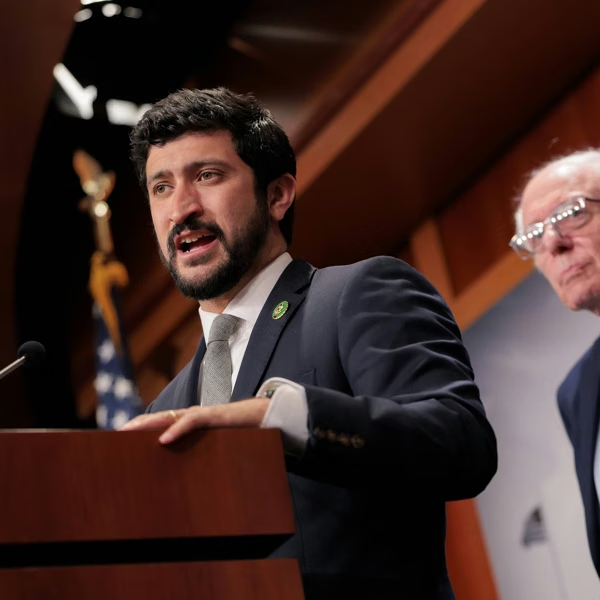
Sanders, Casar Proposal Would Forbid ‘AI Oligarchs From Building Machines Humans Cannot Control’
This job will also employ a “pre-crime” approach that will involve “attempting to predict incidents before a crime occurs,” according to the Prospect. The concept of “pre-crime” was explored in Minority Report, a dystopian science fiction novel by Philip K. Dick.
A report last week in The San Francisco Standard revealed there is already at least one example of Anthropic taking this kind of predictive approach to policing.
Specifically, Anthropic called police last year and informed them that one of its users told the company’s Claude AI chatbot that he had purchased a rifle and had CEO Dario Amodei “in his sights.”
The AI lab told police that this person “was going to kill everyone at Anthropic,” but it didn’t provide law enforcement officials with transcripts of the chats, which would have let them make their own determination about the seriousness of the threat.
The person in question was not arrested or charged with a crime, and they told the Standard that they were “just fucking around” when they talked about buying a gun.
Eric Goldman, a law professor at Santa Clara University, told the Standard that he had some sympathy for Anthropic because if they don’t report potential crimes to police then “they face significant liability if, in fact, a crime does occur.”
“As they become more hated,” Goldman said of the AI companies, “there’s more pressure on them to over-disclose knowing that some of the people they identify for law enforcement shouldn’t be targeted at all.”
Anthropic isn’t merely using technology to monitor potential crimes, but also to keep tabs on US citizens lawfully exercising their First Amendment rights.
The Prospect tracked down a podcast interview with Keon Ellison, global security operations center manager at Anthropic, where he revealed how employees at the company use technology provided by risk detection firm Samdesk to monitor activists.
“Last year we had an executive travel into a major city when we received some intelligence through Samdesk about a planned protest,” Ellison said. “Samdesk gave us about 60 minutes of advanced notice that the protest organizers had moved the timeline... That extra hour was critical. Without it our executives would have departed their meetings, they would have ran right into the heart of the disruption.”
This story about taking great lengths to evade protesters drew a sarcastic reaction from tech journalist and author Brian Merchant.
“You know what you’re doing is good,” Merchant wrote in a social media post, “when you have to develop an in-house, real-time surveillance system to help your executives locate the ideal service exit to avoid contact with the public.” ENDIT
Congress is now investigating a July incident involving OpenAI in which the AI model’s “swarm” of 700 autonomous agents coordinated a hack into Hugging Face’s production infrastructure. However, according to Mother Jones today, this is mostly performative, meant to placate bipartisan anger at reckless capitalists unleashing destructive technology. Most likely, Sam Altman and his cabal of sociopaths will walk away with a slap on the wrist.
Sirota joined me to discuss how fascism will continue to flourish unless Democrats finally embrace an ideology of transformation, instead of restoration, and aggressively combat the broligarchy and super PAC money that is corrupting our world.
...
-=-=-=
OMFG
10 26
NO LNX GFX
Federica Marsi
Published On 16 Oct 2026
16 Oct 2026
Just visiting a page or refreshing an app can be enough to fall victim to a malware attack in which your personal data is stolen from a laptop or phone, researchers have found. You are not even required to “click” on anything.
An Israeli spyware firm has been found to be behind the first-known instance of “zero-click” targeted advertising in which fraudsters or spies can steal private data and send it to external servers, with Al Jazeera journalists among the victims.
Recommended Stories
list 1 of 3A world on trial: How lawyers documenting Israeli abuse pay a price
list 2 of 3EU lawmaker investigating surveillance hacked by Israeli spyware, report says
list 3 of 3UK, US, Netherlands warn of Iran-linked spyware
end of list
In June 2025, 45 devices used by Al Jazeera staff – including several who reported on sensitive subjects – were targeted with spyware which installed itself without the need to open or download any files.
An investigation by the Canada-based academic research unit Citizen Lab, prompted by Al Jazeera’s initial internal probe into the issue, discovered that the Israeli company Candiru was behind the attacks.
Analysts say the findings are “incredibly concerning”, as they confirm the existence of a new global security threat. “We knew we were headed in this direction and now it is out in the public,” Remesh Srinivasan, professor of information studies at the University of California in Los Angeles, US, told Al Jazeera.
“This is the next level, because people are being microtargeted,” he said. “This is the point we’ve come to when it comes to surveillance.”
How ‘zero-click’ malware works
Al Jazeera’s in-house technology team first discovered unusual patterns on devices used by some journalists in 2024. Analysis of network logs provided to the Citizen Lab by Al Jazeera in 2025 provided a clear temporal signature of how the attack was executed.
Malicious advertisements were bought by Discover-Tech, an Israeli company presenting itself as a legitimate advertising firm, but which actually operates as a facilitator for mercenary spyware partners.
Its advertisement network identified Al Jazeera staff, then quietly redirected them to an infected server belonging to Candiru. The spyware firm was blacklisted by the US government in 2021, when Citizen Lab found it was responsible for the illegal hacking and surveillance of at least 100 activists, journalists and political activists across 10 countries.
Al Jazeera Media Network has condemned the targeting of its staff members’ devices and called for those responsible to be held accountable.
Cybersecurity analyst and author Eddy Willems said the advertisements used automatically infect devices the moment they pop up on the screen, but there is an important technical nuance. “Executing code inside the browser does not automatically give an attacker full control over the computer,” Willems told Al Jazeera.
“To escape the browser’s isolated environment – the ‘sandbox’ – the attacker may need a second vulnerability,” Willems said, adding that an advanced spyware operation can combine several vulnerabilities.
“The attacker attempts to exploit vulnerabilities to bypass security boundaries. This is precisely what makes this type of attack so dangerous,” the analyst said.
Once the device is infected, the malicious software is designed to collect a wide range of sensitive data, including files, documents, and browser data such as cookies, bookmarks, and saved credentials.
It can also capture keystrokes, take screenshots, record microphone and webcam input, and extract emails and messages from popular communication platforms. To avoid triggering security mechanisms, the spyware often uses encrypted communication channels and breaks up stolen data into smaller chunks sent over time.
Advertising: A new global security threat?
Analysts say Citizen Lab’s findings point to the escalation of an existing threat, which expands the scale and reach of traditional cyberattacks and makes them much harder to detect.
While “zero-click” attacks are not completely new, the findings outline a new technique through which online advertisements are used as a route to infection.
Stephen O’Shaughnessy, a lecturer in cybersecurity at the TU Dublin Blanchardstown campus in Ireland, explained that when a user opens a website or app, an automated auction sells the advertisement space in a fraction of a second. That auction shares data about the victim, including the device ID, IP address, rough location and the app or site they are on.
“Discover-Tech posed as an ordinary advertiser, used that data to find their target and win the auction for that person’s screen,” O’Shaughnessy told Al Jazeera. “Anyone with a phone or browser that shows ads can be reached, without the attacker needing their phone number or email.”
“Because no message or link is involved, there is almost nothing for the victim to notice,” he added.
Discover-Tech appeared on lists of “certified” and “approved” vendors maintained by Google and advertising industry association IAB Europe, and has served advertisements via major networks such as Google, Yandex and Beeswax.
In its report, Citizen Lab said this illustrates the structural flaws in the online advertising system, which essentially failed to detect or prevent the abuse.
Discover-Tech advertisements have popped up on devices used by personnel in national-security-sensitive networks around the world, including those of various ministries of defence, armed forces, national cyber agencies, intergovernmental organisations and media outlets, Citizen Lab found.
The research unit said these advertisements have also appeared on networks used by the United Nations, NATO, the European Parliament, the European Commission and the Council of the European Union’s General Secretariat.
‘Almost nobody was watching’
Government networks have also been targeted in at least 24 countries, including the United States, Italy, Denmark, Norway, Australia, Russia, Mexico and Israel itself. Networks of media organisations have also been targeted, mainly in Australia, Denmark and Sweden, according to Citizen Lab.
In a separate report, New York-based advertising security firm Confiant said its own investigations had found that some of Discover-Tech’s advertisements also appeared in critical networks used by the Pentagon, the United Nations International Atomic Energy Agency and the International Criminal Court.
O’Shaughnessy said infection has not been confirmed there – only profiling of users. “But that alone is concerning, he said. “The ad system was built to send code from strangers to billions of screens with pinpoint targeting. Almost nobody was watching it from a security angle.”
The analyst said the risk remains low for most people as these attacks are expensive and aimed at specific targets. “For individuals at high risk, like journalists and officials, the best first defence is to install an ad blocker, switch off their advertising ID through their phone’s privacy settings, keep everything updated, and turn on Lockdown Mode or Android’s Advanced Protection,” he said.
Precautions also need to be taken within the industry and at government level. “To combat this, the ad industry needs to properly vet who’s buying ads,” O’Shaughnessy said, while “regulators need to stop personal data being sprayed out to thousands of unknown bidders in every auction.”
//
Israeli ad-tech firm helped place spyware on Al Jazeera devices
Citizen Lab investigation says dozens of Al Jazeera devices were infected by malware planted through advertisements.
Published On 15 Oct 2026
15 Oct 2026
A general view shows the Al-Jazeera headquarter building in Doha, Qatar, May 11, 2022. REUTERS/Imad Creidi
From: NewsFeed
Israeli ‘ad’ firm helped infect spyware into Al Jazeera devices
An Israeli spyware disguised as a digital advertisement firm has targeted journalists’ devices at Al Jazeera.
Published On 15 Oct 2026
15 Oct 2026
00:56
Moroccan journalists recount years of surveillance amid new Amnesty claim
Amnesty cites a whistleblower’s account of how Morocco allegedly uses surveillance to silence journalists.
Published On 6 Oct 2026
6 Oct 2026
Moroccan journalist Omar Radi
-=-=
-=-=
AN 8 26
It was late March when Joe Teirab, the second-in-command at Minnesota’s U.S. attorney’s office, received an urgent email from Washington.
The federal government was scrambling to find criminal cases to back up President Donald Trump’s claims that illegal voting by noncitizens was tipping the scales in American elections. Agents from Homeland Security Investigations, a massive federal law enforcement agency, had been dispatched to work leads across the country, including hundreds in Minnesota.
Teirab was already under pressure. In an earlier missive, Nick Davis, a high-ranking Justice Department appointee helping to lead the election fraud crusade, had reminded him the cases were so high priority that Teirab and his staff couldn’t decline to move forward on them without express approval from agency higher-ups. On March 24, Davis demanded a status report — within hours.
Teirab, a former Marine and a Harvard Law graduate who’d run unsuccessfully for Congress as a Republican, responded with a blunt reality check.
“Bottom line up front,” he replied in an email reviewed by ProPublica. After subpoenaing records on about 130 people, only one had been referred for prosecution, his staff had told him. Agents had deluged local election offices with calls and demands for voting histories, demonstrating “a complete lack of understanding” of illegal voting investigations.
“The HSI task force has been disjointed and disorganized,” Teirab wrote. The entire process, he said, had been “dysfunctional.”
Since Trump regained the White House, his administration has launched a series of unprecedented initiatives to find and prosecute voting by noncitizens, which he’s long claimed, without evidence, is rampant.
He’s stepped up this push in recent weeks, saying in a nationally televised speech that the American election system was “so vulnerable that no one can possibly defend it.” To support that assertion, the Department of Homeland Security, HSI’s parent agency, released documents asserting it had found more than 250,000 noncitizens on voter rolls in just four states, all led by Democrats. The documents included no explanation of how that number was calculated.
It’s well known the administration has tasked HSI — a force established to combat drug cartels, terrorism and other cross-border criminal enterprises — with leading the campaign to find election fraud cases in the United States.
But an investigation by ProPublica reveals for the first time how the Trump administration came to harness HSI’s personnel, technology and sweeping legal authority in service of its election agenda — and how meager the results have been, despite the prodigious resources sunk into the effort.
According to interviews and internal emails reviewed by ProPublica, career staffers at the Justice Department warned that transferring voter rolls to HSI to enable it to search for noncitizen voters could violate federal privacy laws. Similarly, longtime HSI insiders cautioned that using the agency’s databases and tools to search these lists would yield mismatches and wildly inflated results.
The administration plowed forward anyway.
HSI’s involvement in the hunt for election fraud traces at least to summer 2025, when agency supervisors embraced a proposal from a midlevel agent who’d publicly echoed Trump’s claims about elections. He argued the agency’s powerful databases and tools could find noncitizens even on the voter lists that states make publicly available, from which the most confidential information has been redacted. Under Trump, the Justice Department had collected many public voter rolls as part of a controversial effort to compel states to turn over the unredacted versions.
Those searches went forward, ProPublica’s reporting shows, helping to generate tens of thousands of leads regarding illegal voting across the country. But when HSI agents were sent to investigate them, the results were similar to what Teirab reported from Minnesota.
Between January 2025 and May 2026, a ProPublica analysis of Justice Department data shows, fewer than 150 alleged noncitizen voters were referred for prosecution. Even fewer — 41 — were charged with voting illegally or other election-related crimes. (More than 150 million people voted in the most recent presidential election.)
In response to questions from ProPublica, administration officials insisted the effort spearheaded by HSI was producing meaningful results.
“President Trump is committed to ensuring that Americans have full confidence in the administration of elections, and that includes totally accurate and up-to-date voter rolls free of errors and unlawfully registered non-citizen voters,” Abigail Jackson, a White House spokesperson, said in response to ProPublica’s request for comment. “Noncitizens voting is a crime. Anyone breaking the law will be held accountable.”
A DHS spokesperson didn’t answer questions about why so few prosecutions have resulted from HSI’s work. The agency wouldn’t specify what tools or techniques HSI had used, but confirmed it had cross-referenced “publicly available data” from state voter rolls with information on “known illegal aliens” in its systems. “It’s not rocket science,” the spokesperson wrote of this initiative in a response to ProPublica’s questions. “It’s an easy step to secure our elections.”
Teirab and the U.S. attorney’s office in Minnesota declined to comment.
There’s an array of reasons why Trump’s campaign to document claims of widespread voter fraud hasn’t succeeded. Most obviously, it’s exceedingly rare, as countless studies and state audits have found. Noncitizens often get on voter rolls by accident or when government officials make errors. Last month, New Jersey disclosed that a mistake involving its Motor Vehicle Commission caused 6,600 noncitizens to be registered (fewer than 400 voted).
The administration’s critics say its hunt for noncitizen voters aligns with Trump’s attempts to seek more federal control over elections while stoking doubt and fear about the voting process. Since taking back the Oval Office, Trump has tried to impose new restrictions on voter registration, mail-in ballots and voting machines, though judges have shut down most of these efforts.
Former officials at DHS and the Justice Department called the move to involve HSI a further escalation and questioned the propriety of aiming the agency’s muscle and technology at individual cases of illegal voting.
“It’s one thing if you’re going after Pablo Escobar,” said Steve Bunnell, a former DHS general counsel and senior intelligence adviser who handled voting fraud prosecutions during more than a decade at the Justice Department. “It’s another thing if you’re going after some cleaning lady who’s been working in the United States for 20 years and taking care of her 80-year-old mother and taking her little kids to church.”
“The Swiss Army Knife of Federal Law Enforcement”
Trump’s enlistment of HSI in his election fight is no accident. Cobbled together in the aftermath of 9/11, the agency has 7,100 armed, highly trained agents and another 800 criminal analysts, as well as access to troves of confidential data about hundreds of millions of Americans.
Though part of Immigration and Customs Enforcement, the agency has historically stayed out of immigration cases. During the first Trump administration, leaders of 19 HSI regional offices — virtually its entire top field hierarchy — signed a letter calling for HSI to become a standalone agency, arguing that ICE’s deportation work dissuaded people from cooperating with its investigations. But when Trump returned to the White House, it swiftly became clear that the agency would play a central role in investigations related to the president’s twin obsessions, illegal immigration and noncitizen voting.
Trump picked his field general for repurposing HSI even before taking the oath of office. In December 2024, he named Anthony Salisbury, a 50-year-old career agent who’d run the agency’s Miami office, as a deputy homeland security adviser, reporting to White House policy chief Stephen Miller. He was also given a dual appointment as head of HSI.
Salisbury was colorful: A mixed martial arts enthusiast, he once appeared at the agency’s headquarters with his face bruised and eye blackened from a recent bout. He’d sometimes entertain colleagues by pulling out a bridge that covers his missing front teeth.
To agency veterans, however, he was forever linked to a 2011 operation he’d overseen in Mexico in which one agent was killed and another wounded in a highway ambush by a drug cartel. An agency review submitted to Trump in April 2020 concluded that errors by HSI supervisors, including Salisbury, contributed to the outcome; it urged the administration to consider disciplinary action. None was taken against Salisbury, however.
Salisbury did not respond to requests for comment from ProPublica. A White House official called him “a critical member of the Trump administration” who was “cleared” in every review of the Mexico incident and was subsequently “promoted six times under multiple administrations.”
“It’s one thing if you’re going after Pablo Escobar. It’s another thing if you’re going after some cleaning lady who’s been working in the United States for 20 years and taking care of her 80-year-old mother and taking her little kids to church.”
Steve Bunnell, a former DHS general counsel and senior intelligence adviser
Once elevated to his new posts, Salisbury took charge of carrying out the second Trump administration’s agenda for HSI, personally issuing staffing directives, reassignments and promotions, current and former agency officials told ProPublica. (A number of them spoke on condition of anonymity out of fear of retribution.)
Starting in early 2025, Salisbury oversaw the unprecedented reassignment of more than 6,000 agents to immigration enforcement, diverting most of the agency from its normal duties. He then also pointed HSI at noncitizen voting, presiding over multiple meetings with officials at DOJ and Homeland Security focused on election fraud, according to emails reviewed by ProPublica and agency supervisors who worked with him.
“Stephen Miller has an HSI deputy for a reason,” said Eric Balliet, a high-level HSI manager who retired in 2024 after 23 years with the agency. (Like many HSI veterans, Balliet has remained in close contact with former colleagues.) “Salisbury is going to salute and execute, and he is going to make sure that from the HSI side, they fall in line, and there’s going to be no resistance or pushback. HSI has been turned into the Swiss Army knife of federal law enforcement.”
In early July 2025, Frank Quiñones, an HSI special agent who’d worked under Salisbury in Florida, approached leaders at the HSI Innovation Lab with an idea for using the agency’s technology to find noncitizen voters on state voter rolls, sources at the agency told ProPublica. Quiñones had been transferred to Washington to oversee a unit that had previously handled cases involving the theft of government benefits but that had been enlisted into voting investigations.
The lab, housed in an unmarked office in a D.C. suburb, had access to the government’s most sensitive databases, from suspicious activity reports to arrest records. Staffed by a combination of HSI experts and outside consultants, it developed software tools to comb the data for information that could help agents pursue criminal suspects.
Quiñones was a true believer in Trump’s claims about election fraud: In multiple Facebook posts and reposts, ProPublica found, he promoted claims that the 2020 presidential vote had been stolen. At a meeting with the Innovation Lab’s overseers, according to sources who worked in the lab, he pitched using the lab’s technology to identify illegal voters — even though the agency lacked voter rolls that included identifiers such as partial Social Security numbers. (Quiñones did not respond to ProPublica requests for comment.)
For proof of concept, Quiñones proposed using a February 2021 public voter list he’d obtained for New Jersey and running it through HSI’s databases. The lab staff viewed his idea as “a little insane,” one recalled — both unreliable and improper. Since the public rolls don’t include voters’ unique identifiers, people at the lab also knew linking them to HSI’s data would produce mismatches — what the staffer called an “ungodly” number of false positives. The lab team also worried about violating longstanding safeguards limiting use of private citizen data. They “didn’t want to touch this,” the staffer added. Quiñones defended his idea, repeatedly declaring: “The president wants this!”
Tom Hodge, an HSI data analyst at the meeting, proposed running the voter information through the Athena Toolbox, an analytical platform developed by the Sandia National Laboratories that had access to all of HSI’s databases. (Hodge did not respond to ProPublica requests for comment. Sandia referred ProPublica’s questions to the facilities’ parent agencies, including the Department of Energy, which did not respond to our requests.)
Hodge and the Sandia team spent the next six weeks on the project, reporting they’d found large numbers of noncitizens on Quiñones’ 2021 New Jersey list. According to one former HSI official, they said they’d found “5,000 high-confidence illegal voters” in just a single New Jersey county. (Officials at the New Jersey secretary of state’s office, which oversees the state’s voter rolls, declined to comment on the claim. Beth Thompson, head of a group for local New Jersey election officials, called the number impossibly high, even accounting for the mistake disclosed by the state.)
The apparent breakthrough couldn’t have come at a better time.
The Trump administration’s other efforts to identify noncitizens on state voter rolls were running into a variety of roadblocks.
The administration had hoped to persuade states to check their voters’ citizenship status using a system called the Systematic Alien Verification for Entitlements, or SAVE, but many didn’t. Most states also refused the Justice Department’s demands to turn over their unredacted voter rolls, including partial Social Security numbers, which thwarted the agency’s plan to run them through SAVE. Courts have stymied the DOJ’s attempts to sue for the records, citing the Constitution, which gives primary control over elections to the states.
In an Aug. 21 email to a half dozen administration officials, Quiñones touted the solution he’d brought to the HSI Innovation Lab: using HSI’s platform to search voter rolls. The results, Quiñones noted, could fuel both criminal and immigration investigations.
By the end of the month, those in top election-related roles at DHS and the Justice Department were actively promoting what they dubbed the “HSI Tool” as a preferred alternative to SAVE, according to people familiar with the matter. Among them was Heather Honey, the prominent election denier appointed as a senior counselor at DHS, who is helping lead the government’s efforts to identify noncitizens on voter rolls. (Honey did not respond to ProPublica’s requests for comment. In an email responding to questions to her, DHS said Honey’s “expertise in election administration” was “invaluable to the Department’s efforts to protect critical infrastructure.”)
The White House, too, got behind the idea. In a November email, J. Brian Sikma, special assistant to the president, excitedly noted that the New Jersey trial cross-checking voter rolls with DHS data appeared to have identified a “very significant number” of “potential non-citizens.” (Sikma didn’t respond to a request for comment.)
The DOJ, Sikma reported, had already obtained public voter rolls for many other states. He included a list of them, adding: “It is of paramount importance that these also be reviewed expeditiously.”
Running “Roughshod” Over Privacy
As the push to use HSI’s tech to search voter information gained momentum, a new problem emerged.
Career attorneys at the Justice Department, including specialists on privacy law, raised concerns that transferring voter rolls wholesale from the agency to DHS might not be legal, according to internal emails reviewed by ProPublica and interviews with several former officials.
The voter rolls the DOJ had collected contained sensitive information on millions of Americans. Even the public versions, which political parties and candidates routinely obtain to target ads and messages, included voters’ addresses, birth dates and party affiliations. For the 16 states that have agreed to share their unredacted voter lists, the DOJ had citizens’ partial Social Security numbers or driver’s license information, too.
Federal laws, particularly the Privacy Act, dictate what data government agencies can collect, what it can be used for, how it can be shared, and how it must be protected. Agencies have to disclose their plans in advance, gathering public comment. A person’s information can’t be released or shared without their consent, subject to limited exceptions.
From the outset, the Trump administration’s effort to combine data across federal agencies has repeatedly drawn criticism from courts and whistleblowers for failing to adhere to restrictions meant to keep data private and secure. In June, for example, a judge prohibited the government from using SAVE for mass searches, ruling the administration had violated federal privacy laws by giving DHS access to Social Security data to enhance the tool. The administration has appealed that ruling.
In July 2025, as word got around that the DOJ might hand over voter data to DHS, a half dozen career attorneys who had been reassigned into the voting section voiced their unease to supervisors, according to two former DOJ lawyers. Their concerns were disregarded, prompting most to resign.
Instead, the DOJ’s office of legal counsel pushed forward with plans to share the public voter rolls, claiming a Privacy Act exception allowed HSI to receive such data without public notice as long as it was for law enforcement purposes. DHS just needed to submit a letter officially requesting the data for those purposes, an attorney in the legal counsel’s office explained, according to internal emails.
But this exception was meant to be used to get information on individual criminal suspects, not to gain mass access to data on people suspected of no wrongdoing, according to Nikhel Sus, chief counsel for Citizens for Responsibility and Ethics in Washington, which has sued the Trump administration on behalf of voter and pro-privacy groups, filing the case that eventually limited SAVE’s use.
“[Anthony] Salisbury is going to salute and execute, and he is going to make sure that from the HSI side, they fall in line, and there’s going to be no resistance or pushback. HSI has been turned into the Swiss Army knife of federal law enforcement.”
Eric Balliet, a former high-level HSI manager
Peter Winn, a 29-year Justice Department veteran who had served as the agency’s acting privacy chief for nearly a decade, drafted a letter to set out the data-sharing agreement between the DOJ and DHS, according to internal documents reviewed by ProPublica.
In a Feb. 12 email to two top DOJ officials, he said he’d rewritten an initial draft memo to “make the information sharing arrangement far easier to defend, if and when it is challenged in court.”
Rather than simply handing over the voter rolls, Winn proposed having DHS request “pertinent and relevant” information about specific people from the DOJ, then having technical staff at Justice and Homeland Security “coordinate” to fulfill the requests.
“Having slept on it,” Winn wrote, “I ended up deciding that our initial idea of sending a huge amount of raw unprocessed voter registration data to DHS, involved taking far too much unnecessary legal risk, given that 99% of the data would implicate the privacy and civil liberties of United States Citizens, and would risk adding to the false narrative in the establishment press of DOJ and DHS being unconcerned with the privacy and civil liberties of Americans.”
Winn attached his proposed letter, to be signed by Todd Lyons, then the acting director of ICE.
Winn’s suggested restrictions were quickly abandoned, however. A second draft of the letter, dated March 4, contained altered language providing that the voter information would be “transferred” to HSI, with one exception: Voters’ party affiliation would be redacted, if possible, it said.
The final letter, signed by Lyons and sent to the DOJ just two days later, abandoned even that limitation. Just three paragraphs long, it permitted HSI to use the voter rolls to pursue any “appropriate investigation of potential violations of federal election law.”
In response to questions from ProPublica, Winn said “I can’t really comment on internal drafts of correspondence.”
A Justice Department spokesperson defended the government’s actions, saying “no one should oppose intergovernmental data sharing and coordination that enable swift investigations and prosecution of illegal alien voting.” DHS echoed the DOJ’s view, calling such information sharing “essential to protecting America’s election process by keeping noncitizens off voter rolls” and “an easy step to secure our elections.”
Sus said that by pooling voters’ sensitive personal identifiers, along with their party and voting histories, the administration has “run roughshod” over privacy laws and is creating a “1984-style database” that could be used to surveil political participation.
CREW filed a lawsuit in April on behalf of the nonprofit advocacy group Common Cause that argues it’s illegal for the administration to use the law enforcement exception to justify mass sharing of voter information.
Balliet, the former HSI agent, expressed similar concerns, saying that handing over voter rolls to run through DHS’ systems amounted to “a mass data-collection effort by the government against its own citizens in a non-criminal setting.” On a practical level, he added, the data sharing increased the risk of breaches that can open law-abiding citizens up to identity theft.
“As a citizen, I want the government to take seriously the protection of my private data,” he said. “If it falls into the wrong hands, it’s not the government that suffers. It’s me.”
Collapsing Claims
By January 2026, scores of HSI agents were fanning out across the country to investigate thousands of leads about illegal voting.
About 25,000 of them involved people SAVE had identified as potential noncitizens on state voter rolls. Another 15,000 were given to HSI’s cross-border financial crimes unit, which was told to prioritize them over money laundering and fraud cases, a former high-level HSI official said. Quiñones’ unit led a separate effort to find additional cases by reviewing whether people who’d recently become citizens had voted before they were naturalized, then lied about it in naturalization interviews.
Still more leads came from running public voter rolls through the HSI lab’s databases, though it’s not clear how many. Agency sources told ProPublica that the rolls of New Jersey and Pennsylvania were searched using the Athena Toolbox. When DHS announced it had found more than 250,000 noncitizens on the registered voter lists of four Democrat-led states, it said that included “as many as” 35,152 in New Jersey and 14,576 in Pennsylvania. Both states have asked DHS to provide the source of the numbers.
Once federal investigators started digging into these cases, however, they often fell apart.
Through May, prosecutors had charged fewer than four dozen people with crimes related to noncitizen voting, ProPublica’s analysis of DOJ data and federal court filings shows, getting convictions or guilty pleas in 14 cases.
The largest cluster of cases was brought in the Southern District of Florida, headed by Jason Reding Quiñones (no relation to the HSI agent), a staunch Trump ally who has led investigations of the president’s political opponents. Voters have been sentenced in eight of the office’s cases; seven others are pending.
Prosecutors have initiated a total of seven noncitizen voting cases as of May in the four states where DHS claimed to have found more than a quarter million noncitizens on the rolls. Collectively, these states have more than 40 million registered voters.
Overall, the paltry numbers reflect the realities HSI investigators confronted on the ground as they tried to convert leads into cases, a ProPublica review of records obtained by voting-advocacy groups Campaign Legal Center and Democracy Forward shows.
Emails between agents and local election officials in Texas and Ohio indicate much of the federal information on purported noncitizens was inaccurate, the consequence of flawed data matching. When agents demanded voting histories and registration forms, they often discovered people weren’t registered in the counties where HSI thought they were. When voters register, they must attest that they are U.S. citizens; agents found some, however, who’d been put on voter rolls in error after disclosing they weren’t citizens. Many had never voted.
“Our initial idea of sending a huge amount of raw unprocessed voter registration data to DHS, involved taking far too much unnecessary legal risk, given that 99% of the data would implicate the privacy and civil liberties of United States Citizens.”
Peter Winn, a Justice Department veteran, in an email urging limits on data sharing that were not adopted
Most HSI agents, steeped in pursuing complex international crimes, had no experience in pursuing voting fraud. In his email to Nick Davis at the Justice Department, Teirab, the top deputy in Minnesota’s U.S. attorney’s office, described the chaos that ensued when the state and at least six counties got subpoenas for voters’ records. The demands “presented a host of issues,” Teirab wrote to Davis. (Davis did not respond to a request for comment.)
“An unknown number of agents are constantly arriving in Minnesota without any knowledge of the investigation, the issues already discussed and decided, and the processes they need to follow,” Teirab complained. “Instead of getting up to speed and learning, they have demanded many calls and subpoenas, most of which demonstrate a complete lack of understanding of the investigation.”
In Stearns County in central Minnesota, HSI agents subpoenaed voting histories on 13 people, county officials told ProPublica. Only six turned out to live there.
Minnesota Secretary of State Steve Simon, a Democrat, said the effort revealed federal investigators’ ignorance about “the nuance of elections administration.” The rate of purposeful election crime is “microscopic,” he said. “The very human errors that can happen are not some sort of plot or scheme to dirty up the voting rolls, but are just everyday human beings making mistakes, not intending at all to violate any law.”
As of May, only one illegal voting case has been referred for prosecution in Minnesota. The state has more than 3.8 million registered voters.
Even Republican-led states like Ohio, which has shared its unredacted voter rolls with the DOJ and run them through the SAVE system, have struggled to meet Trump administration demands to deliver cases.
In October, the Ohio secretary of state referred more than 1,000 voters identified as possible noncitizens to the federal government, claiming 167 had voted at least once since 2018. At least nine HSI agents in Cincinnati and Cleveland began to investigate, emails obtained by Campaign Legal Center and shared with ProPublica show.
The agents bombarded local election officials with requests for voting histories and other records, some dating back decades. “Sorry again for piecemealing these to you,” one agent wrote to an official in Butler County, outside Cincinnati, after making five separate requests over two weeks. Mohamed Al-Hamdani, a Democratic member of Montgomery County’s Board of Elections, which received similar inquiries, said they amounted to “witch hunts” that ate up staff time.
In February, Davis sent an email pressing Ohio’s two U.S. attorneys’ offices for an “election integrity” update, asking: “How close are we to complaints/indictments, how many subjects, what issues you’ve run into, how many referrals have been closed and why, how helpful HSI has been.”
As of May, just two voting cases had been referred for prosecution in Ohio and no one had been charged, federal data shows. The state has nearly 8 million voters.
In the past, it was uncommon for federal prosecutors to pursue charges against noncitizen voters who didn’t understand that it was against the law for them to vote. Without evidence of a coordinated effort or plot, it didn’t make sense to put resources into such prosecutions, a former DOJ official who oversaw election cases said.
Now, however, U.S. attorneys’ offices are taking a different approach, pursuing prosecutions that could result in prison terms or deportation.
In May 2025, federal prosecutors in Florida filed illegal voting charges against a mother and daughter, both Ukrainian citizens, who’d registered after becoming permanent U.S. residents, then voted in the 2024 presidential election. They’ve pleaded not guilty, with the mother saying in an interview with investigators that she thought having a green card meant she could vote. They and their attorneys didn’t respond to requests for comment from ProPublica. The prosecutor handling the case for the Southern District of Florida also didn’t respond to questions. The mother and daughter are scheduled to go to trial in September.
“Far-Reaching Consequences”
Experts on both elections and national security warn there may be profound longer-term costs to unleashing the federal government’s investigative and prosecutorial might to try to prove the president’s claims about noncitizen voting.
Current and former HSI agents say critical investigations — including task forces aimed at drug rings, human trafficking and money laundering — have languished as the agency has pivoted to take on noncitizen voting and immigration enforcement.
In February 2026, according to court files and emails reviewed by ProPublica, an HSI agent in Ohio who’d been leading a multistate child sex abuse investigation was abruptly assigned to pursue dozens of leads on suspected noncitizen voters, work that took months. It wasn’t until May that he made an arrest in the other case. Prosecutors have filed child exploitation and pornography charges against the man, 38, in connection with acts involving at least five 14-year-old girls.
Cases like this “don’t just stop,” said Balliet, the 23-year HSI veteran. “When you pull people off them for an extended period of time, those criminal networks will adapt, and people get killed and kidnapped.”
Federal data hints at a broader slowdown in what had been HSI’s most urgent work. According to an annual government report, the number of wiretaps obtained by DHS — often to investigate drug trafficking — plummeted to 23 in 2025, from 133 the previous year. In the report, DHS attributed the decline to several factors, including “changes in administration enforcement and prosecutorial priorities.”
“It’s never been a better time to be involved in transnational organized crime,” said John Tobon, a high-ranking HSI official who retired in early 2025.
“The very human errors that can happen are not some sort of plot or scheme to dirty up the voting rolls, but are just everyday human beings making mistakes, not intending at all to violate any law.”
Minnesota Secretary of State Steve Simon
In its statement, DHS denied HSI has neglected its core mission, saying the agency has increased its efforts to combat criminal cartels, gangs and drug traffickers in response to multiple Trump executive orders.
Though HSI’s voting-related investigations have yielded only a small number of prosecutions, voter advocacy groups worry the Trump administration will use them to justify more extreme interventions.
Its latest tactics include threatening to withhold funds from states it says are refusing to check their voter rolls for noncitizens and saying it will prosecute state election officials who “knowingly” fail to remove noncitizens.
Trump has also continued to press Congress to enact the SAVE America Act, which would require people to provide proof of citizenship when registering to vote, a measure advocates have criticized as a barrier to voting. Democrats are preparing for the prospect of federal troops being sent to the polls to intimidate voters.
“Those concerns are playing out in real time, with far-reaching consequences,” said Dax Goldstein, a director at the States United Democracy Center, a nonprofit group that works to build confidence in elections. “When federal agencies are misused and weaponized, people lose trust in government itself.”
-=-=
-=-=
Why The Internet Is Becoming A Surveillance Machine | Whitney Webb
7 26 PALANTIR POINDEXTER SURVEILL TOTAL INFO AWARENESS --> TERROR
ARPA-h
IN Q TEL
CIA ONLY CLIENT OF PALANTIR 1ST 6 YRS RICHARD PEARL --> POIN PVTIZE TO QUELLE OUTRAGE; OROG PUBLIC-PVT WITHIN DARPA
EHUD BARACK
PAYPAL ORIG CODE ALAN WADE TIA
REAGAN DISSIDENT DB?
Jul 15, 2026 #WhitneyWebb #Palantir #AISurveillance
Every search, click, location, and online habit leaves behind a digital trail. Whitney Webb explains how AI, Palantir, and modern surveillance systems are reshaping privacy—and why she believes the internet is becoming a powerful tool for large-scale data collection. In this documentary-style breakdown, Whitney Webb traces the evolution of surveillance from DARPA's Total Information Awareness program to predictive policing, AI-driven profiling, Palantir, and the expanding role of Silicon Valley in government technology. Rather than focusing on isolated events, this conversation explores how data, algorithms, and digital infrastructure increasingly influence modern society.
Topics Covered
• Whitney Webb interview • Palantir explained • Peter Thiel • AI surveillance • Total Information Awareness (TIA) • DARPA history • Predictive policing • Facial recognition technology • Digital identity • AI risk scoring • Government surveillance • Silicon Valley and national security • Privacy and civil liberties
PREDPOL UCLA? LAPD ERRORS
0:35
35 seconds
dictates of the Trump White House. What is being targeted is not the deep state, but the laws, resolutions, regulations,
0:42
42 seconds
protocols, and rules, and the government, civil servants who enforce them, which hinder absolute dictatorial control.
0:55
55 seconds
Yeah, it's definitely I would argue one of the best starting points and also thanks so much for having me on Chris.
1:00
1 minute
Um so John Po Dexter uh as of course you know was one of um the national security adviserss to Reagan and was the highest
1:08
1 minute, 8 seconds
ranking member of his administration that was indicted as part of Iran Contra. But he is also uh remembered as
1:15
1 minute, 15 seconds
the quote unquote godfather of modern surveillance. Um and this is in part because of his efforts in the immediate
1:23
1 minute, 23 seconds
post 911 era um pioneering the off uh in office within DARPA that housed a program called total information
1:30
1 minute, 30 seconds
awareness. Um so right after uh the Reagan administration um Po Dexter was sort of um in various roles throughout
1:39
1 minute, 39 seconds
these tech companies that were sort of a a prototype to what Palunteer and total information awareness would later do uh
1:47
1 minute, 47 seconds
like Saffron Technology, Cintech Technologies that were defense contractors and trying to basically create uh use uh sort of um you know
1:56
1 minute, 56 seconds
predictive analytics um to determine uh what terrorists would do next all before 9/11 even happened and of course there
2:04
2 minutes, 4 seconds
was a renewed demand for that type of technology and these sort of innovative solutions in the immediate post 911 era
2:12
2 minutes, 12 seconds
um and uh when this information you know uh was reported on total information awareness there was a huge outcry um
2:20
2 minutes, 20 seconds
throughout uh you know US mainstream media um a lot of organizations including the ACLU and organizations like that uh rightly noted that it would
2:29
2 minutes, 29 seconds
eliminate uh the constitutional right to privacy uh and create this uh very disturbing era um of of mass
2:37
2 minutes, 37 seconds
surveillance uh by you know it b I think one of the mainstream media reports on it said that it would uh fight terrorism
2:44
2 minutes, 44 seconds
by terrifying US citizens basically and making everyone a suspect um in under this this type of um this paradigm he
2:53
2 minutes, 53 seconds
was seeking to usher in. And so it was eventually you know under pressure. It was I think first announced in February 2003 and by May they attempted to change
3:02
3 minutes, 2 seconds
the name to terrorism information awareness uh trying to move away from uh the idea that it would uh be total it
3:10
3 minutes, 10 seconds
would surveil absolutely everyone uh through a name change but obviously it didn't change how the program actually worked. It would still uh be focused on
3:18
3 minutes, 18 seconds
everyday Americans um you know a total drag net really. Um and in that same month where that name change happened uh
3:25
3 minutes, 25 seconds
Peter Teal incorporated uh Palunteer and as Palunteer uh was developing as a company uh they you uh Peter Teal and
3:34
3 minutes, 34 seconds
Alex Karp the Palunteer co-founders uh reached out to Point Dexter directly through Richard Pearl who's a well-known neoconservative figure and was also one
3:43
3 minutes, 43 seconds
of the architects of the Iraq war at the uh Bush era Pentagon.
3:48
3 minutes, 48 seconds
And uh you know basically they hatched this plan to privata to privatize this program rightly calculating that if they
3:56
3 minutes, 56 seconds
turned it into a entirely private sector enterprise uh the outrage uh would uh
4:03
4 minutes, 3 seconds
you know essentially dissipate which it uh remarkably did because um you know originally it was a public private partnership housed within DARPA and then
4:12
4 minutes, 12 seconds
by making it this private sector uh enterprise um you know a lot of the concerns about it uh disappeared. And
4:20
4 minutes, 20 seconds
bec and this is arguably because by moving into the private sector uh they were able to accomplish a lot more than they than they could have uh by being
4:28
4 minutes, 28 seconds
affiliated directly with the public sector even though they contract uh with the public sector. And so Palunteer uh
4:36
4 minutes, 36 seconds
funding wise was set up with money from Peter Teal um himself and that the algorithm for it had originally been
4:43
4 minutes, 43 seconds
developed at PayPal and um uh the other funding source was the CIA's Inqell. Um
4:50
4 minutes, 50 seconds
and one of the figures that helped create uh that helped made that funding decision uh was the CIA's chief information officer at the time named
4:58
4 minutes, 58 seconds
Alan Wade. and Allan Wade had been one of the top allies of the total information awareness with Po Dexter um
5:06
5 minutes, 6 seconds
you know in the immediate post 911 um era and so um the CIA was the was Palanteer's exclusive company sorry
5:15
5 minutes, 15 seconds
exclusive client for I believe the first six years of its existence as a company um and its its engineers went to Langley uh you know CIA headquarters in Virginia
5:24
5 minutes, 24 seconds
every two weeks for several years as well where the CIA was um developing their algorithm with them, you know, in
5:31
5 minutes, 31 seconds
a very direct partnership. And Alex Karp has even said that the CIA was always the intended client um of Palunteer. So,
5 minutes, 39 seconds
I guess I'll I'll pause there and I'm happy to go in other any other direction.
5:43
5 minutes, 43 seconds
Explain what it does, what what the what the goal, what PO Dexter's goal was and and what they were able to establish. I
5:51
5 minutes, 51 seconds
mean the mechanics of it, the way it was initially sold to the public was this is a way to stop terrorism attacks before they happen um
5:59
5 minutes, 59 seconds
by coalating so much um data um from all different sources and then using an in
6:06
6 minutes, 6 seconds
some sort of analytic or AI to determine um you know if u certain data points are flagging that a terrorist attack will take place here um here or there.
6:17
6 minutes, 17 seconds
There's various different aspects of this program that didn't really get enough coverage at the time. Uh so one is that they attempted to use uh free
6:25
6 minutes, 25 seconds
market forces to determine if a terrorism attack would happen. Before it happened, they created basically what's referred to as a terrorism futures
6:34
6 minutes, 34 seconds
market. It was really like a forerunner to poly market and some of these predictive markets uh where people bet on things online. And it was basically
6:42
6 minutes, 42 seconds
that but about whether a terrorist attack uh will happen in the Middle East or if there will be turmoil in the Middle East if someone like Yaser Arafat
6:50
6 minutes, 50 seconds
would be overthrown. You know, these were the kinds of things they were going to have these unnamed uh investors bet on. Um another one was focused entirely
6:58
6 minutes, 58 seconds
on health um under this program called bioveurveillance um which actually a lot of it Palunteer
7:05
7 minutes, 5 seconds
uh helped launch with HHS during the COVID era. uh things like um analyzing American wastewater to determine if
7:13
7 minutes, 13 seconds
there is going to be an outbreak of a disease before it happens uh with um again with an algorithm or basically you
7:21
7 minutes, 21 seconds
know surveilling Americans uh health data uh and uh to determine if there will be a pandemic before it happens or
7:29
7 minutes, 29 seconds
if there will be a bioteterror attack because remember this was also in the aftermath um of the of the anthrax attacks. Um and so a lot of that
....
TESTED IN LOW INCOME POC HOODS
CARBINE PRED POL
---
AN 5 26
A small disclaimer on a website just exposed a secret project with no reporting, oversight, transparency or accountability under the thumb of President Donald Trump's office.
Audrey Henson, who researches and writes about the intersection of technology and power, found the disclaimer in the footer of a page on the TrumpRx website, which claims to offer access to drugs the government is trying to renegotiate prices for.
"In the footer of the page, beneath all of it, I found something I have never seen on a federal government website in my life. A byline. The government does not do this," explained Henson. "The IRS does not sign its work. The FBI does not. Social Security does not. No federal agency that has ever built a website has felt the need to take credit for it. In plain bold text, sitting directly above the privacy policy, it said: Designed and Engineered in D.C. by National Design Studio. So I clicked through."
What she said she found was "The National Design Studio," an "office" created by one of Trump's executive orders in Aug. 2025.
According to Joe Gebbia, co-founder of Airbnb, the goal was to redesign how Americans experience their government online. He reports directly to Trump's chief of staff, Susie Wiles.
"His position requires no Senate confirmation, which means he files no financial disclosures, which means the office he runs does not appear in any federal procurement database, which means, as far as the official record is concerned, it barely exists," wrote Henson. That, she said, is the point.
Staff is hired under Section 3161, which allows for temporary advisory bodies meant to be part-time advisors and volunteers. Their salary isn't public, and there is no inspector general to keep an eye on ethics. Henson called it essentially what DOGE was meant to be, the "department" that was promised would save $2 trillion by cutting "waste, fraud and abuse" in government. Gebbia was previously working for DOGE.
So, Henson compared the names from DOGE with those of the National Design Studio and found them remarkably similar. " The National Design Studio is not a successor to DOGE. It is DOGE with a better logo and a design philosophy," she said.
What she found in the code of the pages on TrumpRx is that each page is "making phone calls to servers all over the internet with dozens per second." One of those is "PostHog," a Silicon Valley analytics company that records what users do on a website and reports it back to those who own it. It's everything from following mouse movements to scrolls and clicks.
"I had not clicked anything. I had just opened the page, and it was already on the phone with PostHog telling them about me," Henson said. It includes your IP address and any other identifying information it can obtain. Henson said it's not something she expected to see on a government website.
So, she checked other government sites. Real Food, Trump Accounts and others are all part of the PostHog tracking and data collection.
"And on ndstudio.gov alone, running alongside PostHog, was something someone had built entirely by hand. Five hundred and forty lines of custom JavaScript with a name embedded directly in the code: AutoMonitor. What it appears to do is rewire the part of the browser that handles how a page talks to the outside world, so that every conversation the page has with any server gets copied and forwarded to a private backend with no public presence. The studio has the structural ability to keep a copy of every recording as it passes through their infrastructure. I cannot prove they are keeping one. The pipe is built that way on purpose, and that is the part that matters," Hensen explained.
The problem is that the government requires a number of things for websites, which include privacy disclosures, notices in the Federal Register and published contracts with outside vendors, she said. None of those exist on the 12 National Design Studio programs. Those laws were enacted after Watergate to protect Americans from secret government surveillance programs. Each missing piece at those 12 sites is a crime, resulting in 36 breaches of federal law. There is a privacy disclosure on the Trump Rx page, but Hensen said that some paragraphs contradict each other.
"A federal health website is lying to the people using it and cannot even keep the lie consistent," Hensen warned.
Then she went searching for more, finding at least 40 on top of the first 12. Some of the sites haven't been announced.
"I started reading the names. Sites that looked like they belonged to the State Department. To NASA. To the Department of Homeland Security. And then two that stopped me cold: a working preview of vote.gov, and something called fbi-kirk-tipline. I checked the public ownership records for every subdomain, and every single one traced back to the same place, the Executive Office of the President," she said.
The sites were built by the National Design Studio. Everything was built by the White House using the same Cloudflare account, which isn't normal for a federal agency either.
"The login screen for the gated preview sites read: loveisaskill.cloudflareaccess.com. Love is a skill is a phrase Gebbia has used publicly to describe Airbnb’s design philosophy," said Henson. To her, this indicates Gebbia owns these personally, not the government.
Akash Bobba, one of the people on DOGE, now controls one of the sites for an agency as well as emails and security configurations. It "means a White House staffer has full visibility into who applies for grants, who gets approved and who inside that agency is talking to whom," said Henson.
Henson also remembered an Oct. 2025 conference call in which Bobba was recorded saying that the group was building a federal voter registration system on vote.gov.
"Voters would register through a federal portal, their identities verified through Login.gov, their citizenship verified through DHS’s SAVE database, their registrations transmitted to the states," Henson continued. "A state election director asked him what data the federal government would retain. He said, on a recording, in an election year: I don’t know what they retain and what they are logging. The person presenting a federal voter registration system to state election directors did not know what data his own system kept on American voters."
She noted that there is a previous law that blocks the White House from overseeing voter registration, so it violates that law too.
A few weeks before Trump signed the executive order, essentially forcing small parts of the SAVE Act on the public, the security certificate appeared. The order mandates that within 90 days of the signing, they must have a federally created "list" of citizen-verified voters. That 90 days is up in a few weeks. The Justice Department told the judge overseeing lawsuits against the order that it was in the deliberation phase. The websites show that the claim doesn't match up with reality.
"The certificate is dated April 10. DOJ told a federal court the infrastructure does not exist. Both of those cannot be true," Henson said. "Either DOJ lied to a federal judge, or the studio is building a replacement for the country’s voter registration site without telling the agencies whose work it would replace. There is no third option."
She then went to the State Department website for passports. The White House owns that website now, too. On May 5, the first security certificate was issued. The new website has no official seal on it or a privacy notice. She said that, based on the staging environment, it looks to her like the government wants to require Americans "to upload their passport photo through a White House-controlled website, on the same Cloudflare account, by the same people, with no privacy notice on file. A passport photo is biometric quality. Linked to your identity through Login.gov. Collected through infrastructure the White House owns, sealed from public view."
She cautioned that it appears the site is being built this week.
---
---
an 5 26
A Canadian critic of President Donald Trump is fighting to block the Department of Homeland Security (DHS) from obtaining their personal and location information from Google.
A press release from the American Civil Liberties Union (ACLU) said that DHS issued an "administrative demand" after "John Doe" posted criticisms of the death of Renee Nicole Good and Alex Jeffrey Pretti. The individuals were killed earlier this year by federal officers who shot them during the so-called "Operation Metro Surge," in which agents were sent into Minneapolis and faced protests.
Doe's posts on X received over 100,000 views. The X account is connected to a Google account, which identifies who the individual is. However, he isn't a U.S. resident and hasn't even been in the U.S. for over a decade.
Google told the man that it can't hold out forever, but it's raising questions about the Trump administration using the power of the federal government to go after critics.
The ACLU’s complaint said that the demand for information is “a transparent gambit to chill speech the government doesn’t like.”
“I have long admired the United States for its commitment to free speech,”the plaintiff said. “Never in a million years did I think that, after criticizing the US government, I would be targeted with a summons seeking to find out who I am, where I live, where I go and what I read online.”
The ACLU's senior staff attorney, Michael Perloff, attacked the DHS effort, saying that "consequences of its potential release go beyond one individual, whether they are in the United States or elsewhere.”
Trump and his allies are known for doxing individuals, but it doesn't scare them into compliance. It has happened to federal judges who rule against the Trump administration. In one case, Trump pal Rudy Giuliani targeted two Fulton County, GA vote counters who faced death threats and harassment. They won a lawsuit, forcing Giuliani to pay millions in damages.
So far, DHS has demanded information on individuals from Google, Reddit, Discord and Meta, the New York Times reported in February, citing four people who are aware of the requests. In each case, the requests were sent directly to the tech companies, and there was no court order granting a warrant. In the past, DHS and ICE have been known to use what's called "Administrative subpoenas," which are simply written up by the departments and not issued by a court.
*The Washington Post* reported earlier this year that DHS is increasingly relying on the use of administrative subpoenas to get such personal information from companies. The report cited former officials and experts who estimate there have been thousands, possibly even tens of thousands of these kinds of subpoenas that are approved by mid-level staff who have no public accountability.
One such subpoena was issued for an individual who emailed an ICE attorney asking that they "[a]pply principles of common sense and decency" in immigration cases. The individual who sent the email filed a motion to quash, saying that the administrative subpoena was motivated by his speech and violated his First Amendment rights.
“Not satisfied with trying to suppress speech at home, the Trump administration is now targeting dissenters abroad,” the ACLU's Perloff said of the latest case of the Canadian.
Google said it requires that government requests not be overly broad.
“When we receive a subpoena, our review process is designed to protect user privacy while meeting our legal obligations,” a spokesperson told CBC News. “We inform users when their accounts have been subpoenaed, unless under legal order not to.”
Google didn't comment on whether it requires the subpoenas to come from a court or whether it accepts the made-up subpoenas issued by DHS.
---
AN 4 26
Oral arguments unfolded at the U.S. Supreme Court on Mondayin *Chatrie v. United States*, which will decide whether police demands for all Google data from anyone near a crime scene violate the Fourth Amendment's protection against unreasonable search.
The case surrounds a 2019 robbery of a federal credit union in Virginia. Law enforcement investigating the robbery served a warrant on Google, asking for information on any devices near the bank at the time. The district court found there was no probable cause but allowed the warrant anyway, citing the "good-faith exception."
The U.S. Court of Appeals for the Fourth Circuit affirmed. So, the Supreme Court will decide whether Americans can control their privacy and data held by third-party tech companies, and what the government must do if it intends to subpoena the digital records.
During the arguments, the justices sparked online debate about whether they fully comprehend the uses of technology they were debating.
In one discussion, Chief Justice John Roberts didn't understand why they were even meeting to discuss the issue, since users can ask their phones to turn off location services.
Roberts asked, "What's the issue?" Saying that people could simply turn it off.
Arguing for Chatrie, lawyer Adam Unikowsky explained that Americans shouldn't have to turn off "location services" just to avoid being surveilled by the government.
Location services are necessary for features like GPS directions in Google Maps or "find my phone" technology. Parents use the location services to keep an eye on where their kids are. Friends can share it with other friends when meeting up or use it for safety if they're going out with someone they met online.
Roberts argued that the government only gets access if the user decides to make it public.
Constitutional Law Professor Anthony Michael Kreis commented, "If you don’t want the government to track you, just turn the location off. Well, Chief Justice Roberts, maybe I want my friends to know where to find me if I’m dying in a ditch or lost at a festival without the government knowing. Such an unrealistic question."
One lawyer joked, "But under an originalist interpretation, nothing restricted the government from triangulating your location in real time by intercepting and tracing homing pigeons, which people were, of course, constantly sending and releasing at all times."
The justices generally make "originalist" arguments, but such arguments come from a time when technology available today didn't exist.
Another remarked, "If you don't want the electorate to track you, establish a docket to announce decisions without explanation."
This is a slight on the justices, specifically Roberts, who have tried to hide debate from the public using the "shadow docket," where there are no public oral arguments in the court.
Tech Crunch security editor Zack Whittaker confessed it took him just five minutes of listening to the oral arguments before he was "annoyed by Roberts' flawed logic."
A follower joked that Roberts was basically saying, "Just opt out like our Founders intended..."
---
---
AN 4 26
Trump once opposed government surveillance — at least the kind he claimed was directed against him.
“KILL FISA," Trump wrote on Truth Social in 2024. "IT WAS ILLEGALLY USED AGAINST ME, AND MANY OTHERS."
But now that Trump can surveil rather than be surveilled, a conservative is calling him out over his surveillance state.
“It's been two years and five days since Trump wrote that, but it might as well have been another lifetime,” said Eric Boehm, a reporter at Reason who covers economic policy, trade policy and elections. “On Wednesday, Trump again took to Truth Social as Congress was debating a possible extension to Section 702 of FISA, which allows intelligence services to scoop up electronic communications between Americans and individuals overseas.”
Trump is now looking to extend FISA surveillance powers, even as other privacy-minded members of the Republican Party oppose that effort. The extension would permit the CIA, National Security Agency, FBI and other agencies to collect and analyze huge swathes of overseas communications without a warrant. It also sweeps up the conversations of any Americans who interact with international targets for surveillance.
"I am willing to risk the giving up of my Rights and Privileges as a Citizen for our Great Military and Country!" Trump wrote. "We need to stick together when this Bill comes before the House Rules Committee today to keep it CLEAN!"
Boehm has written for conservative publications like The Wall Street Journal, The Daily Signal and The Washington Examiner and is the a featured speaker at seminars hosted by The Libertarian Institute and the American Legislative Exchange Council (ALEC). And he vehemently opposes what he calls Trump’s overreaches in government power.
“It sure would be nice if Trump, who was once a prominent target of these surveillance powers, were willing to advocate for changes,” said Boehm. “Alas, now that those powers are ones he gets to wield, there is no need for consistency or principles.”
Last year The Conversation raised alarms over Trump potentially abusing civil liberties when staffers from the Department of Government Efficiency gained access to the agency’s databases — and then shortly thereafter the Department of Homeland Security obtained access to the same Internal Revenue Service tax data.
"Once confined to separate bureaucracies, data now flows freely through a network of interagency agreements, outsourcing contracts and commercial partnerships built up in recent decades," said Nicole M. Bennett, a Ph.D. Candidate in Geography and Assistant Director at Indiana University's Center for Refugee Studies.
---
3 26 ANTHROPIC REFUSED US MASS SURVEILLANCE, USED IN VENEZ AND IRAN TARGET; SUE TRUMP ADMIN BC BLACKLIST SUPPLY CHAIN BS ~ HEGS
---
===
THIS IS ACTUALLY FROM THE WHITE HOUSE?!
AN 4 26
Trump’s new app has no privacy policy and uses Russian software - Alternet.org
President Donald Trump has been promoting the White House’s new mobile app — pushing it to become the third-most downloaded item on Apple’s popular App Store. But the app reportedly has numerous cybersecurity vulnerabilities, does not properly disclose the data it shares, and uses software components from a Russia-founded company.
“Cybersecurity researchers warn that the White House’s new app regularly shares users’ IP addresses, time zones and other data to third-party services,” NOTUS reports. “But most of its users wouldn’t know that, because the app doesn’t disclose its data sharing the way most others do.”
Cybersecurity experts were shocked by the app’s “slipshod” approach to cybersecurity, especially as it is essentially a product of the White House, and especially since the U.S. is at war.
“The U.S. government’s infrastructure is being attacked from all sides right now, and having an amateur WordPress developer running the White House’s public presence puts everybody who visits it at risk,” Philip Fields, a cybersecurity researcher and former FBI intelligence analyst, told NOTUS. He explains that if this were just a small business’ “random app,” it would not be a story.
“But it’s not,” Fields added. “This is the White House.”
Additionally, the app reportedly has left users and some White House staffers vulnerable. One researcher showed NOTUS screenshots revealing that a Russia-founded software kit company that “provides premade widgets for the app makes public the personal information of some White House staffers through the app.” NOTUS chose to not disclose the staffers’ personal information.
Cybersecurity experts also told NOTUS that the data collected by the White House is not being properly disclosed.
“The White House, as of its latest version released on Friday, left that privacy manifest completely blank, suggesting it collects no data from users,” NOTUS reported.
“It seems to be sharing quite a lot of data about the users to these third parties,” a researcher told NOTUS. “The problem is that the privacy manifest says they do not share that information, but in fact they do. … That is a problem for end-user privacy because effectively, they’re misleading users about how their data is shared.”
A White House press release promoted the launch of its “powerful new official mobile app — delivering President Donald J. Trump and his Administration directly to the American people like never before.”
In his promotional video, Trump says, “Every American should expect their government to have transparency, and the Trump administration is the most transparent in history. That is for sure.”
---
---
AN 3 26
A battle is raging among conservatives over President Donald Trump’s demand to extend warrantless government surveillance, which former GOP Congressman Justin Amash says is an “unconstitutional” attempt to “spy like crazy.”
It all boils down to a specific part of the Foreign Intelligence Surveillance Act (FISA) known as Section 702, which since 2008 has allowed the government to warrantlessly surveil the communications of non-Americans outside the U.S. While it technically targets foreigners, in doing so, it must sweep American communications at the same time, providing a controversial “backdoor” to surveilling citizens.
Section 702 is set to expire on April 20th, but some Republicans are pushing for an 18-month extension that is “clean” of new restrictions. Trump — who in 2024 told the GOP to “KILL FISA” — is leading the charge on that push, calling it in a post today “an effective tool to keep Americans safe” and essential for the “brilliant Military Operation in Iran.” In the same post, he made assurances that he would never abuse it, saying that he himself has been the target of a FISA investigation, but that it is “extremely important” that it is extended.
Amash doesn’t buy Trump’s promises, posting, “He wants one standard for himself (no spying) and another for everyone else (spy like crazy).” And Amash — who left the Republican Party at the end of Trump’s first term citing a desire to reject “partisan loyalties and rhetoric that divide and dehumanize us” — is in no way the lone conservative voice against the extension.
Lauren Boebert (R-CO) has long argued for the need to require judicial warrants before monitoring the communications of Americans, declaring “warrants or bust” and that a clean bill “will not pass.” Anna Paulina Luna (R-FL) has argued that she won’t vote yes unless it is tied to the approval of a controversial voter ID law.
Some Republicans who have previously voted against reauthorizing Section 702 include Andy Biggs (R-AZ), Thomas Massie (R-KY), Darrel Issa (R-CA), and Chip Roy (R-TX), and although they have declined to share how they will vote this time, they continue to express concern.
“We keep finding out over and over and over again that the FBI misused and abused its authority against American citizens,” said Biggs. “So I’m really struggling with that.”
While a handful of Democrats support the extension, many say they would need to see serious concessions if they’re going to vote yes. For most, voting yes isn’t a possibility at all.
“Personally, there’s no way I will support a clean FISA extension,” said Representative Ted Lieu (D-CA). “There’s no way I’m going to give the Trump administration this mass surveillance authority.”
---
The Trump administration is using secretive orders to crackdown on dissent
SARAH MCL
Imagine finding out that the government is issuing secretive orders to unearth your personal information and then sending federal agents to question you — all because you sent an email criticizing the life-or-death decisions the government makes.
That sounds like something out of China, Russia or the increasingly dystopian United Kingdom, right? Well this time, it’s happening here.
The Trump administration is reportedly abusing oversight-free administrative subpoenas to chill protected speech. Recent targets include a man who sent an email criticizing efforts to deport an Afghan man on humanitarian parole seeking asylum.
Our right to express ourselves, particularly in ways that displease the government, is under attack — sometimes echoing authoritarian censorship efforts abroad.
While subpoenas have been used to chill speech across numerous presidencies, the way this administration is using them, and the broader repressive pattern they are part of, should disturb all Americans. As The Washington Post reported this week, a Philadelphia-area retiree wrote an email to a federal prosecutor last year asking him to “[a]pply principles of common sense and decency” to the deportation case of an Afghan man, who feared death at the hands of the Taliban. Only the retiree’s first name, Jon, is given, as he fears for his safety.
Only hours later, to Jon’s shock, he received a notice from Google that the company had received a subpoena compelling the release of identifying information, including older account activity and his physical address. The Department of Homeland Security issued an administrative subpoena, which doesn’t require the oversight of a judge or grand jury, to get Jon’s information. DHS attempted a similar stunt to target internet commenters who posted about Immigration and Customs Enforcement.
That was not Jon’s only brush with DHS. Agents would also soon show up at his door with a copy of the email he’d sent and ask him to explain himself.
There is no better guarantee of the right to speak and criticize our government than the First Amendment, which stands as guard between us and the power of the state. But our right to express ourselves, particularly in ways that displease the government, is under attack — sometimes echoing authoritarian censorship efforts abroad. Americans must understand that with enough time and pressure, even the strongest of foundations can weather down to dust.
These administrative subpoenas intended to unmask critics of government action are just the tip of the speech-chilling iceberg.
Between these disturbing allegations, recent alarming on-camera encounters between civilians and law enforcement and the ceaseless incursions from the Trump administration against our First Amendment rights, Americans must recognize that the United States is failing as a bulwark for liberty in a world increasingly bereft of it.
Alex Pretti’s death at the hands of federal agents in Minneapolis last month was deeply alarming. Rather than immediately commit to an intensive investigation of what took place, officials such as Secretary of Homeland Security Kristi Noem spread the unfounded claim that Pretti tried to “kill” law enforcement. Senior adviser Stephen Miller called Pretti an “assassin” who “tried to murder federal agents.” The administration has since started to shy away from these fantastical claims after Americans could watch the video for themselves.
Their narrative might still stand, however, had protesters nearby not caught the shooting on camera from multiple angles. But that First Amendment right to film law enforcement is increasingly under attack. DHS spokeswoman Tricia McLaughlin said filming and posting videos of ICE is “doxing our agents” and the government “will prosecute those who illegally harass ICE agents to the fullest extent of the law.” Pretti himself had been recording agents with his cell phone moments before he was killed.
U.S. federal agents also appear to be creating a database to track protesters and observers who are legally and peacefully exercising their First Amendment rights. In an encounter a woman filmed in Maine, an ICE agent told her he’s recording her information for a “nice little database” for “domestic terrorists” like her. A CNN report confirms a DHS memo informing agents to “capture all images, license plates, identifications, and general information on hotels, agitators, protestors, etc., so we can capture it all in one consolidated form.” News of this database follows in the footsteps of Attorney General Pam Bondi’s plan to crack down on “domestic terror organizations,” using a framework that targets broad ideologies such as “anti-Americanism, anti-capitalism, and anti-Christianity” as markers of political violence rather than constitutionally protected beliefs.
You may be familiar with lists of alleged anti-government activists from their other iterations in Belarus, Russia and China. The lists are frightening. What governments do with them is usually even worse.
The distance between freedom and tyranny is shrinking fast — and so is our window to combat it.
And many Americans were rightfully shocked by a “60 Minutes” exposé of German censorship last year, which included raids on the homes of social media users who had insulted politicians, and by regular reports from other nations such as the U.K., where a late-night knock at the door from police has become disturbingly commonplace. In Germany, the government treats insults to politicians more, not less, harshly than other forms of insult, essentially exempting the powerful from upsetting speech.
That’s the opposite of how we view political speech in the U.S. — with great power must come a thick skin.
But the Trump administration doesn’t see it that way. In fact, ICE and DHS leadership have undertaken a concerted effort in recent months to pervert the concept of “doxing,” the sharing of identifying information about an individual, into one so broad it includes simply saying the name of the men and women who serve as armed agents of the state. Administration officials have repeatedly — and wrongly — suggested this “doxing” is illegal.
Imagine a United States in which federal agents have the authority to fire their weapons as representatives of the government, and yet everyday Americans aren’t even free to state clearly who or where those agents are. Even worse, those same Americans may find themselves on a clandestine government database for engaging in protected speech. Or, like Jon, they could even face a secretive administrative subpoena followed by a knock at the door from DHS agents.
“Secret police” cannot be a necessary term in the American vernacular, but if we do not stem the tide of these First Amendment violations and transgressions, it may become one. The distance between freedom and tyranny is shrinking fast — and so is our window to combat it.
The post The Trump administration is using secretive orders to crackdown on dissent appeared first on MS NOW.
This article was originally published on ms.now
---
---
AN 1 26
Despite denials from a senior Trump administration official, secret watchlists of Americans are being used by federal agencies to track and categorize US citizens—especially protesters, activists, and critics of law enforcement—as “domestic terrorists,” investigative journalist Ken Klippenstein reported Wednesday.
Klippenstein said that two senior national security officials speaking on condition of anonymity told him that there are over a dozen “secret and obscure” watchlists that the Department of Homeland Security (DHS) and the FBI are using to track anti-Immigration and Customs Enforcement (ICE) and pro-Palestine protesters, antifa-affiliated individuals, and “others who are promiscuously labeled ‘domestic terrorists.’”
“I can reveal for the first time,” he wrote, “that some of the secret lists and applications go by codenames like Bluekey, Grapevine, Hummingbird, Reaper, Sandcastle, Sienna, Slipstream, and Sparta (including the ominous sounding HEL-A and HEL-C reports generated by Sparta).”
“Some of these, like Hummingbird, were created to vet and track immigrants, in this case Afghans seeking to settle in the United States,” Klippenstein explained. “Slipstream is a classified social media repository. Others are tools used to link people on the streets together, including collecting on friends and families who have nothing to do with any purported lawbreaking.”
“There’s practically nothing available that further describes what these watchlists do, how large they are, or what they entail,” he added.
Klippenstein’s revelation seemingly flies in the face of DHS Assistant Secretary for Public Affairs Tricia McLaughlin’s recent denial that the administration has a database containing the names of people accused of domestic terrorism.
“There’s just one problem: She’s lying,” wrote Klippenstein.
Many observers already thought as much, especially after a masked federal enforcer taunted an anti-ICE protester in Maine by telling her that “we have a nice little database, and now you’re considered a domestic terrorist.”
White House “border czar” Tom Homan—who was recently sent to Minnesota to oversee the anti-immigrant blitz following the departure of Border Patrol commander Greg Bovino amid outrage over the killings of Renee Good and Alex Pretti—also said this month that “we’re going to create a database where those people that are arrested for interference, impeding, and assault, we’re going to make them famous.”
Reporting Tuesday that Pretti—the nurse who was disarmed and then shot dead by federal enforcers in Minneapolis last week—was known to Trump officials after a previous encounter in which agentsbroke his rib raised further questions about government watchlists.
“We came out of 9/11 with the notion that we would have a single ‘terrorist’ watch list to eliminate confusion, duplication, and avoid bad communications, but ever since January 6, not only have we expanded exponentially into purely domestic watchlisting, but we have also created a highly secretive and compartmented superstructure that few even understand,” a DHS attorney “intimately familiar” with the matter told Klippenstein on condition of anonymity, referring to the deadly January 2021 Capitol insurrection.
According to Klippenstein:
Prior to 9/11, there were nine federal agencies that maintained 12 separate watchlists. Now, officially there are just three: a watch list of 1.1 million international terrorists, a watch list of more than 10,000 domestic terrorists maintained by the FBI, and a new watch list of transnational criminals, built up to more than 85,000 over the past decade...Among other functions, the new watchlists process tips, situation reports, and collected photographs and video submitted by both the public and from agents in the field; they create a “common operating picture” in places like Minneapolis; they allow task forces to target individuals for surveillance and arrest; and they create the capacity for intelligence people to link individuals together through geographic proximity or what is labeled “call chaining” by processing telephone numbers, emails, and other contact information.
Asked about how the Trump administration might try to legally justify these watchlists, Rachel Levinson-Waldman, the Brennan Center for Justice’s Liberty and National Security Program director, cited President Donald Trump’s National Security Presidential Memo 7 (NSPM-7), which mandates a “national strategy to investigate and disrupt networks, entities, and organizations that foment political violence so that law enforcement can intervene in criminal conspiracies before they result in violent political acts.”
Levinson-Waldman also noted Attorney General Pam Bondi’s December 5 memo directing federal agencies to expand the investigation and prosecution of “domestic terrorism,” including groups “aligned” with antifa, an anti-fascist ideology that does not exist as an organization.
One senior intelligence official who confirmed the existence of the watchlists warned Klippenstein: “Lists of this and that—this social media post, that video taken of someone videoing ICE, the mere attendance at a protest—gets pulsed by federal cops on the beat to check for criminality but eventually just becomes a list itself of criminality, with the cops thinking that indeed they are dealing with criminals and terrorists. Watchlists, and the whole watchlisting process, should be as transparent as possible, not the other way around.”
“If we don’t explore more why all of these secret lists exist,” the official added, there could be “even more of an environment of paranoia on the ground and more tragic killings.”
---
---
WHY NOW? GUBMINT?
“We’re headed to a surveillance state”: Right-wing figures and podcasters are protesting the Trump administration’s relationship with Palantir
Palantir is coming under greater scrutiny even from Trump’s allies
Written by Noah Dowe & Ben Van Bloem
Published 11/10/25 MMA
The Trump administration’s deepening ties to data analysis firm Palantir has caused a surge in discontent in the conservative media sphere. Figures ranging from right-leaning podcasters like Theo Von and Tim Dillon to MAGA allies such as Steve Bannon and Tucker Carlson have warned Palantir’s “spy network” is a step toward a “police state.” Other figures on the far right, including white nationalist commentators Nick Fuentes and Stew Peters, have also railed against the tech company’s CEO and its ties to billionaire Trump-backer Peter Thiel.
The Trump administration is contracting Palantir to work with ICE
- Palantir makes software that searches through and organizes large datasets — and as a U.S. government contractor, that could include sensitive information about every American. Wired notes, “The software firm's work with Immigration and Customs Enforcement, the US Department of Defense, and the Israeli military has sparked numerous protests in multiple countries.” Wired, [8/11/25; Inc., 11/3/25]
- In May, Palantir made a $30 million deal with ICE to provide the agency with “near real-time visibility” into how migrants move in the United States.This comes at the same time that ICE is adopting more technology for surveillance, including facial recognition, to create biometric databases on populations of immigrants and people who interact with law enforcement. NPR, [5/5/25, Brookings Institution, 10/6/25]
- Trump chose Palantir to help “share data across agencies,” creating the possibility of a “master list of personal information on Americans that could give him untold surveillance power.”The apparent goal of the administration is to have Palantir compile a merged database that would include — but not be limited to — a person’s student debt, wages, bank account number, biometric data, and disability status. That information is currently siloed in different agencies, and experts warn that a merged database could be used by government actors to target political enemies, dissidents, and marginalized communities. The New York Times, [5/30/25, 4/9/25, The Guardian, 6/30/25]
- Palantir was co-founded by Peter Thiel, a longtime ally of President Donald Trump who supported his 2016 campaign and is also closely tied to Vice President JD Vance.Thiel hired Vance to his investment firm in 2017 and donated $15 million to a super PAC supporting the future vice president’s 2022 Ohio Senate campaign. CBS News, [7/16/24; Mother Jones, 7/23/25]
- The company and its CEO have also donated to the Trump inauguration fund and the construction fund for the ballroom replacing the East Wing of the White House.CEO Alex Karp donated $1 million to the inauguration, and Palantir is on a list of companies contributing to the estimated $300 million construction budget of the ballroom. Brennan Center, [7/1/25; Axios, 10/23/25]
- ## Right-wing figures and right-leaning podcasters have been critical of the Trump administration for working with Palantir, saying the collaboration “should scare everybody”
- Joe Rogan said that Palantir gathering “personal data of each American” is “kind of creepy.” YouTube, *The Joe Rogan Experience*, [9/9/25]
- War Roomhost Steve Bannon called Palantir “really the villain in the AI” space and expressed doubt that the company had actually “become MAGA, because then you see what they want to do.”Bannon later said convicted sex trafficker Ghislaine Maxwell’s case raises “big questions about Palantir and some of these other companies today about the surveillance technology — exactly who’s financing it, who owns it, who controls it, all of it.” Real America’s Voice, *War Room,* [6/30/25, 8/23/25]
- Podcaster Shawn Ryan told a guest on his show that people were worried that Palantir is “spying on us.”Guest Trae Stephens, a venture capitalist deeply involved in Palantir and other Thiel-related projects, defended the company and said that the “misconceptions around Palantir are crazy,” claiming that “a lot of the hysteria, like philosophically, is really troubling.” YouTube, *The Shawn Ryan Show*, [10/16/25]
- Infowarshost Harrison Smith said the administration’s work with Palantir was “probably the worst news I've heard all year, to be honest with you,” and described the company as “the backbone infrastructure of the Mark of the Beast.” InfoWars, *The American Journal*, [6/2/25]
- PBD Podcastresearcher Brandon Aceto said that Palantir is “a straight-up CIA contractor that harvests our data. It’s probably the biggest data center in the world, so that’s scary for a whole bunch of reasons.” YouTube, *PBD Podcast*, [6/3/25]
- PBD Podcastpanelist Vincent Oshana said Karp and his company “want to control everything.”Host Patrick Bet-David called Palantir’s history “very, very spooky.” YouTube, *PBD Podcast,*[6/10/25, 6/10/25]
- Timcast IRLpanelist Ian Crossland decried “the rise of Palantir and the spy network that’s being built,” claiming, “There’s going to be, like, spy tech everywhere.”Rumble, *Timcast IRL,*[9/13/25]
- Far-right figure Enrique Tarrio said he is “completely against” Palantir contracting for the government, calling it “the more advanced version of the Patriot Act.”According to Tarrio, “The Palantir thing I don't know enough about but I do think that just by what I'm seeing, it is something I am completely against because it's true. It's a second — it's the more advanced version of the Patriot Act.” Rumble, *Lords of War*, [6/4/25; Media Matters, 4/30/25]
- Tucker Carlson said “the technology, not just Palantir but all the emerging technology … it could be used to enslave the population really easily.” Carlson declared, “Every person should be concerned about the centralization of power and the use of technology to strip basic rights from citizens.” YouTube, *The Tucker Carlson Show,*[7/25/25]
- Right-wing political strategist Roger Stone criticized Palantir and claimed he told Vice President JD Vance that he does not “want Big Brother knowing everything about me.” Stone said, “I told him I did not like the idea of the federal government having a database on every American. I don't like Real ID. I don't like these stated plans of Palantir. I don't want Big Brother knowing everything about me, including my spending habits and everything about me, because I think it leads to a social credit score like they have in China.” BBC, [12/23/20, WABC, The Stone Zone, 10/2/25]
- Conservative commentators The Hodgetwins asked, “Why are Republicans giving Palantir all this power? Turning us into a damn police state.” Twitter/X, [6/4/25]
- Comedian and podcaster Tim Dillon has repeatedly questioned the administration’s relationship with Palantir, saying it “should scare everybody.”Dillon claimed, “If you don't have any reservations about Palantir taking everyone's information, I don't know. I can't — I don't know if I could trust you.” Dillon has also accused Palantir of “exporting technology all over the world for the purposes of death,” adding, “They are building this with Trump, with taxpayer money.” YouTube, *The Tim Dillon Show,* [6/7/25, 8/2/25, 8/16/25, 9/27/25]
- ## Some podcasters expressed specific distrust for Thiel and Karp
- Podcaster Theo Von said Palantir’s deal with the administration is “fucked” during an interview with Vice President JD Vance, called Peter Thiel a “dark lord,” and warned that “we’re headed to a surveillance state in America.”Von said, “This sounds crazy, dude. This sounds like we're only going to be human for, like, two more years. … They're going to have every — know everything about us. It makes you feel like you won't be a person anymore.” Von stated in a later episode “you won't be able to be a, like, hypothetically or on paper, illegal person in America in two years.” YouTube, *This Past Weekend w/ Theo Von,* [6/7/25, 7/23/25, 9/5/25]
- White nationalist commentator Nick Fuentes said that Palantir was “infiltrated from top to bottom by Israel” while criticizing Peter Thiel's connection to Vance. Fuentes said, “JD Vance, what do we know about him? He was mentored and groomed and basically a creation of Peter Thiel, the creator of Palantir, who is running Palantir with people like Alex Karp, infiltrated from top to bottom by Israel, and Trump picked him at the behest of Tucker and Musk.” Rumble, *America First with Nick Fuentes*, [9/19/25; Media Matters, 10/2/25]
- White nationalist podcaster Stew Peters called the Trump administration “a big joke,” claiming: “It's time to roll in Palantir and you know, put the final launching measures on this super surveillance state that our enemy wishes to deploy here in the United States — track, trace, and control.”Peters said, “JD Vance with his cryptic statement saying hey, you know, President Trump is in really good health but if tragedy strikes, I'm ready to lead. And then you see Peter Thiel right behind him smiling.” Rumble, *The Stew Peters Show,*[9/4/25; Media Matters, 3/13/23]
---
zetEo gmail 8 254
as age verification laws sweep the US and the prospect of a federal "online safety" law similar to the UK's gains momentum, boosters of these policies claim that they're necessary to rein in "Big Tech." But in reality, these laws expand surveillance, threaten startups and independent communities, and further consolidate Big Tech's power.
Democratic leaders, centrist political pundits, and the mainstream media falsely claim that removing anonymity from the web and censoring content via age verification is "cracking down on Big Tech." They frame privacy and civil rights advocates as somehow doing the bidding of Big Tech.
Lawmakers in at least 11 states are currently attempting to pass online age verification bills. Democratic Governor Kathy Hochul has sought to mandate age verification in New York, telling Big Tech companies, "You’re not going to profit off the mental health of children in the state of New York." At the national level, Rep. Jake Auchincloss, a Democrat from Massachusetts, introduced a bill to update the Children’s Online Privacy Protection Act (COPPA) to mandate age verification. On stage to a crowd at Welcomefest, a centrist Democrat conference in June, Auchincloss railed against civil liberties groups who have fought against age verification laws, saying that he was "unwilling to accept the lecture on corporate power" from those who are "carrying the water for the most pernicious, nefarious corporations in modern history, which are social media corporations."
But despite what Democratic lawmakers claim, the expansion of online surveillance through age verification and "child online safety" bills is a massive gift to Big Tech. Large tech companies and Silicon Valley billionaires, who have aligned themselves with authoritarian government efforts to surveil citizens, stand to gain tremendously from these laws.
Vibrant Internet Ecosystem Under Threat...
---
an new rep common dr 725
omg
New reporting based on a leaked briefing memo from a recent meeting between high-level officials at the Department of Homeland Security and Defense Department sparked fresh warnings on Saturday about the Trump administration's internal plans to increase its domestic use of the U.S. military.
According to Greg Sargent of The New Republic, which obtained the memo, the document "suggests that Trump's use of the military for domestic law enforcement on immigration could soon get worse."
The "terrifying" memo—which the outlet recreated and published online with certain redactions that concealed operational and personnel details—"provides a glimpse into the thinking of top officials as they seek to involve the Defense Department more deeply in these domestic operations, and it has unnerved experts who believe it portends a frightening escalation."
Circulated internally among top Trump officials, TNR reports the memo was authored by Philip Hegseth, the younger brother of U.S. Secretary of Defense Pete Hegseth. The younger sibling, though lesser known by the public than his controversial brother, currently serves as a senior adviser to Homeland Security secretary Kristi Noem and acts as DHS liaison officer to the Pentagon.
The meeting between DoD and DHS officials and the memo centers on Philip Hegseth's push for closer collaboration between the two departments, especially with regard to operations on the ground, like those that happened earlier this year in Los Angeles when National Guard units and later U.S. Marines were deployed in the city to help Immigration and Customs Enforcement (ICE) agents and local law enforcement put down local protests sparked by raids targeting immigrants and workers.
As Sargent noted in a social media post:
Strikingly, the memo says straightforwardly that what happened in Los Angeles is the sort of operation that may be necessary "for years to come." As one expert told me: "They see Los Angeles as a model to be replicated."
"To Make America Safe Again, DHS and DoD will need to be in lockstep with each other, and I hope today sets the scene for where our partnership is headed," states the memo, which also compares transnational criminal gangs and drug cartels to Al Qaeda.
Lindsay Cohn, an associate professor at the U.S. Naval War College, was among the experts TNR spoke with who called that comparison particularly worrying. "The conflation of a low-level threat like transnational criminal organizations with Al Qaeda, which was actually attempting to topple the United States government, is a clear attempt to use excessive force for a purpose normally handled by civil authorities," said Cohn.
Sociology professor Kim Lane Scheppele, a scholar who studies the rise of autocracy at Princeton University, was among those who raised alarm in response to the published reporting and the contents of the memo.
"Here it comes," wrote Kim Lane Scheppele. "The worst we've been waiting for."
According to TNR:
The memo outlines the itinerary for a July 21 meeting between senior DHS and Pentagon officials, with the goal of better coordinating the agencies' activities in "defense of the homeland." It details goals that Philip Hegseth hopes to accomplish in the meeting and outlines points he wants DHS officials to impress on Pentagon attendees.Participants listed comprise the very top levels of both agencies, including Defense Secretary Pete Hegseth and several of his top advisers, Joint Chiefs chairman Dan Caine, and NORTHCOM Commander Gregory Guillot. Staff include Phil Hegseth and acting ICE commissioner Todd Lyons.
"Due to the sensitive nature of the meeting, minimal written policy or background information can be provided in this briefing memo," the memo says.
Joseph Nunn, counsel for the Liberty and National Security Program at the Brennan Center for Justice, told TNR it was "disturbing to see DHS officials pressuring the U.S. military to turn its focus inward even further." Nunn added that the memo suggests that "military involvement in domestic civilian law enforcement" is set to become "more common" if the policy recommendations put forth by Phillip Hegseth take hold.
Following publication of his reporting, Sargent said he wanted to flag something specific for readers.
"It looks plausible that the Hegseth brothers are trying to push military leaders further on involving military in domestic law enforcement," he noted. "Two experts I spoke with read the memo that way. There may be a bigger story here to get."
---
---

715,482 views Jun 2, 2025 #CaroleCadwalladr #JonStewart #DailyShow
“I think what is happening in America is they are building a techno-authoritarian surveillance state.” Carole Cadwalladr, the award-winning journalist behind the Substack newsletter “How to Survive the Broligarchy,” talks to Jon Stewart about how the U.S. government ignored the huge wake-up call that was the Cambridge Analytica-Facebook data breach scandal – a story Cadwalladr broke and which resulted in no legislative protections for citizens’ private data. She warns about the unregulated dangers that data-mining and AI pose to individual privacy and freedom, and what people and institutions can do to push back on big tech’s authoritarian agenda. #DailyShow #JonStewart #CaroleCadwalladr
:{:{===}:
---
---
no lnx
'The cognitive dissonance is frightening': Inside the manipulation of Trump's supporters
John Stoehr June 29, 2025
As I was editing the following interview with Charles Gaba, founder of ACAsignups.com, I was reminded of something Will Stancil told me during my chat with him. Will said, “I think people are used to living in a relatively stable era and have come to believe that stability is normal."
Will was talking about the dominant interpretation of political history among liberals. For most of us, the battles of the past settled the biggest arguments, and from those settlements arose a period of relative peace and stability that nearly all of us take for granted.
Will said: “Liberals have trained themselves to see the world through this very particular end-of-history lens, where the ‘stuff that matters’ is inevitably wonky policy questions, the day-to-day of taxes and government, who gets subsidies, what healthcare policy looks like.
“But it’s ridiculous. History isn’t over, the future will contain events as dramatic and horrible as the events of the past, and this stuff is just what it looks like: an assault on the foundations of our government, with all the terrifying and weighty implications that it seems to have.”
Complicating this is the concept of American exceptionalism, which is to say, the idea that America is the exception to the rule of the world. In most of the nations in global history, might has made right. The law was never applied equally, or universally. It has usually been just another tool of political elites to maintain their preferred status quo.
But liberals don’t want to believe that about America, even when they acknowledge that the country often falls short of its stated ideals. We tell ourselves that whatever tyranny we face is a temporary setback to the inevitability of America's soul being revealed once and for all.
Because of this faith, most liberals, but not only liberals, can’t imagine a future in which the government is trying to hurt them. We say that that only happens in times like the early 20th century, in places like Soviet Russia or Maoist China. There are no gulags here, we say. The government can’t possibly seek to inflict mass suffering and death.
We have to change this mindset. America is just like any other country. It’s not that special. We can love it, flaws and all, even when it’s not the exception to the rule of the world. The battles of the past century have not settled the biggest arguments. Social instability arising from insane public policies will almost certainly become the new norm. And the government can, as it seems to be doing now, try to kill the sickest 5 percent of the population to create conditions for controlling the rest.
In the dark disturbing interview with healthcare policy expert Charles Gaba that follows, the specter of social Darwinism lurks in the background. The unstated belief behind every policy decided by Health and Human Services Secretary Robert F Kennedy Jr is “the survival of the fittest,” in which the strong should rule and the weak should die.
“Everything [Kennedy], the Trump administration and congressional Republicans are doing seems to be intended to ensure that sick people simply die off, which presumably would make those who survive healthier on average, thus achieving his ‘MAHA’ goal,” Charles said.
Robert F Kennedy Jr wants to change the way children are given vaccines. First, is there a problem with the status quo? What are they looking for that we don't know about, if anything?
To the best of my knowledge there aren't any issues with the status quo beyond some states being far too lenient on vaccination requirements (religious objections, etc). My view is that the sole exceptions should be people who have legitimate medical conditions, which make them unable to take a particular vaccine.
The argument seems to be that children are being over-vaccinated as a way of padding drug companies pockets with unnecessary vaccinations. The claim seems to be that children are extremely unlikely to die from or to be seriously harmed by covid, for instance, and therefore, it's unnecessary to vaccinate them – except that even if true, they can still be carriers who infect higher-risk adults, and so on.
It seems like this is what happens when conspiracy theory finds traction in public health policy. Is that right and why?
Absolutely. The most recent anti-vax movement (sparked by [British fraudster] Andrew Wakefield and popularized by celebrities like Jenny McCarthy) started out as more of a left-leaning thing via "granola mom" types (I believe Marin County, California, is considered the "birthplace" of that resurgence) in the late 1990ss and early 2000s.
I think – and again, I'm not an expert on this – it began gaining major traction among Republicans during the 2016 GOP primary when Donald Trump told a vague anti-vax story about a supposedly non-autistic child who "became" autistic after getting vaccinated.
And of course this thinking went into overdrive among MAGA Republicans during the covid pandemic, even though it was the administration of their own lord & savior, Donald Trump that helped develop the very mRNA vaccines they were protesting against.
Since then it's gotten so far out of control that Republican lawmakers in several deep-red states – including Iowa, Montana and Idaho – have actually introduced legislation that would ban mRNA vaccines!
The cognitive dissonance is frightening.
So conspiracy theories are being used to rationalize political outcomes? If so, one of the outcomes is death. Getting rid of people is a rightwing goal, historically. We can say that reasonably, no?
Vaccine specialist and science communicator Edward Nirenberg put it best this morning: "If I were HHS secretary and my goal were to kill as many children as possible, it would be difficult to distinguish the actions I would take from those that Kennedy has taken."
In this particular instance he was referring to yesterday's announcement that RFK Jr is withdrawing US funding from the Global Alliance for Vaccines and Immunization (GAVI), but he could be talking about any number of other policy changes RFK Jr has made already.
I don't know if it's a "rightwing" goal generally, but it sure as hell seems to be the goal of the Trump administration and MAGA Republicans.
When RFK Jr rolled out his "Make America Healthy Again" campaign, the assumption was that he intended to make existing Americans healthy. Instead, everything he, the Trump administration and congressional Republicans are doing seems to be intended to ensure that sick people simply die off, which presumably would make those who survive healthier on average, thus achieving his "MAHA" goal.
Call it Operation Nietzsche, I suppose.
I've written several explainers about the goals of the Affordable Care Act and how health insurance risk pools work, which involve this concept: Generally speaking, around 5 percent of a given large population tends to eat up around 50 percent of all medical spending.
Kennedy’s and the administration’s "logic," therefore, seems to be that if you simply killed off the sickest 5 percent of the population, healthcare costs for the remaining 95 percent would be cut in half.
This is obviously immoral and appalling, but it also seems to be the driving force behind many of their decisions.
It sounds like social Darwinism has been restored in popularity. I mean, even MAGAs, who will themselves be killed by such policies, will nevertheless support them if they also kill people who are "undeserving." It's like a suicide cult that few can see.
This is a trend that folks like Jonathan Metzl (one of his books is literally titled Dying of Whiteness) have been talking about for years, and which I analyzed extensively during the covid pandemic.
I found a direct and steep correlation between Trump support and covid death rates as well as a direct inverse correlation between Trump support and vaccination rates at the county level.
Lyndon Johnson famously put it best:
"If you can convince the lowest white man he's better than the best colored man, he won't notice you're picking his pocket. Hell, give him somebody to look down on, and he'll empty his pockets for you.”
Another goal of rightwing politics is social control. Kennedy came close to saying that when he said this week his goal is everyone wearing "wearables" in four years. How is this even debatable?
The irony goes through the roof. One of the biggest and most absurd conspiracy theories among the MAGA anti-vax crowd regarding covid vaccines was that they supposedly included tiny "microchips" that would "magnetize" you, and allow Bill Gates to track your every move etc. (Of course, the fact that everyone carrying smartphones around these days pretty much allows various companies to do exactly that already was apparently lost on them).
Yet many of the same crowd gush over Elon Musk's companies, including Neuralink, which literally implants microchips into the human brain, and Tesla, which can literally track the location of their cars (so can most other carmakers to some extent these days).
And now you have RFK Jr pushing for "everyone" to wear small devices on their bodies that allow private companies and/or potentially the federal government to track not only your every move but your most private medical and health data via biometrics, etc.
Meanwhile, Republicans in some states like Virginia have introduced bills to track women’s menstrual cycles, something which Vice President JD Vance was a proponent of as recently as 2023.
---
---
omg yikes
AN 5 25
Some people would like to believe that Elon Musk is no longer a danger to democracy because his polls are in the basement and he’s apparently on his way out of Trump’s White House.
They’re wrong. Musk still has Trump’s ear, and even after he leaves he’ll be back in the White House at least once a week. More troubling, Musk continues to expand his power in ways that pose growing threats to democracy in America and around the world.
Today I’d like to discuss these major dangers and get your input about which you believe is the most dangerous and requires most constraint.
1. His fleet of satellites.More than 7,000 of them now surround Earth like a cloud of gnats, providing space-based internet service to the ground. No other private corporation or nation comes close. And almost every week, Musk is adding to his fleet — flinging dozens more satellites into the sky. This gives him not only a near monopoly on space satellites and internet communication, but also unrivaled geopolitical power over every nation and military in the world, including the United States.
2. His data about every American.Musk and his DOGE team have gained sweeping access to databases that store personal information about tens of millions of Americans — not just your name, home address, and Social Security number, but also medical diagnoses and treatment, notes from therapy sessions, financial history, and detailed income information. And Musk is gaining more data almost every day, along with increasing capacity to analyze it. Armed with this, he could potentially control just about anyone by threatening their jobs, families, and reputations.
3. His capacity to bankroll elections.With his virtually unlimited bank account, Musk can potentially get anyone elected (or prevent the election of anyone he opposes). Although his donations didn’t help — and probably hurt — Brad Schimel in the recent Wisconsin Supreme Court race, Republican lawmakers are reportedly terrified over the prospect of facing primary challengers funded by Musk if they oppose Trump’s agenda. Musk has also been rewarding members of Congress supporting the impeachment of judges who have ruled against parts of Trump’s agenda. And, of course, his money will be a major force in the 2026 midterms.
4. His use of X to support right-wing causes and to harass and intimidate.Because he owns the platform and can manipulate its algorithm, Musk’s posts are now received by over 215 million followers around the world. Through them, he’s supporting right-wing movements, encouraging harassment of people he opposes, and even contributing to threats of violence toward judges who have ruled against Trump. Posts targeting judges’ family members have been viewed more than 200 million times. Pizzas are being sent anonymously to the homes of judges and their relatives, which authorities view as a we-know-where-you-live warning.
So, today’s Office Hours question: What’s the single most dangerous aspect of Musk’s power that must be constrained (when there’s the political will and muscle to do it)?
---
---
omg yikes
wired}:
no lnx
WIRED
These Are the 10 DOGE Operatives Inside the Social Security Administration
Makena Kelly David Gilbert
:{:{PoliticsMar 13,}:
These Are the 10 DOGE Operatives Inside the Social Security Administration
The team working at the Social Security Administration appears to be among the largest DOGE units deployed to any government agency.
At least 10 people associated with Elon Musk’s so-called Department of Government Efficiency (DOGE) are now working at the Social Security Administration, according to government records reviewed by WIRED; this includes a number of young engineers whose presence at the SSA has not been reported. The ballooning of DOGE’s presence at the federal agency—which Bloomberg, citing sworn statements filed in federal court Wednesday, previously reported—comes as Musk and his cohorts are publicly threatening social security benefits, citing unsubstantiated claims of mass fraud.
The DOGE-affiliated personnel in question are currently listed in the agency’s internal organizational chart. Background checks for two are still pending, according to a filing by the SSA in federal court in Maryland opposing a motion for a temporary restraining order filed by unions that would prevent DOGE from accessing SSA records. (A sworn statement attached to the filing from the SSA’s deputy commissioner of human resources claims that six of the background checks are still pending.)
The operatives—whom the government did not name in its filing—are, according to internal documents, Akash Bobba, Scott Coulter, Marko Elez, Luke Farritor, Antonio Gracias, Gautier Cole Killian, Jon Koval, Nikhil Rajpal, Payton Rehling, and Ethan Shaotran. This team appears to be among the largest DOGE units deployed to any government agency.
Ten of the DOGE-affiliated staffers are listed as part of the same group within Microsoft Teams, which SSA employees use for internal communication, according to a screenshot shared with WIRED. They are listed as “IT Specialists” based at the agency’s headquarters in Washington, DC, except for Bobba, who is listed as “Front Office” in the office of the chief information officer (CIO).
Many of them have worked or interned at Musk companies such as Tesla and Space X, and the majority of them have also appeared at other government agencies in recent weeks, as part of DOGE’s incursion into the government. Musk has made wild claims about the social security system, calling it a “Ponzi scheme” and falsely claiming that millions of 150-year-olds were fraudulently collecting benefits.
Got a Tip?
Are you a current or former government employee who wants to talk about what's happening? We'd like to hear from you. Using a nonwork phone or computer, contact the reporters securely on Signal at makenakelly.32 and davidgilbert.01.
According to the SSA court filing and accompanying sworn statements, seven of them have read-only access to several datasets including the Master Beneficiary Record, which contains detailed information about individuals and their benefits. Those same DOGE representatives also have read-only access to Numident, a database containing information about everyone who’s ever applied for a Social Security number, as well as data referred to as “Treasury Payment Files Showing SSA Payments from SSOARS.” (The Social Security Online Accounting and Reporting System is a set of systems containing “information on the SSA’s financial position and operations,” according to the SSA.)
These records contain a great deal of personally identifying and financial information; in filings the government says DOGE accessing them is necessary to “detect fraud.”
While it’s been unclear even to well-placed insiders what specifically DOGE is doing inside the Social Security Administration, Musk has repeatedly voiced his desire to “eliminate” large parts of the system in the US, recently claiming that the fact that there are more Social Security numbers than there are US citizens—a well-known quirk of the SSA system—“might be the biggest fraud in history.”
Sources have told WIRED that one of the tasks the DOGE cohort will be assigned is how people identify themselves to access their benefit payments. Experts with decades of experience at the agency are now worried that DOGE operatives working across multiple agencies increases the risk of SSA data being shared outside of the agency or that their inexperience will lead to them breaking systems entirely.
In the SSA filing, lawyers for the agency claim that the DOGE operatives have “no access to SSA production automation, code, or configuration files.” A previous sworn statement from Tiffany Flick, the agency’s former acting chief of staff, claims that its CIO, Michael Russo, was DOGE-aligned and demanded that Bobba be given access to “everything, including source code.”
Last month, President Donald Trump’s administration appointed Russo as the SSA’s new CIO, despite his having no apparent previous government experience. Russo came to DOGE from payments company Shift4, which was founded by Jared Isaacman, Trump’s nominee to run NASA. The office of the CIO works on “implementation of a comprehensive systems configuration management, database management and data administration program,” according to the agency’s own website, and is responsible for strategic planning.
According to an affidavit filed on Friday as part of a lawsuit designed to halt what the suit called DOGE’s “unprecedented” seizure of SSA data, Flick outlined how she tried to educate Russo on how information at SSA is handled and the measures in place to prevent fraud.
“Mr Russo seemed completely focused on questions … based on the general myth of supposed widespread social security fraud, rather than facts,” Flick said, adding that Russo was unwilling to understand SSA’s complex systems and instead seemed fixated on conspiracy theories about fraud within the system, such as Musk’s claim that millions of 150-year-olds were receiving benefit payments. Flick also wrote that she was “not confident” that DOGE operatives had “the requisite knowledge and training to prevent sensitive information from being inadvertently transferred to bad actors.”
Flick’s affidavit named Coulter and Bobba as two of the DOGE associates joining SSA, alongside Russo. Coulter was a New York–based hedge fund manager whose fund, Cowbird Capital, was shuttered last year, according to Business Insider. (Coulter appears to be the DOGE lead at SSA. While the affidavit from the deputy commissioner of human resources doesn’t name him, it does identify the lead as a worker detailed from NASA, and Coulter is the only one of the 10 DOGE workers listed in internal NASA records reviewed by WIRED.)
Gracias, another private equity figure who is now part of the DOGE team at SSA, is the founder of Valor Equity Partners. Men named Jon Koval and Payton Rehling are listed on Valor's website as a vice president and a data engineer, respectively.
Gracias, Koval, and Rehling don’t seem to have any prior government experience, but Gracias does have a long history with Musk—he worked at Tesla for 14 years as a company director and helped Musk take the company public. Gracias spent time with Musk at Mar-a-Lago ahead of Trump’s inauguration and later described their conversations about how they believed the government functioned, on the All In podcast. (“It's broken now. And so literally, money is flowing out,” went one confusing Gracias claim, about how money is moving from the Treasury department to other agencies.) Later, Gracias mentioned the SSA. “The only audit that I've seen is actually from the Social Security Administration. When you read it, I've got one of the partners who have read the thing, it's just riddled with material weaknesses.”
Most Popular
Gear
Donald Trump Bought a $90,000 Tesla With 37 Recall Notices Against It
By Jeremy White
Politics News
Inside Elon Musk’s ‘Digital Coup’
By Makena Kelly
Security News
What Really Happened With the DDoS Attacks That Took Down X
By Lily Hay Newman
Policy
‘People Are Scared’: Inside CISA as It Reels From Trump’s Purge
By Eric Geller
Many of the other DOGE names listed in SSA’s internal records have previously been reported by WIRED as young, inexperienced technologists working at other government agencies.
Individuals having access to the records of multiple agencies is highly unusual and problematic, experts say. “Federal law places strict controls on personal data held by agencies, including limits on cross-agency transfers and rigorous training requirements for personnel who have a legitimate need for access,” says John Davisson, the director of litigation at the Electronic Privacy Information Center. “Ignoring those safeguards and haphazardly putting systems at multiple agencies under the thumb of a single engineer obliterates those protections. They’re hotwiring the federal government with a total disregard for privacy and data security.”
Bobba, a former Palantir intern and recent UC Berkeley graduate, was first appointed to the Office of Personnel Management (OPM) before moving to the General Services Administration (GSA). According to Flick’s testimony, “There were challenges with Mr. Bobba’s background check that took a few days to resolve.” Flick did not expand on what those issues were but stated that Bobba was eventually granted access to sensitive SSA systems after Russo and Musk lieutenant Steve Davis directly pressured top SSA administrators. The acting commissioner was ultimately replaced by Leland Dudek, a mid-level staffer who was, Flick asserted, on leave after having communicated with DOGE outside normal channels—something he later bragged about in a LinkedIn post.
Farritor, a 23-year-old former Thiel Fellow and Space X intern who helped to recruit other young engineers to join DOGE on a Discord group for SpaceX interns, has also appeared internally at the GSA, the Department of Health and Human Services, the United States Agency for International Development (USAID), the Centers for Disease Control and Prevention, the Centers for Medicare & Medicaid Services, the Department of Energy, and the Department of Education.
Rajpal, a former Twitter and Tesla employee, now at the SSA, has also appeared at the National Oceanic and Atmospheric Administration, OPM, and the Consumer Financial Protection Bureau.
WIRED previously reported that Elez, a 25-year-old engineer also on the SSA list, at one point had read and write access within the federal payment system at the Treasury Department. He was also deployed at Customs and Border Protection, Immigration and Customs Enforcement, and the Department of Homeland Security, according to The New York Times. Elez briefly resigned from DOGE after racist comments posted by an account he was linked to were discovered by The Wall Street Journal, but returned after Musk and Vice President JD Vance posted in defense of him on X.
Shaotran, another young DOGE employee, is a 22-year-old Harvard student and a runner-up at an xAI hackathon. (xAI is Musk’s artificial intelligence company.) He has been deployed at GSA and the Department of Education and was recently onboarded at the Department of Housing and Urban Development, according to internal documentation.
Killian is a 24-year-old former computer science student who matriculated at McGill University and has been part of DOGE’s work at the Environmental Protectin Agency and GSA, as well as the SSA.
The SSA did not respond to a request from WIRED about what the DOGE operatives are working on inside the agency.
In a Tuesday meeting, United States DOGE Service administrator Amy Gleason told staff that Musk-affiliated engineers and some legacy USDS workers would be headed to SSA to improve “identity proofing,” say sources who were in the meeting. The US DOGE Service is a permanent rebranding of the US Digital Service. Identity proofing is the process SSA uses to identify that users are who they say they are in order to access their benefits. The process includes registering with identity apps such as the government’s own Login.gov or third-party services such as ID.me.
At a meeting last week, according to The Washington Post, Dudek, the SSA’s acting commissioner, told staff that the “DOGE people” were effectively in charge of day-to-day operations at the agency and “were going to make mistakes.” He also made it clear that he had been in direct contact with the White House.
“I work for the president,” Dudek said, according to a longer recording of the meeting obtained by ProPublica. ”I need to do what the president tells me to do. I’ve had to make some tough choices, choices I didn’t agree with, but the president wanted it, and I did it.”
In February, Dudek outlined plans to fire 7,000 employees at the SSA and close more than half of the agency’s regional offices, while confirming that many of the SSA’s most senior staff were departing. This week, the agency reportedly gave up on the idea of fully abandoning phone service for clients after The Washington Post reported on the plan.
The SSA houses a highly complex system built on decades-old technology and contains some of the most sensitive personal information held anywhere within the US government. The threat posed by DOGE engineers making mistakes within these systems, experts say, is huge.
Martin O’Malley, a former SSA commissioner, warned last week, following DOGE’s incursion, that within months the SSA system could ”collapse” and recipients would see “an interruption of benefits." This warning was repeated by Flick, who wrote in her affidavit that DOGE’s lack of knowledge of the SSA systems, “combined with the significant loss of expertise as more and more agency personnel leave, have me seriously concerned that SSA programs will continue to function and operate without disruption.”
“It’s a valid fear that personally identifiable information will be exfiltrated or source code messed with without necessary controls and rigor,” John McGing, a former SSA employee who worked at the agency for almost four decades, tells WIRED.
Additionally, DOGE has imposed a $1 spending limit on federal credit cards, which has led to some regional SSA offices experiencing issues buying basic supplies, including paper and toner, according to details shared with WIRED by one SSA employee.
“We have started rationing paper,” the source says. “People like to ask for four copies of their benefit verification letter. We’ve been giving them one and telling them to make their own copies.”
The provision of sign language interpreters for appointments at the SSA have also been interrupted due to the $1 spending limit. “We have to go back to that client and tell them we can’t provide an interpreter, even though everything on our website says we will provide that,” the source said, citing an incident that happened this week.
SSA staff are also now unable to order death certificates, which are used to verify whether someone within the system is dead or not, according to an email reviewed by WIRED.
The source added that the office is also unable to pay the company that shreds mountains of documents it prints out on a daily basis, raising fears that piles of paper with highly sensitive personally identifiable information could soon be left lying around the office.
---
---
an 3 25
although the vast majority of anti-Elon Musk demonstrations in the United States and other countries have been peaceful, some critics of the Tesla/SpaceX/X.com leader and Donald Trump ally are resorting to destroying Teslas or committing acts of vandalism. U.S. Attorney General Pam Bondi is describing these incidents as acts of "domestic terrorism," but some civil libertarians fear that her approach could create problems for Musk opponents who are protesting in a nonviolent way.
In a U.S. Department of Justice (DOJ) press release published on Thursday, March 20, Bondi declared, "Let this be a warning: if you join this wave of domestic terrorism against Tesla properties, the Department of Justice will put you behind bars."
The U.S. attorney general and Trump loyalist discussed federal charges against three people accused of throwing Molotov cocktails at Tesla vehicles
READ MORE: Republicans have no moral authority to decide what 'domestic terrorism' is
Wired's Caroline Haskins, in an article published on March 22, reports, "Civil liberties experts claim treating alleged attacks against Tesla cars and infrastructure as terrorist activity could give federal and local law enforcement broad authority to surveil people protesting Elon Musk’s role in the government. The terrorism designation could also allow Musk and other Tesla executives to access information authorities uncover in their investigations."
Haskins notes that Bondi's statement "comes ahead of hundreds of grassroots 'Tesla Takedown' events protesting Musk and his influence in Washington that are scheduled to take place at Tesla facilities across the U.S. this weekend. The demonstrations have multiplied since they began in mid-February, with some attracting hundreds of people each."
President Trump put Musk in charge of an advisory group called the Department of Government Efficiency (DOGE), which is helping the Trump Administration with mass layoffs of federal government workers. And many Musk critics are arguing that Musk has way too much power for someone who was never elected to office.
"Most of the protests have been peaceful, and the organizers of some of them have said that they don't endorse property damage," Haskins explains. "But they are happening amid a string of alleged arson and vandalism cases targeting Tesla dealerships and charging stations, including one in Las Vegas Tuesday morning, (March 18), as well as others in Colorado and Boston. By labeling these and other incidents involving Tesla domestic terrorism, the FBI can file broader search warrants than in other types of cases."
READ MORE:'Clear and present danger': Experts alarmed at 'insanity' of Musk getting secret war plans
Haskins continues, "Under the Patriot Act, law enforcement gets 'special authorities' while investigating terrorism, including 'single-jurisdiction search warrants' from magistrate judges that apply anywhere in the U.S. instead of a single geographic area, according to a 2023 report from the Government Accountability Office. With a court order, law enforcement can additionally get 'confidential education records' from any school or agency in the course of a terrorism investigation, the report notes."
Michael German, a former FBI special agent who is now with the Brennan Center for Justice at the New York University Law School, fears that instead of focusing on extremists who are actually committing acts of violence, a DOJ/FBI probe could end up targeting anyone peacefully expressing "anger or animosity towards Tesla or Elon Musk."
German told Wired, "We've seen a lot of abuse of FBI investigative authorities, particularly around domestic advocacy groups."
READ MORE:'Are you prepared for violence?' Angry voters confront Dems over being 'too nice' to GOP*
*Read the full Wired article at this link.
---
---
IRATE
Sorrell v. IMS Health Inc., 564 U.S. ___ (2011)
In Sorrell, the U.S. Supreme Court invalidated Vermont’s Prescription Confidentiality Law,
ruling that it violated the First Amendment free speech rights of the Association of
Pharmaceutical Manufacturers.
Issue: Can a state prohibit the nonconsensual sale of doctors’ prescribing information
contained in nonpublic prescription drug records, or is such a restriction an improper
infringement on the free speech of pharmaceutical companies?
Rule: Speech in aid of pharmaceutical marketing is a form of expression protected by the Free
Speech Clause of the First Amendment.
Application: Background: Pharmaceutical manufacturers promote their drugs to doctors
through a process called "detailing." This often involves a scheduled visit to a doctor's office to
persuade the doctor to prescribe a particular pharmaceutical. Detailers bring drug samples as
well as medical studies explaining the "details" and potential advantages of the particular
drugs. Knowledge of a physician's prescription practices—called "prescriber-identifying
information"—enables a detailer to better ascertain which doctors are likely to be interested in
a particular drug and how to best present a particular sales message.
Facts of the Case: In 2007, Vermont enacted the Prescription Confidentiality Law, which
prohibited pharmacies, health insurers, and similar entities from selling records containing
prescriber-identifying information to be used for marketing pharmaceuticals absent the
prescriber's consent. State Attorney General William H. Sorrell was sued by three Vermont
data-miners, and an association of pharmaceutical manufacturers that produce brand-name
drugs, claiming that their First Amendment rights to free speech were being violated. The
Supreme Court agreed.
The court's reasoning and ruling: Vermont has imposed a restriction on access to information
in private hands. “An individual's right to speak is implicated when information he or she
possesses is subjected to 'restraints on the way in which the information might be used' or
disseminated.” This violates the pharmaceutical manufacturers' First Amendment rights
because the law forbade the use of this information for marketing purposes. Vermont's law
violates content and speaker-based neutrality of free speech in regulating the drug companies'
“speech,” which is actually access to information. This requires heightened judicial scrutiny.
Transformation: Because the drug retailers are required by law to keep records of
prescription sales, physicians' prescription histories are essentially open to data-miners and
pharmaceutical manufacturers, who then use this information to target physicians, often with
high-pressure sales tactics, to convince them to prescribe their expensive brand-name drugs
rather than less expensive, bio-equivalent generic, alternatives.
Effect: Physicians' prescription histories can be sold to data-miners for the purpose of
marketing.
Fictional Representational Story: I am a Vermont State legislator who has been fighting to
protect medical privacy, including physician confidentiality; avoidance of harassment by
pharmaceutical companies; and the integrity of the doctor-patient relationship. Our law was
intended to improve public health and reduce healthcare costs by preventing pharmaceutical
companies from doing such targeted selling of their drugs. This regulation has been ruled
unlawful by the U.S. Supreme Court. We contend that prescription histories are not a
commodity to be bought and sold by pharmaceutical companies. We contend that our law
regulates, not speech, but simply access to, information. Without this law, we cannot stop the
sale of doctors' prescription records to drug manufacturers who use this information for their
own gain.
Written by: Anne Pflager Disclaimer: For educational purpose only
===
---
an 1 25
Federal Trade Commission Chair Lina Khan announced that the FTC released its findings from a study on "how companies track consumer behaviors to inform surveillance pricing."
"Last summer @FTC launched an inquiry into whether people's private data is being used to set the prices they pay & whether firms are charging different people different prices for the same good or service," Khan wrote via X. "Today @FTC published initial findings," she added, including a link to the report.
Max Fisher, co-host of the Crooked Media podcasts "Offline" and "How We Got Here," replied, "Jesus. FTC finds companies are exploiting your data – browsing history, location, buying patterns, even 'mouse movements on a webpage' – to gouge you with higher prices shown specifically to you. Just shocking."
READ MORE:'Raking in billions': report shows Drug middlemen jack up prices by nearly 8,000%
The FTC's report also noted:
*The staff perspective found that some 6(b) respondents can determine individualized and different pricing and discounts based on granular consumer data, like a cosmetics company targeting promotions to specific skin types and skin tones. The perspective also found that the intermediaries the FTC examined can show higher priced products based on consumers’ search and purchase activity. As one hypothetical outlined, a consumer who is profiled as a new parent may intentionally be shown higher priced baby thermometers on the first page of their search results.
"Should go without saying that charging higher prices based on 'skin tone' is not what you want to do," former George Washington Law Professor Rob Freund wrote via X.
READ MORE:['A gift to the oligarchs': Trump pick vowed to end 'war on mergers'
===
---
OMFG
thom an 10 24
...
— Republican attorneys general go to court to demand more pregnant 15-year-olds. This story sounds too bizarre to be true, but Missouri Republican Attorney General Andrew Bailey, Kansas Republican Attorney General Kris Kobach, and Idaho Republican Attorney General Raúl Labrador have filed a lawsuit in federal court — presumably aiming for an eventual hearing before the Supreme Court — claiming that their states are being harmed, population-wise, by the availability of abortion drugs that can be shipped into their states by mail.
They want shipping Mifepristone outlawed nationwide. The proof of the harm, they say, is that they are not seeing enough pregnant teenagers. The lawsuit is explicit (page 190): “Defendants’ efforts enabling the remote dispensing of abortion drugs has caused abortions for women in Plaintiff States and decreased births in Plaintiff States. This is a sovereign injury to the State in itself. … When data is examined in a way that reflects sensitivity to expected birth rates, these estimates strikingly ‘do not show evidence of an increase in births to teenagers aged 15-19,’ even in states with long driving distances despite the fact that ‘women aged 15-19 … are more responsive to driving distances to abortion facilities than older women.’”
They then claim that this “proof” that availability of mailed abortion pills are causing the drop in pregnancies among girls 15-19 years old is an “injury” to their states because it lowers their potential population. This is getting wild, but wait until the Supreme Court authorizes Red states to begin monitoring the menstrual periods of fertile girls and women; Alabama Republican Senator Katie Britt has already introduced federal legislation requiring companies selling devices that track ovulation to report their results to state agencies or a federal database, including police agencies nationwide, so pregnancies can be caught and tracked. Republicans won’t be happy until every girl in America grows up the way Amy Coney Barrett did in her People of Praise Catholic cult where she was referred to as a “Handmaiden.”
— And now, to the delight of Republican lawmakers and police the US government has bought a tool that can track you by your cellphone to abortion clinics anywhere in the country. Locate X is a product from Babel Street which our government has been using since the Trump administration; it’s capable of tracking every cellphone in the country with remarkable location accuracy. The folks at 404 Media did a trial run of it focused on tracking people to and from abortion clinics, and the process was startlingly easy. When Ted Cruz, JD Vance, and the rest of the GOP forced-birth crowd again gain control of the federal government, get ready. They’re chomping at the bit…
---
---
an 2 24
Sen. Ron Wyden and privacy rights advocates this week are sounding the alarm about an anti-abortion group using cellphone location data to send misinformation to people who visited hundreds of Planned Parenthood clinics across the country.
"If a data broker could track Americans' cellphones to help extremists target misinformation to people at hundreds of Planned Parenthood locations across the United States, a right-wing prosecutor could use that same information to put women in jail," Wyden (D-Ore.) said in a statement Tuesday.
"Federal watchdogs should hold the data broker accountable for abusing Americans' private information," he added. "And Congress needs to step up as soon as possible to ensure extremist politicians can't buy this kind of sensitive data without a warrant."
"That data brokers can track people visiting Planned Parenthood is terrifying enough. That law enforcement agencies can simply buy this type of sensitive data—rather than getting a warrant—is even worse."
Since the right-wing U.S. Supreme Court reversedRoe v. Wade with its June 2022 decision in Dobbs v. Jackson Women's Health Organization, anti-choice state policymakers have ramped up attacks on abortion rights, elevating concerns about patient privacy.
Wyden explained in a Tuesday letter that his office launched an investigation after The Wall Street Journalreported last May that the Veritas Society, a nonprofit established by Wisconsin Right to Life, hired the advertising agency Recrue Media for an anti-abortion ad campaign targeting clinic visitors, whose locations were tracked by the data broker Near Intelligence.
As Wyden wrote to Federal Trade Commission (FTC) Chair Lina Khan and U.S. Securities and Exchange Commission (SEC) Chair Gary Gensler:
My staff spoke with Steven Bogue, the co-founder and managing principal of Recrue Media on May 19, 2023, who revealed that to target these ads, his employees used Near's website to draw a line around the building and parking lot of each targeted facility. On May 26, 2023, my staff spoke with Near's chief privacy officer, Jay Angelo, who confirmed that, until the summer of 2022, the company did not have any technical controls in place to prevent its customers targeting people who visited sensitive facilities, such as reproductive health clinics. On a webpage that has since been taken down, but was saved by the Internet Archive, the Veritas Society stated that in 2020 in Wisconsin alone, it delivered 14.3 million ads to people who visited abortion clinics, and "served ads to those devices across the women's social pages, Facebook, Instagram, and Snapchat." The scale of this invasive surveillance-enabled ad campaign remains unknown, however, Mr. Bogue told my staff that the company used Near to target ads to people who had visited 600 Planned Parenthood locations in the lower 48 states.
Justin Sherman, who studies data brokers at Duke University, toldPolitico that "this is the largest targeting campaign we've seen to date against reproductive health clinics based on brokered data."
In case you missed this yesterday, I discovered that data brokers are helping anti-abortion extremists exploit location data to target patients. The prospect of how red-state prosecutors could abuse this information should terrify every single American with a smartphone.
— (@)
Wyden also highlighted Journalreporting from October about Near selling location data to defense contractors that resold it to U.S. Defense Department and intelligence agencies. He wrote that Angelo, the privacy officer, "confirmed that the company had for three years sold location data to the defense contractor AELIUS Exploitation Technologies."
"Mr. Angelo revealed that after joining Near in June of 2022, he conducted a review of the company's practices and discovered that the company was facilitating the sale of location data to the U.S. government that had been obtained without user consent," the senator continued, noting the removal of "misleading statements" from Near's website.
"The former executives that led Near during the period in which it engaged in these egregious violations of Americans' privacy are now under criminal investigation, according to a statement made by the company's lawyer during a December 11, 2023, bankruptcy hearing. But prosecuting those individuals for engaging in financial fraud will not address Near's corporate abuses," Wyden argued, urging the FTC and SEC to take various actions over the company's "outrageous conduct" that "recklessly harmed the public and investors."
Wyden's letter comes as the Republican-controlled U.S. House plans to take up the Reforming Intelligence and Securing America Act, which would reform Section 702 of the Foreign Intelligence Surveillance Act (FISA), spying powers temporarily extended late last year that agencies—especially the Federal Bureau of Investigation (FBI)—have abused.
Section 702 only allows warrantless surveillance targeting foreigners located outside the United States, but Americans' data is also swept up, and privacy advocates within and outside of Congress—including Wyden—have long been pushing for warrant protections, a key issue in this week's debates about the Republican-led reform bill.
A shocking invasion of privacy that lays bare just how far forced-birth extremists will go to track, monitor, intimidate & scare women.\n\nI am deeply concerned with how this data could be used by states that criminalize abortion. This must be investigated. \nhttps://t.co/TO0Y2QMgx4
— (@)
Responding to Wyden's letter, Rep. Zoe Lofgren (D-Calif.) said Wednesday that "this is outrageous. Americans' most personal private health data is being bought and sold for politics. Major surveillance changes are needed. i.e. If Congress acts, reforms from our Fourth Amendment Is Not For Sale Act must be part of a FISA reform."
Reintroduced by Lofgren, Wyden, and a bipartisan coalition of lawmakers last July, that bill would require the U.S. government to get a court order compelling data brokers to disclose information as well as bar law enforcement and intelligence agencies from buying data on people in the U.S. and Americans abroad if it was obtained from a user's account or device, or deceptive practices.
Privacy rights campaigners and experts also responded to Wyden's letter with renewed calls for closing the data broker loophole.
"That data brokers can track people visiting Planned Parenthood is terrifying enough. That law enforcement agencies can simply buy this type of sensitive data—rather than getting a warrant—is even worse," said Ashley Gorski, senior staff attorney at the ACLU's National Security Project. "This Thursday, Congress must vote to close the loophole for law enforcement purchases from data brokers. The government shouldn't be able to buy its way around the Fourth Amendment."
The organizations Demand Progress and EPIC concurred in social media posts sharing Politico's reporting on the letter.
"The continued sale of our most sensitive information to and by shady data brokers not only fuels harmful surveillance advertising systems, but enables government agencies—from local police departments to state attorneys general to the FBI—to sidestep the Fourth Amendment," said EPIC counsel Sara Geoghegan in a statement. "We urgently need to rein in data brokers and enact comprehensive privacy rules to protect us from these grave harms in the post-Roe era we live in."
---==
---
an 1 24
kochava, the self-proclaimed industry leader in mobile app data analytics, is locked in a legal battle with the Federal Trade Commission in a case that could lead to big changes in the global data marketplace and in Congress’ approach to artificial intelligence and data privacy.
The stakes are high because Kochava’s secretive data acquisition and AI-aided analytics practices are commonplace in the global location data market. In addition to numerous lesser-known data brokers, the mobile data market includes larger players like Foursquare and data market exchanges like Amazon’s AWS Data Exchange. The FTC’s recently unsealed amended complaint against Kochava makes clear that there’s truth to what Kochava advertises: it can provide data for “Any Channel, Any Device, Any Audience,” and buyers can “Measure Everything with Kochava.”
Separately, the FTC is touting a settlement it just reached with data broker Outlogic, in what it calls the “first-ever ban on the use and sale of sensitive location data.” Outlogic has to destroy the location data it has and is barred from collecting or using such information to determine who comes and goes from sensitive locations, like health care centers, homeless and domestic abuse shelters, and religious places.
According to the FTC and proposed class-action lawsuits against Kochava on behalf of adults and children, the company secretly collects, without notice or consent, and otherwise obtains vast amounts of consumer location and personal data. It then analyzes that data using AI, which allows it to predict and influence consumer behavior in an impressively varied and alarmingly invasive number of ways, and serves it up for sale.
Kochava has denied the FTC’s allegations.
The FTC says Kochava sells a “360-degree perspective” on individuals and advertises it can “connect precise geolocation data with email, demographics, devices, households, and channels.” In other words, Kochava takes location data, aggregates it with other data and links it to consumer identities. The data it sells reveals precise information about a person, such as visits to hospitals, “reproductive health clinics, places of worship, homeless and domestic violence shelters, and addiction recovery facilities.” Moreover, by selling such detailed data about people, the FTC says “Kochava is enabling others to identify individuals and exposing them to threats of stigma, stalking, discrimination, job loss, and even physical violence.”
I’m a lawyer and law professor practicing, teaching and researching about AI, data privacy and evidence. These complaints underscore for me that U.S. law has not kept pace with regulation of commercially available data or governance of AI.
Most data privacy regulations in the U.S. were conceived in the pre-generative AI era, and there is no overarching federal law that addresses AI-driven data processing. There are Congressional efforts to regulate the use of AI in decision making, like hiring and sentencing. There are also efforts to provide public transparency around AI’s use. But Congress has yet to pass legislation.

The Federal Trade Commission’s suit against Kochava is set against a backdrop of minimal regulation of data brokers.
What litigation documents reveal
According to the FTC, Kochava secretly collects and then sells its “Kochava Collective” data, which includes precise geolocation data, comprehensive profiles of individual consumers, consumers’ mobile app use details and Kochava’s “audience segments.”
The FTC says Kochava’s audience segments can be based on “behaviors” and sensitive information such as gender identity, political and religious affiliation, race, visits to hospitals and abortion clinics, and people’s medical information, like menstruation and ovulation, and even cancer treatments. By selecting certain audience segments, Kochava customers can identify and target extremely specific groups. For example, this could include people who gender identify as “other,” or all the pregnant females who are African American and Muslim. The FTC says selected audience segments can be narrowed to a specific geographical area or, conceivably, even down to a specific building.
By identify, the FTC explains that Kochava customers are able to obtain the name, home address, email address, economic status and stability, and much more data about people within selected groups. This data is purchased by organizations like advertisers, insurers and political campaigns that seek to narrowly classify and target people. The FTC also says it can be purchased by people who want to harm others.
How Kochava acquires such sensitive data
The FTC says Kochava acquires consumer data in two ways: through Kochava’s software development kits that it provides to app developers, and directly from other data brokers. The FTC says those Kochava-supplied software development kits are installed in over 10,000 apps globally. Kochava’s kits, embedded with Kochava’s coding, collect hordes of data and send it back to Kochava without the consumer being told or consenting to the data collection.
Another lawsuit against Kochava in California alleges similar charges of surreptitious data collection and analysis, and that Kochava sells customized data feeds based on extremely sensitive and private information precisely tailored to its clients’ needs.
The data broker marketplace has been tracking you for years, thanks to mobile phones and web browser cookies.
AI pierces your privacy
The FTC’s complaint also illustrates how advancing AI tools are enabling a new phase in data analysis. Generative AI’s ability to process vast amounts of data is reshaping what can be done with and learned from mobile data in ways that invade privacy. This includes inferring and disclosing sensitive or otherwise legally protected information, like medical records and images.
AI provides the ability both to know and predict just about anything about individuals and groups, even very sensitive behavior. It also makes it possible to manipulate individual and group behavior, inducing decisions in favor of the specific users of the AI tool.
This type of “AI coordinated manipulation” can supplant your decision-making ability without your knowledge.
Privacy in the balance
The FTC enforces laws against unfair and deceptive business practices, and it informed Kochava in 2022 that the company was in violation. Both sides have had some wins and losses in the ongoing case. Senior U.S. District Judge B. Lynn Winmill, who is overseeing the case, dismissed the FTC’s first complaint and required more facts from the FTC. The commission filed an amended complaint that provided much more specific allegations.
Winmill has not yet ruled on another Kochava motion to dismiss the FTC’s case, but as of a Jan. 3, 2024 filing in the case, the parties are proceeding with discovery. A 2025 trial date is expected, but the date has not yet been set.
For now, companies, privacy advocates and policymakers are likely keeping an eye on this case. Its outcome, combined with proposed legislation and the FTC’s focus on generative AI, data and privacy, could spell big changes for how companies acquire data, the ways that AI tools can be used to analyze data, and what data can lawfully be used in machine- and human-based data analytics.
Anne Toomey McKenna, Visiting Professor of Law, University of Richmond
This article is republished from The Conversation under a Creative Commons license. Read the original article.
---
---
rw accuse dems biden deep state of track/enemies list but
recall trump dhs ice head was tracking menstrual cycles
They'e whining that "globalists" are trying to control everyone. Meanwhile, the Republicans in Oklahoma are pushing a bill that would create a database for pregnant women so they can track if they get abortions.
---
---
intercept
fBI Hired Social Media Surveillance Firm That Labeled Black Lives Matter Organizers “Threat Actors”](https://join.theintercept.com/go/67879?t=16&utm_source=The+Intercept+Newsletter&utm_medium=email&akid=7814%2E185521%2EEiJYr1)
Ken Klippenstein
A new Senate report calls out the FBI for lying to Congress about its social media monitoring, pointing out the FBI’s hiring of ZeroFox.
---
---
see mta highjacking: https://www.movetoamend.org/corporate-constitutional-rights?
yahoo mail mta 3 23
corp privacy
As we all know, Corporations are not mentioned anywhere in the U.S. Constitution, but thanks to the rulings of activist Supreme Court Justices, Corporations hijacked the Constitution and Rights that were intended only for individuals.Hale v Henkel is a prime example.
In this case, the SCOTUS established the power of a federal grand jury engaged in an investigation into corporate misconduct to require the corporation in question to surrender its records.
The Ruling:
"An order for the production of books and papers may constitute an unreasonable search and seizure within the Fourth Amendment. While a search ordinarily implies a quest by an officer of the law, and a seizure contemplates a forcible dispossession of the owner, still the substance of the offense is the compulsory production of private papers, whether under a search warrant or a subpoena duces tecum, against which the person, be [an] individual or corporation, is entitled to protection."
And thus, the corporate hijacking of the 4th Amendment, which was intended to protect the individual's right to privacy, including protection against unreasonable searches and seizures without a warrant began.
How does this affect you?
A subsequent ruling in Wilson v. United States (1911) built upon Hale v. Henkelby prohibiting corporate officers from invoking their own personal Fifth Amendment privilege against self-incrimination to justify a failure to turn over corporate documents.
This led to many circumstances in which corporations may exercise their right to "shut the door" on government inspectors who lack a search warrant. The resulting delay may be enough for a company to cover up signs of wrongdoing. Even if evidence is collected under a search warrant, there is no guarantee that it will hold up in court.
Such was the case when in 1997, the Environmental Protection Agency (EPA) received an anonymous tip from an employee of Riverdale Mills, a wire-mesh manufacturer that sits on the Blackstone River near Worcester, Mass. The employer claimed that the mill's wastewater treatment system was not working, and so the EPA agents got a search warrant to investigate and collected evidence which was later used by the government to indict Riverdale's owner on two counts of violating the Clean Water Act. But despite having a warrant and following the rules, the case fell apart after the judge handling the case threw out key evidence (water test results) because the EPA took samples on the mill property without informing the owner.
Like this, there are plenty of other similar examples where thanks to judicial decisions, commercial entities are granted privacy protections that thwart the governments' attempt to protect the public from a multitude of dangers by removing the advantage of surprise inspections allowing businesses to hide, alter or disguise dangerous conditions.
Not everyone was happy with granting corporation's 4th Amendment rights, though. In his dissent in Hale v Henkel, Justice Harlan stated: "...the power of the government, by its representatives, to look into the books, records and papers of a corporation of its own creation, to ascertain whether that corporation has obeyed or is defying the law, will be greatly curtailed, if not destroyed."
---
https://www.mediamatters.org/peter-thiel/peter-thiels-recent-media-investment-period-tracking-app-dissuades-users-taking-birth
---
---
https://cleancreatives.org/learn
Case studies of misleading campaigns:
United States: Exxon Exxchange
Under the Biden Administration, the United States federal government has undertaken a number of climate policies that affect the business of major polluters, such as limiting fossil fuel extraction permits from public lands, re-instituting a ‘social cost of carbon’ for the purposes of environmental permitting, and rejecting the Keystone XL pipeline. In addition, they’ve backed major legislation that could transform the energy system to better address climate change.
In response, energy giant ExxonMobil has aggressively targeted the Biden Administration through its “Exxchange” platform, which uses digital ads on Facebook to encourage Americans to oppose these measures. Throughout 2021, Exxon has regularly been the top spender on climate issues across Facebook, and their total ad spending on the Exxchange likely extends into the millions of dollars.
:{:{}:
}:
Previously, Harris Media, a Texas-based PR firm that often works for far-right politicians in the United States and elsewhere has taken responsibility for managing the Exxchange project.
:{:{}:
}:
However, a coding error preserved on archive.org also reveals that PR giant Edelman has played a role in managing the site, and likely other aspects of the campaign as well. A link on the preserved site includes a Microsoft SafeLinks URL containing the email address with an edelman.com domain. This SafeLinks URL could have only been generated by an Edelman employee and appears to have been mistakenly embedded in the site.It demonstrates that Edelman has had direct control over the site and its content, at least up until May of 2021.
Edelman has not previously disclosed their work on this project.
---
lnx
“Exxchange” platform, which uses digital ads on Facebook to encourage Americans to oppose these measures. Throughout 2021, Exxon has regularly been the top spender on climate issues across Facebook, and their total ad spending on the Exxchange likely extends into the millions of dollars.
Previously, Harris Media, a Texas-based PR firm that often works for far-right politicians in the United States and elsewhere has taken responsibility for managing the Exxchange project.
However, a coding error preserved on archive.org also reveals that PR giant Edelman has played a role in managing the site, and likely other aspects of the campaign as well.
---
surveys what have YOU done? recycle eg up to 1 mill jobs at risk; tax hikes on mtg cost jobs [aa woman] take the pledge to support power of state ind = jobs...
ad library
---
ref 2
https://inthesetimes.com/article/exxon-facebook-instagram-advertising-fracking-climate-fossil-fuels
no lnx pix gfx? italics
INVESTIGATION GOODMAN INSTITUTE CLIMATE
Exxon Spends Millions on Facebook To Keep the Fossil Fuel Industry Alive
Aided by a right-wing political consulting firm, the company is rallying supporters to fight for oil and gas interests at every level of government.
CHRISTINE MACDONALDOCTOBER 20, 2020
https://inthesetimes.com/article/exxon-facebook-instagram-advertising-fracking-climate-fossil-fuels
In January 2019, an outfit called Santa Barbara for Safe and Local Transport (SBSLT) began running social media advertisements for select California residents. SBSLT’s name and logo — showcasing distant green mountains, a sliver of blue ocean and a highway slicing through them — could be mistaken for that of a typical grassroots group or a governmental highway agency. In reality, SBSLT is part of a campaign by the giant oil corporation Exxon Mobil to change public sentiment about its offshore drilling in California’s Central Coast.
Exxon closed down its local offshore oil platforms in 2015, after a broken pipeline led to the catastrophic Refugio oil spill. Without that pipeline, Exxon has no way to move the oil it pumps from its offshore platforms. As a temporary replacement, the company wants to run oil trucks overland to refineries in central California.
Public support is not on Exxon’s side — a fall 2019 poll found 51% of county residents oppose Exxon’s trucking plan (compared with 32% supporting), and surveys show a majority of Californians oppose more offshore drilling — which might explain why SBSLT has paid for dozens of social media ads over the past two years. The ads have appeared on the screens of California Facebook and Instagram users around 3 million times, and often feature racially diverse school children and coverall-clad oil workers. The ads, of course, offer support for Exxon’s overland trucking plan.
The Santa Barbara County Board of Supervisors will decide Exxon’s local fate, likely next year, but the Santa Barbara ad blitz is just one front in Exxon’s digital politicking onslaught — with battles taking place nationwide. The strategy suggests Exxon is girding for a prolonged fight to secure its increasingly tenuous “social license” to operate, despite the dire predictions of how continued fossil fuel business-as-usual is transforming the planet.
[A December 2019 Facebook ad suggests that restarting ExxonMobil's Santa Ynez Unit off the California Central Coast would increase local school funding, due to Exxon's property tax contributions. Santa Barbara for Safe and Local Transport spent between $5,000 and $6,000 to promote this ad. Local activists dispute whether offshore drilling is a safe or reliable source of property tax revenue. (Source: Facebook Ad Library)]
An In These Times investigation, supported by a year-long fellowship from the Leonard C. Goodman Institute for Investigative Reporting, examined 11,622 Exxon social media ads containing around 350 distinct messages that ran in the two-year period from June 1, 2018, to May 31, 2020, and appeared on U.S. Facebook and Instagram users’ screens as many as 265 million times. Facebook (which owns Instagram) has allowed access to the ads it serves through its Ad Library since May 2018, created by Facebook after a number of transparency scandals. In These Times used Python scripts made publicly available by Facebook Research to search and download Ad Library data, then developed custom scripts to analyze and aggregate regional and demographic data. (The full methodology is publicly available here.)
Exxon has spent more than any other major corporation on “social issues, elections, or politics” Facebook ads (outside of Facebook itself), and is the country’s ninth-largest buyer of such ads overall: $15.6 million from May 7, 2018, to October 8, 2020. Almost every other top spender is an organization related to presidential campaigning. The top 100 pages are primarily politicians, nonprofits and other mission-driven organizations: The only major corporation outside of Exxon, Facebook and Instagram is Goldman Sachs, which spent less than a quarter of Exxon’s total.
In These Times examined about $10 million of that Exxon ad spend, a potent complement to the more than $23 million Exxon reportedly spent to directly lobby lawmakers in 2018 and 2019, and the $203 million it spent on traditional TV, radio, print and outdoor ads from June 2018 to June 2020, according to data compiled by Kantar Media’s AdSpender.
Digital advertising is “a very powerful tool to accelerate a range of strategies and tactics that [Exxon] already ha[s],” says Edward Collins, director of corporate lobbying at InfluenceMap, a London-based organization that analyzes and reports on how corporations influence climate policies. Through Facebook, Exxon can target its ads to users related to a particular region, demographic or other variable, communicating directly with any Facebook user who fits the company’s profile of who might be easily persuaded. Using techniques typically seen from activist groups and political campaigns, the ads then ask viewers to sign petitions, take surveys and contact lawmakers in support of Exxon, on issues from fracking to trade.
In many ways, this type of ad campaign on social media is more akin to lobbying or political organizing than advertising, and Exxon has worked with right-wing consulting firm Harris Media, a frequent collaborator with Republican electoral campaigns. Some states do require social media campaigns to be reported as lobbying efforts. Exxon tells In These Times it discloses all of its lobbying activities as required, but experts say inconsistent laws and enforcement means those requirements are generally scant.
“The oil and gas industry is THE engine that powers America’s economy. Take action against ineffective, unnecessary regulations!”
“The U.S. Department of the Interior is close to releasing the next iteration of its five-year offshore leasing plan. Opening these additional areas to drilling will enable the U.S. to access a greater portion of its significant energy resource potential.”
America’s resurgent energy industry has achieved something few thought possible a decade ago - we are the world’s #1 energy producer! SIGN YOUR NAME: Support America’s strong energy industry!
“SURVEY:The energy industry has been the backbone of America for decades. Do you think it’s important to keep our American energy industry strong? Sign your name today!”
“Pipelines support more than 500,000 jobs in the United States. Defend them!”
Many of the Facebook and Instagram ads examined for this story include calls to action, such as a survey or petition. One of Exxon’s biggest campaigns, for example, told Facebook users to contact their lawmakers to support the United States-Mexico-Canada Agreement, the successor to the North American Free Trade Agreement (commonly known as NAFTA) that President Donald Trump ratified earlier this year. Through the new agreement, the oil industry successfully lobbied for special protection allowing it to circumvent Mexico’s court system and use international arbitration in the event of an investment dispute. The campaign even had its own form letter to email to lawmakers. Exxon spent as much as $1.3 million on the campaign ads, appearing on users’ screens as many as 21.4 million times.
Because Facebook only publicly reports ad impressions — the number of times an ad appears, including multiple views by the same person — it is unclear how many people actually acted on the campaign. Facebook also only offers a range of spending and impressions for each ad, rather than an exact amount. For example, on Dec. 20, 2019, Exxon published a series of ads with the text, “Pipelines support more than 500,000 jobs in the United States. Defend them!” For each individual post, Facebook provides a range for spending (for instance, $300 to $399) and impressions (for instance, 7,000 to 8,000). (The lower range is not reported on some ads, so this article presents the upper range unless otherwise noted.)
Even if people do not click an ad or sign a petition, Collins says, the ads “are probably still having an impact, especially if you are seeing it more than a few times — it’s like any other advertisement, after all.”
When users do click, they are often sent to one of Exxon’s digital organizing websites. Exxchange.com, for example, is Exxon’s “advocacy community portal” complete with its own app for smartphones. Before reaching a promised petition, however, users must offer up their personal contact information, building Exxon’s database of supporters.
Exxon declined to comment on how many people have signed up — Exxon says only that the Exxchange is “made up of energy supporters across the country” and “its broad membership is representative of the economic benefits of oil and natural gas in local communities across the nation.” But an ad that ran twice in March 2019 provides a clue. The ads are thank-yous for joining the Exxchange, suggesting they were served primarily to Exxchange members. According to Facebook data, the ads recorded 40,000 impressions, and more than 85% of those who saw the ad were older than 55.
Exxon posted two ads in March 2019 thanking users for joining the Exxchange. (Source: Facebook Ad Library)
NationBuilder is a nonpartisan digital campaign startup company whose platform is the go-to technology for conservative and Republican causes, including the 2016 Trump campaign — and Exxchange.
NationBuilder (and similar companies favored by liberal causes) makes it quick and inexpensive for political campaigns to map detailed intelligence about, and maintain close contact with, supporters. These digital tools have transformed fundraising and get-out-the-vote efforts by giving organizers targeted information about registered voters in every state. According to Exxon, the oil company “is just one of a number of corporations, associations and nonprofits that utilize digital grassroots advocacy as a necessary communications tool.”
The Exxchange website is built on NationBuilder and was developed by an employee of Harris Media. That company is run by Republican consultant Vincent Harris, once dubbed in Bloomberg as “the man who invented the Republican Internet.” Harris presides over Harris Media in Austin, which develops digital campaigns from video to ghost tweets and text messages for clients. Harris emerged as an online savant during Texas Sen. Ted Cruz’s 2012 primary race and has since continued his work with some of the most conservative Republicans in the country, including (briefly) the Trump 2016 campaign.
Harris’ clients have included Secure America Now, which calls itself a nonpartisan group dedicated to bringing “critical security issues to the forefront of the American debate” and has counted among its board of directors former Republican Gov. Mike Huckabee and national security firebrand John Bolton. The Secure America Now website features, among other things, anti-immigrant rhetoric and a conservative podcast series with such guests as former Republican Speaker of the House Newt Gingrich.
In another case, Exxon hired Harris Media for a campaign to help defeat an anti-fracking ballot measure in Colorado in 2018, known as Proposition 112. The Exxon Mobil Colorado Issue Committee paid Harris Media $40,000 for that campaign alone, according to records on file with the Colorado Secretary of State, and paid Facebook as much as $20,000 to run the created ads. Those ads created more than a million impressions on targeted Colorado residents.
In another industry crossover, Rachel Cross, Exxon’s digital and social media advisor since April 2020, is a former Harris employee. Before that, she worked for Americans for Prosperity, a political arm of the Koch brothers.
Abroad, the U.K.-based nonprofit group Privacy International has called out Harris Media for its “virulent” online ads with “law and order” themes during a 2017 presidential campaign in Kenya, where at least 33 people were killed in election violence. The organization also documented Harris Media’s work for extreme right-wing parties in Germany and France and with Israel’s Likud government.
Lucy Purdon, acting policy director at Privacy International, says Harris Media is part of “a whole ecosystem of companies that are all using this tactic of data collection, profiling and microtargeting in order to reach certain audiences.” She adds, “There is no transparency and no accountability.”
“Look, how do you build a database?” Harris told Politico in a 2015 profile, explaining his methods. “You build a database with enthusiasm. How do you build enthusiasm? With a message. How do you push a message? With social media.”
In a 2018 presentation at a meeting of the Independent Petroleum Association of America, Harris lamented how progressive politicians and advocacy groups like Earthjustice were shaping the narrative around the oil industry on social media. On the subsequent slides he laid out the way to neutralize critics and rally support:
“Before an issue arises Find OUR people, recruit OUR people, and educate them”
“Using a bot to get physical address”
“Activate your folks with tangible advocacy actions to sort and segment the database ahead of an issue”
Harris Media did not respond to multiple requests for comment.
Exxon’s use of social media to lobby the public goes way beyond the rest of the industry.
As GOP digital strategist Mindy Finn explained to Politico: “[Digital organizing is] not just raw numbers. It’s analyzing and determining who those people [who are engaging] are and matching them back to voter profiles. … It’s not having the most Facebook likes and clicks, because the ‘who’ matters.”
While only age, sex and state information for each ad is provided by the Facebook Ad Library, Facebook allows ad buyers to target ads based on actual online behavior, in addition to self-reported characteristics like work and education. It can target using online shopping and browsing history, for example, and whether a person is likely to engage with conservative or liberal political content.
“With that kind of targeting,” Lucy Purdon says, “you don’t know what information has been gathered about you, from who, and how you’ve been targeted.”
“Facebook says it’s not a one-to-one match of an identifiable individual,” says digital technology critic Sara Watson, “but the more elements that you start to target against,” the closer you can get to identifying individual people.
Exxon’s social media approach is unusually brazen, according to Collins of InfluenceMap. He tells In These Times that Exxon’s use of social media to lobby the public goes way beyond the rest of the industry, a claim supported by the company’s abnormally high spending on Facebook political ads. Typically, such tactics would be used by political organizations or trade associations, not directly by corporations.
“It does feel novel that the ads would not be about the product but the interests of the company,” Watson says. She likens Exxon’s use of social media ads to the workings of “a Super PAC, but on a much more granular scale.”
In the 11,622 Exxon ads examined for this article, on average, 16% of those who saw each ad were men older than 65, 16% women older than 65, and another 16% men between 55 and 64. In contrast, only about 15% were users 18 – 34 (of any gender). Despite the fact that people older than 65 were a third of those who saw a typical Exxon ad, the group represents only 16% of the total U.S. population. Furthermore, younger people use social media more than older ones. Pew Research Center has used polling to track social media adoption for the past several years, reporting last year that 79% people 18- to 29-years-old are on Facebook and 67% use Instagram, compared to just 46% and 8%, respectively, of senior citizens. Although both Facebook and Exxon declined to comment on what filters Exxon uses to target its ads, this disproportionality suggests the ads are not being sent at random.
Since Exxon’s primary business does not involve selling directly to individuals (the company decided to exit the gas station business in 2008), Watson says Exxon’s personal targeting could build a case for consumer protection, since “most consumers should not have a direct relationship with Exxon.” She adds, “So what right does Exxon have in collecting any consumer data at all, aside from aggregate information about consumer trends?”
Exxon declined to comment on how it uses individual data, but a few recent examples reveal how the oil industry as a whole is embracing the strategies Exxon has been relying upon.
Take the Texas controversy earlier this year over something called prorationing, the (now) rarely used government authority to regulate oil quotas to smooth out fluctuations in the U.S. oil market. The authority hasn’t been exercised in Texas since the 1970s, but this past spring, the Covid-19 shutdown led to an oil glut so large there was nowhere to store any more oil. The Trump administration ordered the U.S. Strategic Petroleum Reserve to fill “to the very top” in March, but his pro-oil policies weren’t enough to make up for the plummeting global demand.
The Texas Railroad Commission considered limiting the number of barrels that oil companies could pump, but free marketeers — linked to the oil industry—succeeded in beating back that proposal.
Multiple energy companies circulated the same anti-proration form letter, including Exxon. The American Petroleum Institute (API), which includes Exxon among its members, fielded an operation under the name Energy Citizens that used the same language.
API used a similar playbook in a 2017 Pennsylvania campaign, bankrolling an organization called Citizens Against Nuclear Bailouts. As revealed in a February Atlantic article, the group targeted residents with a barrage of Facebook ads, direct mail and phone calls. “Perhaps most surprising,” writer Robinson Meyer noted, “the industry has … actually borrowed tactics and ideas from climate activists.”
“It’s a really difficult question about what to do about” direct targeting of individuals with misleading information, says Kathie Treen, a Ph.D. candidate studying climate change misinformation at the University of Exeter, Devon, England. “It does raise all sorts of questions about freedom of speech and democratic rights. Is there a democratic right to be misinformed? Whose responsibility is it and who gets to say what counts, what is misleading and what isn’t, and whose responsibility it is to do something about it?”
12.1 MILLION! That’s how many barrels of oil per day the United States produced in March. Sign up for energy updates and support America’s energy industry!
13.1 MILLION! That’s the number of barrels of oil per day the United States is forecasted to produce in 2020. Sign up for energy updates and support America’s energy industry!
Exxon sent the two ads featured above to social media users nearly 4 million times in April 2019. A year later, headlines about the company’s fortunes had taken a decidedly different turn.
“Big Oil has fallen,” said May Boeve, 350.org executive director, in a triumphant statement emailed to the environmental group’s supporters August 25, the same day the Dow Jones Industrial Average kicked Exxon off its index. The Dow gave Exxon’s spot, which the company had held since 1928, to business software company Salesforce.
Bloomberg called it “a stunning fall from grace,” noting Exxon’s “particularly rapid shift in fortunes” during the lethargic Covid economy. Exxon’s removal came a few weeks after the company reported a second straight quarterly loss. In August, the company announced it would suspend payments to the pension funds of its unionized workforce, though it continued paying stockholder dividends.
Exxon was the most valuable company in the United States as recently as 2011, but its stock began losing value well before the pandemic. “I’m done with fossil fuels.,” declared Wall Street guru Jim Cramer on the show Squawk Box in January. “They’re done. They’re just done. We’re starting to see divestment all over the world.”
As easily accessible oil reserves decline, Exxon and the entire fossil fuel industry is shifting toward lower-profit “unconventional” activities, such as fracking — the process of fracturing shale rock and capturing the oil and gas that gets pushed out.
An August 2018 Exxon ad touts fracking.]
Clark Williams-Derry, an energy finance analyst with the progressive Institute for Energy Economics and Financial Analysis, says fracking has been “a complete and utter bust,” a “cash flow-negative” business with production costs so high they’ve driven many upstart independent drilling companies into bankruptcy.
“Are they moving into shale because shale is a great opportunity,” Williams-Derry says, “or is it that there is no better opportunity?”He adds it’s only a matter of time before Exxon succumbs to competition from renewable energy companies and stockholders flee en masse.
Meanwhile, the oil industry is attempting to market fracking as a climate-friendly “bridge fuel” to ease the transition from coal and oil to renewables. But new research suggests natural gas might actually be contributing more to carbon emissions than coal—because of gas flaring from wells and leaky pipelines. According to a 2020 study, 3.7% of the methane produced in Texas’ Permian Basin (where Exxon has invested in fracking) leaks away and never makes it to market, more than twice the official EPA estimate for the region. Climate scientists have already determined that if just 3.2% of gas leaks it becomes worse than coal for climate change.
“It breaks my heart,” says climate scientist Peter Kalmus, “that we are basically skewing the planet’s future for the next 10 million years in exchange for a few more years of fracking, of fossil fuel CEOs raking in record profits. … It’s just madness.”
Exxon’s local fights aren’t all winners, like the time it spent $16,000 on ads urging Louisiana residents to “take action” in its fight against the East Baton Rouge Parish School Board over extending expiring industrial tax breaks in January 2019. Those ads were shown more than half a million times, though the company lost the vote.
But the trend is clear: Exxon turns to social media to push its national agenda and try to reverse its general waning public support. Exxon spent up to $1.4 million on social media ads promoting pipeline jobs, for example, appearing 40 million times over the two-year period investigated for this article and particularly targeting residents in states such as Michigan, where pipeline construction is controversial. Other ads pushed for offshore drilling in federal waters and the new trade agreement with Canada and Mexico.
For ads that were posted with the same or similar text multiple times, this shows the mean number of impressions and mean spending for ads with that text.
America is the world’s top energy producer. Do you want to see that continue?
SIGN the petition to add your name today!
ENERGY SURVEY: 94% of federal offshore acreage is off limits to development. Do you support expanding access to offshore energy production?
Answer the survey today!
232,000 Colorado jobs are at risk. Tell Governor Polis to OPPOSE a moratorium on new oil and gas development.
In some states, political social media ads like Exxon’s may need to be disclosed as lobbying efforts. But many states — including Texas, where Exxon is based — have few rules or reporting requirements on social media spending. Even in states with regulations, enforcement is nearly non-existent.
Unlike direct lobbying efforts — in which Exxon would meet directly with lawmakers — “indirect” lobbying (also known as “grassroots”) generally refers to efforts that encourage other people to contact lawmakers, the types of campaigns that include petitions or that aim to influence public opinion about a ballot issue. In some states, according to consulting firm State and Federal Communications, that definition includes ads on social media.
“There really isn’t data [about how much indirect lobbying goes on in the U.S.] because every state is different,” Elizabeth Z. Bartz, State and Federal president and CEO, tells In These Times.
In New York, for instance, social media posts are considered lobbying (and subject to regulation and disclosure) when the post includes a “lobbying activity,” takes “a clear position on the issue in question” and attempts to “influence a public official,” according to a tip sheet from State and Federal. As Exxon tells In These Times, it “complies with all applicable laws and regulations and our lobbying reports are publicly available and filed with the appropriate regulatory agencies and authorities. Where required, our reports to regulators and authorities disclose reportable grassroots lobbying activities.”
But disclosure is often not required.
“Facebook and other platforms aren’t going to care about it until the public cares.”
“Quite frankly, grassroots lobbying is probably the lion’s share of lobbying that goes on at the federal and state levels — and it goes entirely unreported,” says Craig Holman, government affairs lobbyist with the nonprofit group Public Citizen. “As long as [lobbyists] don’t actually knock on the door in D.C. of a member of Congress, it’s not actually reported.”
Reported or not, indirect lobbying is changing the corporate lobbying business, as illustrated by the 2019 annual report of the New York State Joint Commission. In New York state alone in 2019, 24% of registered lobbyists had expanded into indirect lobbying efforts, though only 1% engage exclusively in indirect lobbying. Out of a total of $16.8 million that lobbyists spent on advertising in 2019, digital advocacy and websites accounted for $3.6 million, surpassing the $2.9 million spent on print advertising.
Holman adds that the extent of Exxon’s social media operation “probably is evidence that [indirect lobbying] is far more prevalent today than it used to be. Social media now and the internet provide a perfect vehicle for deceptive advertising.”
“Companies will do it until they can’t,” says Sara Watson. “Facebook and other platforms aren’t going to care about it until the public cares.”
In the mid-2000s, there was an attempt in Congress to pass a federal indirect lobbying disclosure requirement, but it was beaten by what Holman describes as a massive astroturf campaign. Holman adds that similar proposals do exist, but whether they even have a chance depends on the outcome of the presidential election and “whether or not the Democrats are sincere” about reining in corporate abuses.
"I’m 24 and I worry every single day about what will become of my future if the oil companies keep drilling.”
Even if legal disclosure requirements are passed, Watson says, “there are huge questions about the enforceability of these laws,” particularly when it comes to platforms like Facebook with a business model utterly reliant on targeted online advertising.
Since 2011, a coalition of more than 70 investor groups have pushed for more disclosure of all corporate lobbying efforts, submitting more than 400 lobbying proposals to dozens of companies in the past nine years. Only seven proposals have received majority votes, but the issue is gaining momentum. Multiple such proposals have been submitted to Exxon by the United Steelworkers, including one earlier this year. Exxon recommended shareholders vote against it. It failed to pass but will be resubmitted next year.
“ENERGY SURVEY: 94% of federal offshore acreage is off limits to development. Do you support expanding access to offshore energy production? Answer the survey today!”
In 2019, 58% of the oil refined in California was imported from other countries. Take action and support energy production and local jobs right here in California. Support American Energy in Santa Barbara County. Make your voice heard.
If you have not had a chance, don’t forget to submit your comment letter in support of ExxonMobil’s Interim Trucking Permit. They’re due by 12pm on August 31st!
The address Facebook provides for Santa Barbara for Safe and Local Transport is the same address listed for ExxonMobil by the Santa Barbara South Coast Chamber of Commerce.
Exxon’s efforts to use social media to shore up public support are being put to the test in Santa Barbara.
The issue concerns Exxon’s Santa Ynez Unit (SYU), consisting of three offshore oil platforms off the Santa Barbara coast and an onshore processing facility at Las Flores Canyon. In 2015, the pipeline Exxon used to send oil inland to refineries — operated by the Plains All American Pipeline company — spilled 140,000 gallons of crude onto the coastline and into the ocean near Refugio State Beach. It wasn’t the first spill along this breathtaking stretch of Pacific Coast. The Santa Barbara Spill in 1969 was the largest single event in state history. Historians say it helped launch the modern environmental movement and the first Earth Day held the following year.
Without that pipeline, Exxon’s three offshore SYU platforms were retired. Exxon applied, in 2017, for a temporary trucking permit that would enable the company to reopen these wells. If approved, the company would run up to 70 trucks each day (about one every 20 minutes) on Central Coast roads from SYU to California refineries.
On August 12, the Santa Barbara County Planning Commission issued its long-awaited recommendations based on the environmental impact analysis on Exxon’s plan. A public hearing was scheduled for early September, but before that could happen, Phillips 66 announced it was closing its Santa Barbara County refinery — which Exxon had intended as its primary destination for the trucked oil.
A possible alternate path would be a longer route to the Plains Pentland Terminal in neighboring Kern County. In its environmental analysis, however, the commission had suggested Exxon abandon Pentland altogether “to limit truck travel, reduce air emissions, and reduce the likelihood of accidents resulting in spills due to fewer miles traveled.”
The commission may still approve Exxon’s plan, however, and the next step would be a final decision from the Santa Barbara Board of Supervisors. Errin Briggs, supervising planner in the Planning Commission’s Energy Division, says the project is still feasible depending on what modifications Exxon makes to its proposal and that county officials will have to weigh the risks of the oil against area economic benefits.
Santa Barbara for Safe and Local Transport (SBSLT), meanwhile, launched in December 2018. SBSLT’s direct ties to Exxon are apparent. The Santa Maria Sun, a local newspaper, spoke to Exxon Mobil’s then-SYU asset manager for a profile on SBSLT, and reported that SBSLT is “a joint effort between ExxonMobil and interested Santa Barbara County community members”; the group’s website says it’s “Powered by Exxon SYU.”
[Oil workers and protestors pack the Santa Barbara County Building May 6, 2019, at a hearing on Exxon’s application to truck crude oil through Santa Barbara County. (Gabriel Vargas / www.gabrielvargasdp.com)]
The SBSLT website describes itself as “a coalition of residents and taxpayers, including local businesses, teachers, law and safety enforcement and ExxonMobil employees.” Exxon does claim support from several unions and business chambers, about 30 businesses and a half dozen local leaders, including some current and former elected officials. To date, SBSLT has spent more than $44,000 on social media advertising, and Exxon has spent more than $2 million in a variety of offshore drilling ads through its primary page.
“We need people to be realistic about the decisions that must be made to live here,” Bob Setbacken admonished other local residents in a comment thread last year on the SBSLT page. He is a retired Santa Barbara resident, according to his Facebook profile, but didn’t return a phone call requesting an interview.
As of October 19, SBSLT’s Facebook page had only 408 likes and 422 followers in a county of 450,000. The page has drawn the ire of local residents. “SYU is a wolf in sheep’s clothing,” Santa Barbara resident Maureen McFadden writes May 22. Amy Foss, another commenter on the page, calls SBSLT “an oil company propaganda page, not a ‘community.’ ”
In October 2019, Facebook said in an online post that it would be adding more information about who is behind Facebook pages, including adding confirmed page owner information and verified city, phone number or website. In October 2020, the SBSLT page continues to be listed as a “community organization,” and under the “Page Transparency” section, it reads: “Santa Barbara for Safe and Local Transport is responsible for this Page,” making no reference to Exxon. But the address provided for SBSLT in the Facebook Ad Library is an ExxonMobil address.
“If we find a Page is concealing its ownership in order to mislead people, we will require it to show more information about who is behind it,” said a spokesperson for Facebook in an emailed statement. “We’re investigating if these Pages follow our rules.”
Beyond Facebook, opposition to Exxon’s Santa Barbara plans is fierce. The opposition has its own grassroots coalition of environmental and community groups, local government supporters and more than 80 businesses. They fear how another oil spill could impact the region’s tourism and fishing industries. Other locals complain the roads just aren’t made to truck that much oil.
In Santa Barbara, as it does across the country, Exxon hopes to turn the tide on its pumping, trucking and fracking through its laxly regulated social media lobbying efforts; its political consultants and campaign software; and its well-funded and heavily motivated supporters. Exxon’s $16-million ad spending spree underscores that the fight against the fossil fuel industry is far from over.
Stephanie Prufer, an oceans campaigner at the Center for Biological Diversity, says she doesn’t think Exxon’s strategy will work for the company, especially among youth.
“I’m not surprised that Exxon is targeting the demographic that they are,” she says, referring to the fact that Exxon ads disproportionately appear on the screens of older social media users. “They know they are not going to be able to get the support of people who are afraid for their own futures. I’m 24 and I worry every single day about what will become of my future if the oil companies keep drilling.”
“The science is so clear,” she adds. “We need to keep oil in the ground. We need to end drilling on our coast, not revive it.”
This article was supported by a grant from the Leonard C. Goodman Institute for Investigative Reporting. David DeMaris served as a technology consultant on this story. Juan Caicedo contributed fact-checking.
CHRISTINE MACDONALD is an investigative reporter and author, whose work focuses climate change, environmental sustainability and greenwashing. She was a 2019-2020 fellow with the Leonard C. Goodman Institute for Investigative Reporting.
---
---
https://www.alternet.org/2022/02/cia/
surveil US
---
---
https://www.alternet.org/2022/01/why-the-fbi-and-bidens-administration-have-rejected-an-israeli-companys-spyware/
pegasus no click activate cam and mic?
---
https://www.alternet.org/2022/01/why-the-fbi-and-bidens-administration-have-rejected-an-israeli-companys-spyware/
===
---
sued cambr anal to get his file see big hack
https://www.wired.com/story/one-mans-obsessive-fight-to-reclaim-his-cambridge-analytica-data/
---
aha surveil = extraction eg mar a lago perlmutter VA vet data
aha cf moral aspects of debt in graeber ilan ziv caplism
prison is state of exception, pioneeer loss of privacy/surveillance
:{:{}:
}:
random intercept grab 921
FEDERAL PRISONS’ SWITCH TO SCANNING MAIL IS A SURVEILLANCE NIGHTMARE
Lauren Gill
---
https://yyy.theguardian.com/commentisfree/2018/mar/28/all-the-data-facebook-google-has-on-you-privacy
are you ready? Here is all the data Facebook and Google have on you
Dylan CurranThis article is more than 3 years old
The harvesting of our personal details goes far beyond what many of us could imagine. So I braced myself and had a look
A slice of the data that Facebook keeps on the author: ‘This information has millions of nefarious uses.’
Fri 30 Mar 2018
Want to freak yourself out? I’m going to show just how much of your information the likes of Facebook and Google store about you without you even realising it.
Google knows where you’ve been
Google stores your location (if you have location tracking turned on) every time you turn on your phone. You can see a timeline of where you’ve been from the very first day you started using Google on your phone.
Click on this link to see your own data: google.com/maps/timeline?…
Here is every place I have been in the last 12 months in Ireland. You can see the time of day that I was in the location and how long it took me to get to that location from my previous one.
A Google map of every place I’ve been in Ireland this year.
‘A Google map of every place I’ve been in Ireland this year.’ Photograph: Dylan Curran
Google knows everything you’ve ever searched – and deleted
Google stores search history across all your devices. That can mean that, even if you delete your search history and phone history on one device, it may still have data saved from other devices.
Click on this link to see your own data: myactivity.google.com/myactivity
privacy
Why have we given up our privacy to Facebook and other sites so willingly?
Read more
Google has an advertisement profile of you
Google creates an advertisement profile based on your information, including your location, gender, age, hobbies, career, interests, relationship status, possible weight (need to lose 10lb in one day?) and income.
Click on this link to see your own data: google.com/settings/ads/
Google knows all the apps you use
Google stores information on every app and extension you use. They know how often you use them, where you use them, and who you use them to interact with. That means they know who you talk to on Facebook, what countries are you speaking with, what time you go to sleep.
Click on this link to see your own data: security.google.com/settings/secur…
Google has all of your YouTube history
Google stores all of your YouTube history, so they probably know whether you’re going to be a parent soon, if you’re a conservative, if you’re a progressive, if you’re Jewish, Christian, or Muslim, if you’re feeling depressed or suicidal, if you’re anorexic …
Click on this link to see your own data: youtube.com/feed/history/s…
The data Google has on you can fill millions of Word documents
Google offers an option to download all of the data it stores about you. I’ve requested to download it and the file is 5.5GB big, which is roughly 3m Word documents.
Manage to gain access to someone’s Google account? Perfect, you have a diary of everything that person has done
This link includes your bookmarks, emails, contacts, your Google Drive files, all of the above information, your YouTube videos, the photos you’ve taken on your phone, the businesses you’ve bought from, the products you’ve bought through Google …
They also have data from your calendar, your Google hangout sessions, your location history, the music you listen to, the Google books you’ve purchased, the Google groups you’re in, the websites you’ve created, the phones you’ve owned, the pages you’ve shared, how many steps you walk in a day …
Click on this link to see your own data: google.com/takeout
Facebook has reams and reams of data on you, too
Facebook offers a similar option to download all your information. Mine was roughly 600MB, which is roughly 400,000 Word documents.
This includes every message you’ve ever sent or been sent, every file you’ve ever sent or been sent, all the contacts in your phone, and all the audio messages you’ve ever sent or been sent.
Click here to see your data: https://www.facebook.com/help/131112897028467
A snapshot of the data Facebook has saved on me.
‘A snapshot of the data Facebook has saved on me.’ Photograph: Dylan Curran
Facebook stores everything from your stickers to your login location
Facebook also stores what it thinks you might be interested in based off the things you’ve liked and what you and your friends talk about (I apparently like the topic “girl”).
Somewhat pointlessly, they also store all the stickers you’ve ever sent on Facebook (I have no idea why they do this. It’s just a joke at this stage).
They also store every time you log in to Facebook, where you logged in from, what time, and from what device.
And they store all the applications you’ve ever had connected to your Facebook account, so they can guess I’m interested in politics and web and graphic design, that I was single between X and Y period with the installation of Tinder, and I got a HTC phone in November.
(Side note, if you have Windows 10 installed, this is a picture of just the privacy options with 16 different sub-menus, which have all of the options enabled by default when you install Windows 10)
Privacy options in Facebook.
Privacy options in Windows 10. Photograph: Dylan Curran
They can access your webcam and microphone
The data they collect includes tracking where you are, what applications you have installed, when you use them, what you use them for, access to your webcam and microphone at any time, your contacts, your emails, your calendar, your call history, the messages you send and receive, the files you download, the games you play, your photos and videos, your music, your search history, your browsing history, even what radio stations you listen to.
Facebook told me it would act swiftly on data misuse – in 2015
Harry Davies
Read more
Here are some of the different ways Google gets your data
I got the Google Takeout document with all my information, and this is a breakdown of all the different ways they get your information.
My Google Takeout document.
‘My Google Takeout document.’ Photograph: Dylan Curran
Here’s the search history document, which has 90,000 different entries, even showing the images I downloaded and the websites I accessed (I showed the Pirate Bay section to show how much damage this information can do).
data
‘My search history document has 90,000 different entries.’ Photograph: Dylan Curran
Google knows which events you attended, and when
Here’s my Google Calendar broken down, showing all the events I’ve ever added, whether I actually attended them, and what time I attended them at (this part is when I went for an interview for a marketing job, and what time I arrived).
And Google has information you deleted
This is my Google Drive, which includes files I explicitly deleted including my résumé, my monthly budget, and all the code, files and websites I’ve ever made, and even my PGP private key, which I deleted, that I use to encrypt emails.
data
Google can know your workout routine
This is my Google Fit, which shows all of the steps I’ve ever taken, any time I walked anywhere, and all the times I’ve recorded any meditation/yoga/workouts I’ve done (I deleted this information and revoked Google Fit’s permissions).
data
And they have years’ worth of photos
This is all the photos ever taken with my phone, broken down by year, and includes metadata of when and where I took the photos
data
Google has every email you ever sent
Every email I’ve ever sent, that’s been sent to me, including the ones I deleted or were categorised as spam.
data
And there is more
I’ll just do a short summary of what’s in the thousands of files I received under my Google Activity.
First, every Google Ad I’ve ever viewed or clicked on, every app I’ve ever launched or used and when I did it, every website I’ve ever visited and what time I did it at, and every app I’ve ever installed or searched for.
data
‘They have every single Google search I’ve made since 2009.’
They also have every image I’ve ever searched for and saved, every location I’ve ever searched for or clicked on, every news article I’ve ever searched for or read, and every single Google search I’ve made since 2009. And then finally, every YouTube video I’ve ever searched for or viewed, since 2008.
This information has millions of nefarious uses. You say you’re not a terrorist. Then how come you were googling Isis? Work at Google and you’re suspicious of your wife? Perfect, just look up her location and search history for the last 10 years. Manage to gain access to someone’s Google account? Perfect, you have a chronological diary of everything that person has done for the last 10 years.
This is one of the craziest things about the modern age. We would never let the government or a corporation put cameras/microphones in our homes or location trackers on us. But we just went ahead and did it ourselves because – to hell with it! – I want to watch cute dog videos.
A caption was corrected on 28 March 2018 to replace “privacy options in Facebook” with “privacy options in Windows 10”.
Dylan Curran is a data consultant and web developer, who does extensive research into spreading technical awareness and improving digital etiquette.
---
an 921 = extraction
Former President Donald Trump empowered associates from his private club to pursue a plan for the Department of Veterans Affairs to monetize patient data,according to documents newly released by congressional investigators.
As ProPublica first reported in 2018, a trio based at Trump's Mar-a-Lago resort weighed in on policy and personnel decisions for the federal government's second-largest agency, despite lacking any experience in the U.S. government or military.
While previous reporting showed the trio had a hand in budgeting and contracting, their interest in turning patient data into a revenue stream was not previously known. The VA provides medical care to more than 9 million veterans at more than 1,000 facilities across the country.
“Patient data is, in my opinion, the most valuable assets [sic] the VA has," a consultant said in a June 2017 email released Monday by Democrats on the House Oversight Committee. “It can be leveraged into hundreds of millions in revenue" by selling access to major companies, he said.
The consultant, Terry Fadem, ran a private nonprofit for Bruce Moskowitz, a West Palm Beach, Florida, physician who was one of the three Trump associates given sweeping influence over the VA, known to officials as “the Mar-a-Lago crowd."
In response to Fadem's email, Moskowitz told then-VA Secretary David Shulkin that he had discussed the plan with interested companies including Johnson & Johnson, CVS and Apple. Shulkin replied that he liked the idea, according to the documents.
Senior officials scrambled to hire Fadem as a contractor, the emails show, but it's not clear whether his contract was awarded. “I am working on trying to understand why and where [h]is contract is stuck," Poonam Alaigh, then the agency's top health official, said in a June 2017 email. “I agree, having him on board as soon as possible will be critical."
The documents do not show what became of the plan or whether the VA ever sold access to patient data. Nor do the records include evidence that Moskowitz or the other Mar-a-Lago associates were in a position to profit personally.
A spokesman for the trio said as far as they know Fadem was not hired and the VA never acted on the licensing idea. “We were asked repeatedly by former Secretary Shulkin and his senior staff, as well as by the President, to assist the VA and that is what we sought to do, period," the three said in a statement.
Shulkin, Alaigh, Trump's office, the VA, Johnson & Johnson, CVS and Apple did not immediately respond to requests for comment. Fadem died in 2019.
The latest revelation helps complete the picture of the Mar-a-Lago triumvirate's extensive influence over Trump's agenda for veterans, a signature issue in his 2016 campaign. ProPublica's revelations about the men's day-to-day involvement prompted investigations by congressional committees and the Government Accountability Office, as well as a court challenge.
House Oversight Committee chairwoman Carolyn Maloney, D-N.Y., and House Veterans Affairs Committee chairman Mark Takano, D-Calif., said in a statement on Monday that the documents show “the secret role the trio played in developing VA initiatives and programs, including a 'hugely profitable' plan to monetize veterans' medical records."
“Ike Perlmutter, Marc Sherman, and Dr. Bruce Moskowitz, bolstered by their connection to President Trump's private Mar-a-Lago club, violated the law and sought to exert improper influence over government officials to further their own personal interests," the chairs said.
Perlmutter, Sherman and Moskowitz have previously said that they obtained no personal benefits, had no official role and exercised no formal authority.
But the newly released documents show that they did view themselves as an official advisory committee — and disregarded repeated warnings that they needed to comply with a Watergate-era transparency law.
“As the President asked, we can now formally create an official committee," Perlmutter, the group's leader and chairman of Marvel Entertainment, wrote in a February 2017 email after a meeting with Trump. Perlmutter is a Mar-a-Lago member and one of Trump's biggest political donors.
Perlmutter went so far as to rebuke White House staff for holding discussions without him.
“I am shocked and extremely disappointed with the manner in which you have engaged in individual communications with Apple — and intentionally excluded our broader team of subject matter experts," Perlmutter said in a March 2017 email to White House aides. “I understand that these backdoor discussions have apparently been occurring almost daily for weeks, and you have not told anyone and refuse to return phone calls and emails."
Official advisory committees are governed by the Federal Advisory Committee Act. The 1972 law, known as FACA, requires federal agencies to inform the public when they consult outside experts.
Administration officials repeatedly told the Mar-a-Lago trio that they would have to comply with the law. The law compels advisory committees to represent a range of views and disclose their activities to the public.
“It appears FACA may be implicated," a VA lawyer said in a January 2017 email that Shulkin shared with Moskowitz.
That April, White House aide Reed Cordish told Perlmutter directly, “You will need to form a FACA group."
But Perlmutter demurred, replying, “We have been advised that FACA does not apply because we are not a formal group in any way."
Instead, the group took efforts to conceal its activities, documents show. “We are still unsure what can be put in emails and what to discuss verbally," Moskowitz wrote to Shulkin in February 2017.
The group's spokesman maintained they weren't a formal committee and said complying with FACA was the agency's responsibility.
In March 2021, a federal appeals court in Washington held that a liberal veterans group could proceed with a lawsuit to enforce FACA's disclosure requirements around the Mar-a-Lago trio.
---
---
mma 921
no lnx vid
The “Justice for J6” rally is a distraction. The attacks on democracy are now happening at the state level – like in Pennsylvania.
Media outlets are allowing a sensationalist story about election conspiracy theories from Trump supporters to crowd out coverage of a much more profound and ongoing threat to American democracy.
WRITTEN BY ERIC KLEEFELD
RESEARCH CONTRIBUTIONS FROM MEDIA MATTERS STAFF
PUBLISHED 09/17/21
More than eight months after a mob of then-President Donald Trump’s supporters stormed the Capitol building while the 2020 presidential election was being ratified, some media outlets are hyping a follow-up rally at the Capitol. But in fact, the real action is happening elsewhere.
Some mainstream media outlets have focused their attention on Saturday’s scheduled “Justice for J6” rally in Washington, D.C., organized by a former Trump 2016 campaign strategist who has resurfaced to contend that people being held in pre-trial detention for their role in the January 6 assault on the Capitol are “political prisoners.” But in doing so, the media are unduly magnifying an event that is widely expected to be a sparsely attended bust — and overlooking a more insidious development in the ongoing attempts to spread further lies about the 2020 election.
Another story developed in Pennsylvania this week, where a committee in the Republican-controlled state Senate has taken a major step in advancing the far-right push for “forensic audits” of the 2020 election results throughout the country.
:{:{}:
}:
The state Senate’s Intergovernmental Affairs and Operations Committee voted along party lines Wednesday to issue a subpoena for detailed personal records of every registered voter in the state, including normally non-public information such as driver’s license numbers and the last four digits of people’s Social Security numbers. In addition to the clear dangers for identity theft if such information were to leak into the wrong hands, these tactics are similar to efforts by Arizona Republicans and could lead to voter intimidation.
“There have been questions regarding the validity of people … who have voted, whether or not they exist,” state Republican Sen. Cris Dush, who is also the committee chair, had said in a committee hearing. These statements are similar to former Trump attorney Rudy Giuliani’s discredited claims from last year that great numbers of votes had been cast under dead people’s names in the swing state as it was won by Joe Biden. (There have been just a small handful of cases in Pennsylvania in which votes were cast under dead people’s names — in acts committed by registered Republicans, who now regret having believed Trump’s propaganda about election fraud.)
An analysis by Media Matters found that in cable news coverage since Tuesday, when Pennsylvania Republicans first announced they would be seeking all this private data, CNN has mentioned the rally in at least 69 segments, while MSNBC has included the story in at least 35 segments. (Fox News, by contrast, has given the rally almost no political oxygen, mentioning it only three times during the same time frame.)...
---
https://www.alternet.org/2021/07/central-florida-sheriffs-department-draws-sharp-criticism-for-advanced-surveillance-program-report/
---
---
1st amend??
https://www.alternet.org/2021/06/trump-doj-secretly-seized-nyt-reporters-phone-records-report/
---
---
ppl lose, started w. phrama RX data?
alfonso saldana
For decades, the U.S. government has been blatantly violating our Fourth Amendment rights by engaging in warrantless mass surveillance of our activities -- aided by corporations who have created an entire industry of mining and selling that data to them!
A new bill aims to put an end to this wildly unconstitutional practice -- the Fourth Amendment Is Not For Sale Act would close the huge loopholes in our federal privacy laws that the government has been exploiting to spy on our internet activity, emails, phone calls, geolocation, etc.
Contact your Rep today and urge them to support both this important legislation, as well as the #WeThePeopleAmendment (by clicking on our Action Page and and filling out your information in a form, you'll be provided with your Rep's contact information and scripts to make it super easy -- and you can be assured we will NEVER share your data)!
Free Press Action Government Relations Director Sandra Fulton made the following statement:
“Every time federal agents buy data from unregulated and exploitative data brokers they’re violating the spirit of the Fourth Amendment. The intelligence community has manipulated legal loopholes to create a sweeping public-private surveillance mechanism that targets immigrants, people of color and other vulnerable communities. The bill is a much needed response to repeated abuses by federal agencies. These abuses include reports about ICE purchasing massive amounts of data from mobile applications, and the military purchasing data from a Muslim prayer application."
Corporations should NOT be profiting off of our government's unconstitutional activities -- and the fact that they are allowed to enjoy these rights they were never intended to have (and exclusively exercise at the expense of the rights of actual human beings) is absolutely outrageous!
Thank you for doing your part to hold our Congress accountable to representing the rights of We The (Real) People.
https://www.movetoamend.org/4th_amendment_act
==
---
https://theintercept.com/2020/11/17/dhs-biometrics-dna/
---
---
https://www.alternet.org/2020/12/amazon-ring-2649483764/
---
---
Inside eBay’s Cockroach Cult: The Ghastly Story of a Stalking Scandal
— David Streitfeld, New York Times
---
oct 3, 2020
What you need to know about the “Google for spies”
If you know the name Palantir, you probably know that it’s associated with Peter Thiel, that it contracts with defense and law enforcement agencies, and that it works with data somehow, including data from surveillance systems. You might get that it’s named, creepily enough, after the magical “seeing-stones” in *Lord of the Rings*.
But what exactly it is that Palantir doeshas not always been clear from media coverage. That’s partly because the company has intentionally cultivated an air of secrecy and mystery around its work. But it’s also partly because the actual nature of its work is somewhat murky and hard to pin down, even once you know what it is.
On Thursday, Palantir went public in a direct listing, completing a transition from a shadowy Silicon Valley unicorn to one that must answer quarterly to investors and regulators. Its shares dipped just a bit from their initial price but left the company with a hefty valuation on the order of $20 billion, per the Wall Street Journal. That’s remarkable for a company that has just 125 customers.
Enterprise software companies tend to stay out of the spotlight; their products are not used, let alone beloved, by the masses, as are those of consumer software giants such as Google. But Palantir in particular is worth knowing about, because it embodies a vision of technology’s role in society that carries profound implications for all of us. And the Google comparison is more instructive than it might seem: Palantir is, in some ways, the yin to Google’s yang.
The Pattern
Palantir is a tech company built for our emerging dystopia.
- To understand what Palantir does, there’s no better starting point than this New Yorkmagazine profile by Sharon Weinberger, published on the day the company went public. Palantir’s promise, she notes, is “to ingest the mountains of data collected by soldiers and spies and police — fingerprints, signals intelligence, bank records, tips from confidential informants — and enable users to spot hidden relationships, uncover criminal and terrorist networks, and even anticipate future attacks.”
- In short, Palantir is “a sort of Google for spies,” although it now serves corporate and public health clients as well as soldiers and spooks. This is consistent with Palantir’s self-description, in its public filing, as a purveyor of software that “enables our customers to transform massive amounts of information into knowledge that reflects their world.”
- What makes Weinberger’s piece so valuable, however, is how it interrogates the margins between what Palantir promises and what it delivers. For Palantir to realize its vision at scale, it would have to largely automate the process of combining and converting vast, messy data sets into actionable insights about the world. That’s a very high bar for artificial intelligence, and Weinberger’s reporting suggests that Palantir isn’t particularly close to meeting it. Instead, like many of today’s ambitious automation tools, its platform requires what one intelligence-community source called “RFOP,” or “rooms full of people” working behind the curtain to clean, label, and interpret the data. Palantir also sends employees that it calls “forward-deployed**engineers” to work permanently onsite with clients, helping them tailor the platform to their needs. (You can learn more about the quotidian mechanics of the work by reading Quora posts from current and former Palantir employees.)
- More than any crystal-ball wizardry, Palantir has won over big clients such as the U.S. Army through white-glove customer service and consulting, plus a user interface much slicker and friendlier than the often-outdated systems it seeks to replace. It has been helped along the way by clever sales tactics, Thiel’s relationship with the Trump administration, and a willingness to lose piles of money in pursuit of future growth. (Palantir has never turned a profit.)
- As a business, then, Palantir is very different from Google. One provides free, heavily automated tools to the masses in exchange for data to power targeted ads. The other provides expensive, labor-intensive data modeling tools and data consulting services on an exclusive basis to a limited number of huge organizations, whose data it promises to keep private. (Palantir has struggled to tap the local law enforcement market, with a few notable exceptions, because it’s simply too expensive.) Palantir’s rift with Silicon Valley is not merely abstract; it’s actually relocating to Denver from Palo Alto.
- Palantir CEO Alex Karp defines his company’s values in opposition to Google’s. In Palantir’s S-1 filing, he took an implicit shot at Google for walking away from its Project Maven military contract in response to employee backlash, while continuing to invade its own users’ privacy. “Our software is used to target terrorists and to keep soldiers safe,” Karp wrote. “We have chosen sides.” At Davos in January, he acknowledged that Palantir has helped ICE find and deport immigrants (as Motherboard had previously uncovered), and defended the company’s government contracts. “The core mission of our company always was tomake the West, especially America, the strongest in the world, the strongest it’s ever been, for the sake of global peace and prosperity,” he said in an interview there.
- That sort of muscular rhetoric, along with Thiel’s Trump ties and Palantir’s business model, would seem to belie Karp’s own claim to be politically progressive. (To the extent these men’s ideologies matter, by the way, it’s because Palantir’s governance structure as a public company keeps almost all the power in its founders’ hands In fact, Karp identified as neo-Marxist in his grad school days, when he earned a doctorate in “neoclassical social theory” at Germany’s Goethe University, home to the famous philosopher Jurgen Habermas.
- For a deeper dive into Karp’s philosophy, and an attempt to reconcile it with the politics of both Thiel and Palantir itself, you can read this fascinating critique of his dissertation by the historian and media theorist Moira Weigel, published in July in the journal boundary 2. (You could also try reading the dissertation itself, I suppose, provided you can read German and have a lot of time on your hands.) In Weigel’s reading, despite their ideological differences, both Karp and Thiel “regard the desire to commit violence as a constant, founding fact of human life.” And while Karp engages with critical theory, his account of aggression’s primary role in language, culture, and socialization is fundamentally analytical rather than normative. That is, he takes it as a given rather than a problem to be overcome.
- In a phone interview for this newsletter Friday, Weigel expanded on how Karp’s philosophy relates to his work with Palantir. “When you take up the tradition of what he calls neo-Marxism and take away the emancipatory impulse that animated it — that the point is to make society less violent— what you get is a very pessimistic view of modernity and society,” she said. That dark worldview helps to explain why Karp might regard the appropriate response as being to simply “choose a side,” as he put it in Palantir’s S-1 — and keep a vigilant watch on what the other side is up to.
- Here again, the contrasts with Google are striking. Google’s aesthetic is sunny and whimsical — think of its colorful logo, its doodles, its dessert-themed Android operating systems — and its products often reflect a worldview that is optimistic to a fault. Its tools promise to put the world’s information in everyone’s hands, for free; it speaks of information as empowering and democratizing, and implicitly assumes that people will use it for good. That’s a convenient assumption for Google’s business model, because a world in which information is unlikely to be abused is one in which people freely share their data, which can in turn be leveraged to show them relevant ads. If Palantir’s world is zero-sum, Google’s is win-win; Palantir runs on suspicion, Google on trust.
- Zoom out far enough, though, and Palantir and Google start to look like flipsides of the same coin. Ultimately, both promise to harness machine learning and computing power to bring together and organize disparate sources of information and make it searchable. The customers and revenue models are different, but the value proposition is the same — to allow people to quickly surface and synthesize information that would otherwise remain disjunct and obscure. (That’s one reason they so often compete for the same engineering talent; according to the New Yorkprofile, early Palantir employees wore t-shirts that said “Google is our backup job.”) And while each might point fingers at the other, surveillance is integral to both models. In one, the customers are doing the surveilling; in the other, the customers are the ones surveilled.
- Privacy theorists sometimes talk about “privacy through obscurity” — the idea that the average person’s everyday privacy resides not in a lack of available information about them, but in the difficulty of tracking it down. Your ISP might know what websites you visit; the DMV knows your license plate number; your next-door neighbor knows what time you leave the house each day; the local newspaper may have an old article about you somewhere in its archives. But as long as no single entity has ready access to all of that information, a semblance of privacy remains intact.
- To see how Palantir explodes that obscurity, consider its partnership with the Los Angeles Police Department. In a *BuzzFeed News*investigation this week, Caroline Haskins detailed how the company trained officers to use its tools to stitch together every piece of data they can get their hands on. “At great taxpayer expense, and without public oversight or regulation, Palantir helped the LAPD construct a vast database that indiscriminately lists the names, addresses, phone numbers, license plates, friendships, romances, jobs of Angelenos — the guilty, innocent, and those in between.”
- There are, of course, benefits and downsides to obscurity: It can empower activists to challenge governments, protect stalking victims from their stalkers — or enable criminals to evade detection. Google and Palantir think about those risks and tradeoffs very differently, with one insisting your data is safe in its hands, the other pledging to only track the bad guys on behalf of reputable clients. Yet by building tools to automate the integration of disparate data sources about people, both Google and Palantir are fundamentally anti-obscurity — and, by extension, anti-privacy. If neither has yet built anything quite like the all-seeing stone from Lord of the Rings, it isn’t for lack of trying.
- Google and Palantir aren’t the only companies automating the connection of informational dots, of course. The Softbank-backed startup Banjo AI — whose now-ousted founder was a former neo-Nazi — seeks to combine real-time data from various feeds, including surveillance video, to detect events such as emergencies as they happen. I wrote last week about how the surveillance tech built by Ring, Amazon’s home security subsidiary, empowers people to spy on each other. There’s a way of looking at today’s tech industry in which its business is essentially to eliminate society’s frictions: the obstacles to interaction, to information, to instantaneous fulfilment of desires. But the friction involved in tracking anyone you find suspicious, for any reason, is one we might be better off holding onto.
---
==
https://www.alternet.org/2020/07/1151617/
The Department of Homeland Security (DHS) authorized domestic surveillance to identify threats against monuments and statues in response to President Donald Trump’s executive order targeting vandalism against federal memorials, according to a department memo obtained by Lawfare.
The document, issued by the DHS Office of Intelligence & Analysis, described “Activities in Furtherance of Protecting American Monuments, Memorials, Statues and Combatting Recent Criminal Violence.”
The document says DHS personnel are “collecting and reporting on various activities in the context of elevated threats targeting monuments, memorials and statues.” It also provides legal guidance on the “expanded intelligence activities necessary to mitigate the significant threat to homeland security” posed by threats to statues.
Senior DHS official Ken Cuccinelli appeared to refer to intelligence gathering on protests during a Monday interview with CNN.
“We got intelligence about planned attacks on federal facilities,” he said in response to questions about the administration’s controversial deployment of federal authorities to Portland. “If we get the same kind of intelligence in other places about threats to other facilities or officers, we would respond the same way.”
But the memo “makes clear that the authorized intelligence activity covers significantly more than just planned attacks on federal personnel or facilities,” wrote Benjamin Wittes, a Lawfare editor, and Steve Vladeck, a national security law expert at the University of Texas School of Law. “It appears to also include planned vandalism of Confederate (and other historical) monuments and statues, whether federally owned or not.”
The document provides legal guidance to personnel detailing what kind of intelligence collection is appropriate. The document was issued after Trump signed an executive order on June 26 reasserting that the federal government would prosecute “any person or any entity that destroys, damages, vandalizes or desecrates a monument, memorial or statue within the United States or otherwise vandalizes government property.”
The order directed Attorney General William Barr to work with local law enforcement to pursue investigations and prosecutions of alleged monument and statue vandals “regardless of whether such structures are situated on federal property.”
Though the order was “widely mocked for not doing anything” since a 2003 statute already made it a crime punishable by up to 10 years in prison to damage any “any structure, plaque, statue or other monument on public property commemorating the service of any person or persons in the armed forces of the United States,”Wittes and Vladeck wrote, the DHS appears to be “interpreting the June executive order as defining a new homeland security priority — one that actually justifies intelligence collection.”
The document says the legal guidance is “specific to expanded intelligence activities necessary to mitigate the significant threat to homeland security articulated in the president’s executive order of June 26, 2020.”
It specifically authorizes personnel to “engage in physical surveillance, the use of mail covers and the use of monitoring devices only to the extent permitted by and consistent with [rules limiting their use to counterintelligence investigations].”
“I&A personnel are not permitted to engage in electronic surveillance or unconsented physical searches,” it adds. “Use of these techniques within the United States will be coordinated with the Federal Bureau of Investigation.”
This means, Wittes and Vladeck wrote, that protesters can “reasonably expect that there will be ongoing DHS collection and analysis of public source information” and likely the social media posts of demonstrators.
The document states that this intelligence collection is authorized in response to threats of violence and threats to damage government facilities. But it also adds that it can be used in response to “threats to damage or destroy any public monument, memorial or statue (MMS).”
The memo clarifies that the surveillance cannot be used “for the sole purpose of monitoring activities protected by the First Amendment or the lawful exercise of other constitutional or legal rights, or for the purpose of suppressing or burdening criticism or dissent.” Officials must “establish reasonable belief” that the intelligence collection supports one of the stated missions.
“You may collect information about (i) threats to MMS; (ii) individuals or groups that pose such threats, or their tactics, techniques or procedures (TTPs); and (iii) information that otherwise informs an overall assessment that threats to MMS will materialize,” the memo says, adding that “persons merely engaging in non-violent protest activities near MMS or making hyperbolic statements about MMS likely do not constitute a threat to MMS.”
A “‘threat to MMS’ means the infliction of any damage sufficient to impede the purpose or function of the MMS,” the memo continues.
The document goes on to add that any information collected which does not relate to one of the stated missions must be purged within 180 days. Information retained by the agency can be disseminated to other federal, state and local law enforcement in advance of any of the stated missions.
The memo drew concerns from legal experts.
“It is unpersuasive, because it should be obvious that vandalism and other damage to monuments, even federal monuments, does not threaten the security of the homeland to any greater extent than most property crimes,” Wittes and Vladeck wrote. “The premise is alarming, because it uses the cover of minor property damage, whether to federal property or otherwise, to justify intelligence gathering against ordinary Americans — most of whom have nothing to do with the underlying property damage, and many of whom are engaged in the most American of activities: peacefully protesting their government.”
---
---
https://theintercept.com/2020/07/09/twitter-dataminr-police-spy-surveillance-black-lives-matter-protests
==
---
720 lee f
https://theintercept.com/2020/06/24/fbi-surveillance-social-media-cellphone-dataminr-venntel/
---
==
https://www.salon.com/2020/05/18/emails-show-uc-santa-cruz-police-used-military-surveillance-to-suppress-grad-student-strike/
Emails show UC Santa Cruz police used military surveillance to suppress grad student strike
UC police used "friendly force trackers" and FBI tech to surveil grad student strikers protesting for a living wage
NICOLE KARLIS
MAY 18, 2020 11:45PM (UTC)
The University of California at Santa Cruz (UCSC) Police Department, with assistance from the Alameda County Sheriff's Office and the California National Guard, used military surveillance to suppress the UC Santa Cruz graduate student wildcat strike earlier this year, according to emails acquired through the California Public Records Act.
Vice first reported the content of the emails on May 15 which provided insight into the coordinated efforts between the UC Santa Cruz Police Department, Alameda County Sheriff's Office, and the California Governor's Office of Emergency Services, to police the protests. As Salon has previously reported, police and campus officials reacted to the nonviolent labor action with threats, arrests, firings, and violence from the police with batons, according to grad students at the strike, for months as grad students demanded a Cost-of-Living Adjustment (COLA) to help alleviate the rent burden of living in a pricey coastal California town.
The new emails, which have been reviewed by Salon, dive deeper into the efforts to police the protests that went beyond what the grad students observed on the picket line. They show the UC Santa Cruz Police Department requested mutual aid from the Alameda County Sheriff's Office to police the protests as early as December 31. Notably, UC Santa Cruz is located in Santa Cruz County, not Alameda County — which is about 40 miles north.
"It's disturbing to be part of a labor action like this and to see the militarized nature of the university's response," Will Parrish, a PhD student in UCSC's History of Consciousness program, told Salon in an interview. "I felt disturbed to see both the level of militarization and the casualness of their discussions in their email threads."
Specifically, the UCSC Police Department requested deputies, trucks and vans in the case of arrests. All expenses, including food and lodging, were paid for by UCSC police for at least 65 officers. At the time, grad students were on a wildcat strike, withholding final grades for the fall quarter until their demand for a Cost-of-Living Adjustment (COLA) was met. Withholding grades evolved into a full wildcat teaching strike in February, meaning they withheld teaching, grading, and office hours, as their demands continued to be dismissed.
According to emails dated February 11 and 13, the California National Guard provided "friendly force trackers," which is a military surveillance technology, as part of the effort. Police also had access to a federal surveillance portal operated by the FBIcalled LEEP, an acronym for "Law Enforcement Enterprise Portal." The FBI's page on LEEP describes it as "a secure platform for law enforcement agencies, intelligence groups, and criminal justice entities" that "provides web-based investigative tools and analytical resources" to help said groups "collaborate in a secure environment, use tools to strengthen their cases, and share departmental documents." Some of the sample use cases for LEEP that the FBI cites include "active shooter incidents," "child abductions" and "takedown operations."
The emails don't specify exactly how these technologies were used, nor do they specify the amount spent on the efforts. However, grad students believe that it could be in the millions.
"Rather than meet us at the bargaining table the UC instead spent close to five million dollars in deploying dozens of UCPD from across the state, California Highway Patrol, and Alameda County sheriffs, and even solicited assistance from counterterrorism intelligence agencies," UCSC Literature PhD student Hannah Newburn said in a statement. "Since when did asking for a raise become a threat to Homeland Security?"
Carlos Cruz, a UCSC PhD student in the history department, told Salon he was given evidence, and an audio clip that Salon listened to, to add to speculation that he was being surveilled by police during the protests. In the audio clip, presumably a police officer is stating Cruz's whereabouts and said his name "Carlos." He also had an alarming in-person encounter with a sergeant.
"I had a sergeant who was able to identify me by first, middle and last name and date of birth," Cruz said, adding there were racist undertones to the exchange. "It's really scary to see how they got my info and knew who I was."
In an emailed statement to Salon, Scott Hernandez-Jason, the Director of News and Media Relations at UC Santa Cruz, told Salon: "Throughout the strike, UC Santa Cruz police officers were focused on supporting the safety of our community on and off campus and protecting the rights of everyone in our campus community, including those engaged in expressive activity."
Hernandez-Jason said the department used the trackers "to know the location of on-duty officers who were helping keep people safe."
"To infer anything else about the use of the trackers would be erroneous. UC Santa Cruz is built across 2,000 acres of hilly land with two entrances, so understanding the location of officers was vital to coordinate their efforts," Hernandez-Jason said. "There was no tracking of students or strikers."
The emails also revealed that after Sen. Bernie Sanders (I-Vt.) tweeted on February 19 in support of striking graduate students at UC Santa Cruz, an officer from the Governor's Office of Emergency Services emailed the California State Threat Assessment Center commander Eli Owen to request assistance to "verify/validate Mr. Sanders schedule." The email referred to the tweet as "intel" that Sanders might appear on the UC Santa Cruz campus.
Hernandez-Jason said about this email that "UC Santa Cruz was paying attention to his publicly posted campaign schedule so that it could begin planning in case he chose to visit the campus."
This isn't the first time military tactics have been used to spy on protesters. The Intercept previously reported on how FBI emails and intelligence reports suggested federal surveillance of Black Lives Matter protests. Similar surveillance happened in the 1960s and 1970s during anti-war protests. Sara Hinkley, a Policy Research Specialist at UC Berkeley Labor Center, told Salon in an emailed statement that whether such a move was worth it for UCSC will be calculated by how tarnished its reputation is for the handling of the wildcat strike.
"In the case of UC, the loss of reputation and academic stability will likely have repercussions for many years," Hinkley said. "It's unfortunate that they chose to treat their own students and employees as an enemy meriting military surveillance."
Hinkley added: "I think it's likely that decision will end up costing them much more than if they had recognized the students' demands and fairly bargained a solution to the real financial stress that graduate students are experiencing."
NICOLE KARLIS
Nicole Karlis is a news writer at Salon. She covers health, science, tech and gender politics. Tweet her @nicolekarlis.
==
---
https://www.alternet.org/2020/05/mitch-mcconnells-patriot-act-expansion-would-give-bill-barr-unprecedented-spy-powers/
no lnx
julia Conley / Common Dreams May 14, 2020
Sen. Ron Wyden was joined by privacy advocates Wednesday in forcefully condemning a new proposed amendment to the PATRIOT Act put forward by Senate Majority Leader Mitch McConnell that would greatly expand the U.S. attorney general’s surveillance powers under FISA.
McConnell’s amendment, which the Senate began debating Wednesday as lawmakers took up thereauthorization of the 2001 PATRIOT Act, would explicitly permit the FBI to collect records of Americans’ internet search and browsing histories without a warrant. It would also mandate that Attorney General William Barr, and his successors, conduct an annual review of the FBI’s submissions into the Foreign Intelligence Surveillance Act (FISA) Court.
Barr would be permitted to review for “accuracy and completeness” evidence presented to the FISA Court by the FBI regarding potential surveillance targets.
“Under the McConnell amendment, Barr gets to look through the web browsing history of any American—including journalists, politicians, and political rivals—without a warrant, just by saying it is relevant to an investigation,” Wyden told the Daily Beast this week, before speaking out against the amendment on the Senate floor.
Mitch McConnell is forcing a Senate vote on his amendment to give Bill Barr warrantless access to Americans’ browsing history. I’ve heard a lot of bad ideas in my lifetime, but this is one of the worst. Tune in as I explain why: https://t.co/r53nm2HxzA
— Ron Wyden (@RonWyden) May 13, 2020....
==
https://theintercept.com/2020/04/09/coronavirus-trump-smartphone-tracking/
a SMARTPHONE TRACKING firm helping Donald Trump clinch his 2020 presidential reelection recently told investors it’s identified a promising new profit opportunity: the global coronavirus pandemic.
Phunware is part of a vast galaxy of obscure advertising technology companies that help clients follow and target their customers — to “capitalize on users’ daily digital trail,” as Phunware’s site puts it. By embedding Phunware code in their app, a developer can easily glean detailed records of where a user goes and what they do, creating a rich behavioral history to sell on to others.
Related
The Trump Campaign Is Deploying Phone Location-Tracking Technology
Last year, The Intercept reported that Phunware had signed to work with American Made Media Consultants, a political consultancy founded by Trump campaign manager Brad Parscale that functioned as the campaign’s highly effective digital media branch.In June of last year, Phunware announced it had appointed to the company’s board Brittany Kaiser, a former executive and self-described “whistleblower” from Cambridge Analytica, the company that infamously abused its access to personal Facebook data to aid Trump’s 2016 victory. A group associated with Kaiser later denied she ever officially joined the board.
Although Phunware hasn’t publicized the details of the services it’s providing to Trump’s reelection effort, the impressive and potentially invasive technical capabilities it possesses are well documented, both on its website and in press reports. “Beyond identifying coveted voters, mobile data can also be used to define ad targeting parameters with incredible accuracy,” reads a section of Phunware’s site that compares the buying and selling of personal data to the 1849 Gold Rush. In October 2019, the Wall Street Journal reported that Phunware had helped a Democratic political strategist target voters whose phones had been tracked to the 2017 anti-Trump Women’s March. The company’s privacy policy grants the company license to use personal data for essentially whatever purposes it deems necessary for however long it deems necessary.
Phunware did not reply to repeated requests for comment....
---
==
https://theintercept.com/2020/04/09/coronavirus-trump-smartphone-tracking/
LOCATION-TRACKING FIRM HELPING TRUMP GET REELECTED NOW WANTS TO CASH IN ON CORONAVIRUS
Sam Biddle, Lee Fang
April 9 2020,
A SMARTPHONE TRACKING firm helping Donald Trump clinch his 2020 presidential reelection recently told investors it’s identified a promising new profit opportunity: the global coronavirus pandemic.
Phunware is part of a vast galaxy of obscure advertising technology companies that help clients follow and target their customers — to “capitalize on users’ daily digital trail,” as Phunware’s site puts it. By embedding Phunware code in their app, a developer can easily glean detailed records of where a user goes and what they do, creating a rich behavioral history to sell on to others.
Related
The Trump Campaign Is Deploying Phone Location-Tracking Technology
Last year, The Intercept reported that Phunware had signed to work with American Made Media Consultants, a political consultancy founded by Trump campaign manager Brad Parscale that functioned as the campaign’s highly effective digital media branch.In June of last year, Phunware announced it had appointed to the company’s board Brittany Kaiser, a former executive and self-described “whistleblower” from Cambridge Analytica, the company that infamously abused its access to personal Facebook data to aid Trump’s 2016 victory.A group associated with Kaiser later denied she ever officially joined the board.
Although Phunware hasn’t publicized the details of the services it’s providing to Trump’s reelection effort, the impressive and potentially invasive technical capabilities it possesses are well documented, both on its website and in press reports. “Beyond identifying coveted voters, mobile data can also be used to define ad targeting parameters with incredible accuracy,” reads a section of Phunware’s site that compares the buying and selling of personal data to the 1849 Gold Rush. In October 2019, the Wall Street Journal reported that Phunware had helped a Democratic political strategist target voters whose phones had been tracked to the 2017 anti-Trump Women’s March. The company’s privacy policy grants the company license to use personal data for essentially whatever purposes it deems necessary for however long it deems necessary.
Phunware did not reply to repeated requests for comment.
Now, at exactly the same time as Trump has repeatedly undermined public health guidelines and overseen a generally botched federal response to Covid-19, Phunware hopes to cash in on the need to enforce pandemic measures like social distancing. In a March 30 call with investors, Phunware co-founder and CEO Alan Knitowski explained that the company was “aggressively pursuing new business opportunities … including remote telehealth and telemedicine triage for health care patient capacity management, virtual rallies for political advocacy during a presidential election year, remote work optimization for corporate campuses and social distance policy enforcement, engagement and asset-tracking for smart cities and government organizations at the local, state, and federal level.”
Phunware is “aggressively pursuing social distance policy enforcement” and “telemedicine triage.”
Phunware COO Randall Crowder...
==
trms digital thermo auto upload good for cdc prediction, but ...
---
privacy-invading, junk science "home DNA test" industry is cratering
Home genetics tests purport to tell you what percentage of your ancestry comes from which places, an incoherent, unscientific fraud that perpetuates ridiculous eugenic myths. But that's not all: when you take one of these tests, you nonconsensually opt your family into perpetual, global genetic surveillance (and it's not like they can opt out afterwards by changing their DNA). Read the rest
---
---
---
privacy-invading, junk science "home DNA test" industry is cratering
Home genetics tests purport to tell you what percentage of your ancestry comes from which places, an incoherent, unscientific fraud that perpetuates ridiculous eugenic myths. But that's not all: when you take one of these tests, you nonconsensually opt your family into perpetual, global genetic surveillance (and it's not like they can opt out afterwards by changing their DNA). Read the rest
---
---
https://boingboing.net/2020/01/27/podcast-the-case-for-citi.html
For my latest podcast, I read my Guardian Cities column, "The case for ... cities that aren't dystopian surveillance states," which was the last piece ever commissioned for the section.
The Guardian commissioned the piece after reading my Toronto Life blurb about how a "smart city" could be focused on enabling its residents, rather than tracking and manipulating them.
In the article, I revisit my 2015 Locus column on the idea of an Internet of Things that treats people "as sensors, not things to be sensed" -- a world where your devices never share your data with anyone else to get recommendations or advice, but rather, where all the inanimate objects stream data about how busy they are and whether they're in good repair, and your device taps into those streams and makes private recommendations, without relaying anything about you or your choices to anyone else.
As I've often written, the most important thing about technology isn't what it does, but who it does it to, and who it does it for. The sizzle-reels for "smart cities" always feature a control room where wise technocrats monitor the city and everyone in it -- all I'm asking is that we all get a seat in that control room.
It’s a safe bet that the people who make those videos imagine themselves as one of the controllers watching the monitors – not as one of the plebs whose movements are being fed to the cameras that feed the monitors. It’s a safe bet that most of us would like that kind of god’s-eye view into our cities, and with a little tweaking, we could have it.
If we decide to treat people as sensors, and not as things to be sensed – if we observe Kant’s injunction that humans should be “treated as an end in themselves and not as a means to something else” – then we can modify the smart city to gather information about the things and share that information with the people.
Imagine a human-centred smart city that knows everything it can about things. It knows how many seats are free on every bus, it knows how busy every road is, it knows where there are short-hire bikes available and where there are potholes. It knows how much footfall every metre of pavement receives, and which public loos are busiest.
==
===
https://www.alternet.org/2020/03/with-nation-focused-on-coronavirus-rights-groups-warn-senate-against-handing-trump-terrifying-spy-powers/
no lnx
With nation focused on coronavirus, rights groups warn Senate against handing Trump ‘terrifying’ spy powers
Written by Common Dreams March 17, 2020
Ahead of a vote that could take place in the Senate as soon as Monday evening, civil liberties groups and federal lawmakers critical of mass surveillance spoke out against House-approved legislation that would reauthorize “abusive” and “dangerous” U.S. government spying powers that expired Sunday.
“If McConnell’s push through the Senate succeeds, it would renew the government’s power to warrantlessly acquire billions of data points on every person in the United States.”
—Sandra Fulton, Free Press Action
The Democrat-held House was widely criticized last week for passing the USA FREEDOM Reauthorization Act (H.R. 6172), a bipartisan compromise negotiated by leaders in the lower chamber that includes the reauthorization of Section 215 powers that Congress established under the USA PATRIOT Act in 2001, which federal agencies have used to justify the collection of Americans’ phone records.
Democratic presidential candidate Sen. Bernie Sanders (I-Vt.), a longtime critic of government spying powers, took to Twitter Monday to speak out against the new bill and note that there is opposition on both sides of the aisle:
As public concern over the ongoing coronavirus (COVID-19) pandemic continued to mount, civil liberties advocates expressed alarm that Senate Majority Leader Mitch McConnell (R-Ky.) could push through the reauthorization bill with limited scrutiny.
Sandra Fulton, government relations director for Free Press Action, wrote for Common Dreams Monday that “opposition to this legislation is gaining momentum, which is why McConnell is pushing so aggressively for a vote today while so much of the nation is focused on the coronavirus crisis.”
According to Fulton:
While the bill makes some minor reforms, they are insufficient. The USA FREEDOM Reauthorization Act fails to put in place stronger reforms favored by privacy, racial-justice, and civil-liberty advocates, most of whom support an alternative bill, the Safeguarding Americans’ Private Records Act, introduced earlier this year with bipartisan support.
SCROLL TO CONTINUE WITH CONTENT
Where reforms are incorporated into the reauthorization act, they are primarily half-measures that leave huge loopholes that can be easily exploited by spying agencies. The bill includes symbolic provisions specifically tailored to address issues raised by the surveillance of [President Donald] Trump aide Carter Page, it bizarrely fails to extend those protections to everyone else living in America. And while the bill prevents the government from collecting location information without a warrant, it leaves other highly sensitive information, like internet browsing and search history, vulnerable to invasive government spying without a warrant.
Fulton argued that “it’s unthinkable to extend these spying powers to the same agencies that have so often sidestepped safeguards and ignored Americans’ fundamental privacy rights,” and urged voters to demand broader reforms and restrictions on U.S. government surveillance authority, especially given that Trump is in the White House.
“If McConnell’s push through the Senate succeeds, it would renew the government’s power to warrantlessly acquire billions of data points on every person in the United States,” she warned. “These are terrifying powers to hand to President Trump, considering his record of surveilling and abusing marginalized communities—but as we’ve seen, even some of the president’s supporters have complained that these overbroad powers were used against the Trump campaign, too.”
Digital rights group Fight for the Future encouraged voters—particularly those who may be stuck at home due to widespread school and business closures resulting from the COVID-19 outbreak—to contact their senators and encourage them to reject the “dangerous” reauthorization legislation.
The non-profit Arab American Institute highlighted some details of the legislation in a series of tweets Monday, concluding that it “does not adequately address the constitutional shortcomings of granting sweeping surveillance authorities to the federal government.” Calling for further debate and reform, the group urged the upper chamber to reject the bill.
===
==
bktv video 3/20
Lurking
Joanne McNeil describes how internet use shifted from being individualistic, spontaneous, and voluntary to being data and advertising focused and dominated by corporations.
==
==
booktv not vetted 3/20
alexis Wichowski, "The Information Trade"Alexis Wichowski, deputy chief technology officer for New York City,…
==
see implant cyborg
no lnx
‘Scariest thing you’ll read all day’: New report sounds alarm over brain-reading tech and ‘neurocapitalism’
Written by Jessica Corbett / Common Dreams August 30, 2019
A Vox report that swiftly sparked alarm across the internet Friday outlined how, “in the era of neurocapitalism, your brain needs new rights,” following recent revelations that Facebook and Elon Musk’s Neuralink are developing technologies to read people’s minds.
As Vox‘s Sigal Samuel reported:
Mark Zuckerberg’s company is funding research on brain-computer interfaces (BCIs) that can pick up thoughts directly from your neurons and translate them into words. The researchers say they’ve already built an algorithm that can decode words from brain activity in real time.
... see musk
---
https://www.alternet.org/2020/03/hackers-are-making-malware-infected-coronavirus-maps-to-harvest-your-personal-information/
==
==
https://www.fastcompany.com/90464883/amazons-ring-will-let-users-opt-out-of-sharing-data-with-other-companies
amazon ring neighborhood feature?
==
https://www.c-span.org/video/?467773-1/after-words-rana-foroohar
not vetted
JANUARY 9, 2020
After Words with Rana Foroohar
Financial Times columnist and CNN analyst Rana Foroohartalked about her book, Don’t Be Evil: How Big Tech Betrayed Its Founding Principles--And All of US, in which she argued that large tech companies are failing to keep consumer data and privacy safe and secure. She was interviewed by CNBC’s Jon Fortt.
---
==
diy alexa defense
https://makezine.com/projects/alias-privacy-parasite-2-0/
==
https://theintercept.com/2019/12/27/the-intercept-2019-technology/
bunch of stories
==
omg geo-fencing
https://www.alternet.org/2020/01/the-real-reason-trump-holds-so-many-rallies-is-deeply-disturbing-and-could-be-weaponized-against-him/
no lnx
The real reason Trump holds so many rallies is deeply disturbing — and could be weaponized against him
Written by Martin Longman / Washington Monthly January 29, 2020
Donald Trump’s digital advantage may be freaking out Democratic strategists, but what should worry everyone is the technology itself. What makes Trump’s operation so formidable is not so much his investment in digital or any particular architecture that he’s built. It’s more that he’s able to take advantage of monitoring people through their cell phones.
To be clear, the Democrats can and will do the exact same thing. The problem isn’t the candidate, but the capability.
Thomas Edsall discusses this in a piece for the New York Times. It begins with geofencing, a practice that involves tracking every cell phone that enters a predefined area, like a church or MAGA rally. Armed with these phone numbers, identities can be sussed out from other commercial databases, and then people can be sorted by how frequently they vote, their party registration (if any), and all manner of personal information:
If you attend an evangelical or a Catholic Church, a women’s rights march or a political rally of any kind, especially in a seriously contested state, the odds are that your cellphone ID number, home address, partisan affiliation and the identifying information of the people around you will be provided by geofencing marketers to campaigns, lobbyists and other interest groups…
…The data generally provides information about individual users’ day-to-day activities and preferences: Where they shop; What they do for fun; What other apps they use, for how long, and what they do in those apps; Where they live; Where they work; With whom they associate.
You might think that Donald Trump holds political rallies simply because he enjoys the adulation, but that’s not the real purpose. His campaign manager Brad Pascale recently boasted about the information he harvests from MAGA rallies:
Out of more than 20,000 identified voters who came to a recent Trump rally in Milwaukee, Wisconsin, 57.9 percent did not have a history of voting for Republicans. Remarkably, 4,413 attendees didn’t even vote in the last election — a clear indication that President Trump is energizing Americans who were previously not engaged in politics…
… Nearly 22 percent of identified supporters at President Trump’s rally in Toledo, Ohio, were Democrats, and another 21 percent were independents. An astounding 15 percent of identified voters who saw the president speak in Battle Creek, Michigan, has not voted in any of the last four elections. In Hershey, Pennsylvania, just over 20 percent of identified voters at the rally were Democrats, and 18 percent were nonwhite.
It’s astonishing that the Trump campaign can so easily get this level of insight about the people who attend their rallies. But Democratic candidates can do the same thing, and they really ought to be doing it if they want to compete on an even playing field.
You might think that you can just anonymously attend a church service or political rally, but that’s no longer true if you bring your cell phone. There are some steps you can take to make it more difficult to track your online activities or what apps you use, but they’re probably insufficient to fully safeguard your privacy. The campaigns will know where you’ve been, and they’ll be able to target you with political advertising designed just for you.
Trump has been aggressively using this capability throughout his whole first term, which may help explain, in part, why he’s able to maintain such a high floor in his approval numbers. More importantly, he now has a big advantage over whoever winds up running against him in the general election.
The American people never meaningfully consented to this invasion of their privacy and I don’t think they like the idea of being tracked or manipulated through targeted advertising. Perhaps in the future, this could become a potent political issue, with voters rewarding candidates who promise to regulate this industry so that folks can go to church without the government watching.
==
---
https://theconversation.com/now-advertising-billboards-can-read-your-emotions-and-thats-just-the-start-45519
Advertising giant M&C Saatchi is currently testing advertising billboards with hidden Microsoft Kinect cameras that read viewers’ emotions and react according to whether a person’s facial expression is happy, sad or neutral.
The test adverts – which feature a fictitious coffee brand named Bahio – have already appeared on Oxford Street and Clapham Common in London. So we now have adverts that can read the reactions of those that view them and adapt accordingly, cycling through different images, designs, fonts and colours. With partners Clear Channel and Posterscope, Saatchi has made advertising history. When future media historians look back they will see 2015 as a landmark year.
There are three key things we should recognise: adverts can read our behaviour, this is based on our emotions rather than website browsing history, and that adverts use this to improve themselves.
What are we to make of this? Is it a bit creepy? The answer is both yes and no. What the campaign represents is an attempt to get closer to us, something that’s a defining characteristic of the advertising and audience research industries. They want to know us more intimately so as to be able to craft messages that will affect and resonate with us. It’s an example of what I call “empathic media” because, through reading facial expressions, adverts are able to bypass the guesswork and make direct use of our emotions.
...
---
---
yikes omg privacy foundational
catastrophe-looking-back-at-the-mayhem-of-the-2010s/
A decade closer to catastrophe: Looking back at the mayhem of the 2010s
Written by Anis Shivani / Salon January 5, 2020
no lnx
A decade closer to catastrophe: Looking back at the mayhem of the 2010s
Written by Anis Shivani / Salon January 5, 2020
No, I do not mean climate change, though that too — or, more generally, ecological collapse, since I hate reducing the nature of the ecological challenge to the words “climate change,” which are simultaneously reductive and fatalistic, and at the same time weirdly exculpatory. And by looking at it in abstraction from the human actions which beckon the catastrophe, one avoids its true meaning altogether.
What did we get much closer to then, in the time period from 2010 to 2019? Most worrying to me, a flattening of human consciousness. People everywhere, because capitalist globalization goes on unchecked, speak a simpler language, shun centuries or millennia of cultural tradition, live in a Twitter-vacuum of the moment, echoing platformed thoughts, imbibing the latest hypocrisy dressed as outrage, sounding like everyone else even when they do resort to speaking their native languages. The same limited cultural producers, dramatically declining in range and number (in the U.S. we seem to be down to just about one worthy newspaper, the New York Times), offering the same vacant thoughts. The dream of cultural uniformity, and therefore cultural annihilation, is much closer than it was 10 years ago. That’s a big change, and for me the most notable one.
Technology has pushed this along, this flattening of human culture, just as it has taken huge steps forward in annihilating privacy and autonomy.I’ve been rereading for the last few years the classics of golden-age science fiction, and one thing that almost everyone — Isaac Asimov, Clifford Simak, Arthur C. Clarke, Algis Budrys, Frederik Pohl and C.M. Kornbluth (as a duo), Alfred Bester, Theodore Sturgeon, A.E. van Vogt and others — missed is the power of technology to track and control us at the mundane level. Nearly all the plots of classic science fiction seem irrelevant now in the face of technology that makes day-to-day elusiveness impossible. That was the one big thing — unlike, say, nuclear power — those writers almost completely overlooked. Their minds, even when writing about millennia into the future, couldn’t grasp the scale of technological control that was actually just around the corner.
Certain facile conclusions are possible about where we have been and where we’re headed. If you look at the rise of Occupy and before that the Tea Party, and more recently Trumpism, Brexit and millennial-style democratic socialism, it seems easy to conclude that the days of conventional neoliberal economics are over. In this prism, populism— whether of a Narendra Modi or a Donald Trump — is resurgent, in opposition to neoliberalism’s reduction of the human being to globally tradable commodity, with all the uniqueness of culture, tradition, ideology, philosophy, art and literature stripped away. But if you consider neoliberalism as being enfolded within capitalism, as being a variant rather than a substitute of the higher power, then the protest movements of the last decade, both on the left and right, seem relatively impotent. Because they are not yet aiming at the real enemy — no, not even American democratic socialism, it seems to me.
Power, in fact, has filtered to certain overlords in the technological world, the Jeff Bezoses and Mark Zuckerbergs of the world having consolidated infinitely more ability to dictate patterns of thought and behavior than anyone would have thought possible at the start of the last decade. They have faced very little resistance: The Russiagate attack on Facebook is fraught with doublespeak, with the “liberal” side exposing its hypocrisy with respect to what has been derisively relabeled the “deep state” — and used to be called the military-industrial complex by respectable dissidents — because they stand in symbiotic relationship with the populist masses who have voluntarily delegated this power upward to them. As long as they can preen and posture, to the delight of their own minute cults, the quiet relinquishment of power and the voluntary erasure of privacy seem to be a price worth paying.
Without privacy, no liberalism. Without print, no liberalism. Without due process of law (consider the various hotheaded cultural movements of the last decade stemming mostly from the liberal side), no liberalism. Without cultural distinction, and the mental space that makes it possible, free from technological determinism, no liberalism. Without reasonable upward mobility even on superficial materialist terms, no liberalism. Without minimal consensus about history and the empirical basis of political narrative, no liberalism.
The movie “Idiocracy” once seemed like a wild exaggeration, despite the patent idiocy of George Bush the younger, during whose peak era the movie was made. Now, at the end of this decade, Mike Judge’s film seems to have been under-boiled, a fainthearted effort at capturing the kind of dumbness the population at large would come to embody.The populist leader in “Idiocracy” seems almost enlightened compared to the actual reality today.
The last decade consolidated the illiberal trends of the decade that preceded it — the one that gave the world the war on terror, and the assorted bureaucratic tools to separate wanted and unwanted people, many of those instruments unprecedented in scope and power. Thus we remain on the linear trend of the gradual dissolution of empire that began as soon as the Soviet Union disintegrated and really took off at the turn of the millennium. Twenty years have gone by, and another 30 or so remain before this saga is all wrapped up.
For the coming decade, certain obvious predictions are in order.An economic collapse, since the fundamental skew toward debt and leverage was never addressed — and can’t be, within the straitjacket American capitalism has forced itself into — which will usher in a stronger wave of austerity, reaction, xenophobia and social Darwinism than was the case in the wake of the last economic crash. And continued political fragmentation, which won’t be anything new, but will be orders of magnitude greater than anything we experienced in the previous decade.
Ten years ago, most large American cities (except for New York and San Francisco, most prominently) were still affordable to large numbers of people. If you go to Los Angeles today, you would never dare to make such an assertion. The crisis of affordability, whereby perfectly good housing that could accommodate normal people has been converted into empty financial space controlled from a distance by oligarchies that refuse to be named, has infected every American city. It does not stem from independent forces, but works in perfect correlation with the new technological prowess to separate the wanted from the unwanted.
I’m sorry, but democratic socialism as it is being marketed now, and which is successfully recruiting large numbers of millennial followers, was suitable for 1990. It is not suitable for 2020. It can’t even begin to address the social pathologies engendered by the last 30 years of unchecked capitalism. Most evidently, it can’t even bring into the ideological fold more than half the voting population, who will fight it tooth and nail, to their own death if necessary, precisely because it promises the kind of love and compassion for which they see no place in public life, except as a form of unwanted weakness.
This linear progression toward absolute chaos and division and fragmentation and quarantine and erasure has become all too predictable. It used to be that Hollywood loved to destroy Manhattan, the ultimate nerve center of empire, over and over again, as an act of love: To declare total fealty to America is to wish to demolish it at its liveliest core, it seems. The era of such movies has passed, their peak being the 1990s, and to a lesser extent the 2000s, both more transitional decades than the one that has just ended. Manhattan is already hollow, cured, pacified, irrelevant, silent, gored at its core. There is no need for Hollywood to step in with its short-order apocalypses.
At the end of the decade, after 10 years that were remarkably free of memorable movies and literature, came two of the best ever. I found Martin Scorsese’s “The Irishman” as compelling as any American movie I’ve ever seen,and his edgy refusal to go quietly into the sunset, as he faces his own mortality, is a testament to his will to tell the truth. The mob is America. It is not a subculture or a split from the mainstream, it is the very essence of America. The small hoodlum (I just rewatched “Mean Streets” from 1973, the first Robert De Niro and Scorsese collaboration) becomes the big hoodlum almost without note, which is what we call America. The sense of wrapping up, of imminent farewell, transcends Scorsese’s personal alarm toward mortality, and is rather a postulate that all of our lives, during these hyper-capitalist last few decades, have been in vain. There is not even sorrow or apology or penance to be had, as is embodied in De Niro’s luminous characterization.
And the novel that spoke to me most resonantly about this exact same dread — this fear of an opportunity for reclamation that went by in a moment’s glimpse before it was even adequately grasped — was “Quichotte,” Salman Rushdie’s best novel since “Midnight’s Children,” published almost four decades ago, just a couple of years after the ayatollahs seized Iran and set in motion furies that still haven’t subsided. “Quichotte” has a lot in common with “The Irishman,” and I encourage readers to look at how far advanced the superficial Hollywood project of annihilating America has become in these trustworthy hands, a giant of filmmaking on the one hand, and of literature on the other hand. The myth of America, in “Quichotte,” is fully encompassed, which is the only reason why alternative (fantastical) myths can be offered, which Rushdie, generous to a fault, does, in plenty.
During the last decade every opportunity for intellectual clarity was passed up by the well-spoken elites — in the academy, in publishing and writing, in all of the arts — as people were encouraged to retreat into their private hells of belief, unwilling to meet other people at face value, living out suspicion, paranoia, conspiracy, fear-mongering and delusion at the most personal level. To give up your humanity without even the promise of anything in return (which is what something like the escalation of social media dependency or call-out culture or ideological surrender represents) is quite something. That’s what this last decade demonstrated in spades. It was not a pretty sight, and it’s about to get worse.
---
---
An act of mass surveillance’: India’s use of facial recognition tech against protesters angers privacy advocatesEoin Higgins / Common Dreams
---
==
https://theintercept.com/2019/11/26/amazon-ring-home-security-facial-recognition/
neighborhood watch?
==
1219
filmmakers Sue to Shield U.S. Visitors From Social Media Vetting
Cora Currier, Ryan Devereaux
The lawsuit challenges U.S. visa registration policies requiring applicants to disclose any social media handle they’ve used over the past five years on 20 platforms.
==
==
Senate Democrats debut privacy bill that lets users stop their personal information from being sold
‘Enormous victory’: US judge rules suspicionless searches of travelers’ electronic devices unconstitutionalJessica Corbett / Common Dreams
==
---
https://www.alternet.org/2019/09/here-are-4-steps-to-defend-yourself-from-big-techs-greed-driven-behavioral-manipulation/
Here are 4 steps to defend yourself from Big Tech’s greed-driven behavioral manipulation
Christina Morillo via Pexels
Written by Justin Podur / Independent Media Institute September 24, 2019
Human nature—how we exist, how we live our lives—is at risk. That’s the premise of Shoshana Zuboff’s book The Age of Surveillance Capitalism.
Zuboff believes the tech giants have created a new form of capitalism. The surveillance capitalist “wants your bloodstream and your bed, your breakfast conversation, your commute, your run, your refrigerator, your parking space, your living room.”
In the old propaganda system, media audiences were not the consumers but the products, sold to the real consumers, the advertisers. In surveillance capitalism, you are neither the consumer nor the product, simply raw material. The tech giants don’t need your consumption, or even your attention: they make their money by selling products that predict your behavior based on the trails of data that you throw off as you go about your daily business online (and, increasingly—with ubiquitous surveillance devices in the environment—offline as well).
And once your behavior can be predicted, it can be changed. You are being hacked, Zuboff says, as the surveillance capitalists “nudge, tune, herd, manipulate, and modify behavior in specific directions by executing actions as subtle as inserting a specific phrase into your Facebook news feed, timing the appearance of a BUY button on your phone, or shutting down your car engine when an insurance payment is late.”
Each new nudge-able behavior becomes a free asset for the taking, as opportunities are found to make money by controlling you. For example, insurance companies offer discounted premiums if you install a surveillance device in your car to monitor your good driving behavior. Once it’s in there, in Zuboff’s words, “the insurance company can set specific parameters for driving behavior. These can include anything from fastening the seat belt to rate of speed, idling times, braking and cornering, aggressive acceleration, harsh braking, excessive hours on the road, driving out of state, and entering a restricted area.” Amazon’s employees, called “athletes,” wear monitored devices to push them to higher levels of productivity. We fear being replaced by robots: surveillance capitalists make us into the robots.
The stakes are as high as the level of control is microscopic. A new form of power, which Zuboff calls “instrumentarian,” has arisen. Instrumentarian power would have you cede your privacy, your behavior, your free will, all to the profit imperatives of the tech giants. To maintain your individuality, Zuboff suggests, you are forced to “hide in your own life,” trying to use encryption and privacy technology to get around the surveillance. But the story of WhatsApp suggests that they can find you if you try to use technology to hide: intended as an encrypted and secure platform for people to chat with one another in privacy, WhatsApp is now one of Facebook’s flagship products. It’s also the platform on which lynchings are organized in India and on which the fascist Jair Bolsonaro’s election was coordinated in Brazil.
As you consciously try to minimize surveillance capitalism’s control on your individual mind and life, a philosophical framework would come in handy. Computer scientist Cal Newport has set out such a framework in his book Digital Minimalism. Newport argues that social media tools delivered through smartphones can add value to a person’s life, but not if used as directed. He asks readers to think carefully about exactly what value they are getting from engagement with these tools, and how we can get that value without the huge costs in time, energy, and emotion that we are currently paying. You can probably get the full value of Facebook from 20-40 minutes per week, he writes. All the other hours per day that you are spending are a voluntary gift of your attention and eyeballs to Facebook, which has figured out how to turn that attention into profit.
How to Defend Yourself Against Big Tech Manipulation
In the face of the old propaganda system, Noam Chomsky advocated a course of “intellectual self-defense.” In the face of the new, supercharged, surveillance capitalist version, I’m advocating a course of “social self-defense.” With help from Zuboff and Newport, here are four steps you can take to defend yourself against social media manipulation.
Join the Attention Resistance. If you are using social media tools like Twitter, Facebook, and Instagram, and hoping to retain your autonomy, Newport writes, “it’s crucial to understand that this is not a casual decision. You’re instead waging a David and Goliath battle against institutions that are both impossibly rich and intent on using this wealth to stop you from winning.” You will have to become a member of what Newport calls the attention resistance, “who combine high-tech tools with disciplined operating procedures to conduct surgical strikes on popular attention economy services—dropping in to extract value, and then slipping away before the attention traps set by these companies can spring shut.” Long live the resistance!
Minimize the Role of Devices in Your Life. Newport’s tactical advice in this section is sound, and I won’t rehash it all, but here are a few key points: remove social media from your phone and access it on a computer; “dumb down” your smartphone; try embracing “slow” media; turn watching Netflix into a social, not an individual activity.
Get Into Real Life. One way to “hide in your own life,” as Zuboff suggests, is to embrace Newport’s suggestions to take up “high-quality” leisure activities to crowd out the “low-quality” leisure that swiping and clicking on your phone represents. Don’t use your phone until you’ve lost the dexterity to use your hands, like the medical students who now lack the dexterity to stitch patients. Do things that involve your hands. Go for walks; embrace conversation, which is a “high-bandwidth” activity and the only real way to maintain friendships (and yes, phone and video calling do count as conversations, though in-person is better).
Fight for a Better Digital World. Using your new practice interacting with real human beings in real life, join groups who are trying to get surveillance capitalism under control. The struggle to assert collective rights to privacy, to communication and information, will have to take a collective form. Perhaps it will be a struggle for regulation, to break up the tech monopolies and assert legal and democratic controls. Perhaps the communications infrastructure of societies shouldn’t be in private hands at all, but should be nationalized (there was a time when economists believed that certain infrastructures were “natural monopolies” that should be government-owned and run).
Newport emphasizes social and civic activity in crowding out mindless phone use, and warns not to be turned off by normal group dynamics: “It’s easy to get caught up in the annoyances or difficulties inherent in any gathering of individuals struggling to work toward a common goal. These obstacles provide a convenient excuse to avoid leaving the comfort of family and close friends, but… it’s worth pushing past these concerns.” I know that I’m not the only activist who has gotten caught up in the “inherent annoyances and difficulties” of offline activism (i.e., endless meetings, dysfunctional group dynamics). And in those dark moments when we think of isolation as an alternative, our phones are there to offer us the lowest forms of socializing and the lowest simulations of activism, clicking “like” (which Newport advises us to never do) and retweeting, or “desperately checking for retweets of a clever quip.” Don’t do that stuff—instead, join a real group and interact with people in real life.
There was a time decades ago when I was frustrated as an activist with groups who spent a lot of time talking and not enough time doing things (action being defined then mainly as street protests, or sometimes occupying things). I’m old enough to remember the criticism of “preaching to the choir,” back when there was apparently a metaphorical equivalent of a choir who would sing together every week. These days, getting together and talking about politics in person, even just with like-minded people, would already be subversive. Let’s talk. Because to work, the new tools of social self-defense must still be complemented by the old intellectual self-defense methods: talking and thinking with others, wide and critical reading, and taking conscious social action according to your principles.
Justin Podur is a Toronto-based writer and a writing fellow at Globetrotter, a project of the Independent Media Institute. You can find him on his website at podur.org and on Twitter @justinpodur. He teaches at York University in the Faculty of Environmental Studies. He is the author of the novel Siegebreakers.
This article was produced by Globetrotter, a project of the Independent Media Institute.
---
omg
https://www.alternet.org/2019/09/secret-files-reveal-how-north-carolina-gop-operative-helped-systematically-stopped-black-people-and-students-from-voting
no lnx
Secret files reveal how North Carolina GOP operative helped systematically stopped black people and students from voting
Written by Igor Derysh / Salon September 11, 2019
Secret files found on a longtime Republican operative’s computer after his death revealed that he compiled racial data to help his party draw new political maps and impose voter ID laws.
Thomas Hofeller, who is considered the master of modern gerrymandering, left behind at least 70,000 files that were found by his estranged daughter after his death in August 2018. Some of those files have already been used to successfully challenge North Carolina’s gerrymander and the Trump administration’s plan to add a citizenship question to the census, which Hofeller argued would help “Republicans and non-Hispanic whites.”
More files, obtained by former Salon editor David Daley at The New Yorker, show that Hofeller and his race research played a key role in Republican gerrymandering efforts in North Carolina and other states, as well as other efforts intended to make it harder for African-Americans and college students to vote.
Though North Carolina Republicans have argued that their maps discriminate based on partisanship and not race, Hofeller’s files show that he compiled maps with overlays of the black voting-age population by district, suggesting that racial data was a key part of the gerrymander, which is at the center of a years-long legal battle.
The files contradict claims Republicans have long used to defend their maps in court. Republicans had long denied that a congressional-district line that cuts right down the middle of the largest historically black college in the United States, North Carolina A&T State University, was intentionally drawn to dilute the black vote, even though it effectively guaranteed two Republican districts. But Hofeller’s files show that the effort clearly focused on the race of students.
Hofeller created “giant databases that detailed the racial makeup, voting patterns, and residence halls of more than a thousand North Carolina A&T students,” Daley reported. “He also collected similar data that tracked the race, voting patterns, and addresses of tens of thousands of other North Carolina college students. Some spreadsheets have more than fifty different fields with precise racial, gender, and geographic details on thousands of college voters.”
A spreadsheet found on Hofeller’s computer shows that the operative sorted students by the residence halls they lived in along with racial data and voting status information.
Hofeller also had dozens of “intensely detailed studies” of the racial makeup of North Carolina college students that was cross-referenced with driver’s license files to determine whether these students likely had a proper ID to vote, according to the report.
Emails on his computer also show that Hofeller billed North Carolina Republicans tens of thousands of dollars for his work. Federal Election Commission filings also show that the national Republican Party paid Hofeller more than $2 million for his work.
Other files show that Hofeller, a key player in the Trump administration’s push to add a citizenship question to the census, compiled data on the citizen voting-age population in North Carolina, Texas, Arizona and other states going back to 2011. In memos, Hofeller argued that drawing maps based on the number of citizens rather than the population would “clearly be a disadvantage to the Democrats” and help “non-Hispanic whites.”
Hofeller also submitted memos to the Trump administration urging them to justify the census question with the dubious argument that it was necessary to enforce the Voting Rights Act. The New Yorker report shows that he also worked for a Massachusetts Republican who wanted to use the Voting Rights Act to turn Boston into a single district, so Republicans could contend for suburban Massachusetts congressional seats. Though Hofeller’s efforts were unsuccessful in Massachusetts, the files show he also compiled data on states like Virginia, Mississippi and Alabama.
Emails found on Hofeller’s computer also show that he advised top Republicans in Florida on gerrymandering effort, despite a state constitutional amendment that bars partisan gerrymandering. Florida officials have denied that Hofeller played any official role in the effort but a state judge later ruled that the Republicans “conducted a stealth redistricting operation that snuck partisan maps into the public process and made a ‘mockery’ of the state’s constitutional amendments,” The New Yorker reported.
The files show that Hofeller also traveled around the country to educate Republicans about redistricting and urged them to push for prison gerrymandering, which allows inmates to be counted as residents of the area where the prison is located, often helping Republican lawmakers.
Hofeller’s emails also show that he grew concerned that his maps would be undone by the anti-Trump wave that followed his election.
“Meanwhile the GOP continues to bury its collective heads in the sand or in other higher places. Trump is only a product to this stupidity,” he wrote to a Republican consultant in 2016. “Do not worry about us in North Carolina in terms of redistricting. Even in the coming political bloodbath we should still maintain majority control of the General Assembly. The Governor cannot veto a redistricting map, so the Democrats hope is that the Obamista judiciary will come to their rescue.”
Last week, a North Carolina court struck down the state’s legislative maps that Hofeller helped create, ruling that they violated the Constitution. The new map had been drawn after the Supreme Court struck down North Carolina’s previous map as a racial gerrymander.
The court ruled that Hofeller’s maps “deliberately minimized the effectiveness of the votes of citizens with whom they disagree,” arguing that the map amounted to “viewpoint discrimination” against Democrats and an effort to “retaliate against voters” for voting for Democrats.
The court said that the files on Hofeller’s computer showed evidence of “predominant focus on maximizing Republican partisan advantage in creating the 2017 Plans.”
“The evidence establishes that Dr. Hofeller drew the 2017 Plans very precisely to create as many ‘safe’ Republican districts as possible, so that Republicans would maintain their supermajorities, or at least majorities even in a strong election year for Democrats,” the court said. “Hofeller drew the maps with an intent to preserve Republicans’ control of the House and Senate.”
The court gave state lawmakers two weeks to draw nonpartisan maps. Republicans have sued to try to get a court to seal or destroy the files, arguing that they should remain confidential because they were obtained from his daughter and not from him.
The files could be a treasure trove for voting rights groups as they seek to challenge years of Republican efforts to gerrymander districts in order to gain an unfair advantage, as well as to impose voter ID laws to make it harder for certain populations to vote.
“We’ve already seen that these files have been instrumental in exposing lies around the effort to add a citizenship question to the census and around subverting a court’s order to redraw gerrymandered lines,” Kathay Feng, the national redistricting director of Common Cause, told The New York Times. “The Hofeller files are important because they’re the only thing that will allow the American people to know the truth behind the efforts to rig redistricting and elections.”
The files show only a fraction of the work Hofeller did, which stretches back to the 1980s. Files obtained by The New Yorker show that Hofeller continued to work to help Republicans even after he was diagnosed with lung cancer.
“I still have time to bedevil the Democrats with more redistricting plans before I exit,” he wrote to a friend. “Look my name up on the Internet and you can follow the damage.”
==
---
https://theintercept.com/2019/08/25/border-patrol-israel-elbit-surveillance/
...
Building the Virtual Wall
Long before President Donald Trump called for the construction of a “big, beautiful wall” along the U.S.-Mexico border, there was the idea of a “virtual wall.” In 2006, Congress authorized the construction of 700 miles of fencing to be accompanied by a vast buildup of surveillance equipment and border guards in more remote terrain.
A key component of that effort, known as SBINet, was canceled after five years and more than $1 billion in expenditures. In the wake of that failure, CBP turned to Elbit, based in Haifa, Israel, awarding it a $145 million contract in 2014 to develop the integrated fixed towers in southern Arizona. In addition to fixed and mobile surveillance towers, other technology that CBP has acquired and deployed includes blimpsoutfitted with high-powered ground and air radar, sensors buried underground, and facial recognition software at ports of entry. CBP’s drone fleet has been described as the largest of any U.S. agency outside the Department of Defense.
The surveillance has had an acute impact on borderland communities, including on the Tohono O’odham reservation.Drones fly overhead, and motion sensors track foot traffic. CBP checkpoints monitor people traveling between the reservation and cities such as Tucson and Phoenix. Vehicle barriers, surveillance cameras, and trucks have appeared near burial grounds and on hilltops amid ancient saguaro forests, which are sacred to people on the reservation.
Nellie Jo David, a Tohono O’odham tribal member who is writing her dissertation on border security issues at the University of Arizona, says many younger people who have been forced by economic circumstances to work in nearby cities are returning home less and less, because they want to avoid the constant surveillance and harassment. “It’s especially taken a toll on our younger generations.”
Border militarism has been spreading worldwide owing to neoliberal economic policies, wars, and the onset of the climate crisis, all of which have contributed to the uprooting of increasingly large numbers of people, notes Reece Jones, a University of Hawaii-Manoa geography professor who studies borders and migration.
...
==
==
we think of pvy at home, but also work
AMY GOODMAN: Arrigo Boito from Mefistofele. This is Democracy Now!, democracynow.org, The War and Peace Report. David Koch died last week of prostate cancer, well-known right-wing donor, major climate change denier, along with his brother Charles Koch. They are the subject of a new book that was written by Christopher Leonard, our guest today, called Kochland: The Secret History of Koch Industries and Corporate Power in America. So, let’s go to that chapter on workers and how the Kochs tracked the workers.
CHRISTOPHER LEONARD: Yes. You know, one of the big questions I wanted to explore going into this book is: Why have middle-class Americans been treading water economically for so long? We live in a country now where the economy can grow for 10 years, as it has over the last decade, but most middle-class Americans haven’t advanced economically. They haven’t kept the gains of their hard work. And I’m so curious as to why that is the case.
And you just can’t ignore the fact that labor unions in this country have gone from, you know, 33% of employees down to 7%. And the book shows labor unions sure as heck were not perfect. There were problems back in the ’70s. Some union bosses were corrupt. They used violence and intimidation. But when you fast-forward to today and see what the world looks like when labor unions have become truly broken and marginalized, you see this picture that I think is, frankly, disturbing.
I spent years reporting on a Koch Industries distribution center in Portland, Oregon, which is operated by Koch’s Georgia-Pacific division. And I interviewed many of these warehouse workers, who had been there since the ’70s, and they described a working life that is increasingly grueling and increasingly difficult.
After Koch bought this distribution in 2005, it used this software system called the Labor Management System, that tracks the warehouse workersevery second of the day. So they show up at work. They log in. The computer tells them where to go and what to do for the 10 hours they’re on the shift, at least, until they’re done. And not only that, but it tracks how quickly they are doing their job. And what Koch Industries would do for years is that it would publicly post these rankings of the employees, with a green tier doing the best, yellow tier kind of in the middle, and the red tier doing the worst. And if you performed at the bottom of your co-workers, you would be disciplined or even fired. And what this did was it sort of systematically divided workers and made them compete against each other, which went directly against the strength of a labor union, which is everybody bargaining together, you know, and having solidarity.
And by the year 2016, you just see kind of a grim picture in this warehouse. I interviewed a woman named Debra Roberts, who was forced to work 30 days in a row without a day off. And on the 30th day, when she was told she would finally get a day off, she broke down in tears. She was so exhausted. And I obtained the labor contracts of these employees, going back to the 1970s. I had an outside compensation expert look at these labor contracts. And what he told me is that these employees are earning less money today than they did back in the 1980s, when you adjust for inflation. So, you really see this picture of American workers being swamped by this pressure to increase productivity and increase profits, and having less and less control over their working life.
AMY GOODMAN: Christopher Leonard, how they made their wealth, in many cases, it was off the backs of Native American tribes. Explain their business model and why Native American reservations were so important to them.
==
https://theintercept.com/2019/08/04/whistleblowers-surveillance-fbi-trump/
==
https://theintercept.com/2019/08/19/twitter-ads-china-uighurs/
==
---
https://boingboing.net/2019/07/12/leaked-palantir-gotham.html
The official user manual for Palantir's 'Gotham' software has been obtained by VICE NEWS Motherboardvia public records request. Some of the contents are now online, and they show just how much information the government can quickly access about any one of us, at any time.
“The guide doesn’t just show how Gotham works. It also shows how police are instructed to use the software,” writes Caroline Haskins.
“This guide seems to be specifically made by Palantir for the California law enforcement because it includes examples specific to California.”
---
Screengrabs below.
From the report in VICE NEWS by Caroline Haskins:
Palantir is one of the most significant and secretive companies in big data analysis. The company acts as an information management service for Immigrations and Customs Enforcement, corporations like JP Morgan and Airbus, and dozens of other local, state, and federal agencies. It’s been described by scholars as a “secondary surveillance network,” since it extensively catalogs and maps interpersonal relationships between individuals, even those who aren't suspected of a crime.
Palantir software is instrumental to the operations of ICE, which is planning one of the largest-ever targeted immigration enforcement raids this weekend on thousands of undocumented families. Activists argue raids of this scale would be impossible without software like Palantir. But few people outside the company and its customers know how its software works or what its specific capabilities and user interfaces are.
Through a public record request, Motherboard has obtained a user manual that gives unprecedented insight into Palantir Gotham (Palantir’s other services, Palantir Foundry, is an enterprise data platform), which is used by law enforcement agencies like the Northern California Regional Intelligence Center. The NCRIC serves around 300 communities in northern California and is what is known as a"fusion center," a Department of Homeland Security intelligence center that aggregates and investigates information from state, local, and federal agencies, as well as some private entities, into large databases that can be searched using software like Palantir.
Read the full story here:
Revealed: This Is Palantir’s Top-Secret User Manual for Cops [VICE, all manual screengrabs courtesy of VICE]
==
---
cory d
Manhattan DA served Google with a "reverse search warrant" in a bid to prosecute antifa protesters
In October 2018, Proud Boys founder Gavin McInnes was invited to speak at the Manhattan Republican club, drawing neo-Nazi supporters and antifa protesters; Proud Boy thugs waded into the protest and began indiscriminately attacking the protesters. Read the rest
...This marks the first known instance in which the Manhattan DA has used the controversial "reverse search warrant."
The Manhattan District Attorney's Office admitted it demanded Google hand over account information for all devices used in parts of the Upper East Side. They didn’t do this to find the Proud Boys; they did it to find Antifa members.
Manhattan DA Made Google Give Up Information on Everyone in Area as They Hunted for Antifa [Albert Fox Cahn/The Daily Beast]
==
==
https://yyy.theguardian.com/us-news/2019/aug/08/fbi-oregon-anti-pipeline-jordan-cove-activists
no lnx
Law enforcement groups, including the FBI, have been monitoring opponents of a natural gas infrastructure project in Oregon and circulated intelligence to an email list that included a Republican-aligned anti-environmental PR operative, emails obtained by the Guardian show.
The South Western Oregon Joint Task Force (SWOJTF) and its members were monitoring opponents of the Jordan Cove energy project, a proposal by the Canadian energy company Pembina to build the first-ever liquefied natural gas export terminal on the US west coast, as well as a new 232-mile pipeline that would carry fracked natural gas to the port of Coos Bay.
The Trump administration has named Jordan Cove as one of its highest-priority infrastructure projects. Jordan Cove opponents have raised concerns about the project’s significant environmental impacts, impacts on public lands, indigenous rights and climate change.
The emails, obtained via open records requests, reflect the increased scrutiny and surveillance to which law enforcement agencies are often subjecting indigenous and environmental groups, activists say.
'Protesters as terrorists': growing number of states turn anti-pipeline activism into a crime
Read more
It also comes amid an uptick in civil disobedience and direct actions challenging fossil fuel infrastructure projects – particularly in the wake of the Native American-led struggle against the Dakota Access Pipeline in 2016 and 2017. They also reflect a nationwide tendency for rightwing partisans, law enforcement agencies and the fossil fuel industry to ally with one another in the suppression of such activities.
An email distribution list associated with the taskforce included addressees in the FBI, the Bureau of Land Management, the Department of Justice (DoJ), the National Forest Service (NFS), Oregon state police (OSP), and various Oregon municipal police and sheriffs departments. But some of its recipients are outside any government agency, most notably Mark Pfeifle, the CEO of the political consultancy Off The Record Strategies.
Pfeifle was previously a Bush administration PR adviser on national security. More recently, Pfeifle worked with law enforcement on a counter-information operation against the Dakota Access Pipeline protesters.
When contacted by telephone about the Jordan Cove project, Mr Pfeifle said “I just don’t have anything for you, I’m not up on it,” before ending the conversation.
Emails circulated on the SWOJTF email list include activists’ social media posts, emails and rally announcements.
Pfeifle appeared on the distribution list of a November 2018 email from the list’s apparent keeper, theCoos county deputy sheriff, Bryan Valencia, which described a recent protest action by Southern Oregon Rising Tide, a direct action climate justice group.
“These are thetactics that are currently being used to forcibly insert their narrative into the conversation,”Valencia wrote. He noted: “There has long been a call for a ‘Standing Rock’ action by the Klamath Tribe in Klamath county.”
Don Gentry, the chairman of the Klamath Tribes, said Valencia’s characterization is false – his tribe has never put out such a call. “We’re working through the readily available channels to get this project stopped,” Gentry said.
In January 2019, Valencia circulated information on Facebook event attendance to a smaller group of SWOJTF officers, related to an upcoming Oregon department of state lands hearing, to some members of the taskforce, despite stating there was a “lack of a criminal nexus”.
The Coos county sheriffs office (CCSO) public information officer, Gabriel Fabrizio, wrote in response to emailed questions that SWOJTF had been set up to “ensure a multi-agency approach to any and all contingencies”.
Fabrizio added: “As potential dangers to the safety of the citizens and businesses of the county are identified, we monitor groups as long as necessary to determine if they will become a danger to others. Once it’s determined a group has not or likely will not conduct criminal activity, we discontinue monitoring.”
He also wrote that “Mr Pfiefle has no relationship with the Coos county sheriff’s office or with the SWOJTF. He was involved with training that was presented by the National Sheriffs Association to emergency responders in Coos county.”
He also denied that SWOJTF had been engaged in surveillance. “Surveillance implies an active gathering of data and images, and any monitoring we have conducted has been passive, simply watching for information,” he said.
The records reveal the existence of other law enforcement intelligence activities related to monitoring the work of environmental groups.
In a November 2018 email to Valencia, a BLM law enforcement analyst noted her role in the “Forest Intelligence Group (FIG)” that is also tracking activists. “I appreciate anything you find, and I am glad to share likewise,” the analyst wrote.
Fabrizio said in an email response to questions that FIG “began its life as a timber investigators meeting in the mid eighties … It has been sharing information about activity including criminal activity in our regions forests since that time. The intent of the group is to identify activities that may require sharing of resources or have an impact across traditional jurisdictional lines.”
In a telephone interview, a spokesman for the US attorney in Oregon also confirmed the existence of another body mentioned in the emails: a “domestic terrorism working group”led by the assistant US attorney, Craig Gabriel, that meets “roughly quarterly” in Portland. He said that the group was mostly made up of federal agencies but included some local law enforcement.
“It’s really just to discuss any current issues in the domestic terrorism arena. This could be local issues, all the way up to international issues,” the spokesman said. He said protest movements would be “within the scope” of its discussions even if no criminal activity had occurred.
In another email exchange, an FBI agent, Michael Frost, offered “open source and social media training” to the Coos county sheriffs, writing to Valencia that “with the significant social media presence of the anti-pipeline individuals, I figured your office would be a good place to start”.
The flyer for the training promises law enforcement officers information on tracking individuals online while minimizing their “digital footprint”, and indicates that it would be hosted by yet another law enforcement “task force”: the FBI’s Joint Terrorism Task Force (JTTF) in Portland.
A spokesperson for the FBI’s Portland field office said in an email: “The FBI does not comment on what may or may not be an ongoing investigation. However, it is important to note that the FBI can never initiate an investigation based solely on first amendment-protected activity.”
On the training session, the spokesperson said: “The FBI’s Portland field office regularly provides training to local law enforcement agencies. This training covers a wide range of law enforcement topics, includingappropriate and legal use of open source material in investigations.”
Fabrizio said that the offer of training had not been taken up.
Although Coos Bay is located more than 200 miles away from Portland, the Portland police bureau (PPB) officer Andrew Hearst is also part of the SWOJTF email list. Hearst told Valencia in January 2019: “As always if we hear anything about our people heading down to your area we will alert asap.”
Jordan Cove opponents expressed alarm upon learning about the level of scrutiny they are receiving from so many different law enforcement entities.
“It is outrageous that our Oregon public agencies are actually working to plan how to stifle the very southern Oregonians whose drinking water, property and communities are threatened by this project,” said Sylvia Mangan, a retired public health nurse who lives on one of the proposed pipeline routes.
Asked why Pfeifle was included in the distribution of intelligence on protest groups, Fabrizio wrote: “Open source information is posted on public forums and not considered sensitive.”
He added: “Anyone who may be affected by potential actions are involved as an effort in community outreach and according to the tenets of community policing.”
Pfeifle previously described his work with law enforcement at Standing Rock during a 2017 presentation to oil, gas and banking executives during a pipeline conference in Houston. “A lot of things that we were doing were being done to put a marker down for the protesters. And, ‘OK, if you’re going to go protest somewhere? There’s going to be consequences from it.’”
In an email comment, the ACLU of Oregon questioned the legality of the activities revealed in the emails.
“Monitoring and compiling information about Oregonians’ political or social views, activities, or associations violates Oregon law,” said the spokeswoman Sarah Armstrong.
Lauren Regan, the executive director of the Oregon-based Civil Liberties Defense Center, says the SWOJTF’s activities reflect a nationwide trend. “Police and corporations are working together to suppress movements against fossil fuels,” she said.
Holly Mills of Southern Oregon Rising Tide, a group regularly subjected to scrutiny in the records obtained by the Guardian, said: “We know that the state, police and corporations have often tried to stop movements like this one by using fear as a tactic and repressing dissent. We have prepared ourselves with this in mind, and we communicate on social media and over email with the assumption that cops might be reading.”
==
==
http://nymag.com/intelligencer/2019/07/walmart-employees-post-union-memes-to-mess-with-corporate.html
surveil and fire on reddit
==
==
https://theintercept.com/2019/08/04/whistleblowers-surveillance-fbi-trump/
---
https://theintercept.com/2016/12/23/virtual-reality-allows-the-most-detailed-intimate-digital-surveillance-yet/
...But as the tech industry continues to build VR’s social future, the very systems that enable immersive experiences are already establishing new forms of shockingly intimate surveillance. Once they are in place, researchers warn, the psychological aspects of digital embodiment — combined with the troves of data that consumer VR products can freely mine from our bodies, like head movements and facial expressions — will give corporations and governments unprecedented insight and power over our emotions and physical behavior.
...
:{:{}:
}:
...virtual RTUAL REALITY AS a medium is still in its infancy, but the kinds of behaviors it captures have long been a holy grail for marketers and data-monetizing companies like Facebook. Using cookies, beacons, and other ubiquitous tracking code, online advertisers already record the habits of web surfers using a wide range of metrics, from what sites they visit to how long they spend scrolling, highlighting, or hovering over certain parts of a page. Data behemoths like Google also scan emails and private chats for any information that might help “personalize” a user’s web experience — most importantly, by targeting the user with ads.
But those metrics are primitive compared to the rich portraits of physical user behavior that can be constructed using data harvested from immersive environments, using surveillance sensors and techniques that have already been controversially deployed in the real world.
“The information that current marketers can use in order to generate targeted advertising is limited to the input devices that we use: keyboard, mouse, touch screen,” says Michael Madary, a researcher at Johannes Gutenberg University who co-authored the first VR code of ethics with Thomas Metzinger earlier this year.“VR analytics offers a way to capture much more information about the interests and habits of users, information that may reveal a great deal more about what is going on in [their] minds.”
The value of collecting physiological and behavioral data is all too obvious for Silicon Valley firms like Facebook, whose data scientists in 2012 conducted an infamous study titled “Experimental evidence of massive-scale emotional contagion through social networks,” in which they secretly modified users’ news feeds to include positive or negative content and thus affected the emotional state of their posts. As one chief data scientist at an unnamed Silicon Valley company told Harvard business professor Shoshanna Zuboff: “The goal of everything we do is to change people’s actual behavior at scale. … We can capture their behaviors, identify good and bad behaviors, and develop ways to reward the good and punish the bad.”
:{:{}:
}:
HeaD MOVEMENTS ARE the most common metric being utilized by the handful of companies that form the still-nascent VR analytics industry. By recording a head-mounted display’s gyroscopic sensor data, commercial analytics software like SceneExplorer, created by a Vancouver-based company called CognitiveVR, is used to reconstruct “heat maps” of everywhere a user looks while in VR.
:{:{}:
}:
VR products like Oculus Rift are also well-positioned to be used for a burgeoning field known as emotion detection, particularly when paired with sensors used to map real-life body movements to a virtual world. Yotta Technologies, a VR company based in Baton Rouge, Louisiana, claims its platform can detect a user’s emotional state using an array of sensors mounted to a VR headset, reading microexpressions by tracking eye and muscle movements in the face. A benefit to end users is that such information can be used to give their VR avatars facial expressions that mirror their own. Speaking with Fusion, the company’s founder said that the company’s primary goal is to “unlock human emotion.” That goal is shared by Affectiva, an MIT spin-off company that offers “emotion detection as a service,” allowing clients to mine images and video feeds from webcams for emotional data revealing how peoples’ faces subtly react to certain cues.
Eventually, consumer VR systems will be able to capture a full range of human body motion,forming what Madary and Metzinger call a “kinematic fingerprint.” Much like the experimental gait recognition capabilities of some video camera-based monitoring systems, a kinematic fingerprint could be used to uniquely identify and analyze a person based on their body movements and posture, both inside and outside VR. VR sensors like the Oculus Touch and LeapMotion also show that hand tracking and gesture control are already becoming standard features in VR, allowing users to manipulate virtual objects and gesticulate to emphasize speech.
Advertisers are particularly excited about measuring and analyzing these movements. In a September 2016 industry report by the Interactive Advertising Bureau, the director of VR at one mobile ad company claims that thecollection of this data is already “shedding light on user behavior and brand engagement for our advertisers,” and predicts that consumer VR will “bring unmatched value and measuring capabilities.” While VR adoption has been relatively slow due to prohibitive hardware costs and other factors, investment in the medium dramatically increased this year, suggesting ad companies are expecting to take advantage of those physical tracking capabilities in the near-future.
...
==
==
wired
Secret Palantir User Manual Sheds Light on How ICE and Law Enforcement Track Families
Few Silicon Valley companies are more secretive than surveillance software provider Palantir, cofounded by Peter Thiel. Exactly what the company does, how it makes so much much money, and what it’s working on next is often shrouded in mystery. What is known is that Palantir’s surveillance software has become a backbone of US law enforcement, particularly:{Immigration and Customs Enforcement, which since 2014 has reportedly had contracts ranging from $41 million to $51 million per year with Palantir for access to the company’s tracking database and management software. }:
Now, through a Freedom of Information Act request, Vice has gotten its hands on one of Palantir’s secret user manuals for law enforcement. The manual shows that withjust the name of a person, law enforcement can use Palantir’s software to map that target's family relationships, get their Social Security number, address, phone number, height, weight, and eye color. Add a license plate number, and Palantir’s system can often allow law enforcement to track where people have been during any period of time. Though much of this kind of information is available to law enforcement via separate means, Vice reports that Palantir’s system “aggregates and synthesizes” it in such a way as to give “law enforcement nearly omniscient knowledge over any suspect they decide to surveil.” As ICE prepares massive raids of immigrant families this weekend, the revealed Palantir system sheds light on how the government tracks and finds people to arrest and deport.
==
==
UK proposal to build in law enforcement access to encrypted communication on messaging apps threatens global privacy
Paulo Garcia, The Conversation
https://theintercept.com/2019/07/11/china-surveillance-google-ibm-semptian/
==
==
medium
https://onezero.medium.com/amazon-is-watching
amazon is watching
---
https://www.democracynow.org/2019/6/19/big_techs_war_for_your_wallet
In a move that could reshape the world’s financial system, Facebook has unveiled plans to launch a new global digital currency called Libra. Facebook announced its plans on Tuesday after secretly working on the cryptocurrency for more than a year. It will launch Libra next year in partnership with other large companies including Visa, Mastercard, PayPal and Uber. Facebook said it wants to create “a simple global currency and infrastructure that empowers billions of people.” The plan has already come under fierce criticism from financial regulators and lawmakers. Democratic Senator Sherrod Brown tweeted,“Facebook is already too big and too powerful, and it has used that power to exploit users’ data without protecting their privacy. We cannot allow Facebook to run a risky new cryptocurrency out of a Swiss bank account without oversight.”We speak with David Dayen, the executive editor of The American Prospect. He recently wrote a piece for The New Republic headlined “The Final Battle in Big Tech’s War to Dominate Your World.”
---
==
https://theconversation.com/what-orwells-1984-tells-us-about-todays-world-70-years-after-it-was-published-116940
...Orwell’s telescreen was based in the technologies of television pioneered prior to World War II and could hardly be seen as science fiction. In the 1930s Germany had a working videophone system in place, and television programs were already being broadcast in parts of the United States, Great Britain and France.
:{:{}:
}:
Past, present and future
The dominant reading of “1984” has been that it was a dire prediction of what could be. In the words of Italian essayist Umberto Eco, “at least three-quarters of what Orwell narrates is not negative utopia, but history.”
Additionally, scholars have also remarked how clearly “1984” describes the present.
In 1949, when the novel was written, Americans watched on average four and a half hours of television a day; in 2009, almost twice that. In 2017, television watching was slightly down, to eight hours, more time than we spent asleep.
In the U.S. the information transmitted over television screens came to constitute a dominant portion of people’s social and psychological lives.
‘1984’ as present day
In the year 1984, however, there was much self-congratulatory coverage in the U.S. that the dystopia of the novel had not been realized. But media studies scholar Mark Miller argued how the famous slogan from the book, “Big Brother Is Watching You” had been turned to “Big Brother is you, watching” television.
Miller argued that television in the United States teaches a different kind of conformity than that portrayed in the novel. In the novel, the telescreen is used to produce conformity to the Party. In Miller’s argument, television produces conformity to a system of rapacious consumption – through advertising as well as a focus on the rich and famous. It also promotes endless productivity, through messages regarding the meaning of success and the virtues of hard work.
...
What Orwell’s ‘1984’ tells us about today’s world, 70 years after it was published
Stephen Groening, University of Washington
In the year 1984, there was self-congratulatory coverage that the dystopia of the novel had not been realized. However, an expert argues that the technologies described in the novel are here and watching us.
:{:{}:
}:
==
omid
When Individuals Control Their Data, Businesses Get Healthier
Access Ventures January 22, 2019
Individual control over data is not only a moral imperative, but also creates economic value that improves overall business health.
==
Big tech surveillance could damage democracy
Chase Johnson, Boise State University
Big tech companies compete over who can gather the most intelligence on their users. Countries like Russia and China turn this information against their citizens.
:{:{}:
}:
==
https://www.alternet.org/2019/06/rep-rashida-tlaib-raises-alarm-over-use-of-facial-recognition-as-groups-demand-federal-moratorium-this-stuff-freaks-me-out/
==
NSA whistleblower Edward Snowden said Thursday that people in systems…
---
omfg
STAND DOWN
National Guard Pulls Missile Launchers Away From Standing Rock Protesters
A day after The Daily Beast reported heavy-duty weapons were brought to the Dakota Access Pipeline sight, they’ve been removed—for now.
David Axe
01.18.176:05 PM ET
https://www.thedailybeast.com/national-guard-pulls-missile-launchers-away-from-standing-rock-protesters
North Dakota National Guard is withdrawing the two unloaded missile launchers it had stationed near the Dakota Access Pipeline construction site in order to “observe” peaceful protestors, which The Daily Beast first reported on Tuesday.
“Its removal demonstrates our commitment to deescalating any tensions its presence may have caused,” Guard spokesman William Prokopyk said in a statement.
Two Avengers launchers, Humvee trucks with rotating turrets that can be armed with guns and eight Stinger surface-to-air missiles, were deployed a day after protestors from the nearby Standing Rock Indian Reservation had spotted one of them deployed on private landoverlooking a pipeline work site.
Several of the protestors were arrested for trespassing.
The U.S. Army Corps of Engineers denied Dakota Access, LLC an easement to extend its pipeline under Lake Oahe, which lies on federal land and borders Standing Rock. Dakota Access has vowed to continue building the 1,200-mile oil pipeline, most likely on private land in Morton County.
Jon Ziegler, a self-described “citizen journalist” covering the Standing Rock movement, described the Avenger as an “anti-drone missile system.”
On Oct. 23, 2016, the Morton County Sheriff’s Department announced it had shot down an activist’s drone after it had approached a police helicopter “in a threatening manner” —an accusation the drone’s operator denied.
But Prokopyk said Army Guardsmen—who have deployed alongside local police to guard the pipeline—were using the unloaded Avengers strictly as observation platforms. The Avengers boast sophisticated night-vision equipment that many other Guard vehicles lack.
“It was employed for over a month in a passive role to observe areas within Morton County where numerous incidences of criminal trespass and mischief have occurred,” Prokopyk said of the pair of Avengers.
“In the same vein as when we used unarmed Blackhawk helicopters to put out a fire near the protest camp in October of 2016, the unarmed Avenger was used in an observation only role to support public safety in southern Morton County.”
Not only were the Avengers not armed while stationed near the work site—there aren’t even any missiles for the vehicles anywhere in North Dakota, Prokopyk explained. “All munitions are strictly controlled by the United States Army.”
Prokopyk denied that authorities sent in the Avengers in order to intimidate anti-pipeline activists.
“If they were placed to intimidate anyone, it wouldn’t have taken a month for someone to notice them.”
The North Dakota Guard selected the Avengers for the “observation” mission not only because of the launchers’ night-vision equipment, but also owing to their enclosed, heated cabins, Prokopyk said. Taking into account wind chill, winter temperatures in North Dakota can dip below negative 40 degrees.
Having withdrawn the Avengers, Guardsmen will continue monitoring protestors using handheld night-vision equipment, Prokopyk said.
“Good thing we’re in a heat wave,” he added. “It’s almost 30 degrees!”
==
==
https://www.alternet.org/2019/05/alexa-stop-spying-on-my-kids-ftc-complaint-charges-amazons-echo-dot-violates-privacy-law/
---
Google, Apple, and the Saudi wife-tracking app
---
==
https://www.cnbc.com/2019/04/25/how-to-stop-google-from-storing-your-location-history.html
vs !
https://truthout.org/articles/googles-sensorvault-can-tell-police-where-youve-been/
==
omfg
https://www.vanityfair.com/news/2019/04/china-created-a-racist-artificial-intelligence-to-track-muslims
The Chinese government is using facial-recognition software to “track and control” a predominantly Muslim minority group, according to a disturbing new report from The New York Times. The Chinese government has reportedly integrated artificial intelligence into its security cameras to identify the Uighurs and appears to be using the information to monitor the persecuted group. The report, based on the accounts of whistleblowers familiar with the systems and a review of databases used by the government and law enforcement, suggests the authoritarian country has opened up a new frontier in the use of A.I. for racist social control—and raises the discomfiting possibility that other governments could adopt similar practices.
Two people familiar with the matter told the Times that police in the Chinese city of Sanmenxia screened whether residents were Uighurs 500,000 times in a single month. Documents provided to the paper reportedly show demand for the technology is ballooning: more than 20 departments in 16 provinces sought access to the camera system, in one case writing that it “should support facial recognition to identify Uighur/non-Uighur attributes.” This, experts say, is more than enough to raise red flags. “I don’t think it’s overblown to treat this as an existential threat to democracy,” Jonathan Frankle, an A.I. researcher at the Massachusetts Institute of Technology, told the Times.“Once a country adopts a model in this heavy authoritarian mode, it’s using data to enforce thought and rules in a much more deep-seated fashion than might have been achievable 70 years ago in the Soviet Union. To that extent, this is an urgent crisis we are slowly sleepwalking our way into.”
Racial profiling has long been a concern in the use of artificial intelligence. But in the United States and other Western countries, much of that scrutiny has centered on biases built into A.I. systems. Computer scientist Aylin Caliskan put the matter succinctly in a 2017 interview with Vox: “Many people think machines are not biased. But machines are trained on human data. And humans are biased.” Already, studies have shown this to be the case. A 2016 investigation by ProPublica found that machine-learning software rated black people at higher risk of committing another crime after an initial arrest. (The software’s conclusions were based on current incarceration rates.) American lawmakers have highlighted these concerns as the A.I. race heats up. “Algorithms are still made by human beings, and those algorithms are still pegged to basic human assumptions,” Rep. Alexandria Ocasio-Cortez said at an event in January. “They’re just automated assumptions. And if you don’t fix the bias, then you are just automating the bias.”
...
---
---
lee f
aftER YEARS OF ignoring the issue, lawmakers on Capitol Hill are suddenly engaged in a furious fight over enacting national legislation to establish basic online privacy rights for consumers. As with the crafting of much legislation dealing with complicated issues, legislators are relying on experts to help codify the consumer protections.
In a twist that is all too familiar in Washington, D.C., however, many of the groups that have positioned themselves as expert voices on consumer privacy are pushing for a bill that hews closely to tech industry interests. Lawmakers who are famously ignorant on technology issues are hearing largely from an army of industry lobbyists and experts funded by social media companies, online platforms, data brokers, advertisers, and telecommunication giants — the very same corporate interests that profit from the collection and sale of internet data.
Take the Center for Democracy and Technology, one of the most prominent privacy-centered Beltway think tanks. The group is considered to be well-respected among congressional staffers, routinely testifies before committees on privacy legislation, and is a prime mover in the national online privacy bill discussion.
Late last year, the organization circulated draft federal privacy legislation that would nullify major state-level regulations. In March, when the Senate Judiciary Committee held its first hearing of the session on how to formulate a federal consumer privacy standard, the center’s Privacy and Data Project Director Michelle Richardson testified.
The Center for Democracy and Technology is also awash in corporate money from the tech sector. Amazon, Verizon, and Google are among the corporate donors that each provide over $200,000 to the group. AT&T, Verizon, Uber, and Twitter are also major donors.
Last Wednesday, the group hosted its annual gala, known as “Tech Prom,” which brought together lobbyists and government affairs officials from leading Silicon Valley and telecom firms. Facebook, Google, Amazon, and Microsoft purchased tables at the event and served as sponsors, a privilege that came in exchange for a $35,000 donation to the center.
The stakes of the online privacy fight could have ramifications the world over. American standards on data collection could shape political and business decisions across the world, said Jeff Chester, president of the Center for Digital Democracy, a privacy think tank that opposes overturning of state-level privacy laws.These industry-funded think tanks are pushing legislation in a direction that would have weak enforcement mechanisms, give consumers limited means for recourse, and perhaps most importantly for the industry, roll back state-level privacy standards being enacted by state legislatures.
“This is much bigger than Cambridge Analytica,” Chester said. Cambridge Analytica was involved in a scandal when, while working on behalf of Donald Trump’s presidential campaign, the data analytics firm illicitly scraped consumer data from Facebook in order to build advanced voter-targeting methods. The events stoked outrage over Facebook’s security around its users’ private data.
Chester said the money lavished by the tech industry on privacy think tanks was tantamount to funding lobbyists. “These groups should not take a dime of corporate money. This is basically lobbying dollars,” Chester said. “I think every one of these groups working on privacy that takes corporate money should return it.”
Meanwhile, actual tech industry lobby groups are pushing federal legislation along the same lines as that proposed by the tech-funded think tanks. One of the largest lobbying groups for Silicon Valley, NetChoice, has rallied behind Sen. Marco Rubio’s, R-Fla., privacy bill. His bill would roll back state regulation and place enforcement authority largely under the Federal Trade Commission, a notoriously toothless federal agency with no rule-making power, instead of letting consumers directly sue tech companies under the law.
NetChoice lobbies on behalf of Facebook, Google, Twitter, Airbnb, and eBay, among other tech companies. (Pierre Omidyar, founder of The Intercept’s parent company, First Look Media, is the chair of eBay.)
THE SUDDEN MOVES around online privacy kicked into high gear with a state-level privacy law that passed in California last year. In June 2018, state legislators passed California Consumer Privacy Act, a surprise turn of events that enshrined the strongest consumer privacy standard in the country.
The law, set to take effect next year, gives California residents the power to view the types of data companies collect from them, request that the data be deleted, and allows residents to declare that their data not be sold to third parties. In response, similar bills are being proposed in several other states.
The lobbying push to water down and overturn the California law has been so intense that some federal legislators are raising questions about whether the urgency for a national standard is simply a vehicle for lobbyists to push pre-emption, provisions in the federal law that would supersede and roll back the state-level privacy laws.
“Are we here just because we don’t like the California law, and we just want the federal pre-emption law to shut it down?” asked Sen. Maria Cantwell, D-Wash., during one of the recent hearings on the bill.
The Center for Democracy and Technology’s proposal for a draft bill contained such a pre-emption provision. The proposed bill would overturn the California Consumer Privacy Act and the Illinois Biometric Information Privacy Act, which compels technology companies to obtain consent from customers before collecting biometric data, including fingerprints and facial recognition models. Both Google and Facebook could faced lawsuits under the Illinois law.
The Center for Democracy and Technology’s vice president for external affairs, Brian Wesolowski, defended the group’s draft proposal. “It’s a stronger bill than the California one when it comes to the privacy rights of all,” he said in an email to The Intercept, adding that the group maintains “clear lines between funding and policy positions.”
The proposed draft from the Center for Democracy and Technology, however, does not reproduce the California law’s right for consumers to opt out of data collection. The California law also provides consumers with what is called a private right of action — meaning that they can file a lawsuit if the state attorney general does not act when companies violate the law — while the Center for Democracy and Technology’s draft simply calls for companies to respond to complaints within 30 days.
Another think tank, the Center for Information Policy Leadership, which bills itself as a leading voice on privacy, has also called for a provision pre-empting state-level laws. In a memo for policymakers released last month, the group said the new federal bill should “preempt a patchwork of inconsistent state laws.” Similarly, another group, the Technology Policy Institute, has asked that a federal privacy law pre-empts state regulation and explicitly called for any new national standard to have “fewer restrictions on the use of information.”
Both groups receive funding from Amazon, Google, and Facebook — and both strongly defended their positions.
Markus Heyder, a vice president at the Center for Information Policy Leadership, told The Intercept in an email, “CIPL’s mission is not to advocate specific industry positions, but to help develop globally consistent policies and approaches to privacy regulation that maximize both the appropriate protection of consumers from privacy risks and harms and reasonable data use and innovation.”
David Fish, a spokesperson for the Technology Policy Institute, dismissed concerns about industry funding, noting that his group’s position is “not supported universally by industry.”
Just like NetChoice, the tech industry lobby group, the Center for Information Policy Leadership and the Center for Democracy and Technology have both called for a weak enforcement standard that rests largely with the Federal Trade Commission.
The push for pre-emption, however, is not shared by all privacy and consumer think tanks. Electronic Privacy Information Center, Public Citizen, and U.S. Public Interest Research Group are among several major advocacy organizations that have demanded that any federal standard not pre-empt state privacy law. “Federal privacy legislation that preempts stronger state laws would only benefit technology companies at the expense of the public,” the groups wrote in a letter to lawmakers.
Jeff Chester’s group, the Center for Digital Democracy, also signed the letter demanding a redline on pre-emption. None of the four groups that signed the letter take corporate money.
---
==
https://www.alternet.org/2019/04/how-big-tech-is-spying-on-your-wallet/
==
==
Facebook’s ‘pivot’ is less about privacy and more about profits
Bhaskar Chakravorti, Tufts University
CEO Mark Zuckerberg's claimed intent to focus on privacy will be hard to execute, will not happen soon and does not address major concerns about the company's role in society.
:{:{}:
}:
:{:{}:
}:
==
==
https://www.alternet.org/2019/03/google-collects-way-more-personal-data-than-facebook/
Facebook and its billionaire CEO, Mark Zuckerberg, were bombarded with negative publicity in 2018 after a data breach involving up to 87 million users. But in a new report, Axios’ Ina Fried demonstrates that Google “actually knows way more about most of us.”
How much Google (which offers the world’s most widely used online search engine, hands down) knows about users, Fried explains, “depends to some degree on your privacy settings.” But a more important factor, Fried quickly adds, is “which devices, products and services you use.”
Fried notes that the information Google collects ranges from “the videos you watch” and “purchase activity” to “the terms you search for,” “people with whom you communicate or share content” and “the ads and content you view on Google’s sites.”
Google has its own browser (Chrome) as well as its own mobile operating system (Android) and its own e-mail program (Gmail). And Fried points out that Google collects the “Chrome browsing history you’ve synced with your Google account.”
Fried also notes some information that Google doesn’t collect,” including “Internet traffic from its Google Wi-Fi home routers” and “Google Docs data from business customers that use the paid enterprise version.” The journalist adds that Google “used to use the content of e-mails in Gmail to choose ads to display,” although it has quit doing that because “other data is more efficient.”
Fried goes on to say that there are some things users can do to reduce their exposure to Google—for example, one can “use another search engine, like Microsoft’s Bing” or “choose not to stay signed in to your Google account when using its services.” But even so, Fried stresses, “It can be incredibly tough to block out Google entirely” because “Google’s services power so many others. If you really wanted to shut out Google, you’d also have to give up Uber, Lyft and Spotify.”
==
old cap'l about dom (extraction?) of phys world, but new colonize/extract mind , based on prediction; ford mo co ceo we want same same profit margin, so car --> sruveill pod.
THE DEFINITION
Sur-veil-lance Cap-i-tal-ism, n.
1. A new economic order that claims human experience as free raw material for hidden commercial practices of extraction, prediction, and sales; 2. A parasitic economic logic in which the production of goods and services is subordinated to a new global architecture of behavioral modification; 3. A rogue mutation of capitalism marked by concentrations of wealth, knowledge, and power unprecedented in human history; 4. The foundational framework of a surveillance economy; 5. As significant a threat to human nature in the twenty-first century as industrial capitalism was to the natural world in the nineteenth and twentieth; 6. The origin of a new instrumentarian power that asserts dominance over society and presents startling challenges to market democracy; 7. A movement that aims to impose a new collective order based on total certainty; 8. An expropriation of critical human rights that is best understood as a coup from above: an overthrow of the people’s sovereignty.
The Age of Surveillance Capitalism: The Fight for a Human Future at the New Frontier of Power
https://www.publicaffairsbooks.com/titles/shoshana-zuboff/the-age-of-surveillance-capitalism/9781610395694/
https://www.publicaffairsbooks.com/titles/shoshana-zuboff/the-age-of-surveillance-capitalism/9781610395694/#module-whats-inside
2015 art'l
https://www.hbs.edu/faculty/Pages/item.aspx?num=49122
10 yo kid get 1 parENT permission and sign contract?!
https://kpfa.org/episode/the-ralph-nader-radio-hour-january-28-2019/
---
https://www.alternet.org/2019/02/most-americans-dont-realize-just-how-much-companies-can-predict-from-their-data/
Sixty-seven percent of smartphone users rely on Google Maps to help them get to where they are going quickly and efficiently.
A major of feature of Google Maps is its ability to predict how long different navigation routes will take. That’s possible because the mobile phone of each person using Google Maps sends data about its location and speed back to Google’s servers, where it is analyzed to generate new data about traffic conditions.
Information like this is useful for navigation. But the exact same data that is used to predict traffic patterns can also be used to predict other kinds of information – information people might not be comfortable with revealing.
For example, data about a mobile phone’s past location and movement patterns can be used to predict where a person lives, who their employer is, where they attend religious services and the age range of their children based on where they drop them off for school.
These predictions label who you are as a person and guess what you’re likely to do in the future. Research shows that people are largely unaware that these predictions are possible, and, if they do become aware of it, don’t like it. In my view, as someone who studies how predictive algorithms affect people’s privacy, that is a major problem for digital privacy in the U.S.
How is this all possible?
Every device that you use, every company you do business with, every online account you create or loyalty program you join, and even the government itself collects data about you.
The kinds of data they collect include things like your name, address, age, Social Security or driver’s license number, purchase transaction history, web browsing activity, voter registration information, whether you have children living with you or speak a foreign language, the photos you have posted to social media, the listing price of your home, whether you’ve recently had a life event like getting married, your credit score, what kind of car you drive, how much you spend on groceries, how much credit card debt you have and the location history from your mobile phone.
What Brokers Know
Data brokers can collect data and make predictions about a wide array of your personal traits, such as those listed below.
[NB a congresswoman? was trying to ask about this, and zuck pretended he did not know what she was reffing to; this was spread as dumb old womn clueless congress ppl who will break IN?!]

It doesn’t matter if these datasets were collected separately by different sources and don’t contain your name. It’s still easy to match them up according to other information about you that they contain.
For example, there are identifiers in public records databases, like your name and home address, that can be matched up with GPS location data from an app on your mobile phone. This allows a third party to link your home address with the location where you spend most of your evening and nighttime hours – presumably where you live. This means the app developer and its partners have access to your name, even if you didn’t directly give it to them.
In the U.S., the companies and platforms you interact with own the data they collect about you. This means they can legally sell this information to data brokers.
Data brokers are companies that are in the business of buying and selling datasets from a wide range of sources, including location data from many mobile phone carriers. Data brokers combine data to create detailed profiles of individual people, which they sell to other companies.
Combined datasets like this can be used to predict what you’ll want to buy in order to target ads. For example, a company that has purchased data about you can do things like connect your social media accounts and web browsing history with the route you take when you’re running errands and your purchase history at your local grocery store.
Employers use large datasets and predictive algorithms to make decisions about who to interview for jobs and predict who might quit. Police departments make lists of people who may be more likely to commit violent crimes. FICO, the same company that calculates credit scores, also calculates a “medication adherence score” that predicts who will stop taking their prescription medications.
How aware are people about this?
Even though people may be aware that their mobile phones have GPS and that their name and address are in a public records database somewhere, it’s far less likely that they realize how their data can be combined to make new predictions. That’s because privacy policies typically only include vague language about how data that’s collected will be used.
In a January survey, the Pew Internet and American Life project asked adult Facebook users in the U.S. about the predictions that Facebook makes about their personal traits, based on data collected by the platform and its partners. For example, Facebook assigns a “multicultural affinity” category to some users, guessing how similar they are to people from different race or ethnic backgrounds. This information is used to target ads.
The survey found that 74 percent of people did not know about these predictions. About half said they are not comfortable with Facebook predicting information like this.
In my research, I’ve found that people are only aware of predictions that are shown to them in an app’s user interface, and that makes sense given the reason they decided to use the app. For example, a 2017 study of fitness tracker users showed that people are aware that their tracker device collects their GPS location when they are exercising. But this doesn’t translate into awareness that the activity tracker company can predict where they live.
In another study, I found that Google Search users know that Google collects data about their search history, and Facebook users are aware that Facebook knows who their friends are. But people don’t know that their Facebook “likes” can be used to accurately predict their political party affiliation or sexual orientation.

What can be done about this?
Today’s internet largely relies on people managing their own digital privacy.
Companies ask people up front to consent to systems that collect data and make predictions about them. This approach would work well for managing privacy, if people refused to use services that have privacy policies they don’t like, and if companies wouldn’t violate their own privacy policies.
But research shows that nobody reads or understands those privacy policies. And, even when companies face consequences for breaking their privacy promises, it doesn’t stop them from doing it again.
Requiring users to consent without understanding how their data will be used also allows companies to shift the blame onto the user. If a user starts to feel like their data is being used in a way that they’re not actually comfortable with, they don’t have room to complain, because they consented, right?
In my view, there is no realistic way for users to be aware of the kinds of predictions that are possible. People naturally expect companies to use their data only in ways that are related to the reasons they had for interacting with the company or app in the first place. But companies usually aren’t legally required to restrict the ways they use people’s data to only things that users would expect.
One exception is Germany, where the Federal Cartel Office ruled on Feb. 7 that Facebook must specifically ask its users for permission to combine data collected about them on Facebook with data collected from third parties. The ruling also states that if people do not give their permission for this, they should still be able to use Facebook.
I believe that the U.S. needs stronger privacy-related regulation, so that companies will be more transparent and accountable to users about not just the data they collect, but also the kinds of predictions they’re generating by combining data from multiple source
==
https://www.alternet.org/news-amp-politics/zuckerberg-must-resign-outrage-surges-after-report-reveals-facebook-let-corporate
zuck must resign
Just hours after civil rights groups called on Facebook's top executives to step down from the company's board for allowing "viral propaganda" and "bigoted campaigns" to spread on the platform, demands for CEO Mark Zuckerberg to resign intensified after a bombshell *New York Times*reportlate Tuesday detailed a "special arrangement" the social media behemoth had with tech corporations that gave them access to users' data and private messages without consent.
"An incredibly damning indictment of Facebook, every single paragraph," Trevor Timm, executive director of the Freedom of the Press Foundation, wroteof the Times report, which is the latest in a long line of recent revelations about Facebook's intrusive—and possibly illegal—data practices.
Citing hundreds of pages of internal company records and interviews with dozens of former employees, the Times reported that "Facebook allowed Microsoft's Bing search engine to see the names of virtually all Facebook users' friends without consent" and "gave Netflix and Spotify the ability to read Facebook users' private messages."
Additionally, the Times found, Facebook "permitted Amazon to obtain users' names and contact information through their friends, and it let Yahoo view streams of friends' posts as recently as this summer, despite public statements that it had stopped that type of sharing years earlier."
"Facebook is a public trust that has broken our trust," wrote author and NBCpolitical analyst Anand Giridharadas in response to the Times report. "Mark Zuckerberg must resign now."
The New Republic's Jeet Heer added, "Facebook is evil, folks."
It’s worse than you thought.
Facebook gave:
-Microsoft names of users’ friends without consent
-Netflix and Spotify got to read users’ private messages
-Amazon got user contact info via friends.
Big story from @gabrieldance @laforgia_@nickconfessorehttps://t.co/GLF60DYaEf
— Edmund Lee (@edmundlee) December 19, 2018
This seems like the most explosive revelation here. People use Facebook messenger for all kinds of things they probably shouldn't, but the reality is that this likely exposed tons of people's super sensitive information. Info that could get people arrested, deported, stalked, etc https://t.co/wYxdW4Opbu
— Evan Greer (@evan_greer) December 19, 2018
In addition to being invasive, former Federal Trade Commission (FTC) officials to the Times that Facebook's data-sharing "partnerships" with other corporate giants may also violate federal law.
"This is just giving third parties permission to harvest data without you being informed of it or giving consent to it," said David Vladeck, former head of the FTC's consumer protection bureau. "I don't understand how this unconsented-to data harvesting can at all be justified under the consent decree."
Roger McNamee, an early investor in Facebook, wholeheartedly agreed, declaring, "I don't believe it is legitimate to enter into data-sharing partnerships where there is not prior informed consent from the user."
"No one should trust Facebook until they change their business model," McNamee concluded.
==
==
J20:
Legal proceedings
In February 2017, the organization announced fundraising and legal support for individuals arrested for January 20 activities.[23]^
Those arrested on Inauguration Day were charged with rioting, and were released pending a court date.[24][25] A class action lawsuit was filed for false arrest, and excessive force.[26][27][28][29] On April 3, 2017, the Metropolitan Police Department raided the house of a DisruptJ20 activist as part of its "investigation into the conspiracy to riot."[30][31]^
On 17 July 2017, the US Department of Justice served DreamHost, the company hosting the DisruptJ20 website, with a search warrant[32] for all information held about the site.[33] The information requested in the warrant included the IP addresses of 1.3 million people who visited the site, as well as the date and time of their visit and information about the browser and operating system.[33]^
Inaddition to this, the contact information, email content and photos of thousands of people was requested.[34]DreamHost challenged the warrant in court, arguing that it was a "highly untargeted deman"d that chilled its users' constitutional rights.[35] TheElectronic Frontier Foundation also called the warrant an unconstitutional fishing expedition.[33] On October 10, 2017, Chief Judge Robert Morin of the Superior Court of the District of Columbia issued ab order significantly narrowing the warrant's scope. "[W]hile the government has the right to execute its Warrant," he wrote, "it does not have the right to rummage through the information contained on DreamHost's website and discover the identity of, or access communications by, individuals not participating in alleged criminal activity, particularly those persons who were engaging in protected First Amendment activities."[36]^
In late November 2017, six people charged with rioting went on trial. Prosecutors alleged that these six people were taking part in DisruptJ20 protests and vandalism.[37] A jury trial found the six defendants not guilty on all counts in December 2017.[38] On January 18, 2018, the U.S. Justice Department dropped charges against 129 people, leaving 59 defendants to face charges related to the DisruptJ20 protest.[39] By early July 2018, federal prosecutors had dropped all charges against all defendants in the case.[40]
---
https://www.alternet.org/koch-brothers-are-watching-you-and-new-documents-reveal-just-how-much-they-know
new documents uncovered by the Center for Media and Democracy show that the billionaire Koch brothers have developed detailed personality profiles on 89 percent of the U.S. population; and are using those profiles to launch an unprecedented private propaganda offensive to advance Republican candidates in the 2018 midterms.
The documents also show that the Kochs have developed persuasion models — like their "Heroin Model" and "Heroin Treatment Model" — that target voters with tailored messaging on select issues, and partner with cable and satellite TV providers to play those tailored messages during “regular” television broadcasts.
Over the last decade, big data and microtargeting have revolutionized political communications. And the Kochs, who are collectively worth $120 billion, now stand at the forefront of that revolution — investing billions in data aggregation, machine learning, software engineering and Artificial Intelligence optimization.
In modern elections, incorporating AI into voter file maintenance has become a prerequisite to producing reliable data. The Kochs’ political data firm, i360 states that it has “been practicing AI for years. Our team of data scientists uses components of Machine learning, Deep Learning and Predictive Analytics, every day as they build and refine our predictive models.”
Thanks to that investment (and the Supreme Court’s campaign finance rulings that opened the floodgates for super PACs), the Koch network is better positioned than either the Democratic Party or the GOP to reach voters with their individually tailored communications.
That is a dangerous development, with potentially dramatic consequences for our democracy.
The Kochs and i360
The Kochs formally entered the data space nine years ago, developing the “Themis Trust” program for the 2010 midterms — an uncommonly impactful election cycle where Republican operatives executed their REDMAP program and algorithmically gerrymandered congressional maps across the country in their favor.
In 2011, the Kochs folded Themis into a data competitor it acquired, i360 LLC, which was founded by Michael Palmer, the former chief technology officer of Sen. John McCain’s 2008 presidential campaign. Palmer still leads the organization.
Back then, as journalists Kenneth Vogel and Mike Allen documented, the Kochs’ long-term funding commitments to i360 allowed the organization to think bigger than their political competitors.
“Right now, we’re talking about and building things that you won’t see in 2016, because it’s not going to be ready until 2018,” Michael Palmer said in the wake of the 2014 midterm cycle.
Those programs are now operational. And according to a successful GOP campaign manager, i360 is the “best in the business” at providing Republicans with voter data.
i360’s client list reflects that data superiority. The country’s most notorious and effective political spenders, like the National Rifle Association, use the platform to identify and influence voters, as do Republican party committees, and U.S. House and Senate campaigns.
(A full list of i360’s clients is available here. Some clients, like the Republican Party of Wisconsin, have multiple sub-campaigns they run. It is also important to note that many Koch political groups, like Americans for Prosperity and the Libre Initiative, signed data sharing agreements with i360 in 2016 that are most likely still in effect.)
i360 sweetens the deal to its clients by offering its services at below-market rates. And once clients are locked into the i360 platform, they have access to the company’s voter file — the beating heart of modern political campaigns.
Conservatives agree that the Kochs are subsidizing i360. The losses they sustain by undercharging clients, however, are a pittance compared to the down-stream public policy returns and political power the Kochs receive from operating what amounts to a shadow political party in the United States — one that vigilantly guards the fossil fuel subsidies, deregulatory schemes, and regressive tax structures that enable Koch Industries to bring in $115 billion annually in private revenue.
Inside the i360 Voter File
i360’s voter file identifies “more than 199 million active voters and 290 million U.S. consumers,” and provides its users with up to 1,800 unique data points on each identified individual.
As a result, i360 and the Kochs know your vitals, ethnicity, religion, occupation, hobbies, shopping habits, political leanings, financial assets, marital status and much more.
They know if you enjoy fishing — and if you do, whether you prefer salt or fresh water. They know if you have bladder control difficulty, get migraines or have osteoporosis. They know which advertising mediums (radio, TV, internet, email) are the most effective. For you.
i360 has the following attribute tags, among hundreds of others, ranked 1-10, or subdivided otherwise in their voter file.
Here’s an example of an i360 attribute tag and code name, using a 1-10 value scale:
But i360 attribute codes are not limited to that 1-10 scale. Their knowledge of your financial standing is granular, from how much equity you have in your home to your net wealth and expendable income.
They know where you live, what your mortgage status is and even how many bathrooms are in your house.
i360 has also created a set of 70 “clustercodes” to humanize its data for campaign operatives. These categories range from “Faded Blue Collars” to “Meandering Millennials,” and have flamboyant descriptions that correspond with their attribute headings.
Here are some examples:
Koch Persuasion Models
Additionally, i360 has developed a series of persuasion models for its voter file. These models are often regionally sensitive — since voters have regional concerns — and are being used in federal elections and down-ballot races to assist Republicans across the country.
In 2016, i360 created a set of regional models while working with Sen. Rob Portman’s 2016 re-election campaign in Ohio. Portman started out the race polling nine points behind his Democratic opponent, Gov. Ted Strickland, but ultimately won with 58 percent of the vote.
The company developed a model that could predict whether a voter supported Portman or Strickland with 89 percent accuracy, and others that predicted voter policy preferences. Well aware of the 2016 landscape, i360 also made a Trump/Clinton model, an Anti-Hillary model, and a Ticket Splitter model.
Much of i360’s success in the race, however, was linked to understanding (after conducting extensive polling) that a “key local issue facing Ohio was the opioid epidemic.” In response, the company created a “heroin model” and a “heroin treatment model” that were particularly effective at convincing voters to support Portman.
When describing how they employed their “heroin model,” i360 was clear that Portman’s “position” on the crisis depended on the voter, emphasizing health care solution communications for some, and criminal justice solution communications for others.
Here is i360 on the subject:
…the issue of opioid abuse was particularly complex in that it was relatively unknown whether it was considered a healthcare issue or a criminal justice issue. The answer to this would dictate the most effective messaging. In addition, this was a particularly personal issue affecting some voters and not others.
By leveraging two predictive models — the Heroin model identifying those constituents most likely to have been affected by the issue of opioid abuse and the Heroin Treatment model determining whether those individuals were more likely to view the issue as one of healthcare or of criminal justice — the campaign was able to effectively craft their messaging about Senator Portman’s extensive work in the Senate to be tailored to each individual according to their disposition on the topic.
This manipulation of the opioid crisis for political gain has a perverse irony given the Kochs’ long-running work to provide corporate interests, including health care and pharmaceutical interests, with undue political power and influence over public policy decisions. The Kochs have gifted over a million dollars to ALEC, for example, an organization that counts Purdue Pharma — the unconscionable manufacturer of OxyContin — as a member.
The company also stated it joined Portman’s campaign 21 months before the election, and that, “Together, i360 and the campaign strategized a plan to execute one of the most custom-targeted, integrated campaigns to date with a focus on getting the right message to the right voter wherever that might be.”
This is notable because during the 2016 election, i360 also ran $11.7 million worth of “independent” expenditures for the National Rifle Association Political Victory Fund, Freedom Partners Action Fund, and Americans for Prosperity in Portman’s race.
These outside spenders, two of which are Koch-funded groups, and Portman’s campaign all used i360 to coordinate their digital marketing, phone banks and television ad buys, in the same market, in the same election.
Additionally, i360 supplied Portman’s campaign with other issue-based models on gun control, gay marriage and abortion that the company continues to supply to its clients in 2018.
Here are some examples of i360’s issue-based models:
The list goes on, but the structure stays the same. The Kochs are tailoring their advertising to you, because they know nearly everything about you.
==
==