Flavonoids
VIDEOS
What are Flavonoids?
Fat Burning via Flavonoids
Bioflavonoids vs Flavonoids
Are Flavonoids like Terpenes in Marijuana?
Overview
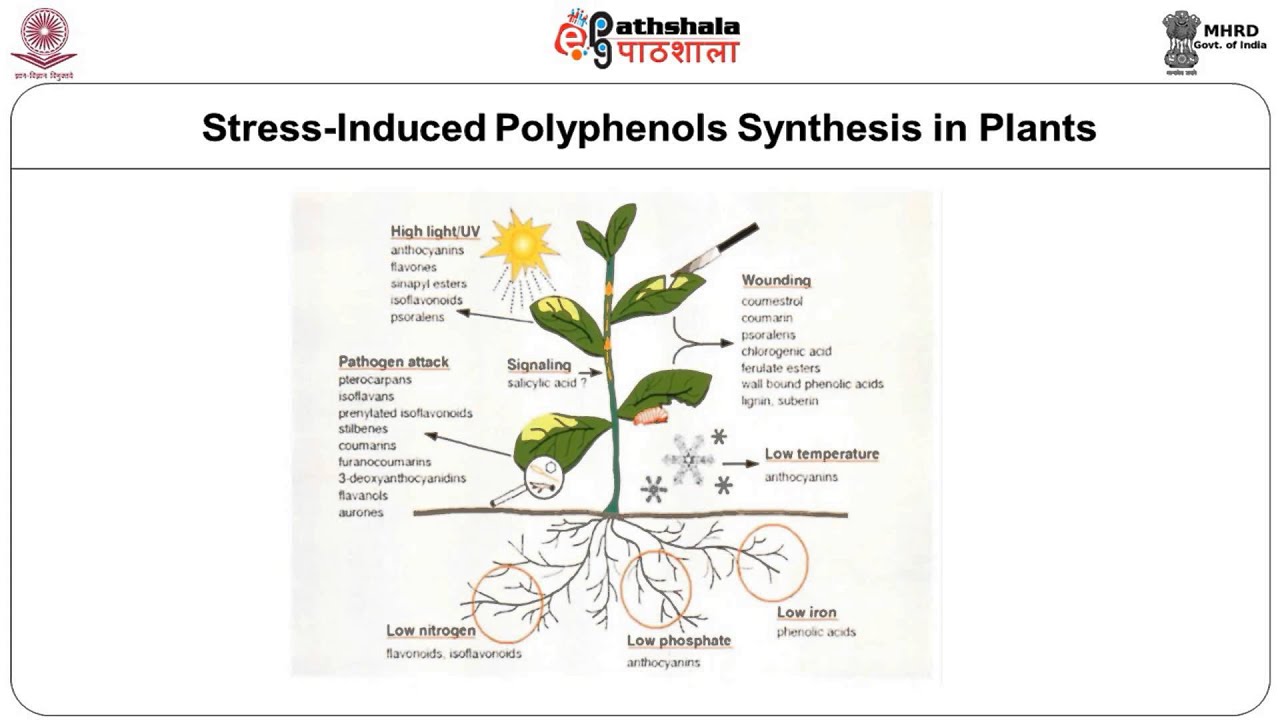
Flavonoids are naturally occurring compounds, as secondary metabolites in the plants functioning as a plant’s physiological survival. They protect against fungal infections and UV radiation. About 12,000 have been identified so far. On the basis of their structure they have been classified into 8 compound groups.
Flavonoids are synthesized by plants in response to infection. Active against bacteria and viruses, including HIV and respiratory syntactical virus (RSV)
Flavonoids universally have low absorption and are treated as xenobiotics, like toxins and drugs, to be eliminated from the body. Rutin from onions, for example, is about 7% absorbed and then metabolized. The benefits of flavonoids are mediated primarily through the principle of hormesis, which is the principle that a little of something bad for you can be good for you by improving your defenses
- Flavonoids: Intervene across the Heat → Damp transition by supporting endothelial barrier integrity, reducing vascular permeability, stabilizing mast cells, and scavenging reactive oxygen species (ROS).
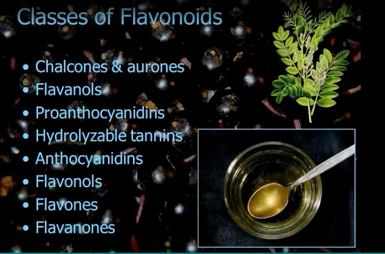
These include flavones, flavonals, flavonones, isoflavones, chalcones and aurones. Plants that are rich in flavonoids have been used as dyes. The fall colors, both the reds and yellows are flavonoids, always present in the leaves but hidden by chlorophyll until fall. Flavonoids are safe for people and animals but toxic to microorganisms. Plants produce them to protect themselves from disease. Many flavonoids are known to have antiviral and anti-inflammatory properties but they are especially valued as antioxidants to help protect the body from free radicals. Most flavonoids are wound healing.
These compounds are becoming established as major contributors to the cancer-prevention, anti-aging, and health-promoting effects of berries, fruits, vegetables, leafy greens, dark chocolate and coffee. All of the flavonoids have antioxidant activity to one degree or another.
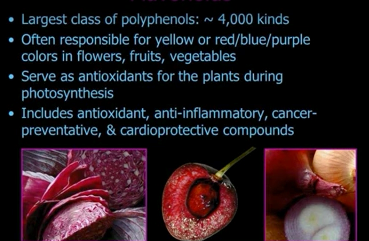
Every green plant biosynthesizes a range of flavonoids, which serve as antioxidants to protect the plant's tissues against free radical damage. These compounds often occur in the form of water-soluble glycosides, intermixed with the more lipophilic aglycones. There are numerous subtypes, some widely distributed and others limited o a smaller number of species. The word root flav means yellow; some flavonoids (those first to be discovered, thus giving their name to the entire class) are yellow; but others are red, blue, purple, or even colorless. A number of those found in flowers emit light in the UV spectrum, making them especially visible to pollinators (bees) that can see wavelengths in the ultraviolet range.
The basic structure of a flavonoid consists of two phenolic rings, with varying numbers and kinds of substituents, joined in the middle by a central pyran ring. Hydroxylated, but as a C6-C3 unit linked to an aromatic ring.
In the subtypes, notice that the specific spelling tells us which functional groups and/or double bonds appear in the central 'C ring' of the molecule. Theflava –prefix means there is no double bond in the C ring itself. The flavo-prefix indicates there is a double bond between C2 and C3. You'll also notice various -ones and -ols in the names of the flavonoid subtypes, designating the presence of ketone or alcohol (hydroxyl) groups.
In general the flavonoids are anti-inflammatory, anticarcinogenic, antioxidant and cardioprotective. These activities are based on the fact that all of them contain phenolic rings and/or have a central structure resembling the stilbene core. (-Ganora)
They are generally diuretic and relieve cramping. They also affect the heart and circulatory system and strengthen capillaries. There are about 500 known flavonoids including vitamin C, E and P. The best way to get them is in fruits and vegetables. Fruits, especially wild berries, contain the highest amounts but they are found throughout the plant kingdom. - (Epel)
A recent prospective study reported that the specific flavonoid-rich foods associated with lower CVD mortality included apples, pears, grapefruit, strawberries, chocolate and bran.
Flavonoids are known to target prostaglandins in the late phase of acute inflammation and pain (Chakraborty et al., 2004).
The most used solvents for the extraction of flavonoids are ethanol, mixtures with water at different proportions, and natural deep eutectic solvents (NADES), which are based on their ability to solubilize moderately polar flavonoids with a relatively low cost and environmental impact. Extraction of Flavonoids From Natural Sources Using Modern Techniques
Pdf Summary
This 2017 narrative review (the pdf linked at the top) examines why people respond so differently to dietary flavonoids—plant compounds found in fruits, vegetables, tea, cocoa, herbs, and wine—and emphasizes that their health effects depend largely on how each person absorbs and metabolizes them.
Main points
- Flavonoid benefits are promising but inconsistent. Population studies and clinical trials associate several flavonoid subclasses—including anthocyanins, flavonols, flavan-3-ols, and flavanones—with cardiovascular, metabolic, cognitive, and possibly cancer-related benefits. However, study results vary substantially between individuals and populations.
- Flavonoids undergo extensive metabolism. After consumption, they are:
- broken down in the small intestine,
- modified by liver and intestinal enzymes,
- conjugated through glucuronidation, sulfation, or methylation,
- and partly excreted through urine or bile.
Most circulating compounds are metabolites rather than the original flavonoids.
- The gut microbiome is central. A large proportion of flavonoids reaches the colon, where bacteria convert them into smaller phenolic and aromatic compounds. These metabolites may be more biologically active and longer-lasting than the original compounds. Microbial composition therefore helps determine whether someone is a “high” or “low” flavonoid converter.
- Individual variability is very large. For example, urinary recovery of epicatechin after the same daily dose varied dramatically among study participants. This variability may help explain why one person experiences metabolic or vascular benefits while another shows little response.
- Several factors may affect flavonoid bioavailability:
- age and sex,
- genetic differences in metabolic enzymes and transporters,
- medications,
- habitual diet,
- dietary fat and fiber,
- food processing and solubility,
- the flavonoid’s chemical structure, sugar group, and stereochemistry,
- and the composition of the gut microbiome.
- Food form matters. The same flavonoid may be absorbed differently depending on whether it is consumed as a whole food, juice, extract, or purified supplement. Sugar attachments and processing can substantially alter absorption. Dietary fat may improve absorption of some compounds, such as quercetin, although findings are not uniform.
- Potential drug interactions deserve attention. Flavonoids and medications can use the same metabolic enzymes and transporters. Grapefruit is the best-known example, but interactions may be especially important in older adults taking multiple medications or in people with enzyme variants.
- Evidence for microbiome effects is strongest in animals so far. Animal studies suggest flavonoid-rich foods can increase beneficial bacteria such as Akkermansia and improve inflammation, insulin sensitivity, and intestinal barrier function. Comparable human evidence remains limited.
Authors’ conclusion
Flavonoids should not be viewed as compounds with identical effects in everyone. Their benefits likely depend on the interaction between the food, the individual’s genetics and physiology, and the gut microbiome. More rigorous human studies are needed before specific flavonoid intake recommendations can be developed.
Key research needs
The authors call for:
- longer and better-powered human trials;
- simultaneous measurement of flavonoid metabolism and health outcomes;
- validated biomarkers of intake and metabolism;
- studies stratified by genotype and microbiome profile;
- investigation of medication and diet interactions;
- comparisons of whole foods, extracts, and purified compounds;
- and research into the two-way relationship between flavonoids and gut bacteria.
Bottom line: The health effects of flavonoids are likely driven less by the amount consumed alone than by the metabolites produced in each individual—particularly those generated by the gut microbiome.
Articles/Studies
- Flavonoids: biosynthesis, biological functions, and biotechnological applications
- Light-controlled flavonoid biosynthesis in fruits
- Recent advances in the discovery and development of flavonoids and their analogues as antitumor and anti-HIV agents.
- Microbial Glycosylation of Flavonoids.
Alzheimer’s
The neuroprotective potentiality of flavonoids on Alzheimer's disease.
Anti-Inflammatory
Anti-inflammatory and anti-allergic potential of dietary flavonoids: A review.
Antiviral
- Flavonoids: promising natural compounds against viral infections.
- Inhibition of HIV activation in latently infected cells by flavonoid compounds
- Roles of flavonoids against coronavirus infection. Up to now, there is no cure for COVID-19 and waiting for an efficacious vaccine, the development of"savage"protocols, based on"old"anti-inflammatory and anti-viral drugs represents a valid and alternative therapeutic approach. As an alternative or additional therapeutic/preventive option, different in silico and in vitro studies demonstrated that small natural molecules, belonging to polyphenol family, can interfere with various stages of coronavirus entry and replication cycle. Here, we reviewed the capacity of well-known (e.g. quercetin, baicalin, luteolin, hesperetin, gallocatechin gallate, epigallocatechin gallate) and uncommon (e.g. scutellarein, amentoflavone, papyriflavonol A) flavonoids, secondary metabolites widely present in plant tissues with antioxidant and anti-microbial functions, to inhibit key proteins involved in coronavirus infective cycle, such as PL, 3CL, NTPase/helicase. Due to their pleiotropic activities and lack of systemic toxicity, flavonoids and their derivative may represent target compounds to be tested in future clinical trials to enrich the drug arsenal against coronavirus infections.
- Flavonoids and the CNS.
Antioxidant
Antioxidative and anti-adipogenesis activity of flavonoids
Cancer
- Flavonoids as Anticancer Agents.
- Natural flavonoids exhibit potent anticancer activity by targeting microRNAs in cancer.
- The role of flavonoids in the regulation of epithelial-mesenchymal transition in cancer.
- Chemopreventive and anticancer activity of flavonoids and its possibility for clinical use by combining with conventional chemotherapeutic agents.
- Flavonoids as anticancer agents: structure-activity relationship study.
- Signaling proteins and pathways affected by flavonoids in leukemia cells.
- The present knowledge on the role of flavonoids in chemoprevention can be used in developing effective dietary strategies.
- This review gives an overview of current research on flavonoids to further elucidate their potential in cancer prevention and therapy, thereby focusing on their distinct epigenetic activities.
- This review is focused on the relationship between flavonoids and cancer, with special emphasis on the role of quercetin in anticancer treatment.
- Fisetin and Quercetin: Promising Flavonoids with Chemopreventive Potential.
- Cancer chemoprevention through dietary flavonoids: what's limiting?
Cardiovascular
- Beneficial Effects of Citrus Flavonoids on Cardiovascular and Metabolic Health.
- Effects of flavonoids in experimental models of arterial hypertension.
- Current insights and future perspectives of flavonoids: A promising antihypertensive approach.
Cognitive Function
These findings support a benefit of higher flavonoid intakes for maintaining cognitive function.
COVID-19
Diabetes
- Flavonoids intake and risk of type 2 diabetes mellitus: A meta-analysis of prospective cohort studies.
- Higher Habitual Flavonoid Intakes Are Associated with a Lower Incidence of Diabetes
Hair
Protective Role of Nutritional Plants Containing Flavonoids in Hair Follicle Disruption: A Review.
Hepatoprotective
The potential of flavonoids in the treatment of non-alcoholic fatty liver disease.
Immune Effects
Effects of flavonoids and Its derivatives on immune cell responses.
Neuroprotective
Potential therapeutic use of plant flavonoids in Alzheimer's disease and Parkinson's disease.
Other Effects
- Flavonoids can restore Brahma functionality by reversing acetylation.
- Inhibition of reverse transcriptases by flavonoids
- Flavonoids inhibit tumor necrosis factor-alpha-induced up-regulation of intercellular adhesion molecule-1 (ICAM-1) in respiratory epithelial cells through activator protein-1 and nuclear factor-kappaB: structure-activity relationships
(Images courtesy of Lisa Ganora)