Nicotine
Videos
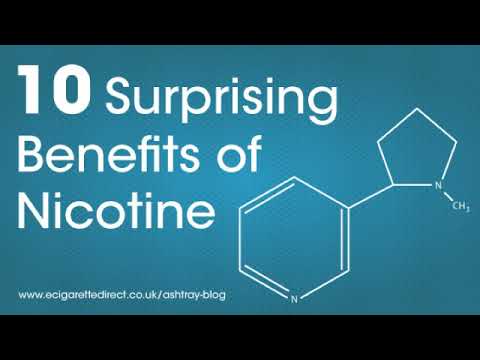
DE-DEMONIZING NICOTINE | Ending Fear to Promote Benefits
Know About the Pathophysiology of Nicotine Withdrawal
Scientists look at smokers' brain activity before and after quitting
Joe Rogan on NICOTINE (nootropic properties, not addictive)

Dr. Bryan Ardis reveals BOMBSHELL findings about reptilian VENOM PEPTIDES in popular weight loss drugs, and role of NICOTINE in healing “long COVID”
Nicotine is a cholinergic agonist. Therefore, it is an important inhibitor of pro-inflammatory cytokines acting through the cholinergic anti-inflammatory pathway via α7-nAChRs. Nicotine inhibits TNF, IL-1, IL-6 and HMGB1 while it does not inhibit anti-inflammatory cytokines such as IL-10. In vivo animal models have found nicotine to be protective against lipopolysaccharide-induced ARDS by reducing leukocyte infiltration and pro-inflammatory mediators in bronchoalveolar lavage fluid. Such effects are relevant to COVID-19 since cytokine storm appears to be the hallmark in severe cases.
SARS-CoV-2 is known to use the angiotensin converting enzyme 2 (ACE2) as a receptor for cell entry. ACE2 has well-established vasodilatory, anti-inflammatory and antioxidant properties. Studies on smoking and ACE2 have reported contradictory findings. Studies published before the COVID-19 pandemic reported that smoking and nicotine down-regulate ACE2. However, more recent studies suggest that they up-regulate ACE2. There is currently no evidence to suggest that up-regulation of ACE2 is associated with increased COVID-19 susceptibility or severity. In fact, up-regulation of ACE2 appears to be protective against tissue damage caused by SARS-CoV-2. ACE2 has been found to protect mice from developing ARDS. Data from SARS experimental studies suggest that continuous SARS-CoV-2 infection and replication induces immediate down-regulation of ACE2 that may be implicated in organ damage and disease severity. Further support for the beneficial role of ACE2 comes from data that estrogens appear to up-regulate ACE2 while children and younger adults have higher ACE2 levels compared to older people. At the same time, women, children and young people have milder COVID-19 symptoms. If accurate and verified, the recently-observed ACE2 up-regulation in smokers is probably induced as a defence mechanism to counteract the effects of angiotensin II. There is probably a dynamic balance between ACE and ACE2, which is continuously changing, depending on stressors and stimuli. Thus, there is uncertainty on whether nicotine affects COVID-19 progression through the renin-angiotensin-aldosterone axis and there is no known interaction between ACE2 and nAChR receptors.
Importantly, ACE2 is expressed in several regions in the brain. The regions where vagal afferent fibers terminate and vagal efferent fibers originate exhibit ACE2 expression. Neuroinvasion is a common feature of coronaviruses. Anosmia and ageusia have been reported by COVID-19 patients. SARS-CoV-2 may enter the CNS either through the blood stream or via the olfactory nerve across the cribriform plate. A case series of 214 patients reported that 36.4 % had neurological manifestations. Thus, it is possible that the virus might infect the terminal areas of vagus afferent fibers or the origin of vagus efferent fiber causing down-regulation of ACE2 and resulting in local inflammation that could disrupt the cholinergic anti-inflammatory pathway and dysregulate the inflammatory response. Nicotine could have protective properties against possible brain inflammation caused by SARS-CoV-2, mediated through α7-AChRs. Source
VIDEOS
Articles/Studies
Behavioural and pharmacokinetic studies on nicotine, cytisine and lobeline.
Nicotine changes how nicotinic receptors are grouped on brain cells
Nicotine’s Influence on Reward and Aversion
Risk Factors
The lethal dosage for nicotine for an adult is 40-100mg, although this can be considerably elevated through habituation (with smoking Tobacco, 2 to 7 g, one cigarette contains 10mg nicotine, of which 1 to 2 mg are inhaled during smoking).
Symptoms of acute poisoning include dizziness, salivation, vomiting, diarrhea, tremling of the hands and feelings of weakness in the legs; very high dosages can lead rapidly to spasms, unconsciousness, cardiac arrest and respiratory failure. Poisonings occur in particular through the ingestion of cigarettes y children, the handling of insecticides containing nicotine (through skin contact), and in connection with the harvesting of Toacco (also through cutneous resorption). Nicotine patches also represent a danger for children. See Tobacco, for Overdose treatment.
- Nicotine from edible Solanaceae and risk of Parkinson disease.
- Nicotine Promotes Spread Of Lung Cancer To The Brain
- Immunomodulatory effects of nicotine on interleukin 1β activated human astrocytes and the role of cyclooxygenase 2 in the underlying mechanism
- Neonatal Nicotine Exposure Alters Brain’s Reward Circuity
- Nicotine induces aberrant hypermethylation of tumor suppressor genes in pancreatic epithelial ductal cells.
- Nicotine upregulates FGFR3 and RB1 expression and promotes non-small cell lung cancer cell proliferation and epithelial-to-mesenchymal transition via downregulation of miR-99b and miR-192.
- Increase in motility and invasiveness of MCF7 cancer cells induced by nicotine is abolished by melatonin through inhibition of ERK phosphorylation.
- Nicotine-induced oxidative stress contributes to EMT and stemness during neoplastic transformation in human kidney epithelial cells.
- These results indicate that chronic paternal nicotine exposure can impact the behavior of offspring.
- Nicotine enhances alcoholic fatty liver in mice: Role of CYP2A5.
- Tobacco smoke and nicotine suppress expression of activating signaling molecules in human dendritic cells.
- Nicotine, Carcinogen, and Toxin Exposure in Long-Term E-Cigarette and Nicotine Replacement Therapy Users A Cross-sectional Study
- Nicotine induces resistance to chemotherapy by modulating mitochondrial signaling in lung cancer.
- Nicotine exposure alone leads to pulmonary hypertension, study suggests
- Nicotine exposure during adolescence induces a depression-like state in adulthood.
Benefits
Texas A&M: Nicotine can protect aging brains against Parkinson's, Alzheimer's disease
Protection from Nicotine Toxicity
- **Spirulina platensis**-lipopolysaccharides mitigate the oxidative stress and impairment of rats' brain induced by nicotine.
- **Rooibos** protects against nicotine induced vascular injury and oxidative stress.
- Protective effect of **alpha-asarone** against nicotine-induced seizures in mice, but not by its interaction with nicotinic acetylcholine receptors.
- **Nanozeolites and artichoke leaf** extract has the synergetic effect on increasing the urinary excretion of nicotine.
- **Vitamin C** mitigates the genotoxic properties of nicotine in mice.
- The study demonstrated that **curcumin** was a potent protective compound against the nicotine-induced stress. Nicotine aggravates many chronic inflammatory disorders in females under the protein-malnourished conditions because women are more susceptible to nicotine-induced diseases due to their low innate immunity. Although curcumin have been found to obliterate the nicotine-induced disorders through its anti-nicotinic activity under the protein-malnourished condition, the exact mechanism of protective action of curcumin is still unclear. :{This study revealed that curcumin bound to the Histidine 87 residues of haemoglobin with a greater binding affinity and significantly protected the RBCs against nicotine-induced damage. Furthermore, the nicotine-mediated disruption of Th1/Th2 balance through upregulation and downregulation of different factors was effectively restored by curcumin under the protein-malnourished conditions. The study demonstrated that curcumin was a potent protective compound against the nicotine-induced stress and offered a probable biochemical and immunomodulatory mechanism of protective action of curcumin.
- **Garlic and onion** protect against nicotine-induced lipid peroxidation.
- "Chronic nicotine toxicity is prevented by **aqueous garlic extract**."
- Protective effects of **Mentha spicata** against nicotine-induced toxicity in liver and erythrocytes of Wistar rats.
- **Moringa oleifera** phytochemicals protect the brain against experimental nicotine-induced neurobehavioral disturbances and cerebellar degeneration.
- **Pomegranate and licorice drinks** could increase the metabolism rate for nicotine.
- A diet rich in **vitamin C and quercetin** could prevent nicotine-induced toxicity.
- Nephroprotective and antioxidant effect of **green tea** against nicotine-induced nephrotoxicity
- **Garlic and vitamin E** provides antioxidant defense in tissues of female rats treated with nicotine."
- Ellagic acid** played a protective role against nicotine-induced nephrotoxicity and oxidative stress.
- Onion** compares favorably to vitamin E in ameliorating the oxidative effects of nicotine in rats.
- Garlic and onion** protect against nicotine-induced lipid peroxidation.
- **Royal-jelly-based apitherapy** can attenuate damages to male reproductive parameter following nicotine administration.