Podocytes & Glomerulus
Return to Urinary System Menu
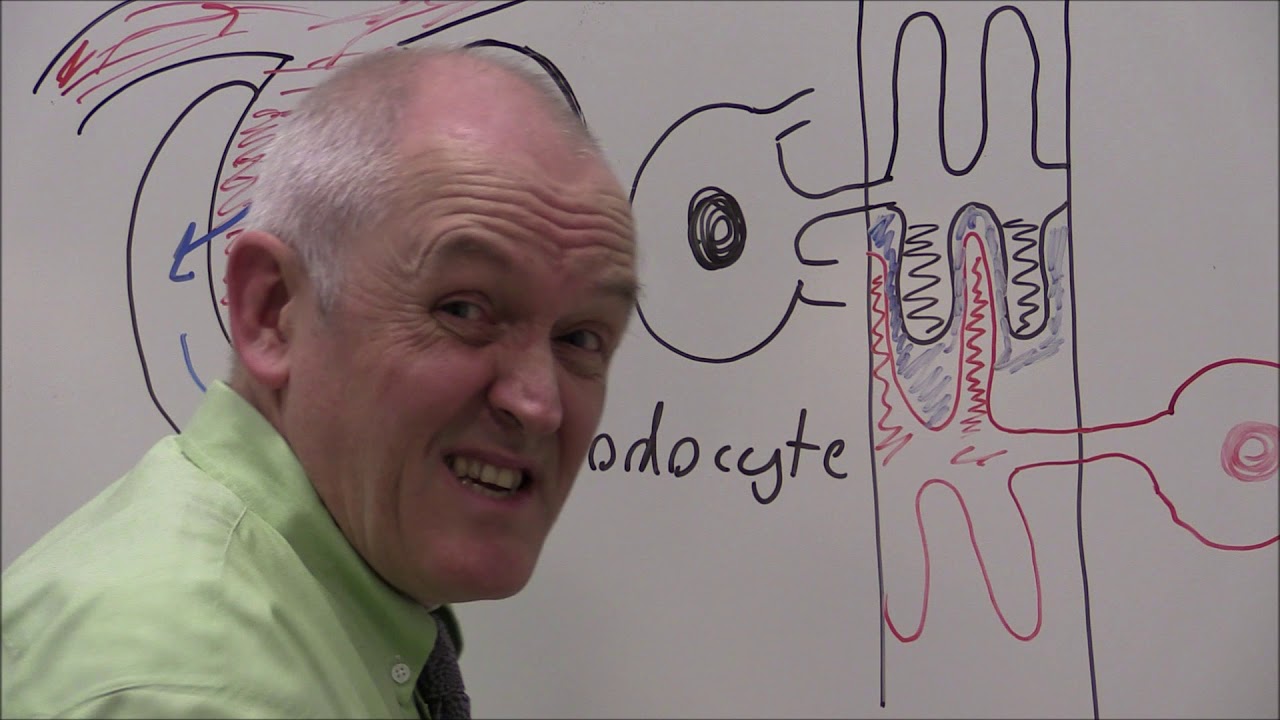
The human kidney is a vital organ responsible for filtering blood, removing waste, and balancing bodily fluids. At the heart of this complex filtration system lies the glomerulus, a network of capillaries that plays a crucial role in the kidney's function. Surrounding the glomerulus are specialized cells known as podocytes, which are essential for maintaining the filtration barrier.
The Glomerulus: A Filtration Marvel
The glomerulus is a tuft of capillaries located at the beginning of the nephron, the functional unit of the kidney. It is responsible for the initial step in the filtration of blood to form urine. The glomerulus is encased in Bowman's capsule, and together they form the renal corpuscle. Blood enters the glomerulus through the afferent arteriole and exits via the efferent arteriole. The unique structure of the glomerulus allows it to filter blood efficiently while retaining essential proteins and cells.
Structure of the Glomerulus
- Capillary Endothelium: The inner layer of the glomerular capillaries is lined with endothelial cells that have fenestrations, or small pores, allowing for the passage of water and small solutes.
- Basement Membrane: This is a dense, gel-like layer that acts as a selective barrier, preventing the passage of large molecules and proteins.
- Podocytes: These are specialized epithelial cells that wrap around the capillaries, forming the outermost layer of the filtration barrier.
Podocytes: Guardians of the Filtration Barrier
Podocytes are highly specialized cells with a unique structure that is critical for their function. They have foot-like extensions called pedicels that interdigitate with those of neighboring podocytes, creating filtration slits. These slits are covered by a thin diaphragm that acts as a final barrier to protein loss.
Functions of Podocytes
- Filtration Barrier: Podocytes play a crucial role in maintaining the integrity of the glomerular filtration barrier. Their foot processes and slit diaphragms prevent the leakage of proteins and large molecules into the urine.
- Structural Support: By wrapping around the glomerular capillaries, podocytes provide structural support, maintaining the shape and function of the glomerulus.
- Regulation of Filtration: Podocytes can contract and relax, altering the size of the filtration slits and thus regulating the rate of filtration.
The Interplay Between Podocytes and the Glomerulus
The relationship between podocytes and the glomerulus is symbiotic. The glomerulus provides the necessary blood supply and structural framework, while podocytes ensure the filtration barrier's integrity. This interplay is vital for the kidney's ability to filter blood effectively.
Pathophysiology: When Things Go Wrong
Damage to podocytes or the glomerulus can lead to a range of kidney diseases. Podocyte injury is a hallmark of many glomerular diseases, such as:
- Focal Segmental Glomerulosclerosis (FSGS): Characterized by scarring of the glomerulus, often due to podocyte damage.
- Minimal Change Disease: A condition where podocyte foot processes are effaced, leading to proteinuria.
- Diabetic Nephropathy: High blood sugar levels can damage podocytes and the glomerular basement membrane, leading to kidney dysfunction.
Advances in Research and Treatment
Recent advances in research have shed light on the molecular mechanisms governing podocyte function and glomerular filtration. Understanding these processes has opened new avenues for treating glomerular diseases.
Potential Therapeutic Approaches
- Podocyte Regeneration: Research is ongoing to find ways to regenerate or repair damaged podocytes, potentially reversing kidney damage.
- Targeted Therapies: Drugs that specifically target the molecular pathways involved in podocyte injury are being developed.
- Gene Therapy: Exploring the potential of gene therapy to correct genetic defects that lead to podocyte dysfunction.