Fruit Morphology & Classification
Fruits which are Veggies and Veggies which are Fruits
Identification Of Major Fruit Types
Classification of fruits:
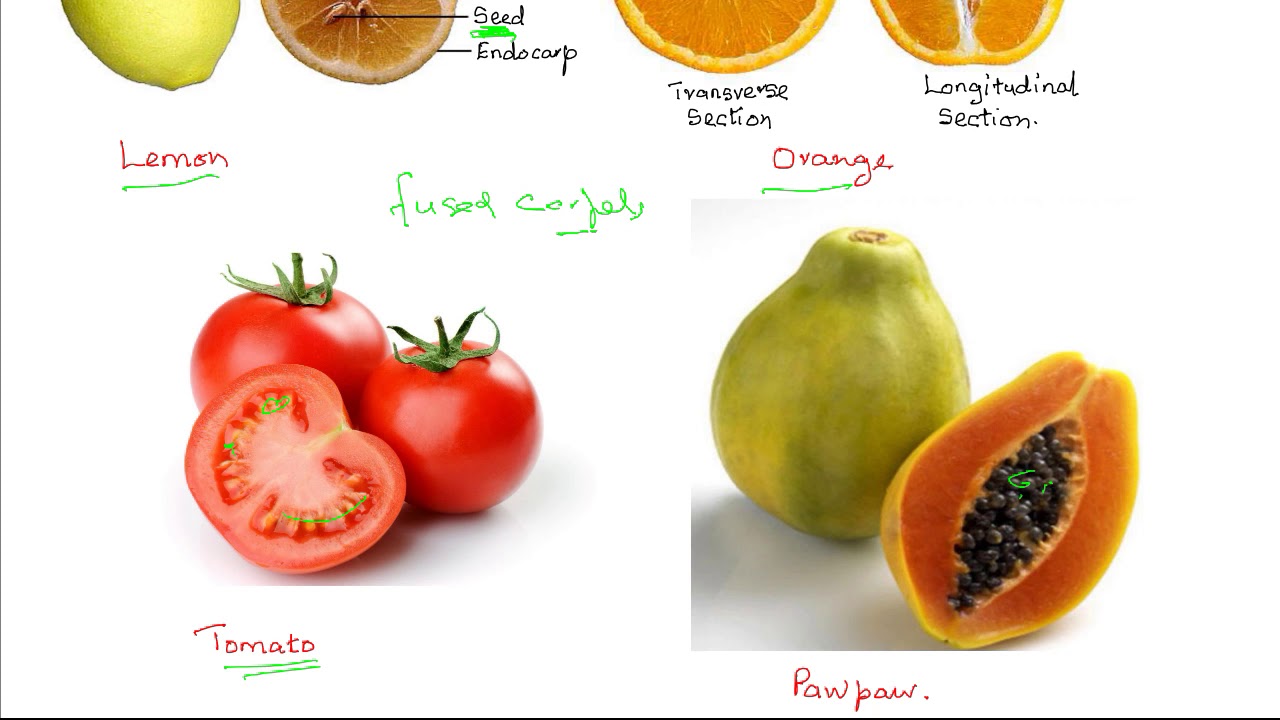
Types of fruits

For most angiosperms, when a flower is pollinated, the pollen fuses with an egg to produce seed. The seed develops within the ovary which is part of the pistil, a female reproductive organ of the flower. The broadened and ripened ovary is referred to as the fruit Typically, the enlarged ovary ends up being the edible portion of the fruit.
Fruit Structure
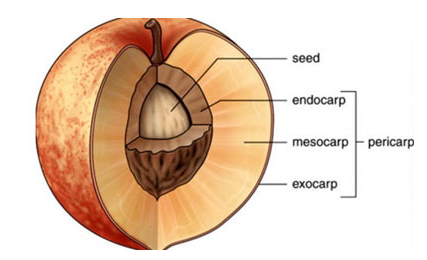
The fruit primarily includes two parts: the pericarp and the seed. The pericarp layer is actually the external wall of the ovary from which the fruit developed. The pericarp has three layers:
- Exocarp or Epicarp: This is the outer layer of the pericarp that forms the skin.
- Mesocarp: It is the thick, fleshy, and juicy middle layer of the pericarp.
- Endocarp: It is the inner layer of the fruit that typically becomes the pith.
Classification
On basis of the number of ovaries and the number of flowers involved in their development, fruits are classified into three categories:
- Simple Fruits
- Aggregate Fruits
- Multiple Fruits
Simple Fruits
These fruits develop from a single ovary of several carpels. These fruits are further divided into Dry fruits and Fleshy fruits depending upon the pericarp.
Aggregate Fruits
These fruits establish from several ovaries however of the same flower. So, an aggregate fruit consists of a collection of simple fruits called fruitlets. E.g., Blackberries, strawberries.
Multiple Fruits
They are formed by all the flowers of an inflorescence which together lead to a single big fruit. Multiple fruits are called false or composite fruits. e.g., Mulberries, pineapple
Types of Fruits
(i) True Fruits:
A true fruit or eucarp is a mature or ripened ovary, established after fertilization, e.g., Mango, Maize, Grape, and so on.
(ii) False Fruits:
A false fruit or pseudo-carp is derived from the floral parts other than ovary, e.g., peduncle in cashew-nut, thalamus in apple, pear, gourd, and cucumber; fused perianth in mulberry and calyx in Dillenia.
(iii) Parthenocarpic fruits:
These are seedless fruits that are formed without fertilization, e.g., Banana. Now a day many seedless grapes, oranges, and watermelons are being developed by horticulture.
- Simple Fruits:
When a single fruit establishes from a single ovary of a single flower, it is called a simple fruit. The ovary might belong to a monocarpellary easy gynoecium or to a polycarpellary syncarpous gynoecium. There are 2 classifications of simple fruits– dry and fleshy.
Dry Fruits:
These fruits are not fleshy, and their pericarp (fruit wall) is not distinguished into three layers.
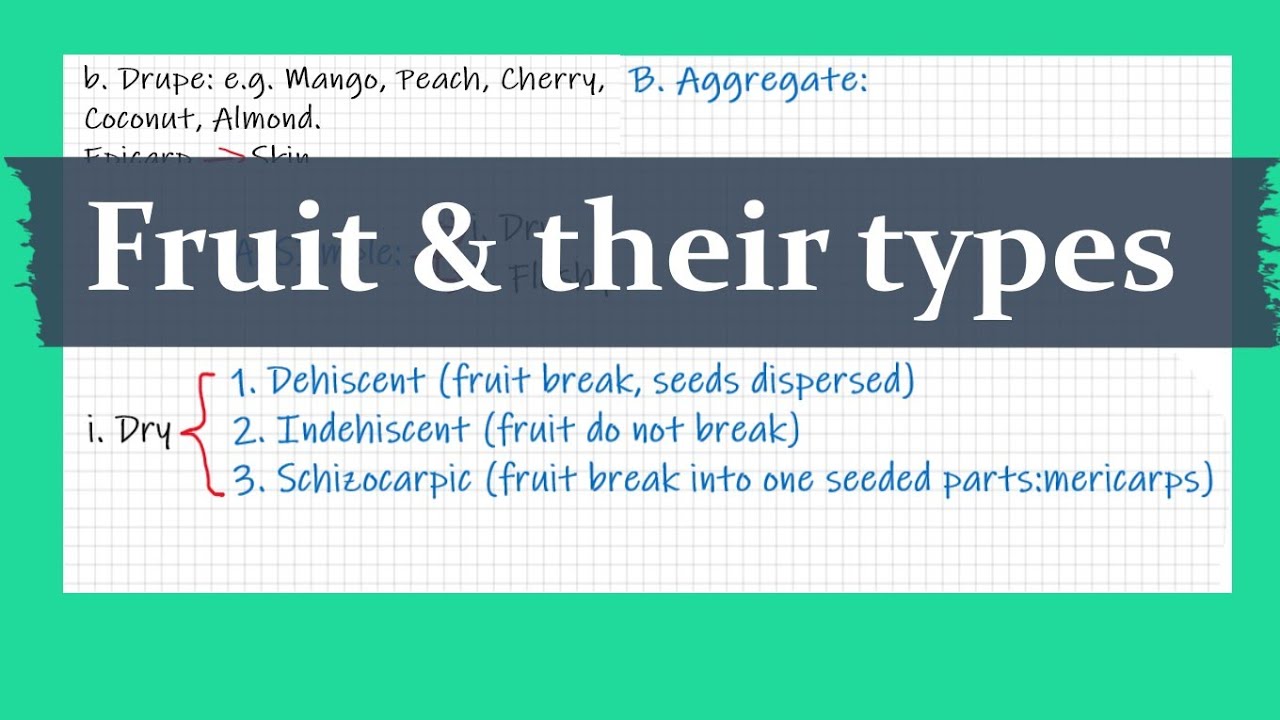
- A) Dehiscent Fruits (Capsular Fruits):
Particular of these fruits is that their pericarp rupture after-ripening and the seeds are dispersed.
- B) Indehiscent Fruits (Achenial Fruits):
As their name shows, the pericarp of such fruits does not burst on ripening and the seeds remain inside.
- C) Schizocarpic Fruits (Splitting Fruits):
The dry, lots of seeded fruits that get into a number of one-seeded part on ripening is called schizocarpic fruit. If this one seeded partis indehiscent, they are called mericarps. If they are dehiscent, they are called cocci.
Depending on the mode of dehiscence, these fruits can be divided into the following five classes:
- Legume:
The fruit formed from monocarpellary pistil and dehiscence along both dorsal and ventral sutures is called legume. It is the characteristic fruit of the household Leguminosae like pea bean etc.
- Follicle:
The fruit formed from monocarpellary pistil and dehiscence along only one suture is called a follicle. Example: Larkspur.
- Siliqua:
A long, round fruit formed from bicarpellary, syncarpous pistil with ovary having two parietal placentas is called siliqua.
- Silicula:
It resembles the siliqua however it is short and as long as broad and includes fewer seeds. Example Candyttift.
- Capsule:
The fruit originated from polycarpellary, syncarpous pistil with the exceptional ovary is called the capsule. Sometimes it is formed from the inferior ovary. Example: Iris, willow.
Succulent Fruits (Fleshy fruits):
In these fruits’ pericarp is distinguished into epicarp, mesocarp, and endocarp. Mesocarp is fleshy or fibrous. These fruits are indehiscent, and seeds are freed after the decay of the flesh.
The wall of the ovary (pericarp) of mature succulent or fleshy fruit is composed of three layers. A few of these layers become dry and difficult. One or more of them become fleshy and juicy. There are 3 types of succulent fruits: drupes, berries, and pomes.
- Drupes:
The succulent fruit in which mesocarp forms the edible portion of fruit and endocarp kinds a hard shell or stone is called a drupe. Examples are Mango, Coconut, Peach, Almond.
- Pome:
It is a simple, fleshy but false fruit as it is surrounded by fleshy thalamus which is edible while real fruit lies within, e.g., apple, pear, loquat, and so on.
- Berry and Bacca:
Berry is a fleshy fruit in which there is no hard part except the seeds. Pericarp may be distinguished into epicarp, mesocarp, and endocarp. One or other of these layers might form pulp in which seeds are ingrained which generally gets removed from the placenta.
The fruits originated from the exceptional ovary are called superior or true berries as in brinjal, grape, tomato. False berries are originated from the inferior ovary and the thalamus and pericarp are merged as in banana and guava, etc.
(source)
Miscellaneous Notes On Fruit Types: Some trees produce seeds and pollen in separate inflorescences called catkins or aments. This includes monoecious species with both male and female catkins on the same tree; and dioecious species with separate male and female trees. In birch (Betula) and alder (Alnus), the seeds (nutlets) are produced in a woody, cone-like catkin. In other trees, such as oak (Quercus), only pollen is produced in the catkins.
In true cone-bearing trees, the immature seeds (ovules) are borne at the surface of ovuliferous scales instead of enclosed within an a ovary as in flowering plants. Because the ovules are exposed to the wind-blown pollen during the pollination period, these trees are referred to as gymnosperms (which means naked seeds). The ovuliferous scales collectively form a woody seed cone sealed with sticky resin. At maturity (in one or two years depending on the species), the scales dry and separate from each other, thus releasing the winged seeds. In junipers (Juniperus) the scales are fleshy and fused together, and the seed cones superficially resemble berries. In the maidenhair tree (Ginkgo biloba), fern pine (Podocarpus), and the California nutmeg (Torreya californica), the large seed with a fleshy outer coat is borne naked on the branchlets. In the yew tree (Taxus) the naked seed is borne in a fleshy, cup-like structure called an aril.