Fibromyalgia
Dr. Teitelbaum's articles and products
See Central Sensitization Syndrome and Myalgia
VIDEOS:
Fibromyalgia
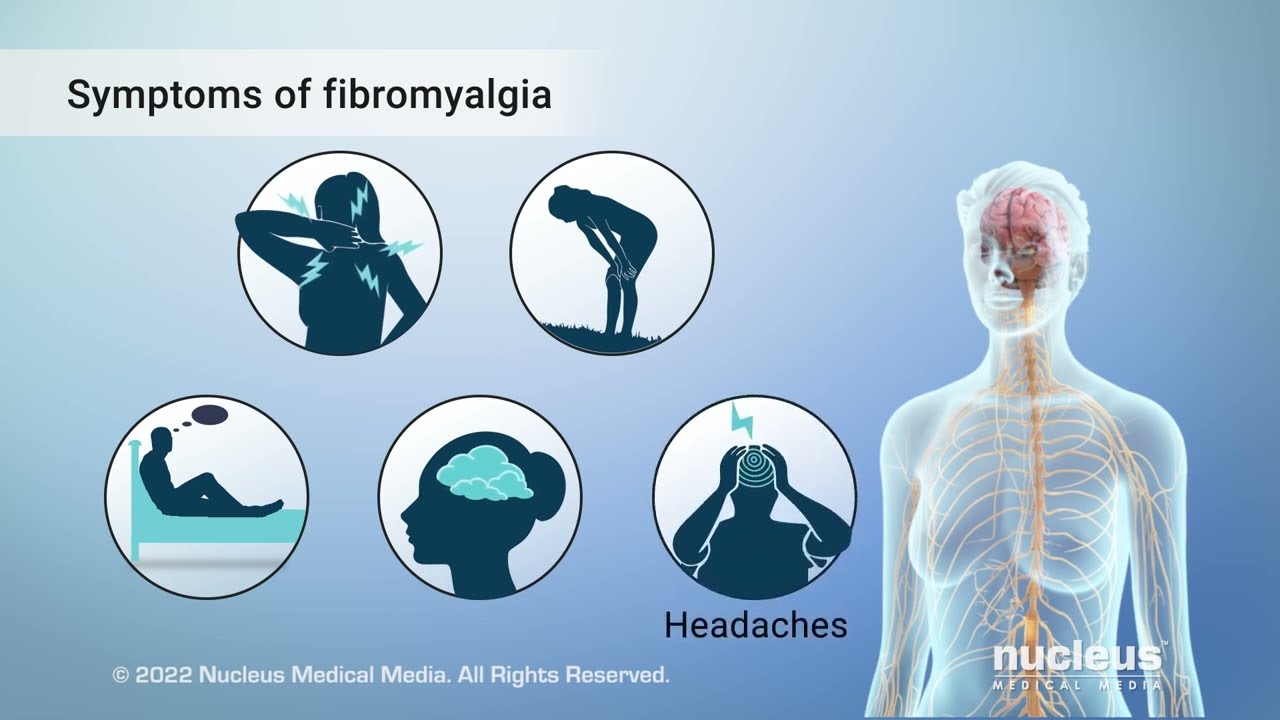
How does Fibromyalgia Start?
NIH Scientists Scanned CFS Brains: Here's What It Means for Fibromyalgia
Is It Really Fibromyalgia or Could it Be These Conditions?
Fibromyalgia is lactic acidosis
Fibromyalgia: from fiction to fact and to the future - Andrea Nicol
Fibromyalgia, Chronic Fatigue & Sleep w/ Dr. David Brady
Fibromyalgia: Research has Discovered Nerve Pathology
Fibromyalgia: Dr Paul Bird
How is Fibromyalgia Treated?
How to Overcome Fibromyalgia with Dr. Brady
Huge Fibromyalgia Treatment Mistakes to Avoid
Mold Issues and Fibromyalgia
A Surprising Finding with Fibromyalgia (congested gallbladder)
Can Fibromyalgia Symptoms Come and Go?
Fibromyalgia vs Raw Vegan and Vegetarian Diets
Finding Fibromyalgia Relief with Dr.Teitelbaum
Finding Fibromyalgia Relief with Dr. Khalsa
Liberation from Fibromyalgia with Dr. Bucknell
Research has Discovered Nerve Pathology
Fibromyalgia & CFS: The Effect of Trauma on Genetics
Fibromyalgia vs. Vegetarian & Raw Vegan Diets
Does Dry Brushing Work for Fibromyalgia?
How to Reverse Fibromyalgia
FIBROMYALGIA - HOW TO RELIEVE PAIN - WHAT ARE THE TREATMENT OPTIONS?
overview
See Chronic Fatigue Syndrome since much of that treatment protocol also relates to Fibromyalgia.
See Diagnosis
Fibromyalgia syndrome (FMS) is a disorder of unknown cause characterized by chronic widespread musculoskeletal pain and symptoms such as fatigue, sleep disturbances, gastrointestinal complaints and psychological problems. One key diagnostic condition was the presence of multiple tender points on the body (11 of 18 tender points should be present, as defined by the American College of Rheumatology), However, not all patients meet this diagnostic hurdle. This has led to other diagnostic approaches. One such approach uses a widespread pain index in conjunction with a symptom severity scale.
Prevalent in 2-8% of the population.
Characteristics of Fibromyalgia:
Fibromyalgia Patients Show Elevated Brain Glial Activation
- Widespread chronic pain for 23 months. Present in right and left sides of the body, above and below the waist, and in the axial skeletal region
- Pain from stimuli at lower than normal thresholds
- Persistence of pain after stimuli ceases
- Generalized tenderness: allodynia, hyperalgesia
- Tenderness of musculoskeletal structures and skin. Joint pain may be present but without synovitis
- Migratory pain, one week its in the back, next week it’s in the arms..for example
- Typically patients have a lifelong history of pain, it may start at an early age as migraines, then over the years increase over other areas of the body.
Most common in women between ages of 20 and 55
·
- Female: male ratio of at least 6:1
- Can develop at any age
- Prevalence is similar across countries, cultures, and ethnicities
- Occurs with other rheumatologic conditions/chronic pain conditions such as Osteoarthritis, Lupus, Rheumatoid arthritis
- 10-20% of patients with rheumatic disorders have fibromyalgia, “secondary fibromyalgia”
Stress as a Risk Factor
Stress can not only cause fibromyalgia but can worsen the condition.
- Psychological OR physical stress
- Severe acute pain episodes, such as car accidents
- Infections such as; Lyme disease, viral hepatitis
- Deployment to war
- Lifetime history of trauma
- Physical, emotional, sexual abuse
- Neglect
- Chaotic home environment (drug/alcohol abuse by caregivers)
If you have a first degree relative with fibromyalgia you are 8-times more likely to develop it. Twin studies have shown it’s 50% genetic and 50% environmental.
Many of these patients will be on multiple medications because multiple symptoms are being treated rather than the central condition.
Healthcare costs are higher for fibromyalgia patients (all the work ups and meds)
Pain:
Recently fibromyalgia has been classified as a centralized pain syndrome. There are two ways we can have a centralized pain syndrome: sensations from the peripheral nerves enter the spinal cord and brain where the signals are amplified. Or, the brain and spinal cord are generating pain in a part of the body where nothing unusual is going on.
Your muscles also need a lot of energy. When you run out, they get stuck in the shortened, rigid position and hurt – including by the joints where they attach (think about writer’s cramp or rigor mortis).
Any time you have chronic pain, including chronic muscle pain, it will trigger neuropathic pain, central sensitization, small fiber neuropathy. But if you put a needle in a trigger point its going to release. 70% of trigger points correspond to acupuncture points. One of the reasons fibromyalgia can respond very well to acupunture.
In fibromyalgia patients the volume knob in the brain for pain is turned way up. Treating it requires lowering the volume (the amplification)
Book recommendation
The Fibro Fix: Get to the Root of Your Fibromyalgia and Start Reversing Your Chronic Pain and Fatigue in 21 Daysby David M. Brady
Chronic pain affects nearly 100 million Americans. Ongoing fatigue affects even more. The combination of fatigue and body-wide chronic pain, often called “Fibromyalgia,” remains mysterious and confusing, and an alarming 66 percent of sufferers are misdiagnosed. Now, leading naturopathic medical doctor and nutritionist David Brady is here with the answer in his comprehensive book The Fibro Fix.
For more than 23 years, Dr. Brady has treated many thousands of patients seeking relief from fibromyalgia. In The Fibro Fix, he distills his life-changing prescription into an integrative 21-day program to help you determine if, in fact, you’re suffering from Fibromyalgia or from one of several severe symptoms misdiagnosed as fibromyalgia. The plan begins with three simple steps―detox, diet, and movement―to start relieving those symptoms for good and then offers deeper long-term solutions specific to the real cause in each person. The Fibro Fixis your groundbreaking guide to resolving Fibromyalgia, and uncovering the mystery behind chronic pain and fatigue.
*Fibromyalgia: an afferent processing disorder leading to a complex pain generalized syndrome*
Subclassification of FMS has also been proposed to better inform treatment approaches.
Some clinicians now consider FMS is part of the spectrum of central sensitivity syndrome (CSS). Clinical entities included under CSS include chronic fatigue syndrome (CFS), irritable bowel syndrome, temporomandibular disorder, idiopathic low back pain, multiple chemical sensitivity (MCS) and interstitial cystitis. Augmented pain and sensory processing in the central nervous system is suggested as the most reproducible pathogenic feature of these illnesses. This could be due to deficiencies in serotonergic and noradrenergic, but not opioidergic, transmission in the central nervous system, together with increases in pronociceptive neurotransmitters such as glutamate and substance P.
As alluded to above, there is considerable co-morbidity between FMS, CFS (chronic fatigue syndrome) and MCS (multiple chemical sensitivity). For example, a study of a cohort of CFS sufferers found 40.6% met the criteria for MCS and 15.6% met the criteria for fibromyalgia. Another study found that 70% of tested CFS patients met the criteria for fibromyalgia. The reverse association is also strong: 58% of a female group with fibromyalgia met the full criteria for CFS compared to 26.1% of a control group; for males the rates were even higher, 80.0% versus 22.2% for controls. In fact, it has been suggested that FMS and CFS are possibly the same condition.
It’s considered a rheumatological condition and is usually diagnosed by a rheumatologist. However, it’s not really a rheumatologic condition. It can co-exist with it, for example those with lupus or rheumatoid arthritis or other autoimmune conditions can get fibromyalgia. Today rheumatologists won’t treat it and refer patients to pain specialists.
Differentiating between CFS and FMS
However, while the literature does support the concept that there is much overlap between CFS and FMS, there are also studies that have been able to clearly differentiate the two conditions. Since CFS and FMS have radically different clinical definitions that form the basis of their respective diagnoses, the possibility exists that they could represent the same underlying condition, but with different aspects of clinical expression. The analogy is somewhat akin to the proverb of the seven blind wise men who sought to explain the nature of the elephant. One felt the trunk of the elephant and concluded it was like a snake, another felt the tail and concluded it was like a rope, and so on.
In this context, an interesting US study examine 646 patients with CFS and/or FMS in terms of the presence or absence of a set of 32 common symptoms. A technique known as latent class analysis demonstrated that essentially patients could be assigned on the basis of their symptoms, into one of four classes. Each class was reasonably discrete from the others. It was found that the presence of CFS was lowest in the more severe class (Class 1) and highest in Class 4. FMS showed the reverse trend. Severity of fatigue was highest in Class 1 and lowest in Class 4. Hence, FMS could represent a more severe form of CFS:
If our interpretation of our results is correct, what are the implications for understanding the clinical heterogeneity of chronic fatigue syndrome and fibromyalgia? In particular, it is notable that latent class analysis did not yield classes corresponding to chronic fatigue syndrome alone, fibromyalgia alone and comorbid chronic fatigue syndrome/fibromyalgia. These analyses would suggest that the clinical definitions of chronic fatigue syndrome and fibromyalgia are not particularly distinctive and that these syndromes are characterized by greater similarities than differences…If the notion is correct – that the distinction between chronic fatigue syndrome and fibromyalgia is very fuzzy rather than sharp – rigid application of the existing case definitions of chronic fatigue syndrome and fibromyalgia may be more likely to lead to confusion than to clarity.
There may be a clinical implication of our findings. It may prove to be the case that classifying patients according to a severity-related construct is more important or useful than (other) classification.
*Latent class analysis of symptoms associated with chronic fatigue syndrome and fibromyalgia*
Despite the considerable evidence of the co-morbidity between CFS and FMS reviewed above, and the suggestion that they are not distinct clinical entities, a number of studies have found distinctive differences between them. A well-proven case in point is the observation that only patients fulfilling the definition of FMS (and not those with CFS) have elevated levels of substance P in their cerebrospinal fluid. *Chronic fatigue syndrome differs from fibromyalgia. No evidence for elevated substance P levels in cerebrospinal fluid of patients with chronic fatigue syndrome*
*A review of fibromyalgia. Nampiaparampil 2004*
This suggests that more emphasis must be placed on pain management in the treatment of FMS.
Other differences noted in clinical studies include higher nocturnal levels of melatonin in FMS patients compared with CFS and healthy controls, elevated levels of plasma**endothelin-1**in FMS whereas levels in CFS are normal, and differing protein profiles in cerebrospinal fluid, and urinary electrophoretic profiles between the two disorders.
Some cardiovascular parameters differ between CFS and FMS. For example, hemodynamic instability using a tilt test demonstrated abnormalities for CFS in two studies. Values for FMS patients did not differ from healthy controls. The results suggest that more emphasis must be placed on the cardiovascular system in the management of CFS. Patients with FMS often have marked sleep disturbances. In the opinion of one group, sleep disturbances are more marked in FMS than CFS. For CFS patients often the main complaint about sleep is that it is excessive and non-restorative. In contrast, FMS patients almost invariably suffer from less than average time asleep.
There also appear to be marked differences in the neuroendocrine response between CFS and FMS. In particular, with CFS there may be a deficiency of corticotropin releasing hormone (CRH) production, while in FMS there may be excess. Patients with CFS have a mild central adrenal insufficiency, secondary to either a deficiency of CRH or some other central stimulus to the pituitary-adrenal axis. In contrast, a review on hormonal perturbations in FMS asserted:
Recent studies of the entire endocrine profile of FM patients following a simultaneous challenge of the hypophysis with corticotropin-releasing hormone (CRH), thyrotropin-releasing hormone and luteinizing hormone-releasing hormone support the hypothesis that an elevated activity of CRH neurons determines not only many symptoms of FM but may also cause the deviations observed in the other hormonal axes.
*Hormonal perturbations in fibromyalgia syndrome Neeck 1999*
These findings and the work of others suggest that an adrenal hyporesponsive state (adrenal depletion) is a distinctly characteristic feature of FMS.
In addition, there appears to be a state of autonomic dysfunction (dysautonomia) in FMS, with sympathetic nervous system hyperactivity. Growth hormone levels may be abnormal in FMS but not in CFS. Adult growth hormone deficiency is a well-described syndrome with many features reminiscent of fibromyalgia. It has been postulated that thyroid hormone resistance is also a factor in FMS. Patients with FMS were less responsive to injections of thyrotropin-releasing hormone in terms of thyrotropin and thyroid hormone production. However, this could be the result of hypothalamic malfunction.
CAUSES
See also: Copper Toxicity Syndrome ; HHV-6 (human herpes virus-6)
Pathophysiology (what’s actually seen as causing pain)
How a hidden brain circuit fuels fibromyalgia, migraines, and PTSD. Neural circuits link pain emotion. What if your brain is the reason some pain feels unbearable? Scientists at the Salk Institute have discovered a hidden brain circuit that gives pain its emotional punch—essentially transforming ordinary discomfort into lasting misery. This breakthrough sheds light on why some people suffer more intensely than others from conditions like fibromyalgia, migraines, and PTSD.
- Most patients display augmented pain and sensory processing on quantitative sensory testing and functional neuroimaging.
- Manifest by increased connectivity to pro-nociceptive brain regions and decreased connectivity to anti-nociceptive regions.
- These abnormalities are being driven by imbalances in concentrations of CNS neurotransmitters that control sensory processing, sleep, alertness, affect, memory
Chronic pain in fibromyalgia may be associated with decrease of size of brain areas involved in pain processing.
More recently seen in virtually all other chronic pain states including headache, IBS, fibromyalgia
However, more recent data from NIH MAPP network presented suggests increase in size of and connectivity to the primary somatosensory cortex may represent neural signature for widespreadedness of pain.
Decreased connectivity during rest and with painful stimulus to anti-pain regions.
Increased connectivity to pro-pain regions.
Like CFS, FMS can have an infectious trigger. But also, like CFS a wide variety of viruses have been associated with the disorder. Viral induced changes in cytokines have been suggested to play a role in fibromyalgia, and one study found abnormal cytokine levels, but not another. Source: Bone & Mill
What we know now is that the pain is being generated by the central nervous system, the brain and spinal cord. It is independent of psychological factors. . Depression and anxiety are downstream effects of the pain.
Muscle biopsy from fibromyalgia patients shows them to be carnitine deficient. It needs to be the acetyl form to get into the mitochondria. 1000 mg of acetyl L-carnitine once or twice a day for 3-9 months.
A study was done on people diagnosed with osteoarthritis of the knee who were given knee surgery. Before surgery their fibromyalgianess was determined. After surgery they were followed for six months to determine how much opioid pain medication they used.
This chart represents fibromyalgia scores for knee replacement surgery patients:
0 = no fibromyalgia, 30 = severe fibromyalgia. The red line is the cut point for identifying those who should have been treated for fibromyalgia vs knee surgery. Those on the left side of the were distributed in a “sub-fibromyalgia” range
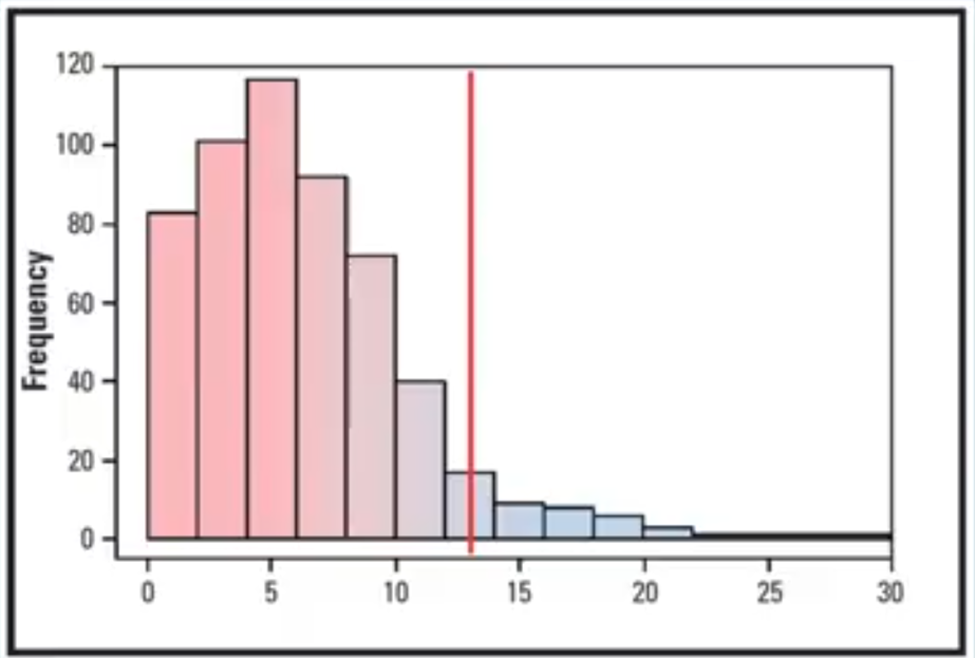
Each one point increase in fibromyalgianess score led to…
- 9 mg greater oral morphine requirements during acute hospitalization (8mg greater when all individuals taking opioids as outpatients excluded)
- 20-25% greater likelihood of failing to respond to knee or hip arthroplasty (judged by either 50% improvement in pain or much better or very much better on patient global). This tells us that the amount of fibromyalgianess someone has makes them less likely to respond to surgical interventions to treat things out in the periphery.
- These phenomena were linear across entire scale up to a score of approximately 18 – and equally strong after individuals who met criteria for fibromyalgia were excluded.
- This phenomenon was much stronger than and largely independent of classic psychological factors.
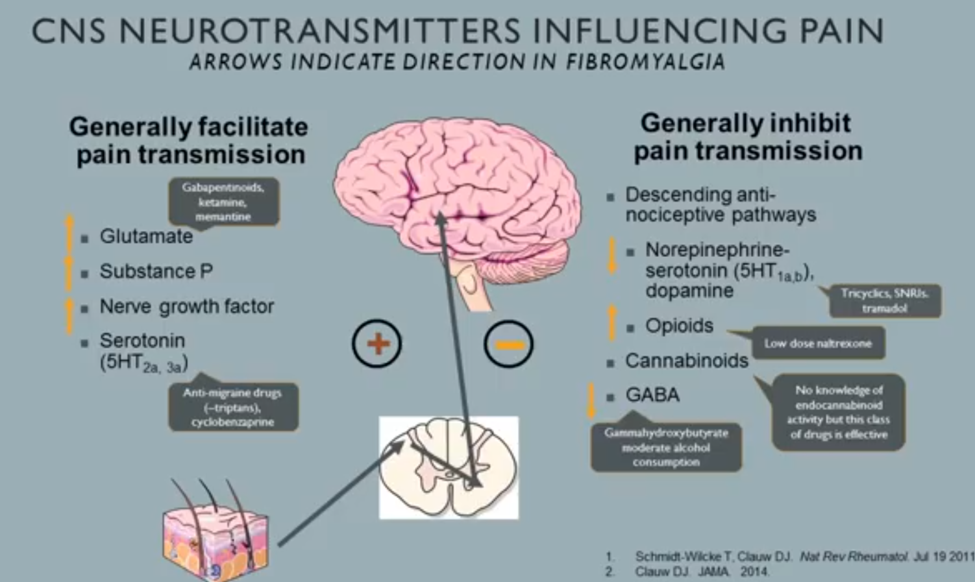
An important substance not shown on the above diagram for inhibiting pain transmission is PEA.
Studies show that in fibromyalgia patients there’s an increase in glutamate, substance P, nerve growth factor and serotonin. Paradoxically, there can also be an increase in the neurotransmitters that inhibit pain! Too much of a good thing, and this is why low-dose naltrexone can help. Also, Fibromyalgia patients have less receptors to take in the opioids. Low-dose naltrexone blocks endogenous opioids and helps make more receptors.
pharmacological therapies
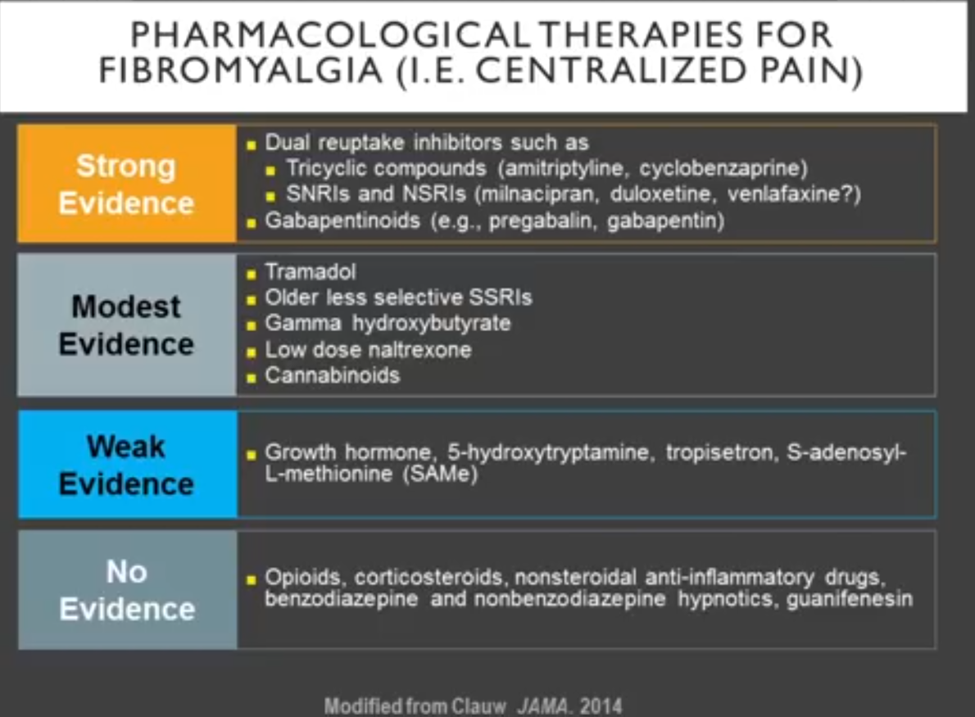
The gabapentinoids are anti-seizure medications that work by reducing hypersensitivity of cell membranes. They are a membrane stabilizer.
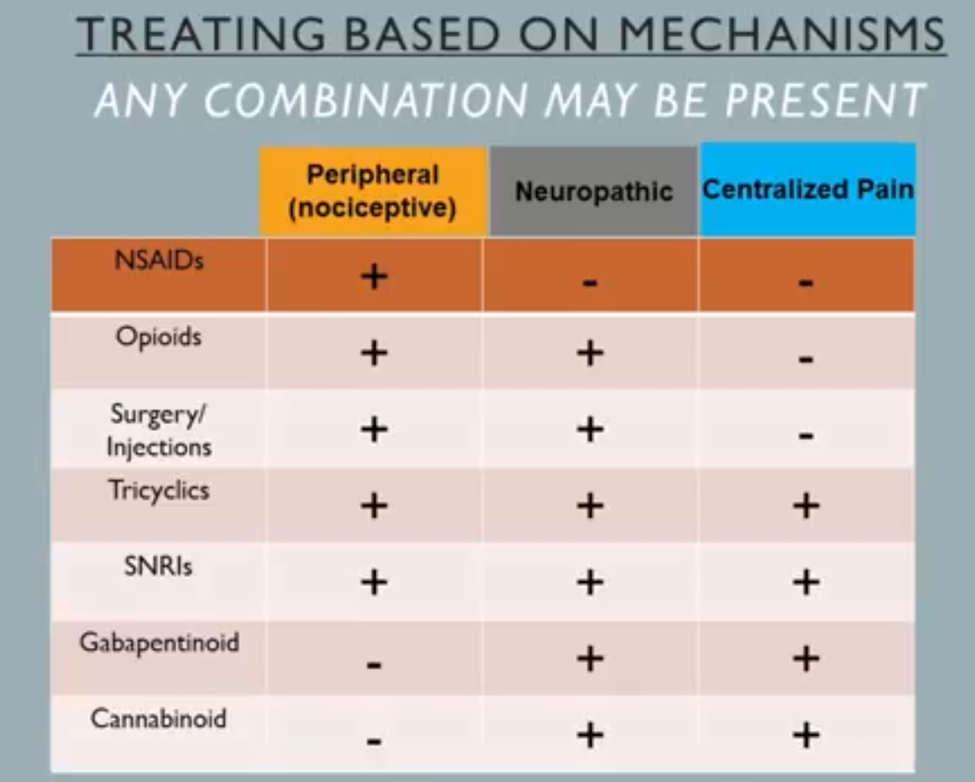
Non-Pharmacologic Therapies
- Education
- Physical therapy
- Exercise
- Cognitive behavioral therapy (with a therapist/psychologist)
All have strong evidence and the magnitude of response to these therapies exceeds that for medications.
These treatments can result in sustained improvements in symptoms. Access, compliance are limited for certain people, unfortunately.
Fibroguide
Fibroguide from the University of Michigan is an educational and self-management resource supporting a patient-centric model of chronic pain care. Its an online cognitive behavioral module. Patients who used this had a 29% reduction vs 8% reduction in those who didn’t use it.
Complementary and Alternative Medicine Techniques
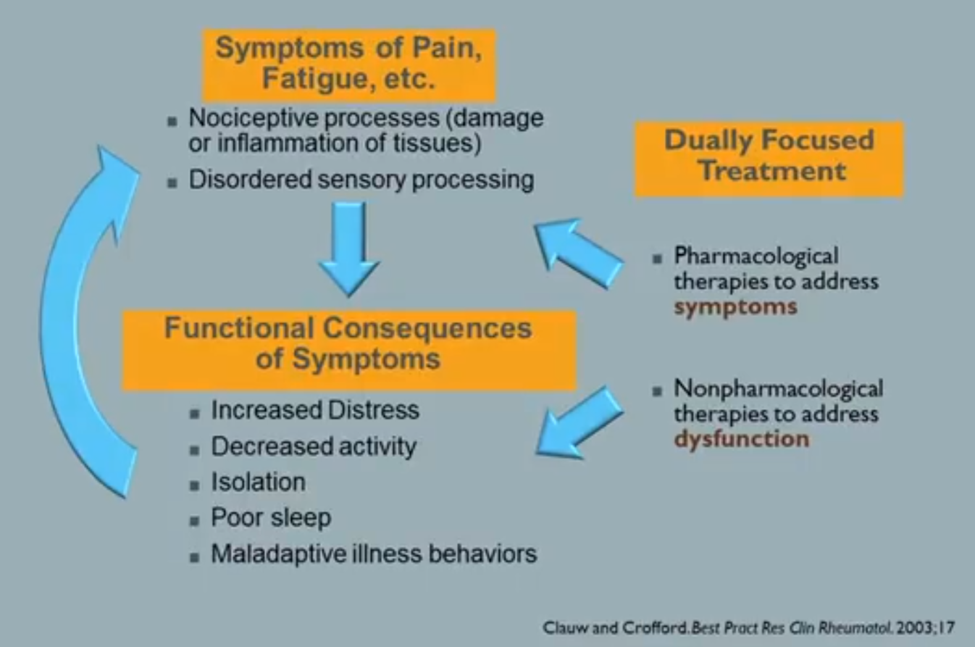
Chart below emphasizes that recovery requires addressing symptoms with pharmacological therapies (which could be herbs) AND addressing the dysfunction with nonpharmacological therapies...both need to be done.
See also: Dispel Wind/Damp/Cold, Relieve Joint & Muscle Pain
Articles/Studies
- Fibromyalgia, Chronic Fatigue, and Multiple Chemical Sensitivities – A Unified Hypothesis
- Fibromyalgia and CFS: A Clinical Update 2013
- Plasma and interstitial levels of endocannabinoids and N-acylethanolamines in patients with chronic widespread pain and fibromyalgia: a systematic review and meta-analysis
Causes / Risk Factors
- Researchers find main source of pain is in the blood vessels
- Increased gut permeability and bacterial translocation are associated with fibromyalgia and myalgic encephalomyelitis/chronic fatigue syndrome: implications for disease-related biomarker discovery.
- Study analyzes brain changes associated with juvenile fibromyalgia
- Low levels of serum vitamin D3 are associated with fibromyalgia syndrome in pre-menopausal women.
- Chronic Toxin Overload: The Real Cause of Fibromyalgia and Chronic Fatigue Syndrome
- The GC-MS metabolomics signature in patients with fibromyalgia syndrome directs to dysbiosis as an aspect contributing factor of FMS pathophysiology.
- The dietary additive excitotoxins MSG and aspartame contribute to Fibromyalgia symptoms
- This study suggests that in some cases chronic fatigue and Fibromyalgia can be temporally related to immunization, as part of ASIA syndrome.
- Patients with Fibromyalgia have overnight falls in arterial oxygen saturation.
- Although serum levels of calcium in Fibromyalgia patients is usually witihin normal range, intracellular calcium concentrations are low.
- Among women with Fibromyalgia, pain symptoms early in the day are associated with variations in function of the hypothalamic-pituitary-adrenal axis (e.g. high cortisol).
- Persons with Fibromyalgia and rheumatoid arthritis may have a hypothalamic-pituitary-adrenal axis disturbance (e.g. high cortisol).
- Patients with Fibromyalgia appear to have low levels of zinc and magnesium correlating with tender points and fatigue, respectively.
- Vitamin D deficiency may be associated with anxiety and depression in fibromyalgia.
- Elevated homocysteine levels in the cerebrospinal fluid of patients with Fibromyalgia and chronic fatigue syndrome is probably due in part to vitamin b12 deficiency.
- Magnesium deficiency is common in patients with chronic fatigue syndrome and fibromyalgia.
- Magnesium levels in the erythrocytes (red blood cells) of patients with Fibromyalgia are lower than in normal subjects.
- Fibromyalgia and non-celiac gluten sensitivity: a description with remission of fibromyalgia
- Determining the association between fibromyalgia, the gut microbiome and its biomarkers: A systematic review.
Treatment
Integrative Treatment Approach
It’s not just about the pills, or physiotherapy, or just about complementary. You have to everything together. And there can be more than just centralized pain going on, below we see pain separated into 3 categories. So it’s important for the doctor to delineate which of the following types of pain are involved since treatment varies:
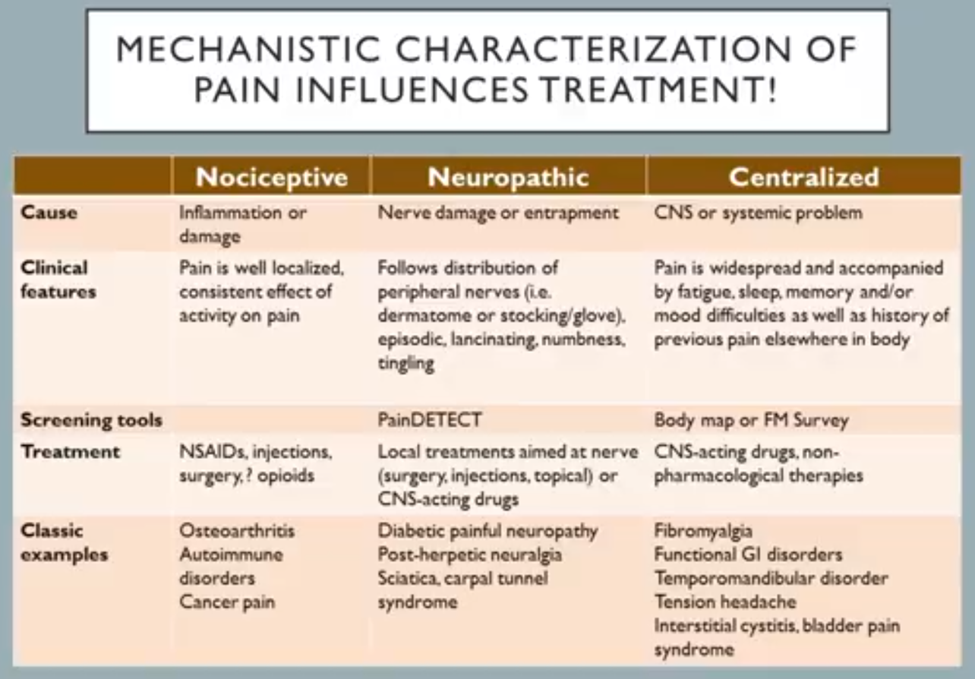
See Nociception, Neuropathic, Centralized
See also: Plants for Treating Fibromyalgia
- White Paper: Proper Diagnosis is Half the Cure for Fibromyalgia Patients
- Paper by herbalist, Dr. Khalsa
- Improving Fibromyalgia Evaluation and Outcomes
- Sensitive to Everything? Addressing “Immune Systems Gone Wild” in Fibromyalgia
- Green light-based analgesia - novel nonpharmacological approach to fibromyalgia pain.
- Dietary interventions in fibromyalgia: a systematic review - PubMed
- Photobiomodulation therapy combined with static magnetic field is better than placebo in patients with fibromyalgia.
- Green light exposure improves pain and quality of life in fibromyalgia patients.
- Short-term complementary and alternative medicine on quality of life in women with Fibromyalgia
- Palmitoylethanolamide and acetyl-L-carnitine act synergistically with duloxetine and pregabalin in fibromyalgia.
- Effectiveness of traditional Chinese exercise in patients with fibromyalgia syndrome.
- Low-frequency pulsed electromagnetic field therapy in fibromyalgia.
- Effects of **antioxidants** on pain perception in patients with fibromyalgia. This review found that antioxidant supplementation is efficient in reducing pain in nine of the studies reviewed. Studies with a duration of supplementation of at least 6 weeks showed a benefit on pain perception in 80% of the patients included in these studies. The benefits shown by vitamins and coenzyme Q10 are remarkable.
- **Electroacupuncture** reduces fibromyalgia pain.
- **Acupuncture** in the treatment of fibromyalgia: what has changed in the last 10 years?
- **Magnesium and malic acid** supplement for fibromyalgia.
- **Hydroxytyrosol** as a promising ally in the treatment of fibromyalgia.
- **Vitamin D** supplementation has significant therapeutic benefits in the management of fibromyalgia syndrome.
- Evaluation of **S-adenosylmethionine** in primary fibromyalgia. A double-blind crossover study
- Oral **S-adenosylmethionine** in primary fibromyalgia. Double-blind clinical evaluation
- **Mindfulness Meditation** for Fibromyalgia: Mechanistic and Clinical Considerations
- **Mindfulness meditation** alleviates depressive symptoms in women with fibromyalgia.
- **Mindfulness-based stress reduction** technique has therapeutic value in women with multiple chemical sensitivity, chronic fatigue syndrome, and fibromyalgia.
- Exercise-based motivational interviewing** was associated with sustained clinical benefits in fibromyalgia patients who were not taking opioids.
- **Sleep Quality** as a Major Factor in Fibromyalgia and Chronic Pain and Fatigue Disorders
- **Aquatic exercise** training for fibromyalgia
- Detoxification
- In Fibromyalgia Syndrome patients **Tai Ji Quan** should be regarded as an effective rehabilitation method.
- Update: **Injection Therapies** for Chronic Fatigue and Fibromyalgia
- **Creatine** supplementation in fibromyalgia: a randomized, double-blind, placebo-controlled trial. Creatine supplementation increased intramuscular phosphorylcreatine content and improved lower- and upper-body muscle function, with minor changes in other fibromyalgia features. These findings introduce creatine supplementation as a useful dietary intervention to improve muscle function in fibromyalgia patients.
- **Probiotics** improved impulsivity and decision-making in fibromyalgia patients.
- The **elimination of MSG, Aspartame and other excitotoxins** from the diets of patients with Fibromyalgia is a successful treatment option.
- A pilot trial evaluating **Meta050**, a proprietary combination of reduced iso-alpha acids, rosemary extract and oleanolic acid in patients with arthritis and fibromyalgia.
- The existing literature provides modest support for the therapeutic value of **massage** for fibromyalgia.
- **Exercise** improves mood and physical function of individiuals with fibromyalgia.
- **Sauna therapy** and exercise act by raising the availability of tetrahydrobiopterin?
- Various **spa therapies** have therapeutic value for chronic low back pain, stabilized rheumatoid arthritis, ankylosing spondylitis and fibromyalgia.
- **Pilates** training has a therapeutic effect in people with Fibromyalgia syndrome
- **Tai Chi** is potentially beneficial to patients with fibromyalgia.
- The practice of **Qigong** significantly improves patients with fibromyalgia.
- **Guided imagery** may have positive effects on pain, functional status, and self-efficacy in persons diagnosed with fibromyalgia.
- **Religiosity** may have a protective effect on the physiological effects of stress among women with fibromyalgia.
- **Mud-bath** treatment is efficacious and tolerable in primary Fibromyalgia.
- **Homeopathic** treatment appears to be safe and effective in patients with Fibromyalgia
- The homeopathic remedy **Rhus toxicodendron 6c** may be effective in some patients with fibromyalgia.
- Individualized **homeopathic** treatment improves clinical status in Fibromyalgia patients.
- Efficacy and safety of **hyperbaric oxygen** therapy for fibromyalgia.
- **Hyperbaric oxygen** can improve quality of life and wellbeing of FMS patients by inducing neuroplasticity and significantly rectifying brain activity in pain related areas of FMS patients.
- Hyperbaric oxygen therapy** can improve pain symptoms, quality of life, emotional and social function of patients suffering from fibromyalgia triggered by TBI.
- Hyperbaric oxygen** therapy appears to be feasible and safe for individuals with fibromyalgia.
- Hyperbaric oxygen** therapy has therapeutic value in the treatment of Fibromyalgia syndrome.
- A **yoga** program has potential benefits for women with fibromyalgia.
- An eight-week **yoga** intervention is associated with improvements in pain, psychological functioning and mindfulness, and changes in cortisol levels in women with fibromyalgia.
- **Balneotherapy** at the Dead Sea area appears to produce a statistically significant substantial improvement in the number of active joints and tender points in both male and female patients with Fibromyalgia and psoriatic arthritis.
- **Wool clothing** alleviates patient suffering from fibromyalgia.
- Fibromyalgia may respond well to the **elimination of xenobiotics** (environmental chemicals).
- **Cellfood (deutrosulfazyme)** improves Fibromyalgia symptoms and health-related quality of life.
- Clinical impact of a **gluten-free diet** of health-related quality of life in seven Fibromyalgia syndrome patients with associated celiac disease.
- **Craniosacral therapy** contributes to improving anxiety and quality of life levels in Fibromyalgia patients.
- **5-HTP** improves Fibromyalgia symptoms in a human clinical study.
- **5-HTP and tryptophan** improves Fibromyalgia symptoms
- **Acetyl-L-carnitine** significantly improves the condition of patients with fibromyalgia.
- The efficacy of **capsaicin** on sleep quality and fatigue in fibromyalgia.
- Administration of **melatonin**, alone or in a combination with fluoxetine was effective in the treatment of patients with fibromyalgia.
- A combination of **ascorbigen (a food derived form of vitamin c) and broccoli powder** reduces pain sensitivity and improves quality of life in patients with fibromyalgia.
- A combination of **malic acid and magnesium** is safe and may be beneficial in the treatment of patients with fibromyalgia.
- A mostly **raw food diet** improves Fibromyalgia syndrome symptoms.
- **Coenzyme Q10** may be of benefit in patients with fibromyalgia.
- **D-ribose** significantly reduces clinical symptoms in patients suffering from Fibromyalgia and chronic fatigue syndrome.
- Due to the high hair calcium and magnesium levels in patients with Fibromyalgia supplementation with **calcium and magnesium** may be beneficial.
- Due to the higher levels of oxidative stress in patients with Fibromyalgia supplementation with **antioxidant vitamins** may be beneficial.
- Optimization of **vitamin D** levels in FMS had a positive effect on the perception of pain.
- **Vitamin D** may be therapeuticinsome patients with fibromyalgia.
- **Sam-e** improves symptoms in primary fibromyalgia.
- **Meditation** awareness training may be a suitable treatment for adults with fibromyalgia.
- **Acupuncture** significantly improved pain and symptoms of fibromyalgia.
- **Laser therapy** is effective on pain, muscle spasm, morning stiffness, and total tender point number in fibromyalgia.
- Low-level laser therapy** provided relief from Fibromyalgia symptoms in patients.
- See Hidrox for a new treatment
- Efficacy of **whole-body vibration** training on brain-derived neurotrophic factor, clinical and functional outcomes, and quality of life in women with fibromyalgia.