Alehouse
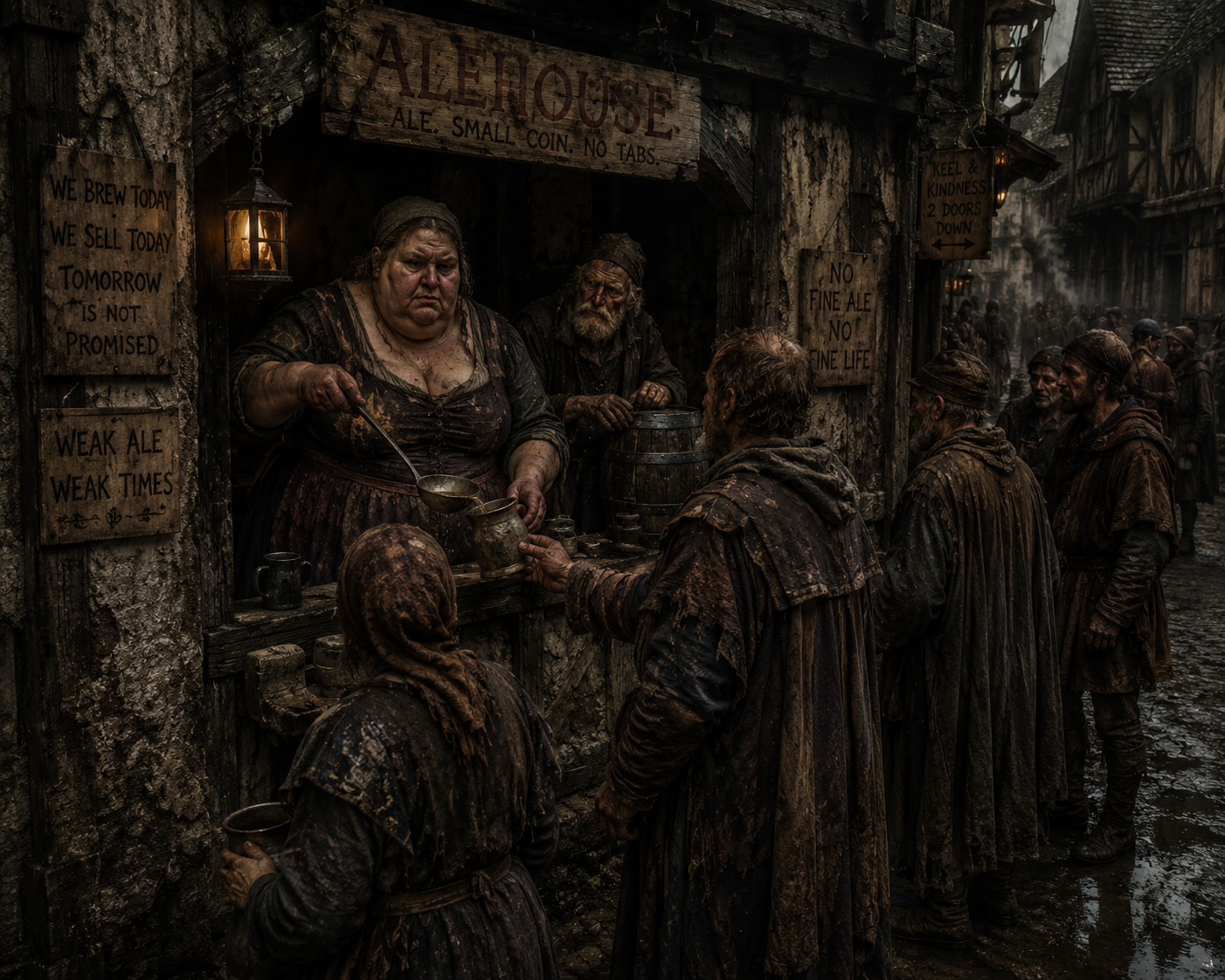
By the third day the ale had already begun to turn.
Everybody knew this.
Old Harl knew it because he had brewed the barrel himself in the rear shed using grain too damp to store properly. His daughter Bette knew it because she had tasted the froth that morning and made the exact face one makes when swallowing weak vinegar mixed with bread water. The customers knew it because they were not idiots. Even the children hovering nearby with cracked clay mugs knew it because the smell coming off the ladle had acquired that faintly rotten sweetness of ale entering its argumentative phase.
Still, the lane filled anyway.
That was the thing outsiders never understood about alehouses.
The ale itself was almost secondary.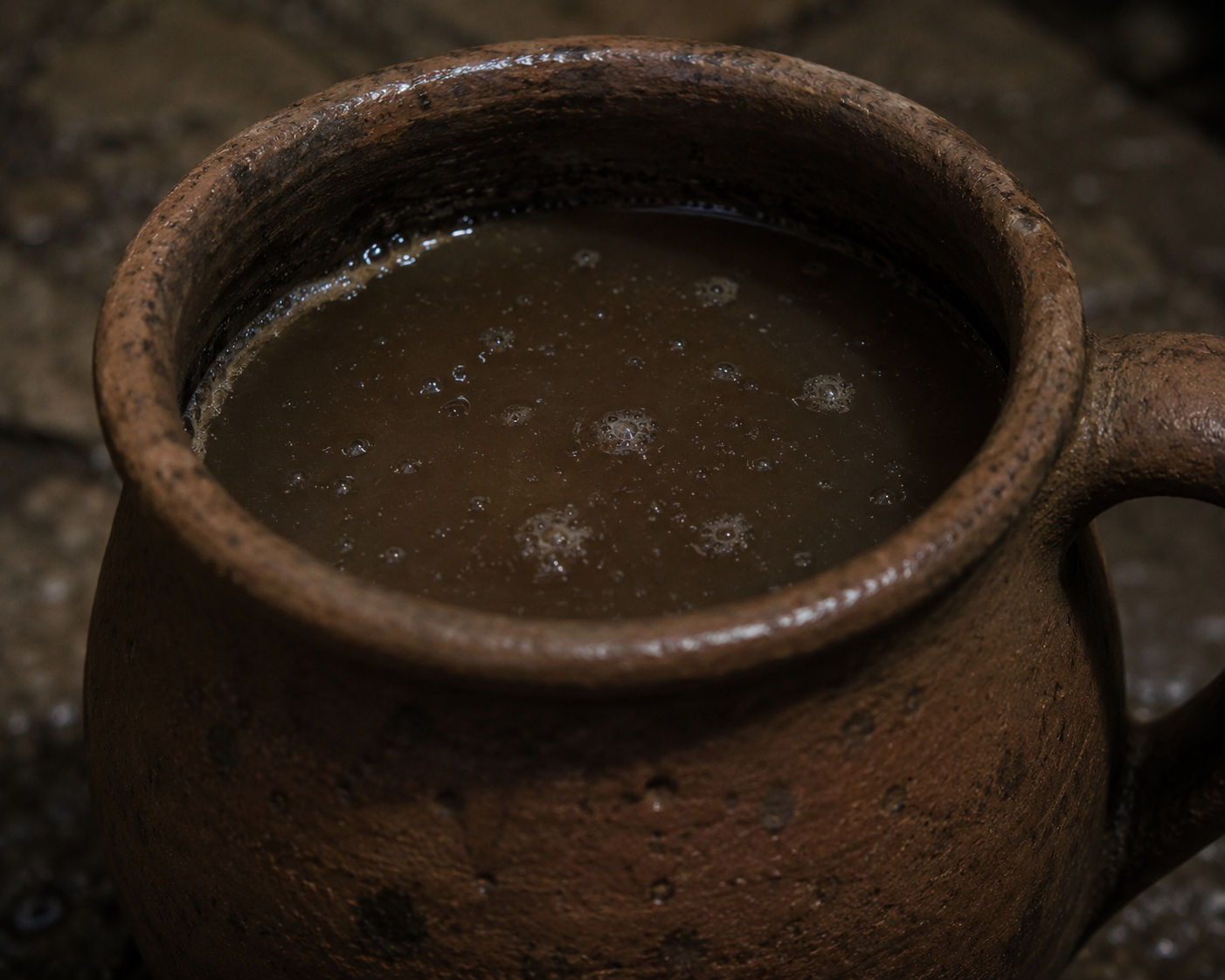
Nobody came expecting pleasure.
The alehouse existed because ordinary life in the Kingdom pressed downward continuously upon ordinary people until any interruption whatsoever became valuable. A weak cup of sour brown liquid ladled from a barrel beneath rain-dripping eaves counted as interruption enough.
The house belonged to Bette and her father, technically. Though “belonged” was perhaps ambitious. The structure leaned visibly leftward and shared one wall with a cooper’s shed that had partially collapsed six winters earlier and never recovered. The roof sweated during rainstorms. The upper room smelled permanently of old smoke and cabbage. Rats moved through the walls with the confidence of hereditary ownership.
Yet the alehouse appeared reliably every planting season regardless.
A board was hung.
The barrel rolled forward.
The ladle produced.
People gathered.
No charter.
No guild.
No permanence.
By autumn the place might vanish entirely and become merely somebody’s miserable house again.
Bette herself was impossible to ignore.
She was enormous.
Not mythically, jovially fat like cheerful festival illustrations painted for nobles who had never smelled real poverty, but genuinely, inconveniently immense. Thick arms. Wet hair pinned back carelessly. Breasts like sacks beneath a stained bodice. Ankles swollen from standing. Her face had the exhausted hostility common among women who had spent thirty years hauling, cooking, cleaning, bargaining, bleeding, and enduring.
Nobody called her pretty.
Nobody expected her to be.
And yet there was a brutal competence to her movements people trusted instinctively.
She handled the ladle like a weapon.
Measured portions precisely.
Took coin without confusion.
Remembered debt with terrifying accuracy.
A drunk laborer once accused her of short pouring and she had lifted him bodily by the collar and thrown him into the drainage ditch outside while the entire queue watched silently.
Since then complaints diminished significantly.
Behind her sat old Harl beside the barrel itself, wrapped in two blankets despite the season. He resembled a collapsed scarecrow left too long in weather. One eye clouded white years ago. His beard retained traces of old grain mash. He smelled faintly of yeast even at distance.
Sometimes he muttered.
Mostly about brewing.
“Too warm this year.”
“Bad water from the north ditch.”
“Hops gone thin.”
“Should’ve boiled longer.”
Nobody listened closely.
The line extended along the muddy lane.
Carters.
Field women.
A ditch digger with a wrapped hand.
Two apprentices.
An old woman buying ale for somebody too sick to stand.
Three laborers already drunk enough to become philosophical.
Children carrying pots bigger than their torsos.
Most brought their own vessels because mugs cost money and washing consumed water.
The atmosphere was not festive.
That mattered.
Modern people imagine public drinking as energetic. But the actual alehouse hour often possessed the strange weary emotional texture of people queuing briefly for manageable disappointment.
Rain drizzled.
Mud thickened.
Someone coughed continuously.
A baby cried nearby.
The cooper argued with his wife through an open window above the lane.
A dog with mange slept beneath the barrel cart.
And still the queue persisted patiently because for a few copper bits one acquired:
calories,
mild intoxication,
social visibility,
and an excuse not to go home immediately.
That last part mattered enormously.
Homes in districts like these were cramped beyond modern comprehension. Eight people in one room. Damp bedding. Endless labor. Screaming children. In-laws. Illness. Silence. Resentment.
The alehouse created temporary neutral territory.
One could stand outside with a pot and become merely another tired human being beneath the evening drizzle.
A pair of Bee Penitants passed at dusk.
Immediately half the queue watched them.
The Bee Men always attracted attention because they looked simultaneously ridiculous and deeply convinced of their own significance. These wore rain-dark purple robes speckled with wax dust and carried one of the smaller ceremonial bee standards wrapped in oilcloth.
One of the laborers muttered:
“Sacred Reefers.”
Another snorted ale through his nose.
The senior Penitant sighed visibly before continuing onward with the expression of a man spiritually exhausted by existing in public.
Old Harl watched them go.
“Used to be six temples near the harbor,” he muttered vaguely. “Before the fires.”
Nobody responded because nobody had asked.
Bette continued ladling.
A thin girl arrived carrying a better quality copper pot than the surrounding district justified. Servant class, probably. She presented a small silver clipped token.
“House Marrowin,” she said carefully. “For the kitchen.”
Bette inspected the token suspiciously.
“Token’s old.”
“The cook sent me.”
“Tell the cook his boy still owes two shillings.”
The girl nodded with the weary dignity of someone accustomed to aristocratic embarrassment and waited while her pot was filled.
Further down the lane two men argued about road tolls near Dulmar. Somebody mentioned plague rumors upriver. Somebody else swore the King was dead again. A one-legged veteran explained loudly why legion boots had declined in quality since his youth.
Nobody particularly cared.
The ale slowly disappeared.
As darkness thickened lanterns appeared beneath awnings and windows. Smoke drifted low through the lane. Bette’s shoulders ached. Her father coughed into a rag and inspected the remaining liquid with increasing pessimism.
By tomorrow the brew would become actively troublesome.
Everybody knew it.
Which meant tonight mattered.
A few customers lingered beneath the overhang drinking in silence while rain ticked softly from roof edges. One old woman hummed tunelessly to herself. A boy attempted flute music somewhere nearby and failed repeatedly.
No bard.
No merriment.
No roaring hearth.
No buxom serving fantasy.
Just weak ale and exhausted people postponing tomorrow slightly.
And yet there remained something almost sacred in it.
Not because the ale was good.
Not because life was good.
But because even here, in the damp lane beneath collapsing timber and dripping thatch, people still performed the tiny stubborn rituals of continuity.
A barrel rolled forward.
A ladle raised.
A few coins exchanged hands.
The world, somehow, continued another evening.