Coherer
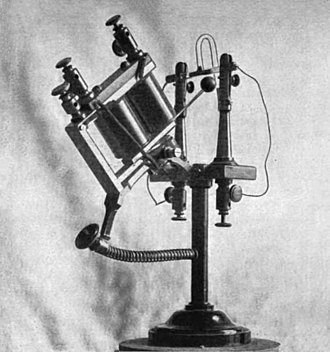
NAME: Coherer
OTHER-NAME: Branly-Lodge coherer
DATE INVENTED/BEGAN: 1890 and 1894
PLACE INVENTED/BEGAN: Paris and London
DATE ENDED:
PLACE ENDED:
CATEGORY: Technology
DISCIPLINE: Invention
ASSESSMENT: Greatly improved radio reception
LANGUAGE: French, English
DETAILS:
After early experiments in 1890 by the French physicist Branly, the English physicist Oliver Lodge* used the theory that electromagnetic radiation caused metal particles to stick together.
He developed the coherer, in which incoming (weak) radio signals) would enter a glass tube filled with loose iron filings connected to a radio receiver. The radiation would make the filings cohere and in this way manifest the arrival of the signal. As soon as the signal had ceased, a ‘trembler’ would shake the tube and loosen the filings again, ready for the next signal to arrive.
ONELINER: The coherer was a primitive form of radio signal detector used in the first radio receivers during the wireless telegraphy era at the beginning of the 20th century
EXTRA-CONNECTIONS: None
BIBLIOGRAPHY:
EB
DSB