Lodge
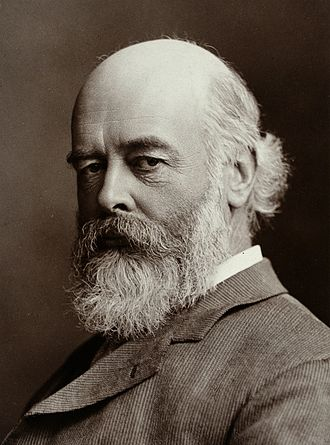
Name: Sir Oliver Joseph Lodge
Achievements: British physicist who, simultaneously with Edouard Branly, perfected the coherer, a radio-wave detector.
Born: June 12, 1851; Penkhull, Staffordshire, England
Died: August 22, 1940; Lake, near Salisbury, Wiltshire, England (Aged 89)
Field & Discipline: Science; Physics
Language: English
Father: Oliver Lodge
Mother: Grace Heath (married 1849)
Siblings: Seven younger brothers and one sister
Spouse: Mary Fanny Alexander Marshall (married 1877; d. 1929)
Children: 14 children, 6 sons and 6 daughters surviving infancy; youngest
son, Raymond (d. 1915).
Education: Newport Grammar School, 1859-63; private tuition from the Rector of
Combs in Suffolk, 1863-65; University of London, 1872-77
Major Work:
“Signalling Through Space Without Wires” (1894)
Life & Times:
In 1881, Lodge became the first Professor of Physics at University College in Liverpool, England. It was there, over the next twenty years, that he did most of his scientific work and established an international reputation, through publications and papers presented mainly to the British Association.
After a short visit to Karlsruhe, Germany, in 1881, where he first met [influenced by] [Helmholtz](https://app.thebrain.com/brain/f3e16344-7cd9-4fa3-ae1d-59876e128474/1f112bdf-7498-5c00-8dc5-ff836874ced7)* and his young assistant [influenced by] Hertz*, Lodge researched a wide range of topics, including ionic conduction, electric storage batteries, photoelectricity, dust and thermal and electrostatic precipitation, sparks and lightning conductors and electromagnetic waves along wires.
In 1884, Lodge became interested in psychic phenomena such as telepathy, telekinesis, and communication with the dead. He joined the Society for Psychical Research, whose members included [fellow psychic with] Wallace*, [fellow psychic with] J.J. Thomson*, [fellow psychic with] Rayleigh*, [fellow psychic with] Crookes*, [fellow psychic with] Tennyson*, Charles Dodgson, (better known as Lewis [fellow psychic with] Carroll* of “Alice in Wonderland” fame) and, a few years later, [fellow psychic with] Conan Doyle*.
In particular, he became very close to two other members, [fellow psychic with] Ruskin* and [fellow psychic with] Balfour* who later became prime minister and frequently played golf with Lodge.
During his time at Liverpool, Lodge also conducted experiments in the propagation and reception of electromagnetic waves, coming close to anticipating Hertz's discovery of propagating waves.
Lodge improved the method of detecting electromagnetic waves. In 1890, the French physicist, Edouard Branly, showed that loose iron filings in a glass tube would coalesce, or cohere, under the influence of radiated electric waves. Lodge added an automatic “trembler” device which tapped the container of filings each time coherence occurred, to separate the filings and prepare them for the next signal reception.
When connected to a receiving circuit Lodge’s [invented] [coherer](https://app.thebrain.com/brain/f3e16344-7cd9-4fa3-ae1d-59876e128474/104eb725-3c3b-5c41-88bb-078fc00a096c)* detected Morse code signals transmitted by radio wave and enabled them to be transcribed onto paper. In 1894, he demonstrated the device and it quickly became the standard detector in early wireless telegraph receivers.
Lodge transmitted the first ever radio message at a meeting of the British Association in Oxford on 14th August 1894. At the meeting, he transmitted letters using the Morse code, from his induction coil and spark gap transmitter in the Clarendon Laboratory, to a receiver 60 metres away in the Oxford Museum.
The receiving equipment (his coherer connected to a Morse recorder) printed onto paper tape. Two years later the world saw the first practical application of radio by [work related to] [Marconi](https://app.thebrain.com/brain/f3e16344-7cd9-4fa3-ae1d-59876e128474/db1bf89e-0211-5dbc-b324-7bfcd6d8493c)*, and Lodge lost out in the patent dispute that followed.
In 1900, Lodge became the Principal of the new University of Birmingham, a job he was to hold for twenty years. He became President of Society for Psychical Research in 1901 and again in 1932.
In 1902, Lodge was given a knighthood and regularly corresponded with the Conservative Prime Minister, Arthur Balfour, on social and educational issues.
During his time in Birmingham, Lodge assisted Sidney and Beatrice [collaborated with] Webb* with their work on the Poor Law and, in the same period was a regular public speaker and broadcaster.
Lodge became President of the British Association in 1913 and after retiring in 1920, continued to write, publishing “Talks About Wireless” in 1925.
Extra Connections:
[his invention improved by] Braun* improved on the coherer.
Admired [a fan of] Heaviside*.
Worked with [worked with] FitzGerald*.
His work related to that of [work related to] Fessenden*
He knew [knew] Mackinder*
Assessment: He succeeded as a research physicist and pioneer in wireless telegraphy and as an educational reformer, until 1910, when he dedicated a lot of his time to psychical phenomena and spiritualism and the reconciliation of science and religion.
Oneliner: Oliver Lodge, inventor of radio coherer
Bibliography:
- Rowlands, Peter and J. Patrick Wilson, Oliver Lodge and the Invention of Radio, Liverpool, PD Publications, 1994.