Bunuel L
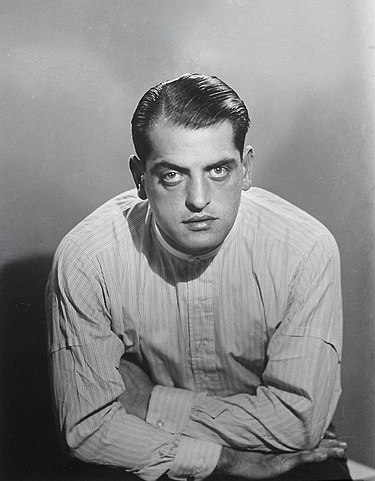
NAME: Buñuel, Luis
ALIAS: Luis Bunuel
DATE OF BIRTH: February 22nd, 1900
PLACE OF BIRTH: Calanada, Teruel, Spain
DATE OF DEATH: July 29th, 1983
PLACE OF DEATH: Mexico City, Mexico
DISCIPLINE: The Arts
FIELD: Cinema
ASSESSMENT: Cult cinema director
LANGUAGE/S: Spanish, French and English
EDUCATION: Jesuit primary education. Residencia de Estudiantes in Madrid (Agricultural Engineering, then switched to Natural Sciences under Ignacio Bolívar). Universidad Central de Madrid (History). Acting school (Paris: taught by Jean Epstein).
ACHIEVEMENTS: Won an Oscar in 1972; one of many awards from different festivals and awards ceremonies.
MAJOR-WORKS: “Un Chien Andalou” (1929), “L’Age d’Or” (1930), “Los Olvidados” (1950), “Subida al Cielo” (1952), “Las Aventuras de Robinson Crusoe” (1954), “Ensayo de un Crimen” (1955), “Nazarín” (1958), “La Joven” (1960), “Viridiana” (1961), “El Angel Exterminador” (1962) “Simón del Desierto” (1965), “Belle de Jour” (1967), “La Voie Lactée” (1969) “Le Charme Discret de la Bourgeoisie” (1972), “Le Fantôme de la Liberté” (1974) “Cet Obscur Objet du Désir” (1977)
PARENTS: Leonardo Buñuel González and María Portolés Cerezuela
SPOUSE: Jeanne Rucar; married in 1934
SIBLINGS: Maria (1901), Alicia (1902), Conchita (1904), Leonardo (1910), Margarita (1912), and Alfonso (1915).
CHILDREN: Juan Luis (1934), Rafael (1940)
DETAILS:
After leaving high school, Bunuel moved to Madrid where he began his college education, during which he met future painter Salvador Dalí* and future writer Federico García Lorca*. While still at university Buñuel started an athletic team and actively participated in boxing matches.
Around 1922 he became interested in North American cinema and helped organize some of the first screenings of the cinema club in Spain.
After university Buñuel moved to Paris to work in the International Institute for Intellectual Cooperation and many other artists and writers. In 1926 he began acting school under Jean Epstein and in 1928 wrote ‘Goya,’ his first script.
Thanks to a loan from his mother, Buñuel directed his first film: “Un Chien Andalou,” with the help of Dalí.
The film caused a sensation and is now considered to be the epitome of Surrealist cinema. Bunuel became associated with the Surrealist group, including Man Ray, Louis Aragon, André Bretón*, Max Ernst, Paul Eluard, Tristan Tzara*, Jean Arp*, and Réné Magritte*.
In 1930 Bunuel’s “L’Age d’Or” was released but was banned in France. In 1932 came: “Las Hurdes/Tierra Sin Pan,” a documentary about poverty and misery in a remote Spanish province. For two years the film was banned in Spain.
In 1934 Buñuel married Jeanne Rucar and his first son, Juan Luis, was born. In 1936 the Spanish Revolution started and, still in Paris, Bunuel produced propaganda work for the Republican cause.
Buñuel was then sent by Spain to Hollywood to supervise the development of two films about the Spanish Civil War. After this work ended he was left without a job. In 1940 Buñuel’s second son, Rafael, was born.
Around 1945 Buñuel went to work for Warner Bros. in Los Angeles, where he renewed acquaintance with André Bretón and other old friends. In 1946 Buñuel went to Mexico, where he was to film an adaptation of Lorca’s story, ‘The House of Bernardo Alba.’ The project fell through and he ended up filming “Gran Casino.”
Buñuel continued making films including: “Subida al Cielo” (1952), “Las Aventuras de Robinson Crusoe” (1954), “Ensayo de un Crimen” (1955), “Nazarín” (1958), “La Joven” (1960), “Viridiana” (1961), “El Angel Exterminador” (1962) “Simón del Desierto” (1965).
In 1967 “Belle du Jour” was released and went on to win four awards in different festivals. “La Voie Lactée” (1969) “Le Charme Discret de la Bourgeoisie” (1972), “Le Fantôme de la Liberté” (1974) “Cet Obscur Objet du Désir” (1977) were all released and were either nominated or won awards. “Cet Obscur Objet du Désir” was Buñuel’s last film.
He was awarded Mexico’s National Art Prize. In 1982 he published his memoirs, titled ‘Mi Ultimo Suspiro’ and dictated to Jean-Claude Carrière. In 1983 Buñuel died of cirrhosis of the liver.
EXTRA CONNECTIONS: While in the United States, Buñuel associated with other celebrity expatriates including Sergei Eisenstein, Josef Von Sternberg, Jacques Feyder, Charles Chaplin and Bertolt Brecht.
For the most part, he was snubbed by many of the people in the film community whom he met during his first trip to America,[105] although he was able to sell some gags to Chaplin for his film The Great Dictator.
Buñuel was hired to produce a shortened version of Leni Riefenstahl's Triumph of the Will (1935) as a demonstration project.
ONELINER: Luis Bunuel, cult Spanish film director
BIBLIOGRAPHY:
C. de Rojo, Alba. Buñuel Iconografía Personal. Mexico D.F.: Fondo de Cultura Económica. 1988
International Movie Database. “Luis Buñuel.” Copyright 1990-2004. http://www.imdb.com/name/nm0000320/