Sondheim S
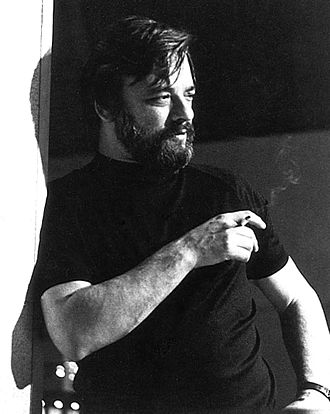
NAME: Sondheim, Stephen
OTHER-NAME: Sondheim, Stephen Joshua
DATE OF BIRTH: 22 March, 1930,
PLACE OF BIRTH: New York, NY, USA
DATE OF DEATH: November 26, 2021
PLACE OF DEATH: N/A
CATEGORY: Music
DISCIPLINE: Composition
ASSESSMENT: Critically acclaimed lyricist/composer who blurred the lines between popular theater and opera and changed the face of American musical theater with his flair for exposing the dark side of humanity.
LANGUAGE: English.
EDUCATION: Ethical Cultural School, New York, 1934-1940; New York Military Academy, 1940-1942; George School, Newtown, Pennsylvania, 1942-1946; Williams College, Williamstown, Massachusetts, 1946-1950
ACHIEVEMENT: Sondheim’s musicals have won Tony awards, Grammies, various critics’ awards and a Pulitzer Prize. He was elected to the American Academy and Institute of Arts and Letters in 1983. Oxford University’s first Visiting Professor of Contemporary Theatre in 1990.
MAJOR-WORK:
Unless otherwise noted, music and lyrics by Stephen Sondheim.
- West Side Story (1957), lyrics by Sondheim; music by Leonard Bernstein; book by Arthur Laurents, produced by Hal Prince.
- Gypsy (1959), lyrics by Sondheim; music by Jule Styne; book by Arthur Laurents, starring Angela Lansbury in 1973 production.
- A Funny Thing Happened on the Way to the Forum (1962), book by Burt Shevelove and Larry Gelbart, produced by Hal Prince, inspired by Plautus, winner of a Tony for best musical in 1963.
- Anyone Can Whistle (1964), book by Arthur Laurents, starring Angela Lansbury.
- Do I Hear a Waltz? (1965), lyrics by Sondheim; music by Richard <collaborated with> Rodgers*; book by Arthur Laurents.
- Company (1970), book by George Furth, produced and directed by Hal Prince.
- Follies (1971), book by James Goldman, produced by Hal Prince, winner of the Drama Critics’ Circle Award for best musical of the year, winner of 7 Tony Awards for best music and lyrics, best director, best choreographer, best scene design, best costumes, best lighting, and best actress (Alexis Smith), premiered in London in 1972.
- A Little Night Music (1973), book by Hugh Wheeler, produced and directed by Hal Prince, winner of a Tony for best musical, turned into a movie starring Elizabeth Taylor.
- The Frogs (1974), a musical version of Aristophanes' comedy with a book by Burt Shevelove, performed in the Yale University swimming pool with chorus members Sigourney Weaver, Meryl Streep, and Christopher Durang, studio recording released in 2001 with Nathan Lane, Brian Stokes Mitchell and Davis Gaines.
- Pacific Overtures (1976), book by John Weidman, produced and directed by Hal Prince.
- Sweeney Todd (1979) book by Hugh Wheeler, produced and directed by Hal Prince, starring Angela Lansbury.
- Merrily We Roll Along (1981) book by George Furth, directed by Hal Prince; revival in 1985 in La Jolla, California; again in 1990 at Arena Stage in Washington, D.C., directed by Douglas Wager.
- Sunday in the Park with George (1984), book by James Lapine, inspired by a <inspired by> Seurat* painting and winner of the 1984 Pulitzer Prize for Drama, starring Bernadette Peters.
- Into the Woods (1987), book by James Lapine, opened at the Old Globe Theater in San Diego California, in 1986, starring Bernadette Peters, named best musical of 1988 by Drama Desk and the New York Drama Critics Circle, won a Tony for best score in 1988, received a 1989 Grammy Award for best original cast recording.
- Assassins (1990), book by John Weidman, won Tony awards for best musical revival for 2003-4, best featured actor in a musical in the role of John Wilkes Booth, best direction of a musical, best orchestrations and best lighting design.
- Passion (1994), written and directed by James Lapine, starring Donna Murphy, filmed and shown on Public Broadcasting stations in the fall of 1996.
- Saturday Night (1997, composed in 1954), book by Julius Epstein and Philip Epstein.
- Bounce, book by John Weidman, Abandoned working titles were Wise Guys and Gold!; tryout runs at the Goodman Theatre, Chicago, Illinois, and at the Kennedy Center in Washington, D.C. in 2003.
PARENTS: Herbert Sondheim, clothes manufacturer, and Etta Janet Fox, dress designer, married 1929, separated 1940, and divorced 1946.
SPOUSE: none
SIBLINGS: none
CHILDREN: none
DETAILS:
The only child of a nouveau riche Jewish family, Sondheim saw little of his parents in their apartment on Central Park West. His father enjoyed playing the piano, and Sondheim started lessons at age 7. When he was 10, his father deserted the family, and his mother moved them to a farm in Pennsylvania, where he befriended the large family of Oscar <friend of> Hammerstein II*, including future actress Susan Blanchard.
Sondheim’s relationship with his mother gradually worsened until the 1970s, when he ceased seeing her. However, he continued to support her financially until her death in 1992. Many believe that his mother inspired such obsessive, manipulative, and controlling female characters as Mamma Rose in Gypsy, Mrs. Lovett in Sweeney Todd, and the Witch in Into the Woods.
A precocious child, Sondheim skipped kindergarten and seventh grade. At age 13 he was given a record of Maurice Ravel’s Piano Trio as a birthday present to Hammerstein, and he cites <influenced by> Ravel* as his primary musical influence. Later he would also cite Oscar Hammerstein, writer/director Burt Shevelove, and playwright/director Arthur Laurents as major influences.
In 1946 he created a musical about his high school: By George. It was a huge hit among his peers. Buoyed by this success, he showed the script to Oscar Hammerstein, who found it horrible but hired Sondheim as an assistant during Allegro in 1947. “It was a seminal influence on my life because it showed me a lot of smart people doing something wrong,” Sondheim said.
Hammerstein also advised Sondheim to write four creative exercises:
a musical based on a play he liked (All That Glitters);
a musical based on a play he found flawed (High Tor);
a musical based on a novel or short story not previously dramatized (Mary Poppins);
an original musical (Climb High)
In 1946 Sondheim moved in with his father. His step-mother was Catholic, and neither of his two step-brothers knew of their father’s Jewish background. At the same time he entered Williams College, where he developed a close circle of friends, including future actor Howard Erskine and future theater producer Charles Hollerith.
Williams College had no budget for student productions, and in 1948 Sondheim had to fight to stage Phinney’s Rainbow. The title referred to the college president, James Phinney Baxter III, and the plot involved a rowdy fraternity whose motto was Strength Through Sex. Sondheim graduated in 1950.
In 1949 Mary Rodgers introduced Sondheim to Hal Prince, who became a collaborator. After college Sondheim won a two-year fellowship and studied with avant-garde composer Milton Babbitt. Later in life when he became Oxford University’s first Visiting Professor of Contemporary Theatre in 1990, he said of Babbitt, “I am his maverick, his one student who went into the popular arts armed with all his serious artillery.”
In 1950 Sondheim met future Broadway stage manager John Barry Ryan III, heir to banker/arts patron Otto Kahn and industrialist Thomas Fortune Ryan, during summer stock. In 1953 Ryan was hired to assist director John Huston in Europe and invited Sondheim to accompany him. On the set Sondheim befriended Humphrey <a friend of> Bogart*, Jennifer Jones, and film producer David Selznick. The same year, Hammerstein recommended Sondheim to playwright/screenwriter George Oppenheimer for the television series Topper, based on Thorne Smith’s novel The Jovial Ghosts.
Sondheim moved to California, wrote 11 scripts, then returned to New York. During this time he embarked on many projects that never came to fruition. Saturday Night was going to be produced in 1955 until director Lemuel Ayers died of leukemia. It wouldn’t be produced until 1997.
In the fateful summer of 1955 Oppenheimer introduced Sondheim to Arthur Laurents, composer-conductor Leonard <worked with> Bernstein*, and choreographer Jerome Robbins. Laurents offered Sondheim the position of co-lyricist on a modern musical version of Shakespeare’s Romeo and Juliet.
At the time the number of theater productions was in decline, from over 250 productions a year during the 1920s to 87 Broadway productions in 1950. The genre had also gone through evolutionary changes, from moralist, escapist, and formulaic extravaganzas to increasingly serious explorations of societal concerns. Nevertheless, the typical musical still guaranteed a happy ending.
Then West Side Story was launched in 1957. The following year it opened to acclaim in London, beating My Fair Lady for the London Evening Standard’s award for best musical of the year. In 1961 it was made into an Academy Award-winning film.
Following this success, in 1960 Sondheim bought his first home in 1960, sharing a garden with neighbor Katherine <was a neighbor of> Hepburn*. He filled the house with over 2500 records but few books (he was a slow reader) and decorated the walls with a growing collection of games and puzzles.
He also invented games for friends, including “Stardom”, where the object was to sleep with a movie star, and “Analysis”, with tiny upholstered sofas as game pieces. For Prince he invented a game in which players produced a Broadway play. For Bernstein’s 50th birthday he created “The Great Conductor Hunt”. In 1968 and 1969, Sondheim published a series of complicated crossword puzzles in New York magazine. Sondheim was "legendary" in theater circles for "concocting puzzles, scavenger hunts and murder-mystery games,"[10] inspiring the central character of Anthony Shaffer's 1970 play Sleuth
Sondheim entered therapy in 1958, at Laurents’ suggestion. He had had relationships with Mary Rodgers and actress Lee Remick, but knew he was gay. The first boyfriend that people knew of was actor John David Wilder in 1971. Wilder later died of AIDS.
Other friends from this era include actress/singer Julie Andrews, actress Mia Farrow, and conductor/composer Andre Previn. In 1991 he began a relationship Peter Jones, a young composer/lyricist for children’s theater.
Sondheim’s popularity on Broadway has not deterred critics who complain that his songs are “unhummable.” Of the over 800 songs he wrote, only one could be considered a hit: “Send in the Clowns” was recorded by Frank Sinatra in 1973 and again by Judy Collins in 1975. Upon re-release in 1977 it won a Grammy for song of the year.
Fans consider his music to be much more sophisticated than his peers because Sondheim often spurns the conventional repetitive structure of musical theater songs. If people do not hum, they argue, it is because they have not heard the song enough times. In recent years, many singers, jazz and symphonic ensembles have performed his work, and every cast album ever issued is still in print on CD.
ONELINER: Stephen Sondheim, major composer of musicals
EXTRA-CONNECTIONS:
Around 2008, Sondheim approached Lin-Manuel Miranda to work with him translating West Side Story lyrics into Spanish for an upcoming Broadway revival.[141][142] Miranda then approached Sondheim with his new project Hamilton, then called The Hamilton Mixtape, which Sondheim gave notes on.[142][143] Sondheim was originally wary of the project, saying he was "worried that an evening of rap might get monotonous". But he believed Miranda's attention to, and respect for, good rhyming made it work.
Sondheim collaborated with Wynton Marsalis on A Bed and a Chair: A New York Love Affair, an Encores! concert on November 13–17, 2013, at New York City Center.
BIBLIOGRAPHY:
Bordman, Gerald, ed. (1984). The Oxford Companion to American Theatre. New York: Oxford University Press.
Byers, Paula K., sr. ed. (1998, 2nd edition). Encyclopedia of World Biography. Detroit, Michigan: Gale Research.
Columbia Encyclopedia, The. (2000, 6th edition). Columbia: Columbia University Press. General Reference Center, Thomson, Gale. Covina Public Library. March 14, 2005.
Gordon, Joanne. (1990). Art Isn’t Easy: The Achievement of Stephen Sondheim. Carbondale and Edwardsville, Illinois: Southern Illinois University Press.
Hartnoll, Phyllis, ed. (1983, 4th edition). The Oxford Companion to the Theatre. Oxford, England: Oxford University Press.
Secrest, Meryle. (1998). Stephen Sondheim: A Life. New York: Alfred A. Knopf.
Zadan, Craig. (1974, updated in 1986). Sondheim & Co. San Francisco: Harper & Row.
AUDIO/VISUAL:
Internet Broadway Database, http://www.ibdb.com/person.asp?id=12430
Internet Movie Database, http://www.imdb.com/name/nm0814227/
Sondheim.com, http://www.sondheim.com/
Wikipedia.org, http://en.wikipedia.org/wiki/Stephen_Sondheim