Rossetti G
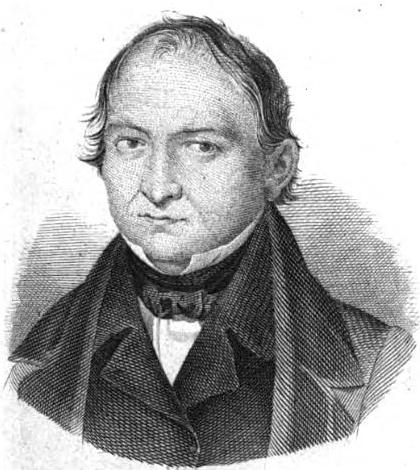
Rossetti, Gabriele Pasquale Giuseppe.
ACHIEVEMENT(S): Father of the painter, Dante Gabriel Rossetti.
NICKNAME/ALIAS: None.
DATE/PLACE OF BIRTH: 28th February 1783, at Vasto, Kingdom of Naples.
DATE/PLACE/AGE AT DEATH: 24th April 1854, at London, England. Aged 71.
DISCIPLINE: Poet.
FIELD: Literature.
LANGUAGE: Italian and English.
PARENTS: ? Rossetti and Maria Francesca Pietrocola.
SIBLINGS: 3 brothers, Andrea, Domenico and Antonio and 3 sisters.
SPOUSE: Frances Mary Lavinia Polidori married 1826.
CHILDREN: Maria Francesca, Dante Gabriel, William Michael and Christina Georgina.
EDUCATION: University of Naples.
MAJOR WORK: 'Thoughts on the Antipapal Spirit Which Produced the Reformation' 1831.
LIFE AND TIMES: Gabriele Rossetti was born in the small town of Vasto on the Adriatic coast of the Abruzzi in what is now Italy. He was particularly admired for his quality as a draughtsman, for his beautiful tenor voice and for his early poems. These talents attracted the attention of the Marchese del Vasto, a nobleman of the house of d'Avalos, thanks to whose patronage, Rossetti was sent to Naples in 1804, where he was able to continue his studies at the university.
In 1807, his patron died and Rossetti found work as a librettist at the San Carlo Opera House in Naples. In 1809, in his twenties, he became a Freemason and in 1813, joined the 'Carbonari', a secret revolutionary political organization.
In 1812 he was appointed sub-curator of ancient marbles and bronzes at the Capodimonte Museum in Naples.
During the winter of 1818-19, he met and discussed recent archaeological discoveries with the poet <met> Percy Bysshe Shelley*.
After the failure of the attempted revolution of 1820 seriously Rossetti was sentenced to death for his membership of the Carbonari and for having attacked King Ferdinand II in verse.
After hiding from the Italian authorities for three years, in April 1824 he escaped to London, England. There he wrote his commentary on Dante’s, ‘The Divine Comedy.’ When it was praised by the Scottish geologist and author, <son’s godfather was> Lyell*, the two men began a remarkable literary friendship. Lyell later became godfather to Rossetti's first son, the painter <son was> Dante Gabriel Rossetti*.
Rossetti also met the poet <met> Coleridge*, who gave him some valuable letters of introduction. He also spent much time with the Italian fraternity in London, including the composer <spent time with> Rossini*. In 1826, he married Frances Mary Lavinia Polidori, the sister of Lord Byron's companion, Dr. John William Polidori.
In 1827, Rossetti's first child, Maria Francesca, was born, then Gabriel Charles Dante in 1828, William Michael in 1829 and Christina Georgina in 1830.
Following the publication of 'Disquisitions on the Antipapal Spirit Which Produced the Reformation' in 1831, Rossetti was appointed Professor of Italian at King’s College in London. There he met fellow exiles, involved himself with pro-democratic propaganda and continued publishing his own poetry.
In 1833, he published his collection of poems, which proved popular in ttheir English translation. 'Smallwood's Magazine' published an original poem by Rossetti in every issue. His five volumes of 'Il Mistero dell'Amor Platonico nel Medio Evo' were completed in 1840. He also wrote such treatises as 'La Beatrice di Dante' (1842), interpreting Beatrice as the symbol of Dante's soul.
In 1842, Rossetti's health deteriorated badly and the following year he took a term's leave of absence from King's College, gave up his private teaching and went to Paris with his wife. After a period in France, much improved in health, he returned to England at the end of 1843.
In the next few years he published three more poetry collections, 'Il Veggente in Solitudine', in 1846, 'Versi' in 1847 and 'L'Arpa Evangelica', 1853.
During that time, he went blind in one eye and, from then on his eyesight deteriorated. In 1847, he resigned from King's and gave up private tuition. The family moved to Mornington Crescent, where his wife, Frances, opened a small school.
He died at the house of his son William.
ASSESSMENT: His idiosyncratic work on Dante was an interesting social and artistic contribution.
EXTRA CONNECTIONS:
Rossetti died on 24 April 1854 in London, aged 71, and is buried on the western side of Highgate Cemetery, adjacent to the grave of Elizabeth Madox Brown, the first wife of Ford Madox Brown. Later burials in the Rossetti family grave are Elizabeth Siddal, wife of Dante Gabriel Rossetti (1862),
ONELINER: Giuseppe Rossetti, scholar-father of DG Rossetti
BIBLIOGRAPHY:
Vincent, E.R., Gabriele Rossetti in England, Oxford: Clarendon Press, 1936.