Welsbach

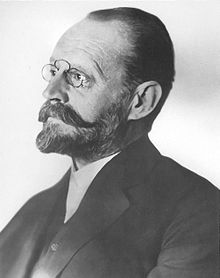
Full Name: Baron Carl Auer von Welsbach
Nickname/Alias: ‘Österreichischer Edison’ (the Austrian Edison)
Achievements: Invented the gas mantle.
Born: 1st September 1858, in Vienna, Austria.
Died: 4th August 1929, in Treibach, Austria. Aged 70.
Field & Discipline: Science; Chemistry
Language: German
Father:: Alois Ritter Auer von Welsbach
Mother: Therese Neuditschka
Siblings: Leopoldine, Alois and Amalie
Spouse: Unknown
Children: Three sons, one daughter
Education: Josefstadter Realschule; Vienna Polytechnic; Heidelberg University
Major Work:
The incandescent gas mantle.
Life & Times:
Welsbach gained his doctorate from Heidelberg University in 1882 and stayed on to work as assistant to [assistant to] Bunsen*. Under Bunsen, he became interested in the area of the rare earths and, in 1885, his research led to the separation of didymia into the two earths neodymia and praseodymia.
After observing the spectra of various rare earths, and with a view to finding a new material suitable for incandescent [experimented on] gaslight*, Welsbach started experiments to produce spectra that were as intense as possible.
He came up with a formula in which cotton fabric was saturated with a ten- percent solution of selected rare earths. After it was exposed to ammonia and dried, he shaped the finished article into a cube and attached it to a gas jet.
The mixture of rare earths used contained 60% zircon oxide, 30% lanthanum oxide and 10% yttrium oxide. Alternatively, 50% zircon and 50% lanthanum oxide could be used. Welsbach was awarded a patent for his chemical process and the design of a new gas mantle in October 1885.
His new product was capable of giving light of between 15 and 20 candlepower and he found an industrial buyer, Lindheim, to produce the mantles. Welsbach himself went into production of ‘fluid’, used to saturate the cotton.
After going on sale to the public, the general consensus was that the lamps were too fragile and they gave off a greenish light.
Welsbach looked into using thorium oxide that gave off a very bright light, but it burned out too quickly. To compensate, he tried purifying the thorium to increase its power, but found that the higher the purity, the dimmer the light. Reduction of the thorium resulted in Welsbach extracting cerium, which proved to be a light-generating substance.
With the intensity of gaslight now increased to sixty candles and with a longer burning period, Welsbach applied for the patent in August 1891 and started manufacturing the new fluid.
Sales rocketed, with half a million lamps sold in Germany within the first fifteen months and 150,000 in Paris by the beginning of 1894. Once production had spread to America, circulation of the burners was estimated at five million worldwide.
After some experimentation, the cerium waste produced by the lamps was processed to form a metal, named after Welsbach: ‘Auer’s metal’, still used in cigarette and gas lighters today.
In 1890, Welsbach had patented a new design for the electric light bulb, known as the osmium lamp. He used amorphous osmium ground to a fine powder, kneaded into a paste with a viscous solution of rubber or burnt sugar, then pressed into threads, and heated until the components of the solution were carbonized.
The threads were then heated to a red glow, cooled and reheated to a white glow, then cooled again, resulting in the carbonized filament lamp. Previous wire filament lamps needed 3.5 watts to burn, but Welsbach’s lamp, launched in 1902, needed only 1.5 watts. The one major disadvantage to the osmium lamp, however, was that it could only be used in a hanging position, as the filaments became soft. The Auer lamp went onto the market in 1902, and was fairly quickly superseded.
Welsbach was a practical, hands-on, scientist, carrying out almost all of his own processing and setting up his own apparatus, as well as being an expert glass blower. As a result of his unceasing hard work and his inventions, he became very wealthy and built himself a castle in Treibach, where he died.
Extra Connections: Welsbach was acquainted with [knew] Edison* and he used cerium discovered by [work related to] Berzelius*.
His rare earth, neodymium would be used to dope [work related to] laser* crystals.
His flickering gas mantle is said to have inspired [work related to] De Forest* to invent the audion
Assessment: Welsbach’s work gave a new lease of life to gas lighting, when electric light was beginning to challenge the continued use of gas.
Oneliner: Carl von Welsbach, inventor of gas mantle
Bibliography:
- Dictionary of Scientific Biography.
- Franz Sedlacek, Blätter für Geschichte de Technik: Auer von Welsbach, Österreichisches Forschungsintitut, Verlag von Julius Sprenger, Vienna, 1934.
http://en.wikipedia.org/wiki/Carl_Auer_von_Welsbach
Carl Auer Freiherr von Welsbach (1 September 1858 – 4 August 1929) was an Austrian scientist and inventor who had a talent for not only discovering advances, but turning them into commercially successful products. He is particularly well known for his work on rare earth elements, which led to the development of the flint used in modern lighters, the gas mantle which brought light to the streets of Europe in the late 19th century, and the development of the metal filament light bulb.
Contents |
Early life
Auer von Welsbach was born in Vienna on 1 September 1858 to Therese and Alois Auer. Alois, ennobled in 1860, was director of the Imperial printing office (K.-k. Hof- und Staatsdruckerei) in the days of the Austrian Empire. Carl went to secondary school in Mariahilf and Josefstadt before graduating in 1877, and joining the Austro-Hungarian Army as a Second Lieutenant.
In 1878 von Welsbach entered the University of Vienna, studying mathematics, general chemistry, engineering physics, and thermodynamics. He then moved to the University of Heidelberg in 1880, where he continued his studies in chemistry under the direction of Robert Bunsen (inventor of the Bunsen burner). He received his Ph.D. in 1882, and returned to Vienna to work as an unpaid assistant in Prof. Adolf Lieben's laboratory, working with chemical separation methods for investigations on rare earth elements.
Rare earths
In 1885 von Welsbach used a method he developed himself to separate didymium for the first time. He saw several different colored versions which he named "praseodymium" (green) and "neodidymium" (pink); the latter then became the more common name for the element, neodymium.
Gas mantle
Later that year von Welsbach received a patent on his development of the gas mantle, which he called Auerlicht, using a chemical mixture of 60% magnesium oxide, 20% lanthanum oxide and 20% yttrium oxide which he called Actinophor. To produce a mantle, guncotton is impregnated with a mixture of Actinophor and then heated, the cotton eventually burns away leaving a solid (albeit fragile) ash which glows brightly when heated. These original mantles gave off a green-tinted light and were not very successful, and his first company formed to sell them failed in 1889.
In 1890 he introduced a new form of the mantle based on a mixture of 99% thorium dioxide and 1% cerium(IV) oxide which he developed in collaboration with his colleague Dr. Haittinger. These proved both more robust as well as having a much "whiter" light. Another company founded to produce the newer design was formed in 1891, working with fellow student from the university Ignaz Kreidl, and the device quickly spread throughout Europe.
He then started work on development of metal-filament mantles, first with platinum wiring, and then osmium. Osmium is very difficult to work with, but he developed a new method which mixed osmium oxide powder with rubber or sugar into a paste, which is then squeezed through a nozzle and fired. The paste burns away, leaving a fine wire of osmium.
Although originally intended to be a new mantle, it was during this period that electricity was being introduced into the market, and he started experimenting with ways to use the filaments as a replacement for the electric arc light. He worked on this until finally developing a workable technique in 1898, and started a new factory to produce his Auer-Oslight, which he introduced commercially in 1902. The metal filament light bulb was a huge improvement on the existing carbon filament designs, lasting much longer, using about 1/2 the electricity for the same amount of light, and being much more robust.
Lighting flint
In 1903 von Welsbach won another patent for a fire striker ("flint") composition named ferrocerium. Welsbach's flints consisted of pyrophoric alloys, 70% cerium and 30% iron, which when scratched or struck would give off sparks. This system remains in wide use in cigarette lighters today. In 1907 he formed Treibacher Chemische Werke GesmbH to build and market the devices. In 1920 he received the Siemens-Ring as his name had become a synonym for the rise of artificial lightning.
Over the rest of his life he turned again to "pure" chemistry and published a number of papers on chemical separation and spectroscopy. He presented a major paper on his work on the separation of radioactive elements in 1922.
Death
Von Welsbach died on 4 August 1929.[1]
Commemoration
Von Welsbach was selected[when?] as a main motif for a high value collectors' coin: the Austrian €25 Fascination Light. The reverse has a partial portrait of Welsbach on the left hand side. The sun shines in the middle of the green niobium pill, while several methods of illumination from the gas light from incandescent light bulbs and neon lamps to modern Light-emitting diodes spread out around the silver ring.
See also
References
- ^ "Karl Auer Dead. Noted Lamp Inventor; Welsbach Incandescent Gas Mantel Made Him Wealthy. A Leading Chemist". New York Times. August 6, 1929. Retrieved 2010-10-08. "Karl Baron Auer von Weisbach, famous Austrian inventor of the incandescent gas mantle, died in his seventy-second year at his castle in Corinthia yesterday ..."
Further reading
- Weeks, Mary Elvira (1932). "The discovery of the elements: XVI. The rare earth elements". Journal of Chemical Education 9 (10): 1751–1773. Bibcode:1932JChEd...9.1751W. doi:10.1021/ed009p1751.
External links
- Auer von Welsbach Museum: Biography
- Treibacher Industrie AG: Company history
- Carl Auer von Welsbach - Das Lebenswerk eines österreichischen Genies
| Authority control |
- 1858 births
- 1929 deaths
- 19th-century Austrian people
- 20th-century Austrian people
- 19th-century chemists
- 20th-century chemists
- 19th-century physicists
- 20th-century physicists
- 19th-century scientists
- 20th-century scientists
- Austrian chemists
- Austrian physicists
- Austrian inventors
- Discoverers of chemical elements
- Werner von Siemens Ring laureates
- Barons of Austria
- Scientists from Vienna
- People from Mariahilf
- People from Josefstadt
- Elliott Cresson Medal recipients