Acheson, EG
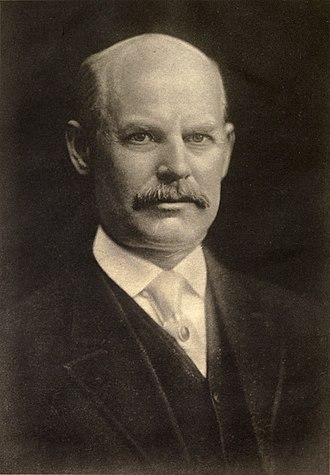
Edward Goodrich AchesonEdward Goodrich Acheson - Wikipedia
Achievements: Invented carborundum.
Born: March 9, 1856; Washington, Pennsylvania
Died: July 6, 1931; New York, NY
Field & Discipline: Science; Invention; Chemistry
Education: Bellefonte Academy, Centre County
Life & Times:
Acheson worked as a timekeeper at the blast furnace at Monticello Furnace, in Gosford, Pennsylvania. At the suggestion of his father (who financed the project) he designed a rock-boring machine for use in coalmines and in 1873 registered the patent. He then worked as a ticket collector for Allegheny Valley Railroad, as an assistant surveyor on a railroad construction job, and as an oil tank gauger for the United Pipe Lines Company.
He spent much of his private time studying electricity and chemistry, inspired by ‘Scientific American,’ and soon moved to New York,
In 1880 he had the temerity to attempt to sell a battery of his own invention to Thomas Edison and wound up being hired. Edison put him to work on September 12, 1880, at his Menlo Park, New Jersey laboratory under John Kruesi. Acheson experimented on making a conducting carbon that Edison could use in his electric light bulbs.[6][7] He worked as a draftsman under [worked for] Edison* at his laboratory in Menlo Park, NJ.
Acheson concentrated on the development of the electric lamp, in particular the graphite filament, and he helped in the preparation of the lamp exhibit at the International Electrical Exposition in Paris, 1881. The next two years were spent installing Edison lighting systems across Europe.
He worked with [worked with] Tesla, the pioneer of alternating current, then moved back to the USA in 1885, to work for the Consolidated Electric Light Company before it went out of business in the same year.
In 1886, he sold the rights to his invention of an anti-induction telephone wire that eliminated line interference. [sold invention to] Westinghouse G*, of the Standard Underground Cable Company, purchased the design for $7,000 in cash, $50,000 in stock and a job with the company for three years.
At the end of his contract, the challenge of building an electric plant to light the town of Monongahela, PA, motivated him to leave Westinghouse. The plant provided a supply of electricity for his own experimental work, financed by the sale of the electricity for lighting the town at night.
In 1891, Acheson found that when clay impregnated with carbon was heated, it increased in hardness, producing a new compound, so he mixed clay with powdered coke and electrically fused the mixture in a plumber’s pot. When the product cooled, it contained shiny drops hard enough to scratch glass.
Acheson called his new material “carborundum”, and set up production of the first abrasive grinding wheels for industrial use. By now successful, he moved the new Carborundum Company to Niagara Falls to take advantage of cheap hydroelectric power.
In 1895, the company built the biggest electrical furnace in existence and diversified their products to include abrasive powders, files, knife sharpeners, scythe stones, carborundum cloth and rubstones. Cashing in on Acheson’s success, the French chemist, [court case against] ] Moisson*, tried to claim the rights to the patent but the courts found in Acheson’s favour in 1897.
In 1899, Acheson began to produce graphite, a process he stumbled across when he used too much heat in the carborundum process. He then produced artificial graphite for electrodes, crucibles, lead pencils, powders for dry batteries, paints and pigments. In 1906, he discovered how to make lubricants from colloidal graphite and added these to his product range.
He amalgamated his various companies in 1903, and formed the Acheson Company. In 1908, The Count Rumford Premium of the American Academy of Arts and Sciences was presented to him, and he was awarded The Perkin Medal by the Society of Chemical Industry, the American Chemical Society, and the American Electrochemical Society, in 1910.
In 1928, Acheson established his own award, with a donation of $25,000, but died, three years later, at the home of his daughter in New York. On his headstone was the inscription: Illegitimi non carborundum
Extra Connections: His work related to that of [work related to] Joseph Priestley*, [work related to] Dobereiner*
He did business with [ did business with] Mellon*
Assessment: By the end of his life, Acheson had established seventy patents, mainly in the electrothermic field, revolutionizing the machining of metals.
Oneliner: Edward Acheson, inventor of carborundum
Language: English
Father: William Acheson
Mother: Sarah Diana Ruple
Siblings: Unknown
Spouse: Margaret C. Maher.
Children: Veronica Belle; Edward Goodrich; Raymond Maher; Sarah Ruth; George Wilson; John Huyler; Margaret Irene; Jean Ellen; Howard Archibald
Bibliography:
- Raymond Szymanowitz, Edward Goodrich Acheson: Inventor Scientist Industrialist, Vantage, New York/Washington/Hollywood, 1971.