De Forest
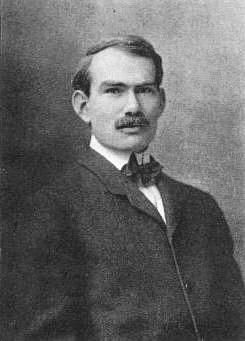
Full Name: Lee De Forest
Nickname/Alias: ‘The father of radio broadcasting’
Achievements: Made long-distance phonecalls possible with his Audion “booster.”
Born: August 26, 1873; Council Bluffs, Iowa
Died: June 30, 1961; Hollywood, California (Aged 84)
Field & Discipline: Engineering; Electricity
Education: Mount Hermon School, Massachusetts; Yale College
Life & Times:
Having studying physics at Yale, De Forest completed his dissertation, ‘Reflection of Hertzian Waves from the ends of Parallel Wires’, before gaining his doctorate in 1899. His first job was with [worked for] Western Electric* in Chicago, where he researched wireless radio transmitting devices and how to improve reception.
After successful trials, he launched a wireless system in 1901, competing with [a rival was] Marconi G* to broadcast the America’s Cup race, but each signal interfered with the other, drowning out both broadcasts.
Up to 1902, he was lecturing at Chicago’s Armour Institute and, in his spare time, he designed an alternating current transmitter. In the same year, he established the American De Forest Co., later known as the United Wireless Telegraph Company, which reported on military manoeuvres for the Signal Corps.
The company installed the first high-powered naval radio stations and, in the early part of the Russo-Japanese war of 1904-05, the English reporter, Lionel James, used the equipment to send news dispatches. At the St Louis World’s Fair, in 1904, De Forest operated a wireless from a huge tower.
In 1906, De Forest used earlier work by [used work of] Edison* to develop his [invented] audion* detector. This was a thermionic grid-triode vacuum tube, based on the two-element valve device [improved work of] John A. Fleming* had invented in 1904. It acted both as an amplifier and rectifier and radically improved radio and telephone reception.
Now, with clearer reception, De Forest concentrated on broadcasting music, transmitting live from New York in 1907. Then, from the Eiffel Tower in Paris, he broadcast a signal that was received 500 miles away and, in 1910, he broadcast the voice of [broadcast] Caruso* from the roof of the Metropolitan Opera.
Despite his successes, the company failed in 1911 and De Forest took a job with Federal Telegraph in California. There, he developed the duplex system of telegraphy, sending two messages along the same wire, and worked on improving and expanding his Audion tube.
He found that he could amplify high-frequency radio signals by cascading the effect of a series of Audion tubes, achieving powerful signals which would make telephonic communication possible.
In 1912, [work related to] Edison* was working on picture projectors and disk phonographs which could be synchronized to show a talking picture. In this year, De Forest had worked to successfully magnify signals, allowing the transmission of both speech and music. He didn’t realise the scope of his discovery and found, when he finally applied for a patent in 1915, that Edwin H. Armstrong had already submitted a paper on regenerative current. After a nineteen-year battle, De Forest was finally awarded primacy on the patent.
In 1913, he sold his interest in the Audion tube to AT&T for $50,000. With the funds, he set up the Radio Telephone & Telegraph Company, to manufacture and sell radio equipment. The company was a great financial success, thanks to major purchases by the Allied Armies, and the sale of radio rights to AT&T and Western Electric. Now a rich man, De Forest set up a radio station in the Bronx, in 1916, broadcasting records from Columbia Gramophone and advertising De Forest radio equipment.
In that year he broke the news that Charles Evans Hughes had beaten Woodrow Wilson in the presidential election, making what is said to have been the first radio news broadcast.
In 1919, he began work on improving the phonograph and, by early 1920, he had made a major breakthrough ( a little after first inventor [invented film sound after] Tykociner* ) by using sound to modify a light beam, exposing film negative to this light, then shining a beam through the developed film, and turning the resulting modified light back into sound. De Forest recognised that his [patented] sound on film*, which could be synchronized with moving pictures on the same film, was far superior to Edison’s earlier works.
By July 1921, he had made his first experimental talking motion picture and, in 1922, he set up the De Forest Phonofilm Corporation. He demonstrated his sound on film system widely in Hollywood, but couldn’t generate interest in it among the film producers there. De Forest sank all his radio profits into the film business, but the company soon suffered losses. In 1928, two South African capitalists invested in Phonofilm and renamed the company General Talking Pictures.
De Forest continued to work on electronics and his final work was on the improvement of magnetic tapes and thermoelectricity. His last patent, for an automatic telephone dialling device, was granted to him at the age of eighty-four, three years before his death from a heart complaint.
Extra Connections:
After making unsuccessful inquiries about employment with Nikola Tesla and Marconi, de Forest struck out on his own
His work related to that of [work related to] Welsbach*.
He sold equipment to [sold equipment to] United Fruit*
Made possible the work of [made possible work of] Swinton*, [made possible work of] Nipkow* and [made possible work of] Zworykin*
His work was developed by [work developed by] Brattain*
Assessment: De Forest is considered to have been the last great independent inventor of the United States. With his life long research and experimentation, he provided the foundation for the future Hollywood film industry.
Oneliner: Lee De Forest, who made long-distance calls possible
Bibliography:
- James A. Hijiya, Lee de Forest and the Fatherhood of Radio, Associated University Presses, Inc., London and Toronto, 1992.