Gray, Asa
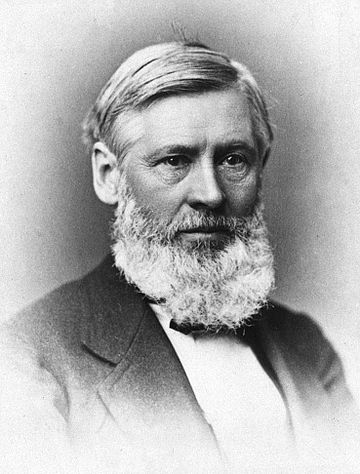
Full Name: Asa Gray
Achievements: First professional botanist in the United States.
Born: November 18, 1810; Sauquoit, New York
Died: January 30, 1888; Cambridge, Massachusetts (Age 77)
Field & Discipline: Science; Botany
Language: English
Education: Fairfield Academy; Fairfield Medical School, New York
Major Work:
Manual of Botany (Gray’s Manual 1848)
Flora of North America (1838-43)
Life & Times:
Asa Gray grew up in rural upstate New York. His father was a tanner and later became a farmer. Gray developed an interest in botany while studying at the Fairfield Academy, but at that time there was no career path for botanists in the United States. He decided to study medicine in order to earn a living as a doctor.
While serving as a medical apprentice, he traveled throughout New York and collected plant specimens from every place he visited. During his first visit to New York City, he left some of the plants he collected for [collaborated with] Torrey*, one of the nation’s foremost amateur botanists. Torrey was impressed by Gray’s specimens and he encouraged Gray to continue his botanical pursuits.
Gray received his medical degree in 1831, but by that time he had little interest left in medicine. In 1834, he moved to New York City where he lived and worked with Dr. Torrey, doing botanical research and writing. He and Torrey began on the Flora of North America, the first comprehensive study of plants across the continent. They replaced the classification by [replaced system of] Linnaeus* with one based on the work of [used work of] A.L de Jussieu* and [used work of] Candolle*.
In 1838, Gray was appointed Professor of Botany at the newly formed University of Michigan. It was the first faculty position devoted exclusively to botany in any American educational institution. The university sent Gray to Europe on a mission to purchase books and equipment.
Gray took advantage of the opportunity to study the vast collections of North American plants housed in European herbariums. He stayed with [stayed with] Sir William Hooker* in Glasgow and became close friends with his son, [a pal of] Joseph Hooker*, who was also studying botany. In London, he met [met] Richard Owen*, the comparative anatomist, and visited [visited] Robert Brown*, the greatest botanist in England.
When Gray returned home, he learned that the university had not raised enough money to fulfill his appointment. Even without a paying job, Gray’s reputation as a botanist was well established by 1842, when he was appointed the Fisher Professor of Natural Sciences at Harvard University.
With his professorship at Harvard, Gray became the nation’s first professional botanist. He developed an informal scientific organization of collectors across the country and was instrumental in classifying specimens sent by Western explorers during the 1850’s. He received collections of plants from the expeditions of Charles Wilkes and Matthew C. Perry.
Gray was developing a broad knowledge of plant geography, which attracted the attention of [collaborated with] Charles Darwin*, whom he met in 1851. Darwin began a correspondence with Gray, asking him for help concerning the range of alpine plants in the U.S. He convinced Gray to publish a landmark paper on plant distribution, Statistics of the Flora of the United States (1856).
Gray’s data on the continuous distribution of related species supported Darwin’s hypothesis that species are not independently created. Gray was one of the few people with whom Darwin revealed his ideas on evolution before they were published in Origin of Species (1859). Other members of this intimate circle were [knew] Lyell*, [knew] T.H. Huxley*, and Joseph Hooker.
The questions regarding species led to some of Gray’s most important research, in which he discovered an unusual number of plants found only in Japan and North America. He argued that the species common to both regions were not the result of separate creations, but were descendants of a common stock that had spanned the Bering Strait and separated as a result of glaciation.
The publication of his results in 1859 prompted a public debate between Gray and [debated Darwinism with] Agassiz*, the first debate in America on Darwin’s theories. Darwin sent Gray an advance copy of Origin of Species, for which Gray wrote a review in the American Journal of Science.
Though he was a devout Christian, Gray accepted most of Darwin’s views. In the battle between science and religion that sprang up around Origin, Gray attempted to return the debate to the scientific realm. He believed that natural selection was compatible with Protestant theology, and that scientists should not be seen as enemies of religion. Gray presented his arguments in a series of popular essays that appeared in the Atlantic Monthly.
Originally anonymous, the essays were collected by Darwin and published as a pamphlet bearing Gray’s name in England. Darwin credited Gray with getting his views a fair hearing in the United States. Huxley played a similar role in England, but differed from Gray in that he saw Darwinism as the triumph of science over religion.
Gray disagreed with Darwin on some points, particularly on the issue of design, but their friendship never wavered. A collection of Gray’s influential papers on Darwin, titled Darwinia, was published in 1876.
Gray spent his later years working to establish the botany department at Harvard. He donated his personal library and herbarium to the university in exchange for a dedicated building and maintenance fund.
When he retired in 1873, he had paved the way for advanced study of botany in the United States. His textbooks contributed to the popularity of botany in American schools in the nineteenth century, and Manual of the Botany of the United States (1848), commonly called Gray’s Manual, remains a standard work in the subject.
In addition to the "Asa Gray disjunction", one of Gray's greatest achievements was the vast network of scientists he built who all communicated with one another and exchanged ideas. He is considered the preeminent American botanist of the 19th century.[103][159]
On Gray's 75th birthday, botanists led by editors of the Botanical Gazette presented Gray with a silver vase with the inscription "1810, November eighteenth, 1885. Asa Gray, in token of the universal esteem of American Botanists." An accompanying silver salver had the inscription "Bearing the greetings of one hundred and eighty botanists of North America to Asa Gray on his 75th birthday, Nov. 18, 1885."[13]
Also received on his 75th birthday was a poem by James Russell Lowell:
Just fate, prolong his life, well spent,
Whose indefatigable hours
Have been as gayly innocent,
And fragrant as his flowers.
Extra Connections: He was a friend of [a pal of] Dana*
Only Harvard and Yale had botany programs, and in the Civil War and pre-war years there had been few botany students. However, after the war there was an upswing in the numbers of botany students.[88] Gray was grooming Horace Mann Jr. as his replacement, but he died of tuberculosis at the age of 24 in November 1868.
Assessment: Through his essays and debates, Gray was largely responsible for the widespread acceptance of Darwin’s views in the United States.
Oneliner: Asa Gray, first professional botanist in the US
Bibliography:
- American National Biography.
- Dupree, A. Hunter, Asa Gray, 1810-1888, Belknap Press, Cambridge, Mass., 1959.
Father: Moses Gray
Mother: Roxana Howard
Siblings: Joseph; George; Roxana; Elsada
Spouse: Jane Lathrop Loring Gray
Children: None