Candolle
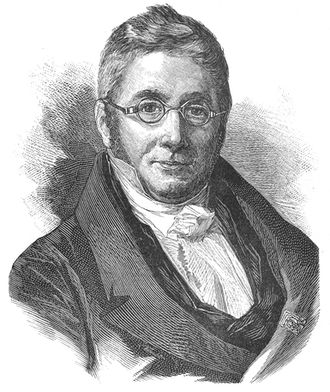
Achievements: Botanical classification. First scientific description of banana.
Born: February 4, 1778; Geneva, Switzerland
Died: September 9, 1841; Geneva, Switzerland (Aged 63)
Field & Discipline: Science; Botany; Botanist, Plant Taxonomist
Language: French
Father: Augustin de Candolle
Mother: Louise Eléonore Brière
Siblings: Unknown
Spouse: Unknown
Children: Alphonse de Candolle (botanist, 1806-93)
Education: Collège de Calvin; Academy of Geneva
Major Work:
“Prodromus Systematis Naturalis Regni Vegetabilis”
Life & Times:
De Candolle’s father was a magistrate in the Republic of Geneva and, after he moved with the family to Neuchâtel, de Candolle, at the age of fourteen, often wandered alone over the Swiss Plateau and the Jura on his own botanical expeditions.
In 1795, the family went back to live in Geneva, where de Candolle attended the Collège de Calvin and then, to suit his father, studied medicine for two years at the Academy of Geneva. During the time he was there, he continued to study botany, going on regular field trips in the Savoy area, collecting specimens and making observational notes that formed the basis of his later writings.
It was during this part of his life that he met the botanist, Pastor Jean Pierre Vaucher, who had a great influence on de Candolle’s work. His teaching is apparent in de Candolle’s “Histoire des Conserves d’Eau Douce,” written in 1803 and in his major work “Prodomus Systematis Naturalis Regni Vegetabilis” as well. Another botanist that he met at this important time in his career was [influenced by] Sénebier*, who taught him about the life processes of plants, how to be a taxonomist, or classifier of plants, and led him to become a true botanist.
[influenced by] Saussure*, a leading Swiss physicist and geologist, influenced de Candolle to study philosophy, mathematics and physics and got him interested in geology and fossils, which resulted in him studying flora of the past as well as the present.
In 1796, de Candolle went to Paris to carry on with his medical and botanical studies and he regularly visited the Muséum d’Histoire Naturelle. There, he got to know the prominent French naturalist, [met] Cuvier* and they discussed the subject of prehistoric life, especially the origin of species and the new science of paleontology. De Candolle was also on friendly terms with [a pal of] Lamarck*.
At this time, he worked on a variety of topics including the germination of legumes, the absorption of water by seeds, lichens and medicinal plants. His first publication was on Reticularia Rosea, a plant he had found in the Jura region of France.
The most notable of Candolle’s monographs was his first important work, illustrated by P J Redouté, “Plantarum Historia Succulentarum” in 1799. Then, between 1805 and 1815, he revised Lamarck’s “Flore Franaçaise,” introducing into it important new plant classifications.
De Candolle stayed in Paris until 1808, spreading his activities into the fields of active philanthropy and political economy, then he took the job of Professor of Botany at the École de Médicine and the Faculté des Sciences in Montpellier. In the more relaxed surroundings of Montpellier, he was able to find the time to arrange the many research papers that he had prepared in Paris
During this period of his life, de Candolle developed his system of classification, based on [improved on] A L de Jussieu*’s system, but with important modifications that de Candolle developed in his famous, “Théorie Elémentaire de la Botanique,” published in 1813 and often republished.
De Candolle believed that the form and shape of a plant were far more important in classification than the physiology of the plant. He also suggested a theory on the symmetry of plant structure, that “the whole art of natural classification consists in discovering the plan of symmetry.”
In 1814, de Candolle began to write what turned out to be his major work, “Prodromus Systematis Naturalis Regni Vegetabilis.” The first seven volumes contained a comprehensive description of certain flower categories, the Dicotyledons and Gymnosperms.
In 1816, the Academy of Geneva created a chair of Natural History and de Candolle accepted the job. His son, Alphonse de Candolle, who followed in his footsteps at the Academy, later completed the remaining volumes of “Prodromus.”
In Geneva, de Candolle set up the present Conservatorie Botanique and rearranged the Botanical Garden. The new layout was opened in November 1817 and served as a model for botanical gardens for many years.
De Candolle, a pioneer in several areas of botany, was one of the first people to work in the field of agronomy, his work in medicinal plants gave birth to medical botany as a discipline. He made important contributions to the field of phytochemistry and invented the science of phytogeography.
De Candolle’s interest in political economics increased when he became an active member of the representative body of the Canton between 1816 and 1841. He was Rector of the Academy of Geneva from 1831 to 1832, but after his retirement, his health declined.
After his death, three hundred plants were dedicated to his memory and a family of plants, the Candolleaceae, and two genera, the Candollea and Candolina, have been named after him.
He was the first to describe the [first described] banana*.
Extra Connections: De Candolle introduced [introduced] Rowland Hill’s* postage stamp to Geneva - it helped lead to the [set stage for] Universal Postal Union*. He visited [visited] William Jackson Hooker*. His work related to that of [work related to] J. Hooker*, [work related to] Somerville*, [work related to] JBA Dumas*, [work related to] Daubenton*, and the [work related to] United Fruit Co.*
Assessment: De Candolle introduced the modern aspect of plant classification.
Oneliner: Augustin de Candolle, Swiss banana expert
Bibliography:
- Dictionary of Scientific Biography.