Greeley
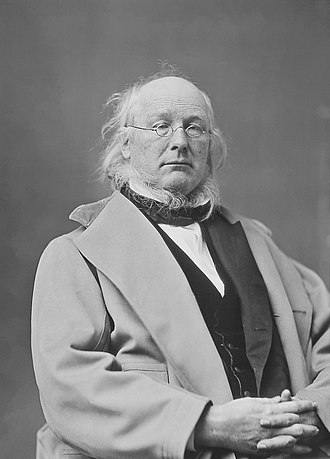
NAME: Greeley, Horace
ACHIEVEMENT(S): Co-founded the “New Yorker”
NICKNAME/ALIAS: None
DATE/PLACE OF BIRTH: 3 February 1811, at Amherst, NH
DATE/PLACE/AGE AT DEATH: 29 November 1872, at New York, NY. Aged 61
DISCIPLINE: Journalist
FIELD: Literature
LANGUAGE: English
PARENTS: Zaccheus Greeley and Mary Woodburn
SIBLINGS: ?
SPOUSE: Mary Youngs Cheney, married 1836
CHILDREN: Seven children, two surviving to adulthood
EDUCATION: Little formal education
MAJOR WORK: 'Recollections of a Busy Life', 1868
LIFE AND TIMES:
In 1830 in Erie, PA, Greeley got a job at the 'Erie Gazette' but within months, the ambitious 20-year-old had been taken on by the 'Evening Post' moved to New York City. He then worked as a printer for the 'Spirit of the Times', the 'Morning Post' and the 'Commercial Advertiser'.
In the early 1830s Greeley began to make his name by writing political articles for periodicals and in 1834 he co-founded'The New-Yorker' with Jonas Winchester . Soon afterwards, Greeley caught the attention of the leaders of New York's Whig party, and <worked for pal> Seward* asked him to issue a weekly newspaper in support of their political campaigns.
To this end, Greeley published the 'Jeffersonian' from 1838 to 1839, and the 'Log Cabin' from 1840 to 1841. These publications marked the beginning of Greeley's political partnership with Seward.
In April 1841 he produced the first issue of a new daily newspaper, the 'New York Tribune', the first daily Whig paper in New York City. This paper, of which he was the leading editor, was issued as a direct rival to <rival of> Bryant's* 'Evening Post', James Raymond's 'New York Times', and <rival of> Bennett's* 'New York Herald'.
The 'New York Tribune' was dedicated to moral and political reform on a grand scale, with Greeley's witty editorials crusading against slavery, poverty, women’s rights, capital punishment, tobacco, alcohol and adultery (which occasionally led him to side against the freedom of women, as in the 1850 debate with <debated> Robert Dale Owen*). The paper’s editorials supported peace movements, free common-school education, vegetarianism, a free press, labour rights, and the western movement of settlers.
Greeley was committed to the production of high-quality journalism, and during the 1840s the 'Tribune' became renowned for the excellent standard of its reporting of local, national and international events, and began attracting contributions by the most brilliant journalists (including <employed> Karl Marx*, who - with <employed> Engels'* assistance - wrote about European affairs in the 1850s).
In 1848 Greeley was elected to the House of Representatives but served for only a single session, from December 1848 to March 1849, during which he introduced one of the first homestead bills.
In 1851 he visited Europe for the first time, to serve as a jury chairman at the American exposition at the London World's Fair at Crystal Palace, a trip documented in his travelogue 'Glances at Europe', and on his return, in 1853, he bought a farm at Chappaqua, New York, where he moved his family and experimented with farming techniques.
In 1854 he transferred his allegiance to the newly emerging Republican party, which he helped to found. In 1856 he supported, through the 'Tribune', the Republican John C.
Fremont's presidential campaign, <supported> John Brown's* goals and, after an initial refusal, the nomination of <supported> Lincoln* for president in 1860. Meanwhile, throughout the 1850s the 'Tribune' strongly supported the antislavery movement in the North.
In 1859, Greeley decided to follow his own advice and "go west", to California, partly in order to publicize the need for government funding of a transcontinental railroad. During this lengthy journey, he wrote a series of dispatches for the 'Tribune', collected as 'An Overland Journey, from New York to San Francisco in the Summer of 1859'.
In 1861, with the onset of the Civil War, Greeley pushed hard for Union victory and generally sided with the radical Republicans in urging early emancipation of the slaves. He lost a degree of public support by his initial failure to support Lincoln's renomination in 1864, however, and for signing the bail-bond of former Confederate President <supported> Davis* at Richmond in 1867, which caused a storm of public indignation.
During these years, Greeley also wrote a major two-volume history of the Civil War, entitled 'The American Conflict' (1864, 1866). Partly from outrage at the apparent corruption of the first administration (1869-73) of President < opposed> Grant*, Greeley joined a breakaway group of Republican and formed the Liberal Republican Party, which opposed the renomination of Grant in 1872. Instead, the party nominated Greeley for president, but he was defeated.
ASSESSMENT: Horace Greeley exerted a major influence on American opinion.
EXTRA CONNECTIONS: <knew> Clinton*
Before 1848 he sponsored an American version of Fourierist socialist reform. but backed away after the failed revolutions of 1848 in Europe.[54] To promote multiple reforms Greeley hired a roster of writers who later became famous in their own right, including Margaret Fuller,[55] Charles A. Dana, George William Curtis, William Henry Fry, Bayard Taylor, Julius Chambers, and Henry Jarvis Raymond, who later co-founded The New York Times.[56] For many years George Ripley was the staff literary critic.[57] Jane Swisshelm was one of the first women hired by a major newspaper.[58]
In 1859, Greeley traveled across the continent to see the West for himself, to write about it for the Tribune, and to publicize the need for a transcontinental railroad.[59] He also planned to give speeches to promote the Republican Party.[60] In May 1859, he went to Chicago, and then to Lawrence in Kansas Territory, and was unimpressed by the local people. Nevertheless, after speaking before the first ever Kansas Republican Party Convention at Osawatomie, Kansas, Greeley took one of the first stagecoaches to Denver, seeing the town then in course of formation as a mining camp of the Pike's Peak Gold Rush.[59] Sending dispatches back to the Tribune, Greeley took the Overland Trail, reaching Salt Lake City, where he conducted a two-hour interview with the Mormon leader Brigham Young—the first newspaper interview Young had given. Greeley encountered Native Americans and was sympathetic but, like many of his time, deemed Indian culture inferior. In California, he toured widely and gave many addresses.[61]
...
The Republican counterattack was well financed, accusing Greeley of support for everything from treason to the Ku Klux Klan. The anti-Greeley campaign was famously and effectively summed up in the cartoons of Thomas Nast, whom Grant later credited with a major role in his re-election. Nast's cartoons showed Greeley giving bail money for Jefferson Davis, throwing mud on Grant, and shaking hands with John Wilkes Booth across Lincoln's grave. The Crédit Mobilier scandal—corruption in the financing of the Union Pacific Railroad—broke in September, but Greeley was unable to take advantage of the Grant administration's ties to the scandal as he had stock in the railroad himself, and some alleged it had been given to him in exchange for favorable coverage.[116]
ONELINER: Horace Greeley, famous US journalist
BIBLIOGRAPHY: EB, ADNB
Van Deusen, G.G., Horace Greeley: Nineteenth Century Crusader, Philadelphia: University of Pennsylvania Press, 1953