Bayle
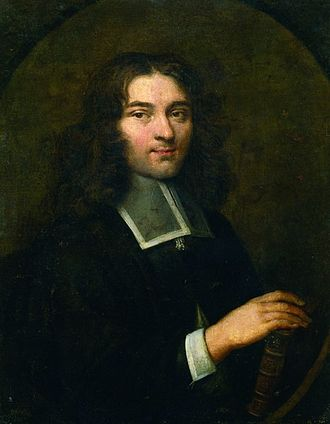
ACHIEVEMENTS: An early encyclopedia
NICKNAME/ALIAS: None
DATE AND PLACE OF BIRTH:
18 November 1647, Carla-le-Comte, France
DATE AND PLACE OF DEATH AND AGE AT DEATH:
28 December 1706, Rotterdam, Netherlands. Aged 59
DISCIPLINE: Philosopher
FIELD: Philosophy, history and religion
LANGUAGE: French
EDUCATION:
Protestant Academy
Jesuit College, Toulouse
MAJOR WORK:
“Dictionnaire historique et critique” (1697, “Historical and Critical Dictionary”)
LIFE AND TIMES:
Bayle’s father was a Protestant minister in a remote region of south-west France where Calvinism flourished. Bayle attended a Protestant school and was then sent to a Jesuit College at the age of twenty where he studied logic. A month after his arrival he became a Roman Catholic, but then recanted. He took private teaching jobs around Geneva and in Rouen and Paris before being appointed professor of philosophy at the Protestant Academy in Sedan in 1675.
In 1680, Bayle was stimulated by the effect of an appearance of a comet that year to write a treatise on superstition. Comets had long been associated with presaging a significant event such as the death of a king, a famine, war or some other act of God. By 1680, many of the more educated members of society were questioning the connection, but the comet that year was so particularly bright that even the educated were giving into superstitious speculation. In his “Miscellaneous Thoughts on the Comet”, Bayle exposed the irrationality of superstitious thinking.
He stayed at Sedan until the Academy was closed by royal decree in 1681 when he went to Holland and took up the chair of philosophy and history at a newly established academy in Rotterdam. In 1682 he published his treatise on comets. It was immediately successful and was reprinted in the same year.
He began producing a monthly journal in 1684 called “News of the Republic of Letters” , a literary and scientific journal which was aimed at intellectuals all over Europe. Bayle was in regular correspondence with the Royal Society in London, and with the French Academy. Although it was distributed illegally in France, his journal was openly read there.
Bayle developed a huge personal correspondence through his journal , including Christina* of Sweden, who became a friend. In January 1686 Bayle published a fictional letter, written by Fontenelle*, which was actually a satirical allegory on the religious divisions in France . In 1686 he published anonymously the first part of his “Philosophical Commentary”, a book in which he condemned the French treatment of the Huguenots and called for religious tolerance.
Bayle’s extremely liberal interpretation of tolerance caused his Protestant colleague Pierre Jurieu to suspect him of atheism and in 1691 he openly attacked Bayle’s moral and religious principles. The civil authorities were not interested in dismissing Bayle so Jurieu then appealed to the Dutch Reformed Church of Rotterdam and backed up his arguments against Bayle with some poorly translated excerpts from Bayle’s treatise on comets. As a result, Bayle was deprived of his professorship in 1693.
He was allowed to remain in Rotterdam and chose not to look for re-employment but to devote his time to his plan for a historical and critical dictionary. He was familiar with Lois Moreri’s “Grande Dictionnaire Historique” which first appeared in 1674 and was the first notable encyclopaedia of the alphabetical type. Moreri had been educated by the Jesuits and the work reflects his declared submission to the will of the Catholic Church.
Bayle had discovered errors of fact in Moreri and other records, and his original plan was simply to correct faults found in published dictionaries. In the event his own “Dictionnaire historique et critique” (1697, “Historical and Critical Dictionary”) was an original work which was really an extended critique of received wisdom. It was mainly biographical and in this aspect was idiosyncratic: Virgil appeared but Horace did not, only four of the thirteen French kings named Louis were written up, and while the Emperor Nero was excluded a fifteenth-century Florentine nobleman called Nero was included.
Bayle explained these discrepancies by the fact that many similar historical and ecclesiastical dictionaries were in print or being prepared and that he was just trying to correct other author’s errors. In fact, his articles, whether dealing with a biographical, topographical, religious or historical subject, were simply the means by which he could launch himself into pages of annotations, quotes and debate. Bayle declared that he wanted some “gayer touches” to lighten the work and he obliged with articles on famous female courtesans.
Only one-sixth of the articles were on people living before the Christian era; Bayle gave up his plan to write the lives of all the ancient masters, saying that he thought his book would then “grow mouldy in the booksellers’ warehouses”.
Bibilical characters were only included when Bayle wished to make a point about the false importance given to such characters as Abraham and David. Over two-thirds of the titles in the “Dictionary” were about people living in the sixteenth and seventeenth centuries and there were forty articles on the refugees in Holland and on the Dutch. Modern figures included playwright Moliere. Bayle was an admirer of Michel de Montaigne* and although there is no article on Montaigne, he is frequently quoted.
The dictionary was published in 1697 and was a wild success with demand succeeding supply. The whole work was imbued with Bayle’s sceptical, open-minded and tolerant approach. For example, he applied the same rules of historiography to the biblical narrative as he did to secular history, pointing out that various Old Testament figures would have been around one hundred and fifty years old according to the Bible and that Ishmael must have been at least sixteen years old when his mother carried him on her shoulders. Miracles were similarly dissected.
Naturally, the dictionary infuriated the Roman Catholic church and its publication was banned in France. Calvinists in Holland also objected to his views and Bayle was admonished by the Consistory court (a ministerial committee of the Reformed Church in Holland) at Rotterdam. Bayle was labeled a libertine, a Deist and enemy of all religions.
Although a skeptic, he believed that it was the inescapable destiny of mankind to accept blind faith and that this was due to the essential nature of humanity. His own religious convictions are not recorded. Most scholars regard him as a decided sceptic but probably not an atheist.
ASSESSMENT: His dictionary was a forerunner of the work of the French eighteenth century encyclopedists.
EXTRA CONNECTIONS: Voltaire was a fan.
Bayle was critical of many influential rationalists, such as René Descartes, Thomas Hobbes, Baruch Spinoza, Nicolas Malebranche and Gottfried Wilhelm Leibniz, as well as empiricists such as John Locke and [Isaac Newton].
ONELINER: Pierre Bayle, early skeptic and encyclopedia compiler
BIBLIOGRAPHY:
Robinson, Howard, Bayle the Sceptic, Columbia University Press, New York, 193l