Hartlib
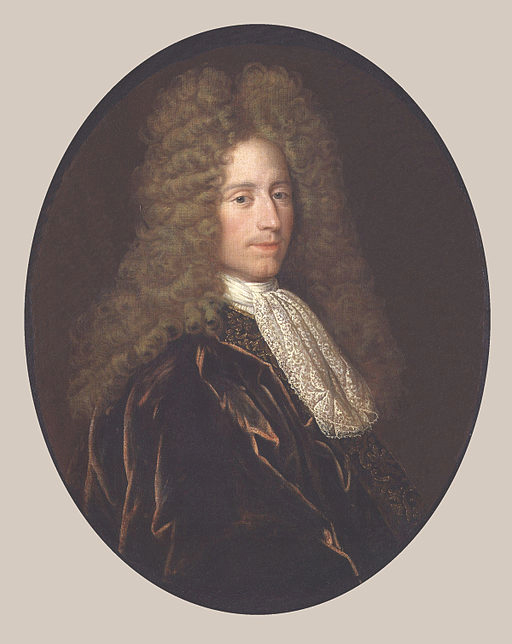
Name: Samuel Hartlib
Achievements: Encouraged 17th century development of practical knowledge in industry and agriculture, improvements in education and religious reform
Born: c 1599; Elbing, Prussia
Died: 1670; Holland (Aged around 70)
Field & Discipline: Public Affairs; Industry; Education; Religion; Agriculture; Benefactor
Language: English
Father: Unknown
Mother: Unknown
Siblings: Unknown
Spouse: Unknown
Children: Samuel; Nan; Name Unknown
Education: Unknown
Life & Times:
Hartlib's father was a wealthy merchant of Lithuanian descent who fled from Poland to Prussia in fear of persecution from the Jesuits and married the daughter of a rich English merchant who was trading in Danzig.
Hartlib seems to have crossed to England around 1628. He was a businessman, nominally running a shipping agency, but also associated with Puritan scholars, scientists and educationalists. He appears to have been part of Protestant movement (with links on the Continent) working to improve society and spread education and religious reform. In 1633 he collaborated with [collaborated with] John Durie* to promote a religious publication and during the 1630's introduced into England the works of the theologian and educator [promoted work of] Komensky*.
In 1641 he published a pamphlet titled "Relation of that which hath been lately attempted to procure Ecclesiastical Peace among Protestants" and "A Description of Macaria" which described his vision of a model state.
He had plans for establishing a school for the children of gentlemen, to be run on experimental lines, and in 1644 the poet and fellow Puritan [knew] Milton* addressed his treatise on education to Hartlib. In the same year, Hartlib was a witness against Archbishop [witness against] Laud* in a Parliamentary inquiry.
Hartlib corresponded widely with men in public affairs on an enormous range of subjects and he published numerous pamphlets on education, husbandry and industrial crafts.
During the Civil War in England, he confined himself mostly to agriculture, published his own works on the subject and paid for the printing of the works of others. His suggestion to set up of a college of agriculture was not followed for another two hundred years.
A pension was granted to Hartlib by Parliament in 1646 in recognition of his outlay on agricultural and other useful experiments. Under the Commonwealth, he was awarded a pension by [pensioned by] Cromwell* because he had spent all his money on his experiments and on helping scholars in need. The diarist [knew] Evelyn*, who viewed Hartlib as a public-spirited person, visited him in 1655 and described him as “master of innumerable curiosities and very communicative.”
Hartlib worked energetically for the promotion of scientific learning, industry and agriculture but when the English monarchy was restored in 1660, he lost his pension and later petitioned Parliament because his financial situation was so desperate.
He probably moved to Oxford and was familiar with the group of scientists, philosophers and writers who later established the Royal Society. It is presumed from papers of [referenced by] Marvell* that Hartlib fled from his creditors to Holland and was living there in 1670. He is assumed to have died around that time.
Extra Connections: Was in contact with [knew] Andreae*.
A friend of [a pal of] Boyle*, [a pal of] Winthrop*, [a pal of] Petty* and [a pal of] Oldenburg*
He published work by [published] Weston*
Hartlib was indebted to Francis Bacon for a general theory of education that formed common ground for him and Jan Comenius.
Assessment: Hartlib was an active member of Puritan society, a great disseminator of practical knowledge in the period surrounding the Civil War in England and energetic worker for the advancement of scientific learning, industry and agriculture.
Oneliner: Samuel Hartlib, Puritan disseminator of practical knowledge
Bibliography:
- Dircks, H, A Biographical Memoir of Samuel Hartlib, John Russell Smith, London, 1935 (first pubd 1865).