Henry W
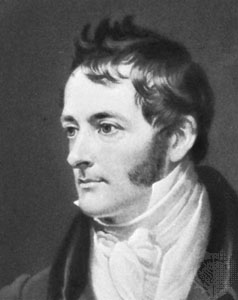
Name: William Henry
Achievements: Work on the solubility of gases
Born: December 12, 1774; Manchester, England
Died: September 2, 1836; Manchester, England. Aged 62
Field & Discipline: Chemistry; Chemist
Language: English
Father: Thomas Henry
Mother: Mary Kinsey
Siblings: 2 brothers
Spouse: Mary Bayley
Children: Son: William
Education: Manchester Academy; Edinburgh University
Major Work:
“The Elements of Experimental Chemistry” (1801)
Life & Times:
Henry, the son of a well-known Manchester chemist, was born into an intellectual community of Dissenters. After leaving school, he spent five years as secretary to the distinguished physician Thomas Percival followed by a year at Edinburgh university where he continued his medical studies and also attended chemistry lectures given by [taught by] Black*.
He returned to Manchester in 1796 to work with his father and help in the profitable family business of manufacturing magnesia. His interest in experimental science had been fostered by Percival and he began to carry out his own research.
In 1797 he submitted his first paper to the Royal Society, in which he successfully refuted claims that carbon was not an element. He attempted to discover the nature of muriatic acid (now known as hydrochloric acid) by decomposing muriatic acid gas, but because he did not realise that oxymuriatic acid was an element he attributed the hydrogen he found to traces of water in the gas.
Henry was a keen follower of the advances in chemistry pioneered in Paris by [a follower of] Lavoisier* and his followers, and in the course of lectures he delivered in Manchester in 1789-99 he used the new nomenclature Lavoisier had introduced. He published “A General View of the Nature and Objects of Chemistry, and its application to Arts and Manufactures” in 1799.
In 1801 he brought out his “An Epitome of Experimental Chemistry” (later expanded and renamed “The Elements of Experimental Chemistry”) which was based on his lectures and which incorporated the new ideas in chemistry. The book was immensely successful; it was expanded and reprinted numerous times, and was the most popular chemistry textbook for over thirty years.
In the same year he read a paper to the Manchester Literary and Philosophical Society in which he argued for the calorific theory of heat and against [argued against] Davy’s* on the subject. Henry was inclined to be conservative about new ideas. He experimented with what was then the new technique of electrolysis but gave up this line of research when he found that the electric current could not be transmitted through gases.
The chemist [a family friend was] Dalton* was a family friend and Henry has been credited with acting as a stimulus to Dalton’s development of his atomic theory. In 1801 Dalton was investigating the relationship between gases of different densities in the atmosphere. Henry undertook a series of important experiments on the quantity of gases absorbed by water at different temperatures and under different pressures, and in 1803 he presented a paper to the Royal Society in which he stated “Henry’s law”: that “…under equal circumstances of temperature, water takes up, in all cases, the same volume of condensed gas as of gas under ordinary pressure…”.
He also began conducting analyses of the inflammable mixtures of gases which were then much in the news because of the experimental use of coal gas for illumination. In 1805 he wrote the first of a series of papers on the analysis of mixtures of gaseous hydrocarbons.
In that year, Henry returned to Edinburgh where he qualified as a physician in 1807. A year later he was elected a fellow of the Royal Society and was awarded the Copley Medal for the papers he had already presented to the Society.
He did not practise as a doctor but continued with this experimental investigations. In 1809 he analyzed the composition of ammonia, basing his investigations on the work done previously by [followed up work by] Berthollet* and Davy on the proportions of hydrogen and nitrogen.
During the course of his analysis of inflammable gases he confirmed Dalton’s statement on the composition of methane and ethylene, and supported Dalton’s view that hydrogen and carbon combined only in definite proportions to form a limited number of compounds.
In his last experimental research in 1824, Henry used the catalytic properties of platinum which had been discovered that year by [work related to] Dobereiner*.
Problems with the use of his hands forced Henry to give up his experimental laboratory work and he began to study contagious diseases. He believed that such diseases were disseminated by chemical substances and he demonstrated that the source of the disease was susceptible to heat and could be inactivated by moderate heat. At that time, opinon favored disinfection with the use of chemicals such as chlorine but during an outbreak of cholera in 1831 Henry developed apparatus to disinfect clothes and other items by heat, anticipating the process of sterilization that followed the acceptance of the germ theory of disease.
In 1836 Henry committed suicide after suffering for many years from chronic ill health.
Assessment: Henry’s most valuable work was in providing corroborative experimental proof for the theories of other chemists.
Oneliner: William Henry, minor chemist
Extra Connections:
The mercury beating heart was first observed in the year 1800 by Alessandro Volta and William Henry. The chemical phenomenon in the form best known today was first described by German chemist Friedlieb Ferdinand Runge, the discoverer of caffeine.
Bibliography:
- Dictionary of National Biography.
- Dictionary of Scientific Biography.
- Partington, J R, The History of Chemistry, Vol. 4, Macmillan Press Ltd., London, 1972.