Black, Joseph
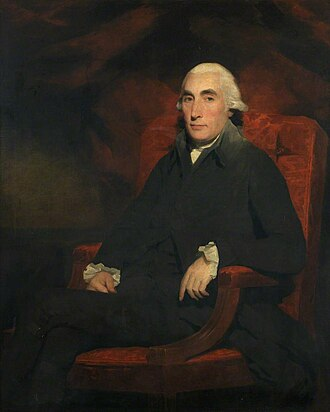
Achievements: Discovered latent heat, and played a key role key in Watt’s invention.
Born: April 16, 1728; Bordeaux, France
Died: December 6, 1799; Edinburgh, Scotland (Aged 72)
Field & Discipline: Science; Chemistry; Physics
Education: Glasgow University; Edinburgh University
Major Work:Discovery of carbon dioxide.
Life & Times:
One of the people who had a great influence on Black was his friend and mentor, [a pal of] Cullen*, the Professor of Medicine at Glasgow University, who gave Black great encouragement.In 1752, Black moved to Edinburgh University where he continued to study medicine, and two years later, submitted his doctoral thesis “De humore acido a cibis orto, et magnesia alba” (“On the acid humour arising from food, and on magnesia alba”).
In his thesis, Black described his research into what he called “causticization” and claimed the existence of a gas that was distinct from air, that he called “fixed air,” which he outlined in more detail in a paper published in 1756. The paper detailed his experiments with carbonates or alkalis in relation to carbon dioxide (“fixed air”). In the course of his research, Black also discovered the bicarbonates.
His studies produced results proving that mild alkalis or carbonates became more alkaline when they lost carbon dioxide and, conversely, when they took up carbon dioxide, caustic alkalis converted back to a mild form. As a result of Black’s work, the field of pneumatic chemistry was born, and later, the “father of pneumatic chemistry,” [work related to] Lavoisier* wrote to Black to thank him for his great contribution.
In 1756, Cullen became Professor of Medicine at Edinburgh and Black replaced him at Glasgow, as Professor of Anatomy and Chemistry. The same year Black started to look at the possibilities of latent heat, having noticed that when snow was melting, it produced a drop in temperature.Black was said to have been led into his studies on the levels of heat stored in vapor in an investigative effort to find ways to reduce the local scotch whiskey distiller's rising fuel costs, amid rising shortages of wood.
Black measured how much energy it took to melt a pan of frozen water, and then how much more it took to boil water away. From these experiments, Black was able to show the distillers the minimum amount of wood they needed to burn in order to evaporate a given quantity of whiskey mash, and then how much cold water it would take to condense the whiskey out of the steam. This research, supposedly, is what gave James Watt the idea of inventing the separate condenser.
Black wanted new instruments and tools for his experiments and employed university instrument-maker, [gave key help to] Watt*. In 1761, he set up an experiment that proved heat was needed for the process in which solids turned to liquid and liquid to vapour. He showed that when ice melted, it absorbed heat from its surroundings. Black’s conclusion was that heat must have combined with the ice to become latent, or hidden. This was also true during the process of turning water to steam, during which the steam absorbed a huge amount of heat, explaining why steam could scald.
As a result of this work, Black was able to demonstrate to Watt why it took such a large amount of cold water to condense the steam in his engine cylinder and that Watt should keep a separate condenser immersed in cold water all the time.
Although his findings regarding latent heat were of serious importance, Black never published. He later demonstrated the distinction between heat and temperature and also the property of specific heat, or the relative heat capacity of different substances.
In April 1766, Black once again succeeded Cullen, taking the Chair of Medicine and Chemistry at Edinburgh University. Teaching always came first with Black, although he would act occasionally as a physician and more often as an industrial consultant on bleaching and dyeing, iron-making, ore analysis, fertilisers and water supply.
Among his friends were [a pal of] Monro*, as well as [a pal of] Adam Smith* and [a pal of] Hutton*, with whom Black started up the Oyster Dining Club in Edinburgh. This was one of the popular informal clubs for which Edinburgh was famous. Other members included William Cullen, [a pal of] John Playfair*, [a pal of] Roebuck* and [a pal of] Archibald Cochrane*.
Extra Connections:
His work related to that of [work related to] Dalton*, [work related to] Cavendish*
He taught [taught] Rennie, [taught] Charles Macintosh*, [taught] William Henry*, Sir AP [taught] Cooper*
Knew [knew] George Macintosh*
Was an admirer of [admired] Smithson, James
He taught [taught] Benjamin Rush*
Assessment: Joseph Black made important contributions to both chemistry and physics. He established the fields of pneumatic chemistry and thermodynamics, and is one of the pioneers of modern science. He is chiefly remembered for his discovery of carbon dioxide.
Oneliner: Joseph Black, who gave Watt the secret
Bibliography:
- Ramsey, W., Life and Letters of Joseph Black, 1918.
Multimedia:
Connections 3 ep 1: "Feedback"(view online)
Podcast: Black taught husband of Elizabeth Fulhame - Wikipedia Stuff you Missed in History Class ( elizabeth-fulhames-colorful-chemistry-328017549); Supported by Priestly
Language: English
Father: John Black
Mother: Margaret Gordon
Siblings: seven brothers; five sisters
Spouse: None
Children: None