Berthollet, C-L
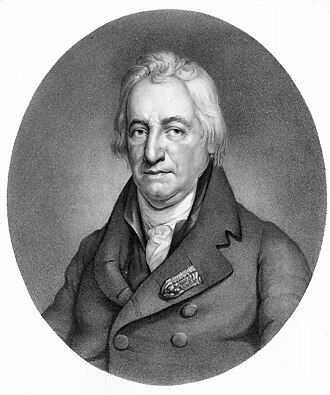
Name: Claude-Louis Berthollet
Achievements: Discovered ammonia and use of chlorine as bleaching agent
Born: December 9, 1748; Talloire, near Annecy, Savoy (now France)
Died: November 6, 1822; Arcueil, France (Aged 74)
Field & Discipline: Chemistry
Language: French
Father: Unknown
Mother: Unknown
Siblings: Unknown
Spouse: Marguerite Baur
Children: 1 son: Amedee
Education: Schools in Annecy and Chambery; University of Turin; University of Paris
Major Work:
“Essai de statique chimique” (1803)
Life & Times:
Berthollet’s father was a prominent member of the professional classes in Talloires, which at that time was in territory ruled by the King of Sardinia. Berthollet attended an Italian university and after qualifying as a doctor in 1768, he spent the next four years in Piedmont, Italy.
In 1772 he went to Paris and studied chemistry and medicine. An introduction to the Duke of Orleans got him the job of private doctor to Madame de Montesson and enabled him to do research in a private laboratory at the Palais Royale, where he first met the chemist [influenced by] Lavoisier*.
Berthollet’s earliest investigations concerned the study of gases and an attempt to reconcile the new chemistry (being introduced by Lavoisier) with traditional ideas. In the course of these experiments, Berthollet anticipated the later work of [anticipated] Bert* by conducting experiments in pneumatic chemistry and studying the physiology of asphyxiated animals.
He presented to the French Academy of Sciences a series of papers on chemical subjects including nitric acid, fulminating gold and compounds of sulfur. In 1778 he became a naturalized Frenchman and in 1780 he was elected to the French Academy of Sciences.
Berthollet was keen to use science to benefit French industry and society. In 1784 he was appointed inspector of dye works and director of the Gobelins tapestry factory, a position in which he was succeeded by the chemist [succeeded by] Chevreul*. The following year he discovered the composition of ammonia and introduced chlorine as a bleaching agent for the textile industry. In accordance with his ideals, Berthollet did not attempt to patent his discovery, which he demonstrated in France and also communicated to the Scottish engineer, [communicated with] Watt*, thus helping to transform the Scottish bleaching industry.
In further investigations of chlorine, Berthollet discovered potassium chlorate which he suggested as a substitute for niter in the manufacture of gunpowder. Unfortunately, a public trial of his process resulted in an uncontrolled explosion and the death of five people.
Berthollet was involved in the reform of chemical nomenclature and, together with [worked with] Fourcroy* and [worked with] Guyton de Morveau*, assisted Lavoisier in producing the “Methode de nomenclature chimique” in 1787. In the same year Berthollet analysed prussic acid, correctly showing it to be made up of hydrogen, carbon and nitrogen.
During the Revolution he continued to hold office and in 1792 he was made a member of the commission for the reform of the monetary system. Together with other scientists such as [worked with] Conte* and [worked with] Monge*, he was co-opted to help in the war effort at a time when France was desperately short of resources. In 1794 he was one of the instructors on a course to teach men from all over the country how to extract saltpeter and manufacture gunpowder.
Berthollet was involved in the establishment of the Ecole Polytechnique in 1795 and he lectured there on animal chemistry. Berthollet became one of [a favorite of] Napoleon’s* favourites and in 1796 he was sent with Monge to Italy to select works of art for removal to Paris. While he was involved in this project, Berthollet developed new chemical methods for the restoration of paintings.
In 1798 he was given the task of selecting personnel to join the scientific group accompanying Napoleon on his expedition to Egypt. He remained in Egypt for two years, during which time he set up the Institute of Egypt of which [worked with] Fourier* was appointed secretary. Berthollet was part of a group that investigated the natural resources of Egypt and he presented papers to the Institute on the application of safflower and henna in dyeing, the analysis of Nile water and the local cultivation of indigo. He also pursued research into chemical affinity. Berthollet questioned the current assumptions on affinity and stated that it was possible to reverse a chemical reaction. He presented an innovative paper on chemical affinity to the Institute before leaving Egypt in 1799.
Berthollet’s contribution in this field was to demonstrate that chemical affinity was a relative concept that varied with physical conditions. He also attempted to prove that the proportions in which two chemical substances combined varied according to conditions. Assisted by one of his proteges, [protégé was] Gay-Lussac*, Berthollet continued his research back in Paris and in 1803 published “Statique chemique”, in which he expanded his theory of chemical affinity and mixed gases. Berthollet’s work in this area had a great influence on later investigations into acids and alkalis conducted by the Italian chemist [influenced] Avrogado*.
In 1804, Berthollet was created Count, made a grand officer of the Legion d’Honneur, appointed senator and given a lucrative job as administrator of the mint. At his country home on the outskirts of Paris Berthollet established what became known at the Society of Arcueil where distinguished scientists met for discussions with younger men. The proceedings of the Society were published between 1807-1814. Berthollet was always generous in his acknowledgements and was known for his encouragement of young men such as the Swedish chemist [encouraged] Berzelius*, who stayed at Arcueil in 1818.
Extra Connections: Met [met] Dalton* during his 1822 Paris visit.
Met [met] Brewster* during his 1814 Paris visit.
He was a friend of [a pal of] Bernard*
His work related to that of [work related to] William Henry*,[work related to] Scheele* and [work related to] Tennant*
Assessment: Berthollet was the first to recognise the part played by the proportional masses of substances involved in a chemical reaction. His discovery of chlorine as a bleaching agent was of great significance to the textile and paper industries.
Oneliner: Claude-Louis Berthollet, famous French chemist
Bibliography:
- Crosland, Maurice, The Society of Arcueil, Heinemann, London, 1967.