Belloc H
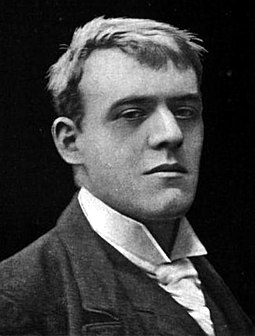
SORT-BY NAME: Belloc, Joseph Hilaire Peter
NICKNAME/ALIAS: none
DATE OF BIRTH: 27 July 1870
PLACE OF BIRTH: La Celle-St. Cloud, near Paris, France
DATE OF DEATH: 16 July 1953
PLACE OF DEATH: Guildford, Sussex
DISCIPLINE: literature
FIELD: poet, essayist, novelist, historian, political satirist
ASSESSMENT: Belloc is remembered particularly for his political satire and verses for children.
LANGUAGE/S: English, French
EDUCATION: Oratory school in Edgbaston, Warwickshire
Collége Stanislas, Paris
Balliol College, Oxford
ACHIEVEMENTS:
MAJOR WORK/S: Bad Child’s Book of Beasts, The Path to Rome, The Four Men, Hills and the Sea, The Catholic Church and Historical Truth, The Servile State, How the Reformation Happened, Belinda, Ha’nacker Mill, Heroic Poem in Praise of Wine.
PARENTS: Elizabeth (Bessie) Rayner Parkes and Louis-Marie Belloc
SPOUSE: Elodie Hogan
SIBLINGS: Marie Elizabeth
CHILDREN: Louis, Eleanor, Elizabeth, Hilary, and Peter Gilbert
LIFE AND TIMES/DETAILS:
Belloc’s mother was the great-granddaughter of Joseph Priestley* . He was born a week after the beginning of the Franco-Prussian War, forcing his parents to flee to London when he was six weeks old. When Belloc was two his father died. Belloc struggled for much of his early life to resolve whether he was a Frenchman with an English mother, or an Englishman with a French father.
Having converted to Catholicism in 1864, Belloc’s mother sent him to the Oratory school run by Newman*. Belloc demonstrated deep religious feelings early on, as well as a precocious interest in politics and philosophy. His first foray into poetry came at the age of 7, in response to the loss of HMS Eurydice. Belloc won many prizes in his time at the school, and matriculated with honors in 1887.
After leaving school, Belloc attended the Collége Stanislas in Paris, with a view to joining the French navy. Objecting to the strict regimentation, after little more than a term he walked out. For the next few years he attempted a number of different jobs. He tried being a land agent for a farm near Bury, Sussex; much of 1888 was spent learning draughtsmanship and applied mechanics in an architect’s office. His sister, working for the Pall Mall Gazette, then secured him a job as their ‘cycling correspondent’ in France.
In 1890, he started the Paternoster Review with a school friend, but although it was well received at first it lasted only six issues. Belloc then volunteered for the French army, and completed a 12-month tour of duty. In January 1893, he started at Balliol College, Oxford. While there, he became President of the Oxford Union, succeeding FE Smith*. He took a First in History, but the fact that he was not elected as a Fellow of All Souls made him resentful of the academic establishment.
June 1896 saw Belloc marry Elodie Hogan, with whom he had been in love since 1890. The delay in getting married was caused mostly by her belief that she had a calling to be a nun. They corresponded over the years, and Belloc travelled to see her late in 1890, going from Philadelphia to San Francisco by train and on foot, and then back to Chicago the same way. After Elodie’s mother died she moved to a convent to see whether her perceived vocation was genuine. Within a few months Belloc travelled once again to San Fransisco and married her. They lived for a few years in London, but then moved to Slindon, Belloc’s childhood home.
In 1896 Belloc managed to get some lecturing work (which then continued for most of his life), and decided to try to get some work published.
This led to The Bad Child’s Book of Beasts, for which he instantly became popular. He was a prolific writer: he wrote over 150 books over his lifetime, including moral poems for children, history, collections of essays, and novels. One of his best-known pieces is The Path to Rome, which described his pilgrimage from Toul in France to Rome, mostly on foot. He also wrote a number of books which his good friend, Chesterton*, illustrated. Most of these were political satires, and led Shaw* to call them “Chesterbelloc’s” Belloc also wrote for a wide range of publications, including a weekly article in Land and Water during the First World War, and a number of Catholic pamphlets.
In 1904, Belloc decided to enter politics, and at the election in 1906 presented himself as the Liberal candidate for South Salford, a suburb of Manchester. Though his Catholicsm and French ancestry could have worked against him, Belloc succeeded in making them non-issues and was returned as the member for South Salford by 852 votes.
By 1907, Belloc was bitterly disillusioned with politics; he more often acted as though he were a member of the Opposition, heckling other Liberals and calling for an audit of their expenses. He spoke passionately against the importation of Chinese labor to South Africa, the Education Act (which would have seen more State control of independent Catholic schools), and women’s suffrage (because he thought it beneath women, rather than beyond them), as well as in defense of the Pure Beer Bill.
He was re-elected in 1910 by 314 votes, after an exhausting campaign, but did not stand for the next election, barely 12 months later. Sick of the Liberal party, he would only have stood as an Independent, but could not have afforded the election expenses. Besides, he received little income from his position, and his writing and lecture work were becoming more tiring. In 1911, he and Cecil Chesterton started the Eye-Witness; by the end of the year it was second only to the Spectator in circulation. He resigned the position of editor to Cecil a year later.
On 23 December 1913, Elodie fell ill and died on 2 February 1914. Belloc never really recovered from his grief. This was compounded in 1918 by the death of his first son, Louis, in an air-raid over Germany, and then later by the death of his youngest son Peter ( a Royal Marine) in April 1941. After Elodie’s death, Belloc continued to write books, poetry, and articles for a wide range of publications, now focusing particularly on history. In 1932 he suffered a minor stroke, had another in 1941 and then another, near-fatal, in 1942. After this last he never fully recovered, slipping into semi-dotage and never writing again.
Belloc left a legacy not only as an author, but as a leading patron of ‘distributism’, along with GK Chesterton. In this he had been inspired by the Catholic Church and Cobbett*, of whom Chesterton saw him as the natural heir. Belloc shared Cobbett’s view that “the ‘community’ of Old England had been undermined by the emergence of a powerful plutocracy in the wake of the Protestant Reformation.” It has since become known as the principle of subsidiarity: that the means of production should be distributed as widely as possible and be held by individuals. He also deeply affected many of his friends by his Catholicism – leading to the conversion of such people as Siegfried Sassoon, GK and Cecil Chesterton, Wyndham Lewis and others.
EXTRA CONNECTIONS: He knew Keynes*, and Sickert*.
Belloc wrote a series of scathing articles in response to HG Wells’* Outline of History.
He broke the story of the share scandal in the Marconi* company
ONELINER: Hilaire Belloc, satirist and children’s author
BIBLIOGRAPHY:
Anger, Matthew and Edward Lengel. “HG Wells: The False Prophet.” Angelus. December 1999, vol 22, no 12
Joseph, Brother Anthony. “Hilaire Belloc: The Man, His Time, and Ours.” Angelus. December 2001, vol 23, no 12 (online).
Pearce, Joseph. Old Thunder: A Life of Hilarire Belloc. London: HarperCollinsPublishers, 2002.