Siemens, William
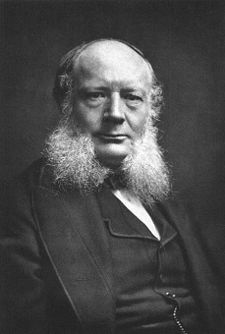
ACHIEVEMENTS: Invention of the regenerative gas furnace and developments in electric telegraphy.
NICKNAME/ALIAS: born Siemens, Karl Wilhelm
DATE/PLACE OF BIRTH: 4th April 1823, in Lenthe, Prussia (Germany).
DATE/PLACE OF DEATH/AGE AT DEATH: 19th November 1883, in London, England. Aged 63.
DISCIPLINE: Engineer.
FIELD: Engineering.
LANGUAGE: German and English.
PARENTS: Father, Christian Ferdinand Siemens, mother, Eleanore Deichmann.
SIBLINGS: 10 brothers. including Werner, and 3 sisters.
SPOUSE: Anne Gordon.
CHILDREN: None.
EDUCATION: Private tutors; Commercial school, Lubeck; Technical school, Magdeburg; University of Gottingen.
MAJOR WORK: "Collected Works" (published 1889).
LIFE AND TIMES:
After he graduated, Siemens decided that he would take up engineering. In 1843, his brother <brother was> Werner Werner von Siemens* got him a job as a trainee in a Magdeburg, Germany factory that produced steam engines. Straight away, he began trying to design new pieces of apparatus, then began work as his brother’s agent, selling an electro-plating process that Werner had patented.
In March 1843, he sailed from Hamburg to London, to sell the patent to the British, who were at that time receptive to new ideas. The success of Werner’s idea encouraged the brothers to work on other inventions, hoping to earn money to help support their nine brothers and three sisters.
A year later, Siemens went back to Britain with two more inventions, one for the printing industry and the other relating to steam engines. He was not very successful, but nevertheless settled in England, where he applied his talents to more inventions as well as acting as an agent for Werner and other inventors.
In 1847, he moved from London to Manchester, where he worked as an engineer, mainly in the printing industry. At that time, the area around Manchester was the main industrial centre of Britain and Siemens was able to study the latest application of steam power. He saw that, in most industrial processes, heat loss was one of the main problems and, from then on, he applied himself to the question of heat conservation.
Together with another brother, Freidrich, Siemens developed a regenerative steam engine and condenser, which they patented in 1847. By now, Werner had a factory in Berlin, and William began selling its product in Britain in 1850.
The fortunes of the two Siemens brothers, William and Freidrich, took a turn for the better when, in 1851, they invented a water meter that was so far ahead of the competition that, in no time, they were earning a lot of money from royalties.
They were able to buy a house in Kensington, a fashionable area of London, and Siemens was able to set up in business.
Heat conservation was, at that time, a subject of experimentation and, in 1856, at the same time that <work related to> Bessemer* perfected his process of steel production, the Siemens brothers took out a patent for applying the principle of heat regeneration to furnaces.
Their process involved channelling waste gases through a brick chamber, rather than allowing them to escape from a chimney. When the bricks had been heated by the gases to a predetermined temperature, the supply of waste gases was cut off. The air supply for the furnace was then passed through the chamber, where it collected the heat stored in the bricks, before being passed into the furnace. In order for the process to be continuous, two brick chambers were used, alternating one to the other, one receiving heat and the other giving it out. The resultant fuel-saving and the much higher furnace temperatures achieved made the process very economical.
In 1857, the process was first applied to melting and re-heating steel and, in 1858, Siemens took over as managing partner in the London firm of Siemens and Halske, which manufactured electrical apparatus as well as carrying out electrical testing for cable firms.
A year later, he married the sister of a professor in engineering and took out British citizenship. In the meantime, he and his brother Freidrich were still working on developments in heat regeneration, and made a breakthrough in 1861, when they improved their process by substituting gas for solid fuel in furnaces.
This new method became instantly popular in the glass industry and <impressed> Faraday* was so impressed that he contacted Siemens as soon as he saw the process. In 1862, William became a Fellow of the <member of> Royal Society*.
The new gas furnace was valuable in industrial processes where high temperatures were called for. It was first used in steel production in 1865, becoming widely adopted within the industry, in competition with the Bessemer process, which it eventually superseded throughout British industry.
Meanwhile the electric telegraph business was booming and, in 1866, the Siemens electrical business was so good that the small factory in London was moved to Kent, eventually becoming a huge complex. In that year, Werner Siemens invented his self-excited generator, which William, as his agent, presented for him in London, although <simultaneous invention with> Wheatstone* published details of his own invention on the same principle at the same time.
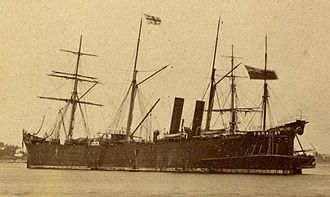
Siemens joined with his brother Werner in Berlin to work on the telegraph line laid from Prussia to Teheran, which was a section of the line from England to India. In 1874, Siemens's company was responsible for manufacturing the direct Atlantic cable, for which he designed the cable ship “Faraday.”
When the use of electric lighting began to spread, the Siemens company in Kent became heavily involved, supplying some of the first electrical apparatus used by lighthouses, and one of the first electric light installations in London (in the British Museum). In 1883, he developed the use of electricity to power locomotives, on the Portrush Electric Railway in Northern Ireland.
ASSESSMENT: His regenerative gas furnace made a valuable contribution to industry and had a significant impact on steel production.
EXTRA CONNECTIONS: <his process used by> Bethlehem Steel* used his process
ONELINER: William Siemens, industrial inventor
BIBLIOGRAPHY:
Pole, William, The Life of Sir William Siemens, John Murray, London, 1888.
Dictionary of National Biography