Onnes
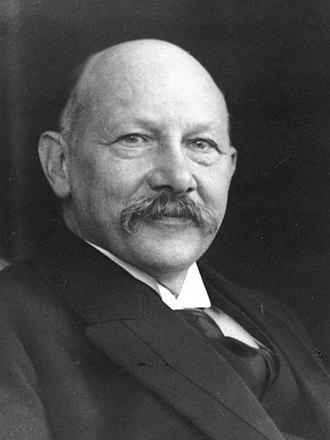
Kamerlingh Onnes, Heike
ACHIEVEMENT(S): Superconductivity.
NICKNAME/ALIAS: None
DATE/PLACE OF BIRTH: 21 September 1853, at Groningen, Netherlands
DATE/PLACE/AGE AT DEATH: 21 February 1926, in Leyden, Netherlands. Aged 72
DISCIPLINE: Physicist
FIELD: Physics
LANGUAGE: Dutch
PARENTS: Harm Kamerlingh Onnes and Anna Gerdina Coers
SIBLINGS: Several younger brothers
SPOUSE: Elizabeth Bijleveld, married 1887
CHILDREN: One son
EDUCATION: Hoogere Burger School, Groningen, 1865-70; Universities of
Groningen and Heidelberg, 1870-78
MAJOR WORK: 'On the Measurement of Very Low Temperatures', 1900 (with M.
Boudin)
LIFE AND TIMES: In October 1871 Onnes went to the University of Heidelberg in Germany, where he was taught by <taught by> Bunsen*, and was one of only two students permitted to work in <worked in lab of> Kirchhoff’s* private laboratory. In April 1873 he returned to the University of Groningen.
In 1878 he was made assistant lecturer in physics at the Polytechnic in Delft. During his four years there, he met the professor of physics at Amsterdam, Johannes van der Waals, with whom he began a correspondence on van der Waals's equations for describing the states of matter for gases which would greatly influence the direction of his subsequent research.
At the same time he began investigations for a paper on the general theory of fluids and gases from the perspective of kinetic theory, and soon realized that a general theory for the thermodynamic properties of liquids and gases needed accurate measurements of volume, pressure, and temperature over as wide a range as possible, in particular at the lower end of the scale.
In 1882, at the age of 29, Kamerlingh Onnes was appointed professor of experimental physics at the University of Leyden (in 1894 he would found the Cryogenic Laboratory now named after him), which became a world centre of cryogenic research.
At this time cryogenic physics was a relatively unknown science as, although gases had been liquefied at very low temperatures, Onnes was the first to investigate low-temperature physics to investigate the atomic nature of matter. According to Van der Waals's theory of corresponding states (1873), all gases behave in the same way when the units of pressure, temperature, and volume are adapted to account for weak forces of attraction between the molecules. To verify this Onnes had to liquify gases at very low temperatures.
He had the choice of three methods. In 1877, the Swiss physicist <work related to> Pictet* had discovered a cooling effect due to the rapid evaporation of a liquid, while in the same year the French physicist <work related to> Cailletet* had also achieved low temperatures when cooling oxygen by applying intense pressure.
The third method, based on the discovery (1850) by <work related to> J.P. Joule* and <work related to> Kelvin* (that, when a gas under pressure is released through very small openings, its temperature is lowered by an amount that depends on the nature of the gas) was developed in 1895 by <work related to> Linde*.
He constructed an apparatus in which gas was put under pressure and repeatedly forced into a coil of tubes that also acted as a heat exchanger, in a method which became known as the regenerative process. However, Linde's method produced only a tiny amount of liquid.
Onnes decided to combine the methods of Pictet and Linde in order to liquify oxygen, since a bath of liquid oxygen was necessary for the liquefaction of other gases,
particularly hydrogen.
Onnes vaporized oxygen, then liquefied it, and then forced it under pressure into a closed, circulating system bathed in gases of progressively lower temperatures than the circulating oxygen. Using this process he was able to produce about 14 litres of liquid air per hour, but the production of liquid helium and liquid hydrogen proved more difficult. During the1890s, he spent a great deal of time and effort attempting to.
In 1898 he learned that the Scottish chemist and physicist <work related to> Dewar* had succeeded in liquefying about a pint of hydrogen using a modified form of Pictet's method.
Onnes began to construct a new system for producing large amounts of low-temperature liquids, based on the fact that there was now a new source of cold (liquid hydrogen) with which to begin.
This system required an entirely new technology, however, and in 1901 he founded a school of instrument makers and glassblowers at Leyden, which was soon sending trained technicians out to physics laboratories all over the world. In 1908, he succeeded in liquefying helium for the first time, at -268C and a vast new temperature region was opened up for research. He then set out to solidify liquid helium, to reach even lower temperatures, and in 1910, by boiling liquid helium under reduced pressure, he reached just one degree above absolute zero.
He also wanted to study how matter behaves at very low temperatures, and because temperature is a measure of the random motion of the molecules of a substance, and
because large random motion obscures some phenomena, low temperatures can expose otherwise hidden aspects of the nature of atoms or electrons.
In 1911 he made his most famous discovery when, during his many attempts at crystallizing helium he had succeeded in lowering the temperature of liquid helium to 0.8K, he observed that the electrical resistance of mercury (and later certain other metals) completely vanished at low temperatures, questioning Kelvin's theory (1902) that as the temperature approached absolute zero, the electrical resistance of a
conductor would increase. Onnes called this new phenomenon ‘supraconductivity,’ later renamed ‘superconductivity.’
During the following years he continued his attempts to reach absolute zero, while also making further investigations of the effects of low temperatures on the conductivity of mercury, lead, nickel and manganese/iron alloys.
He discovered that a magnetic field eliminated superconductivity even at low temperatures. He also investigated the magneto-optical properties of metals at low temperatures.
By 1921, Kamerlingh Onnes had come within a degree of reaching absolute zero but, despite being known by his friends as "the gentleman of absolute zero", he died without ever having achieved it.
ASSESSMENT: Made a major contribution to cryogenics.
EXTRA CONNECTIONS: His work related to that of <work related to> Langevin*.
ONELINER: Kammerlingh Onnes, discoverer of super-conductivity
BIBLIOGRAPHY:
DSB, EB
Mendelssohn, K., The Quest for Absolute Zero: The Meaning of Low-Temperature Physics, Taylor & Francis Ltd.: London, 1977