Haushofer
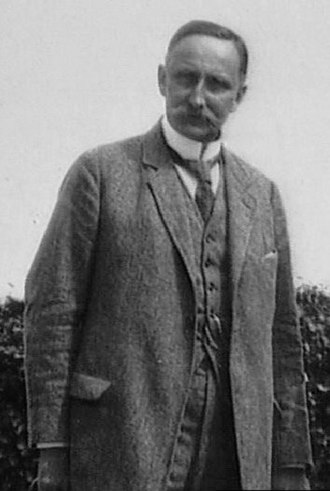
Name: Karl Ernst Haushofer
Achievements: Coined term: “Geopolitics”
Born: August 27, 1869; Munich, Germany
Died: March 13, 1946; Pähl, Germany (Aged 76)
Field & Discipline: Geopolitics; Geographer
Language: German
Father: Max Haushofer (1840-1907)
Mother: Adele Fraas (1844-72)
Siblings: Alfred (1872-1943); Marie (1871-1940)
Spouse: Martha Mayer (married 1896, d. 1945)
Children: Albrecht (1903-45); Heinz
Education: Cadet School, 1887-92; Berlin War Academy, 1892-97; University of
Munich, 1913
Major Work:
“Wehr-Geopolitik” (1941)
Life & Times:
From 1897 Haushofer travelled widely on diplomatic missions to India, China, Russia, Korea and Europe, experiences which proved valuable in his later career as a professor of geography. From 1908 to 1911, as military attache to Tokyo, he learned Japanese and studied the cultures and political systems of South East Asia.
In Japan he also decided to pursue an academic career, and in 1913 he received his Ph.D. from the University of Munich for a thesis on the political geography of the Pacific area. He studied in particular Japan's expansionist policies in Asia, and several of his later books, including his most ambitious study in political geography: 'Geopolitics of the Pacific Ocean', 1924, would deal with Japan's role in 20th-century politics.
On his return in 1911, Haushofer was appointed to the Bavarian general staff and promoted to colonel. His retirement from the army was postponed in 1914 by the onset of World War I, towards the end of which he was promoted to major-general, leading the 13th Bavarian Reserve Division from the Alsace area back to Munich.
In 1919, Haushofer retired from the army, and from then on dedicated himself to the intellectual and political regeneration of Germany. In 1921 he was appointed Professor of Geography at the University of Munich, and in the same year he first met [met and influenced] Hitler* and began to influence on Nazi Party thinking, in particular through his pupil, the young [influenced] Rudolf Hess*.
In 1922, Haushofer founded, and became editor of and principal contributor to, the 'Journal for Geopolitics' and directed the Institute of Geopolitics at the University of Munich. Through his directorship of the Society for Geopolitics and in his lectures and writings, Haushofer became the main exponent in Germany of geopolitics, a modern version of political geography first named by the Swedish political scientist [influenced by] Kjellen* (1916) and which linked politics and geography.
(The idea would be later developed in the early 20th century by the British geographer [ideas developed by] Mackinder* who, in an age of British expansion and overseas interests, drew attention to the geo-strategic advantages of land power (in particular what he called the 'Heartland' within the Eurasian land mass, the possessor which, he believed,
would exert a dominating influence over world politics), and by the American naval historian [ideas developed by] Mahan*, who saw world politics as essentially a conflict between oceanic and continental powers).
Haushofer combined his ideas with [influenced by] Ratzel's* organic theory of the state and with the less-scientific ideas of Kjellen, who took Ratzel's metaphor literally and viewed the state as an actual live organism with a natural right to growth and to Lebensraum ("living space").
Haushofer believed that the British Empire was in decline, and that it was the turn of a European power to take over its leadership by controlling Mackinder's 'Heartland' of Europe - otherwise, the space would be taken over and controlled by "lesser" Eurasians. For Haushofer, the European power most fitted to take this powerful position was Germany.
Germany (according to the theories of Ratzel) needed 'Lebensraum' (or living space) and therefore was justified in its expansion, especially towards the east, where the agricultural Ukraine could be added to the industrial German 'Herzland' (heartland). Haushofer warned, however, that Britain must remain a cornerstone of German politics, and should not become an enemy. When Hess flew to Scotland on 10 May 1941 on his peace mission, he carried with him Haushofer’s card.
Hess later claimed that the idea of flying to Britain came first from Haushofer, who told Hess about a dream in which he had seen Hess striding through the tapestried walls of English castles on a mission to bring the two Nordic nations together.
In Nazi Germany during the 1930s, geopolitics became a new fashion. Ideologists of Nazism, like Hess, Rosenberg and Darre, as well as the young Adolf Hitler, absorbed from Haushofer the concept of 'Lebensraum' in a vulgarized form, and so, to the biological doctrine of racial superiority was added an expansionist concept, and the conviction that German destiny would be decided in the East.
Haushofer continued to provide a respectable rationalization for Nazi expansionism, and won a reputation as the "man behind Hitler". The Fuhrer used the political aspects of geopolitics as a rationalization for national expansion, and borrowed from Haushofer one of his favourite expressions, "space as a factor of power".
However, by 1938 Haushofer was becoming disillusioned with many aspects of National Socialism. In particular he was greatly distressed by the fact that he was forced to secure Hess's help in protecting his wife, who was of Jewish extraction.
Throughout World War II, Haushofer publicly justified the expansionist drive of both Germany and Japan, but continued to believe that peace with both the British and the Russians was crucial to German policy, and found it increasingly difficult to support Hitler's war policies. Abroad he was considered a leading Nazi, and since the war his role in the creation of Nazi ideology has perhaps been exaggerated.
Haushofer was arrested after the assassination attempt on Hitler in July 1944, in which his son Albrecht was implicated. In April 1945 his son Albrecht was shot by the Gestapo, and in March 1946 Haushofer, being investigated for alleged war crimes, committed suicide with his wife.
Assessment: Thanks to Haushofer, geopolitics became a pseudo-academic discipline in which the state is regarded as an organism with a 'life' of its own, which became prominent particularly in Germany in the interwar period, and used by the Nazis to provide spurious intellectual justifications for national paranoia, illegal territorial claims, and geopolitical objectives.
Oneliner: Haushofer, geopolicitican who influenced Hitler
Bibliography:
- Encyclopedia Britannica.*
- Murphy, David Thomas, The Heroic Earth: Geopolitical Thought in Weimar Germany, 1918-33,Kent, Ohio & London: Kent University Press, 1997.
- Wistrich, Robert S., Who's Who in Nazi Germany, London: Routledge, 1995.