Ratzel
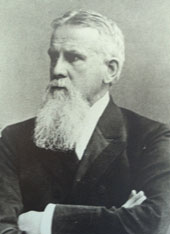
Achievements: Invented then concept, later misused by the Nazis: “lebensraum” (living space).
Born: August 30, 1844; Karlsruhe, Baden, Germany
Died: August 9, 1904; Ammerland, Germany (Aged 59)
Field & Discipline: Geography; Anthropology; Geographer; Ethnographer
Education: La Fontaine Gymnasium, Karlsruhe; Karlsruhe Technische; Hochschule; Universities of Heidelberg and Jena
Major Work:
“Politische Geographie” (“Political Geography,” 1897)
Life & Times:
By the time he was in his mid-twenties Ratzel had published his first book, 'Sein und Werden der Organischen Welt', (Existence and Development of the Natural World), a popular history of creation. Based on the theories of [based work on] Charles Darwin*, his work was influenced by the German zoologist, [influenced by] Haeckel*.After graduating, Ratzel accepted French naturalist Charles Martin’s offer of fieldwork in the Mediterranean area. During this time, he published some popular accounts of his work as a naturalist in the 'Kolnische Zeitung' ('Cologne Journal'), which then took him on as a permanent correspondent.
During 1869-70, Ratzel traveled through Italy and then, when war broke out between the French and the Prussians, he enlisted and was seriously wounded, but made a full recovery.He left the army in 1871 and studied briefly in Munich, where he met and became a life-long friend of Moritz Wagner, the naturalist and curator of the university Ethnographical Museum. Wagner’s thoughts on the importance of the migration of species made a lasting impression on Ratzel.
In 1874-75, as correspondent for the 'Kolnische Zeitung', he made a long tour of North and Central America, visiting London on the way. During this tour, he found his vocation as a human geographer and became interested in the post-Civil War problems facing the United States.Ratzel was particularly interested in the habitat of the American Indians, the inflow of the Chinese into California and the 19th-century migration of large numbers of Germans to the Mid-West. During this U.S. tour, he met the zoologist and glaciologist [met] Agassiz*.
In 1875, Ratzel returned to Europe to begin a full-time academic career as lecturer in geography at the Technische Hochschule in Munich.Ratzel began to study the work of [studied work of] Alexander von Humboldt* and [studied work of] Ritter* and he also started to criticise Darwin's theory of natural selection and Haeckel's views on evolution. His own ideas gradually moved away from a mechanistic, to a biological approach to geography, but he remained convinced of the application of concepts of organic evolution to human societies.
In his eleven years at Munich, he wrote his two volume 'Anthropogeographie', published in 1882 and 1891, in which he detailed his great themes of human geography, especially those of human societies developing within a frame ('Rahmen'), exploiting a place ('Stelle'), needing space ('Raum'), and finding limits ('Grenzen'). This work also discussed and analysed population distribution, its relation to migration and environment, cultural borrowing and the effects of the physical environment on individuals and societies.
While he was still in Munich, Ratzel also wrote the first two volumes of his huge ethnographic work, 'Volkerkunde'. This work ended up as three volumes, published between 1885 and 1888, which were translated as 'The History of Mankind', published between 1896 and 1898. These works brought Ratzel immense fame in the rest of Europe and America and were to have a formative effect on American geography in the early 20th century.
In 1886, he became Professor of Geography at Leipzig, succeeding [succeeded] Ferdinand von Richthofen*, where, as well as completing the third volume of ‘Volkerkunde’, he wrote several important analyses of his concepts of 'Lebensraum' and the science of political geography.
In his later years, Ratzel developed an interest in contemporary philosophy, particularly the works of [studied work of] Comte*, [studied work of] Spencer* and [studied work of] Fechner*. In his 'Politische Geographie' (1897), he attempted to combine practical politics with physical-philosophical thoughts, based on the idea that great space confers great rights and virtues.
Ratzel’s other works included a political-geographical study of the United States, published in 1893 and an essay "Lebensraum" (Living Space), 1901, which summarised his earlier attempts to associate organic activities with the physical environment and to link biology and biogeography with human geography. He also wrote 'Die Erde und das Leben: eine Vergleichende Erdkunde' ('Earth and Life: A Comparative Geography'), which was completed in 1902.
Ratzel's concept of Lebensraum related human groups to the space in which they developed and he pointed out the tendency of a state to expand or contract its boundaries according to rational capabilities.
This was badly interpreted by the Swedish political scientist, [misinterpreted by] Kjellén*, into crude master-race theories, which later were disastrously misused (thanks to further misinterpretations by [misinterpreted by]Haushofer*, and [misinterpreted by] Hess*) by [ideas used by] Hitler*.
In Leipzig, Ratzel formed many important friendships, in particular with the philosopher [a pal of] Wundt* and the chemist [a pal of] Ostwald*. He died suddenly from a stroke at his summer home in Ammerland.
Oneliner: Friedrich Ratzel, originator of ‘lebensraum’ concept
Assessment: The founder of modern human geography.
Language: German
Father: Unknown
Mother: Unknown
Siblings: Two brothers, one sister
Spouse: Marie Wingens
Children: Two daughters
Bibliography:
- Wanklyn, Harriet, Friedrich Ratzel, Cambridge University Press, Cambridge, England, 1961.