Beckett, Sir E
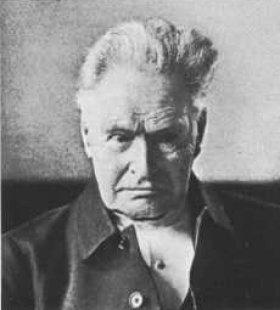
Beckett, Sir Edmund
ACHIEVEMENT(S): Big Ben clock
NICKNAME/ALIAS: from 1874, known as Sir Edmund Beckett; from 1886, as Baron Grimthorpe (of Grimthorpe). He is sometimes known as Edmund Beckett Denison; his father had taken the additional name Denison in 1816, but the son dropped it on his father's death in 1874
DATE/PLACE OF BIRTH: 12 May 1816, at Carlton Hall, near Newark-upon-Trent, Nottinghamshire, England
DATE/PLACE/AGE AT DEATH: 29 April 1905, in St. Albans, Hertfordshire, England. Aged 88
DISCIPLINE: Lawyer and horologist
FIELD: Horology
LANGUAGE: English
PARENTS: Sir Edmund Beckett, 4th baronet (1787-1874) and Maria Beverley (d. 1874), married 1814
SIBLINGS: ?
SPOUSE: Fanny Catherine Lonsdale (d. 1901), married 1745
CHILDREN: None
EDUCATION: Doncaster Grammar School; Eton College; Trinity College,
University of Cambridge to 1838
MAJOR WORK: 'Rudimentary Treatise on Clock and Watchmaking', 1850
LIFE AND TIMES :
During the 1840s Denison worked as a lawyer at the Parliamentary Bar for six months each year, spending the other half on horology and the architecture of the Gothic Revival*, founded by the great architect Pugin* with whose work he was to become involved later.
In 1850 he published: 'A Rudimentary Treatise on Clock and Watchmaking,' and a year later designed the great clock for the Great Exhibition at Crystal Palace, and soon afterwards became involved in the controversy surrounding the commission to build a clock for the clock-tower of Barry's* Houses of Parliament. Over the following two years (1851-53), in association with Dent (and later his stepson, Frederick Dent) and the Astronomer Royal Airy* (and in direct opposition to the architect Barry and numerous others involved in the project) Denison bulldozed through his own innovative design for this huge and prestigious
clock, based on a flat-bed movement.
Denison's principal achievement in this design was a novel double three-legged gravity escapement - a modification of a new highly accurate gravity escapement by a barrister, J.M. Bloxham, in 1853. In most escapements, the impulse that keeps the pendulum swinging is applied by the driving weight or spring through gearing, but it can vary with inaccuracies of the wheels and other parts, with varying friction, and, if spring driven, with variation in driving force.
The gravity escapement applies a constant measured impulse by using the power of the driving weight to raise a light arm, the weight of which provides the impulse as it rests on the side of the pendulum rod, and it is lifted out of the way as the pendulum swings back, then released again. Denison's version of the gravity escapement has proved the most successful for large mechanical clocks, from its first application until today.
Denison first tested his new escapement at the Greenwich Observatory, where it performed so well that Airy approved its incorporation in the Westminster clock, and then again in a clock Dent was making for Fredericton, in New Brunswick, Canada, where the clock proved highly accurate. It was installed in the tower of Westminster in 1859, with its four enormous clock faces each 22' 6" in diameter, and its four 11-foot long minute hands, all 180 feet above the ground.
Meanwhile, the casting of the clock's great hour bell, would later be named 'Big Ben' after Sir Benjamin Hall, commissioner of public works, was causing almost as much trouble as the clock itself. In 1855 Denison prepared the specifications for the 14-ton bell himself, one of the biggest ever to be cast in the country. The first casting in 1856 produced a bell that was nearly two tons overweight and half a note out (it was intended to sound E flat), and which cracked after only being struck a few times. Another modified, 13.8 ton bell was cast by George Mears in 1858 in London. It proved successful, and the clock itself was started in May 1859 with the striking on the hour following in July, and the four quarter-hour bells following in September.
In 1854, Denison became a Queen’s Counsel, and by 1861 he was leader of the Parliamentary Bar. He published a scientific bestseller, 'Astronomy without Mathematics' (1865), and wrote many articles on clocks, watches and bells for the 'Encyclopaedia Britannica'.
During his career, Denison took part in the design of more than 40 big clocks, most notably for St. Paul's Cathedral in London (installed 1893), Leeds Town Hall, Lincoln Cathedral and Worcester Cathedral. In 1867 he was elected president of the Horological Institute, a position which he retained until his death.
With the deaths of his uncle and father in the early 1870s, Denison succeeded to the baronetcy and styled himself Sir Edmund Beckett, fifth baronet (1874).
Soon afterwards he became embroiled in the fate of the ruined St. Albans Abbey, which was in the process of being repaired and converted to a cathedral by Sir Gilbert Scott. Over the following years, Denison contributed generously to the project and greatly interfered with Scott and his work, to the extent that, with Scott's death in 1878 and the subsequent realization that various parts of the restored building were in danger of falling down, in 1880 Denison was granted by the church authorities the faculty to "restore, repair and refit" the church as he saw fit at his own expense. Setting to work with characteristic zeal, by 1893 Denison had completed one of the most expensive and controversial restorations of the century, in which almost everything (brickwork, masonry, tracery, pinnacles), it was universally agreed on its completion, entirely to the cathedral's detriment.
ASSESSMENT: A major figure in the development of clockmaking.
EXTRA CONNECTIONS: None
ONELINER: EB Denison, builder of Big Ben
BIBLIOGRAPHY:
EB, DNB
Bruton, Eric, History of Clocks and Watches, London: Orbis Publishing, 1979
Ferriday, Peter, Lord Grimthorpe, 1816-1905, London: John Murray (Publishers) Ltd., 1957.