Appert
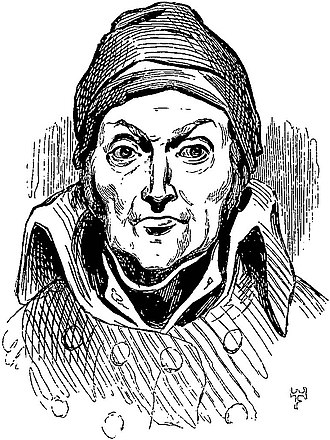

Achievements: Developed the technique for what eventually became food canning.
Born: c. 1750; Chalons-sur-Marne, France
Died: June 1, 1841; Massy (Paris), France (Aged about 91)
Field & Discipline: Invention; Food processing
Education: Elementary school
Major Work: "The Art of Preserving All Kinds of Animal and Vegetable Substances for Several Years"
Life & Times:
Appert began his food career at 14, working in his father's wine cellars in Champagne. In his 20’s, he worked as an apprentice chef, then as chef in a number of restaurants, including the Palais Royal Hotel in Chalons. At 30 he moved to Paris and set up a confectionery shop, a business he would keep for nearly 15 years. Appert became increasingly concerned at the primitive ways of preserving food in Paris slaughter-houses, storehouses and restaurants.
He had heard about the work of Italian biologist [work related to] Spallanzani*, who in 1767 proved that gravy would stay fresh if boiled and immediately placed in a glass container which was then sealed. Spallanzani had also preserved peas by boiling them for 45 minutes, then putting them in water in a sealed glass vessel, the first known attempt to conserve food by heat sterilization. Appert took Spallanzani's work one step further and proved that food inside a closed vessel could be conserved indefinitely by heating the container.
In 1794, [got prize from] Napoleon* offered a prize to anyone who could find a way to preserve food (feeding his army was a serious problem). Appert quit the confectionery shop, and began experimenting. After 14 years, he finally established that virtually all food could be preserved by putting it in loosely-stoppered glass bottles, immersing the bottles in boiling water, then sealing the bottles more tightly with wire and sealing wax.
In 1803, Appert took his findings to the French government. In 1806, the French Navy tried out a wide range of his foods, including meat, vegetables, fruit and even milk, and found that even on extremely long voyages, the foods were unspoiled. In 1810, Appert was rewarded 12,000 francs for his invention on condition he made the technique public. He published an account of his process: "The Art of Preserving All Kinds of Animal and Vegetable Substances for Several Years".
By 1811, Appert's ideas had been taken up in England by [idea used by] John Hall* and his associate [idea used by]Donkin*. Hall and Donkin developed a tinned iron canister to hold the food to be preserved by the Appert method. In 1818, with a contract to supply the Royal Navy with canned food, Hall and Donkin built a factory, with financing from [idea used by] Gamble*.
Impressed by the effectiveness of cans, Appert used his prize money to establish the first commercial cannery in France, the House of Appert, at Massy, outside Paris. It operated from 1814 until 1933.
While Appert's trial-and-error experiments were done with little modern scientific knowledge, his methods were based on the practice of heating foods to above the boiling-point of water. To accomplish this, Appert perfected the design of an autoclave, a steel vessel that sterilized under high steam pressure. During this period, Appert also developed the bouillon cube (made from meat and vegetable extracts). Appert was awarded the silver medal of the Society for the Encouragement of National Industry in 1816 and its gold medal in 1820.
Extra Connections: Knew the family of artist [knew family of] Seurat*
Assessment: He produced the first practical preserved food.
Oneliner: Nicholas Appert, inventor of food preservation
Bibliography:
- Dictionnaire biographique francais.
- Encyclopedia Britannica.
Language: French
Father: Claude Appert
Mother: Marie Huet
Siblings: Unknown
Spouse: Elisabeth Benoist
Children: Benjamin