Hancock, Thomas
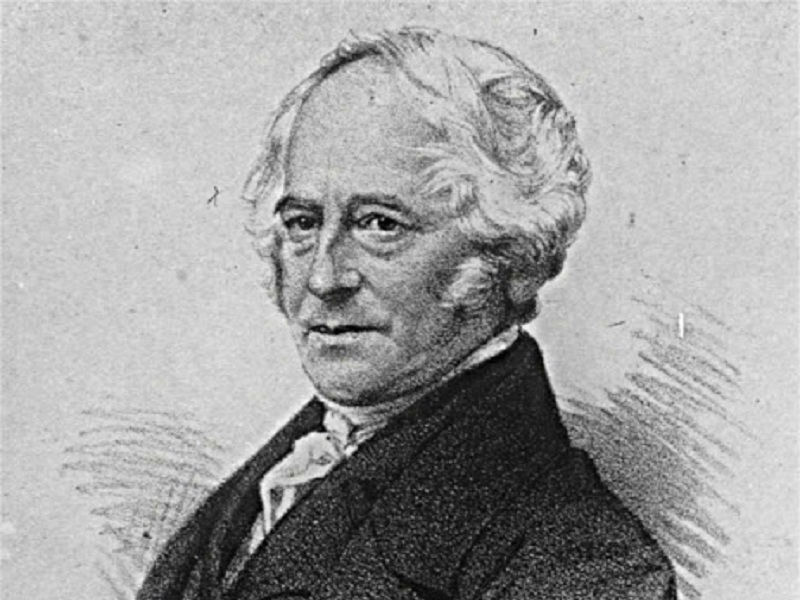
Name: Thomas Hancock
Achievements: Started the modern rubber industry.
Born: May 8, 1786; Marlborough, Wiltshire, England
Died: March 26, 1865; Stoke Newington, London, England (Aged 78)
Field & Discipline: Business; Invention
Language: English
Father: James Hancock
Mother: Unknown
Siblings: Charles Hancock; John; Walter; William
Spouse: None
Children: None
Education: Private school, Marlborough
Major Work:
“Origin and Progress of the Caoutchouc or Indiarubber Manufacture in England” (1857)
Life & Times:
In 1819 in London Hancock became interested in the uses of [commercialized] rubber* ([influenced by] Joseph Priestley* introduced the term "rubber" after using a small piece to erase a pencil mark on his notes) and in April 1820 he took out his first patent. Hancock opened a factory in Goswell Road, London, and began manufacturing on a large scale, assisted at a later date by his brother, William.
The first description of the uses of rubber had come to Europe with [work related to] La Condamine*, who in 1735 was in South America. He reported that the local people made items from a watertight material which they had previously prepared from a milky liquid spread out in the sun to cure.
On an industrial scale rubber in its natural state was difficult to manipulate. Having seen that two freshly-cut surfaces of rubber could be stuck together by simple pressure, Hancock was inspired to create his earliest invention, the "masticator": a roller set with sharp knives or teeth, revolving in a hollow cylinder of slightly larger diameter, which kneaded the raw rubber scraps into a homogeneous mass that could either be shaped into solid blocks or rolled into sheets.
This process, perfected in 1821, was never patented, but remained secret until 1832. Experiments showed that masticated rubber was much more easily acted upon by solvents than ordinary rubber, and this discovery put Hancock in touch with the Scottish chemist [collaborated with] Charles Macintosh*.
Eventually Hancock became a partner of Charles Macintosh & Co., producing rubberised waterproof clothing Hancock's rubber articles had serious defects: at high temperatures they became sticky, and at low temperatures they lost their elasticity. Between 1820 and 1847 Hancock took out 16 patents connected with improving his products, and in 1842 he transferred the Goswell Road factory to his nephew, James Lyne Hancock, and dedicated his time entirely to research at his own private laboratory at Stoke Newington.
It was the American inventor, [business rival was] Goodyear*, who in 1841 transformed the rubber industry by inventing vulcanization, a chemical reaction of rubber and sulphur at high temperature, which transformed the rubber into a light, stable and versatile commercial product with hundreds of uses.
Hancock read an article on Goodyear's work in 1842, and after much experimenting with sulphur additives, he finally mastered the technique, for which he was granted an English patent in November 1843. He devised many medical uses for rubber. Hancock also promoted the use of rubber rather than leather for fire hoses.
Meanwhile, by 1840 rubber manufacture had become well-established in Britain, imports of rubber having risen over the decade from 23 tons to 332 tons. With vulcanization came the possibility of using rubber in the transport industry, in which Hancock, through his brother William's pioneering work in steam road-carriages, soon became involved.
As early as 1826 a patent had been issued for the replacement of steel springs in carriages with rubber blocks, and by 1845 rubber was being used to cushion the ends of railway carriages.
Then, in 1846, Thomas Hancock started the manufacture of rubber road tyres for his brother's carriages, and in the same year he took out a patent for a kind of pneumatic rubber tyre with an outer casing of leather.
In 1857 Hancock published his “Personal Narrative of the Origin and Progress of the Caoutchouc or India Rubber Manufacture in England.”
Extra Connections: [work related to] Joseph Dalton Hooker(https://app.thebrain.com/brain/f3e16344-7cd9-4fa3-ae1d-59876e128474/8fa89411-e42f-521a-8570-2a6b17ace225)* in the 1870’s brought rubber seedlings to Kew Gardens.
The firm had large display stands at the Great Exhibition of 1851 in London and at the 1855 Exposition Universelle in Paris. In 1857 Hancock published the story of his life's work as "The Origin and Progress of the Caoutchouc or India-Rubber Industry in England".
Assessment: A rubber pioneer.
Oneliner: Thomas Hancock, early rubber pioneer
Bibliography:
- Dictionary of National Biography.
- Encyclopedia Britannica.
Ch 5: The Battles of the Giants—Thomas Hancock
Thomas Hancock (inventor) - Wikipedia