Macintosh C
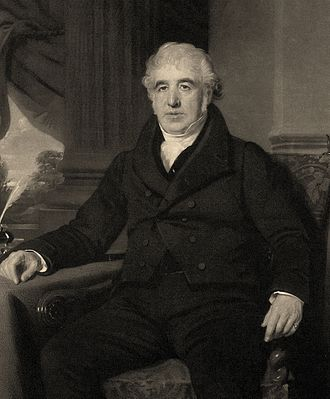
Name: Charles Macintosh
Achievements: Invented rubberized waterproof clothing
Born: December 29, 1766; Glasgow, Scotland
Died: July 25, 1843; Dunchattan, Scotland (Aged 76)
Field & Discipline: Science; Business; Invention; Chemistry
Language: English
Education: Glasgow Grammar School; school at Catterick Bridge, Yorkshire
Major Work:
Created the macintosh, (also ‘mackintosh’) a waterproof coat named after him
Life & Times:
Macintosh was the son of dye-master and industrialist [father was] George Macintosh*. As a youth, Macintosh was employed in the accounts department of a Glasgow merchant, but devoted his spare time to science, especially chemistry.
He attended lectures by William Irvine at Glasgow and [taught by] Black* at Edinburgh, and wrote several essays for a chemical society attached to Edinburgh University.
In 1786, Macintosh went into partnership with his father to produce sal ammoniac, a muriate or chloride of ammonia, normally used in tinning iron, copper and brass, and pharmaceuticals. Macintosh's father wanted it for processing "cudbear," a red dye developed by a partner, Cuthbert [influenced by] Gordon*.
In 1797, Macintosh set up his own business, the first alum (sulfate of alumina and potash) works at Campsie in Scotland, which used the aluminous waste from coal mines. Soon after, he went into partnership with [partnered with] Charles Tennant* of the St. Rollox chemical works near Glasgow.
Meanwhile, he had also opened a factory to manufacture the dye Prussian blue (or ferro-cyanodide of iron) beside his alum works at Campsie. In 1815, he went to Paris, where he met chemists [met] Gay-Lussac*, Nicolas-Louis Vauquelin, and [met] Thenard*.
In 1819, Macintosh entered a deal with [business deal with] Neilson* of the Glasgow Gasworks that was of huge benefit to each. Macintosh was looking for a more convenient way of producing ammonia for cudbear; Neilson was looking for a safe and economical way to dispose of the residual [used] coal tar* and other unpleasant liquid by-products from the manufacture of coal gas. From Neilson's coal tar and ammoniacal water, Macintosh successfully separated large quantities of ammonia.
This enterprise with Neilson led directly to Macintosh's invention of the waterproof raincoat (since then, known in the UK as a ‘macintosh’).
When ammonia is separated in the conversion of coal tar into pitch (by distillation), the essential oil naphtha is produced. Knowing that naphtha could act as a solvent of [commercialized] rubber* (first found in South America by [work related to] La Condamine*), Macintosh took wool cloth, painted one side of it with the rubber solution, placed another layer of wool cloth on top, and produced a waterproof fabric.
He took out a patent in 1822, and in 1824 established a works in Glasgow for the manufacture of waterproof fabrics. In 1825, [partner was] Hancock* took out a license under the patent which eventually led to a partnership, Charles Macintosh & Co., and a new works in Manchester that produced waterproof coats and shoes, and also large sheets of rubber.
Manufacturing problems occurred: tailors punctured the fabric, allowing rain in; the natural oil in the cloth caused the rubber cement to deteriorate; and the garments became stiff in winter and sticky in hot weather.
As early as 1824, Macintosh was corresponding with [provided supplies for] John Franklin* in regard to supplying waterproof canvas bags, air-beds, and pillows for Franklin's ill-fated Arctic expedition. The products were also tested by explorer [product tested by] James Ross*
Trade in waterproof garments fell off when the railways started, since travelers were less exposed to the weather than in stage-coaches. But Macintosh and his partners managed to stay in business by diversifying their products.
Gradually Macintosh expanded the Manchester works and more and more rubber goods were made.
Around 1825, Macintosh assisted Neilson in bringing his "hot blast" process of iron production into use, for which Neilson gave him a share in the patent. However, Macintosh became embroiled in a costly litigation that ensued. It was settled only a few months before his death.
Extra Connections: Macintosh learned about naphtha from experiments conducted by the man who trained surgeon [influenced by] Lister* (who derived carbolic acid from coal tar and used it as the first antiseptic).
Macintosh's work related to that of [process improved by] Goodyear*.
He knew [knew] Robert Owen*.
[his cloth used by]Zeppelin* used his waterproof materials in airships
He knew [knew] David Dale*
Assessment: Well-known Scottish chemist, his introduction of waterproof materials caused a major improvement in the quality of people’s lives.
Oneliner: Charles Macintosh, inventor of rainwear
Bibliography:
- Dictionary of National Biography.
- Encyclopedia Britannica.
Collier's Encyclopedia
Father: George Macintosh
Mother: Mary Moore
Siblings: John
Spouse: Mary Fisher
Children: None