Rosenbleuth
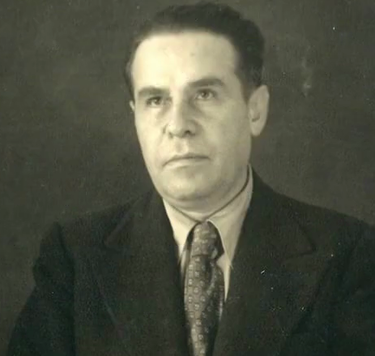
NAME: Rosenblueth, Arturo
DATE AND PLACE OF BIRTH:
2 October 1900, Ciudad Guerrero, Chihuahua, Mexico
DATE AND PLACE OF DEATH AND AGE AT DEATH:
20 September 1970, Mexico City, Mexico. Aged 69
DISCIPLINE:
Neurophysiologist
FIELD:
Neurophysiology
LANGUAGE:
English
PARENTS:
Father: name?
Mother: name?
SIBLINGS:
?
SPOUSE:
?
CHILDREN:
?
EDUCATION:
Franco-English College, Mexico City
University of Mexico
University of Paris
University of Berlin
MAJOR WORK:
“Autonomic Neuro-Effector Systems” (1937, with Walter Cannon)
LIFE AND TIMES:
After studying medicine in Mexico and Europe, Rosenblueth became a lecturer and researcher in physiology at the medical school in Mexico University. At the age of thirty, he accepted a research fellowship to work with <collaborated with> Cannon* at Harvard. Cannon was investigating the physiological processes in organisms by which the relative constancy of their internal environment is maintained – a state he named “homeostasis”. Organisms will not survive if their homeostasis is destroyed and Rosenblueth and Cannon set out to demonstrate the assumption that the homeostatic process is operated by the autonomic nervous system.
The autonomic nervous system is made up of those parts of the central and peripheral nervous systems which regulate the activity of viscera such as the heart, the skin and stomach, and any organ or structure that contains involuntary (smooth) muscles and glands. They proved this assumption with a series of delicate experiments on animals involving the nerves which make up the autonomic nervous system. Their research demonstrated that nerve impulses stimulate a release of a chemical that in turn triggers a specific effect, such as the constriction of blood vessels in cold weather to prevent heat loss.
In 1934 Rosenblueth was appointed assistant professor at the Harvard Medical School. His work on the nervous system aroused the interest of the mathematician <collaborated with> Wiener* with whom Rosenblueth worked on a functional analysis of the nervous system. They collaborated for several years with Rosenblueth elucidating the transmission of coded information by nerve impulse while Weiner demonstrated that this coding process was described by his information theory.
Their first paper: “Behavior, Purpose and Teleology” (1943), led to Weiner’s foundation of cybernetics. Among the papers they subsequently wrote were those on the mathematical expression of the conduction of impulses in a network of nerve cells, the esthetics of science, and a statistical analysis of synaptic transmissions.
Rosenblueth returned to Mexico City in 1944 where he became director of research at the newly established Institute of Cardiology. In 1961 he founded the National Polytechnical Institute of Mexico for advanced studies. At the Institute he promoted wider research programmes embracing interdisciplinary and international research.
In his last work, “Mind and Brain, A Philosophy of Science” (1970), he demonstrated how our knowledge of the material universe is based on coded nerve impulses. Any other “knowledge” about the universe, he maintained, was a mental construct. Rosenblueth died in 1970.
ASSESSMENT: Rosenblueth made a valuable contribution to both knowledge of homeostatic processes in organisms and to the foundation of cybernetics.
EXTRA CONNECTIONS:
He co-developed <co-developed>cybernetics*
ONELINER: A. Rosenbleuth, neurophysiologist
BIBLIOGRAPHY:
DSB
Arturo Rosenblueth - Wikipedia
Research Notes:
ARTURO ROSENBLUETH
Wiener describes him thus:
"He had not started as a scientist but as a musician, and earned his living
for some time by playing classical piano music in a Mexico City restaurant.
Arturo is also a first-rate chess player and a superb bridge player, so good
that in neither of these games does he allow me to play with him. He is a
great enthusiast for the climate and arts of his native land . . . He is a
hard worker, and he makes the greatest demands on the sincerity and industry
of those about him, demands which are only exceeded by those he makes upon
himself." (p. 278)
Rosenblueth's uplifting effect felt by many: after his death in 1970 book by
J. Garcia Ramos appeared, entitled 'Libro homenaje, Arturo Rosenblueth',
containing tributes from many distinguished medical scientists stating he
was their mentor etc. when working with Cannon at Harvard Medical School
(1930-44), and as Head of the Dept of Physiology of the new National
Institute of Cardiology (1944-61).
Wiener was much concerned that overwork would irreparable damage AR's
health, and expressed worry in letters to AR's physician - however, in
reply, Dr. S.A. Simeone pointed out that an intensive pace of work was
necessary to AR's well-being and there was no cause for alarm. AR a positive
moral force - on touchy issues, generally urging querulous Wiener to be
generous and forgiving - and also great optimist, e.g. writing to Wiener in
August 1944:
You sounded rather pessimistic in your last letter. That is
wrong. The war could not possibly be going better . . . Your work seems to
me to be going along beautifully from what you tell me. Your family is doing
handsomely. Our projects, although still in the realm of the "we shall see"
are alive and kicking . . . Your novel is still trying to crack its shell.
You have friends and they don't forget you - witness thereof, the pleasant
time I am having writing to you. What the Avernus can you crab about,
anyhow? It's really a great world and a great life, my dear Norbert,
notwithstanding their occasional infirmities."