Wiener
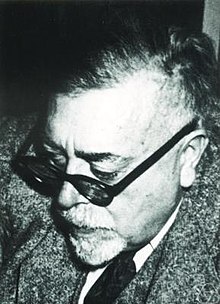
NAME: Wiener, Norbert
@@
ACHIEVEMENTS: Cybernetics
DATE AND PLACE OF BIRTH: November 26, 1894, Columbia, MO
DATE/PLACE OF DEATH/AGE AT DEATH: March 18, 1964, Stockholm, Sweden. Aged 69.
DISCIPLINE: Mathematician
FIELD: Cybernetics
EDUCATION: Ayer High School; Harvard University; Cornell University; Harvard Graduate School; Cambridge University, England
MAJOR WORK: "Cybernetics: or, Control and Communication in the Animal and the Machine"
LIFE AND TIMES:
Wiener, a prodigy, was educated at home until the age of nine by his father, a professor of Slavic languages at Harvard. After receiving his doctorate in philosophy from Harvard at the age of 19 (17?), he studied in England at Cambridge University under philosopher and mathematician Russell*. While at Cambridge, Wiener read Einstein*'s work on Brownian motion (the random movement of small particles suspended in a fluid).
Although later a pacifist, he was eager to serve in WW1 but did not receive a comission, then was turned down as an enlisted man for his eyesight; he eventually succeeded, and was asigned to the army proving grounds he has earlier worked at as a mathematician.
He also studied in Germany at Gottingen under mathematician David Hilbert. Back in the U.S., he was an assistant in the philosophy department at Harvard, then moved to Maine University, where he taught mathematics, wrote articles for periodicals and an encyclopedia, and worked as an apprentice engineer at General Electric. In 1919, he became an instructor in mathematics at MIT.
In 1925, Born* came from Gottingen to lecture at MIT and sought out Wiener's help. Born's colleague, Werner Heisenberg*, had just set out a new basis for the quantum theory of the atom and Born needed a mathematical theory to give the numbers used by Heisenberg a continuity that could be compared to the continuous part of the spectrum of an atom. Wiener was able to supply this by using what he called "operators", which were also used in reconciling Schrodinger*'s work on quantum mechanics with Heisenberg's theory. In 1927 he began collaborating with Bush* on the development of a computer.
His own most important publication at this time was "Acta Mathematica" (1930) a paper on generalized harmonic analysis. In 1931-32 at Cambridge University he wrote "The Fourier Integral and Certain of Its Applications" (1933). He also collaborated with the German mathematician Eberhard Hopf on what resulted in the Wiener-Hopf equations, used in prediction theory and radar design. In 1934 he published "Fourier Transforms in the Complex Domain."
During the Second World War (1939-45), Wiener chose to spend his time on computers and prediction theory. He worked on a binary computer, which he saw as a tool for computing problems involving partial differential equations. He insisted that all decision-making processes and the capability for erasure and replacement of data be built into the computer.
His work on prediction theory with engineer Julian Bigelow was applied to the firing of anti-aircraft guns. This involved the use of negative feedback (information from radar, updating the position of moving targets), a major factor in Sperry*'s earlier work on gyroscopic stabilizers.
He also discussed negative feedback with neurophysiologist Rosenbluth*, whose informal lessons on human physiology led to Wiener's many comparisons between computers and the human nervous system.
Wiener also designed a device to filter out interference in radar transmissions, writing about it in "Extrapolation, Interpolation and Smoothing of Stationary Time Series with Engineering Application", a report that provided engineers with a statistical approach to communication theory.
His work on feedback and computers led to cybernetics*, which he defined as "the theory of communication and control in the machine and the living organism". In 1946, Princeton began to sponsor a series of meetings for scholars interested in the connection between computers and the human brain. Wiener met fellow scientist Neumann*at one of these meetings and the two became good friends.
In 1948, Wiener published "Cybernetics: or, Control and Communication in the Animal and the Machine". In 1950, he published "The Human Use of Human Beings," a popular explanation of cybernetics and a warning of the dangers of the new communications technology. He worked on linear prediction and filtering up to the end of the 1950s. After his retirement from MIT, he continued to work in several different areas, including quantum theory.
ASSESSMENT: Established the science of cybernetics
EXTRA CONNECTIONS: None
ONELINER: Norbert Wiener, originator of cybernetics
BIBLIOGRAPHY:
ANB
Heims, Steve, J. John von Neumann and Norbert Weiner, From Mathematics to the Technologies of Life and Death, MIT Press, London, 1980
LANGUAGE: English
PARENTS: Leo Wiener; Bertha Kahn
SIBLINGS: Unknown
SPOUSE: Margaret Engemann
CHILDREN: Margaret; Barbara