Bernard, Claude
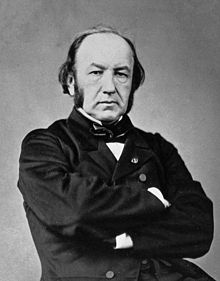
Achievements: Formulated the concept of the internal environment of the organism
Born: July 12, 1813; Saint-Julien, France
Died: February 10, 1878; Paris, France (Aged 65)
Field & Discipline: Physiology
Language: French
Education: Jesuit School, Villefranche; College of Thoissey
Major Work: “Introduction a la medecine experimentale” (1865, “An Introduction to the Study of Experimental Medicine”).
Life & Times:
As a young man Bernard wrote a comedy called “La Rose du Rhone” and began writing a historical drama. Bernard then went to Paris and showed the completed manuscript of his next play “Arthur de Bretagne,” to a professor of literature at the Sorbonne. The professor advised him to make a career in medicine and Bernard began studying at the Medical School in Paris in 1834. Two years later he became an external student in the big city hospitals and also taught natural history in a girls’ school to boost his finances.
After passing the competitive examination for an internship he studied under [studied under] Magendie* at the Hotel-Dieu. Magendie was almost the only representative of experimental physiology in Paris at that time. He noticed Bernard’s skill in dissection and appointed him his assistant at the College de France. Bernard took part in investigations on the physiology of nerves, the cerebro-sprinal fluid and the physiology of digestion. His first published paper was on the facial nerve.
In 1843 he published his dissertation on the function of the gastric juices in digestion in which he produced new findings on gastric digestion and the digestion of carbohydrates. Bernard failed the examinations which would have brought him a teaching position in the school of medicine and having resigned his from his job with Magendie he was forced to contemplate going back to Saint-Julien to practise medicine. Instead, he agreed to marry the daughter of a Paris doctor who brought to the marriage a dowry which enabled him to stay in the capital.
Purely by chance, Bernard noted that the urine of a rabbit bought for him in the market was clear. This was unexpected since herbivores always have cloudy urine. The explanation, he discovered, was that the rabbits had been starved and were reduced to eating their own tissue, thus turning them into carnivores. Through investigating this matter, Bernard was led to his important and innovative work on the absorption of fats and the functions of the pancreas. He used a technique for obtaining pure pancreatic juice which had been attempted by [used technique of] De Graaf*, two hundred years earlier and was eventually perfected at the end of the nineteenth century by [work related to] Pavlov*. His investigations led to the discovery that the secretions of the pancreas break down fat molecules into fatty acids and glycerin. He also demonstrated that the principal digestive processes occur in the small intestine.
In 1847 Bernard secured a job as assistant lecturer at the College de France. In 1848 his discovery that sugar is present in the blood even during fasting led to his hypothesis that the liver had a glycogenic function. In 1855 he succeeded Magendie as professor of medicine at the College de France. Between 1854 and 1860, working on the basis of his hypothesis about the liver, he discovered the existence of glycogen in the liver. He found that glycogen was a starchy substance which acted as a carbohydrate reserve and was built up by the body from sugar. He also discovered the role of the liver in breaking down its store of glycogen into sugar in order to keep the sugar level of the blood at a constant level. He had thus demonstrated that during digestion complex molecules are broken down into simple ones, and vice versa.
His discovery of the vaso-constrictor nerves (1852) and then of the vaso-dilating nerves (1854) enabled him to demonstrate the way these nerves control the dilation and constriction of blood vessels in response to changes of external temperature in order to maintain a stable temperature within the body. Bernard’s findings on digestion and the vaso-motor nerves supported his view that the processes within the organism that are essential for its survival are mechanistically determined by physico-chemical forces. In 1857 he described the ‘internal environment’ of the organism, a concept which was developed by [ideas developed by] Cannon* to explain homeostatic function.
Bernard’s health posed problems in the last two decades of his life and from 1860 he spent an increasing amount of time at his house in St Julien. During a period of convalescence in 1862-3 he wrote most of his most important work, “Introduction a la medecine experimentale” (1865, “An Introduction to the Study of Experimental Medicine”). In the book he declared his support for vivisection, a method of research which was attacked by vivisectionists in France and England, among them [attacked by] Kingsford*. Bernard became seriously ill in 1865.
He turned to the study of philosophy during his recovery and annotated the works of the positivist philosopher [disagreed with views of] Comte* - with some of whose conclusions Bernard strongly disagreed. In 1868 he left the Sorbonne to take up the post of professor at the Museum of Natural History where a new laboratory had been built. He resumed his teaching at the College de France in 1869. Although he was not a natural lecturer, Bernard’s renown and his experimental methods attracted many disciples and he numbered among his assistants [assistant was] Bert* and the scientific writer [assistant was] Charles Henry*. Among those who attended his lectures were fellow scientists such as [taught] Pasteur*, and [taught] Kuhne* who developed Bernard’s early work on curare. Laymen such as the American philosopher [taught] William James* also attended his lectures.
In 1872 Bernard was elected as the first president of the French Association for the Advancement of Science. In his final years, he studied the physiology of plants in order to discover the underlying principles of similar plant and animal phenomena and also investigated fermentation. He attempted to state his philosophical position in an essay entitled “The Definition of Life” (1875) which he discussed with friends such as [a pal of] Berthollet* and [a pal of] Chevreul* and in which he emphasised the importance of the unity of the organism and its susceptibility to physico-chemical analysis.
Extra Connections: He influenced the followers of [influenced] naturalism*, and the work of SW [influenced] Mitchell*
Assessment: Bernard was the most renowned French physiologist of his time.
Oneliner: Claude Bernard, originator of the homeostasis concept
Bibliography:
- Olmsted, JMD, Claude Bernard, Physiologist, Cassell and Co. Ltd., London, 1939.