Bernini
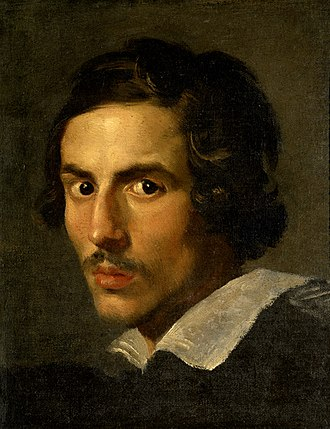
Nickname/Alias: Giovanni Lorenzo Bernini
Achievements: Most important sculptor of the seventeenth century and a major influence on Baroque art and architecture.
Born: December 7, 1598; Naples, Italy
Died: November 28, 1680; Rome, Italy (Aged 81)
Field & Discipline: Art; Sculptor; Architect; Painter
Language: Italian
Father: Pietro Bernini
Mother; Angelica Galante
Siblings: Brother: Luigi
Spouse: Caterina Tezio
Children: 4 sons: Pietro Filippo; Paolo, Francesco; Domenico; 2 daughters: Agnese Celeste; Angelica Cecilia
Education: Trained as a sculptor in his father's studio
Major Works:
“Ecstasy of St. Teresa” (Cornaro Chapel)
“Apollo and Daphne” Piazza S. Pietro (Vatican)
Life & Times:
Bernini's father was a sculptor, and Gianlorenzo trained in the family studio from a very young age, collaborating on works with Pietro even as a boy. He first gained fame as a child prodigy; at age ten he demonstrated his virtuosity by drawing on command for Pope Paul V and sculpting the “Goat Amalthea with the Infant Jupiter” for Cardinal Scipione Borghese, the Pope's nephew. Bernini's earliest pieces show the influence of both [influenced by] Michelangelo*'s works and his own study of classical sculpture.
While Bernini was in his early twenties, Cardinal Borghese, his first important patron, commissioned a series of over-life-size marble statues for his new villa in Rome. The result was a series of virtuoso sculptures, “Aeneas,” “Anchises and Ascanius Leaving Troy,” the “Rape of Proserpina,” “David,” and “Apollo and Daphne.” The Borghese marbles were Bernini's answer to the naturalism of contemporary painters such as Caravaggio. His goal was to make sculpture as free, flexible, and expressive as painting.
He succeeded spectacularly; the sculptures are breathtakingly lifelike, from the play of muscles under skin to the tears coursing down Proserpina's cheeks and the anguished motion of Daphne's body as her skin turns to bark and leaves sprout from her fingertips.
Bernini's most distinguished and politically significant commissions at this time were his portrait busts. His half-length bust for the tomb of [sculpted bust of] Bellarmine* was one of the most important works in this genre during the early 1620s. In 1623 Cardinal Maffeo Barberini, Bernini's second major patron, was elected Pope. Barberini, now Urban VIII, gave Bernini an important and unprecedented position, making him the virtual "art director" of Rome and the Vatican and encouraging him to pursue architectural projects.
Thanks to this opportunity, Bernini's ideas would have a profound impact on both art and architecture and make him the central figure in the development of Italian Baroque style. Bernini played a major role in decorating the interior of St. Peter's. His first and most well-known work in this regard was the “Baldacchino.” This immense structure, situated above St. Peter's grave and beneath Michelangelo's dome, occupied Bernini and his assistants (including his technical adviser [worked with] Francesco Borromini*) for more than ten years.
Bernini's other contributions to the interior of St. Peter's include the extraordinary funerary monument for Urban VIII. His architectural career also flourished under Urban VIII's patronage. When [succeeded] Carlo Maderno* died in 1629, Bernini was appointed architect to the fabric of St. Peter's, a position that would eventually lead him to both humiliation and success.
Not all of Bernini's works were for the Papacy, however. In 1636 he was commissioned to make a bust of [sculpted bust of] Charles I* of England. Three portraits of the king by [used work of] Van Dyck* were sent to Rome so that Bernini could carve the likeness of a man he had never met. He also created pieces for Queen [patron was] Christina of Sweden*, who visited him at his studio during her stay in Rome. She was a great admirer of his work, and after his death she commissioned Filippo Baldinucci to write his biography.
Bernini kept himself busy with painting and drawing, employing a number of assistants who worked from his designs and painting more than 150 pictures himself, most of which are now lost. His self-portraits and religious paintings show the influence of Caravaggio and [influenced by] Velasquez*, the Spanish painter who made several celebrated visits to Rome during Bernini's lifetime (in fact, some of Bernini's paintings were mistakenly attributed to Velásquez in later years).
Bernini's portrait drawings were equally impressive, and his caricatures and theater pieces delighted audiences with their witty social satire. He also created a number of elaborate public fountains and monuments in Rome, the most famous of which is the “Fountain of the Four Rivers” in the Piazza Navona (1648-51).
Urban VIII's death in 1644 created hardship for Bernini, who fell out of favor with the new Pope Innocent X and found himself attacked by his artistic rivals. He had begun remodeling and completion of Maderno's bell towers at St. Peter's in 1636 but was never able to finish them both. When cracks appeared in the south tower, charges of incompetence were brought against Bernini, and the towers were demolished in 1646. This public disgrace did not outshine his artistic genius, however, and other patrons were happy to hire him.
The years 1647-52 found him occupied with a work that would prove to be his greatest artistic achievement, the Cornaro Chapel in S. Maria della Vittoria. The central sculpture in the chapel, the “Ecstasy of St. Teresa,” was created in honor of [made statue of] St. Teresa of Avila*. Both technically and artistically, the Cornaro Chapel is a masterpiece, the work that perhaps best expresses Bernini's ultimate intentions as an artist (Wittkower, 1997). According to his son, even Bernini, who was notoriously self-critical, considered St. Teresa the "least bad" of all his sculptures.
Bernini regained papal patronage with the accession of Alexander VII in 1655. He contributed further work to the interior of St. Peter's, most notably the “Cathedra Petri,” the monumental reliquary for the apostle's throne.
In March 1665, Bernini decided to accept [sculpted bust of] Louis XIV*'s invitation to visit France and design plans for the Palais du Louvre. Bernini's stay in France, his only venture outside of his native Italy, proved to be an exercise in frustration. Thanks to constant criticism by Louis XIV's minister [had problems with] Colbert* and a heated rivalry with [rival was] Claude Perrault* (who hoped to advance his own counter-project), Bernini's plans for the Louvre were ultimately rejected.
His trip to France was not entirely unsuccessful, however; he completed a marble bust of Louis XIV, met the English architect [met] Wren* (who had traveled to Paris especially for that purpose), and received a commission for an equestrian statue of the king. Louis XIV's bust was made in Bernini's workshop and shipped from Rome. Unfortunately, the king found it too "Italian" for his taste, and it ended up in a remote corner of [work in garden of] Le Nôtre*'s gardens at Versailles.
Bernini continued to be involved with sculptural and architectural projects for the rest of his life. His greatest success as an architect was the Piazza S Pietro (1656-1667), an immense and complex project involving construction of the square and the colonnade that frames St. Peter's.
Bernini's final major project was the tomb of Alexander VII (1671-8), which was executed almost entirely by his assistants. His last sculpture, created when he was 80 years old, was a bust of Christ, the “Salvator Mundi.” In his will he stipulated that this work, one of the few created for himself, should be given to Queen Christina of Sweden. Bernini died in 1680, leaving an artistic legacy that, in its sheer scope, is unmatched by any artist before him or since. His earliest biographies were written by Baldinucci (1682) and his son Domenico Bernini (1713).
Extra Connections: He influenced [influenced] Fischer Von Erlach* and [influenced] Cortona*.
Assessment: Bernini was one of the foremost artists of the Baroque era, and the most important artist of the Catholic Counter-Reformation. His statues and portrait busts are among the most brilliant examples of sculpture in the history of Western art.
Oneliner: Gianlorenzo Bernini, major Baroque sculptor
Bibliography:
- Artnet.com Research Library, 'Bernini,' ww.artnet.com/library/00/0082/1008287.asp.
- Borsi, Franco, Bernini, translated by Robert Erich Wolf, Rizzoli, New York, 1984.
- Preimesberger, Rudolf and Michael P. Mezzatesta, Bernini, Gianlorenzo, J. Turner, ed., groveart.com (2001), www.groveart.com (Accessed 10 February 2002).
- Wittkower, Rudolf, Bernini: The Sculptor of the Roman Baroque, Phaidon Press, London, 1997.