Barber, Samuel
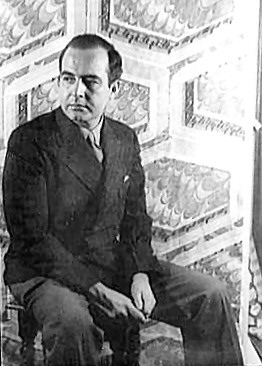
Achievements: Pulitzer Prize for Music 1958, 1963
Born: March 9, 1910; West Chester, Pennsylvania
Died: January 23, 1981; New York, NY (Aged 70)
Field & Discipline: Performing Arts; Music; Composer
Language: English
Father: Unknown
Mother: Unknown
Siblings: Sara Barber
Spouse: None
Children: None
Education: Curtis Institute of Music
Major Work:
Adagio for Strings (1936)
Vanessa (1957)
A Hand of Bridge(1958)
Anthony and Cleopatra (1965)
Life & Times:
Barber was born into a musical family. His mother was an amateur pianist and his aunt was the famed contralto Louise Homer. He began playing the piano at age six and wrote his first composition, titled Sadness, at age seven. During his adolescence, he served as the organist at the local church, Westminster Presbyterian. His academic training began at age 14, when he enrolled at the Curtis Institute of Music in Philadelphia as a member of its first class in 1924.
He studied with a number of talented musicians, including George Boyle, Isabella Vengerova, Rosario Scalero and Fritz Reiner. In addition to piano and composition, he studied singing and conducting and gave vocal recitals.
Several works he composed during his student years became standards of the American repertory: Serenade for String Quartet (1929), Dover Beach (1931), and Sonata for Violoncello and Piano (1932).
Barber won the first of his numerous awards, the Bearns Prize of Columbia University, in 1928 for his Violin Sonata. He won the Bearns Prize again in 1933 for the Overture to the School for Scandal, which was his first work to be performed by a major orchestra. Barber traveled extensively in Europe, beginning with his years at Curtis and continuing after his graduation in 1932, when he took voice lessons from John Braun in Vienna. He received Pulitzer traveling scholarships in 1935 and 1936.
He used these scholarships to travel to Rome, where he spent time composing at the American Academy. He was awarded the American Prix de Rome (1935) for his Cello Sonata and Music for a Scene from Shelley. In 1936, he composed Symphony no. 1, which received immediate performances in Rome, Cleveland and New York. It became the first symphonic work by an American composer to be performed at the Salzburg Festival (1937).
During his time in Italy, Barber met [work conducted by] Toscanini *, who later conducted in the premiers of two Barber works. Toscanini also recorded Adagio for Strings (1938), which became instantly popular in both Europe and the United States and remains Barber’s most widely performed piece.
Barber returned to the Curtis Institute in 1939 to teach orchestration and conduct a chorus. He found he had no real inclination for teaching and left after three years. In 1943, he bought a house in Mount Kisco, New York, with [collaborated with pal] Menotti*, a long-time friend from Curtis Institute. Barber did most of his composing at home, where he also entertained many artists and intellectuals, until he and Menotti sold the house in 1974.
In 1943, he was drafted into the U.S. Army Air Forces. While stationed in Fort Worth, Texas during his first year of service, he composed two works commissioned by the Army, Commando March (1943) and Symphony no. 2 (1944). Barber was released from military service at the end of World War II and returned to Europe on a Guggenheim Fellowship. He was a music consultant at the American Academy in Rome during the summers of 1947 and 1948.
During the later 1940’s and throughout the 1950’s Barber composed a number of commissioned works. These included the score for the [work choreographed by] Martha Graham* ballet Cave of the Heart (1947), Concerto for Violoncello (1947), for which he won the New York Music Critics’ Circle Award, Knoxville (1947), Summer of 1915 (1947), and Prayers of Kierkegaard (1954).
Barber won the Pulitzer Prize for music for his first opera, Vanessa, with a libretto written by Menotti. Vanessa premiered at the Metropolitan Opera in 1958 and was performed there again in 1964. It was also performed at the Salzburg Festival in 1958. Barber was awarded the Pulitzer Prize again in 1963 for his Concerto for Piano and Orchestra (1962), commissioned by publisher G. Schirmer.
The most significant of Barber’s later works was Anthony and Cleopatra, a full-scale opera, commissioned by the Metropolitan Opera for the opening of its new home at Lincoln Center in 1966. The premiere was besieged with problems, from poor acoustics to faulty staging, and was a failure both with the public and with critics. Barber radically revised the opera, which finally achieved success in a 1975 performance at the Julliard School of Music.
Barber received numerous awards and prizes, including the Rome Prize, two Pulitzer Prizes, the Henry Hadley Medal (1958), and the Gold Medal for Music at the American Academy and Institute of Arts and Letters (1976).[24] He was elected to the American Academy of Arts and Letters and, as a Fellow, to the American Academy of Arts and Sciences in 1961....
In addition to composing, Barber was active in organizations that sought to help musicians and promote music. He was president of the International Music Council of UNESCO. He worked to bring attention to and ameliorate adverse conditions facing musicians and musical organizations worldwide.[28] He was one of the first American composers to visit Russia (then part of the Soviet Union). Barber was also influential in the successful campaign by composers against ASCAP, the goal of which was to increase royalties paid to composers.
Barber went through a period of relative anonymity in his last decade, battling depression and struggling with composition. He returned to the concert scene in 1971 with two commissioned works, The Lovers and Fadograph of a Yestern Scene; followed by Third Essay for Orchestra in 1981.
Assessment: Barber is remembered for his many contributions to lyricism and romanticism in music.
Oneliner: Samuel Barber, major modern American composer
Bibliography:
- American National Biography.
- Encyclopedia Britannica.
- Grove Dictionary of Art.
- PBS, http://www.pbs.org/wnet/ihas/composer/barber.htm.