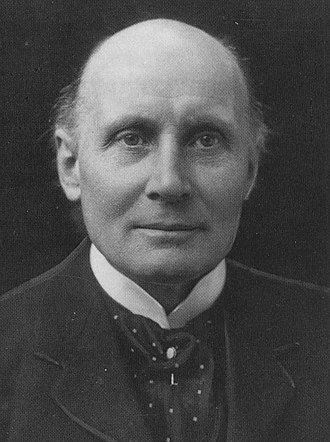
Whitehead AN
NAME:
ACHIEVEMENTS:
Contributions to philosophy and mathematics
NICKNAME/ALIAS:
None
DATE AND PLACE OF BIRTH:
15 February 1861, Ramsgate, Kent, England
DATE AND PLACE OF DEATH AND AGE AT DEATH:
30 December 1947, Cambridge, MA. Aged 96
DISCIPLINE:
Philosopher, mathematician
FIELD:
Philosophy, mathematics
LANGUAGE:
English
PARENTS:
Father: Alfred Whitehead
Mother: Maria Sarah Buckmaster
SIBLINGS:
2 brothers: Henry, Charles
1 sister: Shirley
SPOUSE:
Evelyn Rice Willoughby-Wade
CHILDREN:
2 sons
1 daughter
EDUCATION:
Sherbourne school, Dorsetshire
Trinity College, Cambridge
MAJOR WORK:
“Process and Reality, an Essay in Cosmology” (1929)
LIFE AND TIMES:
In 1884, after gaining his degree, Whitehead was elected a fellow of his college and appointed lecturer in mathematics. He remained at Trinity for almost thirty years. In 1890 he met and married the niece of the sinologist <father-in-law was> Sir TF Wade*. She gave Whitehead the confidence to go head and write his first important work, “A Treatise of Universal Algebra” (1898), which he dedicated to her.
In this book Whitehead investigated systems of symbolic reasoning associated with ordinary algebra.
One of Whitehead’s pupils at Cambridge was <collaborated with> Russell* and they discovered that they were both interested in developing the use of symbols to explain the foundations of mathematics and that their projected works were similar in intent.
They decided to collaborate on the subject and they published the three volumes of “Principia Mathematica”, an investigation of the relationship between mathematics and logic, between 1910 and 1913. It was a work of enormous significance for the development of logical philosophy in the twentieth century. Whitehead left Cambridge in 1910 and taught mathematics at University College, London.
In 1914 he and his wife were visited by the American writer and art collector <visited by> Stein* whose home was in Paris.
From 1914-24 Whitehead was professor of mathematics at the Imperial College of Science and Technology at London University. His thinking began to change after his left Cambridge and he published several papers in which he wrote about his views on a general philosophy of nature.
He rejected the traditional view of physicists that particles of matter and points of space represented the basic constituents of the universe. He replaced this idea with the concept of what he termed linear objective reals, which were akin to the lines of force envisaged earlier by <used ideas of> Faraday*.
In two books on metaphysics, entitled “An Enquiry Concerning the Principles of Natural Knowledge” (1919) and “The Concept of Nature” (1920), Whitehead followed the process philosophy of <follower of> Bergson* in stating that the ultimate constituents of the universe (“the final real things of which the world is made up”) are events which take place over varying durations.
He disagreed with the theory of general relativity but his alternative theory which he stated in 1922 in “The Principle of Relativity” was not accepted. In 1924 Whitehead moved to the United States where he was appointed as a professor in the philosophy department of Harvard.
At Harvard he developed a metaphysical philosophy which he called “Philosophy of Organism”. He adhered to the concept of actual real events as the building blocks of philosophy, as opposed to the materialist position of regarding matter as the basic component of the universe.
Among the ebb and flow of events, he postulated eternal objects which had the capacity to become events. He referred to actual historical events and to the ordinary experiences of everyday life, and introduced a concept he named “creativity”, a force which eternal objects are made into events.
His organic philosophy was based not only on the natural sciences and mathematics but also on the artistic, ethical and religious experience that relate to the social sciences. He perceived the nature of reality as something more than that which could be observed through the senses: it consisted of an expanding network of events which surpassed earlier dualities such as mind-matter, sensation-emotion and God-world, and which provided a reconciliation between the conceptualism and realism of Whitehead’s earlier philosophy.
He coined several new words including “prehension” to express the idea that events relating to each other create a complex; and “concretion”, which he used to signify the unity created by prehension. He maintained that the process of concresence is the process of Being.
In 1927-8 Whitehead gave a series of lectures at Edinburgh University in Scotland in which he expounded his organic philosophy. The lectures were published in 1929 under the title “Process and Reality, an Essay in Cosmology”. In the same year he published “The Aims of Education and Other Essays” in which he stated three stages of educational progress in which opposition between two stages - romance and precision - is overcome by a third - generalization.
Whitehead continued to explore his organic philosophy in “Adventures of Ideas” (1933). His last lectures at Harvard in 1936-37 were on cosmologies, and on the function of reason. He received many honors and remained at Harvard until he retired in 1937. In “Modes of Thought” (1938) he compared logical and aesthetic consistency.
ASSESSMENT: Whitehead is one of the most important twentieth century philosophers whose work influenced the development of logical philosophy.
EXTRA CONNECTIONS: He influenced <influenced> Wittgenstein*
ONELINER: AN Whitehead, major modern philosopher
BIBLIOGRAPHY:
Kuntz, Paul Grimley, Alfred North Whitehead, Twayne Publisheers, Boston, 1984
Lowe, Victor, Alfred Whitehead, The Man and His Work, Vol. I, 1861-1910, John Hopkins University Press, Baltimore, Maryland, 1985.