Oregon Inst OISM
disambiguation see art robinson
===
desmog
10 24
Arthur (Art) B. Robinson
Credentials
- Ph.D., Chemistry, University of California at San Diego (1968).1 ^2
- B.S., Chemisry, California Institute of Technology (1963).3
Background
Art Robinson is the founder of theOregon Institute of Science and Medicine(OISM), which markets, among other things, a home-schooling kit for “parents concerned about socialism in the public schools” and books on how to survive nuclear war.4 ^5
Robinson was a Republican candidatefor the U.S. House of Representatives from Oregon’s 4th congressional district. In 2016, Robinson joined theBoard of Directors of The Heartland Institute. In 2015, the Heartland Institute named its environmental center the “Arthur B. Robinson Center on Climate and Environmental Policy” in honor of Dr. Robinson.”6 ^7 ^8
Robinson appeared on Senator James Inhofe’s list of “prominent scientists” who dispute the existence of man-made global warming. In one debunking of the list, Robinson was found to be one of 70 so-called “scientists” who have no background in climate science.9
Robinson has described environmentalistsas “warmed over college radicals who have found a way to make radicalism pay” who “don’t have much for brains.”10
The Oregon Petition
Robinson is best known for organizing the **Oregon Petition** that disputes the scientific evidence for man-made global warming. The infamous and debunked “Oregon Petition” claimed to have collected 17,000 signatories to a document arguing against the realities of global warming.11
In April 1998, Robinson’s Oregon Institute, along with the Exxon-backed George C. Marshall Institute, claimed to have collected 17,000 signatories to a document arguing against the realities of global warming.12 ^13
According to the May 1998 *Associated Press* article, the Oregon Petition included names that were intentionally placed to prove the invalid methodology with which the names of scientists were collected. For example, the petition included the names of “Drs. ‘Frank Burns’ ‘Honeycutt’ and ‘Pierce’ from the hit-show M*A*S*H and Spice Girls, a.k.a. Geraldine Halliwell, who was on the petition as ‘Dr. Geri Halliwel’ and again as simply ‘Dr. Halliwell.’”14
In response to the issue of the fake names, Robinson said, “When we’re getting thousands of signatures there’s no way of filtering out a fake.”15
Stance on Climate Change
January 30, 2020
The following is excerpted from Art Robinson’s congressional campaign website, on the issue of climate change:16
“Carbon dioxide from hydrocarbon use – is increasing in the atmosphere. It will continue to increase so long as the rate of emissions from human activity exceeds the rate of removal – the half-time for removal being seven years – an experimental fact often misrepresented. There is no “existential climate environmental crisis.”
[…]
“Plants grow faster and are more numerous as atmospheric carbon dioxide increases, which also increases the amount of animal life. From North American forests to Amazon forests, growth has accelerated. All life is carbon based. The more carbon, the more life.”
[…]
“There has been no increase in violent hurricanes or their wind speeds in past 50 years.”
[…]
“Carbon dioxide is a very weak greenhouse gas. The flawed climate computer models assume that a very small increase in temperature from carbon dioxide causes the evaporation of more water, which is a strong greenhouse gas.”
[…]
“The climate is always changing. The geological record shows that Earth’s climate has been relatively stable for the past several thousand years and is currently unusually benign. The colder periods during the past 3,000 years caused a great amount of suffering because, during most of that time, human civilization lacked technology and was based upon relatively primitive agriculture.
“Cold periods will come again. When they do, modern technology can mitigate the effects, if there is a very plentiful supply of extra energy. Unwarranted and unwise suppression of hydrocarbon energy and nuclear-electric energy that leaves humanity without plentiful energy when natural changes in climate occur is now a significant danger.”
October 7, 2010
Robinson appeared on the Rachel Maddow show on MSNBC where he outlined his views on global warming. View the full transcript at MSNBC, and .17
“We have – there are thousands of physical scientists in this country who, on the basis of scientific information alone, reject the idea of human-caused global warming.
You wish to portray each of those people as a nut. I‘ll tell you, madam, there are thousands and thousands of them, far more than there are at the U.N., pushing this bogus claim of human-caused global warming.”18
Abortion
January 31, 2020
Via Robinson’s congressional campaign website:19
“Life begins at conception.
“No one has the right to kill an innocent child.
“The opportunity to live a human life upon the Earth is the greatest secular gift that we can comprehend. There is no value or objective that can rise above or even equal this.
“An estimated 60 million American children have been brutally (and ‘legally’) murdered by abortion.”
January 23, 2019
Speaking at a March for Life eventin Grants Pass, Oregon, Robinson said:20
“If you have people who cannot even understand that it is wrong to murder a child running your country, you have a bad problem. And we’re very lucky today that we have a President and Vice President who understand different.”
Key Quotes
August 27, 2018
of Doctors for Disaster Preparedness (DDP), Robinson declared:21
“I don’t know, I don’t know whether anyone knows whether the vaccines are causing autism. But with these adjuvants in there, I think the best policy is to vaccinate children, if you have to, as late as possible. …” [

He added, responding to an audience question: [
“This business of mandatory vaccinations in schools is just one more reason not to go to the public school. “
October 7, 2010
Art Robinson on the Rachel Maddow Show part 1:22

Art Robinson on the Rachel Maddow Show part 2:

Some notable excerptsfrom the full transcript below:23
MADDOW:Now, you are well-known for your belief that global warming is made up.
ROBINSON: About beliefs, let‘s do that. All right.
MADDOW:You don‘t want to talk about your beliefs?
ROBINSON:Yes, go ahead.
MADDOW:You‘re well known for your belief that global warming is made up, that that is not true. That‘s sort of a source of your national reputation, to the extent that you have one. Your opponent, Mr. DeFazio is also –
ROBINSON:That‘s not a belief. That‘s a conclusion I reached as a physical scientist. I have a degree from Cal Tech. Many others who have degrees from Cal Tech have agreed with me on this.
MADDOW:OK.
ROBINSON:We have – there are thousands of physical scientists in this country who, on the basis of scientific information alone, reject the idea of human-caused global warming.
You wish to portray each of those people as a nut. I‘ll tell you, madam, there are thousands and thousands of them, far more than there are at the U.N., pushing this bogus claim of human-caused global warming. You like it (UNINTELLIGIBLE).
(CROSS TALK)
MADDOW:Do you mind if I ask you a question about your beliefs?
ROBINSON: It‘s a dead scientific issue, Madam.
MADDOW:Do you mind if I ask about your beliefs on this?
ROBINSON: It‘s not a belief. It‘s a scientifically proven –
MADDOW: Right. Your scientifically proven fact that it‘s not true – may I ask you about your scientifically-held, scientifically-proven, absolutely true beliefs that anybody who questions is attacking you about? OK. You have advocated that radio –
ROBINSON: You can go right ahead. You‘ve already put a big pejorative statement before the statement. But go ahead. You can anything you like.
MADDOW:You have advocated that radioactive waste should be dissolved in water and, quote, “widely dispersed in the oceans.” Quote, “All we need to do with nuclear waste is dilute it to a low radiation level and sprinkle it over the ocean or even over America after hormesis(ph) is better stood and verified with respect to more diseases.”
Now, hormesis is your belief that low-level radiation is good for us to a certain extent? Is that right?
ROBINSON:The statements that you have just made are untrue.
MADDOW:Wait. I was quoting you.
ROBINSON: What you have done is take tiny excerpts from a vast amount of writing I have done on this scientific subject. I have not advocated any of this.
MADDOW:I – all we need to – did you not say this?
ROBINSON:As a scientist, I have written about this and many other possibilities.
MADDOW: Wait, wait, wait. Are you saying that your own –
ROBINSON:You are not telling the truth.
MADDOW:Are you saying –
ROBINSON:If you‘d like to tell the truth, that‘s fine. I‘m not going to answer to your lie. That is more mud.
MADDOW:I‘m quoting from your own newsletter.
ROBINSON:This is a complicated scientific subject which you are misrepresenting to your viewers.
MADDOW: This is not –
ROBINSON:You are misrepresenting a very –
MADDOW: Did you not write this?
ROBINSON:Complicated scientific subject, and giving me 30 seconds to answer. That can‘t be done. You go ahead and misrepresent the truth.
MADDOW: Did you write this?
ROBINSON: But it won‘t work for you.
MADDOW:All we need to do with nuclear waste is dilute it – did you write this? This is – I‘m quoting from your newsletter. There‘s no ellipses here, “All we need to do with nuclear waste is dilute it to a low-radiation level and sprinkle it over the ocean or even over America after hormesis is better understood and verified with respect to more diseases.
ROBINSON:I wrote thousands and thousands of words in this subject. You have picked a few words and twisted them into an untruth.
MADDOW:OK. Let me ask you about some other words about your own –
ROBINSON: Do whatever you want, Madam. You‘re just throwing mud.
MADDOW:Let me just ask you some other things that I got – I‘m trying to learn about you, so I read your newsletter. In your newsletter, access to energy – you understand it, right?
ROBINSON:What you‘re trying to do is smear me by – you‘re just trying to smear me with out-of-context quotes.
MADDOW: I‘m trying to get to know by asking you about stuff you‘ve written that I don‘t understand.
ROBINSON:Everyone knows exactly what you‘re trying to do. That‘s your stock and trade.
MADDOW:Can I ask you?
ROBINSON:It‘s not mine. I‘m a scientist and a very good one.
MADDOW:Can I ask you about something else that you‘ve written in your newsletter and you can tell me that I‘m taking it out of context?
ROBINSON: You can ask anything you like. You‘re running the camera.
MADDOW:In your newsletter, “Access to Energy,” you wrote approvingly of the idea that AIDS is a myth, right? Sir, I‘m quoting you. The arguments presented against the –
ROBINSON:About what? Wait a minute. Wait a minute. I didn‘t hear you.
MADDOW:The – Art, I‘m quoting you here, “The arguments presented against the HIV hypothesis are sound.” You wrote this, “Median age at death for homosexual men dying of AIDS is 39 years. The value for homosexual men who did not die of AIDS is 42. By comparison, the value heterosexual married men is 75. This is evidence in support of the hypothesis that AIDS may be little more than a general classification of deaths resulting from exposure to homosexual behavior.” So you‘re writing about the myth that HIV doesn‘t cause AIDS.
ROBINSON: Would you like to tell your viewers the date on that quotation, madam?
MADDOW:This is from 1995.
ROBINSON: Would you like to tell your viewers the date?
MADDOW: Do you no longer believe that?
ROBINSON:Yes, 1995, 15 years ago. There was still a debate over the cause of AIDS and I was writing about that. I wrote about all the other hypotheses, too. Fifteen years ago, the scientific debate was different than it is today.
MADDOW:No, it wasn‘t sir.
ROBINSON:And I wrote approvingly on many of the hypotheses. But you have picked a 15-year-old quote. You‘ve taken it totally out of context. I wrote a lot about this issue. Trying to make it look bad 15 years later. Why don‘t you do something up to date?
MADDOW:Well, let me – I want to know if you still believe this, “Only government reclassification of more and more disease types as AIDS cases has kept the numbers of victims at politically necessary levels.”
You were a conspiracist that AIDS was a government conspiracy in 1995 at a time when a lot of Americans were dying of AIDS. You were advocating that it was made up you for political purposes. Have you changed your mind about that or do you still believe it?
ROBINSON:No.
MADDOW:No? You haven‘t changed your mind?
ROBINSON:Your statement is – you just strung several lies together in a row, and I don‘t have the time to answer these.
MADDOW:I‘m quoting from your own newsletter, sir.
ROBINSON:You strung several lies together in a row because you infused vast amounts of editorial comments into this complicated issue.
MADDOW: Did you say only government –
ROBINSON:You are lying about my view, madam. You‘re just lying about them.
MADDOW:Here‘s a direct quote. Only government –
ROBINSON:I told you, you‘re about it – you‘re reading out-of-context quotes from 15 years ago, a large body of information that I wrote –
MADDOW:Do you no longer believe –
ROBINSON:And I‘m not interested in debating what was thought about 15 years ago. Why don‘t you get to the facts?
MADDOW:What you wrote 15 years ago and published. Here‘s the thing, though –
ROBINSON:Why don‘t you get to the facts? Why don‘t you get to the truth? Why don‘t you stop being so sarcastic and ask a reasonable question.
MADDOW: If you think this is sarcasm, you misunderstand the term. I can show you sarcasm. What I‘m asking you about is stuff that you have written, sir.
ROBINSON:No, madam, it‘s sarcasm. You know what you‘re doing. I know what you‘re doing.
MADDOW:Is this still your belief?
January 7, 2009
In aninterview with *Willamette Week*, Robinson declared:
“This is not rocket science—climate science is very simple. A 12-year-old could probably understand this subject [of climate change].”24
May 1, 1998
Robinson spoke about the fake names that were added to the Oregon Petition in an interview with AP:25
“When we’re getting thousands of signatures there’s no way of filtering out a fake,” Robinson said.
February 1, 1995
The following is from anissue of Robinson’s *Access to Energy*newsletter:26
“If radioactive waste were dissolved as water soluble compounds and then widely dispersed in the oceans, no health or other environmental risks would ever occur.”
Key Deeds
August 27, 2018
Robinso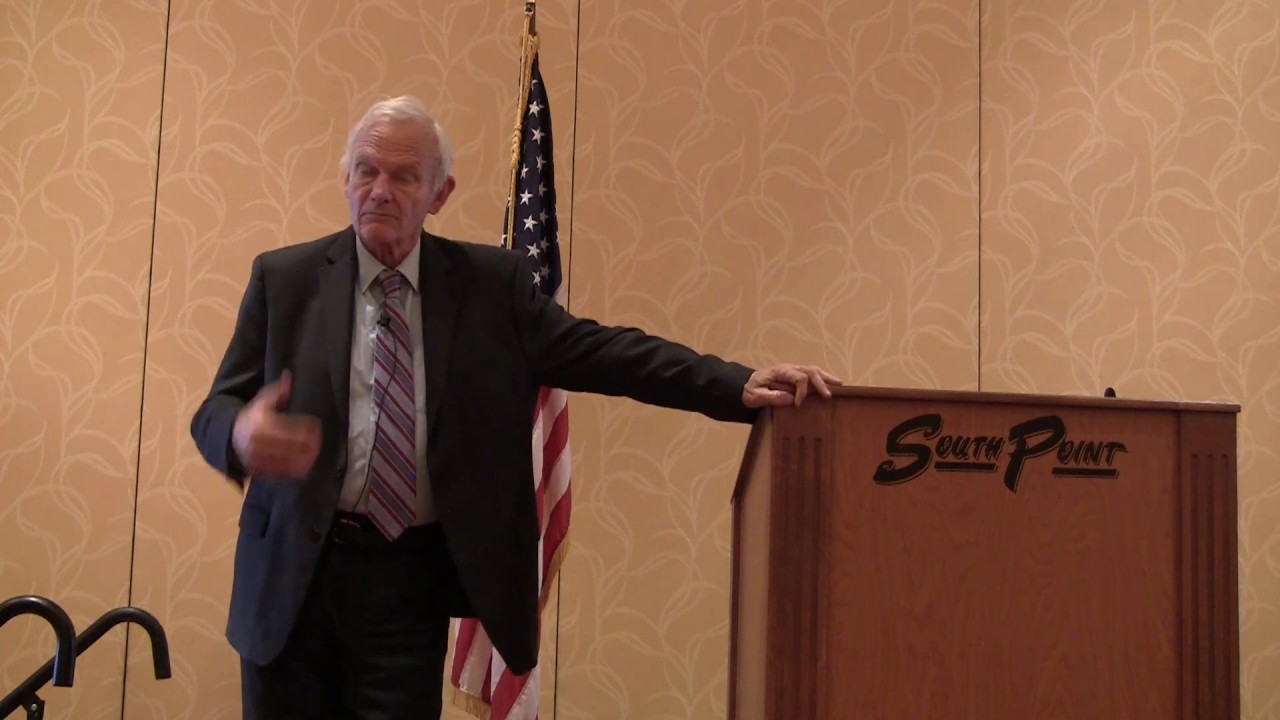 of Doctors for Disaster Preparedness (DDP) to discuss his views on vaccinations.27 vid]
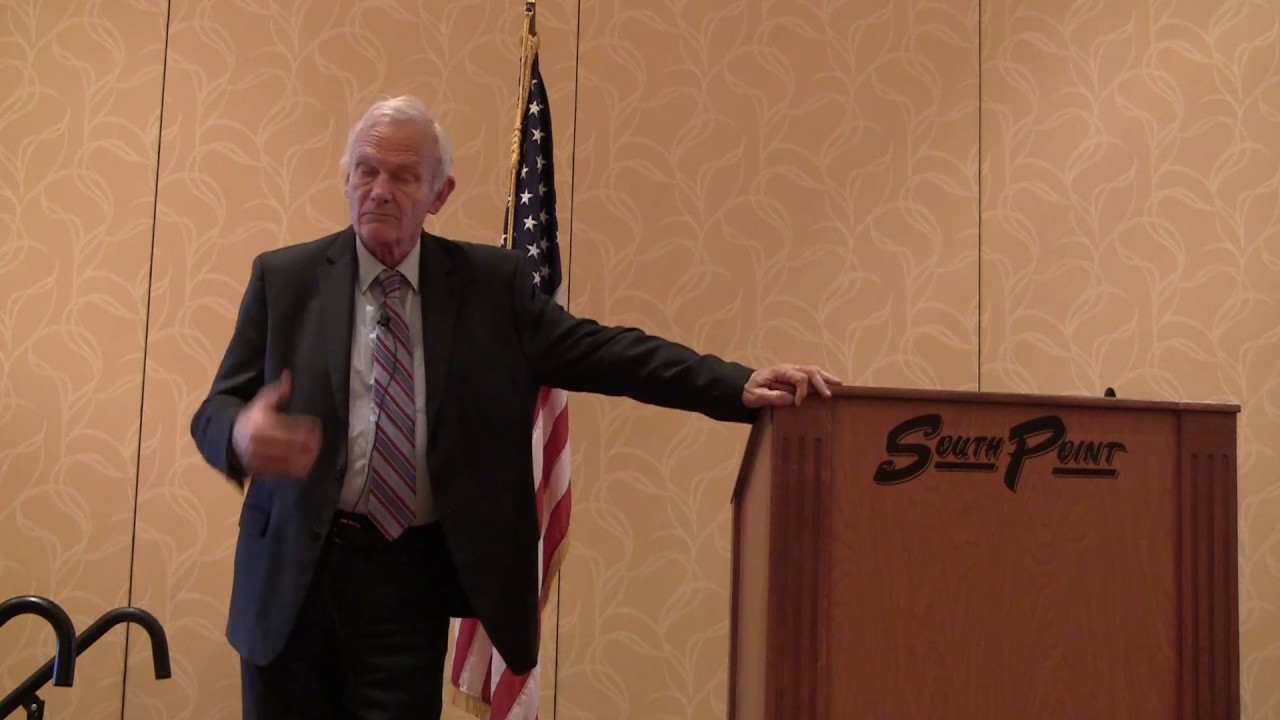
“I don’t know I don’t know whether anyone knows whether the vaccines are causing autism,” Robinson said (see timestamp 10:50). “But with these adjuvants in there, I think the best policy is to vaccinate children if you have to as late as possible.”
He added, responding to an audience question (timestamp 21:33):
“This business of mandatory vaccinations in schools is just one more reason not to go to the public school. “
February 4, 2018
In January 2018, more than 200 scientistsendorsed an open lettercalling on the American Museum of Natural History (AMNH) to remove climate change denier Rebekah Mercer from its board and to “end ties to anti-science propagandists and funders of climate science misinformation.” *The New York Times* reported that those among the AMNH letter calling for Mercer to step down were Michael E. Mann, director of the Earth System Science Center at Pennsylvania State University, and Katharine Hayhoe, director of the Climate Science Center at Texas Tech University.28
Robinson was among a group of climate change deniers whoresponded with their own open letter, calling for the AMNH “not to cave in to this pressure.” The letter was signed by numerous individuals with ties to groups funded by the Mercer Family Foundation such as Will Happer of the CO2 CoalitionRichard Lindzen, a fellow at the Cato InstituteCraig Idso, the chairman of the Center for the Study of Carbon Dioxide and Global Change. There are a number of signatories affiliated with the Heartland Institute, which has received over $5.78 million from the Mercer Family Foundation since 2008.29
The letter reads:30
“The Earth has supported abundant life many times in the geological past when there were much higher levels of carbon dioxide in the atmosphere. It is quite likely that future generations will benefit from the enrichment of Earth’s atmosphere with more carbon dioxide.
“Make no mistake, the agitators are not defending science from quackery — quite the contrary!”
December 29, 2016
The Heartland Institute announced that Robinson would join its board of directors. The press release notes that Heartland had also named its Arthur B. Robinson Center on Climate and Environmental Policy in honor of Robinson in 2015.31
Heartland Institute PresidentJoseph L. Bast commented, “Art Robinson is as bold and brave a person as I have ever met. Having him join Heartland’s Board of Directors honors us and sends a signal to the world that we will continue to ‘speak truth to power’ on the important issue of climate change as well as the need for educational choice, repealing Obamacare, and other issues as well.”32
July 8 – 10, 2016
Art Robinson was a speaker at 34th Annual Meeting of Doctors for Disaster Preparedness, co-sponsored by Access to Energy, the Oregon Institute of Science and Medicine, and Physicians for Civil Defense.33
Robinson’s talk was titled “A Nuclear Power Supply for a Deep-Space Probe.”34
DDP listed the following speakers at their event:35
- Jane Orient
- Willie Soon
- David Legates
- Mohan Doss
- Arthur Levy
- Geoffrey L. Shapiro
- Steven Hatfill
- S. Fred Singer
- Ken Haapala
- Tony Heller (AKA Steven Goddard)
- Patrick Frank
- Joe Leimkuhler
- Donald W. Miller
- Howard Hayden
- Yuri Maltsev
- Stephen Jones
- Matthew Robinson
- Arthur Robinson
August 10, 2013
Art Robinson, was elected as the Oregon Republican Party’s new chairman, the *Huffington Post* reported.36
May 2010
Robinson was aspeaker at the Heartland Institute’s 2010 International Conference on Climate Change. The annual conference gathers climate change skeptics from across the globe to voice their views.37
March 2009
Arthur Robinson was a speaker at the Heartland Institute’s Second International Conference on Climate Change (ICCC2) in New York. His Speech was titled “Nobel Prize for Death.”38

DeSmog researched the funding behind Heartland’s Second International Conference on Climate Change (ICCC2)and found sponsor organizations had received over $47 million in funding from energy companies and right-wing foundations, with 78% of that total coming from Scaife Family Foundations.39
April 1998
Robinson organized and authored the infamous Oregon Petition which collected a supposed 31,000 signatories that denied the existence of man-made global warming.
The Oregon Petition has been used by climate change deniers as proof that there is no scientific consensus, however they fail to note the controversy surrounding the petition itself. In April 1998, Robinson’s Oregon Institute, along with the Exxon-backed George C. Marshall Institute, co-published the infamous “Oregon Petition,” claiming to have collected 17,000 signatories to a document arguing against the realities of global warming.40 ^41
Along with the petition there was a cover letter from Dr. Fred Seitz a notorious climate change denier (and big tobacco scientist), who over 30 years ago was the president of the National Academy of Science. Also attached to the petition was an apparent “research paper” titled “Environmental Effects of Increased Atmospheric Carbon Dioxide.”42 ^43
The petition and the documents included were all made to look like official papers from the prestigious National Academy of Science. They weren’t, and this attempt to mislead has been well-documented.44
The paper mimicked what a research paper would look like in the National Academy’s prestigious Proceedings of the National Academy journal. The authors of the paper were Robinson, Sallie Baliunas, Willie Soon (both oil-backed scientists) and Robinson’s son Zachary.45
With the signature of a former NAS president and a research paper that appeared to be published in one of the most prestigious science journals in the world, many scientists were duped into signing a petition based on a false impression.46
The petition was so misleadingthat the National Academy issued a statementthat “this petition has nothing to do with the National Academy of Sciences and that the manuscript was not published in the Proceedings of the National Academy of Sciences or in any other peer-reviewed journal.” The statement added that “[t]he petition does not reflect the conclusions of expert reports of the Academy.”47 ^48
See a video and commentary debunking the Oregon Petition here.49
Affiliations
- **Oregon Institute of Science and Medicine (OISM)** — Co-Founder and “Professor of Chemistry.”50
- **The Heartland Institute**— Former member, Board of Directors (as of December 2016). Robinson’s OISM was a sponsor of Heartland Conferences.51
- Oregon Republican Party— Chairman (2013 – 2014). Republican candidate for U.S. Congress in Oregon District 4 in 2010, 2012, 2014, and 2016.52
Social Media
- @ArtForCongress on Twitter (account suspended)
- Art Robinson on LinkedIn
- @Artforcongress on Facebook
Publications
Of his own admission Robinson acknowledgee “he has done no direct research into global warming.” An ISI database search of publications confirms that Robinson has never published any research in the area of human-induced climate change.53
Other Resources
- Camilla Mortensen. “Wingnut is as Wingnut does,”Eugene Weekly, August 12, 2010.
- “Arthur B. Robinson,” SourceWatch Profile.
- “Arthur B. Robinson,” Wikipedia Entry.
Resources...
===
The Grandfather Of Alt-Science | FiveThirtyEight
The Grandfather Of Alt-Science
Art Robinson has seeded scientific skepticism within the GOP for decades. Now he wants to use urine to save lives.
Published Oct. 12, 2017
Arthur B. Robinson at the Oregon Institute of Science and Medicine.
Amanda Lucier
Arthur B. Robinson, renegade chemist, failed politician, grandpa of the climate skeptics — and maybe, just maybe, our nation’s next scientist-in-chief — padded across the carpet of his homemade lab in a pair of white athletic socks. “This room, everything you see here, was built by my own sons with their own hands, including the concrete,” he said. Robinson raised and home-schooled six children in this tawny valley scratched into the hills near the town of Cave Junction, Oregon. Now his wife is dead and one of his daughters has moved away, but the rest of his kids — two veterinarians, a biochemist and a pair of nuclear engineers — remain nearby. They have a lot to do: Feed the animals; maintain the lab; ward off cougars; publish their popular home-school curriculums; manage Robinson’s repeated, unsuccessful congressional campaigns; and, of course, perform high-stakes research into medicine and biochemistry.
A stuffed antelope with curly horns stares across the lab at a bank of instruments with flashing lights. “That’s a rectifier, and this machine measures the rotation of light,” said Robinson, a spritely 75-year-old in pleated khakis and a button shirt, with white hair parted neatly on his small, round head. Then he pointed at a massive cylinder, about the size of a hippopotamus and groaning like a locomotive. “And this,” he said, beaming — “this is our miracle in a box.”
Lo, the Robinson family spectrometer — a $2 million, 7-tesla magnet super-cooled by liquid helium and used for analyzing chemicals. It’s not the sort of thing one would expect to find in private hands, let alone in a DIY laboratory on a modest sheep ranch in a rural corner of the Pacific Northwest. But Robinson and his scientific colleagues — that is to say, his children — have big plans for the hulking, gray device with strands of a cobweb tethered to its back. They believe it will provide a novel way to diagnose disease and then, perhaps, to extend the human lifespan.
Here at what Robinson calls the Oregon Institute of Science and Medicine, the family has been assembling an archive of human urine. Eventually they hope to gather 50,000 samples, drawn from 5,000 volunteers across a five-year span. The pee is kept in cryogenic vials and stored in dozens of military-grade, minus-80 freezers on the property. Robinson and his kids have already started placing tiny urine samples, each not much bigger than a raindrop, into the family spectrometer, so they can record its chemical fingerprint — the set of peaks and valleys corresponding to its thousands of component parts. Once their catalog of prints has gotten big enough, they’ll start sifting through for hidden patterns in the data, anything that might provide a hint about our health. According to Robinson, these records could contain the telltale marks of, say, early-stage breast cancer or an approaching heart attack, or they might allow him to track the effects of treating those conditions in real time. Once the details have been worked out, he said, this cheap and noninvasive test — a tiny dab of urine fed into the hippopotamus — could spit out a dossier of diagnostic information.
Clockwise from top left: A metal gate at the entrance of Robinson’s Oregon Institute of Science and Medicine in Cave Junction. The lab and offices are decorated with the work of Robinson’s son Joshua, who is a trophy hunter and a taxidermist. Robinson sits in front of his spectrometer.
Amanda Lucier
Whatever you think of this endeavor, let alone its chances of success, the mere fact of its existence is remarkable. At a time when almost all biomedical research flows from either major public grants or industrial R&D, Robinson has made the choice to strike out on his own. Instead of taking money from bureaucrats in Washington, he’s been raising millions for his big-data research from a set of ultra-wealthy donors who share his conservative values and wariness of government intrusion.
That is to say, Arthur B. Robinson is not some lonesome crank tinkering in his garage. He’s something more unusual: an extremely well-connected crank, with ample funding and an influential perch at the wild outskirts of both politics and science. If he once seemed destined for a respectable career in academia — 45 years ago, he was a young professor on the tenure track at the University of California, San Diego, working side-by-side with the legendary double-Nobelist Linus Pauling — he’s long since cut all ties to conventional research institutions and remade himself as a cowboy chemist, if not an oracle frontiersman for what might be termed America’s “alt-science” movement.
One could view his setup with idle curiosity: the science maverick on his ranch, with a seven-figure budget for his indie urinalysis. But the movement in which Robinson belongs (as a member, if not a shepherd) has nudged a few steps closer, in recent months, to the center of our national politics. Alternative theories of climate change — that is to say, those at odds with mainstream science — are now ascendant at the highest level of government, along with deep suspicion of environmental regulations. And other alt-science points of view — on vaccination, nuclear power, intelligent design — have been showing signs of purchase in the Trump administration. Even Robinson himself may soon be making tracks for Pennsylvania Avenue. Chief among his financial backers are the Mercers — hedge-fund billionaire Robert and his daughter Rebekah — who are better known these days for their avid right-wing activism and sponsorship of Steve Bannon. In March, reports emerged that Rebekah Mercer had made the case for Robinson to be the nation’s new national science adviser. “It would be an honor to do it,” he told me.
“He’s one of the founders of this whole movement,” says Joseph Bast, CEO of the Heartland Institute, which has served for 20 years as the leading think tank of the push to challenge climate science. Last year, when Robinson joined Heartland’s board of directors, Bast called him “as bold and brave a person as I have ever met.” Now Bast says that courage has been vindicated. “Time will tell,” he promised, “but it certainly seems like Robinson’s views are winning the day.”
***
“I’m ordinarily smart,” Robinson likes to say, as if that means he were no more clever than the average man. In fact, he has an extraordinary gift for selling average men on his ideas, and for making even subtle science seem like common sense. He’s been raising private money for his research since the 1970s, mostly on the basis of his grit-and-wit appeals to reason. Robinson is, if nothing else, a master simplifier. It’s a skill he learned from Linus Pauling: He’s the sort of guy who can flatten any topic, no matter how abstruse, into a pair of axes hand-drawn in the air. He mimes the X and Y dimensions with his fingers as he talks, explaining, for example, how samples of a person’s urine, taken over time, could yield a running readout of their health. “When you hear about a scientific subject that is said to be very, very complex, with lots of things to know, and only the expert can approach it,” he tells me, “you know they’re blowing smoke in your eyes.”
In the late-1990s, when Robinson first got into questioning the evidence for human-caused climate change, he spent six months reading through all the science he could find on atmospheric carbon dioxide. His final report, written with his son Zachary (the veterinarian) and two other scholars, cited about 150 academic papers and concluded — in a characteristic plain-spoken manner — that human activity “has not harmfully warmed the Earth.” In fact, Robinson and his colleagues went further still, claiming both in their review and an attached petition that higher levels of atmospheric CO2 would produce “a host of beneficial effects” for the planet. (His belief in the likely benefits of global warming makes Robinson somewhat unusual even among his cohort of contrarians.)
That review of climate science has been hugely influential among climate skeptics, says Bast, precisely on account of its simplicity. “It was a standard reference tool and an important publication,” he explains. “Art was one of the first to say, ‘This isn’t too hard for the layman to figure out.’ … You can go through it, even though you’re not a scientist, and say, ‘You’re right, that doesn’t make sense.’”
The same approach — simplify, clarify, persuade — has been on display for more than 20 years in Access to Energy, a libertarian newsletter that Robinson writes for 3,500 annual subscribers. (Robert Mercer is a reader.) The publication’s subject matter ranges far beyond the power grid: Robinson says it’s meant to serve as his corrective for all manner of irrational and unscientific thought; to counteract panics over pesticides and freak-outs over global warming; to teach its readers, as he puts it, “not to ‘trust and parrot’ the politically motivated statements of the press, politicians, and other self-interested parties” on scientific matters; to preach data directly to the people, so they can reach their own conclusions instead of being force-fed their ideas by science-policy elites in Washington. That is to say, Access to Energy has functioned as the house organ for Robinson’s peculiar brand of science populism — as if Breitbart had been crossed with Discover.
“Science is entirely a populist subject,” he tells me. If we don’t need some expert committee to tell us whether the atmosphere is warming, then we certainly shouldn’t let ourselves be bullied by whatever “custom and culture” happens to prevail in any other scientific circle. Custom and culture: these are dirty words for Robinson, representing the creaky machinery of public science, funded by the government through rusted peer-review committees and indifferent to nonconformists like himself. We can cast aside the custom and the culture, he says, and learn about the science for ourselves. That’s alt-science in a nutshell: It’s the freedom to draw one’s own conclusions from the facts.

A cougar who had killed sheep on Robinson’s ranch now decorates his office.
Amanda Lucier
Robinson has made ample use of that freedom. He currently serves as vice president of the Doctors for Disaster Preparedness — an outré association of science-minded nonconformists, conspiracy theorists and dissenters (also funded by Robert Mercer). “Art is revered by those people,” says Bast, who has attended several of DDP’s annual meetings. At this year’s event, which took place in August on the theme of “Restoring Greatness in American Science and Health,” presenters spoke about the bullying of climate skeptics, the widespread use of phony global-warming models, scientific misconduct at the Environmental Protection Agency and the story of Chernobyl and other “radioactive fairytales.” Robinson himself gave a talk on the “vaccine controversy” — he believes they’re given too early in a child’s life, as a rule — and there was a banquet reception for the infamous anti-vaxxer Andrew Wakefield. Earlier meetings have attacked the science and questioned claims that we’re in the middle of a mass extinction.
Several of these radical positions were aired in between Robinson and MSNBC’s Rachel Maddow in 2010. Four years later, Maddow said Robinson “currently leads for The Rachel Maddow Show hall of fame balloting for weirdest interview on this show ever.”
“Science is entirely a populist thing,” Robinson says again. “It’s a way of using the individual human mind. That means one man can be right, and everybody else can be wrong.
“And if he’s right?” he continues. “Well, then, their ideas are going to fall.”
***
In a dusty and defunct building on the Oregon ranch, what used to be a mouse room now is home to a handful of flies. In the old days, Robinson would irradiate his lab animals, frying their backs with ultraviolet light until they developed squamous cell carcinoma. Then he’d check to see how their cancers might respond to changes in their diets. “We could vary the growth rate of cancer by tenfold, according to what we fed ’em,” he said, describing the results of some 40 experiments going back to his time on the faculty of the Salk Institute at UC-San Diego in La Jolla.1 “The poorer you feed ’em, the poorer the cancer grows.”
Robinson’s elfin face perks up whenever the subject turns to science, and he likes to punctuate his stories with a wheezy, blurted exclamation of delight. It wasn’t just that poor nutrition stopped the cancers’ growth, he said; according to his research, a wholesome diet seemed to make the mouse tumors more robust. “Take a gram of vitamin C per day, and it improves your health, but it’ll make your cancer grow faster, too. Heeeh!”
This alarming result — that eating well can feed the thing that kills you — all but wrecked Robinson’s career, he said: “I worked with Linus Pauling for 15 years, and then he and I got in a fight over those mice.” Pauling had been insisting that a daily mega-dose of vitamin C could prevent or cure three-quarters of all cancers; now Robinson had data that pointed in the opposite direction. “That experiment was the end of our collaboration. The 15 years were over.”
One can say the break with Pauling set the stage for much of what followed: Robinson’s decampment with his family to this secluded ranch; his turn toward radical conservatism; his reinvention of himself as a cowboy scientist; his pursuit of longer life in freezers full of urine; and now, finally, astoundingly, the prospect of his going to the White House.
It took only the slightest interrogatory nudge for Robinson to launch into a wistful account of his relationship with his former mentor, starting with the moment when they met, while Robinson was still an undergraduate at Caltech in the early 1960s.
It was right around the time that Pauling won his second Nobel Prize. The first had been for chemistry; the second, a Nobel Peace Prize, recognized Pauling’s anti-nuclear activism. In 1958, the world-famous chemist had submitted a petition, signed by 9,000 scientists (including 35 other Nobel Prize winners), to the United Nations, calling for a ban on nuclear-weapons testing.

Linus Pauling, an American chemist who won two Nobel Prizes, had been Robinson’s mentor.
Getty Images / amanda lucier
But Pauling’s activism — and sympathy for left-wing politics — had repercussions for his career. Though he was still a member of the faculty, Pauling didn’t have access to a lab at Caltech. So instead he found a bunch of undergrads to run experiments for him while school was not in session. And in 1962, he hired Robinson — a young man from Texas with a natural gift for laboratory work — to supervise the summer research.
Back then, Robinson never read the newspaper and paid no mind to Pauling’s politics, nor in fact to politics of any kind. He’d been “raised a normal American,” he said — the only child of a homemaker and a senior engineer for Union Carbide: “My father was in love with petrochemical plants, and my mother was in love with him, and that was it.” When he got to California and started taking classes, he found himself ensorcelled by Professor Pauling’s brilliance and enthusiasm.
A few years later, their paths would cross again at UC-San Diego, where Robinson had been hired to the faculty as a biochemist. Pauling, who arrived there in 1968, was about to make a sharp left turn in his career, to pursue an alt-science theory of his own: Though his ample expertise had been in biophysics, he’d lately grown obsessed by the healing power of vitamins. One day he came into Robinson’s office with a paper that he’d written for Science magazine. Pauling already held a strong belief that large doses of vitamin C would yield enormous benefits for health; now he was proposing, in the nation’s most prestigious scientific journal, that nutritional supplements might also be a salve for mental illness.
Robinson’s idol, and one of the greatest scientists of the 20th century, was asking him for help in pursuit of this unusual idea. Pauling would be the theoretician and Robinson the experimentalist. The two began by running simple tests to figure out what happens to your body when you mega-dose with vitamins. Robinson would analyze samples of his subjects’ urine so he could figure out how much of each nutrient would be excreted — and thus how much had been absorbed. What he and Pauling really wanted, though, was a global readout of well-being — a yardstick they could use to optimize their dosing. That’s when Robinson had the thought to measure all the metabolites in urine that he could and to try to use the pattern as a master-code for diagnosis, a “metabolic profile” that could serve as a holistic estimate for health.
The two would spend so much time together on this project, hashing out ideas at Pauling’s ranch in Big Sur, that Robinson — whose parents had passed away quite suddenly and tragically just a few years prior — began to think of Pauling as a second father. Eventually the two men hatched a plan to start a private institute where their out-there studies could be financed through direct appeals to donors. For Pauling, at the end of his career, the move off-campus was not so risky. For Robinson it would be a leap of faith. At just 31, he’d already been told by his department head in San Diego that he was close to getting tenure. Yet the promise of the work with Pauling, and of their search for gold in human urine, proved irresistible. So in March 1973, Robinson resigned from UCSD and kicked in $100,000 from his family inheritance to rent out a small, brick building on Sand Hill Road in Menlo Park. This would be the site of the duo’s new nutrition labs, at what they dubbed the Institute for Orthomolecular Medicine.
Robinson and Pauling had always been a mismatched pair: the older man, a brilliant theoretician from the Pacific Northwest, and his earnest protégé, a whiz-kid experimentalist from Houston. Pauling wore a beatnik’s black beret; Robinson favored jeans and button-shirts in situations where others might be wearing suits. Their differences went still deeper: Pauling leaned toward socialism; Robinson turned out to be a vocal libertarian. Pauling was an atheist, Robinson a faithful Christian.

The polar split extended even to each one’s fundamental sense of purpose. Pauling saw the world in pain and said it was his mission to diminish human suffering. Robinson arranged his goals around the sanctity of human life and any means that he might use to increase its quality, quantity and length. The bylaws of their institute tried to span this philosophical divide: The purpose of its research, they declared, was both to extend people’s lives and also to make those lives less miserable.
For a time, the rival forces of their personalities seemed to foster a productive tension, like the pulling of the cables on a suspension bridge. Then their partnership collapsed. Robinson claims the falling-out began with that mouse experiment — the one in which he showed that too much vitamin C could make a tumor grow instead of shrink. In contemporary press reports, Pauling called that work “amateurish.” Pauling’s wife, Ava Helen, had been diagnosed with stomach cancer, and Pauling was convinced that he could save her with 10-gram doses of ascorbic acid — more than 150 times the recommended daily amount. (She died of the disease in 1981, five years after her diagnosis.) Others say the rift between the men had nothing much to do with those experiments or with Ava Helen’s cancer; rather it arose from administrative disagreements. In any case, in late-summer 1978, Pauling had Robinson removed from his position as the president in Menlo Park.
The man who once felt like Pauling’s surrogate son now found himself orphaned for a second time. He responded to his firing with a $25 million lawsuit that would drag on for another half-decade, while his work on metabolic profiling — the reason he’d quit his job at UCSD and the centerpiece of his plan to save the world — came to a sudden halt. According to Robinson, a thousand cryogenic urine samples drawn from newborn infants, along with 200 magnetic tapes and 15 filing cabinets full of paper records, were summarily tossed out. “We lost everything,” he told me.
***
By the age of 36, Robinson had turned his back on academia and been evicted from the institute he’d helped create. Now he set off into the wilderness with a plan for starting over.
The more he tried to pull away from Pauling, though, the more it seemed their fates were drawn together. It was as if the falling-out had left Robinson with a driving need to be his former mentor’s mirror-opposite — a Pauling anti-particle, flung into a rival orbit. In 1980, Robinson took his family to Oregon — where Pauling had grown up — and built a lab so he could finish up their research on his own. He brought along the sign that had been out in front of his and Pauling’s place on Sand Hill Road: The same letters that once spelled out INSTITUTE OF ORTHOMOLECULAR MEDICINE were now scrambled and affixed (with a few new ones added) to the front wall of his homemade laboratory: OREGON INSTITUTE OF SCIENCE AND MEDICINE.
Robinson’s politics,2 like his science, also seemed to bloom in Pauling’s shadow. Pauling and Ava Helen had been terrified at the prospect of a nuclear war, and they’d spent a major portion of their later years organizing to abolish nuclear testing. Robinson and his wife (and research partner) Laurelee were also scared of nuclear devastation, but took a different tack: Starting in 1985, they became involved in “civil defense” and the disputed notion that a war with the Soviets would be survivable in shelters. From their ranch in Oregon, they started building these shelters in trailers and selling them to FEMA. They also worked on developing a nuclear-fallout diet and distributed a book on “Nuclear War Survival Skills,” which gave instructions for how to make a radiation meter from an old beer can, among many other patched-together doodads.

Robinson worked with FEMA to build Cold War-era nuclear-fallout shelters.
Amanda Lucier
participated in a famous televised debate on this topic with the theoretical physicist and Manhattan Project pioneer Edward Teller — Robinson spoke out in favor of nuclear energy. He forged his own, more cordial relationship with Teller and became an advocate for the unconventional theory of “radiation hormesis,” which holds that small doses of ionizing radiation are actually a boon for public health.3 It’s not coincidental that half of Robinson’s children have Ph.D.s in nuclear engineering: As the years went by, the Robinsons have been exactly as devoted to atomic power as the Paulings were against atomic weapons.
Then there was the Paulings’ influential 1958 petition, signed by 9,000 scientists, calling for an end to nuclear-weapons testing. (This would be the activism for which Pauling won his Nobel Peace Prize.) In 1997, Robinson organized his own petition, applying Pauling’s method to a different cause — that of climate-change skepticism. Robinson sent around his take on atmospheric science with the petition, with a cover letter from the well-known physicist, contrarian and tobacco-industry consultant Frederick Seitz. Eventually this mailing would yield 31,000 signatures, including that of Pauling’s adversary, Edward Teller, and many of the nation’s other leading skeptic scientists. Among these were a set of deregulatory pundits, the so-called “Merchants of Doubt,” who had spoken out for years on behalf of conservative think tanks and big business: Seitz, as well as Fred Singer, William Neirenberg and Robert Jastrow.
Robinson’s petition would be just as influential, in its way, as Pauling’s work on nuclear testing. Sen. James Inhofe, author of “The Greatest Hoax” and the Capitol’s leading climate-change skeptic, has described the document as “one of the first things [he] looked at” as his doubts developed, and he’s referenced it repeatedly on the floor of Congress, in claiming that the notion of “consensus” on the matter is a fraud.
“I think [the petition] was tremendously important,” another signer, the Princeton physicist and noted climate-change contrarian William Happer, told me recently. “It showed there are lots of highly credentialed scientists who really know a lot about the details of the science and don’t agree with the alarmists.” (In the past few months, Happer, like Robinson, has been short-listed for the job of science adviser to President Trump.)
Those climate skeptics are still in the minority: In a 2014 Pew Research Center survey of scientists connected to the American Association for the Advancement of Science, 87 percent said climate change was mostly due to human activity. But Robinson’s work has been instrumental to the others.
“Art Robinson is the reason many of us are in this room,” the Heartland Institute’s Bast told a conference of climate skeptics several years ago, in reference to the 1997 review paper and petition. “If it wasn’t for him, we wouldn’t be here.”
***
The Robinsons served me lunch across the gravel road from their homemade lab and urine freezers, in the home where Robinson still lives with his two unmarried sons, Noah and Matthew. There’s an embroidered sign posted on the wall beside the kitchen: “The more laws, the less justice.” The living room feels somewhat wedged between a large wood stove that heats the house and a full-size church organ, about 15 feet wide with lanky pipes that loom into the rafters where dust bunnies dangle to their metal tips from a skylight.
“This was made in 1878,” Noah told me. He bought the instrument for several thousand dollars from a beautiful stone church in Vermont after he’d come across a listing on eBay. “It’s a little out of tune, but it plays.”
Matthew gave a demonstration, briefly banging out a spell of dirge-like music that reverberated throughout the house. “It’s a nice hobby,” Robinson said when his son had finished playing. The boys have been picking up colossal and unwanted instruments from churches all across the country; by now, they’ve accumulated six or seven, toting them back to Cave Junction in pieces, then assembling them on-site. “Laurelee loved the pipe organ,” he added. “She would have loved to have had a pipe organ.”
Robinson’s children work at the lab. From left: Matthew, Arynne and Noah.
Amanda Lucier
The loss of Laurelee was the next of Robinson’s misfortunes, following his falling-out with Pauling. In the fall of 1988, not so many years after Ava Helen succumbed to cancer of the gut, Laurelee started feeling ill. One night she felt a pain inside her abdomen before she went to bed. By sunrise her pancreas, diseased and inflamed, had secreted digestive enzymes onto a nearby artery, boring through its wall. Laurelee bled to death before anyone had any idea of what was happening.
The tragedy left Robinson a hypochondriac. With every minor ache, he worried that he might die and leave his kids as he had been, without a parent. Again, it seemed to him there ought to be a simple diagnostic tool — a quick and easy way for people to obtain a global readout of their health. “My wife was sitting here with a very bad stomachache, and any profiling tool could have immediately diagnosed her, and surgery would have saved her,” he said, referring to the technology that he’d been working on with Pauling and which he’s once again pursuing on the ranch. “I brought Laurelee up here and we built this place,” he said. “I don’t know where she got that disease, but my guess is that if we’d stayed in La Jolla, she’d still be alive. It would have been a different life. So I look at all this, and I know I’m lucky — I’ve got six wonderful young people working here, and they’re all brighter than me so I’m having fun. But she’s dead and the profiling was delayed for many, many years. So if I could do it over again …”
He paused. If he could do it over again, he might have kept his job at UCSD and tried to to do some work on profiling on the side. Or else he might have figured out a way to stave off Pauling’s “self-destruction” and continued with their work in Menlo Park.
That’s not what happened, though. The split from Pauling, and the death of Laurelee, sent Robinson hurtling further out into the fringe, where he found a small but ardent caucus of contrarians: scientists, like him, who had abandoned — or been ejected from — the normie, left-leaning research community and who made common cause in puncturing prevailing views on smoking, DDT, radiation, depletion of the ozone hole and changes to the climate. When his old life fell apart, Robinson had to find a new and different one, and a new and different way of doing science.
***
After lunch — a plate of watermelon slices, with cream of mushroom soup poured over white rice — Robinson told me more about his urine project. It sounded like the end point of his long, peculiar journey as a scientist and the knotty nexus of his life’s loose ends. While much of Robinson’s philosophy and many of his scientific views are informed by his politics, the work on profiling seems to float above all that, buoyed mainly by the goal that he put forth so many years ago when he started work with Pauling: to increase the quality and quantity of human life. But then it’s also anchored in the grief and grievance that cast him out into the wilderness, almost 40 years ago.
We headed back across the gravel road, past the schoolhouse building where Robinson used to sit and do his work, after Laurelee had died, while his kids did theirs with barely any supervision. When it got too cold in there, he put UV lights above the children’s heads to keep them warm. From there we strolled by a dilapidated chicken coop and a truck-sized billboard for one of his congressional campaigns, and then back into the lab with its hippopotamus spectrometer.
Other, more mainstream biochemists have been far too conservative in their attempts to do profiling, he told me, showing off some sample data on a poster, a broad array of spectrographic peaks. Instead of looking at all the different compounds in a sample, and a dataset with thousands of dimensions, they play it safe and study just a handful. “Their papers have one foot in what we’re doing, but they also have one foot in the past,” he said. “I’m sure the field will move, until 50 years from now, it will just be this” — he gestured at his poster — “but the move will be a slow one, because of custom and culture.”
Robinson’s “custom and culture” would seem to be a product of what he sees as the present, fallen age of science, if not of society at large. He likes to talk about the time before “the bureaucracy got control of science,” back when the nation’s “wild cards,” its humble and inventive folks, could still puzzle out their theories over many years of private work. They’d toil in a basement on their own, he said, solving problems for themselves, and then they would appear one day, blinking in the light, to share their big discoveries.
“Progress in science requires freedom to do what you want,” Robinson declared.
Standing there beside him in the hills of Oregon, I was tempted by the epic sweep of this idea. If the government won’t pay to build a giant urine archive, Robinson will build one on his own. Maybe sifting through those drops of pee really will extend our lives, or maybe it won’t. Why not celebrate the fact that someone has the guts to try?

Matthew Robinson plays a reed organ that belonged to George Beverly Shea, a gospel singer for Billy Graham.
Amanda Lucier
Robinson’s plan isn’t even so far-fetched, at least in principle. Other, more mainstream scientists have pursued the same idea, skimming diagnoses from body fluids using giant reams of spectrographic data. This approach has at times been perilous: In one prominent case from 2002, a team of researchers claimed to have discovered a data pattern in patients’ blood showing whether they had ovarian cancer; that finding, published in The Lancet and cited several thousand times, turned out to be an artifact of statistical noise. Yet many still see promise in this grand approach to data-driven medicine: In April, the life-sciences division of Alphabet, Google’s parent company, began a major trial along the lines of Robinson’s. “Project Baseline,” which involves both Stanford and Duke universities and is likely to cost more than $100 million, will follow 10,000 people over four years to see what clues about their health might be gleaned from samples of their blood, saliva, tears and feces.
Indeed, several of the contrarian arguments that alt-science types have championed now seem pretty reasonable, and certain beliefs in Robinson’s portfolio have won out, in a sense, even among environmentalists. It’s no longer off the wall, for example, to suggest that DDT should be used in fighting malaria in Africa, or that we might benefit from greater use of nuclear power (which, after all, is carbon free).
But then, how are we to know which refutations of consensus science will end up seeming more or less correct, and which are nothing more than dangerous denialism? Which diversions from the mainstream path might lead us somewhere fruitful, and which are guaranteed dead ends? Can we really trust Art Robinson to help us make these weighty judgments, just because he’s plain-spoken and persuasive?
Or put another way: If science really is a populist phenomenon, then aren’t we at risk from science demagogues? Take Pauling, another master simplifier. In the 1950s, he convinced a lot of people that nuclear testing was a major risk to public health, based on data that Robinson now claims was “entirely incorrect.” And later on Pauling was nearly as persuasive, for a time, on his theory that vitamin C could eradicate all cancers. What if a great scientist’s skill as a communicator leads us into ruin?
“Linus was a very convincing individual,” Robinson admitted. “This is a failing of human nature that people can be driven by the most effective speaker, and that’s something we have to live with.” But if the wrong guy wins a debate or two, he said, that’s OK, because usually, the truth will come out in the end.
“Suppose I’m a charlatan, but a convincing charlatan,” he continued. “Then some people will voluntarily provide money for my work, and that’s perhaps a loss because they were fooled. But that’s not a big loss. When they earn money, it’s their privilege to spend it as they wish. … That’s a different thing than imposing something from above, something that diminishes the freedom of scientists.”
It occurred to me that the movement Robinson helped create often presents itself as free and independent — as embodying pure and populist resistance to a groupthink status quo, imposed by the elites. Yet I’ve also learned from past experience that scientific-skeptic views are often nurtured with specific ends in mind. Scientists who took tobacco money had a stake in saying cigarettes were not so bad. The Heartland Institute takes aim at mainstream climatology, while critics note its links to ExxonMobil and other companies that benefit from fighting regulation.4 All this to say: Alt-science often doubles as a beachhead for self-interest, if not a vehicle for greed.
Robinson’s ties to Heartland connect him to big business, at least indirectly, and it’s possible that the Mercers, or other wealthy donors, are in his ears on certain matters. (The Mercers did not respond to requests for comment on this story.) Still, I get the sense that he’s secured a different kind of independence. It’s hard to figure how his plans to study pee would carry water for his funders. Working only with his family, raising money as he does, Robinson seems to have walled off a space in which he can set his own alt-scientist’s agenda. On this sheep ranch in the hills, strewn with scrap metal and iron horseshoes, kitted out with electronics purchased second-hand, taxidermy animals and reconstituted pipe organs, his views do not appear to be controlled by any corporation. His way-out research is his own.

Robinson raised his six children on his ranch after his wife died.
Amanda Lucier
That doesn’t mean he’s free, exactly; only that his constraints come from within. His work is tied into a lifetime’s worth of trauma, and a long-held tendency to flout convention. I don’t mean to flatten out a complicated life into a pair of X-Y axes, but sometimes it does make sense to simplify: Robinson has tried to build a private fortress up in Oregon; he’s tried to break apart the shackles of consensus science; he’s tried to liberate his thinking from the so-called experts’ point of view. But in the end, he’s just as stifled and constrained as all the rest of us, wrapped up in the conflicts of his past.
Daniel Engber writes about science and culture. @danengber
===
10 24
for the first time, a gas utility could be on the hook for its role in deceiving the public about the climate crisis. Multnomah, Oregon, has added NW Natural — Oregon’s oldest and largest supplier of “natural” gas, also known as fossil or methane gas — to the list of defendants in a lawsuit that seeks to make fossil fuel companies pay $52 billion for their role in the deadly 2021 Pacific Northwest heat dome.
NW Natural “has routinely misrepresented” the climate harms of gas while undermining the energy transition “in an effort to frighten customers and discourage policy makers from using their authority to protect the public,” according to the county’s amended complaint. The company has portrayed gas as “safe, clean, and environmentally friendly,” despite the fact that methane, its primary component, is 80 times more potent as a greenhouse gas than carbon dioxide.
In its original complaint, Oregon’s most populous county argued that oil and gas companies’ decades-long climate deception helped lead to the heat dome that killed 69 people in Multnomah — an event scientists said would have been “virtually impossible” without climate change. The 2023 lawsuit seeks to recover costs incurred from other extreme weather events and make Exxon, Chevron, McKinsey, and other defendants pay for a range of adaptation measures to protect residents from future ones. The updated complaint now adds that NW Natural “engaged in an enterprise of misrepresentation about the effects its products would have on the climate, and that the use of its products could cause an extreme heat event to occur.”
That enterprise has reportedly ramped up in recent years as the company fights a growing push for policies to limit emissions and phase out their product. The utility has run advertising campaigns touting “renewable natural gas,” targeted children through school books depicting gas as safe and clean, and created front groups posing as local grassroots advocates to fight electrification and promote “consumer choice,” according to evidence cited by the complaint and further detailed in additional reporting, investigations, and challenges to state regulators.
“As we learned in this country when we took on big tobacco, this is not an easy step or one I take lightly but I do believe it’s our best way to fight for our community and protect our future,” Multnomah County Chair Jessica Vega Pederson said in a press release.
Like many fossil fuel and petrochemical companies, NW Natural sponsors sporting events, concerts, and small nonprofits in the region reliant on external funding. The utility’s embedded presence in the community makes it all the more important for the county to “highlight the insidious nature of their communications,” said Carra Sahler, a Multnomah County resident and Director and Staff Attorney at the Green Energy Institute at Lewis & Clark Law School, which has represented advocacy groups in cases against NW Natural for customer rate hikes.
Sept 13, 2024 via X
“People want to trust that their utility is doing the right thing, that the utility is providing the information necessary for them to make choices about their energy use,” Sahler said. “It feels like we’ve crossed into a new era where there is no way forward but to stop [NW Natural] from spreading misinformation.”
“Renewable natural gas”
On a “low carbon energy future” page on its website, NW Natural claims it “has an important role to play in helping our region move to a lower-carbon, renewable energy future in a more resilient and affordable way.” The company goes on to boast its investments in so-called “renewable natural gas,” or gas acquired from decomposing organic matter at livestock operations and landfills.
For years, the utility has used customers’ money to fund ad campaigns promoting “renewable natural gas,” blasting out the slogan “Less We Can,” and insinuating that the company is already providing the “renewable” energy source to Oregon homes. The utility calls RNG a “carbon neutral resource,” but its own filings with Oregon regulators show that’s not true: two of its extraction sites at Tyson slaughterhouses in Nebraska, for example, have a climate footprint.
The company also appears to overstate its use of RNG in its operations. At the Tyson slaughterhouses, the Nebraska-sourced gas is piped mainly to Nebraska customers rather than Oregonians, ProPublica reporters found. And according to the company’s reports, RNG makes up less than 1% of the total gas acquired by NW Natural — a statistic the company blames on “uncertain support from policy makers and regulators, coupled with ongoing barriers created by certain climate advocates.”
According to ads and internal powerpoints scrutinized by DeSmog and documents revealed by ProPublica, the RNG ad campaigns were part of a strategy to beat back the growing “anti-fossil fuel chorus.” That strategy also involved convincing the state legislature to greenlight a state-produced inventory of Oregon’s “technical potential” for “RNG,” and using the highest possible estimates — the amount of RNG Oregon could produce if it had unlimited money — to successfully lobby for another bill to make ratepayers cover the added costs of the biogas, and establish voluntary goals for its use, which the utility would then use to battle regulation.
Targeting schools
NW Natural’s campaign to “promote the continued use and consumption of fossil fuel gas by influencing public opinion” also “targets the next generation through children,” according to Multnomah’s complaint, which cites “gas-related” activity workbooks sent by NW Natural to schools. The books, which target children as young as kindergartners, use puzzles, word games, cartoons, and other activities depicting fossil gas as safe, clean, and beneficial for society, reporting from DeSmog found.
Screenshot from formal testimony to the PUC on April 22, 2022, cited in Multnomah’s complaint.
A group funded by the utility, called Bonneville Environmental Foundation, also planned an event for teachers — which was ultimately canceled after students planned to protest— called “Clean Energy Teacher Training: Exploring Renewable Gas.” The utility promised each teacher who attended the session in Portland a $200 stipend, plus reimbursement for mileage if they traveled more than 50 miles.
In 2022, a coalition of nonprofits and state representatives sent a letter calling on Oregon Attorney General Ellen Rosenblum to investigate the utility’s “misleading advertising,” stating that “it is particularly concerning that school children are being subjected to misinformation from corporate entities of any kind, but especially by a fossil fuel corporation selling a product that is harmful to children’s health.” In 2023, the group once again called on the AG to “investigate and sue NW Natural if appropriate.”
In response to concerns raised by a coalition of local environmental and consumer advocates, the state Public Utility Commission ruled in April that NW Natural can no longer charge ratepayers for pro-gas advertising targeting schoolchildren.
Battling climate action
NW Natural hasn’t just advertised fossil gas as a cleaner, “renewable” fuel — it has also fought policies to reduce emissions and shift toward electrification. Reports show the utility hired a scientist to oppose bans on gas in new construction, worked with a public relations firm and its front group to “defeat policies detrimental to the natural gas industry,” and sued the Oregon Environmental Quality Commission over the state’s landmark Climate Protection Program that aimed to reduce emissions.
The company even posed as a local grassroots group to oppose a partial ban on new natural gas construction by Eugene’s City Council in 2023. Just days after the ban was passed, “Eugene Residents for Energy Choice” was registered with the Oregon Secretary of State. Funded by NW Natural to the tune of nearly $950,000 in a span of two weeks, the group collected signatures to revoke the ban — which was ultimately repealed by the city council.
Recently, state regulators accused NW Natural of misleading consumers about Oregon’s carbon crediting program after the utility claimed in a newsletter that the program would raise rates without reducing greenhouse gas emissions.
NW Natural’s actions are part of a much larger push by the gas industry to fight regulations, including longstanding campaigns by the American Gas Association — an industry trade group of which it is a member, and where its CEO, David Anderson, [sits on the board]
https://substack.com/redirect/29c56708-84aa-4364-b1fc-3a6c46f36cba?j=eyJ1IjoiN3ltancifQ.i0HJl3aVWG8sHp566T-pebMssFGKcgvxVOFLuZyEDpw
. As more communities pass laws to tighten standards for appliances and limit new construction of gas pipelines to homes and businesses, the group’s campaigns to counter scientific evidence that using gas stoves is harmful to human health have resurfaced.
Another new defendant
Multnomah County’s amended complaint adds one more new defendant to the case: the Oregon Institute of Science and Medicine. The nonprofit ran the 1998 “Oregon Petition,” which claimed to capture signatures from 17,000 scientists who agreed there was “no convincing scientific evidence that human release of greenhouse gasses is causing or will, in the foreseeable future, cause catastrophic heating of the Earth’s atmosphere and disruption of the Earth’s climate.”
In reality, the petition was not signed by 17,000 scientists, but included fictitious names, deceased persons, and celebrities, according to the complaint. The project was designed to look as though it was approved by the National Academy of Scientists, but was actually authored by Fred Seitz, cofounder of the Exxon-backed think tank GMI.
“A signal to the gas industry”
In June, the county won a procedural victory when a federal courtruled that its lawsuit could move forward in state court.
Pat Parenteau, an environmental law professor and senior fellow at Vermont Law School, said the evidence of the utility’s deception cited in the complaint fell short of the “massive” amount of evidence plaintiffs have cited against oil companies. Further evidence of NW Natural’s deception could expand through the course of discovery and additional reporting, he added.
Michael Gerrard, director of the Sabin Center for Climate Change Law at Columbia University, agreed that gas utilities’ “histories of climate deception have not been as thoroughly mined as those of the oil companies,” but noted that additional evidence could land more utilities in court for climate deception.
“It does send a signal to the gas industry that these sorts of plaintiffs are looking at them more closely than they have in the past,” Gerrard said.
===
---
The Mercer Family Foundation has given over $1.4 million to the Oregon Institute of Science and Medicine, which is stockpiling huge amounts of human urine to “revolutionize the evaluation of personal chemistry.” In 2010 Mercer spent $600,000 in an effort to elect OISM’s co-founder Arthur Robinson to Congress. (OISM is eager to collect as much urine as possible, so if you would like to donate a sample of your own, the details are available here.)