Exxonknews Site
===
merri ok
~ corp person
===
---
EXXONKNEWs
...
Energy Transfer’s case, originally filed by the firm Kasowitz Benson Torres (long-time lawyers for Donald Trump), was taken over in 2023 by Gibson Dunn, a law firm with a record of “playing both sides” of the First Amendment on behalf of its corporate clients. }:Gibson Dunn lawyer Trey Cox represented Energy Transfer in its opposition to Greenpeace’s motion this week,:{:{ arguing that juror questionnaires are the appropriate method to ensure a fair trial — and that whether or not Morton County residents received or read the newspaper was irrelevant.}:
===
===
ref
https://www.exxonknews.org/p/exxon-uses-free-speech-argument-to
exxon uses free speech argument to fight climate laws
It’s not the first time the oil giant has tried to ward off accountability using the First Amendment.
Oct 29, 2025
ExxonMobil has sued California over a pair of state laws that force big companies to disclose financial climate risks to shareholders and the full greenhouse gas emissions resulting from their businesses — arguing that the measures violate the company’s free speech. It’s the latest example of Exxon, the biggest U.S. oil company, wielding the First Amendment as both a shield and sword in court.
The California Climate Accountability Package, which passed in 2023, would make companies doing business in California disclose emissions that result from the use of their products — also known as “Scope 3” emissions. That category makes up the vast majority of emissions from the oil and gas industry, but companies including Exxon have fought to avoid making them transparent.
Exxon’s new lawsuit argues that by requiring it to account for the entirety of its emissions, the laws would force it to “espouse California’s preferred framing for issues of immense public concern” and to “describe its emissions and climate-related risks in terms the company fundamentally disagrees with.” The lawsuit asks a U.S. District Court to stop California from enforcing the laws.
The case targets the country’s only existing disclosure laws for greenhouse gas emissions, even as the federal government ends emissions reporting and required climate disclosures at the federal level. But it’s also part of a years-long trend of corporations using First Amendment arguments in an attempt to shield themselves from scrutiny and regulation, experts say.
“This is part of a long history of companies including Exxon trying to use the First Amendment to block regulation that they dislike,” said Amanda Shanor, an associate professor of legal studies and business ethics at the Wharton School of the University of Pennsylvania, who has chronicled some of those high-stakes efforts. “That’s not really how the First Amendment works or is supposed to work.”
The fossil fuel industry, in particular, has leveraged First Amendment arguments to repel criticism over their role in the climate crisis. In recent years, oil companies have claimed that lawsuits across the country accusing them of misleading the public about climate change violate their free speech rights. From Oregon to Massachusetts, the District of Columbia to California, Exxon has brought motions to dismiss states’ and municipalities’ climate deception lawsuits under anti-SLAPP (Strategic Lawsuits Against Public Participation) statutes — laws that were developed to protect the free speech of press and civil society groups.
One of those motions, responding to lawsuits filed by the state of California and eight California municipalities, argues that oil companies “have long exercised their rights to participate in the public debate over which policies best balance the challenges posed by a changing climate and the world’s increasing need for energy,” and that “This lawsuit threatens Defendants’ continued participation in those debates.”
The law firm representing Exxon in that motion, O’Melveny and Myers, is the same as in the latest First Amendment lawsuit against California. The argument seeks to cast Exxon’s public statements on climate change as political speech, which concerns public policy and has stringent First Amendment protections, rather than commercial speech, which does not enjoy the same level of protections.
“We’ve seen this movie before,” said Robert Brulle, an environmental sociologist and professor at Brown University and director of research at the Climate Social Science Network, who has co-authored briefs in support of climate deception lawsuits. “Their fallback defense is freedom of speech — ‘nobody ever said we have to be truthful.’”
Mobil Oil, now part of ExxonMobil, helped pioneer the idea of corporations as citizen-like entities with free speech rights in an effort to revive their reputation back in the 1970s. Exxon and Mobil backed other corporations’ First Amendment lawsuits, arguing that companies should be free to express their views on “matters of public concern,” including climate change. In Supreme Court cases like First National Bank v. Bellotti and Citizens United v. FEC, the idea of corporate free speech was expanded to usher in nearly unlimited corporate money in politics.
Still, none of oil companies’ anti-SLAPP arguments has been validated by judges. Under existing First Amendment law, Shanor explained, Exxon’s lawsuit against California’s disclosure laws should be very unlikely to succeed, too.
“Exxon is grasping at straws,” said Maggie Coulter, a senior attorney for the Climate Law Institute at the Center for Biological Diversity. “Courts have already rejected companies’ weak arguments rebranding their greenwashing and misinformation as free speech.”
Exxon and other corporations could be hoping that the U.S. Supreme Court might eventually use such a case to alter the boundaries between political and commercial speech — or “change what the rules are in a way that will favor them,” Shanor said.
“You just keep throwing the same basic core argument up there, wave the flag of the First Amendment and say, ‘leave us alone.’ Kind of like holding up a cross to a vampire,” said Brulle. “Now they’re playing it out in California to try to build a record in the court.”
‘Disproportionate blame’ on Exxon
According to Exxon’s lawyers, California’s disclosure framework would place “disproportionate blame on large companies like ExxonMobil for being large.”
“ExxonMobil understands the very real risks associated with climate change and supports continued efforts to address those risks,” reads the complaint. Such frameworks “send the counterproductive message that large companies are uniquely responsible for climate change no matter how efficiently they satisfy societal demand for energy, goods, and services.”
Michael Gerrard, director of the Sabin Center for Climate Change Law at Columbia University, said that Exxon should “let the readers decide.”
“If Exxon doesn’t like California’s framing, it’s free to supplement it with its own framing and offer an explanation of why it thinks that one is better,” he said.
The company’s own framing hasn’t gone over well so far, at least with climate experts. Exxon is the top investor-owned carbon emitter in the world, according to the latest Carbon Majors database by researchers at the nonprofit think tank InfluenceMap, and one of the most profitable. But Exxon officials have often blamed the company’s emissions largely on the habits of consumers. In an interviewwith Fortune last year, ExxonMobil CEO Darren Woods said that “the people who are generating the emissions need to be aware of and pay the price … for generating those emissions,” and referred to Scope 3 emissions as “essentially the emissions of our customers.”
Just before that interview, Exxon sued its own shareholders in an effort to block a proposal for the oil giant to limit its Scope 3 emissions. The lawsuit was dismissed, but not before shareholders revoked their proposal.
“What Exxon is asking for in this case is to say that shareholders should have no right to question companies on climate-related issues,” Danielle Fugere, president & chief counsel of shareholder advocacy group As You Sow, told ExxonKnewsat the time.
Both that lawsuit and another last year brought by the U.S. Chamber of Commerce against the California Air Resources Board, which also alleged California’s climate disclosure laws violated the First Amendment, were argued by law firm Gibson Dunn — a favorite of fossil fuel companies. The industry has also used the firm to pursue massive legal damages from their opponents, including this year’s nearly $667 million verdict against Greenpeace for its role in the protests against Energy Transfer’s Dakota Access pipeline.
Earlier this year, after California Attorney General Rob Bonta and a group of nonprofits sued Exxon for a “decades-long campaign of deception” about the efficacy of plastic recycling, Exxon sued them back under defamation laws — a clear example of a SLAPP, legal experts said.
Though climate deception lawsuits face growing attacks from fossil fuel allies and the Trump administration in the United States, they have seen recent successes abroad — a Paris Court just ruled that French oil giant Total’s advertising about “net zero” and leading the energy transition was misleading consumers. And over the last week, two new lawsuits have been brought against major polluters in the UK and Germany by victims of climate disasters. “I think that the evidence is pretty solid that Exxon and Mobil and all sorts of other folks knew all about climate damages and lied about it, and it’s just going to get more solid the more information we get,” said Brulle.
California officials said they would fight to uphold the disclosure laws, which could soon show up in other states, too. “These laws are about transparency,” said Christine Lee, a spokesperson for the California Department of Justice, in a statement.“ExxonMobil might want to continue keeping the public in the dark, but we’re ready to litigate vigorously in court to ensure the public’s access to these important facts.”
---
1 15
e xxon resorts to “intimidation” in legal battle over plastics recycling
The oil giant is accusing its opponents of engaging in a “deliberate smear campaign” at the cost of Exxon’s reputation and business prospects.
Months after California Attorney General Rob Bonta and a group of nonprofits separately sued ExxonMobil for a “decades-long campaign of deception” about the viability of plastic recycling, Exxon is suing them back, accusing Bonta and the nonprofits of defaming the oil giant and intentionally harming its efforts to develop new “advanced” recycling technologies.
Bonta’s lawsuit argues that despite knowing that recycling couldn’t effectively handle significant amounts of plastic waste, Exxon marketed it to the public to assuage environmental concerns and delay limits on plastic production. Now that it’s clear traditional recycling methods are insufficient, California’s lawsuit says, Exxon is once again deliberately misleading the public to believe that “advanced” or chemical recycling technologies are a safe and effective solution to plastic waste. A group of environmental nonprofits — including Sierra Club, Surfrider, Heal the Bay, and Baykeeper — filed a similar lawsuit against Exxon on the same day in September.
Exxon’s new complaint says those cases and accompanying public statements amount to a conspiracy between Bonta, advocates, and “foreign interests” to falsely “attack and defame ExxonMobil’s integrity and reputation.” But others say Exxon’s case is a textbook SLAPP — or strategic lawsuit against public participation — intended to ensnare its opponents in lengthy legal battles and prevent them from speaking out.
“This is a classic lawfare and SLAPP suit,” said Pat Parenteau, an environmental law professor and senior fellow at Vermont Law School. “Intimidation is the whole point of lawsuits like this.”
Exxon’s chemical recycling claims have come under sharp scrutiny in recent years, with government and nonprofit reports and Exxon’s own internal documents obtained by California’s attorney general revealing a widening gap between the company’s promotion of chemical recycling and the technology’s capacity to work as promised, even in the future. Those reports also documented the harm caused by the process of chemical recycling, which involves releasing toxic and carcinogenic pollutants, in close proximity to people — and how these facilities have been most often sited in low-income communities and communities of color.
According to Exxon’s complaint, such criticism — and the legal actions that followed — have derailed Exxon’s existing and prospective business deals, and “further threaten to derail advanced recycling by preventing it from achieving the scale necessary to ensure effective and efficient recycling.” But advocates say that’s a diversion from the fact that chemical recycling doesn’t work to significantly reduce plastic waste, and would only perpetuate the increased production of plastic.
"There is consistent data showing that plastics recycling does not achieve a high level of recycling and that chemical recycling is not a real solution to the growing problem of plastic waste,” said Judith Enck, president of U.S. nonprofit Beyond Plastics and former EPA regional administrator. “It would be so much more productive if ExxonMobil simply told the truth and refrained from attempting to intimidate elected officials and advocates who are working to actually solve the problem."
In the complaint against Bonta, Exxon reports having recycled 70 million pounds of plastic waste to date — just 7% total of its goal of recycling one billion pounds per year via chemical recycling by year-end 2026, which appeared on its website as recently as October 31, 2024. Their website now says that goal will be reached by 2027.
A history of retaliation
The new lawsuit was filed Monday in a federal court in Texas, where Exxon’s chemical recycling operations are focused and where the company says defendants’ “disparaging and defamatory conduct” was targeted. According to law professor Parenteau, the venue was more likely seen as a friendlier court than where the original cases were filed, as “California has one of the strongest anti-SLAPP laws in the country to protect constitutional rights of free speech and access to justice.”
It isn’t the first time that Exxon has dragged its critics into a Texas court. In 2016, the company asked a federal court in Dallas to block investigations by New York and Massachusetts attorneys general into whether Exxon deceived investors and the public about climate change. That case was eventually transferred to New York, where it was dismissed.
After California municipalities sued Exxon for climate deception in 2017, the company requested that a Texas state court allow pre-suit depositions of municipal officials and lawyers involved in the case to determine whether they were aiming “to suppress the Texas energy sector’s Texas-based speech.” Their request was ultimately denied.
Since California brought its plastics suit against Exxon, the oil giant has been named in two separate class-action suits that focus on plastic recycling deception, one filed by Ford County, Kansas, and the other by four individuals in a federal court in Missouri. By Exxon’s own admission, the oil giant “is likely to become involved in additional legal matters bringing similar allegations against ExxonMobil in the near future.” To protect the company from facing “a multiplicity of suits in various forums throughout the country,” Exxon is asking the Texas court to issue a declaratory judgement making clear that the company has a legal right to “engage in and promote advanced recycling.”
That may be an unusual request. “Courts do not normally issue that kind of blanket declaration on an emerging technology with all kinds of technical, economic and environmental considerations that are better left to the legislative and executive branches,” said Parenteau.
The case could be part of a growing trend — by Exxon and other fossil fuel majors including Chevron, Italian oil giant Eni, and oil pipeline company Energy Transfer — to use SLAPPs, and defamation claims in particular, as a way to silence opposition and dodge accountability.
Rebecca Tushnet, a First Amendment professor at Harvard Law School, said Exxon’s lawsuit against Bonta and advocates should be considered a SLAPP. “Under current doctrine, the First Amendment strongly protects the speech at issue,” she said. “Even though we're in a period of rapid constitutional change, speech in connection with a lawsuit is really at the core of First Amendment protection, and this is pretty appalling (though perhaps not surprising).”
A matter of public concern
In its complaint, Exxon argues that chemical recycling is in fact “part of the solution to plastic waste,” and that the company “has not engaged in a decades-long secret mission to brainwash or deceive the public.” But the complaint hinges on another central point: that criticisms about chemical recycling have gotten in the way of Exxon’s business deals.
“As a result of Defendants’ false statements, major international brands have refused to jointly promote advanced recycling with ExxonMobil,” the complaint reads. “Potential customers have expressed concern and hesitancy to work with ExxonMobil and explicitly referenced statements by Bonta and the US Proxies as the cause of that concern. And, a number of companies have backed out of proposed transactions with ExxonMobil for advanced recycling.”
Exxon claims Attorney General Bonta worked in concert with U.S. nonprofits and Australian-based Intergenerational Environmental Justice Fund (IEJF) — a charity initiative of nonprofit group Minderoo, funded by Australian mining company Fortescue, a competitor of Exxon’s in the “low carbon solution” sector — to falsely malign Exxon’s chemical recycling business and file their lawsuits as “proxies.” Exxon also accuses IEJF of hiring the nonprofits’ law firm, Cotchett, Pitre, & McCarthy, LLP, to “recruit and enlist willing plaintiffs to stand in for the foreign interests’ agenda.” Bonta, IEJF, Minderoo, Fortescue, and the law firm have refuted Exxon’s descriptions of their connections and work
The company is now asking for an injunction requiring the named parties to “take down and retract defamatory statements and to cease interfering with existing and prospective business relationships.”
Michael Gerrard, director of the Sabin Center for Climate Change Law at Columbia University, suggested that the case could face challenges for its attempts to rein in public debate — even in Texas. “The anti-SLAPP laws adopted by almost every state, including Texas, are designed to protect citizens from defamation and similar claims over matters of public concern,” he said. “The viability of plastics recycling is certainly a matter of public concern.”
12 24
with climate and plastic negotiations sabotaged once again by industry lobbyists, communities across the globe recovering from more frequent and devastating climate disasters, and the rights of those who speak out against powerful entities under increasing threat, I won’t sugarcoat it — 2024 is ending on a menacing note.
Accountability matters more than ever. People are still showing up to protest and make their voices heard. Communities are still taking goliath corporations to court. Investigators and reporters are still exposing the truth and those who try to bury it.
Here at ExxonKnews, we worked to report on some of the emerging trends in these ongoing stories and bring new details to light. I’m particularly grateful to our news partners and collaborators who helped to amplify that work — and to you, our readers.
With that, here’s a look at some highlights from our coverage last year:
Fossil fuel interests worked on multiple fronts to fight accountability and control the narrative.Oil and gas companies tested new strategies — and doubled down on others — to escape increasing scrutiny for their role in the climate crisis.
- In a partnership with DeSmog, ExxonKnews reported on how the law firm Gibson Dunn is helping some fossil fuel giants deploy a First Amendment defense against lawsuits accusing them of misleading the public about climate change while assisting others in using the courts to try to silence their critics.
- ExxonKnews and The Lever reported on how industry groups are advocating for increased federal criminal penalties for protest in a bill meant to address pipeline safety.
- Legal experts and a watchdog researcher talked about how Big Oil’s allies are waging an “unprecedented” dark money campaign to try to convince Supreme Court justices to throw out climate accountability cases.
- ExxonKnews and DeSmog looked into the fossil fuel money trail behind anti-protest coverage from a local North Dakota “newspaper”.
- A major utility sponsored content disguised as research about the energy transition in The Atlantic.
The industry continued to build out fossil fuel infrastructure — and gaslight the public about its consequences.From LNG and petrochemical facilities to carbon capture hubs and pipelines, companies set the stage for an exponential expansion of fossil fuel operations.
- In January, I attended a “toxic tour” of petrochemical facilities in Southeast Texas, where residents explained how companies are green-and-whitewashing their destructive presence in local communities.
- ExxonKnews and The Lever reported on Big Oil’s lobbying effort to limit the scope of CO2 pipeline regulations as it plans to dramatically expand carbon capture infrastructure across the United States. That reporting was cited in recommendations from the White House Environmental Justice Advisory Council in October.
ExxonMobil went on the offensive.Executives at Exxon lashed out as the oil giant faced mounting pushback from the public, policymakers, shareholders, and governments.
- Investors and advocates weighed in on Exxon’s effort to sue its own shareholders for proposing the company limit its emissions. Ultimately, the shareholders were forced to drop their proposal.
- ExxonKnews and DeSmog reported on the departure of the first and only climate scientist from Exxon’s board of directors — and what it says about how the company has responded to pressure to change its ways.
- New evidence revealed how Exxon’s present-day campaigns promoting “advanced” or “chemical” recycling are deceptive. That evidence was cited in California’s lawsuit against Exxon accusing it of misleading the public about plastic recycling as a solution to plastic waste (the first such case against a fossil fuel major).
New communities sued Big Oil and others took new fossil fuel defendants to court.More governments sued Exxon and other oil companies for climate damages and fraud.
- New cases were filed by Maine, Chicago, and Pacific coast tribes, and Michigan announced its intent to file suit. We also looked at how oil companies are facing a reckoning for downplaying the ties between extreme weather and climate change — including new cases like Bucks County, Pennsylvania’s, that argue the industry’s deception helped delay climate action and lead to specific, deadly weather events.
- A small county in Kansas filed a class action lawsuit against Exxon and a slew of other chemical and oil company defendants for plastic recycling deception. (Four residents in Kansas, Missouri, California and Florida just followed suit.)
- Multnomah County, Oregon, became the first government to sue a gas utility for climate deception.
- Legal experts weighed in on how Trump 2.0 could affect the U.S. climate cases.
Members of Congress investigated Big Oil and exposed new evidence.
- I spoke with Jamie Raskin about his work on a years-long congressional investigation into Big Oil’s “campaigns of deception, disinformation, and doublespeak” and referral to the Department of Justice, along with the industry’s First Amendment defense in climate cases and how the federal government could protect the public against SLAPPs.
Local lawmakers pushed new legislation aimed at polluters. U.S. governments tested ways to take on Big Oil at the local level.
- A new Pennsylvania bill aims to prevent corporations from engaging in greenwashing, or misleading environmental marketing.
- Experts explained how “superfund” bills and climate accountability lawsuits are “very complementary, parallel tracks.”
===
10 24
for the first time, a gas utility could be on the hook for its role in deceiving the public about the climate crisis. Multnomah, Oregon, has added NW Natural — Oregon’s oldest and largest supplier of “natural” gas, also known as fossil or methane gas — to the list of defendants in a lawsuit that seeks to make fossil fuel companies pay $52 billion for their role in the deadly 2021 Pacific Northwest heat dome.
NW Natural “has routinely misrepresented” the climate harms of gas while undermining the energy transition “in an effort to frighten customers and discourage policy makers from using their authority to protect the public,” according to the county’s amended complaint. The company has portrayed gas as “safe, clean, and environmentally friendly,” despite the fact that methane, its primary component, is 80 times more potent as a greenhouse gas than carbon dioxide.
In its original complaint, Oregon’s most populous county argued that oil and gas companies’ decades-long climate deception helped lead to the heat dome that killed 69 people in Multnomah — an event scientists said would have been “virtually impossible” without climate change. The 2023 lawsuit seeks to recover costs incurred from other extreme weather events and make Exxon, Chevron, McKinsey, and other defendants pay for a range of adaptation measures to protect residents from future ones. The updated complaint now adds that NW Natural “engaged in an enterprise of misrepresentation about the effects its products would have on the climate, and that the use of its products could cause an extreme heat event to occur.”
That enterprise has reportedly ramped up in recent years as the company fights a growing push for policies to limit emissions and phase out their product. The utility has run advertising campaigns touting “renewable natural gas,” targeted children through school books depicting gas as safe and clean, and created front groups posing as local grassroots advocates to fight electrification and promote “consumer choice,” according to evidence cited by the complaint and further detailed in additional reporting, investigations, and challenges to state regulators.
“As we learned in this country when we took on big tobacco, this is not an easy step or one I take lightly but I do believe it’s our best way to fight for our community and protect our future,” Multnomah County Chair Jessica Vega Pederson said in a press release.
Like many fossil fuel and petrochemical companies, NW Natural sponsors sporting events, concerts, and small nonprofits in the region reliant on external funding. The utility’s embedded presence in the community makes it all the more important for the county to “highlight the insidious nature of their communications,” said Carra Sahler, a Multnomah County resident and Director and Staff Attorney at the Green Energy Institute at Lewis & Clark Law School, which has represented advocacy groups in cases against NW Natural for customer rate hikes.
Sept 13, 2024 via X
“People want to trust that their utility is doing the right thing, that the utility is providing the information necessary for them to make choices about their energy use,” Sahler said. “It feels like we’ve crossed into a new era where there is no way forward but to stop [NW Natural] from spreading misinformation.”
“Renewable natural gas”
On a “low carbon energy future” page on its website, NW Natural claims it “has an important role to play in helping our region move to a lower-carbon, renewable energy future in a more resilient and affordable way.” The company goes on to boast its investments in so-called “renewable natural gas,” or gas acquired from decomposing organic matter at livestock operations and landfills.
For years, the utility has used customers’ money to fund ad campaigns promoting “renewable natural gas,” blasting out the slogan “Less We Can,” and insinuating that the company is already providing the “renewable” energy source to Oregon homes. The utility calls RNG a “carbon neutral resource,” but its own filings with Oregon regulators show that’s not true: two of its extraction sites at Tyson slaughterhouses in Nebraska, for example, have a climate footprint.
The company also appears to overstate its use of RNG in its operations. At the Tyson slaughterhouses, the Nebraska-sourced gas is piped mainly to Nebraska customers rather than Oregonians, ProPublica reporters found. And according to the company’s reports, RNG makes up less than 1% of the total gas acquired by NW Natural — a statistic the company blames on “uncertain support from policy makers and regulators, coupled with ongoing barriers created by certain climate advocates.”
According to ads and internal powerpoints scrutinized by DeSmog and documents revealed by ProPublica, the RNG ad campaigns were part of a strategy to beat back the growing “anti-fossil fuel chorus.” That strategy also involved convincing the state legislature to greenlight a state-produced inventory of Oregon’s “technical potential” for “RNG,” and using the highest possible estimates — the amount of RNG Oregon could produce if it had unlimited money — to successfully lobby for another bill to make ratepayers cover the added costs of the biogas, and establish voluntary goals for its use, which the utility would then use to battle regulation.
Targeting schools
NW Natural’s campaign to “promote the continued use and consumption of fossil fuel gas by influencing public opinion” also “targets the next generation through children,” according to Multnomah’s complaint, which cites “gas-related” activity workbooks sent by NW Natural to schools. The books, which target children as young as kindergartners, use puzzles, word games, cartoons, and other activities depicting fossil gas as safe, clean, and beneficial for society, reporting from DeSmog found.
Screenshot from formal testimony to the PUC on April 22, 2022, cited in Multnomah’s complaint.
A group funded by the utility, called Bonneville Environmental Foundation, also planned an event for teachers — which was ultimately canceled after students planned to protest— called “Clean Energy Teacher Training: Exploring Renewable Gas.” The utility promised each teacher who attended the session in Portland a $200 stipend, plus reimbursement for mileage if they traveled more than 50 miles.
In 2022, a coalition of nonprofits and state representatives sent a letter calling on Oregon Attorney General Ellen Rosenblum to investigate the utility’s “misleading advertising,” stating that “it is particularly concerning that school children are being subjected to misinformation from corporate entities of any kind, but especially by a fossil fuel corporation selling a product that is harmful to children’s health.” In 2023, the group once again called on the AG to “investigate and sue NW Natural if appropriate.”
In response to concerns raised by a coalition of local environmental and consumer advocates, the state Public Utility Commission ruled in April that NW Natural can no longer charge ratepayers for pro-gas advertising targeting schoolchildren.
Battling climate action
NW Natural hasn’t just advertised fossil gas as a cleaner, “renewable” fuel — it has also fought policies to reduce emissions and shift toward electrification. Reports show the utility hired a scientist to oppose bans on gas in new construction, worked with a public relations firm and its front group to “defeat policies detrimental to the natural gas industry,” and sued the Oregon Environmental Quality Commission over the state’s landmark Climate Protection Program that aimed to reduce emissions.
The company even posed as a local grassroots group to oppose a partial ban on new natural gas construction by Eugene’s City Council in 2023. Just days after the ban was passed, “Eugene Residents for Energy Choice” was registered with the Oregon Secretary of State. Funded by NW Natural to the tune of nearly $950,000 in a span of two weeks, the group collected signatures to revoke the ban — which was ultimately repealed by the city council.
Recently, state regulators accused NW Natural of misleading consumers about Oregon’s carbon crediting program after the utility claimed in a newsletter that the program would raise rates without reducing greenhouse gas emissions.
NW Natural’s actions are part of a much larger push by the gas industry to fight regulations, including longstanding campaigns by the American Gas Association — an industry trade group of which it is a member, and where its CEO, David Anderson, [sits on the board]
https://substack.com/redirect/29c56708-84aa-4364-b1fc-3a6c46f36cba?j=eyJ1IjoiN3ltancifQ.i0HJl3aVWG8sHp566T-pebMssFGKcgvxVOFLuZyEDpw
. As more communities pass laws to tighten standards for appliances and limit new construction of gas pipelines to homes and businesses, the group’s campaigns to counter scientific evidence that using gas stoves is harmful to human health have resurfaced.
Another new defendant
Multnomah County’s amended complaint adds one more new defendant to the case: the Oregon Institute of Science and Medicine. The nonprofit ran the 1998 “Oregon Petition,” which claimed to capture signatures from 17,000 scientists who agreed there was “no convincing scientific evidence that human release of greenhouse gasses is causing or will, in the foreseeable future, cause catastrophic heating of the Earth’s atmosphere and disruption of the Earth’s climate.”
In reality, the petition was not signed by 17,000 scientists, but included fictitious names, deceased persons, and celebrities, according to the complaint. The project was designed to look as though it was approved by the National Academy of Scientists, but was actually authored by Fred Seitz, cofounder of the Exxon-backed think tank GMI.
“A signal to the gas industry”
In June, the county won a procedural victory when a federal courtruled that its lawsuit could move forward in state court.
Pat Parenteau, an environmental law professor and senior fellow at Vermont Law School, said the evidence of the utility’s deception cited in the complaint fell short of the “massive” amount of evidence plaintiffs have cited against oil companies. Further evidence of NW Natural’s deception could expand through the course of discovery and additional reporting, he added.
Michael Gerrard, director of the Sabin Center for Climate Change Law at Columbia University, agreed that gas utilities’ “histories of climate deception have not been as thoroughly mined as those of the oil companies,” but noted that additional evidence could land more utilities in court for climate deception.
“It does send a signal to the gas industry that these sorts of plaintiffs are looking at them more closely than they have in the past,” Gerrard said.
===
y? mail 9 24
Mayor Adams’ pick for New York City’s top lawyer played a pivotal role in helping Chevron escape liability for a toxic legacy of pollution in Ecuador.
Emily Sanders|
Randy Mastro appeals to the New York City Council during his confirmation hearing.
At the start of what would turn out to be a grueling 11-hour confirmation hearing before the New York City Council last week, Mayor Eric Adams’ pick for the city’s next top lawyer introduced himself as a “happy warrior” and “lifelong Democrat” with a laundry list of progressive accomplishments. He did not, during that introduction, mention his work as a lawyer for Big Oil.
Randy Mastro pleaded his case to the council as he might before a jury. Voice filled with emotion, he recounted his story as the grandson of Italian immigrants who has dedicated his career to pursuing social justice as a legal advocate. He talked about fighting for LGBTQ+ and civil rights, protections for workers, consumers, and the environment, public safety, and battling organized crime — things he said he could do on behalf of all New Yorkers.
Mastro faced steep odds with that appeal. A longtime trial attorney who worked as deputy mayor for Rudy Giuliani, Mastro’s nomination for Corporation Counsel has been met with heavy skepticism from many of the City Council’s 51 members. In April, the Council’s Black, Asian and Latino Caucus stated that “Mastro is unfit to serve as the city’s chief lawyer” given his “professional track record representing dubious clients.”
Indeed, Mastro’s list of clients include former New Jersey Governor Chris Christie during the “Bridgegate” scandal, New Jersey in its effort to block congestion pricing initiatives in New York, landlords fighting a local ordinance requiring buildings to make energy efficiency upgrades, and oil giant Chevron, in its years-long pursuit to evade liability for oil spills and billions of gallons of cancer-causing wastewater pollution in the Ecuadorian Amazon.
During Mastro’s hearing on August 27, Council Member Jim Gennaro, who chairs the Council’s Committee on Environmental Protection, Resiliency & Waterfronts, used his first question to confront Mastro for his representation of Chevron in that case, and for listing it first on his resume among his most significant legal accomplishments.
“How can the environmental justice community and this council trust you to champion [environmental justice] issues and defend [environmental justice] legislation when you tout as your number one legal victory your triumph for Chevron in this case, in which Chevron perpetrated one of the worst episodes of environmental injustice on the planet, which is still going on today?” Gennaro asked.
“You got them a walk, and the Indigenous people are still suffering from Chevron’s environmental destruction,” he said. “That is, I believe, a dealbreaker.”
“He can’t have it both ways”
The case Gennaro referred to was Chevron’s racketeering case against Steven Donziger, the now-former human rights attorney who in 2011 won a $9.5 billion judgment against the oil giant on behalf of Indigenous people and small farmers in Ecuador. Mastro played a leading role in trying Chevron’s case, which accused Donziger of winning the Ecuadorian judgment through bribery and fraud. Chevron’s paid witness later recanted large parts of his testimony — but more than a decade after the judgment in Ecuador, none of the 30,000 plaintiffs have received a cent or seen a cleanup of the pollution still making them sick.
In an interview with ExxonKnews, Gennaro reaffirmed that Mastro’s choice to “shield Chevron” from accountability was “a dealbreaker in terms of him being a good fit.”
“What I was trying to get across to Mr. Mastro is that he can’t have it both ways,” Gennaro said. “He can’t be the protector of Chevron when they perpetrate one of the most egregious environmental injustices in recent memory, and stand on the side of environmental justice when it comes to policies in New York City.”
Council Member Sandy Nurse, who also serves on the Council’s Committee on Environmental Protection, echoed that sentiment. Mastro helped “a lucrative client get off the hook for poisoning poor Brown people in another country,” she told ExxonKnews. “This was a for-profit venture to work for people who are destroying the planet, who have no problem toxifying our ecosystems for money.”
“He has fought good cases and represented good organizations,” Nurse added. “But he didn’t have to take that case. If you are someone who is claiming to be a lawyer for social justice, you don’t get to pick and choose when you’re doing that.”
Protecting the justice system
In response to Gennaro’s questioning at the hearing, Mastro argued that “Steve Donziger committed litigation fraud” and “is the reason why that judgment [against Chevron] didn’t stand,” and “what we did [in that case] was to preserve and protect the integrity of the justice system.”
But the firm Mastro worked for as a leading litigation partner for 20 years, Gibson, Dunn & Crutcher, has been accused of gaming the justice system to help its corporate clients silence their opponents. Gibson Dunn developed what it called the “kill step” — reportedly enticing witnesses to claim plaintiffs committed fraud — when defending Dole against Nicaraguan banana workers exposed to a toxic pesticide. It leveraged that strategy again against Donziger, who wound up spending 45 days in prison and 993 days on house arrest, and lost his license to practice law. Now, the firm is representing pipeline company Energy Transfer in a defamation case against Greenpeace US for its work organizing against the Dakota Access pipeline.
Gibson Dunn has also pioneered a strategy to expand free speech protections for corporations, beginning with its historic win in Citizens United. Today, the firm is defending Chevron against climate deception cases filed by state and local governments across the country, which accuse the oil giant of misleading the public about the dangers its products would cause. Gibson Dunn argues those cases violate the company’s protected “political speech” under the First Amendment, and should be tossed out.
New York City filed its own climate deception lawsuit in 2021 against BP, ExxonMobil, Shell, and the American Petroleum Institute for “systematically and intentionally” misleading consumers “about the central role their products play in causing the climate crisis.”
Though Chevron isn’t named as a defendant, Exxon and BP have brought motions to dismiss the case under those same First Amendment arguments. (Mayor Adams has boasted publicly about meeting with the “hard-working New Yorkers powering our business sector” at Paul Weiss, the firm defending Exxon against the city.)
After reaching Gibson Dunn’s retirement age for top leadership positions, Mastro left Gibson Dunn for King & Spalding in 2022. During his hearing, he revealed that he’s in a dispute with the former firm over the terms of his departure.
Mastro’s bio at King & Spalding touts that “The New York Times has called him ‘the go-to lawyer for companies’ suing the government,” and references his victory in a “two-month RICO trial barring the enforcement of a $9 billion fraudulent Ecuadorian judgment against Chevron.”
“I do not want someone to represent the City of New York who has no problem representing clients who do not have the interest of our future at heart, who are not committed to the long term viability of us to be here in New York City, given the challenges we have right now around a number of environmental issues,” Nurse said.
What’s next
The job of top lawyer for the nation’s most populous city is no small one: the position would reign over an 800-person law department, bring or defend any legal action brought by the city, and enjoy an indefinite term.
Mastro was nominated by Adams after the May resignation of Sylvia Hinds-Radix, who reportedly resisted defending a former NYPD inspector and friend of the mayor who was accused of sexual assault. Mastro donated $2,100 to Adams last October.
To get the position, Mastro would need to be confirmed by a majority of the 51-member City Council in a vote that will take place before September 15. But after the hearing, numerous anonymous sources told Fox 5 that Mastro is unlikely to have the votes he needs.
If you ask Steven Donziger, a New York City resident and the man who spent years tethered to an ankle monitor thanks to Chevron, the attorney is “the last person New York City should be thinking about for their lawyer.”
“Randy Mastro is a key reason for an ongoing environmental catastrophe that continues to kill people,” Donziger said. “The fact that tens of thousands of Indigenous peoples and farmers are suffering is Randy Mastro’s true legacy.”
Thanks for reading ExxonKnews!
ymail 8 24
is combating climate disinformation an essential part of the climate fight, or a “condescending,” “cheap hack” of the elite?
A much-discussed piece by academic and author Holly Jean Buck in Jacobin this week argues the latter. Buck laments that “much of the climate movement” — exemplified in her account by lawmakers leading Congressional hearings, academics convening conferences, reporters covering what a UN official said, and nonprofit organizations founded to track and counter disinformation — is “obsessing” over “an information war focused on uncovering what Big Oil knew and policing speech.” In Buck’s opinion, focusing on disinformation is distracting from the real work of engaging with communities empathetically to understand the challenges of a clean energy transition and to implement funds granted by the Biden Administration’s Infrastructure Reduction Act (IRA).
Buck, who previously worked in communications for the Department of Fossil Energy and Carbon Management, relies on the valid trope that D.C.-based writers and pundits often misunderstand the real concerns of many Americans. But she uses it to claim that “When the anti-climate disinformation movement redefines all opposition to green transition efforts as ‘climate denial,’ the effect is to cast reasonable disagreements about the best way forward in terms of disputes over the truth.”
From where I sit — albeit as someone covering fossil fuel industry disinformation for a living — that argument is a misrepresentation. Tackling climate deception isn’t about demeaning the real concerns of people who “understand — often in ways office workers like me don’t — the complexity of building out new systems,” or about labeling those people as having been “programmed by a fossil-fueled conspiracy.” It’s about specifically documenting and calling out the spread of falsehoods when they come from the industry interests working to prevent change — both at the national and local level, and often under cover of front groups and powerful institutions. Would calling out the tobacco industry’s disinformation campaigns have insulted consumers’ ability to choose, or stalled public health efforts?
The idea that combating disinformation is “policing speech” and a distraction from real solutions are talking points often used by the fossil fuel industry itself. And it misses a crucial point: that through disinformation, profit-motivated oil and gas companies are helping determine where public funds are directed — often away from renewables, and toward technologies that will further entrench fossil fuels in the decades to come.
Two recent reports help illustrate those stakes, and why tracking and exposing deception is crucial to climate action on the ground.
The victims of misinformation
Buck writes that “Treating the public as victims of misinformation is condescending and serves to reinforce the idea that coastal elites just want to tell them what to think and how to live.” But as Genevieve Guenther responded on X, “‘the public’ also includes the chattering classes themselves, who often know little about climate science or solutions, and the mainstream liberals and centrists they educate on the topic. It even involves policymakers, who of course are not climate experts.”
In fact, the power policymakers have in determining how public money is spent makes them a prime target of climate disinformation — and one of the most important audiences for accountability reporting and advocacy.
According to a report released today by research and advocacy group Oil Change International, governments in North America and Europe have spent a combined $30 billion in public funds on carbon capture and fossil hydrogen projects to date. That includes $4 billion spent by the United States and Canada to subsidize carbon capture technology used for “enhanced oil recovery,” the process of pumping carbon under the ground to get more oil.
For years, oil companies have worked to sell carbon capture as a solution to climate change that wouldn’t necessitate phasing out oil and gas, even while they knew internally that the technology would barely make a dent in global carbon emissions in the best-case scenario. According to Oil Change International, their ploy worked.
The report documents how ExxonMobil played a major role in lobbying the U.S. Congress for tax credits and subsidies, switching from carbon capture skeptic — acknowledging that the technology was too expensive, polluting, and energy intensive — to supporter after realizing it could make trillions in revenue while shifting the conversation away from renewables.
In 2021, Exxon pushed Congress to fund carbon capture — and the IRA granted $12 billion toward “carbon management research, deployment, and demonstration.” That same year, the company launched its Low Carbon Solutions business. Exxon CEO Darren Woods said on an earnings call that he was “very encouraged” by how the conversation about energy transition was shifting away from “whether or not you're both investing in solar and wind.”
When that wasn’t enough, the company lobbied for higher subsidies — and got some of its demands in segments of a carbon capture bill passed as part of the IRA in August of 2022. In 2023, Exxon told investors it expected “double-digit” returns from its Low Carbon Solutions business. “I am very supportive of the IRA — because as legislated the IRA focuses on carbon intensity and in theory is technology-agnostic,” Woods said at an oil summit this year.
Thanks to the IRA’s changes to the carbon capture tax credit known as 45Q, U.S. taxpayers could spend up to $100 billion on CCS in the coming decade, according to Oil Change International’s analysis. “Exxon and other oil companies worked the U.S. Congress like a well-oiled machine,” the report reads. “They used the American public’s increasing concern about the climate crisis to deliver a massive transfer of taxpayers’ money to corporate coffers.”
Not just NIMBY
In her piece, Buck argues that “We shouldn’t confuse cheap discursive battles with the actual work of climate action, which, at the end of the day, is remaking physical systems to replace the 80 percent of fossil energy that now powers our lives with clean energy.”
But it’s hard to imagine how that actual work will get done when the transition to wind and solar energy is being undermined on the ground — not by individual concerned residents speaking on their own behalf, but by fossil fuel interests with a major stake in the game.
In July, the watchdog group Energy and Policy Institute published a report compiling more than a decade of research showing how the fossil fuel industry uses dark money front groups, political operatives, and prominent anti-renewable activists to spread disinformation about clean energy — all “at a time when many of these same opponents are escalating their attacks and seeking to derail the Inflation Reduction Act’s historic investment in renewables.”
The sources of funding EPI identified include major industry players like Exxon, Koch, and the American Fuel and Petrochemical Manufacturers. But there’s also a wide network of local efforts such as Citizens for Local Choice, a ballot campaign opposing streamlined renewable energy siting in Michigan, which has received funding from an Ohio gas industry executive. Or the Empowerment Alliance, a dark money group that attacks wind and solar power and has fought to redefine gas as “green energy” in Ohio. Just this week, Energy Network News reported funding ties between the Empowerment Alliance and an Ohio anti-solar energy group posing as a “grassroots” advocate for local farmers.
Dave Anderson, who authored the report, said there is a big difference between community members with valid reasons for questioning renewable energy projects and fossil-fuel-backed campaigns or anti-renewables activists who became paid consultants for the industry. “You start looking into these key actors who've become known for traveling state to state, through vast regions of the country, doing these presentations, attacking wind and solar farms,” Anderson said. “If you push them hard enough, you'll find that they're not just NIMBY activists trying to block a wind farm in their town, they're literally going place to place fighting wind and solar farms all over the country and sometimes world with the support of these outside groups.”
The report was spurred in part by a recent announcement by the State Policy Network, a national nonprofit network of think tanks and advocacy groups funded by fossil fuel interests, that it will work with state lawmakers this year to oppose wind and solar power.
“There's an unprecedented amount of public funding that's going to support wind and solar projects all over the country right now,” Anderson said. “So it's not surprising that you're seeing groups like the State Policy Network saying our specific goal legislatively is now to just block the deployment of wind and solar.”
Where the money goes
Combating climate disinformation isn’t just about tracking how public money is being spent and why — it’s also about deciding who should pay for the damage that disinformation caused.
Because ultimately, your average American isn’t just pondering heat pumps — many are dealing with the aftermath of deadly and devastating floods, fires, heatwaves, hurricanes, and other disasters intensified by the continued burning of fossil fuels. Until and unless fossil fuel companies are held accountable, the damage will continue to get worse — and communities on the front lines will be footing the bill.
It should go without saying that both things are needed. The climate movement can and should expose climate disinformation and work with communities to implement solutions in just and equitable ways. And local journalists can bridge the gap between both, as long as they’re given funding to do so.
Combating deception and pursuing real climate action aren’t mutually exclusive — they’re necessarily intertwined. Who does it serve to frame it any other way?
===
ymail 8 24
big Oil faces mounting climate battles in European courts
From farmers to disaster survivors, new plaintiffs and progressing lawsuits are putting pressure on industry polluters
Just as fossil fuel majors are increasing oil production and profits amid worsening climate collapse worldwide, communities globally are ramping up their demands for accountability in court.
In the U.S., dozens of states and municipalities are suing oil companies, accusing them of deceiving the public for decades about their products’ role in fueling climate change. Last month, Puerto Rico sued fossil fuel companies for at least $1 billion in climate damages, making the territory’s Attorney General the tenth in the U.S. to file a climate lawsuit against oil and gas majors.
European courts have seen their own wave of climate accountability lawsuits in recent years, too, and a recent landmark ruling from Europe’s human rights court has bolstered the legal foundation for cases targeting industry polluters.
In April, the European Court of Human Rights ruled the Swiss government violated its citizens’ human rights by failing to do more to address climate change. While the ruling was in a case where citizens are suing their own government, the precedent it set has far reaching implications, according to Director of the Center for International Environmental Law’s Climate and Energy Program, Nikki Reisch.
“It reinforces the bedrock, the legal foundation, for climate duties and accountability writ large,” Reisch said.
On the heels of that decision, the U.K. Supreme Court ruled that the climate impact of burning fossil fuels must be taken into account when deciding whether to approve new projects.
“[These rulings] unequivocally recognize that the science on the causes and consequences of climate change is clear, that the climate crisis is a human rights crisis, and that science-aligned action is necessary and obligatory,” Reisch said, noting that climate accountability lawsuits against corporations will benefit from the rulings. “All of these cases are happening across the backdrop of these major wins in climate litigation development generally, even if they’re not all about fossil fuel accountability.”
While some lawsuits against Big Oil are still making their way through European courts, new plaintiffs have also joined the fray.
The farmers taking fossil fuel majors to court
It’s not just Olympic athletes in Paris feeling the heat — from heat waves to extreme weather conditions, outdoor and agricultural workers are particularly susceptible to the impacts of climate change. In European courts, farmers are taking up the fight against fossil fuel giants.
Hugues Falys, a Belgian farmer, made history in March 2024 when he became the first individual person in Belgium to sue multinational corporation TotalEnergies, the largest oil and gas supplier in the country, for the damages he has suffered as a result of climate change. Falys’s case argues that Total downplayed the climate impacts it knew for decades its products would cause, and now that crisis has disrupted his livelihood as a farmer.
"Climate change is having a tangible impact on my work and life: yield losses, extra work, and the stress that comes from dealing with a disrupted crop calendar," Falys said in a press release. "In recent years, climate change has caused farmers a great deal of damage and left us uncertain about the future."
Falys’s lawsuit, which also lists Greenpeace and other nonprofit groups as plaintiffs, seeks compensation for that damage.
“Those farmers have invested a lot to make a shift toward more sustainable practices, and yet they are the ones suffering, they are the ones on the climate frontlines, and they are the ones paying for the damages caused by others,” said Matthias Petel, President of the Environmental Justice Commission at the Ligue des droits humains — one of the NGOs behind the case. “We believe that it’s deeply unfair.”
The complaint also aims to make Total — one of the largest climate polluters in the world — comply with the Paris Agreement. Modeled in part after Dutch environmentalist group Milieudefensie’s winning case against Shell, the lawsuit demands that Total stop new investments in fossil fuel projects and reduce oil and gas production 47% by 2030 (with a 75% reduction by 2040).
The case is still in the early stages, with parties discussing a timeline for legal proceedings.
Before Falys, there was Saúl Luciano Lliuya, a Peruvian farmer who sued German fossil fuel company RWE in 2015 over climate damages. Lliuya’s suit — filed in German court — charges RWE with contributing to climate change, leading to accelerated glacial melting that is dramatically increasing water levels in Palcacocha Lake, the lake above Lliuya’s town of Huaraz, Peru. The court is currently awaiting expert testimony about the threat Lake Palcacocha presents to Lliuya’s home.
Lliuya is asking the court to compel RWE to cover the costs required to safeguard his property from massive flooding based on RWE’s portion of global emissions since industrialization. While the dollar figure may ultimately be small, Reisch notes that Lliuya’s case holds legal significance because a German court allowed the case to proceed despite the climate harm happening in Peru.
“It really tests the legal system’s ability to hold corporate polluters accountable for the foreseeable consequences of their conduct, regardless of where they occur,” Reisch said.
Greenwashing and homicide
From the 2021 Pacific Northwest heat dome to Hurricane Maria in 2017, several of the lawsuits against Big Oil in the United States reference lives lost to climate disasters. But a new criminal case filed in Paris does something that, in the U.S., has only been talked about so far: charges an oil giant with homicide.
In May 2024, three NGOs and eight survivors of climate disasters — many of whom lost homes and loved ones to an extreme weather event — sued Total for involuntary manslaughter. “Despite being perfectly aware that climate change kills, the directors and shareholders of the multi-billion-dollar multinational have made the choice to expand oil and gas production for a single reason: to maximize profits,” the groups wrote in a press release.
Climate homicide claims are backed by attribution science that can reveal how much climate change contributed to a specific weather event — and how much individual oil companies contributed to global emissions — along with growing evidence that those companies deceived the public about the dangers they knew fossil fuels would cause, The Leverreported this week.
Without accountability, one of the plaintiffs whose mother was killed in devastating floods during a 2020 storm in France told the outlet, “It’s just going to happen again and again and again.”
By the end of this month, the public prosecutor who received the complaint will decide whether to open a judicial investigation or dismiss the case.
Another lawsuit filed against Total by Greenpeace France in 2022 argues that the oil major’s deception isn’t just in the past. The case takes aim at the company’s modern-day greenwashing, maintaining that Total violated the European Unfair Practices Directive — a law that protects consumers from false and misleading advertising — with its claims to be ‘net zero’ by 2050 and advertising about the role gas and biofuels will play in the energy transition. That case is progressing in Paris judicial courts, and in the meantime, the EU is moving forward with directives aimed at regulating businesses’ greenwashing of environmental claims.
Big Oil looks for a way out
In 2021, Milieudefensie — along with several other environmental organizations and 17,000 individual co-plaintiffs — secured a major ruling against Royal Dutch Shell, with a Dutch court finding that Shell was violating Dutch and European human rights law by not adequately addressing its emissions. The court ruled that Shell must reduce its overall emissions by 45% by 2030 compared to 2019 levels — a ruling that Shell is currently appealing, claiming “Shell alone cannot directly influence the energy choices made by its customers.”
While Shell says consumers are responsible for using its products as intended, the company recently weakened its carbon reduction targets for 2030, citing uncertainty in the energy transition. Last year, its executives said they would continue to increase oil and gas production despite the company’s net-zero pledge.
Despite Shell’s continued appeal of the Milieudefensie case decision, the court’s landmark ruling has already inspired more activist groups to demand fossil fuel companies lower their emissions.
Greenpeace Italy, ReCommon, and 12 Italian citizens are suing fossil fuel giant Eni — as well as two Italian government entities that hold significant stake in the company — citing internal documents that show that “ENI, like the US oil companies, has been well aware of the relationship between CO2 emissions and climate change for decades,” but continues to deceive the public about their products, leading to human rights violations under Italian and European law. The lawsuit seeks to make Eni reduce emissions related to their operations by 45% by 2030, per Paris Agreement targets.
After a lower court agreed to hear jurisdictional disputes brought by the oil company, Greenpeace and its fellow plaintiffs appealed the case to the Italian Supreme Court last month. But in the meantime, Eni has filed multiple requests for mediation — a required step in Italian law before bringing a lawsuit — accusing the groups of defamation. “We consider this an attempt to intimidate us,” said Chiara Campione, head of Greenpeace Italy’s Climate Unit, told ExxonKnews and DeSmog last year.
As the movement for climate accountability grows, an increasing number of oil companies are taking a similar route, filing lawsuits or otherwise using the courts to threaten and bankrupt opponents into silence.
But advocates are prepared to fight back. Last month, Greenpeace International became the first to wield a new EU directive designed to prevent “abusive lawsuits” when it filed a claim against pipeline company Energy Transfer. In 2017, the energy giant sued the organization over its activism during the Indigenous-led protests at Standing Rock. Under the new directive, Greenpeace can counter-sue Energy Transfer in Dutch court, where Greenpeace International is based, and recover damages for Energy Transfer’s lawsuit, which has now gone on for seven years.
In March, the Paris Judicial Court dismissed a lawsuit filed by Total that sought to make Greenpeace France withdraw a report about the oil giant’s greenhouse gas emissions.
“Justice confirms that the law protects our fundamental freedoms against attempts at intimidation by economic powers,” Clara Gonzales, legal expert at Greenpeace France, said at the time.
Despite Big Oil’s efforts to escape scrutiny, those seeking to hold it accountable in court are operating under an increasingly favorable legal framework, Reich explained.
“The tide of climate litigation is unstoppable,” she said. “The trend is toward more and more climate cases being heard in courts, growing recognition that they belong there and that courts have a critical role to play in enforcing legal obligations in relation to the climate crisis. That’s the legal backdrop against which these cases are now unfolding.”
---
ymail 6 24
These bills aim to make polluters pay
Climate superfund legislation is gaining traction in state legislatures across the country. How do the bills fit into the broader movement to hold Big Oil accountable?
EXXONKNEWS
JUN 27
Emily Sanders is senior reporter at ExxonKnews.
As communities across the United States grapple with the rising costs to protect residents and infrastructure from the worsening impacts of climate change, some state legislators are targeting a potential new source of resilience funding: fossil fuel companies.
Sometimes called “polluter pays” bills or “climate superfund” bills, a new wave of state legislation aims to make oil companies bear a portion of the expenses necessary to adapt to climate impacts and recover from climate disasters fueled by those companies’ greenhouse gas emissions. The bills are quickly gaining momentum in statehouses: Vermont passed one into law in May, another in New York awaits Governor Kathy Hochul’s signature, and similar proposals are under consideration in California, Massachusetts, and Maryland.
Oil and gas companies have generated the majority of the world’s climate pollution, the bill sponsors argue, and therefore they should help pay for the damage that pollution is inflicting on communities. While each state’s legislation has unique features and different mechanisms to determine how much oil and gas companies would pay, they all draw inspiration from the federal Superfund program, first enacted in 1980 and administered by the Environmental Protection Agency, which makes polluters pay to clean up hazardous waste they’ve dumped into the environment.
State climate superfunds established by these bills would function similarly by making fossil fuel companies pay for a portion of the damages caused by their greenhouse gas emissions.
“States and municipalities are suffering enormous costs from the damage associated with climate change and the money they have to spend now to prepare for the consequences they're going to face in the future, at the same time as fossil fuel industry actors are posting record profits from creating these harms,” said Martin Lockman, climate law fellow at the Sabin Center for Climate Change Law and associate research scholar at Columbia Law School. While the superfund bills would not cover the full amount states will spend on climate adaptation, he said, communities “are looking for any tools that they have available to make sure that the people who are profiting from causing them harm pay for [that] harm.”
So how exactly do the bills work, how do they interact with the growing number of distinct state and local lawsuits seeking to hold Big Oil accountable for climate deception, and what challenges will they face? Here’s what you need to know.
How climate superfund bills work
All of the currently proposed climate superfund bills would assess a dollar figure that companies owe to the fund based on the amount of emissions attributed to the fossil fuels they sold over a set period of time: 2000 to 2018 in New York’s case, or 1995 to 2024 in Vermont’s for example. The costs of those emissions, or how they are proportioned among companies, are calculated using attribution science — a growing field also tapped for climate accountability lawsuits. Those calculations rely on companies’ self-reported data to the Securities and Exchange Commission (SEC).
“It's looking at something they already did, and saying ‘this had a negative effect and now you have to clean up the mess you made,’” said Maggie Coulter, senior attorney at the Center for Biological Diversity, a group that supports a climate superfund bill in California that was recently shelved by its author but could be reintroduced later in the year.
Some of the bills direct a state agency to conduct a cost assessment of the climate harms companies’ emissions caused during a set time frame. In Vermont’s case, the state’s Agency of Natural Resources will have until the start of 2027 to conduct that assessment and determine each company’s appropriate share of the costs.
Those costs could include some portion of the estimated $1 billion response and recovery costs incurred after major floods devastated Vermont last summer, or the price of fortifying roads, bridges, and floodplains to lessen the damage caused by rain storms intensified by climate change. The agency will also help determine which resiliency programs — programs that could help municipalities, businesses, and farms in Vermont adapt to climate impacts — will be covered.
The law “is a common sense manifestation of a very well-established principle of American environmental law, which is that the polluter pays,” said Christophe Courchesne, assistant professor of law and director of the Environmental Advocacy Clinic at Vermont Law School, which voiced its support for the bill before it passed. “It's not new, even as the application of this policy to climate damages is new, and is an extremely important concept that we certainly hope will be a model to other states.”
Other bills have already set a total cost that would be divided up by companies — like New York’s, which would require the oil majors to pay into a $75 billion fund that could be used for projects such as air conditioning schools or upgrading roads, bridges, subways, and stormwater drainage systems to account for more extreme weather. Still, that $75 billion is nowhere near the total costs New York faces for climate adaptation; in 2021, the city estimated it would cost $100 billion just to “recalibrat[e] our sewers for storms like Ida.”
Proponents of the bills say their popularity reflects growing public demand for polluters to pay; polling last year found that 70% of likely voters supported making fossil fuel companies pay for climate disasters including wildfires, droughts, and floods. “The science is more than clear on the outsized impact these companies have had on the climate crisis,” said Cassidy DiPaola, communication director for Fossil Free Media, one of the groups behind that poll. “It's time for them to pay their fair share, and this is one step in the right direction, but still not nearly enough.”
“Very complimentary, parallel tracks”
The bills come at the same time that dozens of state and local lawsuits to hold Big Oil accountable for climate fraud and damages are steadily advancing through the courts. So how do the two mechanisms interact?
The two tracks have some fundamental differences and aim to accomplish different things. Unlike the bills, the lawsuits center on disinformation, not pollution. They accuse the companies of engaging in deceptive behavior, citing evidence that the fossil fuel industry has misled the public for decades about the harms their products cause. Through the courts, the cases aim to stop companies from lying to consumers and hold them accountable through a range of remedies, including paying for the damage their deception has caused.
Lawsuits can also help address past disinformation by forcing defendants to set the record straight. A Minnesota lawsuit brought against Exxon, Koch Industries, and the American Petroleum Institute under the state’s consumer protection laws, for example, seeks to make the companies “disclose, disseminate, and publish all research previously conducted directly or indirectly… that relates to the issue of climate change,” and “fund a corrective public education campaign in Minnesota relating to the issue of climate change, administered and controlled by an independent third party.”
Similar remedies came out of lawsuits brought against the tobacco industry by U.S. states and territories for misleading consumers about the connection between smoking and cancer. Through the 1998 Master Settlement Agreement, major tobacco companies were made to fund the Truth Initiative, a public education campaign that has drastically reduced youth smoking rates.
Discovery, the process of obtaining evidence for trial, can also produce internal company documents that shed further light on the industry’s deception about its products for legislators and the public — and can help inform a response. Such documents were obtained through litigation against the tobacco and opioid industries and made publicly available.
The climate superfund legislation, on the other hand, “does nothing to prevent [companies] from continuing business as usual if they want to,” said Coulter. “It's just saying that the business that you conducted has caused damage and you need to pay for that.” That’s why the bills and lawsuits, she emphasized, are “very complimentary, parallel tracks,” which together can both make the fossil fuel industry pay for a share of its pollution and bring an end to continued deceptive acts.
A similar dual strategy was applied in California, where the California Childhood Lead Poisoning Prevention Act of 1991 taxed manufacturers of products containing lead to fund evaluations and medical services for children who were exposed. In 2019, 10 California cities and counties were still able to recover a court settlement from lead paint manufacturers after they sued the companies under public nuisance claims.
“This is how our democracy works,” California’s Attorney General Rob Bonta recently told Politico when asked about the relationship between California’s proposed superfund bill and the accountability lawsuit his office brought against Big Oil companies last year. “Different leaders elected to do their jobs think about the authority that they have, the jurisdiction that they own, and the action that they can take to solve a problem that affects their constituents.”
Legal battles ahead
The bills will likely implicate many of the same major oil companies facing climate deception lawsuits in state courts, including Exxon, Chevron, Shell, and BP. The industry’s lead trade association, the American Petroleum Institute, has already expressed its strong opposition to the bills, calling them “a punitive new fee” that “represents yet another step in a coordinated campaign to undermine America’s energy advantage and the economic and national security benefits it provides.”
Legal experts expect API and others to challenge the laws in court.
In March, API sent a letter to Vermont lawmakers claiming that the state's bill “retroactively imposes costs and liability on prior activities that were legal” and “violates equal protection and due process rights by holding companies responsible for the actions of society at large.”
But experts and advocates refute those claims. “This bill is premised on a well-established, reasonable approach to assigning liability for pollution harms,” said Courchesne, of Vermont Law. “These issues around due process and the retroactivity of liability have been litigated and those laws have been upheld.”
Big Oil’s public communications have sought to shift the blame for climate change to consumers for years, despite growing evidence that the companies intentionally mislead the public about the harms their fossil fuel products cause.
While the superfund bills don’t rely on that evidence of deception like the lawsuits do, there is still plenty of precedent for laws that hold producers liable for their pollution, Lockman explained. “If you buy a product, and the company that made that product was dumping toxic chemicals into a river and killing off species, is the consumer responsible for that?” he asked. “Generally, as a society and a legal system, we’ve decided that it’s OK to hold the most immediate actors responsible for the pollution they’re causing.”
Thanks for reading ExxonKnews!
---
524
the leaders of a years-long Congressional probe into Big Oil’s decades-long climate disinformation campaigns just formally referred their investigation to the Department of Justice, calling on the nation’s biggest law office to “pursue further investigation and take any appropriate legal action, as it has in similar cases involving the tobacco and pharmaceutical industries.”
In a letter sent to U.S. Attorney General Merrick Garland today, Senate Budget Chair Sheldon Whitehouse and House Oversight and Accountability Ranking Member Jamie Raskin wrote that they believe that “there is adequate evidence that fossil fuel industry companies and trade associations may have violated one or more federal statutes and that, accordingly, further investigation is warranted.”
The referral comes after the committees released a joint report at the end of April that unveiled thousands of “new documents exposing the fossil fuel industry’s role in spreading climate disinformation and preventing action on climate change.” The documents, revealing oil giants’ internal strategies to greenwash their climate records and downplay the harms of “natural” gas while further investing in fossil fuel production, came out of a House Oversight Committee investigation into ExxonMobil, Chevron, Shell, BP, the American Petroleum Institute, and the U.S. Chamber of Commerce, that began in 2021.
At a hearing on May 1, former DOJ attorney Sharon Eubanks, who led the Justice Department’s case against Big Tobacco, testified that “Just as the Department of Justice investigated the tobacco industry and ultimately filed a civil racketeering complaint against the industry, given the similarities of the fraudulent acts, and the government’s successful case against tobacco, there is adequate foundation for building a case… We should not waste any more time wringing our hands about what can be done.”
Whitehouse and Raskin announced the referral at a press conference today, where Whitehouse called on the Justice Department to “commence a proper inquiry into whether charges should be brought and what charges should be brought” against Big Oil and made the comparison to civil racketeering charges the department brought against the tobacco industry.
“The end result was that the [tobacco] industry was ordered to stop future fraudulent statements and correct fraudulent statements,” he said, before reading Judge Gladys Kessler’s famous ruling against Philip Morris and other tobacco majors, slightly altered to replace references to those companies with mentions of climate change and Big Oil. “The complaint writes itself,” he said.
Following Congress’s investigation, Raskin emphasized the importance of an effort by the executive branch, which “takes care that the laws are faithfully executed and implemented,” to take accountability efforts to another level and provide a “second chance for America and the world to address the climate crisis.”
“If there’s no accountability, and there’s no truth, then there’s no progress,” Raskin said today. “The deception and the deceit must end for us to seriously confront the magnitude of the climate crisis that we are in.”
Fossil fuel majors have kept members of Congress busy since that latest hearing on May 1. Last week, Raskin used his position as ranking Oversight Committee member to request documents from several oil and gas companies — including Exxon and Chevron — whose executives were reportedly offered major tax breaks and policy rewards in exchange for $1 billion in campaign donations by Donald Trump. “Media reports raise significant potential ethical, campaign finance, and legal issues that would flow from the effective sale of American energy and regulatory policy to commercial interests in return for large campaign contributions,” he wrote in a letter to the companies’ bosses.
Lawmakers have been calling for a DOJ probe into Big Oil for nearly a decade. Those calls grew even louder last year, when Representative Ted Lieu and Senator Richard Blumenthal led more than a dozen U.S. representatives and senators in a letter calling for Attorney General Garland to look into “Shell, ExxonMobil, and potentially other fossil fuel companies to determine whether their coordinated campaigns of climate change deception violated federal law.” After new evidence was uncovered of Shell’s early knowledge and subsequent denial about the dangers its products would cause, Lieu toldExxonKnews in January that those requests were “even more urgent.”
The referral is the latest sign that legal pressure against Big Oil is mounting, as the state of Michigan prepares to sue the industry for climate damages, accountability lawsuits brought by Anne Arundel and Annapolis were just greenlit for pre-trial discovery by a Maryland judge, and the companies are pleading the Supreme Court to bail them out.
Last year, the DOJ reversed the previous administration’s support of oil companies in fighting climate accountability cases filed by state and local governments, throwing its support behind the communities on a procedural issue after U.S. senators, state attorneys general, and even lawmakers from Biden’s home state urged them to.
But Whitehouse and Raskin’s plea today is for the Justice Department to go further and launch its own actions to hold the fossil fuel industry accountable. Whether Merrick Garland and the Justice Department will be responsive remains to be seen.
===
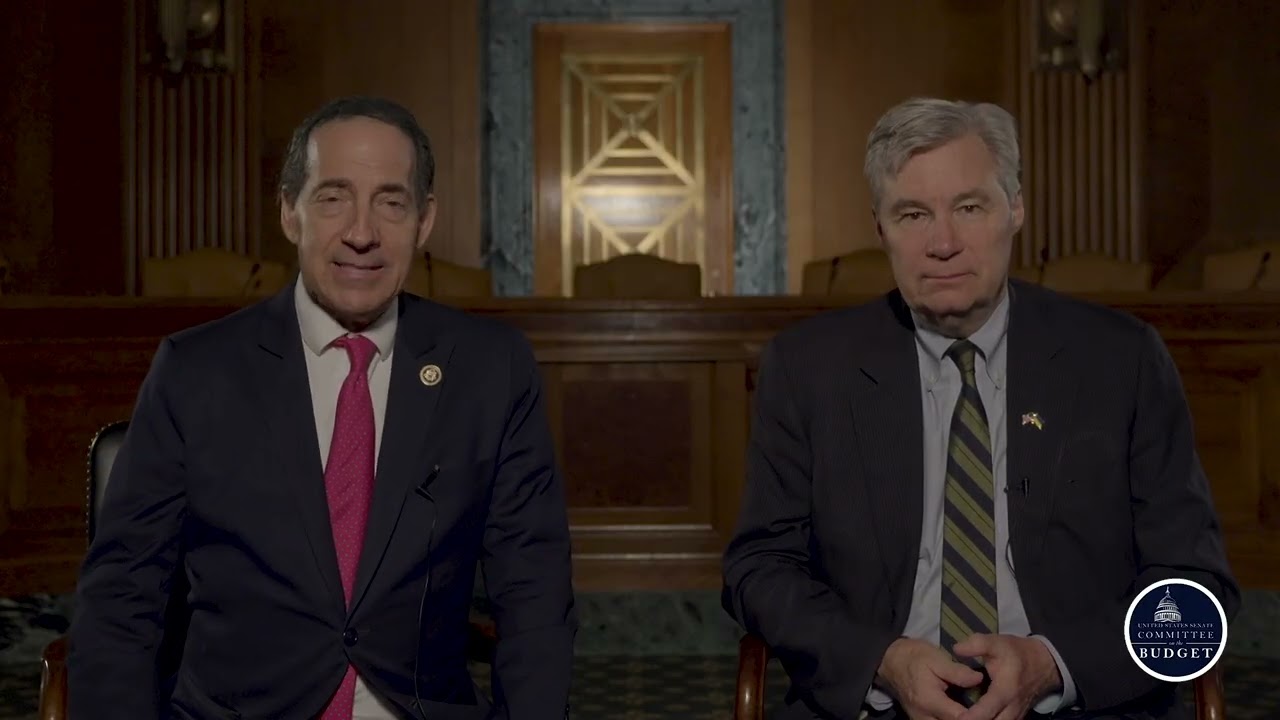
5 24
algae pgm cancelled 2023
randall davis methane
representative Jamie Raskin, left, and Senator Sheldon Whitehouse, right, speak in a video played during today’s hearing, Denial, Disinformation, and Doublespeak: Big Oil’s Evolving Efforts to Avoid Accountability for Climate Change.
A congressional investigation into Big Oil’s ongoing climate deception was revived yesterday with the release of thousands of documents and a joint report by the House and Senate members that further exposed the industry’s campaigns of “deception, disinformation, and doublespeak.”
In a Senate Budget Committee hearing chaired by Sheldon Whitehouse, witnesses drew parallels between Big Oil and Big Tobacco, lawmakers demanded accountability for the fossil fuel industry, and a former U.S. Department of Justice attorney suggested the agency could bring legal action against Big Oil.
“Fossil fuel companies publicly claim to be partners, if not leaders, in fashioning climate solutions, but our investigation exposed that as a fraud,” said House Oversight and Accountability Committee ranking member Jamie Raskin, who co-released the latest congressional findings and was the lead witness at today’s hearing. “Big Oil is not addressing the climate crisis, but profiting from it.”
The newly released documents reveal a lengthy pattern of oil companies publicly pledging their commitment to climate solutions while privately dismissing any intention to follow through.
One 2017 email from a BP executive ruminating on whether the U.S. might stay in the Paris Agreement offers a glimpse into the company’s view of participation in actions to address the climate crisis.
“All the benefits and few of the risks… no one is committed to anything, other than to stay in the game,” wrote global head of Sustainability and Climate Policy, Partnerships, and Stakeholder Relations Paul Jefferiss.
That same attitude was present in the companies’ own tactic of handling climate pledges. In an internal discussion two years later on how to respond to a press request for comment, Jefferiss said that “it goes a bit too far to state or imply support for net zero by 2050, because that would require policy likely to put some existing assets at risk, and we haven’t discussed that internally.” Still, he noted, “we need to stand by our public support for the Paris goals and the achievement of net zero.”
The evidence was first obtained after the House Oversight Committee subpoenaed Exxon, Chevron, Shell, BP, the American Petroleum Institute, and the U.S. Chamber of Commerce after launching that investigation in 2021, adding to a growing arsenal of proof that the companies and trade associations worked to minimize the dangers they knew fossil fuels would cause.
 |
“Talk green, act dirty”
The latest release of documents show oil companies using partnerships in academia to launder their greenwashing of fossil fuel products as climate solutions under the guise of university credibility — despite the companies’ internal knowledge of those products’ harm. One 2018 draft presentation from BP marked “Confidential” lays out a plan by the company to “advance and protect the role of gas — and BP — in the energy transition,” and recommends that BP fund Princeton University and Imperial College white papers that would posit “the role of gas as a friend to renewables.”
But BP knew that “Gas doesn’t support climate goals when you take methane emissions into account,” as stated by the title of another slide in that same presentation, featuring articles tying methane emissions from gas to climate change.
The committee’s probe is already having an impact. After E&E questioned Stanford about pre-publication access to research the university offered the American Petroleum Institute in 2017, as revealed in one of the committee’s unearthed documents, Stanford said it would begin an investigation into that research program.
The report also detailed the companies’ promotion of “pie in the sky technologies,” as Raskin put it this morning, like carbon capture and storage (CCS) and algae biofuels.
ExxonMobil spent upwards of $175 million dollars advertising their research into algae as a climate fix — almost half the $350 million it spent on actual research and development — even while admitting internally that the technology was “still decades away from the scale we need,” according to documents previously released through Congress’s investigation. After years of campaigns to promote algae and, in so doing, distract from the company’s growing investments in fossil fuels, the company dropped its funding of algae research projects last year.
New documents show Exxon employees hedging over algae advertisements they knew were misleading. “Need to be mindful that we’re not suggesting it’s ready to go large scale demo,” one employee emailed in a thread on a TV ad on algae that CEO Darren Woods had already “endorsed.”
“They were careful about the words to make sure it is indicating we hope to one day get there,” another employee responded. “The challenge is that the images have to be visually stimulating to get the audience engaged… it tested very well.”
Other documents spotlight Exxon’s CCS advertising campaigns that both feature and target young people through a “Kids series.”
“Kids is an over-performer in terms of our content. It humanizes ExxonMobil and is in an unexpected format,” said the company’s Digital and Social Media Manager, Jayme Meyer, in a 2019 email chain with Exxon’s Public and Government Affairs group.
“De-emphasize concept that catching carbon is difficult or hard,” Meyer writes in a summary of the group’s feedback. The solution provided in the email: end cards that say “Carbon capture and storage: Making a difference for future generations.”
As ExxonKnews and The Leverreported last week, Exxon is one of many oil and gas companies pushing to scale back new safety rules for carbon dioxide pipelines as the industry races for IRA tax credits from experimental CCS projects. Previous documents obtained by Congress show the companies internally admitting that though CCS is “complex, costly, and will require additional power,” it will “enable the use of petroleum and natural gas” for years to come.
“As a scholar of disinformation, I do not use the word ‘lie’ lightly, but no other word adequately describes the oil industry’s brazen efforts to mislead the public,” said Geoffrey Supran, a scholar of climate disinformation and director of Climate Accountability Lab at University of Miami, told Senators this morning during testimony.
The investigation further revealed how oil companies internally viewed the crisis their products were causing while they touted their ambitions to fight climate change. “The Challenge of Climate Change,” according to one 2016 presentation created by a Princeton researcher funded through BP’s Climate Mitigation Initiative, is the risk it posed to BP’s “core business” through a transition to cleaner sources of energy. That’s because “effective climate policies can emerge that discourage fossil fuel consumption… and that subsidize or otherwise promote efficiency and low carbon energy.”
BP, along with the other major oil companies, would use trade associations to lobby “against pro-climate legislation and regulations that they publicly claimed to support,” according to the House and Senate committees’ report. During a prior Congressional hearing in 2021, CEOs from all six entities refused to stop spending money to oppose climate action.
It’s “greenwashing 101,” said Supran: “talk green, act dirty.”
As payoff for its efforts to keep Americans hooked on a fossil fuel economy, the industry now reaps $750 billion in subsidies each year, Senator Whitehouse said in his opening remarks.
“What is protecting the massive fossil fuel subsidies? And what is preventing policies to reduce danger? It’s the same thing: the fossil fuel industry itself,” Whitehouse said.
All six entities obstructed the investigation, redacting thousands of documents unnecessarily and completely withholding many more, Whitehouse said.
The case for DOJ to step in
Sharon Eubanks, the former lead counsel for the Department of Justice who won the agency’s historic lawsuit against Big Tobacco, said during her testimony today that she observed “striking similarit[ies]” between the actions of the tobacco industry and those of the oil industry today — including the funneling of money into promoting “fake science,” and lying to the public and regulators “about what they knew about the harms of their products and when they knew it.”
Following the new revelations, Eubanks said there was “solid evidentiary basis to support more information being gathered on these companies, just as the Department of Justice investigated the tobacco industry and ultimately filed a civil racketeering case.”
“Complaints against the industry have similarities in the fraudulent acts and the government was successful in the tobacco case, so there is certainly an adequate legal foundation for litigation against this industry,” she said.
Last year, nearly two dozen House and Senate members wrote letters to Attorney General Merrick Garland urging the Department of Justice to either sue or investigate Big Oil for potential violations of federal law. In January, Representative Ted Lieu toldExxonKnews that new evidence of Shell’s early knowledge of climate change “provide additional evidence and make our calls for an investigation even more urgent.”
The mounting evidence released by Congress could provides even more fuel behind those requests.
As Raskin pointed out, holding the tobacco industry accountable in court had major implications for public health and safety. “The companies were ordered to cease and desist their propaganda and to start telling the truth,” he said. “Just insisting upon the truth has saved millions of lives.”
New lawsuits have been filed against Big Oil since Congress began its investigation — and some of those complaints cite documents obtained through congressional subpoenas, including by the City of Chicago, Pennsylvania’s Bucks County, Puerto Rico municipalities, and the Shoalwater Bay Indian Tribe.
Patrick Parenteau, a law professor at Vermont Law School, said the latest evidence could play a role in the lawsuits and eventually be considered at trial. “The case for recovery of damages is getting stronger all the time,” he said.
===
4/24 no pix
yahoo
when Bucks County, Pennsylvania, filed a lawsuit last week against major oil and gas companies for climate damages, Commissioner Chair Diane Ellis-Marseglia pointed to “unprecedented weather events here in Bucks County that have repeatedly put residents and first responders in harm’s way, damaged public and private property and placed undue strain on our infrastructure.” The county argues oil companies’ “campaigns to deceive and mislead the public about the damaging nature of their fossil fuel products” delayed climate action for decades, robbing communities of precious time to mitigate the climate-driven disasters they now face.
One of those disasters occurred last year, when a rainstorm in Bucks County caused deadly flash flooding that swallowed vehicles and killed 7 people, including two children. Scientists said the deluge and its aftermath — not the county's first "100-year flood" in recent years — are a harbinger of the intense and dangerous rainstorms that a warming climate is making more likely.
As the science connecting climate change to more frequent and severe weather events becomes clearer, there is mounting evidence that members of the fossil fuel industry coordinated to downplay that link — evidence that could be valuable to lawsuits seeking accountability.
Bucks County is just one in a growing list of communities taking legal action against fossil fuel companies in the wake of deadly extreme weather events. Multnomah County, Oregon sued oil, gas, and coal majors after a 2021 heat dome that killed nearly 70 people. On the 10 year anniversary of Superstorm Sandy, New Jersey’s attorney general took Exxon, Chevron, and other oil giants to court, citing the billions of dollars in damage and deaths the hurricane caused in the state. In the first-ever racketeering lawsuit against Big Oil companies, Puerto Rico municipalities are seeking to recover costs incurred by Hurricane Maria.
Fossil fuel majors, these cases argue, should help communities pay for the costs of adapting to and recovering from climate disasters given the industry’s early research into — and subsequent denial of — their products’ harm. “We’re already seeing the human and financial tolls of climate change beginning to mount,” said Commissioner Ellis Marseglia. “If the oil companies’ own data is to be believed, the trend will continue.”
It’s a trend that the fossil fuel industry worked to obscure for decades. A collection of evidence just published to ClimateFiles.com reveals the extent to which oil companies and their trade associations sought to deny and downplay the relationship between climate change and extreme weather.
Nicky Sundt, a climate expert and former communications director for the U.S. Global Change Research Program during the George W. Bush administration, said she tried to publicly communicate the science behind that link, but was “stymied over and over again” by industry interests inside and outside the White House — an experience she has discussed with The Guardian andPBS Frontline.
“By interfering with the communications of climate science to the public, [the fossil fuel industry] knew that the public was less likely to become agitated and do something about it,” Sundt said. “The consequence was to slow efforts to reduce our emissions, and to leave us more unprepared for the impacts of climate change. The longer you wait, the more expensive it is to deal with all of these issues, and they’ve eaten up incredibly important time we needed.”
“A new norm”
In 1997, fossil fuel interests successfully convinced prominent United States officials to oppose U.S. ratification of the Kyoto Protocol — an international climate agreement that would have limited greenhouse gas emissions decades ago.
A year later, the American Petroleum Institute (API) — the largest oil and gas trade association in the U.S. — bluntly outlined a plan to keep drumming up opposition to the Kyoto Protocol as negotiations continued. According to a newly uncovered February 1998 internal strategy proposal reviewed by ExxonKnews, API would “develop and implement a campaign-style ‘rapid response’ team… to respond to op-eds that make exaggerated claims about climate science… and to media events staged by government officials and/or environmental organizations seeking to tie extreme weather events to possible human impacts on global climate.”
Long before that campaign began, internal industry memos and promotional materials show, major oil companies knew about the role that climate change would play in intensifying hurricanes, floods, droughts, heatwaves, precipitation patterns, and other extreme weather events.
One 1979 memo distributed to Exxon management, about a report conducted by Steve Knisley of Exxon’s Research and Engineering Department, accurately predicted the growth of atmospheric carbon dioxide concentrations by 2010 and referenced the “ecological consequences of increased CO2 levels.” Those consequences were listed in detail, including global temperature increases, water shortages in the U.S. southwest, increased rainfall, and “violent storms.”
In a 1991 film productionby Shell, called “Climate of Concern,” a narrator warns that “if the weather machine were to be wound up to such new levels of energy, no country would remain unaffected,” and that “what is now considered abnormal weather could become a new norm.”
Another film produced that year by BP, called “This Earth – What Makes Weather?”, alludes to the ways climate change would increase the frequency and damage caused by extreme weather events like storms, flooding, and drought. “From warmer seas, more water would evaporate — making storms and the havoc they cause more frequent,” the narrator predicts. “Catastrophic floods could become commonplace and low-lying countries like Bangladesh would be defenseless against them.”
But around the same time, the industry began to worry about how public understanding of those phenomena could affect their core business. A 1989 presentation by Duane LeVine, a senior executive at Exxon, expressed concern that an extreme heat and drought event the year before had “drawn much attention to the potential problems and we’re starting to hear the inevitable call for action. Exactly what happens now is not clear… but this critical event has energized the greenhouse effort and raised public concern over PEG [potential enhanced greenhouse].”
Under the cover of trade associations and front groups, through PR campaigns and funded academic research, the industry developed a strategy to undermine the link between climate change and weather-related disasters — and discredit those who sought to communicate that science to the public.
A campaign to turn the tide
 |
*One ad from a PR campaign by the “Information Council on the Environment,” funded by fossil fuel and electric utility interests. Minnesota is now suing ExxonMobil, Koch Industries, and the American Petroleum Institute for climate fraud.
One key player was the Global Climate Coalition (GCC) — an international industry lobbying group that was instrumental in early efforts to deny climate change and generate opposition to policy action to reduce emissions. In 1994, the GCC hired weather forecasting service AccuWeather Inc. to produce a report minimizing the impact of global warming on extreme weather, which the GCC would cite in a pamphlet distributed at the United Nations climate convention the following year.
“No convincing, observational evidence exists that hurricanes, tornadoes and other extreme temperature and precipitation events are on the rise because of the recent slight increase in the Earth’s surface temperature,” the report states.
 |
In response to ExxonKnews’ requests for comment on the report, a spokesperson for AccuWeather said that “AccuWeather and the other leading consulting meteorologists involved had been engaged to produce an analysis based upon the available data at that time. There was much debate and uncertainty in the scientific community over the causes and effects of global warming during that time period, and a new generation of computer modeling studies was just beginning to emerge that would create an important shift in scientific judgment.”
“As an organization rooted in science, AccuWeather’s view on global warming and extreme weather has evolved over the past three decades, as has the view of many other scientific organizations,” they said, noting that data now shows a “marked increase in billion-dollar disasters due to extreme weather events.” Today, the spokesperson added, AccuWeather has signed the “Global Climate Science-Media Action Pledge”, and is committed to communicating the impacts of climate change on extreme weather to the public.
The GCC also hired academics to further their cause. Internal meeting notes from July 1997 show that the GCC commissioned a research paper from Robert E. Davis, a University of Virginia climatologist, explicitly denying the climate and extreme weather connection.
 |
“A belief commonly held is that global warming will produce more extreme weather,” the published paper read. “While this thinking serves as convenient fuel for sensationalist headlines linking what only a decade ago would have been viewed as the normal vagaries of weather to some approaching climatic apocalypse, it is not based on sound science.”
 |
From a folder handed out by the GCC at the UN climate negotiations in 1999.
In 1999, in the wake of Hurricane Floyd, Frank Maisano, then a spokesman for the GCC, faxed a memo to “Communicators Interested in Global Climate Issues." "As millions of people flee Hurricane Floyd, many climate activists have again suggested — despite the facts — that hurricanes and global warming are connected,” the memo stated.
In response to questions about the memo and the GCC’s positions, Maisano told ExxonKnews that “Any fair review of the debate over any link between climate and severe weather has always been the subject of significant discussion between the experts themselves, especially with regard to hurricanes.”
“Importantly,” Maisano said, “GCC’s main focus at the time was on the economic impacts, sovereignty and effectiveness of any policy proposed to address climate change.”
Maisano now runs a strategic communications practice for Bracewell LLP, a firm that provides “Industry-Focused Legal and Advocacy Strategies” for oil and gas companies including Eni (currently being sued for climate deception in Italy) and Phillips 66 (which is a defendant in many U.S. climate lawsuits, including those filed by Bucks County and the state of New Jersey).
The industry’s campaign stretched on for years. In 2006, shortly after Hurricane Katrina, the DCI Group — a lobbying and campaign contractor with ties to Exxon — produced and sent VHS tapes of videos designed to look like a national news broadcast to Gulf of Mexico area news stations. The tape featured Dr. William Gray, a (now deceased) hurricane scientist at Colorado State University and climate change denier, stating that in the past 20 years, scientists had seen “no significant change in the frequency and intensity of major hurricanes around the globe…. This is the way nature sometimes works.” (Scientists have since concluded that climate-driven warming contributed to the increased rainfall and severity of storm surge during Hurricane Katrina, which killed nearly 2,000 people.)
According to Sundt, after Hurricane Katrina hit, the communications arm of the U.S. Global Change Research department proposed hosting a session on the implications for preparing for climate change on the Gulf Coast. “We had a well developed proposal, and it was just killed [by the White House] without explanation,” she said.
“A more resilient world”
Today, the steady growth of attribution science — or research investigating the role of climate change in altering or intensifying extreme weather events — has put a dent in Big Oil’s designs. The field of study has developed to even be able to tie the emissions of specific corporate actors to climate-worsened disasters — opening up more possibilities for those companies to be held liable for climate damages in court.
One such study, from researchers from the Union of Concerned Scientists and the University of California, Merced, found that nearly 40% of all forests burned in the Western U.S. and Canada since 1986 can be tied to emissions from just 88 of the world’s largest fossil fuel and cement manufacturers. That research was cited in Multnomah County’s lawsuit against oil and gas majors for climate damages last year.
Delta Merner, lead scientist for the Union of Concerned Scientists’ climate litigation hub and a co-author of the study, pointed out that many of the same companies that fought regulation of climate-warming emissions adapted their own fossil fuel infrastructure to account for rising seas, warming temperatures, and worsening storms decades ago.
“As you look through the oil industry’s own reactions to their knowledge about climate change, they were able to build better infrastructure to be resilient,” Merner said. “We would have a more resilient world, we would not be facing the realities of climate change that we’re seeing today if it wasn’t for the lies the industry propped up for so long.”
At least one oil major anticipated legal action decades ago. In a planning scenario from 1998, Shell made an eerie prediction: “In 2010, a series of violent storms causes extensive damage to the eastern coast of the U.S. … Following the storms, a coalition of environmental NGOs brings a class-action suit against the US government and fossil-fuel companies on the grounds of neglecting what scientists (including their own) have been saying for years: that something must be done.”
Shell was ahead of its time. Between the increased frequency, severity, and costs of extreme weather events, the advancing science connecting them to polluters, and mounting legal theories, Merner said she expects more communities to file suit. Even as she sees the industry’s deception evolving in content and sophistication — like companies trying to shift the blame for emissions onto consumers to avoid responsibility — Merner believes attribution research is evolving faster.
“It’s a testament to the power of science that climate litigation has been able to withstand an additional onslaught of disinformation from the fossil fuel industry and is now a key part in the fight for climate justice,” she said.
===
YMAIL 2 24ExxonKnews
Chicago last week brought the newest lawsuit against Big Oil companies for spreading disinformation about the climate-warming hazards of burning fossil fuels — adding the third largest city in the U.S. to the growing list of state and local governments pushing for oil and gas majors to be held accountable in court.
The case charges BP, Chevron, ExxonMobil, Shell, ConocoPhillips, and the American Petroleum Institute with conspiring together and through front groups to run “tobacco-industry-style campaigns to deceive and mislead the public about the damaging nature of their fossil fuel products.” The fallout of those campaigns, according to the complaint, was a long delay in climate action that has come at an increasingly unbearable cost to Chicago residents — particularly in its low income neighborhoods and communities of color.
City officials say their legal action is necessary for the city to help shift the financial burden of adapting to climate disasters away from those communities and back onto the companies most responsible.
“There is no justice without accountability,” said Mayor Brandon Johnson in a statement. “From the unprecedented poor air quality that we experienced last summer to the basement floodings that our residents on the West Side experienced, the consequences of this crisis are severe, as are the costs of surviving them. That is why we are seeking to hold these Defendants accountable.”
Ted Boutrous of law firm Gibson, Dunn and Crutcher, an attorney for Chevron and chief architect of Big Oil's legal arguments in these cases, said in a statement that “addressing climate change requires a coordinated international policy response, not meritless local litigation over lawful and essential energy production.”
The city is charging the companies with 10 counts of failure to warn, negligence, fraud, conspiracy, and public nuisance, and it asks for compensatory damages and the disgorgement of profits made in the course of the industry’s fraud, among other remedies. The lawsuit, filed Tuesday in Cook County court, also requests a jury trial, where the companies could face more evidence of their deception gained through the discovery process.
That deception, Chicago argues, includes the oil majors’ ongoing campaigns to “falsely present themselves as corporate leaders in the fight against climate change, claiming to invest substantially in low-emission technologies and zero-emission energy sources, while their business continues to be overwhelmingly focused on fossil fuel production and sales.”
As one example, the complaint cites a recent BP ad targeting Illinois Facebook users that claims “We agree - the world needs fewer emissions. That's why we're working to make all forms of energy cleaner and better.” BP is simultaneously reneging on its climate pledges and increasing its production of oil and gas.
“At the end of the day, the climate crisis that we’re enduring was known by fossil fuel companies — they were warned decades ago by their own scientists of the potentially severe or even catastrophic consequences of their approach,” said Chicago Alderman Matt Martin, who applauded city leaders’ decision to file suit. “These companies should no longer be allowed to shift the burden of paying for the impacts resulting from that conduct onto Chicagoans.”
The harm to Chicago from climate change
It might be difficult to imagine what climate change looks like for a Midwestern city far from rising seas and hurricanes — but Chicago is susceptible to a spate of climate threats.
Chicago’s complaint cites more frequent and intense storms, flooding, droughts, shoreline erosion, toxic algae blooms in Lake Michigan, and extreme heat events like a four-day heat wave in 1995 that killed more than 700 Chicagoans.
The 1995 heat wave was a “watershed moment,” said Daniel Horton, who leads the Climate Change Research Group at Northwestern University. “Since that time the city has done a number of things to improve community resilience, but we expect more heatwaves in the future as the world continues to warm — so we have to constantly update our policies and prepare for extreme heat,” he added.
Many victims of that heat wave were elderly, low-income, and Black, residing in apartments without air conditioning. Those groups are still most at risk from extreme heat and air pollution in Chicago, which can coincide to produce “profound public health consequences,” said Horton, like they did when wildfire smoke from Canada gave the city the worst air quality in the world in June. The same demographics were also hit hardest during a severe rain event in July, which wreaked havoc on Chicago’s West Side, and are most susceptible to the city’s more-regular flooding.
“When you’re talking about the legacy of environmental racism all across the city, too often with regard to both severe weather and other aspects of the climate crisis, the communities bearing the brunt of that devastation are lower income communities of color,” said Alderman Martin.
Chicago is an “incredibly segregated city,” explained Horton, where Black and Hispanic communities are far more likely to live in places that are hotter, have poorer air quality, and are most flood-prone. The city can make decisions to ease the burden on those communities — like figuring out “where to increase our green infrastructure, building more of a green canopy and reducing the heat island effect, deciding where to build cooling centers in neighborhoods that have more vulnerable citizens or people without access to air conditioning or the ability to pay for it,” he said. The more the city invests in community adaptation, the higher the price tag — in its complaint, the city said it is already spending $188 million on climate projects in low-income communities — and that’s the kind of thing Chicago wants oil companies to help pay for.
“There’s surviving, and then there’s thriving,” Horton said. “I like to think surviving isn’t the goal.”
“Another powerful player”
More than 25% of all Americans are now represented by governments taking oil companies to court for climate deception. Chicago’s lawsuit brings “another powerful player into the game,” remarked Pat Parenteau, an environmental law professor at Vermont Law School.
“There’s strength in numbers, and the more entities like Chicago and California that have the resources to do battle, the better, from the plaintiffs’ side of it,” Parenteau said.
Chicago is suing as similar cases across the country move toward trial in state court. Massachusetts' consumer fraud case against Exxon is currently in the pre-trial discovery phase, and the City and County of Honolulu is in the process of agreeing what discovery will look like once it starts. Delaware is requesting that the state’s Supreme Court review a lower court’s ruling regarding which parts of its case can be heard at trial. In Italy, the trial for twelve Italian citizens’ lawsuit against oil giant Eni just kicked off.
Parenteau had a long list of reasons why new communities like Chicago would choose to sue now — growing evidence of what the companies knew and how they lied, more attribution science linking specific companies’ emissions to specific damages, the state of California filing suit, plaintiffs winning the fight to keep their lawsuits in state court, and other legal successes against oil majors across the world.
Or it could be simpler than all that. “These cities are beginning to realize just how much money they’re facing to deal with climate effects, and the recalcitrance of the oil companies that are sitting on piles of money and making more every year,” he said. “Maybe it’s too much for them to ignore.”
===
y mail 12 23
no lnx see exxon 4
exxon crashes COP28 to “fight for its life”
ExxonMobil CEO Darren Woods is on a mission to defend fossil fuels and deny science during his debut at the UN climate conference.
EXXONKNEWS
DEC 6
Emily Sanders is the Center for Climate Integrity’s editorial lead.
:{:{Will COP28 be a climate denial superspreader event, or the death knell for Big Oil? The fossil fuel industry is doing all it can to ensure the former and prevent the latter. At least 2,456 fossil fuel lobbyists were granted access to the conference — nearly four times more than any previous year.}:
COP President and Abu Dhabi National Oil Company (ADNOC) CEO Sultan Al Jaber proclaimed that there is “no science” to back up the need to phase out fossil fuels in order to keep warming within the 1.5 degree threshold, accused his interviewer (Mary Robinson, former president of Ireland) of lying about ADNOC’s increasing investments in oil, and insisted that ending fossil fuels would “take the world back into caves.” He then launched yet another “net zero” emissions commitment, joined by about 50 major oil companies, which the UN secretary-general swiftly condemned as greenwashing.}:
https://twitter.com/PriceofOil/status/1731025554789318713
All in all, it’s shaping up to be the worst takeover of COP by fossil fuel interests yet, with oil and gas representatives boring like hungry termites into policy discussions concerning their companies’ profits — just the kind of thing ExxonMobil wouldn’t miss for the world.
A debut of desperation
This year is Exxon’s CEO Darren Woods’ first at COP, and he has been on quite the press tour. Woods’ mission is like those of other major oil company representatives at the conference: to defend the continued expansion of fossil fuel production against the irrefutable scientific consensus calling for its end.
“This is a desperate attempt to prolong his company’s destructive, fossil fuel-dependent business model,” said Kathy Mulvey, accountability campaign director for the Climate & Energy Team at the Union of Concerned Scientists.
“The unprecedented nature of an Exxon CEO’s appearance at a U.N. climate talk seems consistent with the unprecedented nature of this year’s talks themselves,” said Geoffrey Supran, a Professor of Environmental Science & Policy at University of Miami and researcher of Exxon’s disinformation campaigns.
This particular COP is a “potential watershed moment, where Big Oil’s products finally become the target of international climate policy. That’s got to have oil executives up at night,” he said.
In conversations with multiple major media outlets, the oil executive said that policymakers were focusing too much on reducing fossil fuels and not enough on their emissions.
The talks in Dubai have “put way too much emphasis on getting rid of fossil fuels, oil and gas, and not . . . on dealing with the emissions associated with them,” Woods told the Financial Times in one interview.
“I actually think that part of the thing that has slowed us down is this focus on making a step change and getting out of our existing energy system and starting something brand new,” he told CNBC in another. “I think what society ought to focus on is the true problem here, which is emissions.”
Woods’ approach “appears to be an attempt to delay the urgent phase out of fossil fuels,” said William J. Ripple, a Distinguished Professor of Ecology at the University of Oregon and Director of the Alliance of World Scientists. Ripple was lead author on a report signed by more than 15,000 scientists last month that concluded that “the significance of immediately curbing fossil fuel use and preventing every further 0.1°C increase in future global heating cannot be overstated.”
International scientific bodies agree. “The uncomfortable truth that the industry needs to come to terms with is that successful clean energy transitions require much lower demand for oil and gas, which means scaling back oil and gas operations over time – not expanding them,” International Energy Agency executive director Fatih Birol wrote in the foreword to a report the agency published just before COP.
As has been its pattern for decades, Exxon is well aware of the science demanding the phase-out of its products — it’s just doing everything in its power to stop that science from leading to action, critics say.
“This is what they do: confuse and corrupt, deny and delay,” said Supran.
Confuse and corrupt, deny and delay
https://twitter.com/ClimateUCS/status/1731723555207876633
“The idea of taking advice on climate action from an oil boss is like inviting an unrepentant con artist to lead a fraud protection bureau,” said Mulvey, of UCS.
Woods, who just sealed a $60 billion deal to acquire Pioneer Natural Resources and produce more oil — a merger that is now being investigated by the Federal Trade Commission — has no plans to transition away from fossil fuels. Exxon was one of the 50 oil companies to sign on to Sultan Al Jaber’s voluntary emissions reduction pledge, called the “Oil and Gas Decarbonisation Charter,” which critics say rehashes old commitments and would do nothing to curb fossil fuel production. A letter from more than 300 advocacy groups called the pledge a “smokescreen to hide the reality that we need to phase out oil, gas and coal.”
“Oil and gas companies are under pressure, desperately trying to preserve their social license through recycled pledges,” said David Tong, Global Industry Campaign Manager at Oil Change International, which last year published a report finding that Exxon’s climate commitments are “grossly insufficient” to meet the goals of the Paris Agreement.
Woods and his fellow oil company representatives are also using COP to push for unproven technologies that will prolong the lifespan of climate-wrecking fossil fuels. In an interview with Bloomberg at COP, Woods said the energy transition would require an assortment of “solutions” — including hydrogen and carbon capture — and “we need big companies to help with that.”
Woods rejected the IEA’s recent assessment of carbon capture as an “illusion,” telling Reuters that “you could say that about electric vehicles, about wind, about solar.” But according to the IEA, “The key actions required to bend the emissions curve sharply downwards by 2030 are well understood, most often cost effective and are taking place at an accelerating rate. The scaling up of clean energy is the main factor behind a decline of fossil fuel demand of over 25% this decade.”
Yet unlike the billions it invests in carbon capture, Exxon is spending almost nothing on renewable sources of energy, while lobbying against the transition away from its core products.
“It’s no surprise that Exxon is pushing for the continued use of fossil fuels,” said Jessica Green, Professor of Political Science at the University of Toronto. “Exxon is in a fight for its life. Real progress on climate change isn’t about more carbon markets or net zero pledges, it’s about putting the oil and gas industry out of business.”
A larger strategy
Woods’ deflections at COP are part of a larger strategy of “corporate issues management,” said Supran, which “the fossil fuel industry has been pioneering for decades.”
“It means having your fingers in all the pies, anticipating future threats to your business and neutralizing them through decades of 360-degree public affairs strategies,” he said.
Exxon has been working to shift the narrative outside of COP, too. “On November 30, the first day of COP 28, The New York Times included a full-page greenwashing ad from ExxonMobil,” Brad Johnson documented in Hill Heat on Monday. “Reuters coverage of Al Gore’s criticism of ExxonMobil’s presence at COP 28 was smothered by greenwashing ads from ExxonMobil. The Punchbowl News political newsletter today is Presented by ExxonMobil.” Yesterday’s Power Switch newsletter from Politico was Presented by ExxonMobil, too.
While the oil giant’s greenwashing may have ramped up around COP, it’s also a years-long affair — aided in large part by many of the same media outlets interviewing Woods at the conference. A major analysis of Big Oil’s advertising between October 2020 and October 2023 found that “many of the world’s most trusted English-language news publications help fossil fuel companies mislead readers about topics like the promise of carbon capture, the potential of ‘renewable biogas,’ and how much the industry contributes to the energy transition,” according to Amy Westervelt and Matthew Green.
The analysis, published by Drilled and DeSmog this week, found that Bloomberg Media Studios last year created a video for Exxon promoting carbon capture and hydrogen; Politico organized 37 e-mail campaigns for Exxon; and Exxon sponsored more than 100 editions of Washington Post newsletters in 2022 alone, as just a few examples.:}:
Ultimately, it’s up to the media, policymakers, and other major institutions to determine whether the oil companies still responsible for fueling climate catastrophe are allowed to have a platform to stand on — or whether, like Big Tobacco, their time to influence the debate about their products’ harm is finally up.
ICYMI: If you want to learn more about the language being used by oil companies at COP this year, here’s a helpful guide from NPR.
---
y mail 11 23
a climate lawsuit filed by the City and County of Honolulu that could make oil and gas majors pay billions of dollars in damages for deceiving the public about their products’ role in climate change is now positioned to be the first of its kind to go to trial, following a ruling from the Hawai‘i Supreme Court. Legal experts say that Honolulu’s case could set a precedent for similar climate lawsuits filed by dozens of U.S. communities and make history as the first time fossil fuel companies would have to face the evidence of a decades-long industry campaign of climate deception in court.
The unanimous ruling, written by Hawai‘i Supreme Court Chief Justice Mark E. Recktenwald, upheld a lower court ruling that rejected two key arguments the oil companies made in an effort to dismiss the case. The court’s decision means that the case can now enter into full discovery — the phase during which plaintiffs can collect more evidence to prove their case — and a state court can finally set a date for the case to go to trial.
“This is now the most important climate case in the United States,” said former Hawai‘i Supreme Court Justice Michael Wilson, who retired earlier this year after a decade on the state’s highest court. “Now the Hawai‘i Supreme Court has allowed a jury of twelve Hawai’i citizens to decide whether lies by the oil companies created large scale billion dollar damage to our county and city of Honolulu.”
The city and county’s lawsuit charges ExxonMobil, Chevron, Shell, and BP and other oil giants with orchestrating “sophisticated disinformation campaigns to cast doubt on the science, causes, and effects of global warming,” thus delaying climate action for decades. The complaint argues that the companies violated state common laws like public nuisance, failure to warn, and trespass — and that their conduct left Honolulu facing floods, storms, heat waves, wildfires, rising seas, and other climate disasters that have cost billions of dollars in destruction and repairs. Now, plaintiffs contend, Big Oil should help foot the bill for the damage.
But the oil and gas industry has bitterly disputed the case, first attempting to move it out of state court, and, when that failed, filing motions to have it dismissed entirely. Along the way, a pro-fossil fuel industry group even launched a PR blitz in right wing media against Recktenwald, the state's Republican-appointed Chief Justice, accusing him of bias for giving a presentation through the nonprofit Environmental Law Institute that sought "to educate fellow judges about the basic science they need to adjudicate the climate litigation over which they preside." (Oil company lawyers, including one involved in Honolulu’s case, are also involved in ELI. One law professor said the attack on Recktenwald was “grasping at straws.”)
In August, just after nearly a hundred people were killed in the devastating wildfires on Maui, which has filed a nearly identical lawsuit that is also moving through state courts, Hawai‘i’s Supreme Court heard Big Oil’s arguments to dismiss Honolulu’s case. The companies argued that state law could not address the global issue of climate change — and that federal law preempted Honolulu’s claims under the Clean Air Act.
Ted Boutrous, a lawyer for Chevron, told the court that Honolulu was “seeking to impose damages based on the actions of millions and billions of people around the world. They’re going to put all the consequences of that on these companies.”
This week’s decision thoroughly debunked those arguments. “We agree with [Honolulu city and county] Plaintiffs,” wrote Chief Justice Recktenwald. “This suit does not seek to regulate emissions and does not seek damages for interstate emissions… Because this is a traditional tort case alleging [oil company] Defendants misled consumers and should have warned them about the dangers of using their products, Defendants’ arguments fail.”
Big Oil’s “big problem”
The ruling makes clear that “our courts are united in their view” of the case, said Denise Antolini, a retired University of Hawai‘i law professor who has submitted legal briefs in support of the lawsuit. “The cases use traditional tort law to tackle a very large problem, which is the deceptive climate marketing and campaigns of Big Oil.”
A ruling in the case could have significant implications for other climate cases across the country, said Richard Wallsgrove, a Professor of Law and Environmental Law Program Co-Director at the University of Hawai‘i.
“Big Oil’s argument is, ‘the problem is so big that we no longer have responsibility for that problem,’” Wallsgrove said. “But there have to be ramifications. These municipal climate cases’ core legal theory is, [oil companies] created a big problem and they lied about it. The Hawai‘i Supreme Court’s opinion is saying that if somebody violates the law, courts are the place where that should get adjudicated.”
The case has been in a limited form of discovery, but it can now move into a comprehensive phase where the city and county can request documents and depose key representatives from the oil companies. That next stage “will bring to light the lies and the campaign of Big Oil’s climate denial, and that’s what they’re deathly afraid of — of that story seeing the light of day,” Antolini said.
The path ahead
Of the dozens of climate accountability cases working their way through U.S. courts, Honolulu’s is now one of two — along with a Massachusetts consumer fraud case against ExxonMobil — that is positioned to receive a 2024 trial date.
Honolulu still needs to prevail against one more Big Oil motion to dismiss its case. Chevron has invoked an anti-SLAPP law from California, where the company is headquartered, that’s intended to protect individuals and whistleblowers from lawsuits meant to silence their free speech. Honolulu’s lawsuit, Chevron contends, violates that law and Chevron’s First Amendment rights because its climate denial was actually protected free speech.
That motion is moving through a separate appeals process — but if you ask Antolini, it has a “snowball’s chance in hell” of preventing the case from moving forward. “Anti-SLAPP protections are really important, but they don’t protect Big Oil,” she said.
“A groundbreaking decision of hope”
Wilson said Honolulu’s case is now “set up to be a major achievement for the jurisdictions around the state that are victims of fossil fuel burning that’s being done as a result of misrepresentations made by the oil companies … There will be a price tag put on the knowing poisoning of the atmosphere.”
“The procedure of this case shows how young people, future generations, and the citizens of the city and county of Honolulu can have hope that the oil companies that increase greenhouse gas emissions and are more profitable than they’ve ever been will have to go to trial,” he said. “This is a groundbreaking decision of hope.
- US students file complaints against six universities over fossil fuel investments
- How Chevron and Exxon’s Latest Fossil Fuel Deals Compare To Their Green Spending
- A new report calls chemical recycling a ‘dangerous deception’ — and a former plastic lobbyist agrees
- In Boston speech, ExxonMobil CEO says he’s still betting on oil
- In early 2029, Earth will likely lock into breaching key warming threshold, scientists calculate
In Boston speech, Exxon Mobil CEO says he’s still betting big on oil - The Boston Globe
no lnx
In Boston speech, Exxon Mobil CEO says he’s still betting big on oil
Darren Woods says the oil giant will double down on fracking technology, but brings little to the table on renewables
By Jon Chesto Globe Staff,Updated November 1, 2023, 4:52 p.m.
Exxon Mobil chairman and CEO Darren W. Woods spoke Wednesday at the Boston College Chief Executives Club, which met at the Boston Harbor Hotel.
Exxon Mobil chairman and CEO Darren W. Woods spoke Wednesday at the Boston College Chief Executives Club, which met at the Boston Harbor Hotel.Pat Greenhouse/Globe Staff
Exxon Mobil Corp. chief executive Darren Woods knows his company’s pending purchase of rival Pioneer Natural Resources is a $60 billion bet on the future of oil. On Wednesday, Woods defended that bet during a Boston business leaders luncheon. Oil, he said, needs to be a big part of the energy mix for a long time to come.
Woods held forth with former State Street chief executive Jay Hooley — a member of Exxon’s board — at Wednesday’s meeting of the Boston College Chief Executives Club. The Pioneer deal, announced on Oct. 11, was top of mind. The acquisition will more than double Exxon’s acreage in the Permian Basin, an oil-rich region that stretches across the Texas-New Mexico border. Exxon is also about to complete another important acquisition, the nearly $5 billion purchase of pipeline operator Denbury; that deal is expected to close on Thursday.
One thing you won’t see Woods buying: a major wind or solar company. He made it clear to the Boston crowd that he doesn’t believe electricity generation fits with Exxon’s core business strengths. The Texas-based company will remain focused on molecules and not electrons. Translation: He’s sticking with fuels, and steering clear of electricity.
Woods talked about how Exxon was late to the game to invest in fracking — the process of blasting through rock to extract more oil and gas from the ground — and tried to catch up with the purchase of XTO Energy in 2010. More recently, Exxon has harnessed its immense research and development operations to build on that acquisition by improving its fracking technology, considered crucial to unlocking the full potential of the Permian’s oil reserves. (The acreage that Exxon and Pioneer control there essentially equal an estimated 15 to 20 years worth of oil inventory.)
“Over the course of the last five years, we have come up with unique approaches and technologies for more effectively recovering the resource out of this rock that looks like granite,” Woods said. “We’re getting more recovery at less cost. That’s magic in this business.”
Related
Exxon works hard to keep America addicted to fossil fuels
Chevron buys Hess for $53 billion, second megadeal in the oil patch this month as energy prices soar
Exxon Mobil buys Pioneer Natural in $59.5 billion deal with energy prices surging
Woods didn’t directly address the calls on Wednesday from Senate Majority Leader Chuck Schumer and other Senate Democrats to scrutinize the antitrust implications of the Exxon Mobil-Pioneer merger. (The Democrats also want another recent oil megamerger, Chevron’s $53 billion deal to buy Hess, to get similar scrutiny.) But Woods did pledge that the Pioneer deal will help lower oil costs — a potential tripping point in any antitrust scrutiny by the Biden administration.
“We’re going to recover more oil at a lower cost, which is good for the US economy,” Woods said. “It’s good for US energy security.”
Signage for Exxon Mobil at the company's booth during the Gastech Exhibition & Conference in Singapore on Sept. 5.
Signage for Exxon Mobil at the company's booth during the Gastech Exhibition & Conference in Singapore on Sept. 5.Nicky Loh/Bloomberg
Hooley noted that oil companies have been pilloried for not doing more to help with the clean energy transition away from fossil fuels.
Woods’s response? Those critics of oil and gas will be proven wrong.
“That’s a very superficial way of thinking about it,” Woods said. “We definitely think wind and solar will be an important part [of the country’s energy portfolio]. But they’re not sufficient in and of themselves. ... There is a somewhat superficial view that [if] you’re an energy company, you should go into wind and solar.”
That won’t be happening at Exxon, at least not under Woods’s watch. “My view is, we don’t bring a lot to that space,” Woods said. “We’re not an electron company. We’re a molecule company.”
“Molecules,” as Woods put it, can help with the clean energy transition. He mentioned carbon capture — Denbury, for example, specializes in pipelines used for transferring and storing carbon dioxide underground — as well as hydrogen and biofuels.
“We need as many solutions out there as possible,” Woods added. “We got very focused as a society on a narrow narrative that said, you’ve got to get rid of oil and gas.”
Policy makers, Woods said, should be more focused on managing the costs of this transition. Many low- and zero-carbon solutions, he said, aren’t economically practical at a large scale, particularly at the global level. While the federal government is providing subsidies for carbon capture and similar technologies, Woods said subsidies should not go on forever.
“I think of it as a catalyst,” Woods added. “Without market forces, we’re not going to get the best answers.”
Jon Chesto can be reached at jon.chesto@globe.com. Follow him @jonchesto.
Boston Globe Today