Aier Am Inst Economic Research
NO MERRI
offshore wind bs 1123
ROB FUCKING BRADLEY
RICHARD STROUP PERC FOUNDER
WEGMAN DENIER HACKADEMIC OREGON PETITION ART ROBINSON PEE GREENING EARTH SOC
KOCH
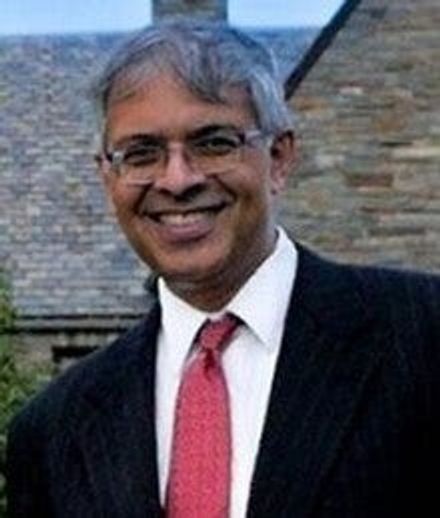
JAY BHATT PJT 2025
GILDER
COVID GT BARRINGTON BROWNSTONE INST
STANLEY YOUNG PARTIC HOLOCAUST
theconv
prager 7 26
DeAngelis has described school choice as "a winner for Trump".[7][8] He contributed to the Project 2025 document, in the section discussing education and the dissolution of the U.S. Department of Education.[9]
---
GGL 6 26
AI Overview
The American Institute for Economic Research (AIER) evaluates offshore wind (OSW) primarily through the lens of economic liberty, energy favoritism, and grid impacts. They advocate for "technology-neutral" energy policies rather than government mandates or targeted subsidies for the offshore wind sector. [1, 2, 3]
AIER's Perspective on Offshore Wind
- Ending Energy Favoritism: AIER argues that governments should stop picking energy winners and losers. Their reports suggest that state and federal mandates for offshore wind have created unnecessary market distortions, complicating grid operations and raising consumer prices. [1, 2, 3, 4]
- Regulatory Hurdles: They point out that permitting inefficiencies, shipping restrictions, and domestic content mandates (like the Jones Act) have made the US market complex, risky, and expensive. [1, 2, 3]
- Free-Market Competition: AIER supports lifting bureaucratic barriers to allow all energy sources (such as advanced nuclear and natural gas) to compete freely to meet rising energy demands. [1, 2, 3]
Broader Industry Context
Offshore wind developments are currently at a critical economic and political crossroads.
- Economic Pressures: While offshore wind generates a higher level of energy density compared to onshore alternatives, upfront capital expenditure (CAPEX) remains very high. Fixed-bottom and floating offshore wind currently average between $52 to $184 per MWh. [1, 2, 3]
- Regulatory and Political Pushback: Some federal lease areas and offshore projects have faced temporary stop-work orders and leasing suspensions due to national security and commercial fishing concerns, which have further disrupted development pipelines. [1, 2, 3, 4, 5]
- Grid Reliability: Proponents counter that, despite upfront costs, offshore wind helps shield consumers from volatile global fossil fuel prices and lowers long-term carbon output in densely populated coastal regions. [1, 2, 3, 4]
PRO
New analysis from Resources for the Future (RFF) finds that developing 32 planned or proposed offshore wind farms off the Atlantic and Gulf coasts would reduce emissions, environmental damages from those emissions, deaths, and consumer energy bills. The detailed modeling projects that, because offshore wind farms prevent polluting electricity generation from natural gas and coal, each year of operation would prevent approximately 2,100 premature deaths.
In the face of recent cost increases and project cancellations, governments are deciding how strongly to support offshore wind development. This new study finds that the offshore wind farms would bring net benefits to society, with a projected benefit-to-cost ratio of 14 to 1.
7 26
The Sound Money Project was founded in January 2009 to conduct research and promote awareness about monetary stability and financial privacy. The project is comprised of leading academics and practitioners in money, banking, and macroeconomics. It offers regular commentary and in-depth analysis on monetary policy, alternative monetary systems, financial markets regulation, cryptocurrencies, and the history of monetary and macroeconomic thought.
|
7/19/24
Milei’s New Monetary Regime for Argentina
“Despite its controversial nature, full dollarization remains the monetary regime with the most potential for long-term stability in Argentina. It offers a credible pathway to restore confidence and put the country back on a sustainable economic trajectory.” ~Nicolás Cachanosky
Mises and Hayek: Two Complementary Critiques of Central Planning | AIER
---
desmog mashey
People try to paint climate scientists as members of a cabal or conspiracyto hide the truth, but this idea is often promoted by thinktanks, politicians, bloggers, journalists and some economists, members of a tight social network themselves. Their emails are not usually subject to FOIAs, but the FOIA Factsresearch fortuitously found unexpected data.
Email to Ed Wegman highlighted close relationships between UK‘s main climate anti-science charity, Global Warming Policy Foundation (GWPF), its counterparts in the US and Canada, and some key Congressional staffers. Many email addresses were quite familiar, with a few surprises, including involvement of AIER, a previously unnoticed thinktank.
In the English-speaking machinery of climate anti-science, GWPF is the main UK gear, seen to be well-meshed with AEI, CATO, CEI, CFACT, GMI, Heartland Institute(HI), ICSC, IER, Mercatus (GMU), PERC,SEPP plus staffers for Rep. Joe Barton (R-TX) and SenatorJames Inhofe(R-OK), among others.
In October 2010, USA Today‘s Dan Vergano sent FOIA requests to George Mason University (GMU), which gave them to Ed Wegman for reply. The American Tradition Institute ( David Schnare, Chris Horner, etc) published the full sequence in May 2011, then Vergano put separate files online in 2013, two noted inFOIA Facts 2. Regarding Peter Spencer, who managed the Wegman Report’s creation for Rep. Barton, Wegman wrote to GMU FOIA officer Phil Hunt, forwarding a message from Patrick David Henderson, Chair of GWPF‘s Academic Advisory Council:
‘VIA EMAIL on October 19, 2010
Dear Phil: This is the only email on my GMU accountthat even has Peter Spencer’s email. Note that this is from the past August.
Best,
Ed
Date: Thu, 12 Aug 2010 13:18:03 +0100 From: Patrick David Henderson <EMAIL> Subject: Reviewing the IPCC
To: (list of people enumerated later)
Dear All, As you know, the expert committee appointed by the InterAcademy Council to review the role and functioning of the IPCC is due to report at the end of this month. Against this background, you might be interested to see the three attached documents* which were submitted as evidence to the committee. The respective authors are Gordon Hughes, Ross McKitrick and me.* Although we are all professors of economics, each of these submissions follows its own distinctive line of argument: they are in fact complementary. Taken together, they present a strong case for change, alongside specific proposals for giving effect to it.’
In addition to his long-time gmu.edu email, by September 2005 Wegman began to use a gmail account through which he handled all Wegman Report communication. Henderson sent to both accounts. Wegman had resumed attacks on climate science in 2009, speaking more, giving Fred Singer, Jeff Kueter (GMI) and Don Easterbrook slots at his Interface conference, §0.3, §A.6.4. This single email proves nothing about any earlier conversations, except that Wegman claimed no more such messages arrived via gmu.edu. The fortuitous find was GWPF‘s recipient list.
GWPF‘s Director is Benny Peiser, a social (sports) anthropologist known for his inept failed attempt to refute Naomi Oreske’s 2004 essay on consensus in climate science. In 2007, Mr. Klaus-Martin Schulte, then an endocrine surgeon at the NHS and King’s College London, tried again, and likewise failed. Perhaps his obvious endocrinology expertise was even less relevant to climate than Peiser’s. That attempt was orchestrated by Robert Ferguson and especially the Viscount Christopher Monckton, an in-law of Lord Nigel Lawson, the Chairman of the GWPF Board.
Henderson’s To: list included many long active in climate anti-science, a few new names and some people that seemed irrelevant to climate anti-science, perhaps past associates he wanted to convince and may well not have expected or wanted this email. People are listed by groupings, tagged as Heartland experts or speakers, DeSmogBlog database, SourceWatch, Wikipedia, or Other. Mention in earlier reports is tagged as c, s, f. Use Full Search on the PDFs. Many of these people have moved among thinktanks or have many more affiliations, have attended Heartland or other conferences together. This is a very tight-coupled social network, but is not so explicit as the open list of contributors to IPCC reports.
Relevant scientists are scarce in this list, but it certainly includes many economists associated with politics and/or thinktanks, some with strong ideological bents that seem to make non-scientsts spend their time casting doubt on science they find inconvenient.
| Name | Co | Field | Orgs | H | D | S | csf | W | O | O |
|---|---|---|---|---|---|---|---|---|---|---|
| Lawson, Nigel | UK | Politics & journ | GWPF BoD Chair | D | S | cs | W | 1 | 2 | |
| Peiser, Benny | UK | Social anthy | GWPF Director | H | D | S | c | W | ||
| Henderson, D. | UK | Economics | GWPF AAC Chr | H | D | S | 1 | 2 | ||
| Hughes, G. A. | UK | Economics | Edinburgh U | 1 | 2 | 3 | ||||
| McKitrick, R. | CA | Economics | U Guelph, GMI | H | D | S | csf | |||
| ACADEMIC | ADVISORY | COMMITTEE | ||||||||
| Carter, Robert | AU | Marine geology | HI, ICSC | H | D | S | cf | W | 1 | |
| Courtillot, Vin. | FR | Geophysics | U of Paris | D | S | W | 1 | |||
| Dyson, Free. | US | Physics | IAS Princeton | H | D | S | cf | W | 1 | |
| Happer, Will | US | Atomic physics | GMI Chr, Princeton | D | S | cf | W | 1 | ||
| Lindzen, Rich. | US | Atmos. sciences | M.I.T. | H | D | S | cf | W | 1 | |
| Plimer, Ian | AU | Geology | U Adelaide | H | D | S | W | 1 | ||
| Reiter, Paul | FR | Med. Entomol | Pasteur Inst | H | D | S | W | |||
| Tol, Richard | IE | Economics | E&SRI | S | W | |||||
| TO: | A. THINKTANKS | INVOLVED | ||||||||
| Green, Ken. | US | Environ sci & engr | AEI,ELC, Reason | H | D | S | 1 | |||
| Hayward, S.F. | US | American Studies | AEI, DONORS | D | S | W | 1 | |||
| Lynch, Kerry | US | Economics | AIER | 1 | 2 | |||||
| Illarionov, A. | US | Economics | CATO | H | S | W | ||||
| Niskanen, W. | US | Economics | CATO (d 2011) | S | W | |||||
| Michaels, Pat | US | Ecol climatology | CATO, WCR, GMU | H | D | S | csf | W | 1 | |
| Ebell, Myrion | US | Economics? | CEI, CHC, FoF | H | D | S | csf | W | ||
| Horner, Chris | US | Attorney | CEI, CHC, ATI | H | D | S | sf | W | 1 | |
| Lewis, Marlo | US | Government | CEI | H | S | cf | 1 | |||
| Smith, Fred | US | Political writer | CEI | H | S | W | ||||
| Morano, Marc | US | Political Science | CFACT, Inhofe | H | D | S | c | |||
| Driessen, Paul | US | Attorney, PR | CFACT, Atlas+ | H | D | S | f | W | ||
| Bast, Joseph | US | – | HI President | H | D | S | cf | |||
| Miller, Dan | US | Journalism | HI Publisher | H | f | |||||
| Taylor, J. M. | US | Attorney, journ. | HI E&CN Editor | H | D | S | f | |||
| Harris, Tom | CA | MechEng->PR | ICSC, High Park | H | D | S | cf | 1 | 2 | |
| Bradley, R. Jr | US | Polit. Economy | IER, CATO, CEI | H | D | S | 1 | |||
| Murphy, R. P. | US | Economics | IER, Reason | H | D | W | ||||
| Morriss, A. P. | US | Economics | U AL,Mercatus,IER | H | 1 | 2 | 3 | |||
| Goklany, Indur | US | Electrical Engr. | PERC, AEI | H | D | S | f | W | ||
| Singer, Fred | US | Physics | SEPP, IHS(GMU) | H | D | S | csf | W | 1 | |
| TO: | B. US CONGRESS | INVOLVED | ||||||||
| Spencer, P. | US | Managed Weg Rpt | House(Barton) | H | cs | |||||
| Dempsey, M. | US | Paper 02/23/10 | Senate(Inhofe) | c | 1 | |||||
| Lungren, D. | US | Paper 02/23/10 | Senate(Inhofe) | c | 1 | |||||
| TO: | C. OTHERS, | INVOLVED | ||||||||
| Wegman, E. J | US | Statistics | GMU | D | S | csf | W | |||
| Corcoran, Ter. | CA | Journalist | FP,National Post | W | 1 | 2 | ||||
| Bhandari, J. | SG | Journalist? | von Mises of CA | 1 | 2 | |||||
| Rosett, C. | US | Journalist | WSJ, now FftDoD | S | W | 1 | 2 | |||
| TO: | D. INVOLVEMENT | UNCLEAR | ||||||||
| Barfield, C. | US | Economics | AEI | S | 1 | |||||
| Diewert, E. | CA | Economics | UBC, (Fraser) | 1 | ||||||
| Griswold, D. T. | US | Politics, econ | CATO | W | ||||||
| Kraske, H. Q. | US | ? | 1818 World Bank | 1 | ||||||
| McCarthy, E. | US | Economics | 1818 World Bank | 1 | 2 | |||||
| Vasquez, Ian | US | Int’l Studies | CATO | W | 1 |
Most of these were familiar, as seen by the high density of H, D, S, and csf tags. A new addition is the American Institute of Economic Research (AIER), which seems a tax-exempt 501(c)(3) public charity that runs a for-profit investment subsidiary. That may bear further scrutiny, but AIER‘s relevance here is in some its various “educational” materials:
2001A Climate of Opinion: The Kyoto Protocols and Atmospheric Science,?
This Economic Education Bulletin cites Robert Essenhigh, Arthur Robinson, John Christy, the Greening Earth Society, John Daly, Indur Goklany, Richard Lindzen, Frederick Seitz, the OISM Petition. Readers can assess the quality of “education” provided by this 501(c)(3) entity.
2005Economics, Climate Change Issues, and Global Salvationism, D.Henderson
2009Climate Science, Economics, and Policy, David Henderson
AIER ran a conference in 2007 with PDF Proceedings also sold as a book, and unlike Heartland Conferences, some participants are quite credible, but readers might guess the likely results given the mix of participants:
2008 GlobalWarming Debate Science, Economics, and Policy, Kerry Lynch, Ed.
‘with content by Michale J. Rizzo (sic, AIER), Carl Wunsch (M.I.T.), David S. Chapman (U Utah, Geology and geophysics), William R. Cotton, William M. Gray, James I. Mills (Architecture & Planning, U Utah), David Henderson, Ross McKitrick, Claudia Rosett, Kenneth P. Green, Robert H. Nelson(Environmental Policy, U MD),E. Calvin Beisner, Richard S. Lindzen.‘
Also participating were Edward J. Kane (Finance, Boston College), Robert O. Mendelsohn (Economics, Yale), Gilbert E. Metcalf (Economics, Tufts U), Gordon E. Michaels (CTO Oak Ridge National Laboratory), Richard L. Stroup (PERC, CATO, Mont Pelerin), Peter J. Wilcoxen (Economics and Public Administration, Syracuse U).
People can study the PDF of the proceedings, which include statements such as these in the Introduction, by AIER Senior Economist Michael J. Rizzo:
‘Just as important, the scientific consensus is not as strong as the popular one. The state of scientific knowledge is less certain than the media and others often suggest. …
Climate science is extremely complex for three reasons, …
First, it is an immature science….
Second, climate science is virtually the “science of everything.” …
Third, modern climate science relies on large, complicated models that seek to describe and predict the climate system, but these models are inherently unreliable and unstable. For instance, climate models predicted three to six times more warming than that which has occurred to date. Complexity does not ensure accuracy. (In this regard, climate models are reminiscent of the failed macroeconomic econometric models that were popular a generation ago.)
Thus, even a broad climate “consensus” may prove fragile. …
According to the scientists at our conference, identifying mankind’s role in the climate question is not easy and might not even be possible for decades.Potential natural sources of climate change include solar variability, aerosol variation, changes in cloud cover, greenhouse gases, changes in land use, and natural variability from factors such as El Niño and the oceans’ thermohaline circulation. Changes in any or all of these may be sufficient to account for the changes in global mean temperature since 1880.
Evidence abounds to suggest that CO2 is far from the most important contributor to global warming. Previous interglacial periods were much warmer and had far lower concentrations of CO2 in the atmosphere; and it might eventually be demonstrated that CO2 concentrations lag temperature increases. When the temperature change is within a few tenths of a degree, it is difficult to identify the particular causes.’
Some economists can be Merchants of doubt about science, not just a few old physicists.
A future post may review the 3 attachments by Hughes, McKitrick and Henderson,included with Henderson’s email. Some suggestions might actually have been useful. Some rely heavily on McKitrick’s opinions of the IPCC and claims to statistical credibility.
The attached spreadsheet is a map of people X (activities and organizations), similar to Appendix A.6 in older PDF, wherein many of the abbreviations are explained. Most of the people listed above are strongly connected via shared activities and organizations involved in climate anti-science, with far too many to show in a simple table. Many of the same people appear again and again.
Update 06/13/13: A few of GWPF‘sAdvisors are also involved with the Instiute for Economic Affairs (IEA), another well-connected thinktank. From IEA‘s list, those in common include David Henderson, Professor Sir Gordon Peacock and Sir Samuel Brittan. IEA‘s list also included IER‘s Robert L. Bradley (on email list) and George Mason Unversity’s Walter E. Williams, for whom Nancy Mitchell Pfo[serious tobacco involvementtenhauer](http://www.sourcewatch.org/index.php/Nancy_Pfotenhauer) was a research assistant. Unlike GWPF, but like many US thintkanks, IEA has had , confirmed by checking the files mentioned in Fakery 2, fn203, and searching the LTDL. Clearly, IEA has been involved with Philip Morris, RJ Reynolds, and British American Tobacco since the 1980s and getting money.
Update 06/13/14: Lord Lawson’s climate-change think tank risks being stripped of charitable status.
---
GGL 6 26
[### Jeffrey A. Tucker

The Epoch Times
https://www.theepochtimes.com › Authors](https://www.theepochtimes.com/author/jeffrey-a-tucker)
Jeffrey A. Tucker is the founder and president of the Brownstone Institute and the author of many thousands of articles in the scholarly and popular press.Read more

AI Overview


+11
Jeffrey Tucker is a libertarian author, publisher, and founder of the Brownstone Institute. He previously served as the Editorial Director for the American Institute for Economic Research (AIER) where he helped coordinate efforts against COVID-19 pandemic restrictions.
His connections and involvement with other conservative, libertarian, and advocacy networks include:
- AIER & Brownstone Institute: Tucker served as AIER's Editorial Director from 2017 to 2021. During the pandemic, he helped launch the Great Barrington Declaration, an anti-lockdown petition. He subsequently left AIER to found the Brownstone Institute in 2021.
 Wikipedia +2
- Koch Network: While Tucker is primarily known for his work with the Mises Institute, AIER, and FEE, his organizations have operated within the broader landscape of libertarian, free-market, and conservative think tanks, heavily backed by networks like those of the Koch brothers.
 Wikipedia +3
- ALEC: Like many free-market think tanks (e.g., The Heartland Institute and the Acton Institute where he acts as an advisor or associate), AIER and its associates frequently share overlapping goals with conservative advocacy groups like ALEC (American Legislative Exchange Council) regarding deregulation, taxation, and economic policy.
 Wikipedia +3
If you are looking to explore specific policy papers or understand the network connections between these organizations, tell me what you'd like to dive into next:
- The organizational funding/ties between these institutions
- Tucker's specific economic or historical writings
- The impact of the Great Barrington Declaration on public policy
Let me know how you'd like to narrow down the search.
626 990
1) SAMUEL GREGG
PRESIDENT/FRIEDRICH HAYEK CHAIR IN E
(2) MICHELE M. KEARNS
(3) WILLIAM RUGER
(4) BRITTNEY PAUL
(5) JASON SORENS
(6) RYAN YONK
(7) LAURIE B. PSHENISHNY
(8) JASON KELLY
(9) TERRY W. ANKER
(10) KATHERINE H. DELAY
(11) ROBERT SCHIMENZ
(12) GERALD P. DWYER
(13) DOUGLAS L. HARWOOD
(14) FREDERICK C. HARWOOD
(15) BRADLEY K. HOBBS
(16) NELSON E. FURLANO
(17) TERRY KIBBE
VICE PRESIDENT, FINANCE & HR
PRESIDENT/DIRECTOR OF RESEARCH & EDU
DIRECTOR OF STRATEGIC PARTNERSHIPS
SENIOR RESEARCH FELLOW
DIRECTOR OF EDUCATION & SENIOR RESEA
COMPTROLLER
DIRECTOR OF DATA & TECHNOLOGY
CHAIR (AS OF 10/25)
CHAIR (UNTIL 10/25)
SECRETARY
TRUSTEE
TRUSTEE
TRUSTEE
TRUSTEE
TRUSTEE
TRUSTEE
40.00
40.00
40.00
40.00
40.00
40.00
40.00
40.00
...
338,492.
284,145.
226,392.
161,701.
165,858.
165,125.
146,130.
147,684.
===
AN 1 25
If I have to pick only one from the list of nepotistic freaks, ghouls, B-list celebs, lost souls, Hitlerian zealots, and bunglers that will comprise U.S. President Donald Trump's inner circle of appointees, satellite charlatans, and court jesters, I am going to go with the one with the highest body count. There are plenty of zombies in Trump's starting lineup that would give you goosebumps—people who would cause you to choke on a sip of coffee and double check the pistol under your suit jacket if you met them in a diner to talk about internment camps and environmental deregulation. Picking the most terrible of these dregs is no easy task.
We have a serial pet murderer, a dumpy bald version of Reinhard Heydrich, and a bevy of cheerleaders for ecocide. Among Trump's cabinet picks there is a guy with a fetish for bear meat and whale carcasses and a viable plan to bring back smallpox and polio, but it takes more than a nostalgic and wistful longing for diseases of long ago to excite me. There is a certain irony to choose the most upright, clean-cut, impressively credentialed, and soft spoken of this hall of Hell hounds to be my best of the worst. Few things inspire cold sweat beads of fear like a murderer masquerading as a nice guy. Think of Ted Bundy as a Trump appointee.
I have to select Jay Bhattacharya (Trump's nominee to take over Francis Collins' former niche as director of The National Institutes of Health) as my absolute favorite monster from among the whole entourage of moral mutants and groveling sycophants. Bhattacharya would not raise your suspicions if he knocked on your door to deliver pamphlets—I would happily take a copy of The Watchtower and Awake from this reassuring man. He would bring a glow of satisfaction to most parents if their daughter brought him home. Hell, he even has ardent fans on the so-called left—the Tucker Carlson fan club comprised of Glenn Greenwald, Jimmy Dore, and Matt Taibbi. You can toss Russell Brand in there too. In a game of free association, we casually link Bhattacharya with the issue of free speech—recall that Twitter once censored this honest doctor. Jacobin, in 2020, did a softball interview with one of Bhattacharya's ideological partners, Martin Kulldorff. On the left we sometimes worry more about a killer's rights to free speech than we do about his raised dagger.
Bhattacharya was never about free speech, he was about giving a thunderous voice to the corporate aspiration to kill you for profit.
Free speech has been a distracting shibboleth for many sincere people, even though free speech has little meaning in a media system dominated by cash. The narrative promoted by both fascists and assorted enablers holds that Bhattacharya challenged the powerful forces of the “deep state” and was censored for his courage.
You might recall that the Stanford Professor of medicine coauthored the Great Barrington Declaration (GBD) along with Sunetra Gupta of Oxford, and Martin Kulldorff of Harvard. The rightwing Covid-19 gambit enjoyed unlimited oil industry funding and a mandate to assemble tenured prostitutes from academia to bamboozle the public. Jeffrey Tucker of the American Institute for Economic Research—a Koch Network outpost in Great Barrington, Massachusetts with a plump endowment from stock trading—must have had great confidence in the public tendency to skip the fine print. Leading up to, and following the pandemic, Bhattacharya has held fellowships and professional associations with The Hoover Institute, The Epoch Times, Hillsdale College, and The Brownstone Institute. The Brownstone is an Astroturfed organization with a Brooklyn visual motif and an Austin, Texas mailing address.
This Great Barrington Declaration spinoff—yet another brain child of the restlessly promiscuous, Koch affiliated, Jeffrey Tucker—specializes in Covid-19 minimizing, and anti-vax propaganda while dabbling in climate change denial. Walker Bragman and Alex Kotch revealed that the Brownstone is largely funded by dark money. To appreciate Bhattacharya’s mastery of absurdity, consider his statement in this 2022 interview posted at The Hoover Institute's Website:
It's a disaster that it's become a partisan thing. Public health, when it is partisan, is a failed public health.
If there is one essential talent that a fascist henchman needs, it is an utter immunity to self scrutiny, irony, and hypocrisy. I recall that Rudolf Hoss—the infamous commandant at Auschwitz—remarked in his dutifully composed autobiography (requisitioned by his British Jailers, postwar, prior to hanging), that his administration succeeded (I am paraphrasing) due to the cooperation of staff and prisoners alike. He could not wrap his head around the concept of victims and perpetrators having different agendas. They all worked together in a common purpose in Hoss' broken brain. Likewise, Bhattacharya has a Hoss-like inability to imagine that his narrative might be transparently nonsensical—how can a man affiliated with nearly every institution in the Koch Network not be self conscious when complaining of partisan medical narratives?
Bhattacharya's GBD is little more than libertarian rhetoric shaped to the contours of public health. Libertarian public health is a flagrant oxymoron—the task that Bhattacharya will be handed in a fascist oligarchy will be one that he has already done quite brilliantly—get the fuck out of the way and pretend that the mountain of bodies is an offering to the god of freedom.
Libertarian metaphor is wonderfully adaptable, like an elastic pair of stretch pants—one size fits all. Inaction is always in the service of human well-being. The climate regulates itself—"drill baby, drill." Guns need no regulations either, the "good guy with a gun" provides a natural balance. Bhattacharya, Gupta, and Kulldorff figured out the libertarian essence of the Covid-19 story—the pandemic would fizzle out via the designs of nature (herd immunity!). The mandate for the government public health agencies was to use magic and disappear. And that is what Bhattacharya will do, make healthcare as ephemeral as a slight-of-hand handkerchief. His role is one of absence, abdication, retreat—but ultimately one of corporate fidelity, privatization, and the empowering of insurance companies and other profit-seeking medical companies to feed upon a sickly public.
Herd immunity was the whole tale in the GBD—the entire document can be read by a second grader in 20 seconds, but I can condense it into a three second sentence: Let everyone walk into the pandemic like it was a fourth of July stroll in the park, and, bingo—herd immunity!
There was a tiny bit about "focused protection" for the old and the sick. There was even a suggestion that old folks ought to have their groceries delivered, but not a whisper about who would pay for it. Of course we all know that some 40% of U.S. residents are afflicted with obesity, an enormous risk factor for Covid-19 mortality. We might add in all the smokers, lead- and mercury-poisoned masses, and the generally compromised health of a nation long on high fructose corn syrup and short on medical coverage. What you won't find in the GBD is a word about contact tracing, isolation, support for workers, mask wearing, and equipment for afflicted individuals—you know, the stuff that South Korea did to reduce Covid-19 harms by a factor of five compared to the U.S. Bizarrely, Bhattacharya belatedly renounced “herd immunity” in a *Salon* interview. WTF? It was all about focused protection he explained.
The deep state censored Bhattacharya, the truth teller, and now he will lead the very agency that suppressed him. The truth is a little more nuanced. Bhattacharya and his fellow medically credentialed whores had a bigger platform than former Chief Medical Adviser Anthony Fauci ever had. With Trump's appointment of Scott Atlas to his Covid-19 Task Force, the GBD nearly became the de facto inspiration for U.S. policy.
According to *The Lancet*, some 40% of US Covid-19 deaths were preventable—about a half a million deaths could be loosely traced to public recalcitrance regarding pandemic protocol. How many of these victims can be directly traced to the influence of Bhattacharya and the GBD? I can't venture an exact figure, but if you line up all the wicked, unqualified, strange, and misshapen beings who will guide Trump's administration into the stormy seas of fascism, not a single one—not Kash Patel, RFK Jr., Kimberly Guilfoyle, Mike Huckabee, Kari Lake, Jared Kushner, Tulsi Gabbard, or anyone else can be linked to the incalculable measures of suffering that Jay Bhattacharya shepherded into history.
This is how Benjamin Mateus, writing for the *World Socialist Web Site* described the GBD:
The AIER, a libertarian think-tank, which posits as their aim “a society based on property rights and open markets,” is engaged in a highly reactionary, anti-working-class, and anti-socialist enterprise. The declaration has been partly funded by the right-wing billionaire, Charles Koch, who hosted a private soiree of scientists, economists, and journalists to provide the homicidal declaration a modicum of respectability and formulate herd immunity as a necessary global policy in response to the pandemic.
Derrick Z. Jackson described the GBD as a plan for "herding people to slaughter." If any of you take issue with my favoring Jay Bhattacharya as Trump's most evil selection, when did Elon Musk, Vivek Ramaswamy, or Tulsi Gabbard ever herd people to slaughter?
I am not denying that there are other abominable sociopaths who will be vying for crumbs at the master's table. Lee Zeldin and Doug Burgum as heads of the Environmental Protection Agency and Secretary of the Interior respectively, might someday cause more deaths than the piddling few hundred thousand that I have speculatively traced to Bhattacharya. In fact, the wholesale, escalating assassination of the natural world will act in tandem with our disassembled, privatized medical system. You will get to live downstream from an industrial pig slaughterhouse, with no medical insurance, and no funding for public health.
Zeldin, Burgum, and Bhattacharya might be thought of as crossing guards for the grim reaper, or maybe you might prefer to picture them as scare crows, mannequins, or plastic fuck dolls—things that have no inner lives and serve as extensions of our fantasies.
Bhattacharya was never about free speech, he was about giving a thunderous voice to the corporate aspiration to kill you for profit. Bhattacharya whined about school closings but never acknowledged the 6 million U.S. children now potentially ruined by long Covid.
As you read about the fires turning LA into an ash heap, and Trump's plans to drill and frack until the entire globe achieves end-Permian parity, be aware that the styrofoam inhabitants of Trump's administration will do no more to alleviate your misery than so many cardboard boxes sitting in the storage rooms of Amazon. If we want relief we'll have to plan unprecedented acts of resistance.
One last thought—look at the Rorschach blot below and ask yourself...

Is this an image that summons worries about free speech denied, or does this picture remind you that the oil industry owns our future?
===
---
offshore wind bs 1123
the International Energy Agency recentlyreported that shifting to clean energy will create between 13 and 26 million jobs by 2030. They present this as a benefit, but that’s misleading; jobs are not a benefit but a cost.
That might sound counterintuitive, but it’s easy to understand. Say you need to do repairs on your home, and you can’t or don’t want to do them yourself. That means you have to pay for both materials and labor. But imagine that the materials would magically assemble themselves into the needed repair work all on their own. Then you would only have to pay for materials, and you would save the cost of hiring someone.
This is true for any business as well. Suppose the elements of their business could magically assemble themselves into the finished product or service. The business owner could then avoid spending on employees and pass some of that savings on to customers. That’s why automation has replaced so many laborious tasks over time, from agriculture to washing clothes to taking orders at fast-food restaurants.
Can you save the cost of labor by doing your own repair work on your home? No, because your time has value. The time and energy spent doing the home repair can’t be spent on something else, whether that something else is a money-making activity or just leisure. That’s the opportunity cost of your labor, the lost opportunity to do the next most valuable thing with your time, whetherfor you that’s doing something that makes money or just enjoying some leisure time. Even if you find working on your home pleasurable, there’s still an opportunity cost. If that cost is high, then it’s worth hiring someone else. If it’s low, it may make sense to do the work yourself. But either way, there’s a cost.
But aren’t jobs a benefit to the person who has the job? No. They are no more a benefit than your labor on your own home is a benefit. The income is the benefit, and the job is the cost you pay to get the income. That’s easy to see if you imagine getting the same income without having to work for it. Consider why nobody talks about what job they’ll have in heaven. Our standard picture of heaven is that we have all our needs taken care of without doing any work. All our time is leisure time. That vision implicitly recognizes that having a job is a cost. It may be a necessary cost here on earth, but it is nonetheless a cost.
Which brings us back to green jobs. The International Energy Agency suggests that creating millions of jobs in clean energy is a benefit, but now you should see that these jobs are really a cost. You can see this more clearly by thinking about who pays that cost. After all, someone has to pay for all that labor. And that someone is the public. Imagine how much cheaper the transition to clean energy would be if it required fewer jobs, so the public didn’t have to pay for as much labor. Then the clean energy policies would have even more net value.
And if such a loss of jobs in the energy sector were to occur, it would not mean a net loss of jobs. Instead, those workers would become available for employers in other sectors of the economy to hire. Then for the same amount of labor, we would get both green power and whatever other goods and services those workers would end up providing for us. So if government wanted to craft a truly economically beneficial clean energy policy, it would devise one that requires fewer workers in the energy industry.
Government is not needed to create jobs. The private sector does that on its own and does it best when government stays out of the way. Consider that the U.S. population has tripled in the past century while at the same time automation has eliminated countless jobs. Yet, in the years just before the Covid-19 pandemic, the unemployment rate was historically low. Or consider automated checkout in grocery stores that has reduced the number of cashiers. Naively one would expect a reduction in grocery store employment. Instead, those workers have shifted to tasks like shopping for customers who then come to the store just long enough to pick up their order. Freeing up labor from one job makes them available for new tasks that nobody could do for us in the past.
Government policies that “create” jobs – green or any other color – are not adding to the total number of jobs. They are only shifting them away from other economic sectors. And they can only do so by offering higher wages, which are paid for by us members of the public. So once again, those jobs are a cost of the policy, not a benefit.
This isn’t an argument against clean energy. This is an argument that jobs are not a reason to favor clean energy. If we have decided to transition to clean energy for environmental reasons, then we should hope for clean energy that requires fewer jobs. That would be a real benefit.
==
off bs
2 25
William Ruger
President
MK2
Michele Kearns
Vice President, Finance & Human Resources
IMG_4686
Britt Paul
Director of Strategic Partnerships
Jason Kelly
Jason Kelly
Director of Data and Technology
Scholars
Samuel Gregg
Samuel Gregg
Friedrich Hayek Chair in Economics and Economic History
Peter C. Earle
Peter C. Earle
Senior Research Fellow
David Hebert
David Hebert
Senior Research Fellow
Paul Mueller
Paul Mueller
Senior Research Fellow
dave.rose-1 - Copy
David C. Rose
Senior Research Fellow
Jason Sorens
Jason Sorens
Senior Research Fellow
Ryan M. Yonk randy simmons utah kochademia
Ryan M. Yonk
Director of Education and Senior Research Fellow
William J. Luther
William J. Luther
Director, Sound Money Project
lydia-mashburn-newman
Lydia Mashburn Newman
Managing Director of Monetary Economics
Savidge Headshot 2022
Thomas Savidge
Research Fellow
Wenzel_Nikolai-Headshot-Small
Nikolai G. Wenzel
Associate Research Fellow
==
Fellows & Contributors
Charles W. Baird
Charles Baird
Senior Fellow
Peter Boettke
Peter Boettke
Senior Fellow
Joakim Book
Joakim Book
Research Fellow
Donald J. Boudreaux
Associate Senior Research Fellow
Robert L. Bradley
Robert L. Bradley Jr.
Senior Fellow
Scott A. Burns
Fellow
Nicolás Cachanosky
Senior Fellow, Sound Money Project
Art Carden
Art Carden
Senior Fellow
James L. Caton
James L. Caton
ArthurDiamond
Arthur M. Diamond, Jr.
Senior Fellow
Dwyer
Gerald P. Dwyer
Senior Fellow, Sound Money Project
Richard M. Ebeling
Richard M. Ebeling
Senior Fellow
Vincent Geloso
Vincent Geloso
Senior Fellow
George Gilder
George Gilder
Senior Resident Fellow
VanceGinn
Vance Ginn
Associate Research Fellow
Steve-H-Hanke
Steve H. Hanke
Advisor, Sound Money Project
David R. Henderson
David R. Henderson
Senior Fellow
Hendrickson-1
Joshua R. Hendrickson
Senior Fellow, Sound Money Project
Thomas Hogan
Thomas L. Hogan
Associate Senior Research Fellow
Jerry Jordan - Advisor Picture
Jerry L. Jordan
Advisor, Sound Money Project
Kimberlee
Kimberlee Josephson
Contributor
JPKoning
J.P. Koning
Fellow, Sound Money Project
Robert Mulligan
Robert F. Mulligan
Senior Fellow
Michael Munger
Michael Munger
Senior Fellow
Raymond-Niles
Raymond C. Niles
Senior Fellow
Gerald P. O'Driscoll, Jr
Gerald P. O’Driscoll, Jr.
Senior Fellow
Alan Reynolds
Alan Reynolds
Senior Fellow
Richard Salsman
Richard M. Salsman
Senior Fellow
Alexander W. Salter
Alexander William Salter
Senior Fellow, Sound Money Project
Amity Shlaes
Amity Shlaes
Distinguished Visiting Fellow
John-Tamny
John Tamny
Research Fellow
lwhite
Lawrence H. White
Advisor, Sound Money Project
X
Michael J. Rizzo’s research while affiliated with Cornell University and other places
This page lists works of an author who doesn't have a ResearchGate profile or hasn't added the works to their profile yet. It is automatically generated from public (personal) data to further our legitimate goal of comprehensive and accurate scientific recordkeeping. If you are this author and want this page removed, please let us know.
Publications (7)
Who Bears the Growing Cost of Science at Universities?
November 2007
3 Reads
50 Citations
 Ronald G. Ehrenberg
 MICHAEL J. RIZZO
 George Jakubson
CITATION
As discussed above, since ideology leads to career advancement and career advancement is tied to economic capacity, the first and foremost barrier is going to be monetary price of entry. The cost of academic study and research has been increasing steadily over time (Ehrenberg et al. 2003), these costs are often borne by researchers themselves (Bleasdale 2019). In practical terms this is once again obvious to anyone who has attempted to publish in conferences or journals without institutional payment-coverage. ...
Financial Forces and the Future of American Higher Education
July 2004
33 Reads
25 Citations
Academe
 Ronald G. Ehrenberg
 Michael J Rizzo
Recent shifts in state funding are altering the most basic realities of American higher education, from student access to faculty research.
Resident and Nonresident Tuition and Enrollment at Flagship State Universities
January 2004
12 Reads
41 Citations
[ Michael J. Rizzo](https://www.researchgate.net/scientific-contributions/Michael-J-Rizzo-10455853?_tp=eyJjb250ZXh0Ijp7InBhZ2UiOiJzY2llbnRpZmljQ29udHJpYnV0aW9ucyIsInByZXZpb3VzUGFnZSI6bnVsbH19)
 Ronald G. Ehrenberg
Who Bears the Growing Cost of Science at Universities?
May 2003
124 Reads
65 Citations
[ Ronald G. Ehrenberg](https://www.researchgate.net/profile/Ronald-Ehrenberg?_tp=eyJjb250ZXh0Ijp7InBhZ2UiOiJzY2llbnRpZmljQ29udHJpYnV0aW9ucyIsInByZXZpb3VzUGFnZSI6bnVsbH19)[
 Michael J. Rizzo](https://www.researchgate.net/scientific-contributions/Michael-J-Rizzo-10455853?_tp=eyJjb250ZXh0Ijp7InBhZ2UiOiJzY2llbnRpZmljQ29udHJpYnV0aW9ucyIsInByZXZpb3VzUGFnZSI6bnVsbH19)
 George Jakubson
Scientific research has come to dominate many American universities. Even with growing external support, increasingly the costs of scientific research are being funded out of internal university funds. Our paper explains why this is occuring, presents estimates of the magnitudes of start-up cost packages being provided to scientists and engineers and then uses panel data to estimate the i
---
bs
Historian Quinn Slobodian Misrepresents Ludwig von Mises
Eye on the News / Arts and Culture, Education, Politics and Law
Jun 23 2026
Academic works on “neoliberalism” almost invariably share three characteristics. First, they portray neoliberalism as the dominant paradigm of the global economy since the mid-twentieth century. Second, they treat that development as harmful, attributing a long list of social ills to its rise. Third, they rarely explain what “neoliberalism” actually means. Nevertheless, the term has become one of academia’s favorite buzzwords, generating tens of thousands of books and journal articles purporting to document its corrosive effects on society.
Boston University Professor of International History Quinn Slobodian ranks among the most visible figures in this burgeoning genre of “neoliberalism studies.” His 2025 book Hayek’s Bastards: Race, Gold, IQ, and the Capitalism of the Far Right won the National Book Critics Circle Award for Criticism. He holds various elite academic honors, including a Guggenheim Fellowship, visiting stints at Harvard and Brown, and six-figure grants from a Hewlett Foundation program, which funds research opposing neoliberalism. All evince a strong adversarial stance toward the subject of his research.
Hayek’s Bastards has gained high cachet on the political Left, as it purports to uncover a “neoliberal” origin of MAGA populism, especially its far-right underbelly of race theorist and conspiracist types. As his title suggests, Slobodian portrays these elements as intellectual offspring born out-of-wedlock from the free-market-oriented Austrian School of Economics, particularly its two great twentieth-century expositors: Ludwig von Mises and Friedrich Hayek.
The central claim of Slobodian’s thesis is that, while Mises and Hayek were not racists themselves, they left a “parenthetical opening” to racial pseudoscience in their writings, which later bigots and cranks exploited. These ideological descendants, he argues, include figures associated with the “Alt-Right,” such as Curtis Yarvin and Richard Spencer, who have shaped political discourse through white identity politics and movements like the 2017 Unite the Right rally in Charlottesville, Virginia. According to Slobodian, their worldview is fundamentally an outgrowth of neoliberalism, albeit a distorted one. As Hayek’s Bastards puts it, they are “less of a backlash against global capitalism than a frontlash within it.” Slobodian casts himself as the physician providing the genealogical “X-rays” needed to expose the neoliberal project’s deeper intentions.
[### Independent Institute Names Phillip W. Magness as the ...

Independent Institute
https://www.independent.org › news-release › 2023/12/14](https://www.independent.org/news-release/2023/12/14/independent-institute-names-phillip-w-magness-as-the-david-j-theroux-chair-in-political-economy/)
Dec 14, 2023 — Phillip W. Magness, Ph.D., was formerly the F.A. Hayek Chair in Economics and Economic History at the American Institute for Economic Research.Read more
[### Phillip W. Magness

John Locke Foundation
https://www.johnlocke.org › about › team › phillip-w-...](https://www.johnlocke.org/about/team/phillip-w-magness/)
Dr. Phillip W. Magness is a Senior Research Fellow at the American Institute for Economic Research and the author of “The 1619 Project: A Critique.”Read more
Images
[### Phillip W. Magness

Google Scholar
https://scholar.google.com › citations](https://scholar.google.com/citations?user=XdyCdHoAAAAJ&hl=en)
Phillip W. Magness. The Independent Institute. Verified email at independent.org - Homepage · Economic HistorySlaveryAmerican Civil WarTrade ...Read more
[### #190 Sidebar Conversation: Phil Magness on The 1619 ...

The History of the Americans Podcast
https://thehistoryoftheamericans.com › sidebar-conversa...](https://thehistoryoftheamericans.com/sidebar-conversation-phil-magness-on-the-1619-project/)
Dr. Phillip W. Magness is an economic historian and the David J. Theroux Chair in Political Economy at the Independent Institute. Magness' research has appeared ...Read more

[### Phillip Magness

CFG Foundation
https://clubforgrowthfoundation.org › Fellow](https://clubforgrowthfoundation.org/fellow/phillip-magness/)
Dr. Phillip W. Magness is an economic historian specializing in the United States. He currently holds the David J. Theroux Chair in Political Economy at the ...Read more

[### Phillip W. Magness

AIER
https://aier.org › people › phillip-w-magness](https://aier.org/people/phillip-w-magness/)
Phillip W. Magness works at the Independent Institute. He was formerly the Senior Research Faculty and FA Hayek Chair in Economics and Economic History.Read more

[### Phillip W. Magness: books, biography, latest update

Amazon.com
https://www.amazon.com › stores › author](https://www.amazon.com/stores/author/B004IA7HBI)
Phil Magness is a political and economic historian of the "long" 19th century US (1787-1920). His work aims to foster our understanding what Tocqueville and ...Read more

[### Phillip W. Magness

Reason Magazine
https://reason.com › people › philip-magness](https://reason.com/people/philip-magness/)
Phillip W. Magness is the David J. Theroux Chair in Political Economy at the Independent Institute.Read more

[### Phillip W. Magness | C-SPAN.org

C-SPAN
https://www.c-span.org › person › phillip-w-magness](https://www.c-span.org/person/phillip-w-magness/64830/)
On the C-SPAN Networks: Phillip W. Magness is a Senior Fellow for the Independent Institute with five videos in the C-SPAN Video Library; the first appearance ...Read more
---