Law, Steven
===
see dark $ superpacs
mcconn beef w. hawley?!
oops see gps
poster boy? the McConnell Mafia rides again on drug prices 420
bannon declares war on moore/strange
---
an 6 24
Outgoing Senate Minority Leader Mitch McConnell (R-Kentucky) is not only losing his post as the leader of the Senate Republican Conference when the next Congress gavels in — he might also completely lose control of his prized fundraising operation.
According to the Hill, a growing number of Senate Republicans are going public in their opposition to McConnell's Senate Leadership Fund (SLF), which he has deployed for more than a decade to inject millions of dollars into Senate races across the country. Sen. Josh Hawley (R-Missouri), who is running for reelection this November, was particularly outspoken in his opposition to McConnell threatening to spend money against current members of the conference who supported Hawley's bill to rein in corporate campaign contributions to super PACs.
"I think the idea that a leader would use outside money, much of it dark money, to try and intimidate or threaten members of the caucus is frankly corrupt," Hawley told the Hill. "And I think it’s a corrupt practice that has gone on for far too long, and it needs to end."
READ MORE:McConnell says GOP shouldn't 'get too excited' about chances of winning Senate
Data from campaign finance database Opensecrets shows that the SLF is one of the heaviest hitters in Washington, with more than $724 million in outside spending on record since the 2000 election cycle. Much of that spending has come in recent cycles, with the SLF spending more than $246 million in the 2022 campaign cycle alone.
The Kentucky Republican recently reminded fellow GOP senators that the SLF — which is currently run by McConnell's former chief of staff Steven Law — has been instrumental in helping members win elections. In a recent meeting, McConnell reportedly read aloud the names of senators whose campaigns have directly benefited from the SLF's spending, like Sen. Eric Schmitt (R-Missouri), who has also backed Hawley's bill.
As Senate Republicans debate who will be their next leader, one major departure from McConnell's time as the caucus chair is the insistence of term limits. That has been a key component of Sen. Rick Scott's (R-Florida) campaign for GOP leader, who has pushed for members of the Senate Republican Conference's rank-and-file to have more say in legislative negotiations. McConnell pushed back strongly against that idea, warning Republicans that weakening the power of leadership could result in the same brand of chaos currently plaguing House Republicans.
Sen. Thom Tillis (R-North Carolina), who is considered one of McConnell's key allies in the Senate GOP conference, argued in a recent letter to his colleagues that it's "important that we consider proposals to strengthen not weaken the Republican Conference leader position when we fully engage in this discussion this fall," adding that Senate Majority Leader Chuck Schumer (D-New York) has been able to wield a significant amount of power and influence due to both the powers of leadership and the unity of his caucus.
READ MORE:Longest-running Senate majority leader delivers impassioned plea against term limits
One unnamed Senate GOP aide speaking anonymously to the Hill said Tillis' letter was "clearly was a McConnell-driven response."
"Tillis is seen as like, McConnell’s axe man in some ways," they said.
Aside from Scott, other candidates for Senate GOP leader include Sens. John Cornyn (R-Texas) — who served as Senate Majority Whip between 2015 and 2019, and current Senate Minority Whip John Thune (R-South Dakota). Republicans will decide on their next leader this November.
Click here to read the Hill's report in full.
READ MORE:'McConnell completely blew this': GOP leader hemorrhaging support after border bill fail
---
---
an 6 24
Outgoing Senate Minority Leader Mitch McConnell (R-Kentucky) is not only losing his post as the leader of the Senate Republican Conference when the next Congress gavels in — he might also completely lose control of his prized fundraising operation.
According to the Hill, a growing number of Senate Republicans are going public in their opposition to McConnell's Senate Leadership Fund (SLF), which he has deployed for more than a decade to inject millions of dollars into Senate races across the country. Sen. Josh Hawley (R-Missouri), who is running for reelection this November, was particularly outspoken in his opposition to McConnell threatening to spend money against current members of the conference who supported Hawley's bill to rein in corporate campaign contributions to super PACs.
"I think the idea that a leader would use outside money, much of it dark money, to try and intimidate or threaten members of the caucus is frankly corrupt," Hawley told the Hill. "And I think it’s a corrupt practice that has gone on for far too long, and it needs to end."
READ MORE:McConnell says GOP shouldn't 'get too excited' about chances of winning Senate
Data from campaign finance database Opensecrets shows that the SLF is one of the heaviest hitters in Washington, with more than $724 million in outside spending on record since the 2000 election cycle. Much of that spending has come in recent cycles, with the SLF spending more than $246 million in the 2022 campaign cycle alone.
The Kentucky Republican recently reminded fellow GOP senators that the SLF — which is currently run by McConnell's former chief of staff Steven Law — has been instrumental in helping members win elections. In a recent meeting, McConnell reportedly read aloud the names of senators whose campaigns have directly benefited from the SLF's spending, like Sen. Eric Schmitt (R-Missouri), who has also backed Hawley's bill.
As Senate Republicans debate who will be their next leader, one major departure from McConnell's time as the caucus chair is the insistence of term limits. That has been a key component of Sen. Rick Scott's (R-Florida) campaign for GOP leader, who has pushed for members of the Senate Republican Conference's rank-and-file to have more say in legislative negotiations. McConnell pushed back strongly against that idea, warning Republicans that weakening the power of leadership could result in the same brand of chaos currently plaguing House Republicans.
Sen. Thom Tillis (R-North Carolina), who is considered one of McConnell's key allies in the Senate GOP conference, argued in a recent letter to his colleagues that it's "important that we consider proposals to strengthen not weaken the Republican Conference leader position when we fully engage in this discussion this fall," adding that Senate Majority Leader Chuck Schumer (D-New York) has been able to wield a significant amount of power and influence due to both the powers of leadership and the unity of his caucus.
READ MORE:Longest-running Senate majority leader delivers impassioned plea against term limits
One unnamed Senate GOP aide speaking anonymously to the Hill said Tillis' letter was "clearly was a McConnell-driven response."
"Tillis is seen as like, McConnell’s axe man in some ways," they said.
Aside from Scott, other candidates for Senate GOP leader include Sens. John Cornyn (R-Texas) — who served as Senate Majority Whip between 2015 and 2019, and current Senate Minority Whip John Thune (R-South Dakota). Republicans will decide on their next leader this November.
Click here to read the Hill's report in full.
READ MORE:'McConnell completely blew this': GOP leader hemorrhaging support after border bill fail
---
judd
12 22
andrew Ross Sorkin speaks with FTX founder Sam Bankman-Fried during the New York Times DealBook Summit on November 30, 2022 (Photo by Michael M. Santiago/Getty Images)
Former FTX CEO Sam Bankman-Fried, better known as SBF, burst onto the political scene and cast himself as the financial savior of the Democratic Party. In May, SBF said he was prepared to spend up to $1 billion to help Democrats win in 2022 and 2024.
Like many of SBF's claims, that turned out to be bluster. Public campaign finance filings show that SBF spent just $41 million in the 2022 midterm elections. Much of that was spent propping up unsuccessful Democratic primary candidates, including $11 million to Carrick Flynn, who lost a Congressional primary in Oregon. Still, SBF made substantial donations to Democratic Super PACs, including $6 million to the House Majority PAC, the Super PAC affiliated with Speaker Nancy Pelosi (D-CA). The spending made SBF one of the top two donors to Democrats in the 2022 cycle. (Billionaire George Soros technically spent more, but most of it was donated to Soros' own PAC and not distributed.)
When FTX collapsed and declared bankruptcy, the media portrayed it as a serious blow to Democrats.
| [gfx] |
Even based on public campaign finance reports, this was an oversimplification. SBF donated to Republicans favorable to crypto, including Senator-elect Katie Britt (R-AL), Senator John Hoeven (R-ND), and Senator Lisa Murkowski (R-AK). SBF also donated to the National Republican Campaign Committee, which supports the election of Republicans to the House. Further, another FTX executive, Ryan Salame, publicly donated about $23 million in the midterms, and almost all of it went to Republicans.
FTX itself donated to a slew of Republican Super PACs just before the election, including $1 million to the Senate Leadership Fund (SLF), $750,000 to Congressional Leadership Fund (CLF), and 150,000 to the American Patriots PAC. These donations would have almost certainly required the approval of SBF, the company's then-CEO.
Now, SBF has admitted that his image as a top supporter of Democratic candidates was a ruse. After FTX's bankruptcy, in a phone interview with crypto content creator Tiffany Fong, SBF said that he gave just as much money to Republicans in the 2022 cycle. SBF just made sure that those donations were secret.
I donated about the same amount to both parties this year. That is not generally known because, despite Citizens United being literally the highest-profile Supreme Court case of the decade and the thing everyone talks about when they talk about campaign finance, for some reason, in practice, no one can possibly fathom the idea that someone in practice actually gave dark. All my Republican donations were dark. And the reason was not for regulatory reasons. It's just reporters freak the fuck out if you donate to a Republican. They are all secretly liberal and didn't want to have that fight. So I made all the Republican ones dark.
If SBF is telling the truth, it would make him one of the Republicans' top donors.Since much of SBF's spending on behalf of Democrats went to failed Democratic primary candidates, it's possible that SBF spent significantly more helping Republicans than Democrats in the general election.
SBF blames "reporters" for his deception, but he chose to hold himself out as someone who was willing to spend $1 billion to elect Democrats. That generated an enormous amount of media coverage and raised the profile of FTX. All the while, he was engaged in the much more mundane task of buying influence from both parties. How did SBF do it?
The top Super PAC for Republican Senate candidates was Mitch McConnell's SLF. But the largest donor, by far, to the SLF is One Nation. Through September 30, 2022, One Nation donated $53.5 million to the SLF. Like the SLF, One Nation is run bySteven Law,a former Chief of Staff to McConnell. But unlike the SLF, One Nation is organized as a 501(c)4 non-profit organization and can keep its donors secret. One Nation can collect unlimited donations from people like SBF, keep their identities secret, and then pass the money on to the SLF. The top Super PAC for Republican House candidates, CLF, also has an affiliated non-profit, the American Action Network, that operates the same way.
The truth about SBF's political spending is an example of his duplicity. But, more importantly, it illustrates how the public has no idea who is actually funding candidates in the United States. The largest sums of money spent on elections come from anonymous donors. Making disclosure effectively optional allows unscrupulous individuals like SBF to manipulate public perception.
The DISCLOSE Act is one solution to this problem. It would require "organizations spending money in elections – including super PACs and 501(c)(4) dark money groups – to promptly disclose donors who have given $10,000 or more during an election cycle." If the DISCLOSE Act was law, SBF's donations to all candidates would be public. The bill would also "crack down on the use of shell corporations to hide the identity of the donor by requiring companies spending money in elections to disclose their true owners."
The Senate brought the DISCLOSE Act up for a vote in September. All Democratic members voted for it, and all Republican members opposed it. Since the bill required 60 votes to pass, it failed.
"The American people are fed up with dark money influence campaigns that rig their government against them and stymie their priorities," Senator Sheldon Whitehouse (D-RI), who sponsored the legislation, said. "The DISCLOSE Act would shine a light on special interest spending to neutralize its toxic effect, giving Americans’ voices a chance to be heard. Republicans heeded the wishes of dark money donors today, but the fight to pass this bill isn’t over."
https://theintercept.com/2020/04/14/one-nation-pfizer-lobbyist-drug-prices/
one NATION, ONE of the dark-money groups spending the most to back Republican candidates for Senate, added a formerPfizer lobbyist and U.S. Chamber of Commerce board member to its board of directors at the end of 2019. One Nation has spent $1.7 million already this year on ads praising the efforts of Republican senators, including the push for lower drug prices, a cause both Pfizer and the Chamber have lobbied against.
:{
}:
The group is part of the network of conservative fundraisers — under the “Crossroads” umbrella — launched by Karl Rove and Ed Gillespie after the Supreme Court’s 2010 decision in Citizens United. Former staffers for Crossroads GPS, the 501(c)(4) wing of Rove and Gillespie’s Super PAC, American Crossroads, started One Nation in 2015 after a yearslong fight with the Internal Revenue Service for tax-exempt status. Crossroads eventually received that status in 2016. Although the group has been relatively dormant since 2014, it maintains fundraising efforts and ended 2019 with $35.5 million cash on hand.
Ken W. Cole,who has long worked in government relations for companies like General Motors and Honeywell, as well as the pharmaceutical giant Pfizer, joined the board of One Nation last year. The group listed Cole as a director on its latest annual report, filed to the Virginia State Corporation Commission in March, but he’s not yet listed publicly on its website.
Cole lobbied on behalf of Pfizer as senior vice president of government relations from 2010 to February 2018, on issues including drug pricing and drug shortages. Pfizer has placed the blame for high drug prices on health care providers and insurers, while it has fought recent legislative efforts aimed at reducing drug prices. Since at least 2014, Cole has also served on the board for the Chamber of Commerce, which has similarly opposed legislative efforts to cut drug costs or allow the government to fine companies for inflating prices.
Pfizer and the Chamber of Commercehave collectively spent just under $1 billion on lobbying over the last decade, with Pfizer typically spending around $10 million each year, and the Chamber spending more than $60 million. In recent years, that included efforts to kill legislation aimed at lowering the cost of prescription drug prices, including a bipartisan prescription drug-pricing bill put forward last September by Iowa Republican Sen. Chuck Grassley and Oregon Democratic Sen. Ron Wyden. President Donald Trump has praised the bill and earlier this year called on Congress to pass legislation to address rising drug costs. The Senate bill, which Grassley has accused Senate Majority Leader Mitch McConnell of sabotaging, remains deadlocked, while a companion bill in the House, which Pfizer and the Chamber also lobbied against, passed last year. The Chamber, meanwhile, supported a separate drug-pricing bill from Idaho Republican Sen. Mike Crapo, saying that it “would help reduce drug prices without resorting to destructive price controls,” citing “inflation cap penalties” in the Grassley-Wyden bill and “government negotiation provisions” in the House bill.
Cole is currently the CEO and managing director of Cactus Consulting LLC, a firm registered in January 2019 in the District of Columbia, with principal offices based in Florida.
One Nation defended its board appointment of Cole, claiming that his work for Pfizer was not a conflict since he left the company early last year. “Ken has been a respected leader in a variety of different companies and industries. After he retired, we sought him out for his breadth of management experience and judgment,”One Nation President Steven Lawsaid in a statement to The Intercept. “Our boards provide guidance on macro issues like financial controls, budgets, compensation and management policies. They do not direct day-to-day activities.”
Law, the CEO of Crossroads GPS, American Crossroads, Senate Leadership Fund, and One Nation, is also a former chief of staff to McConnell and a former legal officer for the Chamber of Commerce.
AS A 501(C)(4) GROUP, One Nation is not required to disclose its donors, but voluntary disclosures from a number of interest groups shed light on its funds. The dark-money group received major contributions of $1 million in 2016 and 2017 from Andeavor, an oil company bought in 2018 by an Ohio petroleum conglomerate. In 2018, One Nation also received $50,000 from the American Petroleum Institute, and another $50,000 from the Real Estate Roundtable in 2017.
**One Nation**is the single largest group contributing to the Senate Leadership Fund, the McConnell-aligned Super PAC backing Republican Senate candidates. It’s the political action committee’s second-largest donor overall this cycle, after Blackstone CEO Stephen Schwarzman. It has also contributed to conservative groups working on policy issues like abortion and gun rights, like the National Rifle Association and the Susan B. Anthony List:{, an anti-abortion group. The group has spent more than$1 million already this year backing Maine Sen. Susan Collins, including } :{ in}:January:{, }:February:{, and }:March:{ highlighting “Collins’ effort to lower the price of insulin.” Democrats note that Collins — like almost every other Republican — }:voted repeatedly against:{ the }:Affordable Care Act:{ and closing the Medicare Part D coverage gap. Collins has taken }:$431,604:{ from the pharmaceutical industry throughout her career. }:
Collins, whose chances of securing a fifth term became less certain after her vote to confirm Supreme Court Justice Brett Kavanaugh in 2018 and increased criticism over her stance on abortion rights, is facing a challenge from Maine House Speaker Sara Gideon, backed by the Democratic Senatorial Campaign Committee, and Betsy Sweet, backed by Justice Democrats. In the wake of Collins’s vote to confirm Kavanaugh, activist Ady Barkan helped raise more than $4 million to support whoever wins the state’s Democratic primary in July.
In addition to Collins, One Nation is backing Iowa Sen. Joni Ernst:{and started running }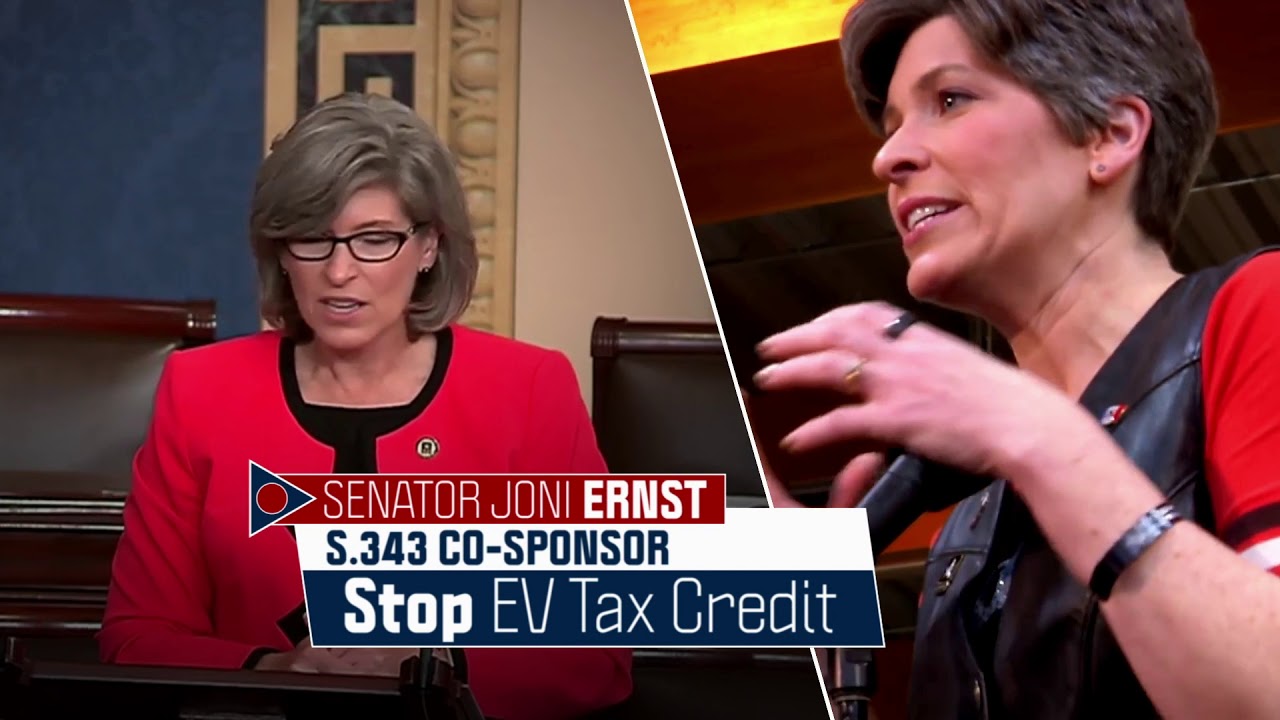 :{ supporting her last year.}: On March 18, One Nation announced another $970,000:{ in television, radio, and digital ads praising Ernst as a champion for lower drug prices. Ernst said she supported, but did not sponsor, the Wyden-Grassley bill that Pfizer and the Chamber lobbied against, but voted against a 2017 }:bill:{ that would have allowed the U.S. to import cheaper drugs from Canada. }:
Ernst in 2018 co-sponsored a Republican-led bill as part of a party effort to assuage fears among its base after its successful repeal of parts of the Affordable Care Act. Republicans said the bill would protect people with preexisting conditions, but it would still have allowed insurers to discriminate against patients for other reasons, or sell policies that don’t cover other medical problems, HuffPost reported.
Critics say it’s unsettling, if not unsurprising, that a McConnell-aligned dark-money group would add a former pharmaceutical lobbyist to its board while running ads celebrating Republican senators for pushing lower drug prices, a cause McConnell himself has stymied in Congress.
“One Nation’s mission is to make sure that Republicans hold their majority in the Senate. They are going to craft their message around that,” said Robert Maguire, research director at Citizens for Responsibility and Ethics in Washington. “It does not mean that One Nation has staked out that policy. They think that voters in Maine want to hear that.”
===
Steven J. Law worked for McConnell then CoC
poster boy rev dr; promoted primary 4/16, hub connects GPS and CoC
http://www.opensecrets.org/revolving/rev_summary.php?id=70206
| 2010- | American Crossroads/Crossroads GPS Revolving Door Personnel: (1) | President, Chief Executive Officer | |
|---|---|---|---|
| 2007-2010 | US Chamber of Commerce Revolving Door Personnel: (105) | General Counsel |  Client lobbying profile |
| 2001-2007 | Dept of Labor Revolving Door Personnel: (111) | Deputy Secretary/Chief of Staff | Agency lobbying profile |
| 1998-2000 | National Republican Senatorial Cmte Revolving Door Personnel: (45) | Exec Director | |
| 1991-1997 | McConnell, Mitch Revolving Door Personnel: (48) | Chief of Staff |  Member profile |
| 1990-1990 | McConnell Senate Cmte Revolving Door Personnel: (1) | Manager | |
 Lobbying Firm  Private Sector  Federal Govt.  State/Local Govt. | Lobbying Firm Private Sector Federal Govt. State/Local Govt. | Lobbying Firm Private Sector Federal Govt. State/Local Govt. | Lobbying Firm Private Sector Federal Govt. State/Local Govt. |
http://www.cavalryllc.com/how-mcconnell-world-works/
mcconnel mafia:
In Mitch McConnell’s world, it doesn’t matter who works in his Hill office, who left for K Street or who runs his campaign, almost everyone calls the Kentucky Republican “Boss.”
Indeed, interviews with a number of those closest to the incoming Senate majority leader say there’s little difference between the McConnell confidants who used to be on his payroll and those who still are: a couple dozen key players, from political operatives to senior leadership staff to outside policy wonks, work nearly seamlessly to advance his agenda, whether it’s getting him reelected or pushing bills through. A number of those closest to McConnell are alumni turned lobbyists, and they too have retained their access to his office and staff in a mutually beneficial way, advancing his interests at the same time they gather intel for clients who pay their firms millions of dollars.
As McConnell prepares to take control over the Senate, then, it’s impossible to understand how he’ll run the place unless you know who’s in his network and how it works.
“One thing that you consistently hear from former McConnell staffers is how proud they are to have worked for him and the personal affection they have for him,” said Steven Law, a former McConnell chief of staff.
The tight bond comes in part from the long hours Hill staffers clock during big fights, like over health care reform or the government shutdown, but McConnell world is unusually tight even for a powerful Senate office. Loyalty, years of service and a near-devotion to McConnell make it one of the strongest and most influential in Washington.
The gatekeepers on his staff controlling who has access to McConnell, to the wonks who help write and vet Republican bills, to former chiefs of staff who now lobby his office, to even his wife, Elaine Chao.
Chao is a political operative in her own right, and she’s committed to keeping her husband on top. She served as secretary of labor under President George W. Bush and is now an important surrogate for McConnell at events in Washington and Kentucky. This campaign season, she went so far as to meet with Republican lobbyists and others and urge them not to wait, but to give the maximum donation to her husband early — a bold ask for a congressional spouse. She also made individual phone calls to donors asking for money. And with Democratic opponent Alison Lundergan Grimes trying to paint McConnell as anti-woman, Chao appeared in an ad to counterattack.
Never was the network more on display than in his recent reelection, when current congressional staff became political aides, old friends took leaves of absence from their jobs to go on the campaign trail, and the entire crew not only contributed but encouraged their networks and clients to cut checks for his reelection bid.
Formal roles shift and change – but the goal has remained the same: help McConnell.
For example, Josh Holmes, chief of staff in McConnell’s personal office left Capitol Hill for Kentucky to lead his political team. Holmes is credited with the strategy that helped McConnell handily beat Lundergan Grimes by 15 points. The Kentucky Republican was so thankful, on election night, he said Holmes “pitched a perfect game.” Holmes has not said publicly what he’ll do next.
Even long-ago aides like Law, who hasn’t worked for McConnell in more than 20years, has remained part of the extended political team. He helped set up and served on a pro-McConnell super PAC that was key to hitting McConnell’s primary tea party challenger and trying to define Grimes. “Even when they aren’t talking, they are thinking the same way,” one lobbyist said of the relationship between McConnell and Law.Law ran McConnell’s first reelection campaign in 1990 and later served for six years as his chief of staff. He’s now the CEO of American Crossroads, a super PAC backed by Karl Rove.
Three former chiefs of staff who now lobby — Kyle Simmons of the Simmons Russell Group, Billy Piper, whose clients include theAmerican Television Alliance and Metlife Group, and Hunter Bates, a lobbyist who splits time between Washington and Kentucky — were on a weekly call helping with campaign strategy.
Piper, who worked for McConnell for nearly 20 years, went so far as to take a three-week leave of absence from his K Street job at boutique GOP lobbying firm Fierce, Isakowitz & Blalock to help out on the campaign.
The extended network isn’t just on call when McConnell is in trouble on the campaign trail....
POLITICAL OPERATIVES
JOSH HOLMES, former chief of staff and campaign manager
Josh Holmes left Capitol Hill to lead McConnell’s political team.
McConnell put his toughest political reelection bid in Holmes’ hands. After serving as his personal office chief of staff for nearly three years, Holmes moved to McConnell’s political operation full time in August 2013 and moved down to Louisville, Kentucky. On election night, McConnell said, “He pitched a perfect game.” He’s weighing his next move.
STEVEN LAW, political adviser and former chief of staff
Law is seen as McConnell’s No. 1 political consultant. This cycle, he served on the board of the pro-McConnell super PAC Kentuckians for Strong Leadership, meaning he technically could not coordinate with the campaign. Still, one McConnell ally described the relationship between Law and McConnell as, “Even when they aren’t talking they are thinking the same way.” Law ran McConnell’s first reelection campaign in 1990 and later served for six years as his chief of staff. He’s a U.S. Chamber of Commerce alum and is a major fundraiser and strategist for the Karl Rove-backed American Crossroads.
LAURA SEQUEIRA, national finance director
The former office manager in the Senate Republican leader’s office, Sequeira is the brains behind Team Mitch’s fundraising operation. Based out of Kentucky, this cycle she worked solely raising for McConnell, a rarity in the fundraising world. Besides being able to bring in the money, Sequeira knows the world of McConnell’s major donors.
LARRY McCARTHY, media consultant
McCarthy has been with McConnell since the senator’s first campaign. The veteran media consultant of McCarthy Hennings Whalen worked on the original “Bloodhound” ad with Roger Ailes and was responsible for the reprise in this past campaign....
==
Steven J. Law is Chief Legal Officer and General Counsel at the :{U.S. Chamber of Commerce:(style="background-color:#fff200"):}:.[1] Previously, he served as :{Deputy Secretary of Labor:(style="background-color:#fff200"):}: in the the administration of U.S. President :{George W. Bush:(style="background-color:#fff200"):}:. In 2005, Law chaired the President’s Management Council Subcommittee on E-Government.[2] He is also president of :{American Crossroads:(style="background-color:#fff200"):}:, a Republican organization that seeks to influence U.S. elections.[3]
Law is a Phi Beta Kappa honors graduate of the University of California at Davis, and a graduate of Columbia Law School.[4]
[edit] References
- ^ Press release. U.S. Chamber Names Deputy Secretary of Labor Steven J. Law Chief Legal Officer and General Counsel, Feb 7, 2007
- ^ Deputy Secretary of Labor Steven J. Law Named New Chairman of President’s Management Council Subcommittee on E-Government, GeorgeWBush-WhiteHouse", Feb 3, 2005
- ^ Time magazine, September 27, 2010 issue, p. 32
- ^ Fighting for Your Business, Steven Law, USChamber.com, accessed Oct 3, 2009.
| American Crossroads Director Steven Law His Mitch McConnell And U.S. Chamber Of Commerce Ties.by: HillbillySun Oct 03, 2010 at 01:22:20 AM EDT |
|---|
The name American Crossroads sounds innocent enough, but when you dig a little deeper you find this is a very partisan outfit with deep ties to Mitch McConnell, George Bush and the Republican Party. Steven Law the director of American Crossroads seems intent to take us back to the George Bush days when he was US Labor Department Deputy Secretary, working for Mitch McConnell's wife, Secretary of Labor, Elaine Chao. |
| Hillbilly :: American Crossroads Director Steven Law His Mitch McConnell And U.S. Chamber Of Commerce Ties. |
Those were the good old days for the Republican party, an ex One could reasonably assume Steven Law found it was possible to get people to vote against their own interest in 1990, when he was Manager of Senator Mitch McConnell’s first reelection campaign and now he wants to take that to a new level. The National level. Steven Law, seems to believe, the American people are easily influenced and not politically informed and he can get the American people to vote against their own interest with slick TV Ads demeaning the opponent of the person he and American Crossroads wants to win and he may be right. After all he did get Mitch McConnell re-elected in 1990. The folks at American Crossroads, including Kentucky's B. Wayne Hughes, a $1,300,000 contributor to American Crossroads have and agenda and it's up to all of us to look at what the have to say in their slick TV Ads with skeptical eyes.
Steven Law: 1990: Manager of Senator Mitch McConnell’s first reelection campaign. 1991-1997: Senator Mitch McConnell's Chief of Staff. 1998-2000: National Republican Senatorial Committee Executive Director. :{2001-2007: US Labor Department Deputy Secretary and Chief of Staff. 2007-2009: US Chamber of Commerce Chief Legal Officer and General Counsel. 2010: American Crossroads President & Chief Executive Officer.}: |


http://www.hillbillyreport.org/diary/2045/american-crossroads-director-steven-law-his-mitch-mcconnell-and-us-chamber-of-commerce-ties