mcconnell mafia staff
reminder/placeholder?
oops other node
---
poster boy? the McConnell Mafia rides again on drug prices 420
bannon declares war on moore/strange
---
---
// BAK CONTEXT
Mitch McConnell benefits from corporate cash. And corporations benefit from him.
Walker Davis and Linnaea Honl-Stuenkel
April 22, 2021
Perhaps more than any other politician, Senate Minority Leader Mitch McConnell has both vigorously defended and benefited from the windfall of large-dollar, often anonymous money flooding elections over the past decade. He has fought in the vanguard of the forces blocking bipartisan reform while helping to raise millions from corporate interests from CEOs, anonymous dark money groups and massive gifts to his allied political committees.
In public, McConnell claims that his advocacy for more money in politics is all about defending free speech, but behind closed doors, he reportedly told other Senators that it is actually about winning elections. Given the massive sums he has helped raise to power both his own campaigns and those of other senators, it is not surprising that he wants to keep the corporate cash flowing — and will use any excuse and any tool at his disposal to do so.
As a legislator, McConnell has championed some of the same industries that have helped him win elections. This mutual dependence means that McConnell needs America’s campaign finance system to stay broken in order for him to hang on to power.
McConnell has welcomed money in politics
Oct 14, 1999
McConnell vocally opposed — and later used the filibuster to block — the bipartisan McCain-Feingold campaign finance reforms which would have limited the ability of corporations to spend on politics.
Mar 27, 2002
A more limited version of their reforms known as the Bipartisan Campaign Reform Act (BCRA) is enacted. McConnell sued the Federal Election Commission to limit the power of the law. He lost in the Supreme Court, but it was only a matter of a few years before the Court, under new Chief Justice John Roberts, began striking down the very rules it had upheld in the McConnell case.
Jun 25, 2007
The Supreme Court ruled in FEC v Wisconsin Right to Life decision, which began rolling back BCRA regulations and opening the floodgates for dark money, which exploded from $6 million in the 2006 election cycle to nearly $103 million in 2008. McConnell submitted an amicus brief in support of WRTL.
Jan 21, 2010
McConnell applauded the Supreme Court’s Citizens United decision, which paved the way for corporations to spend massive sums on politics, saying, “For too long, some in this country have been deprived of full participation in the political process. With today’s monumental decision, the Supreme Court took an important step in the direction of restoring the First Amendment rights of these groups.”
Apr 07, 2021
McConnell spoke out against the For the People Act, which aims to cut down on corporate influence in politics and expand voting rights. He has also criticized it in meetings with Senate colleagues.
Multiple avenues for corporate cash
Corporations can’t legally give to candidates’ campaign committees, but their chief executives can, and McConnell is a top recipient of CEO cash. In the 2020 election cycle alone, he raised more than $250,000 from 37 different Fortune 500 CEOs, more than any other candidate in a competitive race.
Not only has McConnell raised a lot of money from corporate executives, but he may be particularly reliant on them because only a small fraction of his donations come from his constituents in Kentucky. In the 2020 cycle, less than eight percent of donations to his campaign came from his home state.
Super PACs and dark money groups are allowed to raise money in unlimited sums from corporations directly. They can raise unlimited amounts of money from corporations and spend the contributions on elections. McConnell is closely aligned with a super PAC called the Senate Leadership Fund that helps elect Republicans to the Senate.
Elected officials aren’t supposed to solicit large donations to super PACs, but there are ways around those rules. McConnell has reportedly helped raise money for the super PAC. Last year, the group’s president, who is a former McConnell aide named Steven Law, said, “There’s no way we would be where we are financially without Leader McConnell’s disciplined and tireless promotion of our efforts to hold the Senate.” McConnell called the group a “huge help.”
The Senate Leadership Fund relies heavily on corporations for its fundraising, taking in millions from corporate interests each cycle. In the 2020 cycle, it received $6.5 million from the National Association of Realtors, $5 million from the American Petroleum Institute, $4.4 million from Chevron, $2.6 million from Reynolds tobacco, $2 million from Koch Industries, and $1.25 million from Pilot gas stations. Chicken processing company Mountaire gave $500,000 last cycle, its first-ever contribution to the group.
The Senate Leadership Fund’s biggest donor of all last cycle was a sister dark money group, also run by Law, called One Nation. One Nation also spends to back Republican control of the Senate. While One Nation does not reveal its donors, CREW and others have identified five-figure, six-figure, and seven-figure contributions from insurance, health care, and oil interests, respectively. A recently-filed disclosure shows the pharmacy company CVS gave One Nation $1.75 million last year. CVS also gave a matching contribution to the group Majority Forward, an analog dark money group to One Nation that helps elect Senate Democrats.
How McConnell has helped big industries, and reaped campaign cash
From early on in the pandemic, McConnell took the position that Congress should give corporations legal protections when their employees got sick on the job. That was good news to the meat processing industry, whose employees were facing pressure to keep coming to work while sick, in spite of rising cases.
McConnell’s advocacy for liability protections coincided with a jump in the meat processing industry’s financial support. In addition to the $500,000 that Mountaire gave to the Senate Leadership Fund, McConnell’s campaign took in more in donations from the meat processing industry last cycle than any other member of Congress, according to the Center for Responsive Politics. He’d never topped that list before. The last time he was up for reelection, he wasn’t in the top twenty recipients of the industry’s cash, raising less than a third of the $37,000 they kicked in 2019 and 2020.
McConnell raising money from the meat processing industry while going to bat for them on policy is illustrative of the relationship he’s had as a “special friend” to corporate interests that have also included tobacco, coal, and pharmaceutical manufacturers. McConnell has used his position in the Senate to aggressively advocate for traditional corporate priorities like lower corporate taxes and limited regulations. In turn, he’s been a top beneficiary of corporate political spending.
This all shows that while Mitch McConnell defends money in politics with dubious claims of wanting to protect the First Amendment, his own dependence on corporate money is like nothing the founding fathers could have ever imagined.
But it doesn’t have to be this way. Politicians can be accountable to their constituents instead of corporations, and there’s already a bill with the Senate that would be a huge step in that direction. The For the People Act is a significant campaign finance and democracy reform that amplifies the voice of grassroots donors and drags anonymous money out of the dark. If we know anything about Mitch McConnell, it’s that he will try to block the bill using the filibuster, because his political operation depends on limited access to the vote and limitless corporate cash in elections. He can’t be allowed to succeed.
Read More in Investigations
---
gop staffer rev dr
off bs
https://www.cgcn.com/
THE CGCN TEAM
MATT RHOADES
CO-CEO
Romney/Ryan 2012 Presidential Campaign Manager
Co-founder of a bipartisan cybersecurity initiative, Defending Digital Campaigns
Past leadership positions inPACs, the Republican National Committee and at the White House
SAM GEDULDIG
CO-CEO
Former Senior Advisor to then Majority Whip Roy Blunt
Former staffer for the House Financial Services Committee and then Speaker John Boehner
Successful record of building unconventional coalitions and issue advocacy campaigns
MICHAEL CATANZARO
PRESIDENT AND CHIEF POLICY OFFICER
Former Special Assistant to the President for Domestic Energy and Environmental Policy, White House National Economic Council
Former Deputy Staff Director, Senate Environment and Public Works Committee with Sen. Jim Inhofe
Former Senior Policy Advisor to then Speaker John Boehner
STEVE CLARK
FOUNDER AND CHAIRMAN
Former Manager of Government Affairs for Ohio Bell Telephone Co
Former Vice President of Public Affairs forAmeritech/ SBC
Recognized by The Ohio Chamber of Commerce as Ohio’s Top Corporate Lobbyist
ANTONIA FERRIER
CHIEF STRATEGIC COMMUNICATIONS OFFICER
Former senior aide for Leader Mitch McConnell, the Senate Finance Committee, and then Majority Whip Roy Blunt
Experienced communications professional the Washington Post called “A top Republican message guru”
JOHN STIPICEVIC
CHIEF ADVOCACY OFFICER
Former Deputy Chief of Staff to LeaderKevin McCarthy for Floor Operations and Member Services
Former Director of Floor Operations to then Majority Whip Kevin McCarthy
Former floor aide to then Majority Whip Roy Blunt and Minority Whip Eric Cantor
MIKENIELSEN
CHIEF FINANCE AND MANAGEMENT OFFICER
Accomplished financial services and appropriations advisor
Professional Staff and Subcommittee Staff Director on the Senate Banking Committee for over a decade.
Extensive work as a Senate staffer and outside consultant on appropriations issues.
JAY CRANFORD
SENIOR PARTNER
Former committee and leadership policy aide
Accomplished energy, environment, technology and telecommunications policy advisor
Client services approach enhanced by private sector experience in both the corporate and trade association space
EVA BANDOLA
VICE PRESIDENT
Former Senior Communications Director at Definers Public Affairs
Former Senior Account Manager at Trident DMG
JULIA COMISKEY
SENIOR VICE PRESIDENT
Former Vice President, Partnerships & Special Assistant at Definers Public Affairs
Former Deputy War Room Director at Romney for President
JANELLE GARDNER
SENIOR VICE PRESIDENT OF OPERATIONS
Over a decade of experience inside the federal government, both in Congress and the Executive branch
Served as a key member ofPresident Trump’s beachhead team facilitating the transition at the Department of Labor,
AMANDA HORNE
ASSOCIATE
Former Staff Assistant to Leader Mitch McConnell
Former intern at the Environmental Protection Agency Office of Public Affairs
TIM KILLEEN
PARTNER
Experienced communication professional with experience in energy, healthcare, and financial services
Former campaign advisor toRep. Liz Cheney and Republican National Committeeofficial
AMBER KIRCHHOEFER
PARTNER
Former Deputy Chief of Staff toSen. Pat Roberts
Experienced policy advisor in health care, appropriations, agriculture and trade
TATUM MARTINEZ
DIRECTOR OF CLIENT RELATIONS
Works to streamline every facet of client relations at CGCN to remove friction and deliver results.
Severs as Executive Director for CGCN Partner United By Interest
LAUREN O’DONNELL
DIRECTOR OF HUMAN RESOURCES & COMPLIANCE
Expertise in Human Resource Management
Experience with compliance matters relating to the lobbying industry
KATIE O’NEIL
VICE PRESIDENT
Experienced in nearly every aspect of digital communication strategy
Former Senior Digital Director at Definers Public Affairs
Former Digital Manager at Freedom Partners Chamber of Commerce
TIM PATAKI
PARTNER
Former Assistant to the President and Director, White House Office of Public Liaison
Former Senior Advisor & Director of Coalitions and Member Services, House Energy & Commerce Committee, then Chairman Fred Upton
Former leadership aide to then Majority Whip Kevin McCarthy and Majority Leader Eric Cantor
ALEX RENJEL
PARTNER
Former aide to Sen. Jim Inhofe
Former senior aide for Senate Environment and Public Works Committee, where he helped pass multiyear transportation legislation
SCOTT RIPLINGER
PARTNER
Former senior aide to Senate Finance Committee Ranking Member Mike Crapo
Accomplished financial services, tax, appropriations and commerce policy advisor
COURTNEY SCHNEIDER
DIRECTOR OF FINANCE AND ACCOUNTS MANAGEMENT
Former Brokerage Investment Professional at Vanguard
Manages CGCN’s finances and accounting process
Expertise in a variety of administrative duties, including scheduling and coordinating meetings for partners and clients
AARON SZABO
PARTNER
Former White House staff for Presidents Trump& Obama
Worked with career and political staff at various agencies
Expertise in energy, environmental and regulatory policy
Peter Ventimiglia
PETER VENTIMIGLIA
PARTNER
Former Managing Director at Koch Industries overseeing external communications
Helped develop Koch’s first corporate reputation campaign
Former Executive Vice President at Edelman
CGCN Logo
HOME
ABOUT
PEOPLE
EXPERTISE
PARTNERSHIPS
CONTACT
1101 K STREET N.W.
SUITE 800
WASHINGTON, DC 20005
---
---
https://theintercept.com/2020/04/14/one-nation-pfizer-lobbyist-drug-prices/
one NATION, ONE of the dark-money groups spending the most to back Republican candidates for Senate, added aformer Pfizer lobbyistandU.S. Chamber of Commerceboard member to its board of directors at the end of 2019. One Nation has spent $1.7 million already this year on ads praising the efforts of Republican senators, including the push for lower drug prices, a cause both Pfizer and the Chamber have lobbied against.
:{:{}:
}:
The group is part of the network of conservative fundraisers — under the “Crossroads” umbrella — launched by Karl Rove and Ed Gillespie after the Supreme Court’s 2010 decision in Citizens United. Former staffers for Crossroads GPS, the 501(c)(4) wing of Rove and Gillespie’s Super PAC, American Crossroads, started One Nation in 2015 after a yearslong fight with the Internal Revenue Service for tax-exempt status. Crossroads eventually received that status in 2016. Although the group has been relatively dormant since 2014, it maintains fundraising efforts and ended 2019 with $35.5 million cash on hand.
Ken W. Cole,who has long worked in government relations for companies like General Motors and Honeywell, as well as the pharmaceutical giant Pfizer, joined the board of One Nation last year. The group listed Cole as a director on its latest annual report, filed to the Virginia State Corporation Commission in March, but he’s not yet listed publicly on its website.
Cole lobbied on behalf of Pfizer as senior vice president of government relations from 2010 to February 2018, on issues including drug pricing and drug shortages. Pfizer has placed the blame for high drug prices on health care providers and insurers, while it has fought recent legislative efforts aimed at reducing drug prices. Since at least 2014, Cole has also served on the board for the Chamber of Commerce, which has similarly opposed legislative efforts to cut drug costs or allow the government to fine companies for inflating prices.
Pfizer and the Chamber of Commercehave collectively spent just under $1 billion on lobbying over the last decade, with Pfizer typically spending around $10 million each year, and the Chamber spending more than $60 million. In recent years, that included efforts to kill legislation aimed at lowering the cost of prescription drug prices, including a bipartisan prescription drug-pricing bill put forward last September by Iowa Republican Sen. Chuck Grassley and Oregon Democratic Sen. Ron Wyden. President Donald Trump has praised the bill and earlier this year called on Congress to pass legislation to address rising drug costs. The Senate bill, which Grassley has accused Senate Majority Leader Mitch McConnell of sabotaging, remains deadlocked, while a companion bill in the House, which Pfizer and the Chamber also lobbied against, passed last year. The Chamber, meanwhile, supported a separate drug-pricing bill from Idaho Republican Sen. Mike Crapo, saying that it “would help reduce drug prices without resorting to destructive price controls,” citing “inflation cap penalties” in the Grassley-Wyden bill and “government negotiation provisions” in the House bill.
Cole is currently the CEO and managing director of Cactus Consulting LLC, a firm registered in January 2019 in the District of Columbia, with principal offices based in Florida.
One Nation defended its board appointment of Cole, claiming that his work for Pfizer was not a conflict since he left the company early last year. “Ken has been a respected leader in a variety of different companies and industries. After he retired, we sought him out for his breadth of management experience and judgment,”One Nation President Steven Lawsaid in a statement to The Intercept. “Our boards provide guidance on macro issues like financial controls, budgets, compensation and management policies. They do not direct day-to-day activities.”
Law, the CEO of Crossroads GPS, American Crossroads, Senate Leadership Fund, and One Nation, is also a former chief of staff to McConnell and a former legal officer for the Chamber of Commerce.
AS A 501(C)(4) GROUP, One Nation is not required to disclose its donors, but voluntary disclosures from a number of interest groups shed light on its funds. The dark-money group received major contributions of $1 million in 2016 and 2017 from Andeavor, an oil company bought in 2018 by an Ohio petroleum conglomerate. In 2018, One Nation also received $50,000 from the American Petroleum Institute, and another $50,000 from the Real Estate Roundtable in 2017.
One Nationis the single largest group contributing to the Senate Leadership Fund, the McConnell-aligned Super PAC backing Republican Senate candidates. It’s the political action committee’s second-largest donor overall this cycle, after Blackstone CEO Stephen Schwarzman. It has also contributed to conservative groups working on policy issues like abortion and gun rights, like the National Rifle Association and the Susan B. Anthony List:{, an anti-abortion group. The group has spent more than$1 million already this year backing Maine Sen. Susan Collins, including } :{ in}:January:{, }:February:{, and }:March:{ highlighting “Collins’ effort to lower the price of insulin.” Democrats note that Collins — like almost every other Republican — }:voted repeatedly against:{ the }:Affordable Care Act:{ and closing the Medicare Part D coverage gap. Collins has taken }:$431,604:{ from the pharmaceutical industry throughout her career. }:
Collins, whose chances of securing a fifth term became less certain after her vote to confirm Supreme Court Justice Brett Kavanaugh in 2018 and increased criticism over her stance on abortion rights, is facing a challenge from Maine House Speaker Sara Gideon, backed by the Democratic Senatorial Campaign Committee, and Betsy Sweet, backed by Justice Democrats. In the wake of Collins’s vote to confirm Kavanaugh, activist Ady Barkan helped raise more than $4 million to support whoever wins the state’s Democratic primary in July.
In addition to Collins, One Nation is backing Iowa Sen. Joni Ernst:{and started running }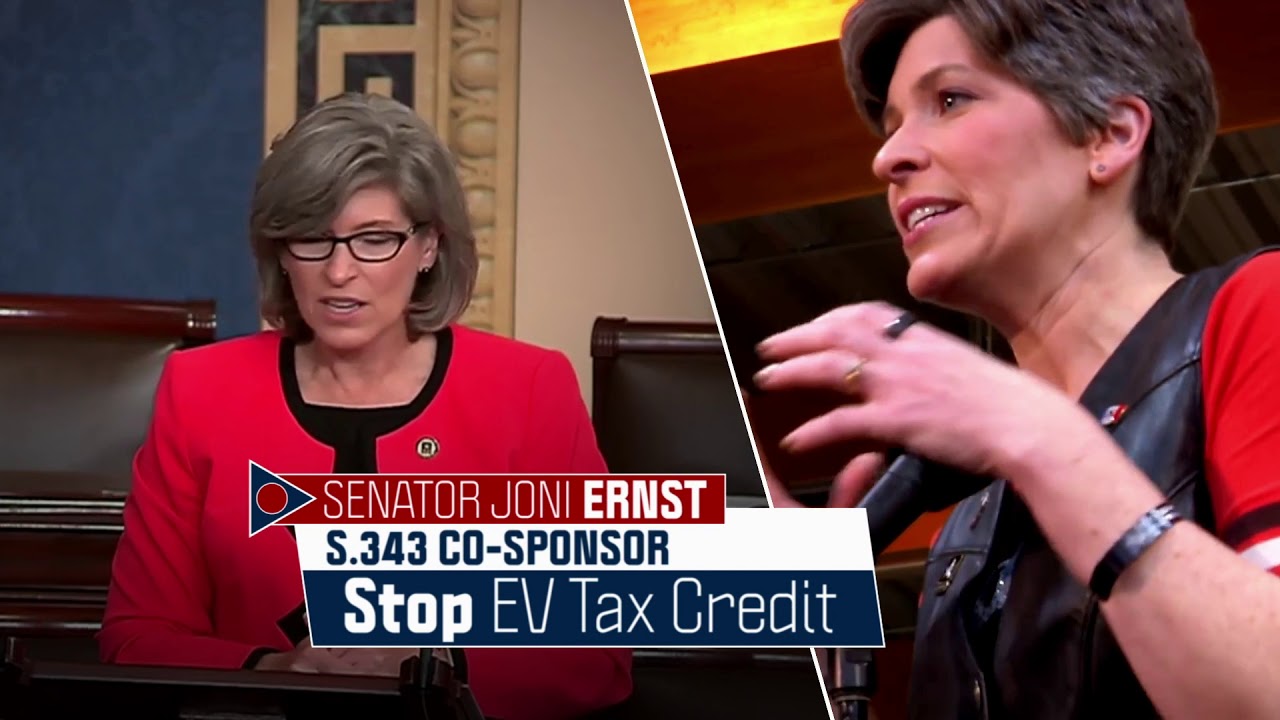 :{ supporting her last year.}: On March 18, One Nation announced another $970,000:{ in television, radio, and digital ads praising Ernst as a champion for lower drug prices. Ernst said she supported, but did not sponsor, the Wyden-Grassley bill that Pfizer and the Chamber lobbied against, but voted against a 2017 }:bill:{ that would have allowed the U.S. to import cheaper drugs from Canada. }:
Ernst in 2018 co-sponsored a Republican-led bill as part of a party effort to assuage fears among its base after its successful repeal of parts of the Affordable Care Act. Republicans said the bill would protect people with preexisting conditions, but it would still have allowed insurers to discriminate against patients for other reasons, or sell policies that don’t cover other medical problems, HuffPost reported.
Critics say it’s unsettling, if not unsurprising, that a McConnell-aligned dark-money group would add a former pharmaceutical lobbyist to its board while running ads celebrating Republican senators for pushing lower drug prices, a cause McConnell himself has stymied in Congress.
“One Nation’s mission is to make sure that Republicans hold their majority in the Senate. They are going to craft their message around that,” said Robert Maguire, research director at Citizens for Responsibility and Ethics in Washington. “It does not mean that One Nation has staked out that policy. They think that voters in Maine want to hear that.”
---