steven law gps
no merri
see dark money superpacs
mcconn mafia
SEE ONE NATION GPS
oops duplic
poster boy staffer?
ryan?
===}:
---
an 6 24
Outgoing Senate Minority Leader Mitch McConnell (R-Kentucky) is not only losing his post as the leader of the Senate Republican Conference when the next Congress gavels in — he might also completely lose control of his prized fundraising operation.
According to the Hill, a growing number of Senate Republicans are going public in their opposition to McConnell's Senate Leadership Fund (SLF), which he has deployed for more than a decade to inject millions of dollars into Senate races across the country. Sen. Josh Hawley (R-Missouri), who is running for reelection this November, was particularly outspoken in his opposition to McConnell threatening to spend money against current members of the conference who supported Hawley's bill to rein in corporate campaign contributions to super PACs.
"I think the idea that a leader would use outside money, much of it dark money, to try and intimidate or threaten members of the caucus is frankly corrupt," Hawley told the Hill. "And I think it’s a corrupt practice that has gone on for far too long, and it needs to end."
READ MORE:McConnell says GOP shouldn't 'get too excited' about chances of winning Senate
Data from campaign finance database Opensecrets shows that the SLF is one of the heaviest hitters in Washington, with more than $724 million in outside spending on record since the 2000 election cycle. Much of that spending has come in recent cycles, with the SLF spending more than $246 million in the 2022 campaign cycle alone.
The Kentucky Republican recently reminded fellow GOP senators that the SLF — which is currently run by McConnell's former chief of staff Steven Law — has been instrumental in helping members win elections. In a recent meeting, McConnell reportedly read aloud the names of senators whose campaigns have directly benefited from the SLF's spending, like Sen. Eric Schmitt (R-Missouri), who has also backed Hawley's bill.
As Senate Republicans debate who will be their next leader, one major departure from McConnell's time as the caucus chair is the insistence of term limits. That has been a key component of Sen. Rick Scott's (R-Florida) campaign for GOP leader, who has pushed for members of the Senate Republican Conference's rank-and-file to have more say in legislative negotiations. McConnell pushed back strongly against that idea, warning Republicans that weakening the power of leadership could result in the same brand of chaos currently plaguing House Republicans.
Sen. Thom Tillis (R-North Carolina), who is considered one of McConnell's key allies in the Senate GOP conference, argued in a recent letter to his colleagues that it's "important that we consider proposals to strengthen not weaken the Republican Conference leader position when we fully engage in this discussion this fall," adding that Senate Majority Leader Chuck Schumer (D-New York) has been able to wield a significant amount of power and influence due to both the powers of leadership and the unity of his caucus.
READ MORE:Longest-running Senate majority leader delivers impassioned plea against term limits
One unnamed Senate GOP aide speaking anonymously to the Hill said Tillis' letter was "clearly was a McConnell-driven response."
"Tillis is seen as like, McConnell’s axe man in some ways," they said.
Aside from Scott, other candidates for Senate GOP leader include Sens. John Cornyn (R-Texas) — who served as Senate Majority Whip between 2015 and 2019, and current Senate Minority Whip John Thune (R-South Dakota). Republicans will decide on their next leader this November.
Click here to read the Hill's report in full.
READ MORE:'McConnell completely blew this': GOP leader hemorrhaging support after border bill fail
---
---
an 5 24
Democratic strategists, according to Roll Call, are feeling increasingly optimistic about their chances of flipping the U.S. House of Representatives — but worried about holding their small U.S. Senate majority.
Democrats know they are likely to lose a Senate seat in West Virginia, where Democratic Sen. Joe Manchin isn't seeking reelection. And that makes races in Ohio, Montana and other states all the more important.
Politico's Burgess Everett reports that the conservative group One Nation is investing another $70 million in races against "vulnerable" Senate Democrats — including Sen. Sherrod Brown in Ohio and Sen. Jon Tester in Montana.
READ MORE:GOP's path to reclaiming Senate majority goes through these two popular red state Democrats
"The nonprofit advocacy outfit, which is closely aligned with GOP leaders and the top GOP super PAC, is dropping tens of millions into five key battleground states to join a campaign already up in Montana," Everett explains in a report published on May 13. "The group is diving into Ohio, Pennsylvania, Michigan, Wisconsin and Nevada in a sweeping ad buy focused on the southern border and inflation, an effort branded as the 'Stop the Insanity' campaign."
Everett adds, "The push includes spending on radio, mail, TV and digital. The total spend for the campaign this cycle is $88 million, more than double the $43 million run of ads the group ran last cycle."
According to Everett, the "lion's share" of One Nation's spending will be on Republicans targeting "the most vulnerable" Democrats — namely, Brown and Tester. But Republicans also "believe they have a good shot against" Sen. Bob Casey Jr., who is seeking a fourth term in Pennsylvania.
National Republican Senatorial Committee (NRSC) Chairman Steve Daines recently said that Republicans "are at a cash-on-hand disadvantage in virtually every race."
READ MORE:'Strap on a glock': Kari Lake tells Republicans 'the next 6 months is going to be intense'
But "One Nation's onslaught," Everett reports, is "so important" because "it gives the GOP critical air cover in half a dozen states while the rest of the party braces for the crucial fall ad buying season."
READ MORE:Trump mocks US senator seeking his support for reelection: report
ref politio
conservatives-drop-70m-more-on-senate-dems-00157355
conservative outside group drops $70M on Senate Democrats in battlegrounds
The lion’s share of the new money will go into what Republicans currently see as their top three pick-up opportunities.

05/13/2024
One Nation, a top conservative group, is plowing $70 million more into hitting vulnerable Democrats in key Senate races nationwide according to details first shared with POLITICO, an extraordinary sum that’s roughly double the group’s Senate investment last cycle.
The nonprofit advocacy outfit, which is closely aligned with GOP leaders and the top GOP super PAC, is dropping tens of millions into five key battleground states to join a campaign already up in Montana.
The group is diving into Ohio, Pennsylvania, Michigan, Wisconsin and Nevada in a sweeping ad buy focused on the southern border and inflation, an effort branded as the “Stop the Insanity” campaign. The push includes spending on radio, mail, TV and digital.
The total spend for the campaign this cycle is $88 million, more than double the $43 million run of ads the group ran last cycle. The lion’s share of the new money will go into what Republicans currently see as their top three pick-up opportunities: The group will start $28.6 million in ads in Ohio on May 22 and $18.6 million in Pennsylvania starting in mid-June. The group previously announced a $17.9 million tranche of ads in Montana.
One Nation will also air $9.4 million in ads in Michigan and $7.5 million in Wisconsin starting in August and $5.9 million in Nevada beginning on June 18. The summer ads are still under development; the two that have run in Montana both hit Sen. Jon Tester (D-Mont.) on his border record.
“President Joe Biden and liberals in Congress have enacted policies that are hurting our country and it’s time to tell them to stop the insanity,” said One Nation President and CEO Steven Law. “Americans are increasingly concerned about our porous Southern border and saving for the future because the cost of living is so high. There are solutions to these problems, but liberals in Washington, D.C., aren’t listening.”
The campaign excludes two other prospective battlegrounds in Arizona and Maryland, though money could be added later this summer.
Many Democrats are staking their border security politics on the bipartisan border deal hatched earlier this year by Sens. Chris Murphy (D-Conn.), James Lankford (R-Okla.) and Kyrsten Sinema (I-Ariz.).
At-risk Democrats, including Tester, are pressing Majority Leader Chuck Schumer to hold another vote on it, arguing the GOP’s rejection of that bill, directed by Donald Trump, demonstrates their position is all politics. Tester also recently signed onto the Laken Riley Act, which would detain undocumented immigrants who are arrested for stealing.
With the border still a hot issue nationally, Tester and Sen. Sherrod Brown (D-Ohio) are widely seen as the most vulnerable Democrats this election cycle, and Republicans believe they have a good shot against Sen. Bob Casey (D-Pa.) as well. Spending in the other three states shows Republicans are still playing on a wide field.
The top GOP super PAC, Senate Leadership Fund, has already reserved fall ads in Montana and Ohio, while Democrats have already invested more than $300 million across the Senate map between Senate Majority PAC and the Democratic Senatorial Campaign Committee. That’s to say nothing of the Democratic senators and candidates themselves, who are generally outraising their opponents.
As NRSC Chair Steve Daines put it in an interview this week: “We are at a cash on hand disadvantage in virtually every race.”
That’s what makes the One Nation's onslaught so important: It gives the GOP critical air cover in half a dozen states while the rest of the party braces for the crucial fall ad buying season.
---
judd
12 22
andrew Ross Sorkin speaks with FTX founder Sam Bankman-Fried during the New York Times DealBook Summit on November 30, 2022 (Photo by Michael M. Santiago/Getty Images)
Former FTX CEO Sam Bankman-Fried, better known as SBF, burst onto the political scene and cast himself as the financial savior of the Democratic Party. In May, SBF said he was prepared to spend up to $1 billion to help Democrats win in 2022 and 2024.
Like many of SBF's claims, that turned out to be bluster. Public campaign finance filings show that SBF spent just $41 million in the 2022 midterm elections. Much of that was spent propping up unsuccessful Democratic primary candidates, including $11 million to Carrick Flynn, who lost a Congressional primary in Oregon. Still, SBF made substantial donations to Democratic Super PACs, including $6 million to the House Majority PAC, the Super PAC affiliated with Speaker Nancy Pelosi (D-CA). The spending made SBF one of the top two donors to Democrats in the 2022 cycle. (Billionaire George Soros technically spent more, but most of it was donated to Soros' own PAC and not distributed.)
When FTX collapsed and declared bankruptcy, the media portrayed it as a serious blow to Democrats.
| [gfx] |
Even based on public campaign finance reports, this was an oversimplification. SBF donated to Republicans favorable to crypto, including Senator-elect Katie Britt (R-AL), Senator John Hoeven (R-ND), and Senator Lisa Murkowski (R-AK). SBF also donated to the National Republican Campaign Committee, which supports the election of Republicans to the House. Further, another FTX executive, Ryan Salame, publicly donated about $23 million in the midterms, and almost all of it went to Republicans.
FTX itself donated to a slew of Republican Super PACs just before the election, including $1 million to the Senate Leadership Fund (SLF), $750,000 to Congressional Leadership Fund (CLF), and 150,000 to the American Patriots PAC. These donations would have almost certainly required the approval of SBF, the company's then-CEO.
Now, SBF has admitted that his image as a top supporter of Democratic candidates was a ruse. After FTX's bankruptcy, in a phone interview with crypto content creator Tiffany Fong, SBF said that he gave just as much money to Republicans in the 2022 cycle. SBF just made sure that those donations were secret.
I donated about the same amount to both parties this year. That is not generally known because, despite Citizens United being literally the highest-profile Supreme Court case of the decade and the thing everyone talks about when they talk about campaign finance, for some reason, in practice, no one can possibly fathom the idea that someone in practice actually gave dark. All my Republican donations were dark. And the reason was not for regulatory reasons. It's just reporters freak the fuck out if you donate to a Republican. They are all secretly liberal and didn't want to have that fight. So I made all the Republican ones dark.
If SBF is telling the truth, it would make him one of the Republicans' top donors.Since much of SBF's spending on behalf of Democrats went to failed Democratic primary candidates, it's possible that SBF spent significantly more helping Republicans than Democrats in the general election.
SBF blames "reporters" for his deception, but he chose to hold himself out as someone who was willing to spend $1 billion to elect Democrats. That generated an enormous amount of media coverage and raised the profile of FTX. All the while, he was engaged in the much more mundane task of buying influence from both parties. How did SBF do it?
The top Super PAC for Republican Senate candidates was Mitch McConnell's SLF. But the largest donor, by far, to the SLF is One Nation. Through September 30, 2022, One Nation donated $53.5 million to the SLF. Like the SLF, One Nation is run bySteven Law,a former Chief of Staff to McConnell. But unlike the SLF, One Nation is organized as a 501(c)4 non-profit organization and can keep its donors secret. One Nation can collect unlimited donations from people like SBF, keep their identities secret, and then pass the money on to the SLF. The top Super PAC for Republican House candidates, CLF, also has an affiliated non-profit, the American Action Network, that operates the same way.
The truth about SBF's political spending is an example of his duplicity. But, more importantly, it illustrates how the public has no idea who is actually funding candidates in the United States. The largest sums of money spent on elections come from anonymous donors. Making disclosure effectively optional allows unscrupulous individuals like SBF to manipulate public perception.
The DISCLOSE Act is one solution to this problem. It would require "organizations spending money in elections – including super PACs and 501(c)(4) dark money groups – to promptly disclose donors who have given $10,000 or more during an election cycle." If the DISCLOSE Act was law, SBF's donations to all candidates would be public. The bill would also "crack down on the use of shell corporations to hide the identity of the donor by requiring companies spending money in elections to disclose their true owners."
The Senate brought the DISCLOSE Act up for a vote in September. All Democratic members voted for it, and all Republican members opposed it. Since the bill required 60 votes to pass, it failed.
"The American people are fed up with dark money influence campaigns that rig their government against them and stymie their priorities," Senator Sheldon Whitehouse (D-RI), who sponsored the legislation, said. "The DISCLOSE Act would shine a light on special interest spending to neutralize its toxic effect, giving Americans’ voices a chance to be heard. Republicans heeded the wishes of dark money donors today, but the fight to pass this bill isn’t over."
:{
}:
===
https://www.alternet.org/2020/12/georgia-super-pac/
with just two weeks left until the Georgia Senate runoff, a new Republican super politician action committee (PAC) has emerged with a massive financial contribution to help boost Republicans' chances of retaining control of the Senate. However, there are mounting questions about the donors who contributed the funds to this political group.
According to the Associated Press, Peachtree PAC — reportedly spearheaded by an organization known as Senate Leadership Fund (SLF)— will kick off a $43 million-dollar television campaign on behalf of Georgia Republican Sens. Kelly Loeffler and David Perdue.
While the television ad is only a percentage of the projected $245 million the Republican National Committee (RNC) plans to spend on television and radio advertisements according to ad-tracking statistics from the firm Kantar/CMAG, the problem centers on Peachtree PAC's efforts to conceal the identities of its contributors.
The lack of transparency raises more concerns about secret groups' ability to manipulate elections by circumventing rules and protocols to achieve political goals.
Brendan Fischer, director of federal reform at the Washington, D.C.-based Campaign Legal Center, weighed in with his concerns about voters' inability to know the people who are tailoring ads to influence their political opinions.
"Voters have a right to know who is trying to influence their vote," said Fischer. "Disclosure of donors tells voters who is trying to influence them, and also who potentially stands to benefit from the election of a particular candidate."
However, SLF President Steven Law also released a statement as he defended Peachtree PAC. He also stressed the importance of the upcoming Georgia Senate runoff and how it could ultimately impact the country's direction.
"The fate of our country hangs in the balance in Georgia. This new activity through Peachtree PAC will articulate the stakes couldn't be higher as the future of freedom is on the ballot," Law said in a statement.
FROM YOUR SITE ARTICLES
- Fed-up GOP donors may withhold money from Georgia senate races ... ›
- GOP Sen. Kelly Loeffler's attempt to win over Black voters is ... ›
- Roger Stone-allied super PAC threatens to torpedo Senate GOP in ... ›
RELATED ARTICLES AROUND THE WEB
- Democratic super PAC starts a multimillion-dollar ad blitz for Georgia ›
- Source of money behind GOP's new Georgia super PAC a mystery ›
- Pop-up super PACs flood Georgia Senate runoff: 'It's about the big ... ›
===
ref
wASHINGTON (AP) — A new Republican super political action committee, Peachtree PAC, is starting a$43 million TV ad campaign in Georgiaon Wednesday, adding to the surge of money being poured into two Senate runoff elections that will determine control of the chamber and the trajectory of President-elect Joe Biden’s agenda.
But the funding behind the group will likely remain a mystery until well after ballots are cast in the Jan. 5 election.
The millions of dollars that the group plans to spend represents just a small portion of more than $245 million in TV and radio advertising the GOP already plans to unleash, according to data from the ad tracking firm Kantar/CMAG.
Yet unlike other similar outside groups operating in the state, Peachtree PAC has taken steps to mask who its donors are until Jan. 31, according to Federal Election Commission records. It’s just the latest example of how secretive groups can spend millions trying to influence an election with little disclosure before ballots are cast.
“Voters have a right to know who is trying to influence their vote,” said Brendan Fischer, the director of federal reform at the nonpartisan Campaign Legal Center in Washington. “Disclosure of donors tells voters who is trying to influence them, and also who potentially stands to benefit from the election of a particular candidate.”
Peachtree PAC will be operated by Senate Leadership Fund, a group affiliated with Senate Majority Leader Mitch McConnell, said SLF spokesman Jack Pandol. He declined to say who was funding the group.
Groups like Peachtree PAC are often referred to as “pop up ” PACs, which have been embraced by Republicans and Democrats alike. They typically are formed by national party committees, or affiliated groups, in the middle of a fiercely contested election. Often they are given local sounding names that belie their Washington origins.
“The fate of our country hangs in the balance in Georgia. This new activity through Peachtree PAC will articulate the stakes couldn’t be higher as the future of freedom is on the ballot,” SLF President Steven Law said in a statement.
Georgia’s two runoff races kicked off in November after Republican Sens. David Perdue and Kelly Loeffler failed to get more than 50 percent of the vote on Election Day. They are now locked in tight contests, with Perdue facing Democratic challenger Jon Ossoff, while Loeffler, who was appointed to her seat, is battling Raphael Warnock to complete the remainder of Republican Sen. Johnny Isakson’s term.
If Republicans win one race, they will maintain a narrow majority, and the chamber will serve as a bulwark against Democratic ambitions. But if Democrats carry both, the balance will be 50-50 —with Vice President-elect Kamala Harris delivering tie-breaking votes. That will enable Biden to enact a more ambitious agenda, assuming he can keep fellow Democrats on board.
CNN was first to report that Senate Leadership Fund was operating Peachtree PAC.
==
ref2
no lnx
cnn
Pop-up super PACs flood Georgia runoff: 'It's about the big message'
By Kim Berryman and Kyung Lah, CNN
Updated 7:40 AM ET, Mon December 21, 2020
PAC money pours into Georgia Senate runoff races
Atlanta (CNN)The message on the two trucks with the blue electronic billboards was hardly subtle and impossible to miss as they rolled through the busy streets of Atlanta.
Drivers paused at lights, pulled out their cell phones to take pictures and watched the bright lights pass by. The backs and sides of each truck were outfitted with flashing LED lit political ads measuring roughly 10-feet wide by 6-feet tall. Their message, "Vote Democrat, Get $1200," was very big indeed.
"This story isn't so much about the big money, it's about the big message" said Jon Jones as he tailed his two electronic billboard trucks.
Why Georgia's Senate runoffs are too close to call
Why Georgia's Senate runoffs are too close to call
Jones is the man behind "Relation PAC" a new and relatively small super PAC, or political action committee, entering the fray ahead of Georgia's Senate runoff races on January 5. While personal donations to political campaigns are capped at $2,800, PACs can receive unlimited funding from individuals, corporations, unions and other groups. In other words, they're a good way to get lots of money without naming names.
With control of the US Senate at stake, Georgia's two senate races are seeing a deluge of money, both campaign and outside money, flood in. Republican Sens. David Perdue and Kelly Loeffler are defending their seats against their respective Democratic challengers, Jon Ossoff and Rev. Raphael Warnock.
More money, more PAC ads
Since November 10, super PACs have put upwards of $226 million into Peach state politics, mostly in the form of omnipresent advertising.
The Peachtree PAC, a committee affiliated with Senate Majority Leader Mitch McConnell is due to deliver $43 million in TV and radio marketing ahead of election day. Despite the name suggesting homegrown roots, Peachtree PAC is an arm of the Senate Leadership Fund, a super PAC affiliated with McConnell, a Kentucky Republican.
Obama appears in three digital campaign ads for Georgia's Raphael Warnock
Obama appears in three digital campaign ads for Georgia's Raphael Warnock
"The most concerning (PACs) are those that pop up, just before a hotly contested election, like the ones we're seeing in Georgia," explained Brendan Fischer, federal reform director at the Campaign Legal Center. Those PACs "create the appearance of having local roots, but in reality, are financed by or affiliated with national party interests."
Jones followed his rolling billboard campaign around Georgia from the seat of a rental car. He lives primarily in New York.
"I would prefer for the super PAC to not exist," he said of his own group. "Personally, I don't think PAC money should exist this way. I wish they would reform these campaign finance laws. It's kind of a shame that people can do this and that there can be so much money and dark money in our politics."
But, he added, "These are the rules that we were given. This is the playing field that we're on." So he kept following his large, flickering and fully financed advertisements.
As for who financed them?
"We'll be disclosing that at the end of the month like we're required to do," he said. "But honestly, if we wanted to hide who our donors were, we could. Just put a corporation in between your donor and the FEC and you can do that. It's a shame that that's possible to do. It's very easy. It's a couple of hours of paperwork from your lawyer, and you're good to go."
Breaking through to voters
Jones' Relation PAC opted for "guerilla marketing" by rolling hard-to-miss billboards through neighborhoods and congested traffic. The extra-large lettering reads "Don't let David Perdue Steal Your Check. Vote Democrat. Get $1200." The slogan refers to the Covid-19 stimulus checks that the Democratic candidates are pushing for.
Others, such as the Republican-backed Club for Growth Action Committee is using television ads to promote the unfounded belief that Democrats rigged the presidential election. "They can't steal this election if we all show up!" the PAC's television commercial chimes.
Fact check: Breaking down attack ads in the Perdue vs. Ossoff Georgia Senate race
Fact check: Breaking down attack ads in the Perdue vs. Ossoff Georgia Senate race
Humor is the chosen route for Democrat-backed Meidas Touch. Their television ads show Perdue and Loeffler with green faces and Grinch-like features. A nursery rhyme narration includes the verse, "Their stockings were stuffed from the stocks that were sold, when they heard Covid was coming, before we were told."
Attack ads from the right include the GOP group American Crossroads PAC,which produced a commercial falsely claiming that Warnock is "in bed with defund the police radicals."
False, inflammatory or funny, the idea is the same: the more ads, the more likely the victory.
"Money matters because the candidate with the most money usually wins," says Fischer. "Money matters because the wealthy donors who can afford to write six figure super PAC checks have their voices heard louder than anybody else."
Sick of it
"Enough is enough!" said Georgian Mark Giuliani (no relation to the President's lawyer), who recently spoke with CNN at a local sports bar filled with TVs. "I get tired of seeing people bashing people. We're supposed to be getting along and we just can't."
Giuliani felt similarly to many other Georgians and is sick of being inundated with political ads.
In a state with more than 10 million people, nearly $500 million has been spent in political advertising since early November. That's equivalent to around $50 per person statewide, and the money keeps coming.
"Part of the problem is our campaign finance rules and laws are a bit out of whack," Jones explained. "It's kind of a shame that you can have all this money come into a race like this and not even know where its coming from, just to push special interests. The truth is, most special interests aren't pushing for every day Americans. They're pushing for corporate interests and it shows."
https://theintercept.com/2020/04/14/one-nation-pfizer-lobbyist-drug-prices/
one NATION, ONE of the dark-money groups spending the most to back Republican candidates for Senate, added a former Pfizer lobbyist and U.S. Chamber of Commerce board member to its board of directors at the end of 2019. One Nation has spent $1.7 million already this year on ads praising the efforts of Republican senators, including the push for lower drug prices, a cause both Pfizer and the Chamber have lobbied against.
:{
}:
The group is part of the network of conservative fundraisers — under the “Crossroads” umbrella — launched by Karl Rove and Ed Gillespie after the Supreme Court’s 2010 decision in Citizens United. Former staffers for Crossroads GPS, the 501(c)(4) wing of Rove and Gillespie’s Super PAC, American Crossroads, started One Nation in 2015 after a yearslong fight with the Internal Revenue Service for tax-exempt status. Crossroads eventually received that status in 2016. Although the group has been relatively dormant since 2014, it maintains fundraising efforts and ended 2019 with $35.5 million cash on hand.
Ken W. Cole,who has long worked in government relations for companies like General Motors and Honeywell, as well as the pharmaceutical giant Pfizer, joined the board of One Nation last year. The group listed Cole as a director on its latest annual report, filed to the Virginia State Corporation Commission in March, but he’s not yet listed publicly on its website.
Cole lobbied on behalf of Pfizer as senior vice president of government relations from 2010 to February 2018, on issues including drug pricing and drug shortages. Pfizer has placed the blame for high drug prices on health care providers and insurers, while it has fought recent legislative efforts aimed at reducing drug prices. Since at least 2014, Cole has also served on the board for the Chamber of Commerce, which has similarly opposed legislative efforts to cut drug costs or allow the government to fine companies for inflating prices.
Pfizer and the Chamber of Commercehave collectively spent just under $1 billion on lobbying over the last decade, with Pfizer typically spending around $10 million each year, and the Chamber spending more than $60 million. In recent years, that included efforts to kill legislation aimed at lowering the cost of prescription drug prices, including a bipartisan prescription drug-pricing bill put forward last September by Iowa Republican Sen. Chuck Grassley and Oregon Democratic Sen. Ron Wyden. President Donald Trump has praised the bill and earlier this year called on Congress to pass legislation to address rising drug costs. The Senate bill, which Grassley has accused Senate Majority Leader Mitch McConnell of sabotaging, remains deadlocked, while a companion bill in the House, which Pfizer and the Chamber also lobbied against, passed last year. The Chamber, meanwhile, supported a separate drug-pricing bill from Idaho Republican Sen. Mike Crapo, saying that it “would help reduce drug prices without resorting to destructive price controls,” citing “inflation cap penalties” in the Grassley-Wyden bill and “government negotiation provisions” in the House bill.
Cole is currently the CEO and managing director of Cactus Consulting LLC, a firm registered in January 2019 in the District of Columbia, with principal offices based in Florida.
One Nation defended its board appointment of Cole, claiming that his work for Pfizer was not a conflict since he left the company early last year. “Ken has been a respected leader in a variety of different companies and industries. After he retired, we sought him out for his breadth of management experience and judgment,”One Nation President Steven Lawsaid in a statement to The Intercept. “Our boards provide guidance on macro issues like financial controls, budgets, compensation and management policies. They do not direct day-to-day activities.”
Law, the CEO of Crossroads GPS, American Crossroads, Senate Leadership Fund, and One Nation, is also a former chief of staff to McConnell and a former legal officer for the Chamber of Commerce.
AS A 501(C)(4) GROUP, One Nation is not required to disclose its donors, but voluntary disclosures from a number of interest groups shed light on its funds. The dark-money group received major contributions of $1 million in 2016 and 2017 from Andeavor, an oil company bought in 2018 by an Ohio petroleum conglomerate. In 2018, One Nation also received $50,000 from the American Petroleum Institute, and another $50,000 from the Real Estate Roundtable in 2017.
**One Nation**is the single largest group contributing to the Senate Leadership Fund, the McConnell-aligned Super PAC backing Republican Senate candidates. It’s the political action committee’s second-largest donor overall this cycle, after Blackstone CEO Stephen Schwarzman. It has also contributed to conservative groups working on policy issues like abortion and gun rights, like the National Rifle Association and the Susan B. Anthony List:{, an anti-abortion group. The group has spent more than$1 million already this year backing Maine Sen. Susan Collins, including } :{ in}:January:{, }:February:{, and }:March:{ highlighting “Collins’ effort to lower the price of insulin.” Democrats note that Collins — like almost every other Republican — }:voted repeatedly against:{ the }:Affordable Care Act:{ and closing the Medicare Part D coverage gap. Collins has taken }:$431,604:{ from the pharmaceutical industry throughout her career. }:
Collins, whose chances of securing a fifth term became less certain after her vote to confirm Supreme Court Justice Brett Kavanaugh in 2018 and increased criticism over her stance on abortion rights, is facing a challenge from Maine House Speaker Sara Gideon, backed by the Democratic Senatorial Campaign Committee, and Betsy Sweet, backed by Justice Democrats. In the wake of Collins’s vote to confirm Kavanaugh, activist Ady Barkan helped raise more than $4 million to support whoever wins the state’s Democratic primary in July.
In addition to Collins, One Nation is backing Iowa Sen. Joni Ernst:{and started running }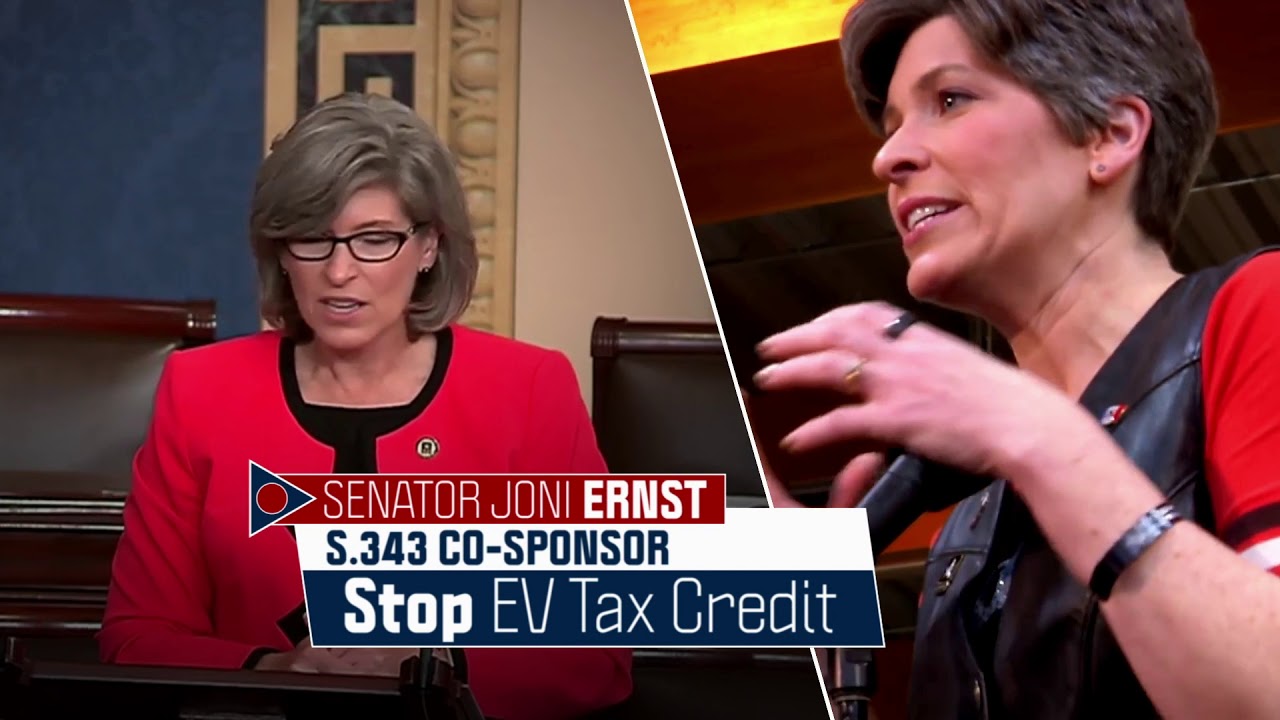 :{ supporting her last year.}: On March 18, One Nation announced another $970,000:{ in television, radio, and digital ads praising Ernst as a champion for lower drug prices. Ernst said she supported, but did not sponsor, the Wyden-Grassley bill that Pfizer and the Chamber lobbied against, but voted against a 2017 }:bill:{ that would have allowed the U.S. to import cheaper drugs from Canada. }:
Ernst in 2018 co-sponsored a Republican-led bill as part of a party effort to assuage fears among its base after its successful repeal of parts of the Affordable Care Act. Republicans said the bill would protect people with preexisting conditions, but it would still have allowed insurers to discriminate against patients for other reasons, or sell policies that don’t cover other medical problems, HuffPost reported.
Critics say it’s unsettling, if not unsurprising, that a McConnell-aligned dark-money group would add a former pharmaceutical lobbyist to its board while running ads celebrating Republican senators for pushing lower drug prices, a cause McConnell himself has stymied in Congress.
“One Nation’s mission is to make sure that Republicans hold their majority in the Senate. They are going to craft their message around that,” said Robert Maguire, research director at Citizens for Responsibility and Ethics in Washington. “It does not mean that One Nation has staked out that policy. They think that voters in Maine want to hear that.”
:{
}:
https://www.motherjones.com/politics/2016/03/right-wing-groups-gearing-up-onslaught-merrick-garland-supreme-court/
no lnx
Wednesday, President Barack Obama picked Merrick Garland, a federal court of appeals judge with a stellar and moderate reputation, to replace the late Supreme Court Justice Antonin Scalia. His strategy was obvious: present obstructionist Republicans with a nominee with little or no baggage. But Senate Republicans immediately signaled that the Garland nomination would not change their calculations—that the fight to block any nominee was on. And prior to Obama’s announcement, conservative groups were already gearing up for this crusade, perhaps the last big battle of the right’s war on Obama.
The political players leading this effort are the usual suspects. The Republican National Committee had already announced plans to oppose Obama’s nominee—whoever it might be—and to run ads in competitive Senate races in Colorado, Ohio, Florida, New Hampshire and elsewhere, in addition to targeting Democratic members of the Senate Judiciary Committee. The tea party group FreedomWorks is rallying grassroots voters to the cause. On the other side of political spectrum, liberal advocacy groups such as the Alliance for Justice and People for the American Way are girding for a massive fight.
This face-off could well be nastier and more expensive than past confrontations over the Supreme Court. It’s the first political fight of this kind since the controversial Citizens United decision allowed money to flow freely into the political system. The influx of money has also helped create a well-funded extra-party political infrastructure that is now turning its sights on the SCOTUS fight.
Thanks to Citizens United, campaign finance rules that once limited the use of corporate and union money for certain advertisements no longer exist. Meanwhile, dark-money groups—which can get involved in campaigns but don’t have to disclose their donors—are supposed to spend slightly more than half of their money on nonelection activities to keep their nonprofit status. As a result, they “may funnel a lot of the rest of their money into Supreme Court-related ads,” says Rick Hasen, an election law professor at the University of California-Irvine law school
Here’s a look at the groups launching the assault against Garland:
Judicial Crisis Network: Perhaps the biggest player in the Supreme Court fight is the Judicial Crisis Network, launched in 2005 and long a dark-money conduit for a number of rich conservative donors. Founded by Ann Corkery, a low-profile conservative fundraiser and lawyer, the group reportedly launched with startup money from California foreclosure king Robin Arkley II, a wealthy conservative who helped bankroll the effort to unseat former South Dakota Sen. Tom Daschle (D). Corkery’s husband Neil is JCN’s treasurer.
Other early JCN supporters included Jay Sekulow, a longtime culture warrior and chief counsel of the American Center for Law and Justice (which was created by televangelist Pat Robertson), and Leonard Leo, the executive vice president of the Federalist Society, a leading conservative legal group. Originally called the Judicial Confirmation Network, the group was formed to help push through George W. Bush’s judicial nominees. After Obama was elected in 2008, the group shifted its focus to blocking his federal court nominees.
In 2008, JCN ran ads attacking then-candidate Obama for associating with former Weatherman Bill Ayers and the Rev. Jeremiah Wright. The group went all in to oppose the Supreme Court nomination of Sonia Sotomayor in 2009, setting up state-level opposition groups to pressure vulnerable Democratic senators. It also ran attack ads against Supreme Court nominee Elena Kagan the following year.
Since Citizens United, JCN has become more heavily involved in elections,particularly judicial and attorney general elections at the state level. It has spent millions of dollars to swing state supreme courts to the right and to elect business-friendly attorney generals. The group is a beneficiary of significant amounts of dark money.The bulk of its budget in 2014 came from an outfit called Wellspring Committee, a secretive nonprofit group that isn’t required to disclose its donors.
According to Wellspring’s most recent tax filing, it gave JCN nearly $7 million that year. Wellspring was a creation of the Koch brothers, the billionaire industrialists who have pumped millions of dollars into conservative political campaigns over the past several years. According to Ken Vogel’s book Big Money, Wellspring was one of the Kochs’ first forays into using a nonprofit entity to funnel money secretly to other political organizations to obscure the source of the funding. The Koch brothers reportedly broke with Wellspring in 2008 and moved on to other projects, but Wellspring still apparently maintains ties with members of their donor network.
Within a week of Scalia’s passing, JCN announced the launch of a $1 million ad campaign calling on Senate Republicans to refuse Obama a hearing on any Supreme Court nominee.The ads praised senators in competitive 2016 races who had already pledged to block any Obama nominee. (Last week, the group ran ads attacking Judge Jane Kelly, a federal appeals court judge who was briefly on Obama’s Supreme Court short list, for once having represented a “child molester.”) After Obama announced Garland’s nomination, JCN disclosed that it would spend another $2 million on ads opposing his confirmation.
Carrie Severino, a former clerk to Supreme Court Justice Clarence Thomas who serves as JCN’s chief counsel and policy director, said last month, “We cannot allow President Obama turn the Supreme Court nomination process into another partisan game, where Obama’s goal is to dominate the court with extremist liberal ideologues.”
America Rising:A super-PAC, America Rising was founded in 2013 by Mitt Romney’s former campaign manager, Matt Rhoades. The PAC’s biggest donor this cycle is Republican hedge fund mogul Paul Singer. Close behind is Mike Fernandez, a big Jeb Bush donor. The outfit has made a name for itself by sending out trackers to follow Democratic congressional candidates during the 2014 election—looking for material for attack ads. The trackers scored a big hit when they captured Senate candidate Bruce Braley calling Iowa Republican Sen. Charles Grassley “a farmer from Iowa who never went to law school,” a comment that hurt Braley’s campaign.
America Rising’s involvement in the Supreme Court fight is coming largely through a subsidiary, America Rising Squared, run by a former communications director for Sen. John McCain, that was created to do opposition research on Democratic candidates. Before the Garland pick was announced, JCN and the Republican Party each hired American Rising to dig up dirt on potential Supreme Court nominees. After Garland’s nomination, America Rising Squared executive director Brian Rogers released a statement warning of the judge’s liberal leanings. “Merrick Garland has been called the ideal judge to move the Supreme Court to the left and cement President Obama’s liberal legacy for decades into the future.” And he told the Washington Post, “We’ve done a good deal of research on Judge Garland so far and now we’re in the midst of a big surge to get after the record to make sure the American people have all the information they need to weigh this debate.”
One Nation:Republican strategist Karl Rove’s dark-money monster, Crossroads GPS, will be a key player in Senate elections, though under a less familiar name. That outside spending group, created in the wake of Citizens United, has lately been operating using an entity called One Nation. The new group is headed by Crossroads’ President Steven Law, a former chief of staff to Senate Majority Leader Mitch McConnell (R-Ky.), who has made obstructing Obama’s Supreme Court nominee a priority. One Nation has already spent several million dollars trying to help endangered GOP senators such as Sen. Pat Toomey (R-Pa.).
The group has said it will likely focus its Senate campaign efforts on the Supreme Court fight, honing in on the impact of a new potential liberal justice and the effect on core conservative issues. Ian Prior, a spokesman for the group, told Politico last month, “The consequences of our next Supreme Court justice and what that will do to shape the court for 20 years is certainly an issue that One Nation will be front and center in addressing over the next several months.”
==
https://www.opensecrets.org/news/2018/11/karl-rove-crossroads-gps-is-dead-long-live-dark-money-operation
One Nation, a conservative 501(c)(4) “dark money” nonprofit masterminded by Karl Rove, raised nearly $17 million last year, according to the most recent IRS tax filings released Friday.
Meanwhile, Crossroads GPS — formerly a dominant group in conservative circles and also run by Rove — raised just $75,000 last year, all but confirming its demise less than a year after the IRS granted it tax-exempt status.
The two dark money groups — along with the conservative American Crossroads and Senate Leadership Fund (SLF) — share the same Washington, D.C. office and employees. Each organization is run by Steven Law, a former chief of staff to Senate Majority Leader Mitch McConnell, who remains closely aligned with the groups.
One Nation does not reveal its donors, but it reported receiving four contributions north of $1 million, the biggest being an individual $7.9 million contribution.
The dark money group handed out only one grant last year — a $500,000 grant to the National Rifle Association for “social welfare” purposes.
It spent nearly $6.5 million by the end of the year, including $3.1 million on media services. One Nation spent $1.7 million with Main Street Media Group, which has long been associated with One Nation and SLF. Politically active 501(c)(4) nonprofits are supposed to exist for the purpose of promoting “social welfare” and not allowed to have politics as their primary purpose but the IRS has not established any “bright line” rules governing how much politicking is too much, a vagueness even Crossroads GPS has lamented.
One Nation paid a total of 10 independent contractors more than six figures in 2017.Some of its other large payments to contractors include six figures for legal services to a high-powered law firm that helped the group win the battle for tax-exempt status the prior year and another $250,000 payment to opposition research firm America Rising LLC.
As it was not an election year, One Nation’s spending in 2017 was down from 2016, when it reported spending more than $63 million. Politically active nonprofits are not required to disclose spending totals in tax filings with the IRS until 10-and-a-half months after the end of an organization’s fiscal year — long after the group wrapped up its political spending.
Crossroads GPS was once a dominant outside spending group, shelling out $71 million in an attempt to defeat Democrats in 2012. The group was so prolific that its legal battles ultimately spawned new guidance from the FEC earlier this year that now requires all “dark money” groups that spend at least $250 on independent expenditures explicitly advocating for or against a candidate to report every donor who gave at least $200 for “political purposes” in the calendar year.
The nonprofit reported raising more than $16 million in 2016, but its funding appears to have disappeared almost entirely as the focus shifts to One Nation.
The tight-knit super PACs and dark money groups like to shuffle their money around and have remained active in the 2018 election cycle. SLF reported accepting one contribution of $6.8 million from One Nation in September 2018 and two additional $3 million contributions last month.
SLF — which spent nearly $94 million to support Republican Senate candidates, mostly through attack ads — is the second-largest donor to American Crossroads in 2018, giving more than $690,000.
RELATED TOPICS
- 501(c) groups
- American Crossroads
- Anna Massoglia
- Crossroads GPS
- dark money
- karl evers-hillstrom
- Karl Rove
- One Nation
- senate leadership fund
==
==
bannon decalres war on judge moore
:{===
}:
Head of Crossroads GPS once a McConnell aide, now his ...
:{https://www.washingtonpost.com/...mcconnell.../9f17e...
The Washington Post
}:
:{Oct 30, 2012 - Senate minority leader and Steven Law remain a powerful combined force in ... Head of Crossroads GPS once a McConnell aide, now his political ally ..... At the time, the Chamber was expanding to become the lobbying and ...
After more than a decade working side by side, the two men rarely talk these days. But Senate Minority Leader Mitch McConnell and Steven Law, his trusted former aide, remain a powerful combined force in Washington.
Law heads American Crossroads and Crossroads GPS, conservative groups whose $300 million budget has allowed them to outspend every other interest group in this election, as well as the Democratic National Committee. Together, the two groups have matched the Romney campaign in running anti-Obama ads, and in the past two months, they have put $35 million into 10 Senate races around the country — more than the Republican Party itself.
If things go his way, Law could deliver control of the Senate to the Republicans and their leader, McConnell. It would be a fitting outcome for the two, who have spent their careers in part shaping the rules governing how money is spent in politics.
Helped by two Supreme Court rulings, their efforts have led to this moment in politics — an election defined by huge spending and anonymous donors.
In the 1990s, McConnell and Law vigorously fought efforts to limit campaign spending and to finance campaigns with public dollars. For years, they have raised and spent large donations known as soft money, together in the Senate and for Law, at the U.S. Chamber of Commerce and now Crossroads.
View Graphic
Explore the candidates’ campaign finances
Filling the Senate majority leader post would satisfy a long-held ambition for the Kentucky Republican, who single-handedly boosted Law from unpaid intern to campaign manager, chief of staff and then Republican Party official, easing his way to the top of Washington’s highest power circles.
“Most of what I’ve learned about politics I learned from him,” Law, 52, says of his mentor.
:{
Now, McConnell, 70, is taking the lead in preventing Democrats and government regulators from cracking down on Law’s group,}: which has thrived under rules allowing its donors to remain secret.
Democrats, too, have taken advantage of the loosened fundraising environment. After sitting out 2010, liberals organized a trio of political groups that have raised a combined $122 million so far this election cycle.
But no other group has come close to matching Crossroads.
Obama and others have vocally criticized the secrecy of Republican groups such as Crossroads GPS, saying wealthy donors and corporations — including one $10 million donor — are swaying the election without allowing public scrutiny.
“Voters have a right to know who is spending millions of dollars to try and influence their vote,” said Rep. Chris Van Hollen (D-Md.), who has led the fight in Congress to force groups to disclose donors. “Having shadowy groups influence our elections undermines the strength of our democracy.”
McConnell, a featured speaker at two Crossroads fundraisers this year, has become not only a beneficiary of the secret donations, but also their biggest defender.
:{He has consistently used his Senate post to block Democratic efforts to force groups such as Crossroads GPS to disclose donors, arguing that liberals are using disclosure as a “political weapon” that would curtail free speech. He contends that contributors should be allowed to give anonymously to avoid attacks by opponents.
“We’ve seen the way a hostile administration can intimidate people and try to remove them from the political playing field,” he said.}:
Under different circumstances, McConnell has been an advocate for disclosure. In the early 1990s, while Law was his chief of staff, McConnell pushed for a ban on political action committees, which favored Democrats at the time. And he wanted to bar soft money, the type of funds Law now collects at Crossroads.
“Soft money is a problem because it is unlimited and undisclosed to the public, yet it can play a decisive role in elections,” McConnell wrote in a 1993 opinion page article. “All campaign spending should be on top of the table where voters can see it.”
McConnell says he was supporting disclosure to candidates and parties, a position he still holds, but not for groups like Crossroads GPS that operate outside the party structure.
Longtime colleagues
In McConnell’s efforts to shape the money rules over time, Law has often been at his side.
Law had been answering mail on the Hill in the late 1980s, just out of Columbia Law, when McConnell hired him as a legislative aide working on, as Law put it, “the beginning of the campaign finance wars.”
“It took me about a year to figure out he was the smartest guy on the staff,” McConnell said.
McConnell named Law to manage his 1990 reelection effort, although Law had never worked for a campaign and his only management experience was running a restaurant one summer during college.
:{After a close race, which McConnell won, the two went on to lead a fight against Democratic proposals for campaign spending limits and public funding.
When McConnell became chairman of the National Republican Senatorial Committee in 1997, Law served as executive director, where he said he “learned the craft” of running a large political operation. After two election cycles in that job, however, McConnell said he was at a loss: “I didn’t have any more jobs to give him to keep him moving up.”
But there was an opening with McConnell’s wife, then-Labor SecretaryElaine Chao, who hired Law as her first chief of staff. He later became deputy secretary, where he helped pass regulations requiring more transparency from unions on their finances, including their political spending for Democrats.
In 2007, he moved to the private sector, joining the U.S. Chamber of Commerce as its general counsel, earning $845,000 a year. (He now earns $600,000 at Crossroads.) He took the lead in helping the Chamber raise more than $10 million to stop what was seen as a serious threat to business and Republicans, a labor push to ease the rules on forming unions.
At the time, the Chamber was expanding to become the lobbying and campaign behemoth it is today, spending millions in undisclosed corporate money to help pro-business, mostly Republican congressional candidates.
Joining forces with Rove
In the fall of 2009, Law pitched an idea to former RNC chairman Ed Gillespie over lunch at the Mayflower Hotel: a new conservative group to boost Republican candidates and counteract better-organized liberal players such as MoveOn.org.
“I could just see the need,” Law said. “What I didn’t know was that at the same time while I had the faintest outline of this idea, Karl Rove already had a fairly detailed blueprint that he was building the architecture for.”
Gillespie was already working with Rove, the former political adviser to President George W. Bush, and together they formed the group they named American Crossroads. They chose Law to run it.
Just as Crossroads was getting off the ground, the Supreme Court handed down a gift: the landmark Citizens United v. Federal Election Commission decision that stripped away limits on election spending by corporations, unions and nonprofit groups such as Crossroads GPS, allowing them to expressly urge voters to oppose or support certain candidates.
Law said the ruling served as “a Good Housekeeping seal of approval for nervous general counsels” at corporations considering donations.
For the 2010 elections, the Crossroads groups raised a combined $71 million, helping Republicans pick up 63 House seats and take control of the chamber.
Crossroads GPS has been the subject of several complaints filed by activists who have argued to the IRS that the group is a partisan outfit masquerading as nonprofit solely to keep its funders anonymous. And Democratic members of Congress have joined the fray, urging the IRS to limit the amount that such nonprofits can spend on politics.
The IRS, which reviews groups on a case-by-case basis, has not yet approved nonprofit status for Crossroads GPS.
The agency has been reluctant to weigh in on political matters, and in an official response, said it was aware of “public interest” in the issue.
That was enough to prompt McConnell and other Republican senators to warn the officials “to resist allowing the IRS rule-making process to be subverted to achieve partisan political gains.”
McConnell argues that the proper venue to shape the rules is in Congress, where Democrats will have to find the votes to overcome his objections.
“One of the things I learned from Senator McConnell is the power of simplicity and consistency,” Law said. “There’s tremendous power in Washington to being the immovable object.”}:
}:
How McConnell world works - POLITICO
www.politico.com/story/2014/11/mitch-mcconnell-112945
Politico
Nov 17, 2014 - A number of those closest to McConnell are alumni turned lobbyists, and they too .... STEVEN LAW, political adviser and former chief of staff.
McConnell's guy Steve Law runs Rove's... - West Chester ...
https://www.facebook.com/permalink.php?id=131533523581973...
McConnell's guy Steve Law runs Rove's American Crossroads, and other former staffers are positioned throughout law firms, lobbying groups,media, and...
Revolving Door: Steven Law Employment Summary ...
https://www.opensecrets.org/.../rev_summa...
Center for Responsive Politics
Law, Steven. Employment History ... of Staff, Dept of Labor. See also: Individual Lobbying Profile ... 1990-1990, McConnell Senate Cmte Revolving Door ...
Leadership Team - American Crossroads
https://www.americancrossroads.org/leadership-team/
American Crossroads
Steven Law is the president and chief executive officer of American Crossroads. ... Committee and chief of staff to U.S. Senator Mitch McConnell (R-KY). Law ...
Missing: lobbyist
Leadership Team - Crossroads GPS
www.crossroadsgps.org/leadership-team/
Steven Law brings two and a half decades of diverse experience in ... Mitch McConnell's first reelection campaign in 1990, and served as McConnell's chief of ...
Missing: lobbyist
Our Team — Engage Cuba
www.engagecuba.org/our-team/
Steven Law has held a number of high-level positions in the executive branch, Congress ... Senatorial Committee and chief of staff to U.S. Senator Mitch McConnell. ... was a Principal at Ricchetti, Inc., a Democratic lobbying and consulting firm.
K Street McConnellites on the rise | TheHill
thehill.com/...lobbying/...lobbying/224470-k-street-mcconnellite...
The Hill
Nov 18, 2014 - ... Russell Group; Billy Piper of Fierce, Isakowitz & Blalock; and Steven Law, the president ... The network includes contract lobbyists with clients in healthcare, ... McConnell's former staffers on K Street include Amy Swonger at ...
Mitch McConnell at War - National Review Online
www.nationalreview.com/.../mitch-mcconnell-war-jonat...
National Review
Nov 8, 2013 - Senate minority leader Mitch McConnell likes to say, “If someone flicks a ... former McConnell chief of staff Billy Piper, now a lobbyist at Fierce, Isakowitz, ... Insiders list Billy Piper, American Crossroads' Steven Law, the U.S. ...
The Inside Story Of How Citizens United Has Changed ...
www.huffingtonpost.com/.../citizens-united-congres...
The Huffington Post
:{Feb 26, 2015 - and Senate Majority Leader Mitch McConnell (R-Ky.) ... into the dark money network run by Steven Law, a member of McConnell's inner circle and .... Reynolds, decamped with her old boss to the law and lobbying firm of Nixon ...
==
}: