Radicaliz 2 Funnel
---
MERRI OK
estb 12 24 NEGLECTED? GALLOWAY ON TIKTOK 2 26
ALSO INCLUDES GENERIC RW RADICALIZATION EG IDAHO
SEE ALGORITHM TWITTER MUSK TIKTOK
---
---
---
---
---
New from GPAHE: Betting Your Future: Crypto Casinos Radicalizing Young Men into Hate
Crypto casinos are becoming a new pipeline into far-right radicalization. Largely unregulated gambling platforms such as Duel, Stake, and Rainbet use influencers with millions of followers, including neo-Nazis and manosphere figures, to promote gambling while amplifying hate. As gambling debt and financial instability increase vulnerability, the industry is creating a dangerous convergence of addiction and extremist recruitment.
---
AN
Study confirms what many suspected: the 2024 election was rigged
U.S. President Donald Trump places a hand over his heart during a Veterans Day ceremony at Arlington National Cemetery in Arlington, Virginia, U.S., November 11, 2025. REUTERS/Kevin Lamarque
:{Thom HartmannJuly 10, 2026
It sure looks like tech billionaires and foreign dictatorships gave us Trump in 2024. This is as bad as the massive Russian bot presence on Facebook and Twitter back in 2016, which Robert Mueller documented gave Trump the presidency that time.
A peer-reviewed study released Thursday in Nature, the world’s most prestigious scientific journal, has finally put hard numbers to what a lot of us suspected the moment the 2024 election was called for Trump (and Republicans in Congress) by the big networks: the algorithms that control our largest social media platforms intentionally and explicitly tilted the playing field, and they tilted it for Donald Trump and the GOP.
Researchers at New York University Abu Dhabi created hundreds of “sock puppet” TikTok accounts in New York, Texas, and Georgia (via VPN), uploaded to them either pro-Democratic or pro-Republican videos to show their political leanings, and then watched what TikTok’s algorithm fed back to them every day over the 27 weeks leading up to Election Day.
Across more than 280,000 recommendations, Republican-seeded accounts received about 11.5 percent more “party-aligned content” than their Democratic counterparts, while the pro-Democratic accounts were force-fed 7.5 percent more attacks from the other side. As Professor Talal Rahwan put it:
“The algorithm wasn’t just giving people what they want; it was giving one side more of what the other side says about them.”
The pro-rightwing bias was even more dramatic when researchers looked at how the candidates’ own accounts did. Candidate Trump’s official TikTok videos were pushed to Democratic-leaning users 27 percent of the time, while Kamala Harris’s videos only reached Republican-leaning users just 15.3 percent of the time.
Translation: Leading up to the 2024 election, TikTok was working overtime to expose Democrats and lefties to MAGA’s most persuasive messaging, all while shielding rightwingers, independents, and Republican voters from Harris’s voice.
Making it even more astonishingly consequential, studies show that TikTok matters enormously to young people; roughly half of TikTok users under 30 say they use the app to keep up with politics and news, and that TikTok-engaged demographic shifted a mind-boggling full 10 percentage points toward Trump between 2020 and 2024 following this exposure.
Young men, for example, flipped from voting 56 percent Biden in 2020 to 56 percent choosing Trump in 2024, the kind of swing that decides battleground states.
Even more troubling, other research shows that TikTok isn’t an outlier. It’s one piece of a much larger algorithm-run social media ecosystem, and that system is now the main way a plurality of Americans engage with politics. Pew Research, for example, found that 42 percent of US social media users consider these platforms “important” for getting involved in political and social issues, and almost none of them have any idea how the top-secret social media algorithms decide what they see.
Sometimes it’s so obvious that it’s surprising it’s not a bigger news story.
Researchers at the Queensland University of Technology found a “structural break for Musk’s metrics around July 13th, 2024,” the exact day Elon Musk endorsed Trump. Overnight, algorithm-driven view counts on Musk’s own X posts jumped 138 percent and retweets exploded 237 percent, far above what any other major account experienced.
And it wasn’t just Musk’s own posts that got the boost; other pro-MAGA, pro-white supremacy, pro-GOP right-wing accounts across X were also systematically amplified. A separate peer-reviewed field experiment published this year in Nature randomly assigned active US users to either an algorithmic or chronological X feed for seven weeks. The result — what could only be called successful brainwashing of those being fed posts by the X algorithm — was astonishing.
The scientists noted that those on the algorithmic feed shifted “towards more conservative positions, particularly regarding policy priorities, perceptions of criminal investigations into Donald Trump, and views on the war in Ukraine.”
And once people are initially convinced of a worldview, changing their mind is a huge and usually unsuccessful undertaking, which is why rightwing billionaires were so eager to fund Charlie Kirk and other programs to indoctrinate schoolkids. Switching back to a chronological feed didn’t undo the damage.
This was on top of the roughly $277 million Musk personally spent electing Trump and Republicans, $239 million of it through his America PAC, making him by a wide margin the largest individual donor of the 2024 cycle.
Then there’s Mark Zuckerberg. After spending a decade telling Congress that Meta was politically neutral, Zuckerberg watched Trump win, metaphorically dropped to his knees, and immediately killed the fact-checking systems on Facebook and Instagram that kept identifying and calling out Trump’s and Republicans’ lies and misrepresentations.
Like a loyal puppy (or a terrified rabbit), Zuck called Trump’s reelection “a cultural tipping point,” wrote a $1 million check to Trump’s inaugural slush fund, replaced his head of global policy with longtime Bush-era Republican Joel Kaplan, and then announced he was moving Meta’s trust-and-safety operation from California to Texas. Meta’s institutional pivot toward Trump and MAGA wasn’t even subtle.
YouTube — also largely owned and run by right-wing billionaires — isn’t innocent either. A UC Davis audit using 100,000 sock-puppet accounts found that right-leaning users get systematically funneled into channels pushing rightwing extremism, conspiracy theories, and hard-right “otherwise problematic content,” while left-leaning users see nothing comparable.
A separate Brookings analysis found that YouTube’s algorithm tugs every user, regardless of where they start, “in a moderately conservative direction.”
I’ve been around digital media since the very beginning. My business partner Nigel Peacock and I were running forums on CompuServe back in the early 1980s, when “going online” meant a 300-baud modem screeching into your phone line and a connection bill that could put a small business under in a month.
The platforms were primitive, slow, and gloriously pluralistic; gatekeepers were a handful of sysops who worked with Nigel and me (CompuServe paid us) trying to keep the message boards clean and useful. Things were civil, the feed was chronological, and there was no anonymity; even political arguments were reasonable.
None of us back then imagined that one day a few billionaires would be able to flip a switch in Beijing, San Francisco, or Austin and successfully shift the political mood of an entire continent overnight. But that’s exactly where we are today, and it appears to have been the tipping point that brought us Trump and all the horrors that accompanied him.
The closest historical parallel is the era of William Randolph Hearst and the Yellow Press at the turn of the 20th century. Hearst’s chain of newspapers reached more readers than any information outlet in human history up to that point, and when he decided it would be in his interest for America to have a war with Spain in 1898, he largely manufactured one with wild, sensationalist coverage of an explosion in the boiler room of the USS Maine in Havana harbor, casting it as an attack against America.
He’s said to have cabled his illustrator in Cuba, “You furnish the pictures, and I’ll furnish the war.” And, sure enough, within just a few months, America was at war.
The difference between Hearst and the men running today’s platforms isn’t moral; it’s mechanical. Hearst had to print on physical paper and ship it on physical trains. Musk, Zuckerberg, and the executives at TikTok and Google/YouTube can rewrite the political information environment in which hundreds of millions of people are marinating in real time, with no editor, no copy desk, and — unless things change — exactly zero public accountability.
So what do we do about these men effortlessly swinging our elections invisibly and without spending a penny of their own money? Three things are at the top of the list that Democrats in Congress and Democratic candidates need to make priorities.
First, Congress needs to require algorithmic transparency, as I suggested in The Hidden History of Big Brother in America. Senators Markey and Blumenthal have introduced excellent bills demanding that platforms disclose how their recommendation systems weight political content and forcing them to submit to fully independent audits. Given the political power these platforms and their billionaire owners command and how they’ll fight to hang onto it, none of these types of bills will pass without sustained public pressure.
Second, we need to repeal or substantially reform Section 230 of the Communications Decency Act so that algorithm-driven platforms are treated legally like the publishers they are, rather than like the telephone wires they used to travel over.
Third, the Justice Department’s antitrust division needs to be unleashed against the handful of companies that now control the political conversation in America. Standard Oil was broken up in 1911. AT&T was broken up in 1984. There is nothing about Meta, X, or Google that makes them more sacred that these behemoths that preceded them.
Call your senators today through the Capitol switchboard at (202) 224-3121 and tell them you want algorithmic transparency legislation and Section 230 reform. Make sure your voter registration is current at vote.org, check on your state-level legislators at openstates.org, and start telling everyone you know that science has now proven that the 2024 election wasn’t a free and fair contest of ideas.
It was — based on this new research — a rigged information environment run by a handful of billionaires that put a corrupt, predatory fellow billionaire in the White House and helped install billionaire-friendly Republican lickspittles in Congress and state houses across the country.
We can fix this mess. But only if we stop scrolling and start demanding change.
---
---
2 26 MANY yt ON CENSORSHIP ~ KARA?
---
DUCK 5 26
- - [
 rawstory.com
Researchers expose algorithm skew that boosted Trump in 2024
2 days ago
](https://www.rawstory.com/trump-2676859361/)
- [
 truthout.org
- [
TikTok Algorithm Favored Conservative Content in 2024 POTUS Race, Study Suggests
23 hours ago
](https://truthout.org/articles/tiktok-algorithm-favored-conservative-content-in-2024-potus-race-study-suggests/)
A NEW study examining the algorithms of the social media site TikTok appears to suggest that content users received on the platform skewed more politically conservative during the 2024 presidential election, regardless of a user’s personal preferences.
Researchers Talal Rahwan and Yasir Zaki at New York University’s Abu Dhabi campus created over 300 “dummy” botaccountstomimic real-life users during the 2024 race. The bots “lived” in Democratic-leaning New York, Republican-leaning Texas, and the “purple” state of Georgia.
After creating the accounts, the researchers trained some to follow and react positively to Democratic messaging, while others were trained to support Republican content. Afterward, the researchers monitored the accounts’ “For You” pages for 27 weeks during the campaign, analyzing over 280,000 videos that were suggested by TikTok.
For the Republican bots, the outcome was predictable: the algorithm resulted in an 11.5 percent higher chance that they’d see more Republican-leaning content than Democratic-leaning posts.
But for the Democratic bots, it was different. Those accounts were 7.5 percent more likely to see Republican posts than Democratic ones.
Related Story
|
TikTok Restricts Gaza Journalist Bisan Owda’s Account Mere Days After US Deal
Owda’s account had 1.4 million followers, she said.
By Sharon Zhang , TruthoutJanuary 29, 2026
“Our findings show partisan imbalances in political information exposure on a platform dominated by algorithmic recommendations, with implications for platform governance and democratic discourse,” the researchers wrote in their study, which was published in *Nature*this week.
“The question arises whether the partisan content recommended on TikTok is skewed towards one party over the other,” the authors added.
TikTok responded to the study’s findings, claiming that its conclusions were largely incorrect. In a statement, the company stated:
This artificial experiment with fake accounts does not reflect how people actually use TikTok. In reality, people discover and watch a wide variety of content on our platform which they continuously shape and can control through more than a dozen tools the authors seem unaware of.
But the study’s authors defended their conclusions.
“Our finding isn’t just about reinforcement; Democratic accounts were shown significantly more anti-Democratic content than Republican accounts were shown anti-Republican content,” Rahwan said, speaking to *The Guardian* about the study’s findings.
“The algorithm wasn’t just giving people what they want; it was giving one side more of what the other side says about them,” Rahwan added.
How social media sites design their algorithms — and whether they are skewed toward one political party over another, accidentally or purposefully — could have real repercussions for elections and the political direction of the country. Indeed, according to data collected from Pew Research, 57 percent of Americans used digital devices “often” to get their news in 2024, higher than any other media, including television (33 percent) and the radio (11 percent).
“In an environment where margins are thin, systematic differences in the kind of political information recommended to tens of millions of young voters are worth taking seriously,” Zaki said.
TikTok Algorithm Favored Conservative Content in 2024 POTUS Race, Study Suggests | Truthout
---
Nature
https://www.nature.com › articles › d41586-026-01314-0
TikTok's algorithm systematically skewed to the right during the 2024 ...
2 days agoAn audit of TikTok's recommendation algorithm using hundreds of automated 'bot' accounts during the 2024 US presidential election finds that the 'For You' feed of the platform steered ...
---
Scott Galloway on TikTok, Musk, and the Radicalization Pipeline | Best of Lincoln Square
959 views Premiered 3 hours ago #politics #lincolnsquare #democracy
---
AN 2 26 TCONV
A new study published today in Nature has found that X’s algorithm – the hidden system or “recipe” that governs which posts appear in your feed and in which order – shifts users’ political opinions in a more conservative direction.
Led by Germain Gauthier from Bocconi University in Italy, it is a rare, real-world randomised experimental study on a major social media platform. And it builds on a growing body of research that shows how these platforms can shape people’s political attitudes.
Two different algorithms
The researchers randomly assigned 4,965 active US-based X users to one of two groups.
The first group used X’s default “For You” feed. This features an algorithm that selects and ranks posts it thinks users will be more likely to engage with, including posts from accounts that they don’t necessarily follow.
The second group used a chronological feed. This only shows posts from accounts users follow, displayed in the order they were posted. The experiment ran for seven weeks during 2023.
Users who switched from the chronological feed to the “For You” feed were 4.7 percentage points more likely to prioritise policy issues favoured by US Republicans (for example, crime, inflation and immigration). They were also more likely to view the criminal investigation into US President Donald Trump as unacceptable.
They also shifted in a more pro-Russia direction in regards to the war in Ukraine. For example, these users became 7.4 percentage points less likely to view Ukrainian President Volodymyr Zelenskyy positively, and scored slightly higher on a pro-Russian attitude index overall.
The researchers also examined how the algorithm produced these effects.
They found evidence that the algorithm increased the share of right-leaning content by 2.9 percentage points overall (and 2.5 points among political posts), compared with the chronological feed.
It also significantly demoted the share of posts from traditional news organisations’ accounts while promoting or boosting posts from political activists.
One of the most concerning findings of the study is the longer-term effects of X’s algorithmic feed. The study showed the algorithm nudged users towards following more right-leaning accounts, and that the new following patterns endured even after switching back to the chronological feed.
In other words, turning the algorithm off didn’t simply “reset” what people see. It had a longer-lasting impact beyond its day-to-day effects.
One piece of a much bigger picture
This new study supports findings of similar studies.
For example, a study in 2022, before Elon Musk had bought Twitter and rebranded it as X, found the platform’s algorithmic systems amplified content from the mainstream political right more than the left in six out of the seven countries.
An experimental study from 2025 re-ranked X feeds to reduce exposure to content that expresses antidemocratic attitudes and partisan animosity. They found this shifted feelings towards their political opponents by more than two points on a 0–100 “feeling thermometer”. This is a shift the authors argued would have normally taken about three years to occur organically in the general population.
My own research offers another piece of evidence to this picture of algorithmic bias on X. Along with my colleague Mark Andrejevic, I analysed engagement data (such as likes and reposts) from prominent political accounts during the final stages of the 2024 US election.
Our findings unearthed a sudden and unusual spike in engagement with Musk’s account after his endorsement of Trump on July 13 – the day of the assassination attempt on Trump. Views on Musk’s posts surged by 138%, retweets by 238%, and likes by 186%. This far outstripped increases on other accounts.
After July 13, right-leaning accounts on X gained significantly greater visibility than progressive ones. The “playing field” for attention and engagement on the platform was tilted thereafter towards right-leaning accounts – a trend that continued for the remainder of the time period we analysed in that study.
Not a niche product
This matters because we are not talking about a niche product.
X has more than 400 million users globally. It has become embedded as infrastructure – a key source of political and social communication. And once technical systems become infrastructure, they can become invisible – like background objects that we barely think about, but which shape society at its foundations and can be exploited under our noses.
Think of the overpass bridges Robert Moses designed in New York in the 1930s. These seemed like inert objects. But they were designed to be very low, to exclude people of colour from taking buses to recreation areas in Long Island.
Similar to this, the design and governance of social media platforms also has real consequences.
The point is that X’s algorithms are not neutral tools. They are an editorial force, shaping what people know, whom they pay attention to, who the outgroup is and what “we” should do about or to them – and, as this new study shows, what people come to believe.
The age of taking platform companies at their word about the design and effects of their own algorithms must come to an end. Governments around the world – including in Australia where the eSafety Commissioner has powers to drive “algorithmic transparency and accountability” and require that platforms report on how their algorithms contribute to or reduce harms – need to mandate genuine transparency over how these systems work.
When infrastructure become harmful or unsafe, nobody bats an eye when governments do something to protect us. The same needs to happen urgently for social media infrastructures.
Timothy Graham, Associate Professor in Digital Media, *Queensland University of Technology
This article is republished from The Conversation under a Creative Commons license. Read the original article.
---}:
---
an 2 26
When the late white supremacist Richard Butler founded the Aryan Nations back in the early 1970s, he chose Idaho for the group's headquarters. The Aryan Nations opened a compound in Hayden Lake, a suburb of Coeur d'Alene, Idaho — and starting in 1981, Butler held the annual Aryan Nations World Congress gathering on the compound. Members of other white supremacist, white nationalist and neo-Nazi groups were invited, including the Ku Klux Klan, The Order, and former KKK Grand Dragon Tom Metzger's White Aryan Resistance (WAR).
In a lengthy article for Mother Jones' March/April 2026 issue, reporter Michael Edison Hayden (known for his work with the Southern Poverty Law Center in the past) examines Idaho's long history of far-right extremism — from the Aryan Nations to MAGA Christian nationalists — and describes the deep red state as a "bellwether for radicalization."
"North Idaho came up a lot during my time at the Southern Poverty Law Center, the storied civil rights watchdog where I worked from 2018 through 2023," Hayden explains. "The region seemed to have an uncanny ability to attract bigots from elsewhere in the country…. By the 1970s…. neo-Nazis were arriving…. Then in 1991, an Aryan Nations associate named Randy Weaver failed to appear in court on a firearms charge. U.S. marshals began surveilling his property the following year, and when they approached his residence in the Ruby Ridge area of North Idaho, they came into conflict with the Weaver family, ultimately killing Weaver's teenage son and Weaver's wife, who was carrying the couple's baby in her arms when she was shot."
More recently, Hayden notes, "new extremists" in Idaho have been "making inroads in the local GOP power structure."
"A Republican group called the North Idaho Pachyderm Club, which is promoted on the official Kootenai County GOP website, has invited far-right activists Vincent James Foxx and Dave Reilly to speak in recent years," Hayden reports. "Reilly, who has a history of antisemitic commentary, even secured a KCRCC endorsement for his failed 2021 school board campaign. More moderate Republicans became targets….. In June 2020, armed individuals patrolled (Coeur d'Alene's) streets in an event called 'Gun d’Alene' —part of the backlash to the Black Lives Matter movement. Two years after that, dozens of masked members of Patriot Front, a neofascist collective, were caught packed in a U-Haul, preparing to storm a Pride parade."
Hayden emphasizes that extremism in Idaho can encourage extremism in other parts of the U.S.
"One theme I heard repeatedly about Coeur d’Alene was that it is a bellwether for radicalization," Hayden warns. "Meaning that if you see something like authoritarians shutting down speech at a town hall there — or maybe even a maniac ambushing firefighters — you should take it seriously, because it could be coming to your city next…. As Kate Bitz of the Western States Center said, 'If it happens in North Idaho now, no one should be surprised when it happens nationally a few years later.'"
---
Scott Galloway on TikTok, Musk, and the Radicalization Pipeline | Best of Lincoln Square
959 views Premiered 3 hours ago #politics #lincolnsquare #democracy
:{:{Scott Galloway lays out the real fix for social media: end legal cover for algorithmic amplification, force competition, and age-gate the platforms that harm kids. Then he explains why TikTok (and Elon’s Twitter) supercharge polarization and radicalization. Published Sept 25, 2023. Watch the original video: [ • Society's Negative Impact On Young People ...](https://www.youtube.com/watch?v=CYMBB_WaQeI
}:
Remove Section 230 for algorithmic amplificatioN
 Break up big tech (competition as “oxygen”
 Age-gate social media for minor
 Why TikTok is uniquely dangerouS
 Influence at scale: “CCP owning everything” analog
 The attention economy (and why it’s overpowering
 TikTok’s growth + why numbers may be understate Radicalization pipeline
 + Musk’s Twitter}:
---
---
neo nazi ads 1 26
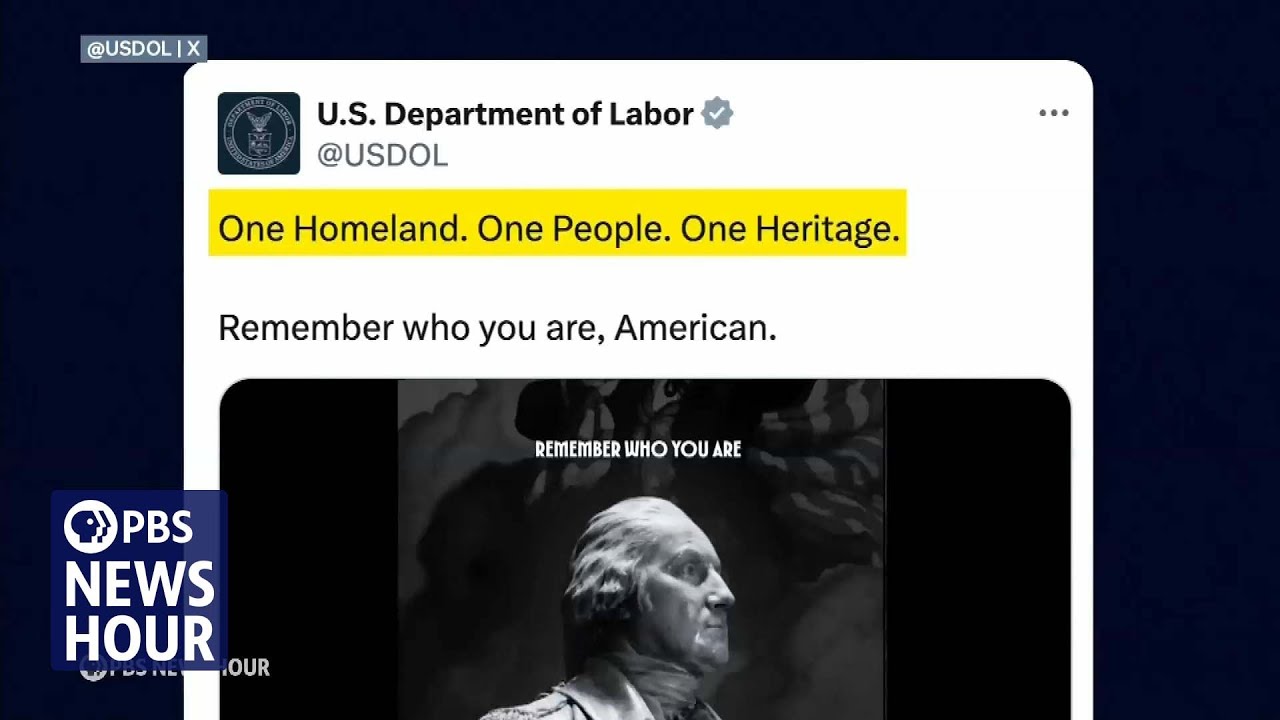
we will have home agAIN BY GOD PROUD BOY
MUSK WE WILL BE SLAUGHTERED GT REPL
CYNTHIA MILLER IDRISS SP AM UNIV POLR EXTR LAB
---
---
// MANOSPHERE BRO POD GOOD HANG
AN 9 25
Small local organizations called Active Clubs have spread widely across the U.S. and internationally, using fitness as a cover for a much more alarming mission. These groups are a new and harder-to-detect form of white supremacist organizing that merges extremist ideology with fitness and combat sports culture.
Active Clubs frame themselves as innocuous workout groups on digital platforms and decentralized networks to recruit, radicalize and prepare members for racist violence. The clubs commonly use encrypted messaging apps such as Telegram, Wire and Matrix to coordinate internally. For broader propaganda and outreach they rely on alternative social media platforms such as Gab, Odysee, VK and sometimes BitChute. They also selectively use mainstream sites such as Instagram, Facebook, X and TikTok, until those sites ban the clubs.
Active Club members have been implicated in orchestrating and distributing neo-Nazi recruitment videos and manifestos. In late 2023, for instance, two Ontario men, Kristoffer Nippak and Matthew Althorpe, were arrested and charged with distributing materials for the neo-Nazi group Atomwaffen Division and the transnational terrorist group Terrorgram. Following their arrests, Active Club Canada’s public network went dark, Telegram pages were deleted or rebranded, and the club went virtually silent. Nippak was granted bail under strict conditions, while Althorpe remains in custody.As a sociologist studying extremism and white supremacy since 1993, I have watched the movement shift from formal organizations to small, decentralized cells – a change embodied most clearly by Active Clubs.
 An investigation by the Canadian Broadcasting Corporation tracks down two Ontario-based Active Clubs that recruit and train young men to fight.
White nationalism 3.0
According to private analysts who track far-right extremist activities, the Active Club network has a core membership of 400 to 1,200 white men globally, plus sympathizers, online supporters and passive members. The clubs mainly target young white men in their late teens and twenties. Since 2020, Active Clubs have expanded rapidly across the United States, Canada and Europe, including the U.K., France, Sweden and Finland. Precise numbers are hard to verify, but the clubs appear to be spreading, according to The Counter Extremism Project
, the Anti-Defamation League, the Southern Poverty Law Center and my own research. The clubs reportedly operate in at least 25 U.S. states, and potentially as many as 34
. Active U.S. chapters reportedly increased from 49 in 2023 to 78 in 2025. The clubs’ rise reflects a broader shift in white supremacist strategy, away from formal organizations and social movements. In 2020, American neo-Nazi Robert Rundo introduced the concept of “White Nationalism 3.0
” – a decentralized, branded and fitness-based approach to extremist organizing. Rundo previously founded the Rise Above Movement, which was a violent, far-right extremist group in the U.S. known for promoting white nationalist ideology, organizing street fights and coordinating through social media. The organization carried out attacks at protests and rallies from 2016 through 2018. Active Clubs embed their ideology within apolitical activities such as martial arts and weightlifting
:{:{. This model allows them to blend in with mainstream fitness communities. However, their deeper purpose is to prepare members for racial conflict. }:
An actor reconstructs how British broadcaster ITV News infiltrated and secretly filmed inside Active Club England, documenting its recruiting process, activities and goals.}:
‘You need to learn how to fight’
Active Club messaging glorifies discipline, masculinity and strength – a “warrior identity” designed to attract young men. “The active club is not so much a structural organization as it is a lifestyle for those willing to work, risk and sweat to embody our ideals for themselves and to promote them to others,” Rundo explained via his Telegram channel. “They never were like, ‘You need to learn how to fight so you can beat up people of color.’ It was like, ‘You need to learn how to fight because people want to kill you in the future,’” a former Active Club member told Vice News in 2023.These cells are deliberately small – often under a dozen members – and self-contained, which gives them greater operational security and flexibility. Each club operates semi-autonomously while remaining connected to the broader ideology and digital network.
Expanding globally and deepening ties
:{:{Active Clubs maintain strategic and ideological connections with formal white supremacist groups, including Patriot Front, a white nationalist and neofascist group founded in 2017 by Thomas Rousseau after the Unite the Right rally in Charlottesville, Virginia.Active Clubs share extremist beliefs with these organizations, including racial hierarchy and the “Great Replacement” theory, which claims white populations are being deliberately replaced by nonwhite immigrants.}:
While publicly presenting as fitness groups, they may collaborate with white supremacist groups on recruitment, training, propaganda or public events. Figures connected to accelerationist groups – organizations that seek to create social chaos and societal collapse that they believe will lead to a race war and the destruction of liberal democracy – played a role in founding the Active Club network. Along with the Rise Above Movement, they include Atomwaffen Division and another neo-Nazi group, The Base – organizations that repackage violent fascism to appeal to disaffected young white men in the U.S.}:
Brotherhood as a cover
By downplaying explicit hate symbols and emphasizing strength and preparedness, Active Clubs appeal to a new generation of recruits who may not initially identify with overt racism but are drawn to a culture of hypermasculinity and self-improvement.Anyone can start a local Active Club chapter with minimal oversight. This autonomy makes it hard for law enforcement agencies to monitor the groups and helps the network grow rapidly. Shared branding and digital propaganda maintain ideological consistency.
Through this approach, Active Clubs have built a transnational network of echo chambers, recruitment pipelines and paramilitary-style training in parks and gyms.Club members engage in activities such as combat sports training, propaganda dissemination and ideological conditioning. Fight sessions are often recorded and shared online as recruitment tools.Members distribute flyers, stickers and online content to spread white supremacist messages. Active Clubs embed themselves in local communities by hosting events, promoting physical fitness, staging public actions and sharing propaganda. Potential members first see propaganda on encrypted apps such as Telegram or on social media. The clubs recruit in person at gyms, protests and local events, vetting new members to ensure they share the group’s beliefs and can be trusted to maintain secrecy.
From fringe to functioning network
Based on current information from the Global Project Against Hate and Extremism, there are 187 active chapters within the Active Club Network across 27 countries – a 25% increase from late 2023. The Crowd Counting Consortium documented 27 protest events involving Active Clubs in 2022-2023. However, precise membership numbers remain difficult to ascertain. Some groups call themselves “youth clubs” but share similar ideas and aesthetics and engage in similar activities. Active Club members view themselves as defenders of Western civilization and masculine virtue. From their perspective, their activities represent noble resistance rather than hate. Members are encouraged to stay secretive, prepare for societal collapse and build a network of committed, fit men ready to act through infiltration, activism or violence.
Hiding in plain sight
Law enforcement agencies, researchers and civil society now face a new kind of domestic threat that wears workout clothes instead of uniforms.Active Clubs work across international borders, bound by shared ideas and tactics and a common purpose. This is the new white nationalism: decentralized, modernized, more agile and disguised as self-improvement. What appears to be a harmless workout group may be a gateway to violent extremism, one pushup at a time.
Art Jipson, Associate Professor of Sociology, University of Dayton This article is republished from The Conversation under a Creative Commons license. Read the original article.
---
---}:
AN 9 25
Rebecca Kasen has seen and heard things in recent years in and around Michigan’s capital city that she never would have expected.
“It’s a very weird time in our lives,” said Kasen, executive director of the Women’s Center of Greater Lansing.
Last November, a group of people were captured on surveillance video early one morning mocking a “Black Lives Matter” sign in the front window of the center, with one of them vandalizing its free pantry. That same fall, Women’s Center staff reported being harassed.
A couple of blocks down East Michigan Avenue, Strange Matter Coffee, which supports progressive causes in the community, has been confronted by “First Amendment auditors” outside its storefront. Some toted guns or cameras, sometimes chanting slogans supporting President Donald Trump, generally unnerving customers and staff, Kasen said.
In many cases, extremist activities and conduct throughout the U.S. over the past few years have been driven by the deepening chasm of political partisanship and disinformation-driven rebellion against responses to the covid-19 pandemic. More recently, backlash against immigration and diversity, equity, and inclusion initiatives has heightened tensions.
Last year, the Southern Poverty Law Center documented 1,371 hate and extremist groups nationwide sowing unrest through a wide range of tactics, sometimes violent. Over the last several years, the group writes, the political right has increasingly shifted toward “an authoritarian, patriarchal Christian supremacy dedicated to eroding the value of inclusive democracy and public institutions.”
Researchers at American University’s Polarization & Extremism Research & Innovation Lab, or PERIL, say that in online spaces, “hate is intersectional.” (For example, Pasha Dashtgard, PERIL’s director of research, explains, platforms dedicated to male supremacy are often also decidedly antisemitic.) Seemingly innocuous discussions erupt into vitriol: The release of “A Minecraft Movie” prompted tirades against an alleged trend toward casting Black women and nonbinary people.
The continued escalations drove staffers at PERIL and the Southern Poverty Law Center to approach the problem from a different angle: Treat extremism as a public health problem. Community Advisory, Resource, and Education Centers are now operating in Lansing, Michigan, and Athens, Georgia, offering training, support, referrals, and resources to communities affected by hate, discrimination, and supremacist ideologies and to people susceptible to radicalization, with a focus on young people.
The team defines extremism as the belief that one’s group is in direct and bitter conflict with another of a different identity — ideology, race, gender identity or expression — fomenting an us-versus-them mentality mired in the conviction that resolution can come only through separation, domination, or extermination.
Researchers who study extremism say that, as the federal government terminates grants for violence prevention, state governments and local communities are recognizing they’re on their own. (CARE receives no federal funding.)
Aaron Flanagan, the Southern Poverty Law Center’s deputy director of prevention and partnerships, said his organization and PERIL came together about five years ago to examine a shared research question: What would it take to create a nationally scalable model to prevent youth radicalization, one that’s rooted in communities and provides solutions residents trust?
They looked to a decades-old German counter-extremism model called mobile advisory centers. The objective is to equip “all levels of civil society with the skills and knowledge to recognize extremism” and to engage in conversations about addressing it, Dashtgard said.
“We’re not about, ‘How do you respond to a group of Patriot Front people marching through your town?’” Pete Kurtz-Glovas, who until June served as PERIL’s deputy director of regional partnerships, explained during a training in January. “Rather, ‘How do you respond when your son or a member of your congregation expresses some of these extremist ideas?’”
Michigan has long been considered fertile ground for extremism. Timothy McVeigh and Terry Nichols, convicted of the bombing of a federal building in Oklahoma City in 1995, were associated with a militia group in the state. Some of the men charged in 2020 in the plot to kidnap Democratic Gov. Gretchen Whitmer had ties to a militia group calling itself the Wolverine Watchmen.
The state’s capital city and adjacent East Lansing, where Michigan State University is, are relatively progressive but have seen conflict.
Will Verchereau has a vivid recollection from the early days of the pandemic: a pickup truck speeding down the street in their Lansing neighborhood, a Confederate flag flying from it, music blasting, later joining a rolling protest that clogged streets around the Capitol to protest Whitmer’s covid lockdown directives.
Incrementally, the community has responded to these expressions of extremism. After the confrontations at Strange Matter Coffee, Verchereau, a board member of the Salus Center, which advocates for and supports the LGBTQ+ community, said people banded together to talk about “how to be safe in those moments; how to de-escalate when and where possible.”
The CARE initiative reinforces such efforts. The centers offer tool kits catered to specific audiences. Among them are a parent and caregiver guide to online radicalization, a community guide to youth radicalization, and “Not Just a Joke: Understanding & Preventing Gender- & Sexuality-Based Bigotry.”
Flanagan said the team views this public health model as separate from but complementary to law enforcement interventions. The goal is to have law enforcement as minimally engaged as possible — to detect nascent warning signs and address them before police get involved.
The resources help identify conditions that can make people more susceptible to manipulation by extremists, such as unaddressed behavioral health issues and vulnerabilities, including having experienced trauma or the loss of a loved one.
Lansing resident Erin Buitendorp witnessed protesters, some of them armed, flood the state Capitol building during the pandemic over lockdown and masking orders. She’s a proponent of the public health approach. It’s “providing people with agency and a strategy to move forward,” she said. It’s a way to channel energy “and feel like you can actually create change with community.”
Lansing and Athens were chosen for a number of reasons, including their proximity to universities that could serve as partners — and to rural communities.
In the small town of Howell, 40 miles southeast of Lansing, protesters waived Nazi flags outside a production of the play “The Diary of Anne Frank” at an American Legion post.
In nearby DeWitt, the local school district proposed a mini lesson on pronouns for a first grade class that involved reading the picture book “They She He Me: Free to Be!” Threats against school staff followed and officials canceled the lesson. Since then, the CARE team has helped provide support to teachers there in holding conversations on contentious topics in classrooms and in dealing with skeptical parents.
“It’s really important that rural communities not be left behind,” Flanagan said. “They persistently are in America, and then they’re often simultaneously demonized for some of the most extreme, or extremist, political problems and challenges.”
The CARE team hopes to expand its program nationwide. Similar public health initiatives have been launched elsewhere, including Boston Children’s Hospital’s Trauma and Community Resilience Center and the DEEP program, run by New York City’s Citizens Crime Commission.
And in June a new tool, the Reach Out Resource Hub, went live, offering guidance to help prevent violent extremism.
Pete Simi, a professor of sociology at Chapman University and a leading expert on extremism, sees a daunting task ahead, with extremism’s having become more mainstream over the past 25 years. “It’s just devastating,” he said. “It’s really startling.”
Simi said that while there was previously talk of shifts in the Overton window, the range of ideas considered politically acceptable to mainstream society, “I would say now it has been completely shattered.” Violent extremists now feel “unshackled, supported by a new administration that has their back.”
“We are in a more dangerous time now than any other in my lifetime,” Simi said.
The Rev. Pippin Whitaker ministers the Unitarian Universalist Fellowship of Athens in Georgia, which last year received a package of ammunition in the mail with no note included. She embraces framing extremism, and people’s lack of awareness of it, as a public health issue.
“If you have a germ out there,” Whitaker said, “and people aren’t aware that if you wash your hands you can protect yourself, and that it’s an actual problem, you won’t enact basic protective behavior.”
NOW READ:Across America there are stirrings of a giant backlash against Trump
---
---
AN 4 25
A Wisconsin teenager accused of murdering two family members and plotting to assassinate President Donald Trump was inspired by Terrorgram, a white supremacist network that operated on the Telegram messaging and social media platform for half a decade, according to federal court records.
The Terrorgram community, which has been linked to around three dozen criminal cases around the globe, including at least three mass shootings, was profiled last month in stories and a documentary produced by ProPublica and FRONTLINE.
The court documents allege that Nikita Casap, a 17-year-old from Waukesha, Wisconsin, wrote a three-page manifesto calling for the assassination of Trump in order to “foment a political revolution in the United States and ‘save the white race’ from ‘Jewish controlled politicians.’”
In his manifesto, Casap allegedly encouraged people to read the writings of Juraj Krajčík, a longtime Terrogram figure who murdered two people in an attack on an LGBTQ+ bar in Bratislava, Slovakia, in 2022, according to the court records. Casap also allegedly recommended two publications produced by the Terrorgram Collective, a secretive group that produced alleged hit lists, videos and written publications — including instructions for building bombs and sabotaging critical infrastructure — and distributed them throughout the Terrorgram ecosystem.
Launched in 2019, Terrorgram was a constellation of scores of Telegram channels and chat groups focused on inciting acts of white supremacist terrorism and anti-government sabotage. At the network’s peak, some Terrorgram channels drew thousands of followers. Over the past six months, however, the network has been disrupted as authorities in Canada, the U.S. and Europe have arrested key Terrorgram influencers and community members.
But the violence hasn’t stopped.
Casap in February allegedly shot and killed his mother, Tatiana Casap, and stepfather, Donald Mayer; stole their property; and fled in their Volkswagen Atlas, Waukesha County prosecutors say. He was arrested in Kansas. Prosecutors have charged the teen with two counts of first-degree homicide, as well as identity theft and other theft charges. He is expected to be arraigned on May 7, according to court records.
A witness told local investigators that Casap “was in touch with a male in Russia through the Telegram app and they were planning to overthrow the U.S. government and assassinate President Trump,” according to charging documents in the Wisconsin case.
The newly unsealed federal court filings indicate that the FBI is investigating Casap in connection to the alleged assassination plot.
The bureau declined to comment on the matter.
Last fall, federal prosecutors accused two Americans of acting as leaders of the Terrorgram Collective and charged them with soliciting the murder of federal officials and a host of other terrorism-related offenses. The U.S. State Department has officially designated the Terrorgram Collective as a terrorist organization, as have officials in the United Kingdom and Australia. The two Americans have pleaded not guilty to the charges.
“Do absolutely anything you can that will lead to the collapse of America or any country you live in,” Casap allegedly wrote in his manifesto, according to an FBI affidavit. “This is the only way we can save the White race.”
The teen’s writings and online postings that are cited in the affidavit indicate that he is a believer in militant accelerationism, a concept that has become increasingly popular with neo-Nazis and other right-wing extremists over the past decade. Militant accelerationists aim to speed the collapse of modern society through acts of spectacular violence; from the ruins of today’s democracies, they aim to build all-white ethno-states organized on fascist principles.
Matthew Kriner, executive director of the Institute for Countering Digital Extremism, a nonprofit think tank, called the alleged Casap plot unique. “It’s the first time we’re explicitly seeing an individual tie an accelerationist act or plot with the president of the United States as a means of collapsing society,” Kriner said. “I think what we have here is a fairly clear-cut case of an individual who is being groomed to take drastic terrorist action in an accelerationist manner.”
Casap’s public defender could not be reached for comment.
A Telegram spokesperson said, “Telegram supports the peaceful exchange of ideas; however, calls for violence are strictly prohibited by our Terms of Service and are removed proactively as well as in response to user reports."
A ProPublica and FRONTLINE review shows that Casap was recently active in at least five extremist Telegram channels or chat groups, including a Russian-language neo-Nazi chat in which posters uploaded detailed instructions for crafting explosives, poisons and improvised firearms. He was also a member of a chat group with more than 4,300 participants run by the Misanthropic Division, a global neo-Nazi organization.
Casap, according to the federal documents, also sought out information online about the Order of Nine Angles, a cult that blends Satanic concepts and Nazi ideology and has increasingly turned to Telegram to recruit and proselytize.
“This is a clear example of how Terrorgram continues to influence murder,” said Jennefer Harper, a researcher who studies online extremism. “Nikita was influenced online by an assortment of ideologies and groups that intersect with the Terrorgram ecosphere.”
===
---
===
an 2 25
The Washington State Patrol is investigating a Nazi sympathizer who posted a social media reply that appears to threaten the state’s governor with gunfire.
Greyson Arnold wrote in reply to an X post by Gov. Bob Ferguson last month that “the federal government must act quickly to arrest you or it will be the 2nd amendment and judgment by lead.”
Arnold was responding to a post by Ferguson highlighting a new state program to assist families targeted for deportation by the Trump administration, which the governor described as “ripping families apart” and resulting in “kids losing their parents” and “businesses losing their workers.”
A former podcaster, the 35-year-old Arnold is part of the Groyper movement, an optics-obsessed cluster of far-right activists who seek to move white nationalist ideas into the political mainstream. Arnold was at the U.S. Capitol on Jan. 6, 2021, but was not arrested. The day after Donald Trump took the oath of office and issued mass pardons for the Jan. 6 defendants, Arnold posted a video of himself on the Capitol steps on Jan. 6 stating, “This is an American baptism. The American spirit is awakening.”
Arnold has cultivated ties with far-right Republicans such as former gubernatorial candidate Kari Lake, and Rep. Paul Gosar in Arizona. In 2022, Joe Kent, a Republican candidate for Congress from Washington state who is now set to direct the U.S. National Counterterrorism Center appeared in a video for an interview conducted by Arnold. When confronted with Arnold’s pro-Nazi views, the campaign disavowed him, claiming Kent did not know who Arnold was.
CNN compiled a list of atrocious pro-Nazi views expressed by Arnold, including a conspiracy theory purporting that there were Jewish plans to “genocide the German people,” describing Adolf Hitler as “a complicated historical figure which many people misunderstand," and calling the Nazis a “pure” race.
Arnold also briefly worked as a field organizer for the Washington State Republican Party in 2022, before he was fired for his social media posts. Despite his extremist views, FEC records show that Arnold registered voters last summer for Citizens for Free Enterprise, a super PAC led by former Arizona Gov. Doug Ducey.
The Executive Protection Unit of the Washington State Patrol was alerted to the Arnold’s “judgement of lead” post by a legislative assistant at the state capitol in Olympia, according to Chris Loftis, a spokesperson for the state law enforcement agency. The legislative assistant, in turn, received a tip from “an extremist watchdog group” in Arizona, Loftis said.
“We did visit the gentleman’s residences of record,” Loftis told Raw Story. “WSP detectives visited an address in Spokane and, at our request, Arizona officials visited an Arizona address. Greyson Arnold was not in either location, so we did not speak to the gentleman in either visit.”
Loftis said he was unable to comment further because the matter remains under investigation.
In a message last week to his 7,200 Telegram subscribers, Arnold appeared to double down on the threat,
“The new WA ‘governor’ just sent law enforcement to my house who claimed this tweet is a credible threat of violence,” he wrote.
“To make it clear,” Arnold added, “if you protect criminal illegal aliens then you are participating in the genocide of the American people, and if the federal government doesn’t act then it is up to the American people to.”
In comments below the message, Arnold’s subscribers endorsed the apparent call to violence, with one writing on Monday: “That’s literally what the 2nd amendment was made for. Literally killing your own government.”
In an X post last week, Arnold appeared to express confidence that he has the backing of Attorney General Pam Bondi.
“Looks like the [law enforcement officers] who tried to harass and intimidate my family are going to get prosecuted,” he wrote.
Arnold’s post referenced a news item reporting, "Bondi just ordered the Justice Department to freeze all funding for sanctuary cities and has instructed attorneys to begin prosecuting officials preventing ICE from doing their job.”
Asked whether the U.S. Attorney’s Office for the Western District of Washington intends to take the action sought by Arnold, spokesperson Emilie Langlie told Raw Story that as a matter of policy the Justice Department would decline to confirm or deny the existence of any investigation “unless or until something is filed on the matter in court.”
Arnold has a conviction in Arizona for disorderly conduct-fighting. A police report obtained by Raw Story indicates that officers responded to a domestic violence call at Arnold’s home in Lake Havasu City in December 2021. The alleged victim told officers that Arnold became frustrated when she told him his bank account was overdrawn. She said he slammed down a plate of food, threw down a glass of orange juice, and smashed a bottle of liquor on the counter, and then followed her from the kitchen to the living room, where he held her in a chair and prevented her from going to the bathroom.
“Too bad, b----, I’m the man and you need to listen to me,” Arnold said, according to the victim.
According to the report, Arnold admitted to forcing the victim into the chair, and notes from the report indicate he told the officer that she “is a very easy woman to move around and he just wanted her to sit in one spot and listen to what he had to say.”
Arnold was also charged with intentionally placing another person in fear of imminent physical injury and criminally defacing or damaging property worth less than $250, but court record show the charges were dismissed when he pleaded guilty to disorderly conduct.
Arnold’s social media posts have become increasingly unhinged in recent weeks, targeting not only the governor but also local and federal judges and migrants.
Replying to a post showing photos of King County Superior Court Judge Johanna Bender shopping at a supermarket, Arnold wrote: “What’s her home address and usual locations she visits, I’m sure the families she’s hurt would like to know.”
In another post referencing a photo of U.S. District Court Judge Loren AliKhan and a decision by her to block President Trump’s freeze on spending for federal aid programs, Arnold posted a GIF of Dwight K. Schrute, the character from the TV show “The Office,” firing a rifle.
On the same day as his “judgement by lead” post in reference to Gov. Ferguson, Arnold posted a video recorded from his car window as he cruised past a group of men standing on the side of a public roadway outside a self-storage business.
“I am mapping hotspots where illegals congregate and documenting where they reside to report directly to ICE,” he wrote. “This includes not only Home Depot, but schools, hospitals, and places of worship. Together we can find them and send them home, to Mexico.”
In another post that echoes the history of ordinary Germans looting Jewish homes when they were deported during World War II, Arnold posted a reply on X expressing indifference to a news story about a Guatemalan woman who had been deported and was upset that she still owed her parents money after they raised more than $25,000 to pay a smuggler.
“We should be doing our duty as Americans and helping strip them of any wealth before deporting them,” he wrote.
Arnold could not be reached for comment for this story.
Many of Arnold’s comments on X reflect a preoccupation with the global labor force. He talks about his experience working in China from 2015 to 2020. His posts express a negative view of Indian tech workers in the United States, in contrast to his own experience as a foreign worker in China.
“The only time I was even able to geta STEM-related job was in China,” he posted on X on Jan. 31. “America doesn’t hire Americans.”
In another post on the same day, he wrote: “China didn’t need Indians. We took in the inferior races and now the U.S. is crumbling. I choose the Chinese team if my team is just foreigners.”
---
---
no lnx
an no lnx
'Nothing is beyond our reach': Extremist site accused of 'grooming' teen attackers exposed
An image taken by school shooter Solomon Henderson and shared in his diary features a character from the Soyjak website. It's thought to be based on Patrick Crusius, who carried out a mass shooting in El Paso.
(Taken from Solomon Henderson's diary.)
Jordan Greenand Raw StoryFebruary 01, 2025
Before taking a handgun out of his backpack and walking into the cafeteria at Antioch High School in Nashville, where he opened fire and killed another student before taking his own life on Jan. 22, 17-year-old Solomon Henderson posted a link to an online screed filled with violence and unfiltered racism.
His message gave “special thanks” to Soyjak.party, an imageboard website whose anonymous users and administrators post bigoted memes based on a stock set of caricatures that typically make fun of liberals, sensitive men and trans people.
Using the insider lingo of the community, Henderson closed his post with a sign-off, “Remember keep jakking ‘teens,” followed by the website’s emblem, an octopus-like creature wrapping its tentacles around the globe. The emblem was accompanied by the slogan, “Nothing is beyond our reach.”
Henderson is one of three teenage attackers who have carried out shootings — and in one case a knife attack — over the past six months that extremism researchers have linked to a subset of the Soyjak community known as the Soyjak Attackers Video Fandom, or SAVF.
In the hours after Henderson’s school attack, investigators at the Anti-Defamation League’s Center on Extremism monitored discussions among the anonymous users on the Soyjak website.
“We watched as they started panicking about losing their website out of fear because they believed the Antioch shooter had been groomed to carry out the shooting by their imageboards,” Carla Hill, the center’s director of investigative research, told Raw Story.
Henderson was a Black teenager whose writings revealed a deep immersion in white supremacist ideology. His consumption of extremist content appears to have manifested as a loathing for himself and other Black people, as he grappled with personal difficulties.
Henderson also identified with the involuntary celibate, or incel, movement, whose members blame women and society for their lack of romantic success.
The title of Henderson’s screed combined the two ideas by marrying a racial slur against Black people with the suffix “cel,” adding a parenthetical to explain that he was an “involuntary” Black person.
“We felt like the Antioch shooter was driven to self-loathing by what he saw online,” Hill said. “That’s how he came to be a self-hating person.”
Other terrorist attacks — such as the car-ramming recently carried out by an ISIS sympathizer in New Orleans and the 2019 mass shooting by a white supremacist at a Walmart in El Paso, Texas — have proven to be significantly more lethal, but Henderson’s attack has unnerved extremism researchers as a harbinger of an emerging hybrid threat that is harder to pin down.
Hill took notice of three intertwined “driving forces” behind Henderson’s attack.
“There’s the incel space — various incel spaces — we found him in those. Soyjak crosses over with that,” Hill said. “Then, he was in spaces that glorify violence and gore and school shooters. Third, he was in these reactionary imageboard sites like Soyjak that serve as a hub for all kinds of extremist discourses, including antisemitism, accelerationism, white supremacy and misogyny.”
Through his participation in overlapping fringe internet subcultures where members use multiple social media platforms to celebrate white supremacist mass murder, dabble in the occult and engage in degrading interpersonal drama, Henderson connected online with 15-year-old Natalie Rupnow, who fatally shot a fellow student and teacher before taking her own life in Madison, WI, in December.
And Henderson took inspiration from an 18-year-old Turk named Arda Küçükyetim, who carried out a knife attack at an open-air café near a mosque in August. Rupnow participated in an online group that held a pre-arranged viewing party to watch Kücükyetim carry out the attack on a livestream.
Küçükyetim and Rupnow were also “part of” the Soyjak Attacker Video Fandom,” according to a report written by two pseudonymous authors and published by Marc-André Argentino, a senior researcher at the Accelerationist Research Consortium.
A screed left behind by Ryan Palmeter, a 21-year-old white supremacist who fatally shot three Black people in a Dollar Store in Jacksonville, FL in August 2023, also bears the imprint of the Soyjak community. A graphic included in Palmeter’s document includes a Soyjak character known as Chudjak, who is said to have been inspired by Patrick Crusius, the El Paso shooter. The word “soy” is emblazoned across Chudjak’s T-shirt in the graphic. The reference caught the attention of Henderson, who referenced him in his writings as a “soyteen,” the term that insiders use to describe a member of the community.
Similar to Palmeter, Henderson and Küçukyetim published screeds in advance of their attacks that celebrated previous white supremacist shootings, reviewed their meticulous planning and gear, and provided encouragement to readers they hoped would emulate their actions. (Rupnow also engaged in this ritualistic practice, but it’s unclear what she wrote because she left her Google document on private before taking her own life.)
As part of an iterative effort to promote accelerationist violence calculated to bring about the collapse of society, Henderson and Küçükyetim’s posts shared one specific facet: They recommended documents produced by the Terrorgram Collective, which was recently named as a specially designated global terrorist entity by the U.S. State Department.
Terrorgram first emerged in 2019 and, within a couple years, coalesced into a tight-knit group that produced PDFs with highly stylized graphics that combine terrorist propaganda, white supremacist hate, and tactical guidance. Terrorgram’s propaganda venerates white supremacist mass murderers by calling them “saints.”
Terrorgram’s publications function like a virus that finds a receptive host in fringe online extremist communities such as Soyjak, and then infects individuals who attack society at large through mass shootings and other lone-actor violence.
Henderson shared instructions on how to perpetrate attacks on social media from a Terrorgram Collective publication, among others, according to Argentino, and links to three of the publications appear in his screed.
Küçükyetim, meanwhile, shared PDFs of three Terrorgram publications on Telegram, according to a federal indictment of two Terrorgram Collective leaders. Dallas Humber of Elk Grove, CA, and Matthew Allison of Boise, ID, the Terrorgram leaders, were arrested less than a month after Kücükyetim carried out his attack. Humber and Allison were indicted on 15 counts, including conspiring to provide material support for terrorists, and could face up to 220 years in prison if convicted.
On the morning of his attack in the northwestern Turkish city of Eskisehir, according to the Humber/Allison indictment, Küçükyetim posted in a Telegram group chat: “Come see how much humans I can cleanse.” The post included links to a livestream and PDF files of the Terrorgram publications.
Hill and her team at the Anti-Defamation League’s Center on Extremism found the group chat. A Telegram account they identified as Natalie Rupnow's joined the chat through an invitation, which meant that she had been connected somehow to the other members of the chat prior to the livestreamed attack, Hill said.
Hill told Raw Story that Rupnow participated in a post-play discussion to evaluate the merits of the attack. Rupnow remarked that Küçükyetim had been “caught” and that the death toll was “0 probably,” but that he deserved “credit” for at least trying.
Humber and Allison also took note of the attack.
“He included the Terrorgram books and other Saint manifestos in his file dump, gives shoutouts to the other Saints in his manifesto and references several Hard Reset passages, he was 100% our guy,” Humber wrote in a chat with Allison, according to the indictment.
“But he’s not white, so I can’t give him an honorary title,” she added. “We still celebrating his attack tho, he did it for Terrorgram.”
When Rupnow posted her screed on X before opening fire at Abundant Life Christian School in Madison, WI on Dec. 16, Henderson replied under the post: “Livestream it.”
Later that day, after the attack, he expressed excitement that “the newest skool shooter followed” him on two of his X accounts.
In his diary, Henderson appears to speculate that he may have influenced Rupnow.
“It’s weird how we had similar takes and views, but not really because she followed my account,” he wrote.
“Arda was right!” Henderson added. Then he quoted directly from Küçükyetim’s screed: “Remember, I and the other saints will not forget what you did…. In this way, you will motivate future saints.”
It’s not clear whether Henderson directly interacted with Küçükyetim. In his diary, Henderson described Küçükyetim as “an ultimate saint” and “someone I was inspired by,” while cryptically adding, “maybe I didn’t know him.”
The transfer of terrorist motivation and camaraderie in each of the attackers’ screeds is part of a negative feedback loop, along with group chats and other social media posts, that is ensnaring some teenagers who are globally linked to one another through the internet.
“It’s not like a conversation in real life where if I told you something crazy you would be like, ‘Wait a minute,’” Hill said. “It’s an echo chamber that allows anything to go. They’re not getting healthy feedback. It builds on things that trouble them, and causes real-world problems.”
The proliferation of accelerationist terrorism through online radicalization is a challenge that law enforcement is not equipped to handle alone, she said.
“It’s going to take everyone,” Hill said. “It’s going to take parents talking to kids about how what you see on the internet could be false and horrible. And the tech community somehow trying to stop the spread of this.”
NOW READ: Incompetence and chaos as Trump 2.0 crashes and burns
This story is the first in a three-part series exploring how violent online subcultures provide the opportunity for teenagers attracted to accelerationism and inceldom to network and encourage one another to carry out terrorist attacks.
---
---
no lnx
:{:{Alternet}:
Social media shows Antioch shooter was influenced by Holocaust deniers, white nationalists
Antioch High School.
Jordan Greenand Raw StoryJanuary 23, 2025
The 17-year-old who killed a female student at a high school in Nashville before taking his own life was an African-American Reserve Officers' Training Corp member who hated Black people and identified as involuntarily celibate, according to a manifesto apparently posted by him online.
A document outlining the views was posted to the X account of the shooter, Solomon Henderson, along with a photo of a handgun in a backpack that appears to have been taken in a bathroom before he walked into the cafeteria at Antioch High School and opened fire around 11 a.m. Central Time. Henderson’s X account was still active, with the link at the time of publication.
In a question-and-answer section in the document, Henderson indicated the attack was motivated by “hatred” of Black people referenced through a racial slur. Europeans, according to the shooter, “need to be protected because they are conquerors, inventors and revolutionary’s [sic] thinkers.” It goes on to accuse Jews of subverting Europeans and imperiling their existence, echoing the racist Great Replacement theory.
ALSO READ: Trump's MAGA America revives a Confederate nightmare
The final page of a diary that was also posted on the shooter’s X account shows a photograph of Henderson, accompanied by the inscription: “God I am ugly. 4 hours to go.”
An entry in the position document on Henderson's opinions of Black people includes a litany of shockingly dehumanizing and ultraviolent descriptors of murder and atrocities.
Henderson credited less than a dozen internet personalities, mostly far-right influencers with radicalizing him.
The list includes Candace Owens, a Black conservative who left the Daily Wire website founded by Ben Shapiro last March following a string of increasingly antisemitic comments. In 2019, Owens testified before a House subcommittee hearing on white supremacist terrorism as a witness for the Republican minority. Owens lashed out at another witness during the hearing, saying, “The audacity of you to bring up the Christchurch shooting manifesto and make it seem as though I laughed at people that were slaughtered by a homicidal maniac is in my opinion absolutely despicable.”
Henderson wrote: “To expand on this, Candace Owens has influenced me above all. Each time she spoke I was stunned by her insights and her own views helped push me further and further into the belief of violence over the Jewish questions.”
Henderson also said he was influenced by Nick Fuentes, a white nationalist and Holocaust denier who dined with President Trump at Mar-a-Lago in 2022, and Ethan Ralph, a far-right podcaster who helped stoke the Gamergate controversy, a culture war flashpoint in 2014 that proved to be a staging ground for a misogynist backlash against women’s participation in gaming and other male-dominated spaces.
Henderson describes himself as a "Groyper incel," using terms that respectively refer to Fuentes followers and the involuntary celibate, or incel, movement.
Fuentes responded to the shooting by acknowledging that Henderson called himself a 'groyper,' but distanced himself from the attack in a post on X.
The document also credits the rapper Ye (formerly known as Kanye West) with inspiring his violence and extremism.
Henderson's position document pays tribute to an array of white supremacist mass murderers, including Patrick Crusius, who carried out a massacre targeting Hispanics in El Paso, Texas, in 2019; Brenton Tarrant, who killed Muslims at two mosques in Christchurch, New Zealand, in 2019; and Anders Breivik, who murdered young people at a youth camp in Norway in 2011.
Henderson's document expresses support for neo-Nazi ideals, which he described as "a better, neater, cleaner world by eliminating all undesirables." He added, "We must aid the Aryans regardless of our race."
Henderson’s diary indicates that he had initially planned to attack on Thursday, but decided to move it up to Wednesday because he wanted “to speed things up.” He said he was “scared of failing to kill myself and then going to jail,” and that his “goal was to kill at least 10 people.”
He wrote on X that he had saved money for a GoPro camera "but it was hard to explain to my parents why I needed it so I couldn't buy it." Henderson's X account includes a link to the streaming platform Kick.com, where three videos documenting his attack were posted. The videos have since been taken down from that site, although Henderson's X account remains active.
Henderson’s X account re-shares posts from four other accounts that promote violence, self-hatred, white supremacy and the incel movement. Some of the accounts show pictures of the users making the A-OK hand signal and writing, “Goodbye everyone.”
The similarities suggest some degree of coordination, although it is unclear whether the other account owners carried out attacks of their own.
Henderson said he had "connections" to some of the other shooters, although "only loosely via online messaging platforms."
In a section of his position document, Henderson paid tribute to what he called "new gen cases," including Natalie Rupnow, the 15-year-old girl who fatally shot two students at the Abundant Life Christian School in Madison, Wisconsin, last month.
an 12 24
A new trend taking over TikTok is targeting vulnerable young men. The “looksmaxxing” phenomenon – to maximise one’s looks – is aimed at young men and boys who want to change their appearance to become more attractive and gain social acceptance.
Unhappy with their appearance, teenage boys and young men scrolling the app are directed to chat rooms where they’re instructed to upload photos in exchange for advice.
It begins with “softmaxxing”. This includes basic hygiene such as teeth brushing and whitening, removal of face and body hair, and “mewing” (tongue exercises that supposedly help tone facial muscles).
This progresses to “hardmaxxing”, which is to improve one’s appearance by any means necessary. More extreme measures include:
- steroid use
- hair transplants and plastic surgery
- using pumps for penis stretching
- removing ribs for a sculpted waist
- “bone-smashing”, which involves using hammers to break bones in the face to look more masculine
- “starvemaxxing”, which encourages extreme dieting and eating disorders
- “whitemaxxing”, which involves using creams to present as more White
- and “edgemaxxing”, which is described as “withholding climaxing in order to boost testosterone to improve appearance”.
Looksmaxxing may appear harmless, encouraging self-care, exercise and healthy eating. But at its core it has ties to violence, suicide and incels (involuntary celibates) – men who blame women for their struggles with establishing romantic or sexual relationships.
A click away from the incel rabbit hole
Looksmaxxing videos on TikTok have amassed many millions of views.
They pull young boys and men into a dark subculture of incels. Incel and extremist content is suggested to users on multiple platforms including TikTok Instagram and Youtube.
Within minutes, TikTok users may be bombarded with videos that promote suicide and gendered hate speech. One 2021 research report found young YouTube users will sometimes be suggested incel-related videos by YouTube’s algorithm within just five hops when starting from a non incel-related video.
‘Hunter’ versus ‘prey’ eyes
Male model Jordan Barrett has become an envied idol for men and boys following the looksmaxxing trend.
Many looksmaxxers believe having his “hunter eyes” with a positive canthal tilt (the canthal is the angle between the inner and outer corner of the eye), along with pursed lips and hollow cheeks, translates to a dominating stare women can’t possibly resist.
On anonymous incel forums, young men are trained to calculate their “sexual market value”. If they’re deemed below average, they’re bullied, accused of being “bitches who are feminine, weak and submissive, too ugly to live” and told to take their own lives.
The Bateman effect
At the apex of the incel beauty tower is the character Patrick Bateman from the 2000 satire-thriller American Psycho. Bateman is known by incels as a superior “sigma” male: a lone wolf and capitalist hustler who attracts money-hungry women.
In fact, he is shallow, manipulative, misogynistic and extremely violent. This sociopathic ideal resonates with many incels. Other characters idolised by incels include Tyler Durden from Fight Club and Joaquin Phoenix’s Joker.
Incels who feel they are misunderstood and demoralised by women also look to self-proclaimed powerful male influencers with perceived “social status”, such as Andrew Tate, for solace. Alongside messages about fitness, financial gain and self-improvement, Tate is openly misogynistic and suggests it’s socially acceptable to indulge in violent desires against women.
This false representation of masculinity creates a sense of entitlement in men who believe they are repressed. This can then be used as fuel for gender-based violence, femicide, copycat crimes and mass killings.
Bateman and incel ideology influenced self-proclaimed incel and mass shooter Elliot Rodger. In 2014, Rodger carried out a deadly mass shooting and stabbing spree in Isla Vista, California, killing six people. He blamed women for his celibacy and wanted to seek revenge by killing them.
Many misogynist incels now hail him as a hero. Some men use his initials claiming they want to “go ER” or “be a hERo”, implying they’re ready to commit mass murder.
A 2023 report from the Australia Strategic Policy Centre highlights concerning incel content online. One user says “women should be stripped of their rights because they still have primitive minds that need to be tamed”. Another says “I might start a political movement. ‘BRING BACK RAPE’ […] ‘WANNA STOP BEING INCEL, TIME TO START RAPING’.”
Young people are under pressure
Our preoccupation with having a perfect appearance is an obsessive social disease alienating us from ourselves and others.
Researchers point to a link between trends such as looksmaxxing and the broader cultural pressures young people face. They’re growing up in an increasingly precarious world with war, post-pandemic anxiety, environmental degradation, unaffordable living and unstable employment. This is juxtaposed with neoliberal hyper-individualism, hypersexuality and consumer capitalism.
Where young people feel like they can’t control their environment, they may turn to trends such as looksmaxxing as something they can control.
In recent years, former members of the manosphere have started producing their own counter-forums that challenge the beliefs they once held.
Studies highlight young men and boys are beginning to recognise misogynistic ideology and restrictive performances of masculinity. These studies also argue these forums can offer alternative perspectives, with information that emphasises the importance of healthy socialising, consent and respectful relationships.
In the age of TikTok algorithms, schools and communities must do more to educate on masculinity, what it means to be a “man” and the dangers of incel culture, extremism, gendered hate speech and sexual violence.
Celebrities and influencers also have a role to play. Actors such as Mark Ruffalo and Ryan Gosling have helped foster positive ideas about what it means to be a man. Real, positive change can come from instilling the belief that collectively we can create a more equal and empathetic world.
Jamilla Rosdahl, Senior Lecturer, Australian College of Applied Psychology
This article is republished from The Conversation under a Creative Commons license. Read the original article.
---