SOC MEDIA 4
ESTB 11 24
SEE ESCA ECHO, SEE CRM
SEE ALGO, AMPLIFY, MONETIZATION
SEE MALE TRUMP see manosphere 4 RADICALIZATION POLAR TWIT MUSK
SEE TIKTOK SKEW RT 5 26 NATURE JRNL
SEE WH INFLUENCER ~ ANTIFA 4 EG NICK SHIRKEY
===
---
:{---
---
---
---
AN
Study confirms what many suspected: the 2024 election was rigged
U.S. President Donald Trump places a hand over his heart during a Veterans Day ceremony at Arlington National Cemetery in Arlington, Virginia, U.S., November 11, 2025. REUTERS/Kevin Lamarque
:{Thom HartmannJuly 10, 2026
It sure looks like tech billionaires and foreign dictatorships gave us Trump in 2024. This is as bad as the massive Russian bot presence on Facebook and Twitter back in 2016, which Robert Mueller documented gave Trump the presidency that time.
A peer-reviewed study released Thursday in Nature, the world’s most prestigious scientific journal, has finally put hard numbers to what a lot of us suspected the moment the 2024 election was called for Trump (and Republicans in Congress) by the big networks: the algorithms that control our largest social media platforms intentionally and explicitly tilted the playing field, and they tilted it for Donald Trump and the GOP.
Researchers at New York University Abu Dhabi created hundreds of “sock puppet” TikTok accounts in New York, Texas, and Georgia (via VPN), uploaded to them either pro-Democratic or pro-Republican videos to show their political leanings, and then watched what TikTok’s algorithm fed back to them every day over the 27 weeks leading up to Election Day.
Across more than 280,000 recommendations, Republican-seeded accounts received about 11.5 percent more “party-aligned content” than their Democratic counterparts, while the pro-Democratic accounts were force-fed 7.5 percent more attacks from the other side. As Professor Talal Rahwan put it:
“The algorithm wasn’t just giving people what they want; it was giving one side more of what the other side says about them.”
The pro-rightwing bias was even more dramatic when researchers looked at how the candidates’ own accounts did. Candidate Trump’s official TikTok videos were pushed to Democratic-leaning users 27 percent of the time, while Kamala Harris’s videos only reached Republican-leaning users just 15.3 percent of the time.
Translation: Leading up to the 2024 election, TikTok was working overtime to expose Democrats and lefties to MAGA’s most persuasive messaging, all while shielding rightwingers, independents, and Republican voters from Harris’s voice.
Making it even more astonishingly consequential, studies show that TikTok matters enormously to young people; roughly half of TikTok users under 30 say they use the app to keep up with politics and news, and that TikTok-engaged demographic shifted a mind-boggling full 10 percentage points toward Trump between 2020 and 2024 following this exposure.
Young men, for example, flipped from voting 56 percent Biden in 2020 to 56 percent choosing Trump in 2024, the kind of swing that decides battleground states.
Even more troubling, other research shows that TikTok isn’t an outlier. It’s one piece of a much larger algorithm-run social media ecosystem, and that system is now the main way a plurality of Americans engage with politics. Pew Research, for example, found that 42 percent of US social media users consider these platforms “important” for getting involved in political and social issues, and almost none of them have any idea how the top-secret social media algorithms decide what they see.
Sometimes it’s so obvious that it’s surprising it’s not a bigger news story.
Researchers at the Queensland University of Technology found a “structural break for Musk’s metrics around July 13th, 2024,” the exact day Elon Musk endorsed Trump. Overnight, algorithm-driven view counts on Musk’s own X posts jumped 138 percent and retweets exploded 237 percent, far above what any other major account experienced.
And it wasn’t just Musk’s own posts that got the boost; other pro-MAGA, pro-white supremacy, pro-GOP right-wing accounts across X were also systematically amplified. A separate peer-reviewed field experiment published this year in Nature randomly assigned active US users to either an algorithmic or chronological X feed for seven weeks. The result — what could only be called successful brainwashing of those being fed posts by the X algorithm — was astonishing.
The scientists noted that those on the algorithmic feed shifted “towards more conservative positions, particularly regarding policy priorities, perceptions of criminal investigations into Donald Trump, and views on the war in Ukraine.”
And once people are initially convinced of a worldview, changing their mind is a huge and usually unsuccessful undertaking, which is why rightwing billionaires were so eager to fund Charlie Kirk and other programs to indoctrinate schoolkids. Switching back to a chronological feed didn’t undo the damage.
This was on top of the roughly $277 million Musk personally spent electing Trump and Republicans, $239 million of it through his America PAC, making him by a wide margin the largest individual donor of the 2024 cycle.
Then there’s Mark Zuckerberg. After spending a decade telling Congress that Meta was politically neutral, Zuckerberg watched Trump win, metaphorically dropped to his knees, and immediately killed the fact-checking systems on Facebook and Instagram that kept identifying and calling out Trump’s and Republicans’ lies and misrepresentations.
Like a loyal puppy (or a terrified rabbit), Zuck called Trump’s reelection “a cultural tipping point,” wrote a $1 million check to Trump’s inaugural slush fund, replaced his head of global policy with longtime Bush-era Republican Joel Kaplan, and then announced he was moving Meta’s trust-and-safety operation from California to Texas. Meta’s institutional pivot toward Trump and MAGA wasn’t even subtle.
YouTube — also largely owned and run by right-wing billionaires — isn’t innocent either. A UC Davis audit using 100,000 sock-puppet accounts found that right-leaning users get systematically funneled into channels pushing rightwing extremism, conspiracy theories, and hard-right “otherwise problematic content,” while left-leaning users see nothing comparable.
A separate Brookings analysis found that YouTube’s algorithm tugs every user, regardless of where they start, “in a moderately conservative direction.”
I’ve been around digital media since the very beginning. My business partner Nigel Peacock and I were running forums on CompuServe back in the early 1980s, when “going online” meant a 300-baud modem screeching into your phone line and a connection bill that could put a small business under in a month.
The platforms were primitive, slow, and gloriously pluralistic; gatekeepers were a handful of sysops who worked with Nigel and me (CompuServe paid us) trying to keep the message boards clean and useful. Things were civil, the feed was chronological, and there was no anonymity; even political arguments were reasonable.
None of us back then imagined that one day a few billionaires would be able to flip a switch in Beijing, San Francisco, or Austin and successfully shift the political mood of an entire continent overnight. But that’s exactly where we are today, and it appears to have been the tipping point that brought us Trump and all the horrors that accompanied him.
The closest historical parallel is the era of William Randolph Hearst and the Yellow Press at the turn of the 20th century. Hearst’s chain of newspapers reached more readers than any information outlet in human history up to that point, and when he decided it would be in his interest for America to have a war with Spain in 1898, he largely manufactured one with wild, sensationalist coverage of an explosion in the boiler room of the USS Maine in Havana harbor, casting it as an attack against America.
He’s said to have cabled his illustrator in Cuba, “You furnish the pictures, and I’ll furnish the war.” And, sure enough, within just a few months, America was at war.
The difference between Hearst and the men running today’s platforms isn’t moral; it’s mechanical. Hearst had to print on physical paper and ship it on physical trains. Musk, Zuckerberg, and the executives at TikTok and Google/YouTube can rewrite the political information environment in which hundreds of millions of people are marinating in real time, with no editor, no copy desk, and — unless things change — exactly zero public accountability.
So what do we do about these men effortlessly swinging our elections invisibly and without spending a penny of their own money? Three things are at the top of the list that Democrats in Congress and Democratic candidates need to make priorities.
First, Congress needs to require algorithmic transparency, as I suggested in The Hidden History of Big Brother in America. Senators Markey and Blumenthal have introduced excellent bills demanding that platforms disclose how their recommendation systems weight political content and forcing them to submit to fully independent audits. Given the political power these platforms and their billionaire owners command and how they’ll fight to hang onto it, none of these types of bills will pass without sustained public pressure.
Second, we need to repeal or substantially reform Section 230 of the Communications Decency Act so that algorithm-driven platforms are treated legally like the publishers they are, rather than like the telephone wires they used to travel over.
Third, the Justice Department’s antitrust division needs to be unleashed against the handful of companies that now control the political conversation in America. Standard Oil was broken up in 1911. AT&T was broken up in 1984. There is nothing about Meta, X, or Google that makes them more sacred that these behemoths that preceded them.
Call your senators today through the Capitol switchboard at (202) 224-3121 and tell them you want algorithmic transparency legislation and Section 230 reform. Make sure your voter registration is current at vote.org, check on your state-level legislators at openstates.org, and start telling everyone you know that science has now proven that the 2024 election wasn’t a free and fair contest of ideas.
It was — based on this new research — a rigged information environment run by a handful of billionaires that put a corrupt, predatory fellow billionaire in the White House and helped install billionaire-friendly Republican lickspittles in Congress and state houses across the country.
We can fix this mess. But only if we stop scrolling and start demanding change.
---
---
Why the New House "KIDS Act" Benefits Big Tech, NOT Children
National Center on Sexual Exploitation
https://www.youtube.com/watch?v=uCj1sonXUVc&pp=ugUHEgVlbi1VUw%3D%3D
---
DUCK 5 26
- - [
 rawstory.com
Researchers expose algorithm skew that boosted Trump in 2024
2 days ago
](https://www.rawstory.com/trump-2676859361/)
- [
 truthout.org
- [
TikTok Algorithm Favored Conservative Content in 2024 POTUS Race, Study Suggests
23 hours ago
](https://truthout.org/articles/tiktok-algorithm-favored-conservative-content-in-2024-potus-race-study-suggests/)
A NEW study examining the algorithms of the social media site TikTok appears to suggest that content users received on the platform skewed more politically conservative during the 2024 presidential election, regardless of a user’s personal preferences.
Researchers Talal Rahwan and Yasir Zaki at New York University’s Abu Dhabi campus created over 300 “dummy” botaccountstomimic real-life users during the 2024 race. The bots “lived” in Democratic-leaning New York, Republican-leaning Texas, and the “purple” state of Georgia.
After creating the accounts, the researchers trained some to follow and react positively to Democratic messaging, while others were trained to support Republican content. Afterward, the researchers monitored the accounts’ “For You” pages for 27 weeks during the campaign, analyzing over 280,000 videos that were suggested by TikTok.
For the Republican bots, the outcome was predictable: the algorithm resulted in an 11.5 percent higher chance that they’d see more Republican-leaning content than Democratic-leaning posts.
But for the Democratic bots, it was different. Those accounts were 7.5 percent more likely to see Republican posts than Democratic ones.
Related Story
|
TikTok Restricts Gaza Journalist Bisan Owda’s Account Mere Days After US Deal
Owda’s account had 1.4 million followers, she said.
By Sharon Zhang , TruthoutJanuary 29, 2026
“Our findings show partisan imbalances in political information exposure on a platform dominated by algorithmic recommendations, with implications for platform governance and democratic discourse,” the researchers wrote in their study, which was published in *Nature*this week.
“The question arises whether the partisan content recommended on TikTok is skewed towards one party over the other,” the authors added.
TikTok responded to the study’s findings, claiming that its conclusions were largely incorrect. In a statement, the company stated:
This artificial experiment with fake accounts does not reflect how people actually use TikTok. In reality, people discover and watch a wide variety of content on our platform which they continuously shape and can control through more than a dozen tools the authors seem unaware of.
But the study’s authors defended their conclusions.
“Our finding isn’t just about reinforcement; Democratic accounts were shown significantly more anti-Democratic content than Republican accounts were shown anti-Republican content,” Rahwan said, speaking to *The Guardian* about the study’s findings.
“The algorithm wasn’t just giving people what they want; it was giving one side more of what the other side says about them,” Rahwan added.
How social media sites design their algorithms — and whether they are skewed toward one political party over another, accidentally or purposefully — could have real repercussions for elections and the political direction of the country. Indeed, according to data collected from Pew Research, 57 percent of Americans used digital devices “often” to get their news in 2024, higher than any other media, including television (33 percent) and the radio (11 percent).
“In an environment where margins are thin, systematic differences in the kind of political information recommended to tens of millions of young voters are worth taking seriously,” Zaki said.
TikTok Algorithm Favored Conservative Content in 2024 POTUS Race, Study Suggests | Truthout
---
Nature
https://www.nature.com › articles › d41586-026-01314-0
TikTok's algorithm systematically skewed to the right during the 2024 ...
2 days agoAn audit of TikTok's recommendation algorithm using hundreds of automated 'bot' accounts during the 2024 US presidential election finds that the 'For You' feed of the platform steered ...
---
Scott Galloway on TikTok, Musk, and the Radicalization Pipeline | Best of Lincoln Square
959 views Premiered 3 hours ago #politics #lincolnsquare #democracy
===
ROGan boost benz to musk usaid woodchipper JO 3 26
===
---
AN 2 26 TCONV
A new study published today in Nature has found that X’s algorithm – the hidden system or “recipe” that governs which posts appear in your feed and in which order – shifts users’ political opinions in a more conservative direction.
Led by Germain Gauthier from Bocconi University in Italy, it is a rare, real-world randomised experimental study on a major social media platform. And it builds on a growing body of research that shows how these platforms can shape people’s political attitudes.
Two different algorithms
The researchers randomly assigned 4,965 active US-based X users to one of two groups.
The first group used X’s default “For You” feed. This features an algorithm that selects and ranks posts it thinks users will be more likely to engage with, including posts from accounts that they don’t necessarily follow.
The second group used a chronological feed. This only shows posts from accounts users follow, displayed in the order they were posted. The experiment ran for seven weeks during 2023.
Users who switched from the chronological feed to the “For You” feed were 4.7 percentage points more likely to prioritise policy issues favoured by US Republicans (for example, crime, inflation and immigration). They were also more likely to view the criminal investigation into US President Donald Trump as unacceptable.
They also shifted in a more pro-Russia direction in regards to the war in Ukraine. For example, these users became 7.4 percentage points less likely to view Ukrainian President Volodymyr Zelenskyy positively, and scored slightly higher on a pro-Russian attitude index overall.
The researchers also examined how the algorithm produced these effects.
They found evidence that the algorithm increased the share of right-leaning content by 2.9 percentage points overall (and 2.5 points among political posts), compared with the chronological feed.
It also significantly demoted the share of posts from traditional news organisations’ accounts while promoting or boosting posts from political activists.
One of the most concerning findings of the study is the longer-term effects of X’s algorithmic feed. The study showed the algorithm nudged users towards following more right-leaning accounts, and that the new following patterns endured even after switching back to the chronological feed.
In other words, turning the algorithm off didn’t simply “reset” what people see. It had a longer-lasting impact beyond its day-to-day effects.
One piece of a much bigger picture
This new study supports findings of similar studies.
For example, a study in 2022, before Elon Musk had bought Twitter and rebranded it as X, found the platform’s algorithmic systems amplified content from the mainstream political right more than the left in six out of the seven countries.
An experimental study from 2025 re-ranked X feeds to reduce exposure to content that expresses antidemocratic attitudes and partisan animosity. They found this shifted feelings towards their political opponents by more than two points on a 0–100 “feeling thermometer”. This is a shift the authors argued would have normally taken about three years to occur organically in the general population.
My own research offers another piece of evidence to this picture of algorithmic bias on X. Along with my colleague Mark Andrejevic, I analysed engagement data (such as likes and reposts) from prominent political accounts during the final stages of the 2024 US election.
Our findings unearthed a sudden and unusual spike in engagement with Musk’s account after his endorsement of Trump on July 13 – the day of the assassination attempt on Trump. Views on Musk’s posts surged by 138%, retweets by 238%, and likes by 186%. This far outstripped increases on other accounts.
After July 13, right-leaning accounts on X gained significantly greater visibility than progressive ones. The “playing field” for attention and engagement on the platform was tilted thereafter towards right-leaning accounts – a trend that continued for the remainder of the time period we analysed in that study.
Not a niche product
This matters because we are not talking about a niche product.
X has more than 400 million users globally. It has become embedded as infrastructure – a key source of political and social communication. And once technical systems become infrastructure, they can become invisible – like background objects that we barely think about, but which shape society at its foundations and can be exploited under our noses.
Think of the overpass bridges Robert Moses designed in New York in the 1930s. These seemed like inert objects. But they were designed to be very low, to exclude people of colour from taking buses to recreation areas in Long Island.
Similar to this, the design and governance of social media platforms also has real consequences.
The point is that X’s algorithms are not neutral tools. They are an editorial force, shaping what people know, whom they pay attention to, who the outgroup is and what “we” should do about or to them – and, as this new study shows, what people come to believe.
The age of taking platform companies at their word about the design and effects of their own algorithms must come to an end. Governments around the world – including in Australia where the eSafety Commissioner has powers to drive “algorithmic transparency and accountability” and require that platforms report on how their algorithms contribute to or reduce harms – need to mandate genuine transparency over how these systems work.
When infrastructure become harmful or unsafe, nobody bats an eye when governments do something to protect us. The same needs to happen urgently for social media infrastructures.
Timothy Graham, Associate Professor in Digital Media, *Queensland University of Technology
This article is republished from The Conversation under a Creative Commons license. Read the original article.
---}:
---
NYT columnist David Brooks didn't mean any of it
New York Times columnist David Brooks sits next to Sergey Brin, the co-founder of Google, in this image from the U.S. Justice Department’s file of late financier Jeffrey Epstein, released by the House Oversight Committee Democrats in Washington, D.C., U.S., on December 18, 2025. House Oversight Committee Democrats/Handout
:{John Stoehr December 24, 2025
David Brooks, the conservative columnist who is beloved by liberals, wrote last month that the Democrats make too much of the Epstein story. He said they’re acting as conspiratorially as the Republicans.
Brooks said he was “especially startled” to see leading progressives characterizing all elites as part of “the Epstein class.” If he were a Democrat, he said, he’d be focused on “the truth”: “the elites didn’t betray you, but they did ignore you. They didn’t mean to harm you.”
Brooks went on to say: “If I were a Democratic politician … I’d add that America can’t get itself back on track if the culture is awash in distrust, cynicism, catastrophizing lies and conspiracymongering. No governing majority will ever form if we’re locked in a permanent class war.”
Sounds noble, but he didn’t mean any of it.
Last week, it was discovered that David Brooks had palled around with Jeffrey Epstein. Pictures of him were part of a trove released by the Democrats on the House Oversight Committee. It was deduced that they were taken at a 2011 “billionaires dinner.” A 2019 report by Buzzfeed identified Brooks, among others, along with Epstein, who had pleaded guilty to soliciting a minor for sex just three years prior.
Buzzfeed: “In 2011, after Epstein had been released from a Florida jail, it was an exclusive gathering, dominated by tech industry leadership. A gallery of photos taken at the event by Nathan Myhrvold, formerly Microsoft’s chief technology officer, named 20 guests, including just one media representative: New York Times columnist David Brooks.”
While defending Brooks, the Times inadvertently confirmed Epstein's presence at the dinner. “Mr. Brooks had no contact with [Epstein] before or after his single attendance at a widely-attended dinner.”
Sure, but Brooks knew Epstein was there. If he didn’t know about his crimes, which is doubtful, he still chose to write a column warning the Democrats against waging “permanent class war” without disclosing his non-trivial association with the namesake of “the Epstein class.”
It’s bad faith, up and down.
“I think that's what we get when (very) wealthy people are shaping opinion,” said Denny Carter, publisher of Bad Faith Times, a newsletter. “We can never really know the depths of their conflicts of interest, whether it's covering for a known pedophile ringleader or promoting a cause or politician or company that will benefit them financially.”
In 2023, Denny wrote a piece highlighting the importance of bad faith, which is to say, if you don’t put it at the center of your thinking about rightwing politics, you’re going to be very, very confused. He wrote:
“Republicans today support women’s sports (if it means barring trans folks from participating). They love a member of the Kennedy family. They’re skeptical of Big Pharma. They hate banks. None of it – not a single part of it – makes any sense unless you understand bad faith.”
They never mean what they say.
Denny brought my attention to that two-year-old piece by reposting it. I immediately thought of Brooks. Scolding the Democrats about demonizing “the Epstein class” while fraternizing with “the Epstein class” (it was a “billionaires dinner,” for Christ’s sake) – that’s the kind of behavior you might expect from a man who’s ready to betray you.
“You see these op-eds about supporting the fossil fuel industry and continuing to accelerate climate collapse in the guise of electoral advice for Democrats without having any idea if the writer means what they're saying or has some financial stake in promoting Big Oil and its various subsidiaries,” Denny told me in a brief interview. “You assume good faith among these writers and influencers at your own peril.”
In a 2023 piece you recently reposted, you said the world is upside down. The right loves Russia. The left hates Russia. This is confusing for those of us who remember 20 years ago. What happened?
This one, I think, is pretty straightforward. The right despised the collectivism inherent in Soviet ideology and the left was curious about how it might look in action. The fall of the USSR (eventually) led to a totalitarian fascist Russian state ruled by a vicious dictator who used religion and "traditional values" as a weapon against his many enemies, or anyone who dared promote democracy in Russia.
Listen to Putin and you'll hear a Republican babbling about “woke” this and “woke” that and positioning himself as the last barrier between so-called traditional society and some kind of far-left hellscape.
It's the same script every modern fascist leader uses, and it appeals very much to Republican lawmakers and their voters. You sometimes read stories about Americans fleeing to Russia to escape the “woke” scourge, only to deeply regret it. That's always funny or tragic, depending on how you look at it.
You say bad faith explains the upside-downness, but you also suggest the center has not held -- that social fragmentation brought us here. You even cite David Bowie. How did you come to that insight?
I've been a Bowie superfan for a while now, and like a lot of folks who spend too much time online, I've seen the viral clip of Bowie explaining the world-changing potential of the internet way back in 1999.
He was right on a few levels, but most of all he identified the internet's potential for destroying any sense of commonly held reality. Here we are today, a quarter century later, trying to operate in a political world in which there are a handful of different realities at any one time.
A traitorous right-wing mob tried to overthrow the US government in 2021. We all saw the footage. We all know what happened. Yet there are tens of millions of Americans who believe January 6 did not happen or was in fact a walking tour of the US Capitol.
We can't even agree that there was a coup attempt orchestrated by the outgoing president because social media took that event, broke it into a million pieces, and allowed bad actors to piece it back together to fit a politically convenient narrative. I wrote about it here.
You suggest that simply telling the truth won't fix things. Why?
I don't mean to sound cynical but if we've learned anything over the past decade of small-d democratic backsliding, it's that the truth doesn't mean anything anymore because of the societal fragmentation created by social media. There is no truth. We can choose our own adventure now because our phones will confirm our priors about what happened and why.
Pro-democracy folks in the US can't rely on facts and figures to win the day. They won't. The Harris campaign reached a highwater mark in August 2024 when they were ignoring facts and figures and coasting on vibes. It was a heady time because it seemed like Democrats had finally learned their lesson: good-faith “Leslie Knope” politics [facts will win the day] has no place in the modern world, if it ever did.
The right has a gigantic media complex and it's getting bigger. Twitter, CBS News and soon perhaps CNN -- all are right-coded or soon could be. Are you seeing recognition among liberals and leftists that this imbalance is unsustainable? If so, what's the plan?
Look, there are plenty of pro-democracy folks in the world with more money than they could spend in 50 lifetimes. A little bit of that money could go a long way in establishing pro-democracy media outlets that operate as propaganda outlets for the kind of liberalism that has been washed away by the right's capture of the media. Democracy needs to be sold to Americans just as fascism was sold to them, first in the seedy corners of the internet, then on Elon Musk's hub for international fascism, then in mainstream outlets run by people cooking their brains daily on Musk's site.
I'm not sure of a specific plan. I'm just a blogger. But people are awash in fascist propaganda 24 hours a day on every major social media site. It has ruined a lot of relationships and radicalized Americans who spent most of their lives ignoring politics as the domain of nerds.
There has to be a flood of pro-democracy messaging in the media and that can't happen without billions being invested in a massive network of outlets that can effectively push back on the right's unreality.
I wrote about the selling of democracy here.
The meaning of "elites" is central to the fascist project. As defined by David Brooks, they are educated liberal-ish people who drive Teslas, or used to. With an affordability crisis underway, liberals and leftists have a chance to redefine "elites" for the long haul. Thoughts?
I think engaging the right on the meaning of "elites" is probably a road to nowhere. They will label as "elite" anyone who has ever read a book or graduated from college. I would say the left can and should point out the vast gulf between real populism and fake right-wing populism. Media outlets, of course, have conflated these two because the media assumes everyone in politics is operating in pristine good faith.
But pointing out that Zohran Mamdani and Alexandria Ocasio-Cortez are real populists while Trump and his lackeys talk a big populist game while selling the country for parts to their golf buddies and business associates could offer people real insight into what it means to be on the side of the working person. Barack Obama has toyed with the idea of rejecting Trump as a populist; I think every pro-democracy American needs to push back harder on that label because it's disingenuous and a powerful tool for fascist politicians who have nothing if they don't have at least some working-class support.
---
---
GREIVance IN A BIGGER SENSE // STORY 1
AN 12 25
In his New York Times column and frequent appearances on MS NOW, journalist David French isn't shy about attacking President Donald Trump from the right. Like other Never Trump conservatives — from attorney George Conway to MS NOW's Nicolle Wallace to The Lincoln Project's Rick Wilson — French believes that Trump and the MAGA movement have been terrible for the GOP and terrible for conservatism.
But French examines MAGA's belief system in his December 14 column for the Times. MAGA, according to French, believes that Trump is fighting to save the United States from a "death spiral" — and that combination of anger and "despair" is one of the things that makes MAGA and the "New Right" so dangerous.
"In this telling," French explains, "the 'strong men' of the American past had created a glorious and powerful nation. Our peace and prosperity had spawned a weak and feckless generation that had squandered America's strength and cultural identity, and now, it was time for hard men to arise to reclaim what was lost. This view of America's glorious past is indispensable to understanding MAGA's appeal — and the extremism of MAGA youth. After all, the slogan, 'Make America Great Again' implies the loss of greatness."
French continues, "This sense of loss provides the intellectual and — crucially — emotional foundation of the right's authoritarian turn. It's hard to overstate how much the New Right idealizes America's past. Online spaces are full of memes and images, for example, of families from the 1950s in idyllic settings, often with the caption, 'This is what they took from you.'"
The New Right, French observes, typically "contrasts its vision of a glorious past with a miserable present."
"Now, combine that hyperbole with smartphones and social media, and you've got a recipe for a nonstop sense of alarm," the conservative New York Times columnist warns. "I can open my Twitter feed and see video after video of outrageous conduct, and no amount of telling myself that these are isolated incidents in a nation of over 340 million people can blunt their emotional impact."
*David French's full New York Times column is available at this link (subscription required).
---
---
[### Ahead of US Election, TikTok and Facebook fail to block ...

Global Witness
https://globalwitness.org › campaigns › digital-threats](https://globalwitness.org/en/campaigns/digital-threats/before-us-election-tiktok-and-facebook-fail-to-block-harmful-disinformation-youtube-succeeds/)
Oct 17, 2024 — Just weeks before the US presidential election, Facebook and TikTok approved ads containing harmful election disinformation.
Ahead of US Election, TikTok and Facebook fail to block disinformation | Global Witness
Just weeks before the US presidential election, Facebook and TikTok approved ads containing harmful election disinformation. This is despite a similar Global Witness investigation published two years earlier that found failures in their moderation systems.
A new Global Witness investigation examined if YouTube, Facebook, and TikTok can detect and remove harmful election disinformation.
Our new investigation found that Facebook and TikTok had improved their moderation systems. But, major issues remain.
- TikTok did the worst. It approved 50% of ads containing false information about the election. This despite its policy explicitly _banning all political ads_.
- Facebook did much better. It approved just one of the eight ads submitted, in an improvement on its previous performance.
- YouTube did the best. Although it approved 50% of the ads submitted, it told Global Witness that it wouldn’t publish any of the ads without more identification (like a passport or driver’s license). However, there may still be room for improvement: YouTube rejected all but one of the ads because they referenced the election, rather than because they referenced the election and contained disinformation.
Ads Testing Scorecard US election 2024
Social media has become the public sphere through which voters gather information, discuss politics and follow election campaigns. It is also the primary means for political campaigns to access new audiences and ‘get out the vote’. Disinformation spreading through social media platforms has been a serious issue in _previous US elections_, and the same is true for this year. As one of the most influential nations in the world, as well as one of the greatest emitters of greenhouse gas, the outcome of the US election will have a major impact in the global fight against climate breakdown.
YouTube and Facebook are by far the most popular social media platforms among US adults – with 83% and 68% of adults reporting use of them, respectively. TikTok’s user base is smaller (only 33% of US adults), but it is the key platform through which to mobilise the youth vote. Both the Harris and Trump campaigns have invested in ads on online platforms.
With election day in the US just three weeks away, all three platforms must ensure their political ad policy enforcement is watertight.
*How did we test if we could get election disinformation onto social media platforms?...
---
---
How AI, TikTok, and Instagram Are Shaping the U.S. Election | Faculty of Arts and Sciences
Growing up in Taiwan, Herbert Chang '18 saw firsthand how technology and politics could be tightly intertwined.
"Because of its contentious history with China, Taiwan receives a ton of misinformation, but also boasts a high freedom-of-speech index. It's a particularly interesting space," he says, "to study how technology and democratic values come together."
Now, as an assistant professor in the Quantitative Social Science Program, Chang studies the role of technology and social networks in politics and human relationships, with a special interest in the impact of artificial intelligence.
This fall, working with a PhD student and five undergraduates as part of his lab and new course, AI and Machine Learning for Social Science, Chang led two groundbreaking studies that examine the role of AI and social networks in political engagement online. The resulting papers are under review by prestigious journals.
"This is the first U.S. election that coincides with the release of sophisticated generative AI," Chang says. This technology is being used to create images and memes, which are then uploaded to social networks like Twitter, Instagram, and TikTok. "This is really important to understand—especially as an analysis unbiased by the results of the elections," he says.
In the first study, the team investigated how AI-generated content influences political discussions on Instagram. With LLM-based tools, they collected more than 500,000 Instagram images and found that AI-generated content alone does not increase engagement among users—but when AI-generated content is combined with a meme, it's more likely to go viral. In other words, when an AI-generated image is overlaid with text or given some kind of cultural context, it is much more effective at stirring up discussion.
"Generative AI and the meme format produces a synergistic effect," Chang says.
"Our paper definitely challenges assumptions that AI will dominate online discourse," says Mingyue Zha '27, who took part in the research with fellow students Maya Magee '25, Sean Noh '28, Ben Shaman '26, Tracy Weener '26, and Guarini PhD candidate Chiyu Wei. "However, it also highlights the potential of meme content that is AI-generated, which does synergize and increase social media engagement."
One implication is that thanks to platforms like Instagram, where mass exposure isn't limited to politicians and legacy media, political discourse is shifting away from traditional media. "There's more opportunity for 'ground up' discussion by organizations who aren't MSNBC or Fox News," Chang says.
Another (and perhaps more sinister) implication is that AI is actually "mediating our content and information quite significantly, especially in this political context," Chang says.
Thanks to AI-powered meme-generating tools like MidJourney, users can simply type in general prompts about what kind of meme they'd like to create, and the system automatically generates one for them. But users don't have much ability to tweak the resulting meme, meaning the AI technology is ultimately responsible for it—and, therefore, for shaping the increased chatter around it.
The researchers found that about 15% of memes were generated by AI. Additionally, when considering synthetic memes versus normal memes over time, the biggest difference occurs during Donald Trump's conviction.
The second ongoing study offers a large-scale, systematic analysis of the influence of TikTok and Instagram on political discourse. The team collected more than 800,000 Instagram posts and 1 million TikTok posts curated from election-related key words, and has begun analyzing divergences across the two platforms.
Understanding their differences is important because while Instagram and TikTok are the two largest visual social media platforms, they operate in different ways. Instagram content is driven by social networks, meaning a user will be exposed to content by their online "friends" or followed accounts. TikTok, meanwhile, is algorithm driven, so users are exposed to content based on machine learning—technology chooses what they see based on a variety of datasets and past online behaviors.
"Pragmatically, this means that if you're a politician or you're trying to start a social movement, your strategies on the two platforms would be different," Chang says. "On Instagram, you might want to leverage the social network and work with big players to gain solidarity across different audiences. But that might not be effective on TikTok, where you'd want to invest more broadly in individual micro-influencers."
The team is observing that Instagram is used more for sharing breaking news from established media accounts, whereas TikTok has more in-depth commentary from individuals.
"My students are incredibly talented and come from diverse backgrounds—from pre-med to computer science to QSS," Chang says. "They are also perfect collaborators. As frequent users of these platforms, they have incredible insight into how these platforms work and strategies for generating visibility."
"We all worked on different parts of the project based on our experiences and interest, so it was super rewarding to see how everything came together to create new insights that show how this election is taking place over social media," Noh says. "It's a constant learning process, and it's been so cool to be studying something so important and relevant while it's actually happening."
This year's presidential election feels especially significant to Zha, who recently obtained her U.S. citizenship after living in the country for the past 10 years.
"Not only is this the first U.S. election where I'm able to vote, it's also one of the most pivotal elections of our lifetimes, especially since many issues on the ballot will have huge ramifications on the future of my generation," she says.
"One of the most rewarding aspects of being part of this research has been gaining a deeper understanding of how people discuss and engage with electoral issues, as well as how social media platforms influence and mediate this discourse."
Zha also found inspiration in fellow students. "We're able to support each other's work and challenge each other, achieving far more as a team than we could alone," she says. "Herbert's mentorship and encouragement have been instrumental in making this collaborative environment possible."
Chang will continue live-tracking the U.S. presidential election using a dataset curated for his course this fall. "I want students to know that their projects at Dartmouth are directly relevant to the world right now," he says.
At the end of the day, the irony that he wouldn't be able to conduct this research without machine learning, and that there also wouldn't be any research to conduct without AI, isn't lost on Chang.
"AI can be used to generate fake content or misinformation, but it can also be used as a form of civic engagement, and to help identify malicious trends," he says. "It's a technological arms race I'm excited to continue navigating with my students."
---
---
NEWSWEEK
MAke no mistake about it: 2024 will be America's first "TikTok election."
And in case you're wondering—that's a very bad thing.
TikTok is body-shaming the U.S. economy, driving down consumer confidence with a skewed narrative that could have far-reaching political impacts in 2024 and beyond. Like the young, fit woman with a healthy BMI who ends up watching too many videos of rail-thin super models only to eventually begin to see herself as overweight, TikTok is enabling "vibes" of economic gloom and doom to take hold, even when the data says otherwise. And it's having a real impact on the way many Americans view President Joe Biden's job performance.
It's this TikTok economic body-shaming that explains how Biden, despite chalking up an enviable spate of economic achievements, including record low unemployment, real wage growth, and GDP expansion—feats all accomplished despite an environment of rising interests rates—is trailing former President Donald Trump, the Republican frontrunner, in poll after poll.
Although Biden inherited a rocky post-COVID economy that was teetering on the brink of a recession, Biden has been able to guide it to terra firma; but as Sam Sutton posited in a recent piece for POLITICO, "a so-called soft landing might not mean a lick to voters."
But what is it about the dynamics of this economy that has voters blaming an administration that has done just about everything it was supposed to and then some?
Read more
- The World Needs Athletes To Stand Up
- Israel Is Finally Starting To See China And Russia Clearly
- To Keep Kids Safe, the Internet Needs a Bouncer at the Door
- 'Decolonizing' the Holy Land? A Story of Peace, Power, and Privilege
In a word: vibes, fueled in large part by a data-be-damned public rage machine otherwise known as TikTok.
Next year's presidential elections will have a lot less to do with the mainstream media's fixation on red states versus blue states, or MAGA versus democracy, and a lot more to do with the socialized pop punditry from TikTokers, who almost no one over 40 years old has ever heard of.
Take Woods Owned, whose curated posts of everyday Americans railing against inflation regularly get millions of views, or Blair Allison, a TikToker whose recent dash cam soliloquy on how no one can afford life's basic necessities has garnered nearly 2 million views. TikTok is a near endless repository of clips like these served up on a daily basis to millions of Americans using an algorithm designed by its Chinese founder.
What the platform does exceedingly well is to bottle individual frustrations and then normalize them, socializing TikTok creators' suffering and misfortune across the expanse of its entire digital landscape. Like the droplets used in Chinese water torture, after enough exposure to videos of people lamenting the state of the Biden economy, almost everyone is bound to feel just a little bit worse about their own situation, even if they are doing quite a bit better in reality.
Recent studies by the Pew Research Center found that news consumption across social media sites is either stagnant or declining—except on TikTok, where more and more Americans are turning to get their political news. Roughly a third of U.S. adults under the age of 30 now rely on the platform to keep abreast of current events. It's upending traditional constituencies, and has put young voters who have historically veered to the left in their voting habits now up for grabs.
That a new platform like TikTok would eventually emerge and disrupt the current vectors of political media is nothing new. Every couple of election cycles, a new media phenomenon takes hold that ends up playing an influential role on the body politic. From Franklin D. Roosevelt's pioneering radio "fireside chats," to John F. Kennedy's iconic television debate performance in 1960, to Barack Obama's use of social media for communication and fundraising, new disruptive technologies have consistently played a pivotal role in ushering in a new era of American politics. Now, as we stand on the precipice of another critical electoral cycle, it's becoming increasingly clear that the 2024 election will become known as the nation's first "TikTok election."
But unlike these previous waves of technology, TikTok wields much more relative power because, rather than being an instrument of the news media, the major political parties, or even the candidates themselves, this new tool is firmly in the hands of voters—the vox populi. A glass half-full view might herald this innovation as a modern riff on the early American colonial experiments with direct democracy. But a more likely outcome is a free-for-all, where data and facts are trampled by the stampede of socialized emotions, fueled by an algorithm that sits on servers halfway across the world.
In either case, if you want to understand the 2024 elections and why Biden is lagging in the polls, start spending some more time on TikTok.
*Arick Wierson is a six-time Emmy Award-winning television producer and served as a senior media and political adviser to former New York City Mayor Michael Bloomberg. He advises corporate clients on communications strategies in the United States, Africa, and Latin America.
*Bradley Honan is the president and CEO of Honan Strategy Group a polling and political consulting group. He is co-president of the American Association of Political Consultants' New York City chapter.
*The views expressed in this article are the writers' own.
ymail 11 24
SR
A near-majority of American voters willingly reelected Donald Trump. This harsh reality is a collective moral failure, but it’s also not a choice made in sound mind.
Consider that voters believed Trump’s first presidency was a roaring success and Joe Biden’s only term a Carter-level catastrophe. It’s an upside-down Bizarro World view that ultimately played a key role in dooming Kamala Harris.
The global anti-incumbent backlash doomed Kamala Harris
[Noah Berlatsky](https://substack.com/profile/2185926-noah-berlatsky)
·
Nov 7
[Read full story](https://www.publicnotice.co/p/kamala-harris-anti-incumbent-backlash-2024)](https://www.publicnotice.co/p/kamala-harris-anti-incumbent-backlash-2024)
Trump’s 2024 platform was rooted in an obvious lie — that the nation under Biden’s leadership is a flaming dumpster fire and everyone was much better off when Trump was president. Democrats challenged this false reality with facts, but they ultimately lost the messaging war. Their best efforts were no match for the most powerful weapons in Trump’s propaganda arsenal — a timid press and a right-coded social social media environment.
Greg Sargent reports in the New Republic that the Harris campaign’s own internal polling revealed an alarming trend: “Undecided voters didn’t believe that some of the highest profile things that happened during Trump’s presidency — even if they saw these things negatively — were his fault.”
According to exit polls, Trump decisively won the questions “who do you trust more to handle the economy?” and “who do you trust most to handle a crisis?” Of course, in reality Trump utterly botched the 2020 pandemic response, which researchers concluded resulted in 40 percent more deaths than necessary. And yet swing voters are willing to risk it all again in hopes of cheaper eggs and cruelty against outgroups.
Disinformation on demand
Legacy media shoulders significant blame for their “sanewashing” of Trump’s incoherency and deteriorating mental state. Voters believed Trump could fix a steadily improving economy despite his promotion of inflationary tariffs. The media even presented Trump’s rants as cogent discussions of economic theory.
Sanewashing and the damage done
[Stephen Robinson](https://substack.com/profile/52692688-stephen-robinson)
·
Sep 10
[Read full story](https://www.publicnotice.co/p/trump-sanewashing-2024-campaign-nyt-cnn)](https://www.publicnotice.co/p/trump-sanewashing-2024-campaign-nyt-cnn)
It’s worth noting, however, that an NBC poll from April revealed that voters who received news primarily from legacy media (newspapers, cable news, etc.) still overwhelmingly supported Biden. Trump owes his victory in great part to low-propensity voters of all races, including young men, and those voters don’t necessarily form their views based on mainstream media reporting. Rather, far too many are stuck in an online social media bubble where they are delivered a steady diet of rightwing propaganda.
The median age of a Fox News viewer is 68, and liberals have joked about the network “brainwashing” their conservative parents. But rightwing social media content has effectively targeted and radicalized younger people, who — unlike the typical Hannity-obsessed grandpa — can vote for the next several decades.
TikTok, which Trump joined in June, has 170 million users in the United States, and according a Pew Research survey, more than half of them said they regularly get their news from the platform. That’s up from just 22 percent in 2020. This is a serious concern because the far right uses TikTok to advance unfounded conspiracy theories and outright lies.
Rightwing content on TikTok goes mostly unchallenged. In the past year, there were twice as many pro-Trump posts as pro-Democratic ones. A recent estimate places 70 percent of TikTok’s users between the ages of 18 to 35. Once a key Democratic constituency, Kamala Harris won voters aged 18 to 44 by just 5 points (51 to 46 percent), a steep decline from Joe Biden’s 14 point margin (56 to 42 percent).
Trump surrogates boosted his youth appeal on the platform with videos of him attending Ultimate Fighting Championship matches and college football tailgates. Meanwhile, over the past year, TikTok users have encountered an onslaught of posts criticizing the Biden/Harris economy. The term “Silent Depression” went viral, as seemingly average, everyday young people complained about increased costs for housing, food, and transportation.
IFrame Content tiktok vid]

@woodsowned💰Inflation on the rise!📈 Brace yourself, it's a rollercoaster ride!😱 #EconomyCrisis #economy #inflation
Tiktok failed to load.
Enable 3rd party cookies or use another browser]
Woods Owned frequently posted video compilations of Americans shouting about inflation. Blair Allison, an avowed Trump supporter, received millions of views for her video that wondered “how people can afford to live right now.” These videos fostered a negative feedback loop, and content creator Kyla Scanlon, who birthed the term “vibecession,” warned last year that people were steadily getting angrier about the economy.
Lower income Americans, particularly young people, do spend more of their income on groceries, rent, and gas. That’s why Republicans were so laser focused on the price of eggs. Unfortunately, there’s a dearth of liberal content countering the negative vibes. Of course, explaining the post-pandemic economic recovery is complex and requires more than a punchy one-minute video can convey. Although people might idly scroll TikTok all day, consuming 60-second quick hit videos like potato chips, they will balk at reading an extensive, well-reported news article. That’s too filling a meal.
[
Trump demands Senate recess so he can install Star Wars cantina
[Liz Dye](https://substack.com/profile/6000720-liz-dye)
·
Nov 13
[Read full story](https://www.publicnotice.co/p/trump-recess-appointments-demand-gop-senate)](https://www.publicnotice.co/p/trump-recess-appointments-demand-gop-senate)
According to a University of Oregon study, 40 percent of Democrats and 57 percent of Republicans surveyed said they’d become more conservative from their TikTok usage. Half of the Democrats surveyed said they’d grown more liberal, but a lot of far-left content on TikTok is downright alienating and can sound like MAGA’s idea of a strawman leftist. For instance, one user boasted that she “didn’t care” if liberal economic and social policies “hurt the economy,” thus conceding that those policies are in fact harmful to economic progress.
TikTok’s artificial “vibecession” dominated the discourse, while abortion-related content was actively suppressed even while pregnant women were bleeding out in parking lots. Users of the platform resorted to disguising the word “abortion” as “aborshun” or “ab0rti0n” in order to reach an audience. TikTok has a longstanding policy against promoting abortion services, which it classifies as “unsuitable businesses, products or services.” However, TikTok, YouTube, and Meta have allowed users to spread and monetize anti-abortion misinformation.
Studies have shown an interesting gender gap in where young people receive their news on social media: For most women, it’s TikTok, while most men learn about the world from YouTube, X, and Reddit, all of which have become havens of crude masculinity.
On YouTube, 56 percent of users are between the ages of 18 and 44. The Institute for Strategic Dialogue, a London-based nonprofit that researches extremism, conducted a four-part research project this year that determined :{YouTube’s algorithm consistently steers users to rightwing and Christian content.}: The algorithm does this even with seemingly apolitical search terms, like “male lifestyle guru,” which YouTube reflexively associates with conservative ideology. Rightwing news content was also more frequently recommended, including anti-vaxxer videos. As far back as 2019, both YouTube and Facebook’s autofill search boxes would return content that promoted anti-vaccine misinformation.
Meta’s social media platforms Facebook, Instagram, and Threads suppress political content, and while this has choked off liberal creators, far-right ones still thrive. Matt Walsh and Ben Shapiro have millions of followers on Facebook and there’s significant engagement with their rage bait. They also drive the political debate, often putting Democrats on the defensive. Walsh supercharged the “groomer” smears against LGBTQ Americans, which led to anti-queer legislation in Florida and other red states. There’s a direct line from hate influencer Chaya Raichik’s Libs of TikTok social media posts to Trump’s sudden fixation with trans youth.
Why rightwing content has the edge
When Kamala Harris appeared on the Call Her Daddy podcast, host Alexandra Cooper told her listeners, “I do not usually discuss politics or have politicians on the show because I want Call Her Daddy to be a place that everyone feels comfortable tuning in.” Left-leaning podcasters/social media content creators often avoid politics for fear of turning off their right-leaning fans. Joe Rogan and Dave Portnoy at Barstool Sports don’t bother with such apologies when they have rightwing guests because it doesn’t compromise their brand. They are rightwing cultural influencers.
Liberal podcaster Hasan Piker recently commented on the impact rightwing influencers have on young men of all races.
“There is a massive amount of rightwing radicalization that has been occurring, especially in younger male spaces. Everything is completely dominated by rightwing politics,” he said. “If you’re a dude under the age of 30 and you have any hobbies whatsoever, whether it’s playing video games, whether it’s working out, whether it’s listening to a history podcast or whatever, every single facet of that is completely dominated by center right to [the] Trumpian right. Everything they see is rightwing sentiment.”
The wreckage Merrick Garland leaves behind
[Lisa Needham](https://substack.com/profile/10292-lisa-needham)
Nov 8
[Read full story](https://www.publicnotice.co/p/merrick-garland-failures-explained)](https://www.publicnotice.co/p/merrick-garland-failures-explained)
Rogan and Portnoy might not present as overtly political as Walsh and Shapiro, but their edgy, hyper masculine personas are pure MAGA. Even billionaire CEO Elon Musk likes to present himself as a “disrupter,” an agent of change who boldly confronts the status quo. Anyone who’s seen the more popular indie films of the 1970s would realize how compelling this narrative is to young men.
The subtle way that Rogan and Portnoy infuse politics into their personas presents a contrast with left-leaning social media content. The liberal TikToker or YouTuber who releases videos about home makeovers might endorse Democratic politicians during election season while wearing their “just voted” sticker, but rightwing influencers prime their audience on a daily basis. Young men marinate in a stew of rightwing sentiment and end up resenting the libs.
Trump significantly improved his performance among Latino voters, outright winning Latinos in Michigan and flipping some predominately Latino districts in the northeast. This shocked Democrats considering Trump’s brutal anti-immigrant rhetoric. But Latinos are a disproportionately younger voting cohort and they use social media more regularly than white Americans. It’s reasonable to assume that most of those voters were shielded from Trump’s more grotesque positions or only encountered them through rightwing commentators defending them.
It’s true that Latinos are not a homogenous voting bloc, and a third-generation Latino in a Texas border town might have a harder line on border security than a white liberal in Portland. But it’s definitely convenient for Trump and the GOP that Latino voters ranked the economy and violent crime as their top issues, both of which right-coded social media platforms present as five-alarm fires.
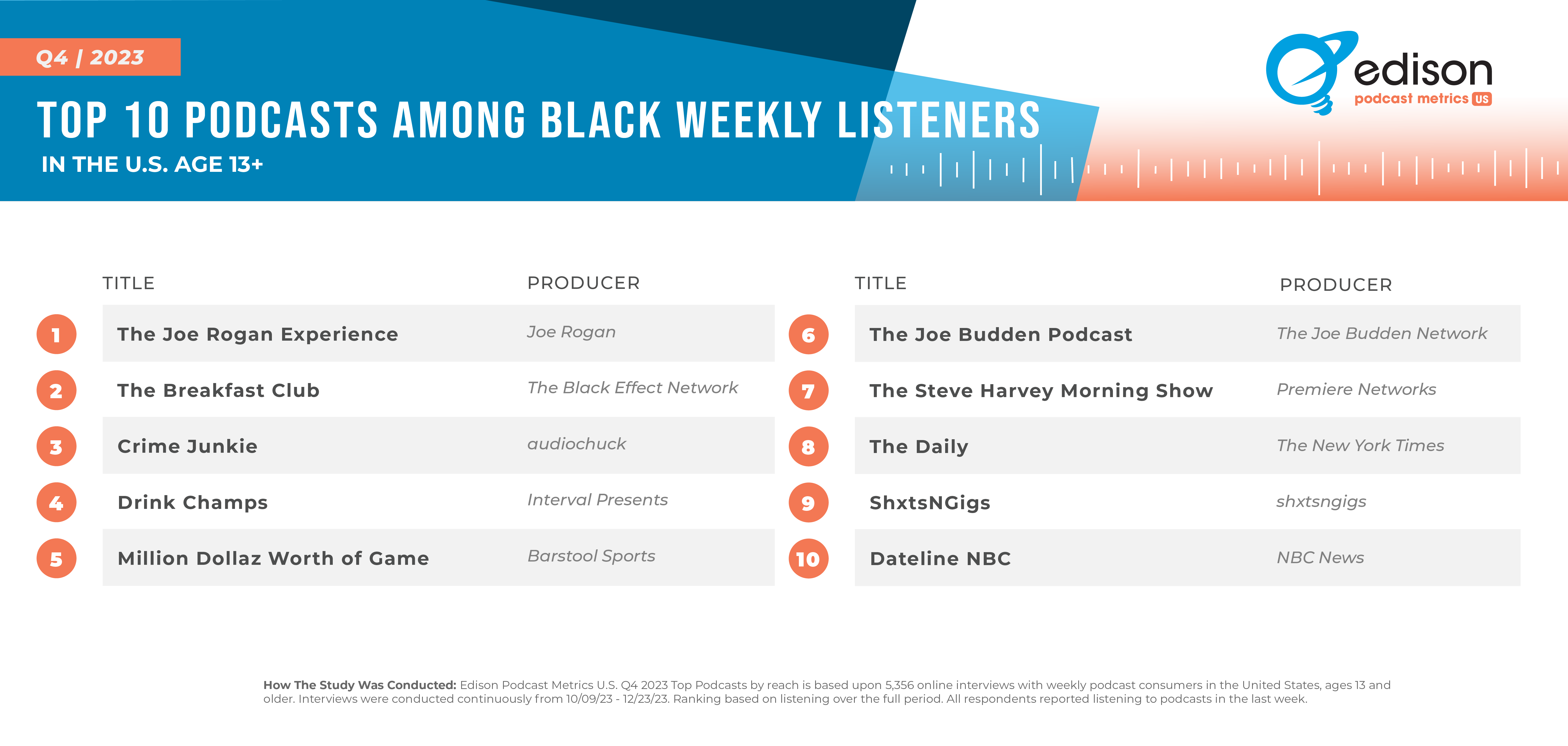
Another area of concern for Democrats is that Trump doubled his share of support among young Black men. As the civil rights movement fades further into the past, Black voters’ cultural and traditional links to the Democratic Party are becoming less secure. Studies have also shown that Black Americans are now less likely to get their news from political and religious leaders than from social media platforms. (Rogan has a sizable Black audience, more so even than The Breakfast Club.)
At first glance, it seems condescending to declare that voters made the wrong choice because they didn’t know any better. However, on every major issue, voters were fundamentally misinformed and insisting otherwise won’t improve Democrats’ chances in future elections. Democratic politicians and liberals need to quickly discover some way to engage in this Orwellian information environment. Otherwise, all the self-flagellation about messaging failures and policy changes won’t amount to much.
Thanks for reading Public Notice.
mma 11 24
Angelo Carusone and Molly Jong-Fast discuss how American discourse is “pickled in misinformation and right-wing rage”
Written by Media Matters Staff
Angelo Carusone Fast Politics excerpt, 11/7/24
November 7, 2024
CitationFrom the November 7, 2024, edition of IHeart's Fast Politics with Molly Jong-Fast
MOLLY JONG-FAST (HOST) Let's talk about growing power from the fringes. So does that look like McCarthyism?
ANGELO CARUSONE (MEDIA MATTERS): Yeah. But you know what's so different about — and that's one of the reasons why you mentioned McCarthyism as opposed to, say, the John Birch Society. Right? Because McCarthy actually was able to get some power. Right?
And whereas the John Birch Society, they hey. Yeah. They were influential, but they didn't —. Here's the difference, and it gets it, and there's a modern analog to it. The difference is that America has always had fringes, just like any society. We've had a little bit more fringes. In part, that's what makes us a little spicy. Our fringes are kind of a feature in a way, but what we haven't had is the fringes being connected. Right? And so you can't build power unless you connect otherwise disconnected audiences.
That's where McCarthyism comes in. Obviously, McCarthy was a demagogue, so the tool was demagoguery. But what it did was it connected otherwise disconnected audiences, and he used a platform that he had to do that. And what we have now, the modern analog, and, like, to your point about McCarthyism, in a way, it's McCarthyism on steroids because McCarthy still needed to rely on traditional means. And one of the things that we have now is that you have extremely powerful algorithms that connect otherwise disconnected audiences.
:{If you like one piece of QAnon content or two pieces QAnon content, even if you don't intentionally know it's QAnon or not, the algorithms will feed you more and more and more of that and move you down a rabbit hole and move you and intensify or capture you. They will convert you and they will connect you to new people. :{And so that is partly what we're dealing with now is that we are dealing with a McCarthyism that does not need to dilute itself to speak to mass audiences.}:
And believe it, the McCarthy thing strangely enough was diluted. It needed to be diluted in order to reach broader and broader audiences. What happens when you don't need to dilute to have the same reach and saturation because the tools that we're using, the tech platforms, are automatically distributing that content to those individuals. And I just wanna make one point on that because I think it helps tie into the outcomes here.}:
The major platforms had put in place many safeguards since the last election about about about what was recommended, about who they were recommending content to, about not accelerating extremism. And in the last year, most of those safeguards have all been systematically eliminated or reduced as a result of pressure from right-wing influencers. They worked the refs at these platforms. So they knew what they were doing because they knew that in order to scale and execute organizing power on the fringes, you needed the runway and the tools that these tech platforms provided. So I would say it looks like McCarthyism, but strangely enough, a more raw and nondiluted version of McCarthyism.
And I don't think we should joke about the demon thing. When I said that before, it's a joke, but think about it. There's the increase of Christian nationalists, the rise of this evangelical strain, of this intense religious strain, this idea that there are demons among us doing bad things — that is going to be something that they start to name. They're going to start identifying — I'm not even joking. When I talk about Qanon and, like, you know, back in 2018, people, donors, supporters, they really thought I was losing my mind.
And I talk about demons now, not because like, it's a focus point of mine, but I look where they get their information. And it's like they're gonna start screaming that person's a demon. That person's being motivated by demons. And that is a tactic of the same thing that McCarthy is. They will have — they will they will build up new boogeymen, new labels that they can then apply to individuals in order to harass them, persecute them, and all of that is designed to sort of make examples out of people fast so that more and more people duck and cover.
JONG-FAST: Yeah. Let's just keep going with this for a minute. What do we think that we do next? I was on a show this morning. It was on the late-night MSNBC, and we're talking about, like, what went wrong.
CARUSONE: Yeah.
JONG-FAST: Which is what we're gonna be talking about for the next five hundred — until the midterms. And one of the things that, you know, there was a lot of, like, this and that, and this went wrong, this went wrong. But, like, one of the things that I think is that it seems to me like there is a real information problem. Right? Like, we — there are parts of this country that don't have news. The news they're getting is red sludge. Remember how, you know, the thing that Elon shared after Paul Pelosi has been you know what I mean? So what — what's the solve there?
CARUSONE: I would say there are three sort of immediate things, and they — and part of it's you know, a lot of this all starts too with the with the recognition early on that I was describing about how they're organizing and building power. And because that — sort of then is you're working toward countering that.
I think there's sort of three things that are important in terms of the next step here. One is everyone I think a lot of people talk about messaging and say, oh, we need better messaging. I look at it a slightly different way. You know, there's three ways that you can talk to somebody. You can talk to their head, their heart, or their gut. That's it. It doesn't matter what the message is. It's either to their head, their heart, or their gut.
And if you look at the bulk of Republican and conservative and right-wing message you know, messaging, what they're saying, it's almost all to people's gut. Sometimes it'll be to their to their heart, never to their head. If you look at Democratic messaging, it's almost always to people's heads, sometimes their heart, never to their gut. And why that matters is that we live in — we have this information asymmetry, but obviously people say, well, not that many people watch the news or read papers. Sure. But they still live in an information world because they — you get it through word-of-mouth.
You get — you don't get the individual facts or the threads, but you get the narrative. We all live in a narrative or narratives. And when that narrative when the right wing has narrative dominance, and as you noted, that narrative dominance is really just a reflection of right-wing sludge, you're just pickled in misinformation and right-wing rage all the time. Even if you don't consume a drop of it, you're still pickled in it because your friends are, because indirectly you're getting it, it's on the television, you see the chyron when you're picking up your bagel in the morning. You form a narrative. That's what happens. And so I think we need to, 1, think about how it is that we communicate, and communicators need to recognize that we need to rethink about that.
The second, there were two more structural pieces. One is that there's no shortage of creators on our side, but the one thing that the right-wing does, and they've done this for decades and they do it better, is they invest in people.
There's no reason why our content creators should not be getting — have to have other jobs. You know? Some of our best people are you know, it's not their primary position. They're not full-time, you know, you know, video creators or podcasters. It's something they do on the side incidentally, and we've never really made robust investments in them, whereas they have, and they have a pipeline for that.
JONG-FAST: Which they have. Yeah.
KIRK
CARUSONE: You know, there are people on Instagram that got grants from Charlie Kirk years ago that will make their way to or have already made their way to Daily Wire podcasts after a few years. Right? And that's how it works. And so you get the benefits immediately of you balance out the scales because you have your own people out there pushing information, and it's it's authentic. You're not trying to come in and control it, but then you're also building revolving capital in businesses that are designed to build and shape narratives. So unless that challenge is confronted, you know, and liberals are so burned by what they — by Air America. It's like, well, we tried to combat right-wing radio in the ninety you know, in the late nineties and early two thousands and it failed. So let's give up forever. You know? And that's a mistake.
And then the last thing I'll say is — so one is we need to do grapple with that, and that's not no. We'll spend one point five billion dollars on ads that we know don't work, but we won't spend a hundred million dollars to incubate and seed a new generation of creators and talkers and storytellers. That's ridiculous. That's stupid.
And that's a mistake. And then the third thing I'd say is that the tech platforms are going to kill us. They are. And we need to deal with that. And the Democrats you know, Republicans worked the refs in newsrooms, and then they took the same strategy.
JONG-FAST: And it worked.
CARUSONE: And it worked. And it worked. And they did it again here. You know, every time you know, YouTube or another major platform rolled back another election policy as a result of right-wing pressure, there was no Democratic counter-response.
There was no talk of them cheating or yelling and screaming. I wasn't surprised by what happened with Jeff Bezos or what we saw in Silicon Valley as the spring rolled by because those seeds were sown months ago. They were scared from Republican pressure that they were getting. And that needs to be something that Democrats really grapple with. And it's not only because that will help, again, balance out the scales, but it's also that they'll maybe get some insights into that the political landscape is realigning. They need to be more responsive to what is happening, and that political landscape is actually a reflection of what the larger information landscape is.
You know? Obviously, I'm at Media Matters, whenever I talk to them about the media, people say, well, not that many people watch CNN or read The New York Times. Like, sure. But they get a podcast secondarily. They sit online. They get push alerts on their phones. All these things add up.
JONG-FAST: Right, it's downstream.
CARUSONE: Yes. And that's it. And Republicans understand, and Trump in particular, you know, I think we need to internalize the lesson. He's a media creature, and he was able to do a lot because he is a media creature.
And, you know, part of what allowed people to say, oh, he doesn't really mean it is a thing called kayfabe, which exists in WWE. It's a wrestling thing. It's a character. And people sort of— all the stuff that people that really has turned him off to people, they say, oh, but he's just a character. No one thinks the Undertaker really murders their villain in the, you know, their opponent in the ring and brings them underground. It's a joke. And I think a lot of times, what Trump was able to do was not only manipulate the media to have narrative dominance and to coordinate, you know, take advantage of this massive right-wing megaphone that they've had, but also rely on the benefit of the doubt and the sort of the way that consumers engage with those characters and in particular him. And we need to recognize that that is a thing that we're gonna have to grapple with as well because he won't be the last. That's the scary thing.
Tucker will be a rising political force, and we need to accept that as a thing that is true. We will have to accept that, look out the trail, and look who performed in terms of engagement. Very few people cut across right the right-wing landscape in the way that Trump does, and Tucker is one of those few figures. Obviously, Musk as well. That's it.
That's the next step. And it doesn't solve everything, but I don't think circular firing squad or trying to figure out some of the micro things that would have been different are gonna be helpful because what took place here is macro, and we need to think about it at a bigger level.
---
mma
MAGA propaganda machine helped carry Trump back to the White House — and it’s not done poisoning America
Written by Matt Gertz
Published 11/07/24
Donald Trump was reelected president on Tuesday, four years after fomenting a coup which saw a mob of his supporters storm the U.S. Capitol and then leaving the White House in disgrace. He owes his return at least in part to a rankly dishonest right-wing information ecosystem that helped carry him through countless scandals that would have ended the careers of most politicians, driving his comeback to the pinnacle of power.
Conservative audiences are dependent on a right-wing media complex that bombards them with falsehoods and grievances while dissuading them from consulting any alternative sources of information, be they legacy news outlets or government officials or medical experts.
Once Trump captured the GOP and ascended to the presidency in 2017, that bubble served him and his interests. Within it, for example, his supporters were convinced by a sprawling conspiracy theory portraying the then-president as the victim of a shadowy “deep state” cabal that justified vast retribution.
The January 6 insurrection presented Trump’s propagandists with a crossroads. Rupert Murdoch, whose media empire includes right-wing bastions like Fox News, The Wall Street Journal, and New York Post, privately sought for him to become a “non person.” But Tucker Carlson and his allies at Fox and elsewhere instead went to work creating a counternarrative in which Trump was blameless. People who knew better either played along or actively participated in the whitewashing of that day.
Trump’s various indictments for a host of crimes provided additional hinge points. Right-wing media figures who could have used evidence of his abject criminality as a rationale for cutting him loose instead rallied to him and sought to delegitimize those seeking to bring him to justice.
The right-wing media bubble’s eagerness to excuse Trump’s actions gave him a dominant position in the Republican primary. As he romped to the nomination, his opponents complained that they were unable to gain traction because the party’s propaganda wing had united behind him.
Trump again became the nominee of one of the two major parties. He selected Ohio Sen. JD Vance, a Carlson favorite, as his running mate, and demonstrated the importance of the right-wing echo chamber by giving Carlson himself a prime-time speaking slot at the Republican National Convention.
With the general election set between Trump and Vice President Kamala Harris, right-wing propagandists went to work holding the GOP base together with a combination of grievance-mongering and silence.
They flooded the zone with a bogus narrative of “migrant crime” while ignoring evidence that violent crime was actually plummeting from its Trump-era high.
They instructed their audiences to treat immigrants as a scapegoat, falsely claiming that federal disaster aid desperately needed to respond to hurricanes had been siphoned off to benefit migrants and ginning up grotesque lies about Haitian immigrants eating pets.
They lashed out at the press, urging the Republican base to treat Trump’s poor showing in his debate against Harris as the result of media bias.
When an unprecedented string of former Republican officials and Trump’s own former administration aides came forward with dire warnings of what Trump did in his first term and could do in a second one, they hid the news from their audiences.
And they kept quiet on a host of unpopular aspects of Trump’s policy agenda, from Social Security to reproductive rights, while beating back burgeoning scandals over his alleged January 6 crimes, communications with Russian President Vladimir Putin, and a political event at Arlington National Cemetery.
Journalists and political strategists will spend the next weeks and months grappling for explanations as to how Trump returned to the White House. But without the support of the right-wing propaganda machine, he would not have been in position to sweep his party’s nomination in the first place — and in an evenly divided country amid a global anti-incumbent wave, that provided a strong position to win the presidency.
Now, the same propagandists who helped him back to power are poised to help him carry out his extreme agenda of destruction and retribution.
mma
November 6, 2024, edition of MSNBC's *Deadline: White House
NICOLLE WALLACE (HOST): We're back with Ian, Angelo and Tim. I mean, I don't want to embarrass you, but we have been talking a little bit about how crippling it is to contemplate, Angelo, that the substance of Project 2025 — I feel like one of the great accomplishments of the summer was that because of your work and some great work in The New York Times and other places and Taraji P. Henson, Project 2025 was front and center before the country. And I'm sure no one read all 900 pages but you. But I read a couple hundred. And it's scary, you know, S-H-I-T. And people voted for Trump knowing about Project 2025. Tell me where your thoughts are today about that.
ANGELO CARUSONE (MEDIA MATTERS PRESIDENT): I think one of the tie-ins with the early discussion about democracy too is many of people voting for Trump also thought they were voting for democracy, in a way. Because in this — and part of the, one of the signature cruxes of Project 2025 is this idea that we're going to go in, execute schedule F, which is the ability to fire tens of thousands of federal employees, and obviously that, for Project 2025 that's about giving the effort control. It's sort of removing all the potential obstacles, as they see it, and you can then put in your people and move forward, move fast.
But for one of the audience — for the larger right-wing audience and national audience, I mean, we have a country that is pickled in right-wing misinformation and rage. And one of the stories that they've heard, not for one year but for eight years, is that there is a deep state, a universe of people in government that are out there that have the real power. They're the ones with the real power. They're taking power away from you, the individual. And the only person that can give you back that power is Donald Trump. He's going to — and that's why they hate him so much, because he's going to come in and he's going to get rid of them once and for all. He's not going to be duped again like last time. And he's going to give you back your power.
And so, yeah, there's a lot of policies to it and it's all scary, and we can get into it. But at its core, this is a discussion about democracy. I'm not so blinded to think that they all are deeply pro-democracy. Many of them don't believe in democracy as a principle and they want something more autocratic and authoritarian. But there's another part, a much larger part, that actually believe that a vote for Donald Trump is a vote for democracy because they have validated and internalized the idea that there's an anti-democratic secret cabal that is actually preventing their desires and exercise of democratic power from being implemented and put in place, and that only Trump can restore their power.
And that's the part that's so frightening about this, is that it not just means that Project 2025 becomes more of a reality, and that a lot of the things we see of it, going after opponents and everything else, in their minds, in many people's minds, that will be acceptable because those — they have it coming to them. And the through line, the foundation upon where all of this is, is a large right-wing misinformation engine that has created an environment where, and a lens through which people see the world that is not the way that it is. And so, that's how you get so many people going out there and saying, “Oh well, he does it because he has to,” or “he's not really going to do those things,” or “he's going to do them, but they have it coming to them.” Because they are also in belief that they're being democratic and defending the system.
WALLACE: What is the role of the fear that a document like Project 2025 creates, just to sort of come back to the beginning of obeying in advance —
CARUSONE: Yeah.
WALLACE: I mean, friends in same-sex marriages are frightened that their families will be destroyed. Friends who have worked in DOJ, in places that maybe weren't in the crosshairs last time, had nothing to do with Russia, are afraid they'll be dismissed as people like Jeffrey Clark take over. People who serve in the military around the world are frightened that they'll be given illegal orders and are too far down the food chain to know how to deal with them or who to — I mean, what happens now, Angelo?
CARUSONE: Yeah, I mean, when Ian was talking before, that's all my brain could go to, was exactly the question that you just asked which is, one of the things that Project 2025 talks about early on, aside from getting rid of all this personnel and replacing them, is that you have to immediately weaponize the DOJ in order to shock and awe people, that you take a bunch of grand swift actions, mass arrests, mass prosecutions, harassments. And the goal isn't to get all those people ultimately in prison or something.
It's to show a force very early on that we mean business, in hopes that most people do the natural thing, the thing that comes instinctually, which is to duck and cover. There's a reason why, it's so concerning about anticipatory obedience because it does speed up the process of giving authoritarians more power. And they're very open about it in Project 2025. That's the tactic. It's not just about revenge, although that's a part of it. It's also about sending a message that this is the new order and everybody else best get in line.
And that is an intention of that very first few months, is to execute that shock and awe thing. It was one of the first things Steve Bannon said last night, that they're coming for you, FBI. They're coming for you, deep state. He listed the places they're going to go after. And it's to show that nobody's safe, to get in line. So teachers, librarians, educators, they will all be systematically targeted and identified. It won't just be government bureaucrats, who do very good work. It'll also be anyone that they've identified as sort of a vanguard of this culture war that they've oriented around.
And it's really is — to your point, it's to get everybody else to have to press the question, “Is this worth it or is it better for me to just go along to get along?” And that's what they want to instill right away because you get rid of the personnel, you change that norms, and then you drive forward with the larger anti-democratic agenda. And that's the reality that we are heading into. It doesn't have to be. We're going to have to fight. We have to stiffen our spines and put some bulwarks in. There's a lot of work to be done. But that's why they're doing it and that's the intention.
===
ink 11 24
The Democratic communication deficit}:
There is simply no way that progressive content creators can compete. So, they burn out, they quit, and this further constrains the left’s ability to build a powerful leftist influencer ecosystem that could even begin to rival conservative influencers' reach and power
All of these things could change significantly if the Democratic party had any interest in supporting the independent media ecosystem on the left, but leftist creators have been repeatedly shunned by the Democratic party establishment. [User Mag]
...
seeds of a pro-democracy future
Resilience seems a good frame to think about this campaign, which failed as an effort to elect Harris but can continue as a pro-democracy movement. As I wrote a few days ago, the campaign has laid the foundation for such a movement, and our organizing, messaging, fund-raising, canvassing, conversing, and strategizing was not in vain.}:
The new networks, circuits of communication, memes, slogans, and images that came out of this period will not disappear just because we did not prevail. The experiences and knowledge and connections we gained in this process will help us in the years to come as we organize to win back whatever freedoms we lose and remain vocal and visible in the face of attempts to silence us. [Lucid]
===
i t takes a bubble
Hurricane Helene shows the catastrophic consequences of the right-wing echo chamber's support for Donald Trump's lies
Written by Matt Gertz
Published 10/08/24 MMA
Former President Donald Trump’s deadly lies about the federal response to Hurricane Helene — and soon, inevitably, Hurricane Milton — depend on the impermeability of the right-wing information bubble.
President Joe Biden has directed an ongoing federal and state response to the swath of death and destruction Hurricane Helene left on the southeastern United States, an effort which includes tens of thousands of personnel helping victims across several states.
Trump’s Helene response has been characterized by conspiracy theories and grievance-mongering for political gain.
The Biden administration won plaudits from GOP elected officials across the region, but Trump falsely claimed the federal government abandoned the public. Americans affected by the storm can access a robust program of federal assistance, but he falsely claims they could only get $750 in aid. The White House stressed there’s plenty of FEMA funds to respond to both Helene and Milton — and Republicans are reportedly the ones blocking additional funding — but Trump falsely claims Vice President Kamala Harris blew “all her FEMA money” housing immigrants.
The former president, through these deranged fabrications, is trying to win votes in the coming election. He is summoning an alternate reality in which Biden and Harris are blithely unconcerned with the fates of millions of victims because many of those victims are Republicans and they instead prioritize immigrants. And he is doing so despite his own record as president of allegedly withholding disaster aid for political reasons.
The only reason this strategy is remotely plausible is that the right-wing media ecosystem is willing to play along with it. The news sources Republicans rely on, from MAGA influencers to Fox stars, have bolstered Trump’s lies at every turn. The result is that right-wing audiences are bombarded with falsehoods from within an echo chamber.
The MAGA media ecosystem responds in this same fashion to every news event because its function isn’t to report on what is happening. Instead, right-wing pundits offer a scapegoat — immigrants, Jews, journalists, teachers, trans people, Democrats, anti-Trump Republicans — in order to hold their audience’s attention, make money, and support the GOP’s core agenda of tax cuts for rich people and abortion bans.
This incentive structure is universally toxic. But when it collides with issues like disaster relief, the consequences can turn deadly. Before, during, and after a hurricane, people on the ground need credible information about what to do, what help is available, and how to get it. Right now, the sources many victims depend on for news are lying to them.
Hurricane misinformation is plaguing the response to Helene. Local media outlets, federal and state officials, and emergency responders all are desperately trying to swat down rumors and falsehoods — some promoted by the former president. Republican officials in affected areas are begging the people pushing “conspiracy theory junk” to stop lying and pitch in instead.
“The scale of the misinformation — and simply the number of posts and the eyeballs that each of those are being given online, particularly on [X] — that is what is different and truly scary,” a North Carolina state official told Politico. “This has felt like you're in the Thunderdome, and people are just piping this noise in. They create this great confusion. It creates chaos and a crisis moment where you need people to be able to work together and come together.”
The calamity hearkens back to the early weeks of the COVID-19 pandemic, when Trump and his media allies first downplayed the potential impact of the deadly virus, then promoted unproven and ultimately ineffective medications as a “miracle cure.”
And it bodes ill for the coming election if Trump loses, when all the same figures will have the same incentives to help him deny and subvert the results. mma
===
mma
The Fox News coup
Trump’s propaganda outlet and others in right-wing media helped make this happen
Written by Matt Gertz
Published 01/06/21 3:07
As I write this, the U.S. Capitol has been breached by a riotous mob of President Donald Trump’s supporters who are bent on preventing the peaceful transition of power to President-elect Joe Biden. The House of Representatives and the Senate, whose members had convened in their separate chambers after some Republicans objected to the counting of Arizona’s electoral votes, are locked down, while Vice President Mike Pence, who was presiding, has left the area. Insurrectionists continue to stream into the building. It’s unclear when or how the legislators will be able to proceed with their constitutional duty.
A coup attempt is underway in the United States of America, which prides itself on being a beacon of democracy.
It was not an accident. It did not just happen. Democracy in this country has enemies.
The American people spoke, and Trump lost the election by a sizable margin. But rather than accept that reality, he claimed that the election had been rigged, stolen away from him by fiendish Democratic operatives in a number of states. These were wild conspiracy theories, the dregs of the internet fever swamps.
Fox News and others in the Trumpist media could have explained this to their audiences. Instead, they chose to lie. They laid the groundwork in the months leading up to the election for Trump to cry fraud, and once he did, they cheered on his cynical effort to subvert the vote and usher in the end of American democracy.
When protesters descended on Washington, D.C., this morning for rallies the president had supported, they celebrated that too. Then Trump gave a rally speech before the assembled crowd, told them that the election had been stolen and “we’re not going to let it happen,” and the mob listened.
Like the senior Republican official who questioned what “the downside” was for “humoring [Trump] for this little bit of time,” many at Fox likely assumed they could continue to stoke the fury of their viewers without consequences.
But now the bill has come due. They cheered on a coup, now it’s here, and no one can say what will happen next. And no one should ever let Fox forget its role in causing it.