Anand Giridharadas ink
---
the ink newsletter pm subscribed
NO MERRI
===
GMAIL 1 26
Amanda Doyle of We Can Do Hard Things
This week, Amanda Doyle of We Can Do Hard Things,” the massively popular podcast she co-hosts with her sister, author Glennon Doyle, and soccer hall-of-famer Abby Wambach, kicked off “You’re Not Gonna Believe This B.S.,” a new series of explainers that expose the inner workings of the structures of power we take for granted in our daily lives.
Anand dropped in for the first episode to talk about billionaires, the narratives that have long maintained the reign of the wealthy over the rest of us, what the Jeffrey Epstein files have revealed about today’s oligarchic class, and how to tell a different story — and build a better world.
https://chrishedges.substack.com/p/how-the-epstein-class-fails-to-the
How the 'Epstein Class' Fails to the Top | The Chris Hedges Report (w/ Anand Giridharadas)
Anand Giridharadas explains how the elite continuously find ways to screw you, with either good or cynical intentions.
Dec 23, 2025
*This interview is also available on podcast platforms and Rumble.
Noam Chomsky once said “The more privilege you have, the more opportunity you have. The more opportunity you have, the more responsibility you have.”
Today, this profound quote from an important figure is ensconced in irony, not only in light of Chomsky’s close ties with Jeffrey Epstein, but also regarding the entire ruling class structure’s facilitation of the pedophile’s rise to the top. Anand Giridharadas, in his book Winners Take All: The Elite Charade of Changing the World, talks about this privilege and the elite delusions that capitalism and capitalists can save the planet from the very problems that they create.
Giridharadas joins host Chris Hedges on this episode of The Chris Hedges Report and shares how the world today, one of vast inequality and stark class divide, is perpetuated by the self-serving and egotistic mentality of oligarchs who see themselves as humanity’s figureheads.
Many of the elite class, especially those in Silicon Valley, believe they are shaping the world for the better. They believe, according to Giridharadas, “the way to solve gender inequality is through Silicon Valley tech companies. The way to solve the environment is through Tesla. The way to solve poverty in Africa is MasterCard and Goldman Sachs figuring out credit cards for rural people in Kenya.”
Their belief that they are the agents of change, efficiency and good in the world leads them to gut government programs and proceed to point “to the failures of government, failures they helped engineer, as evidence for why government cannot be entrusted with the solution of public problems, thus leaving only them, the private sector, to step in,” Giridharadas explains.
As for the Jeffrey Epstein-aligned elite, they are different because they can still function as good capitalists but have no reservations about the morality of their work. After Epstein’s conviction in 2008, Giridharadas spells out that Epstein surrounded himself with these people, those who do their business and have no trouble looking away.
“[Epstein] picked a group of people who are expert, if at nothing else, in putting fingers in their ears when people begin to scream.”
---
yt chris murf thinker doer restore commons
WATCH: How to king-proof America, now and forever
1,144 views Oct 29, 2025
Senator Chris Murphy on fighting the authoritarian takeover, remaking the Democratic Party, and how you, today, can cure the disease that led to Trumpismhttps://the.ink/p/watch-how-to-king-p...
Transcript
...Um you were talking about the lack of stock taking. I'm curious for you. You're someone who's a I think unusually
7:13
in our era, you're like a a doer thinker. I mean, you you you have this pretty uh demanding day job, but you
7:20
take some time to do these research projects. You write books that are not just like here's why I'd be a great
7:26
re-election candidate books, but like real books, um history of violence, other topics. So,...
10:08
Run for Something. Yeah. And obviously she you know on one level
10:13
works in a very narrow way to do a very specific thing which is to get people to run for office. But as we were talking
10:19
about this and she was kind of helping share with with people watching what they can do, so many of her ideas were
10:27
what you would not call political in kind of narrow terms. She was saying like host people at your house more
10:33
often, right? And and and you could imagine people saying like what the hell does it like Trump's doing this, Trump's
10:39
doing that, like what's that going to do? And I was I was listening to her say all these different things and share her
10:44
own experiences and it you know it struck me that like she was talking about Toqueville, right?
10:50
She was talking about a habit of association that we lost in becoming
10:55
consumers instead of people who associate with each other. And your congressman is not the only thing you
11:01
can do, right? Rebuilding a thicket of connection of all kinds, non-political,
11:07
right? if it's if if you're only asking people to do political things, it's like it's a little bit too late in the
11:12
conversation, right? Um how do you but is there how do we get there? How do we
11:19
we can talk about it? But are there policy levers to rebuild that habit of association?
11:25
Yeah, it's a great it's it's it's a great question, right? And you know, you and I are both students of De Toqueville and it's just so amazing, right? How he
11:32
sort of becomes more and more relevant, right? He worries so deeply about this country not being able to hold together
11:38
because of our differences, but also because of our fierce, rugged in individualism. Of course, he thinks that
11:43
it's it's the common project of democracy and religion, right, that are that are two of the things that will
11:48
sort of stitch us together. And we're at the first point in American history where less than 50% of Americans, you
11:54
know, consider themselves part of an organized religion. And politics, of course, has now become a forum to highlight our differences rather than to
12:01
resolve them. Yes, I do think that um government has a role, a limited role,
but a role to play in setting the preconditions for individuals to make
better decisions about creating communion. Um, regulating technology is one of them, right? I mean, we these
12:22
these devices are literally built to destroy us. They are built to to try to cycle us into withdrawal from people.
12:30
And so if we just said, you know, we're going to we're going to make it harder for these devices to occupy so much of
our time, that time might be just naturally turned in to to communion, right? To
time with other with other people. I don't think that's what we were doing right before them. Yeah. Right. And I and I don't think
there's also any shame in saying, okay, we're going to be a little bit more purposeful in helping community institutions be healthier. Obviously,
12:58
that's fraught if you're talking about government support for churches and religious institutions, but you know, we
could have a pretty comprehensive suite of of of assistance to try to just make
13:09
it a lot easier for a union or a civic group or a neighborhood organization or a mosque or a synagogue to be healthy
and have more programming and open its doors. Um, again, that doesn't address some of the underlying problems of um,
13:24
you know, the illegitimacy of institutions in people's minds, but man, it's better than nothing, which is kind
13:30
of what we're doing today to try to help people find each other. Well, I think it's also very empowering
13:36
for people to know that, you know, if you live in a town with one of these, as
[ufw hall empty 10 yrs]
... and have more programming and open its doors. Um, again, that doesn't address some of the underlying problems of um,
13:24
you know, the illegitimacy of institutions in people's minds, but man, it's better than nothing, which is kind
13:30
of what we're doing today to try to help people find each other. Well, I think it's also very empowering
13:36
for people to know that, you know, if you live in a town with one of these, as
13:41
I've seen all over this country, like empty VFW halls or Rotary Club hall, you
13:46
know, where no one has walked in in 10 years, reviving that, reinventing that is a pol act --> shtdn

GMAIL 10 25
Who is included in "We the People"?
https://substack.com/app-link/post?publication_id=70374&post_id=177137311&utm_source=post-email-title&utm_campaign=email-post-title&isFreemail=true&r=1n6e6&token=eyJ1c2VyX2lkIjoyNzYwOTkwLCJwb3N0X2lkIjoxNzcxMzczMTEsImlhdCI6MTc2MTQ3NDg0NSwiZXhwIjoxNzY0MDY2ODQ1LCJpc3MiOiJwdWItNzAzNzQiLCJzdWIiOiJwb3N0LXJlYWN0aW9uIn0.SEyv4v6U1GIuNNb4DsETOzhXohFV1zZCm0GEWBRASkU)
Our thanks to historian Jill Lepore, and announcing our November Book Club pick, Julian Brave NoiseCat's "We Survived the Night"
In closing out our discussion of the U.S. Constitution with historian Jill Lepore, she told us that the phrase “we the people” is “the most richly amended phrase” in our founding document. Why? As Justice Thurgood Marshall said in his remarks on the occasion of the Constitution’s 200th birthday in 1987, when the framers used this phrase in 1787, “they did not have in mind the majority of America’s citizens.”
Part of that majority were the original inhabitants of the land claimed by the United States as its own. Lepore writes in We the Peopleabout how Native scholars like Vine Deloria Jr. have argued that it’s not just the fact that the founders left out Native people that’s a problem, but that the Constitution — written to protect property and only later extended to protect rights — rested on a conception of belonging too individualist to encompass a truly multicultural nation. New narratives are necessary.
“We have never had a ‘peoplehood’ in this country because we have always been tied to a barren conception of man,” he wrote. He didn’t think a new Constitution was necessary, but he did think that “We the People” ought to be reread to mean “We the Peoples.”
This Native American Heritage Month, we celebrate an extraordinary new voice in literature. Our new Ink Book Club selection is We Survived the Night, the first book by the writer, environmental activist, political strategist, and filmmaker Julian Brave NoiseCat, whose 2024 documentary, Sugarcane, won the Directing Award in U.S. Documentary at the Sundance Film Festival. Starting from an investigation into abuse and death at an Indian residential school, it’s a work that fuses history, myth, memoir, and oral history with the tale of a son wrestling with a heritage of loss. NoiseCat explores the persistence and legacy, in the face of attempted erasure, of the continent’s First Peoples.
==
re tr chat
Introducing FuhrerFree™, the once-daily tablet that soothes your inner fascist.
FuhrerFree™ is the first and only prescription treatment for Nazi Streak.
It works by gently restoring oxygen to the parts of the brain responsible for empathy, historical memory, and not being an asshole.
It’s time to stop hating people you don’t even know and start being employable again. Ask your doctor if FuhrerFree™ is right for you.
Side effects may include normal-person guilt, heightened self-awareness, nausea, insomnia thinking about what you have allowed yourself to become, chest pain, and, in rare cases, genuine concern for the welfare of others.*
You may also experience flashes of respect for liberal democracy, remorse for your racism, a sudden urge to apologize like you’re British, and brief episodes of historical accuracy.*
More serious reactions can include wanting to watchSchindler’s Listto get your heart right, and blackouts where you unconsciously apologize to people of color for “being like this.”*
Stop taking FuhrerFree™ immediately if you start quoting Goebbels, despite having no idea who he is, or asking people to show you their papers.*
FuhrerFree™ — because even one Nazi streak is one too many. Call your doctor and take the first goose step to a better future today.
ESSAY: A cure for Trumpism: Radical empathy and radical change
Some reflections on Dr. Abdul El-Sayed’s playbook for a post-Trump America
Anand Giridharadas
May 5
Here is a strange thing about politics. It’s a competitive arena in which people win by distinguishing themselves from others. And it’s an arena so lacking in originality. How often do you hear a political leader say something truly inspired, or even just slightly fresh? How often do you notice them actually thinking out loud, the mind still active, still with questions, not answers given to them on Post-It notes by an aide?
It is rare enough that, when it happens, it sometimes takes me a second to realize it. But that’s what happened when I interviewed Dr. Abdul El-Sayed. He is a doctor and public health professional in Michigan who ran unsuccessfully for governor in 2018 and is now running for the U.S. Senate.
What took me time to register was that El-Sayed was doing something more interesting than explaining why he should win his primary. He was laying out a vision for how America can finally be done with Trumpism. Like, actually done.
I don’t think I’ve heard these ideas put together like this in a package before. Each one will have its share of critics. But I think the whole package is worth a look.
The bottom line is this. A lot of what Democrats have ended up offering is contempt for Trump voters and moderate policy ideas. Dr El-Sayed is suggesting a reversal on both counts: radical empathy for Trump voters (which will rankle progressives) and radical change to eradicate the social conditions that enabled Trump (which will rankle moderates). Let them be rankled.
The Ink is brought to you by readers. Support free and independent media that bows to no billionaire or tyrant by becoming a subscriber.
- The bully and the posse
Growing up with the name Abdul, the son of immigrants from Egypt, El-Sayed knew a thing or two about bullying.
What he sees in Trump is a bully par excellence. But bullies are often secretly weak, El-Sayed observed. What props them up is their posse. Trump’s posse is millions of voters. Without their allegiance, he is a childhood-scarred, semi-literate, narcissistic bully halfwit. With their allegiance, he has a path to making himself Caesar.
El-Sayed argues, therefore, that the pro-democracy movement must obsessively seek to separate the posse from the bully. Which means adopting a posture that some fellow Democrats may not like: showing what he calls “radical empathy” for Trump voters, and viewing the choice millions made as an expression of desperation in an unresponsive system, a shout into the void.
That means not lapsing into the condescension toward lay voters that feels so satisfying and, oftentimes, so justified. It means not calling them Magats and brainwashed and irredeemable racists all. It means strategically biting your tongue and opening your arms. For winning’s sake.
Confront the bully. But woo the posse.
- Don’t prove them wrong. Get them to right
Winning movements don’t humiliate potential followers. They fix them a drink.
Trump’s chaotic and economy-quaking opening months are already causing lots of pain for his own supporters, let alone all the other people in his policy crosshairs.
Open any social media site, and what do you see these days? Gleeful Democrats sharing stories of MAGA types now being hurt by the policies they voted for.
Understandable psychologically? Yes. Smart politically? No. Not even a little bit.
Dr. El-Sayed framed the approach he favors instead succinctly: “We’ve got to get folks to being right, not prove them wrong.”
What’s the difference? It’s about creating, he says, “a space within which you felt safe enough…to say, you know what?, I made a mistake.”
So next time you hear a veteran who voted for Trump complaining about benefit cuts, or a shopkeeper complaining about tariffs, or a CEO complaining about the stock market, resist the temptation to gloat. If you want to save your country from hell, invite these potential newcomers to the pro-democracy cause in. Pour them a drink.
- America is good, actually
In some of the progressive circles Dr. El-Sayed travels in, well-earned critiques of American policy and history can sometimes devolve into contempt for America.
Progressives have a patriotism problem, often conceding the flag to those who would break the country rather than share it. They become so consumed with what is wrong with the country that they forget to say whether there is anything they love about it, and they leave the impression, sometimes true, sometimes not, that they think it irredeemably flawed, rotten at the root.
This is fine for your academic seminar. But please keep this pose out of politics. Because it’s risking the republic itself and plays right into Donald Trump’s hands.
Dr. El-Sayed, as a child of Egyptian immigrants, has a way into this issue that is compelling and worth listening to. He knows all the critiques leveled at America; he levels many of them himself. But his dualness — being from here and being from there — gives him another way of seeing.
He spoke in our conversation about going back to Egypt in his youth. He would sit with his grandmother who, he said, half-jokingly (or maybe not?), would sit with him and tell him that this cousin of his was better looking than Abdul, and this one more athletic, and this one smarter. But you know what Abdul had, his greatest gift that would matter more than any of these others? He would soon be leaving Egypt.
It’s a bittersweet truth that many of us with similar experiences of dualness know from childhood. And many of us who, like El-Sayed, would grow up to have criticisms of how America functions would also, like El-Sayed, never forget that America has real and profound gifts, that it offers many, many people — not enough, but more than most places — life chances and an opportunity to flourish and create and speak and become the fullest version of yourself. That this is a great country, which is, sadly, language many progressives would find way too cringe. Enjoy autocracy, guys!
What El-Sayed reminds us is that to be a progressive who comes partly from somewhere else can be to hold two competing ideas in tension: that America is flawed, and is built on ideals and ways rare in history and worth defending.
“America sucks” is a lazy shrug too often heard in progressive organizing spaces, and it is weirdly provincial in its obliviousness to how life is in other places around the world, and what El-Sayed is pointing toward instead is a progressive patriotism.
“I love America because I know exactly what my life would have ended up as if I didn’t, but for the accident of history, get to grow up here,” he told me. And: “My critiques about America are about the difference between what she gave me…and what she has not given too many kids.”
His advice to Democrats and progressives: “Wrap yourself in the flag as you demand the flag represent the things that you believe are best about this country.”
- Fighting Trump isn’t enough. Win the peace
Since Inauguration Day, I, like so many of you and so many across the country, have argued that Democrats need to show fight.
Boneless and skinless is fine for chicken thighs. It’s not adequate for a party that purports to be interested in beating back an attempted authoritarian breakthrough.
But El-Sayed challenged my thinking on the fight point. A former team captain in school sports before he became a Rhodes Scholar and a medical doctor, he pointed to scars on his face and spoke obliquely about not being afraid to fight when needed.
But he argued Democrats need to be more interested in winning the peace than the war: “Nobody fights the war to just win the war. You fight the war to win the peace.”
What he means is remaining focused on healing the causes of the pain that made Trump possible, instead of over-fixating on Trump as the sum total of the ill.
The mantra to fight more and fight harder, which I have touted as much as anyone, risks fetishizing fight for its own sake. The real goal, El-Sayed says, must be creating conditions where the fighting is unnecessary.
And how do you win the peace?
- The age of insecurity
There are a lot of ways to frame the times we live in. But El-Sayed offered one that stuck with me: this is an age of insecurity.
What’s powerful about insecurity as a grand unified theory is that it encompasses all manner of sentiments, from all sections of the political spectrum, some based in reality, others more in fantasy, but all with emotive, often explosive political effect.
Brutal hyper-capitalism creates insecurity. Not being able to afford things creates insecurity. Feeling vulnerable to crime creates insecurity. Feeling deluged across a poorly managed border creates insecurity. Racial and gender progress, when you are not well prepared for your own new role and standing, creates insecurity. New and unfamiliar ideas about history and the meaning of your country create insecurity. New technology and the threat of obsolescence create insecurity. The loss of control over one’s children and their vulnerability to outside influences creates insecurity.
You will no doubt identify with some forms of insecurity listed above, and not with others. El-Sayed’s point is that insecurity in general has been roiling our hearts and politics, and has achieved what he, a public health doctor, calls “epidemic” status.
“The thing about insecurity is that you may have what you need right now, but you’re constantly at risk of losing it.”
So part of winning the peace beyond Trumpism, rather than just making war with Trump, is addressing the roots of insecurity.
And how bold should Democrats be in doing that?
- Abolish vanilla
Some of El-Sayed’s arguments above — the radical empathy part of his solution — might strike some Democrats as too solicitous of Trump voters, too eager to make accommodations. But El-Sayed is not a mushy moderate. Rather, I think of him as being in the mold of many of the organizers I wrote about in my book The Persuaders: advocating more flexibility on how you reach out to and court moderates and MAGA voters, but more stridency in policymaking.
A lot of what you see from Democrats right now is the opposite: Snideness and condescension toward MAGA types, but mushy moderate policies. El-Sayed wants to flip that script: Gentle, openhearted outreach and aggressive, even radical, policy.
“You can't beat something with nothing,” he told me. “And, love him or hate him, when it comes to Donald Trump, he's always saying something. And the problem that folks have with Democrats is that we say nothing, but we say it with a lot of enthusiasm. It’s like somebody screaming ‘Vanilla!’ at you. You're like, Well, I don't know, what if I like cookie dough? What if I like cookies and cream? What if I like Rocky Road? The folks are like, ‘Vanilla! vanilla!’”
El-Sayed has advocated aggressive policy responses to America’s overlapping crises — including Medicare for All, which he wrote an entire book about. Whatever you think about individual policy questions, the larger point is worth grappling with: that the proper place for moderation is in the stance one shows to potentially politically adrift Americans. The place for unbending passion is on substantive policy ideas that would drastically change the country, drain some of the insecurity, and therefore heal the conditions that enabled Trump, so that we don’t keep returning to square one.
- Reclaim common sense
Listening to El-Sayed, it struck me that he was pushing against both his fellow progressives and the more moderate wing of the Democratic Party, in distinct ways.
His message to progressives is to ditch the label. I am referring to him as a progressive, but he didn’t call himself that, although his policy vision lines up with any conventional definition. But he seemed determined to frame ideas like clean air and water, healthcare for all, ending wasteful wars, and such as basic common sense, not radical or out of the mainstream. (Representative Alexandria Ocasio-Cortez has been making similar arguments on her “Fighting Oligarchy” tour stops.)
But he also has a bracing message for those moderates so singularly fixated on Trump that they think the goal of political struggle should be to return America to the day before the golden escalator ride in 2015. “That’s our own version of Make America Great Again. It just happens to be 2015 instead of 1930-something,” he told me.
America wasn’t working for most people in 2015. The way to move past Trumpism is to champion drastically, boldly upending what wasn’t working, and to do so with an openhearted posture toward converts who will have many reasons to seek a new political home in the days that are coming.
---
an 2 25 As President Donald Trump and Elon Musk attempt to systematically dismantle the United States government, agency by agency, they are working to eliminate vast numbers of employees, removing public data and institutional knowledge, and reportedly accessing sensitive government records and personal information of American citizens. In response, many grassroots Democratic voters are demanding to know what their party’s elected leaders are doing to stop them.
There appears to be a growing sense among some on the left that top elected Democrats are out of touch, unable or unwilling to grasp the severity of what some say is a constitutional crisis and others are simply calling a “coup.”
And while a few House and Senate Democrats this week showed up at the Washington, D.C. offices of the United States Agency for International Development (USAID) and were denied access, and others held a press conference, few elected Democrats appear to have understood this extremely volatile moment — or at least publicly communicated what is actually going on.
RELATED: Dems Blocked From Entering USAID Offices: ‘Illegal and Corrupt’
U.S. Senator Chris Murphy (D-CT) has been leading the battle against President Trump and his director of the so-called Department of Government Efficiency, Elon Musk.
For the uninitiated, here’s how The Washington Post summed up recent events on Tuesday.
“U.S. government officials privately warn Musk’s blitz appears illegal,” the headline reads. “The billionaire’s DOGE team has launched an all-out assault on federal agencies, triggering numerous legal objections.”
“Over the past two weeks, Musk’s team has moved to dismantle some U.S. agencies, push out hundreds of thousands of civil servants and gain access to some of the federal government’s most sensitive payment systems,” The Post reported. The paper noted that “many of these moves appear to violate federal law, according to more than two dozen current and former officials, one audio recording, and several internal messages obtained by The Washington Post. Internal legal objections have been raised at the Treasury Department, the Education Department, the U.S. Agency for International Development, the General Services Administration, the Office of Personnel Management, the Equal Employment Opportunity Commission and the White House budget office, among others.”
Financial Times’ columnist Ed Luce, on MSNBC Wednesday morning, put this moment in starker terms.
“This is a coup that’s happening. It is happening here. It’s happening now,” he declared, as Mediaite reported. “So I think this requires a far more radical and drastic sort of rethink of what the Democrats’ democratic strategy should be.”
On Tuesday morning, Senator Murphy spoke with MSNBC political analyst Anand Giridharadas, who praised him as a “real leader” who started “early” in the Trump-Musk battle.
Giridharadas said that “the Democrats’ transition from being asleep during a coup to being awake during a coup is a trend in the right direction — being awake is certainly preferable to being asleep, and some of that, you know, I think Chris Murphy has been someone who’s been a real leader early in this.”
READ MORE: ‘Blind to What’s Happening on His Watch’: Rubio Slammed After ‘Cheap Shot’ at Aid Groups
“But at the end of the day, the Democratic Party right now is completely leaderless,” he lamented. “There’s no real clear sense of fight. You still have these messages of, well, ‘we gotta trust in God,’ or well, ‘we’ll pass a law to regulate the Treasury.'”
“There’s no understanding that this is a very serious concerted an anti-constitutional coup being waged by very determined actors.”
Senator Murphy shared his concerns—and plan—with Giridharadas.
Giridharadas told Murphy he thought the Senator’s “present-level thinking about the future of the Democratic Party…has been clearer and starker and more honest.”
But he also charged, “I would imagine that 90% of people watching this right now feel profoundly undefended by the Democratic Party.”
Murphy replied, “I do think that people understand that we are the minority party. We don’t run the White House, we are the minority in the House and in the Senate, but we need to act like a real opposition party in the middle of a constitutional and democracy crisis.”
And he offered a plan for his colleagues and grassroots Democrats.
“That means we should not be moving forward nominees or legislation in the United States Senate. Democrats should not be giving votes to nominees or to legislation in the United States Senate until Republicans get serious about this crisis. Democrats should not help Republicans raise the debt ceiling in order to pass their massive tax cut for billionaires and millionaires.”
“Democrats should be leading public gatherings all weekend, all across the country to bring Americans out to show Republicans if they will pay a price. And then Democrats need to speak in really stark terms about what is going on here.”
Calling it “a billionaire power grab,” Murphy said, “I think Elon Musk is trying to steal our money, is trying to steal our data. I think Elon Musk is shutting down the USAD because he wants to do deals with China and make more money. And and I know that there are some in the Democratic Party that, you know, don’t like jumping to conclusions, that there are some of the Democratic Party that don’t like to call out specific billionaires for what they are doing to all of us, but this is a moment in which we’ve got to engage in very, very simple and strong terms about what is happening.”
“Side by side with being a true opposition party in the Senate, using our tools to make life difficult for complicit Republicans, and then going out there and leading a a public engagement, which is I think the next step that we have to do, don’t just fight on the inside, go fight on the outside.”
On social media, Murphy added, “We still have the power to stop this billionaire power grab, but Democrats need to act like our democracy is weeks away from disintegrating—because it is.”
Watch the video below or at this link.
ink 2 25
Eleven days into the new Trump presidency, here is something we’ve been noticing. After four years on, and four years off, and the dawn of another four years, every new episode is a test of whether we and our institutions have learned anything — or not.
This week, it became clear how much we have not.
It was all so familiar — the action, and the reaction, and the reaction to the reaction. And all so inadequate to the task we face.
The.Ink is brought to you by readers like you. Support independent media by becoming a paid subscriber today.
Upgrade to paid
It began, in this case, with a tragic plane crash. As is almost always the case in such episodes, there is little specific knowledge at the outset about the incident’s cause.
Traditionally, that has meant that public officials of decency wait to…learn stuff. It’s a tried-and-true method — 10/10 recommend.
But we’ve all been through enough rounds of this to know that President Trump and his acolytes will not abide by that principle.
And so, right on cue, he filled the giant gaping void left by the reality-based community’s factualness, respectfulness, and decorum by ascribing the crash to…DEI.
That’s right, ladies and gentlemen: The plane crash, according to the president, was caused by efforts to recruit talent from a wider range of backgrounds and to train people not to make others feel degraded at work and therefore underperform.
Cool theory, bro. It is as if America is being governed by a manosphere podcast.
So, already, we had the familiar cadences: the incident, the void of information and meaning, the Trumpian filling of that void, and then the Democratic Party’s and the media’s frenzy of reaction, repetition through critique, and unwitting amplification.
Before long, and less out of ill intent than out of incompetence, even well-meaning and thoughtful reality-based people were essentially having his conversation about whether the miscegenation of the races is causing airplanes to drop out of the sky.
The problem is not that Democratic Party leaders and media voices who were now responding to Trump’s hogwash were wrong. It was that that had been dragged into a conversation that was insane to be having.
In the above, Person A and Person B disagree on the effects of diversity, but they have both somehow consented to having a conversation about the causal connections between race mixing and airplane crashes, which is sort of like consenting to enter into a conversation about whether Justin Bieber caused the sinking of the Titanic.
The remedy is not to avoid reacting to Trump. He is, like, the president. The remedy, rather, is to live in more than mere reaction to him. It is to go on narrative offense.
Public-relations professionals will tell you that to own a news cycle, you need to get in front of the story. Successful political leaders know that to own public sentiment, you need to help people make meaning out of the things that shape their lives, whether everyday challenges or national crises. “To lead effectively,” Heather McGhee has told us here, “you have to really be in people’s lives in a way that helps them make meaning out of everyday life.”
Meaning doesn’t make itself, as you’ve heard us say many times. People need help connecting the dots of experience into a story. Such stories aren’t self-organizing.
What an actual opposition might have considered doing in the aftermath of the crash, even before any details were known, was simply underscoring why government matters at a time when Trump and his cronies are setting out to eviscerate it.
We don’t know what caused the crash. But the crash should be cause for reflection about the project of disemboweling the state.
The crash should cause us to remember that government matters. That staffing at agencies matters. That public goods matter. That competent leadership at the Pentagon matters, instead of hegsethian vapidity. That it’s dangerous to email millions of government workers, trying to trick them into quitting their jobs.
In short, there is much one can say in a moment like that while still being factual, still being classy, still being decorous. But refusing to be in the void-excavation business.
If we’re going to get through another four years of this — and what choice is there? — we need to get better at this. That starts by acknowledging — Democrats acknowledging and media folks acknowledging — that they are not very good at this.
But they can get better!
The first rule is not to leave the void. Don’t wait for meaning to make itself. It won’t.
The second rule: find ways of reacting that don’t end up being unconscious hyping.
When Trump attributes plane crashes to DEI, you don’t have to consent to having a conversation about DEI and plane crashes. You don’t have to do the newspaper thing of calling the statement controversial or reporting it and citing a “lack of evidence.”
Democratic leaders and media observers know enough to rise one meta layer up and describe the move being made, the job being done. Things have a history. DEI is a euphemism. Explain the move. At a minimum, call things what they are, as The Washington Post’s Karen Attiah reminds us.
Karen Attiah @karenattiah.bsky.social
I actually wish the media would stop using "DEI" and "diversity hiring" and just get to the essence of the thing and ask: "Are you saying that this crash was caused by desegregating the races?" And see what happens.
Thu, 30 Jan 2025 17:25:59 GMT
View on Bluesky
The real scandal here is not Trump talking about DEI. It’s the leaving of the void. The obliviousness to getting sucked into conversations. And the hyping of the madness.
We will say it again. Meaning doesn’t make itself. If others are not making it, he will.
---
post mort 11 9 24
the electoral loss has been a shattering blow, and the end, for now at least, of a vision of America’s future. But Trump’s return does not mean the end of millions of Americans’ ideals. Instead, it means it is time to understand what brought us to this point, rethink things, and set out on a new path. As we wrote Wednesday morning:
What is important now is to find the right way forward, to lend the love and support the people around you will need in the coming days and weeks and years, and to give yourself that love, too. And not to lose hope.
How can we go on right now? Where can we locate hope? Can the grueling years ahead also be a time of rethinking and rebuilding, so that another country from this becomes possible again?
We’ve collected some of the best, most critical writing that seeks to explain and help us understand what’s happened this week, and begins the difficult work of imagining the future — the democratic future we deserve.
But first, we encourage you to read Anand’s reflections on what we owe to one another and ourselves now — and how to build the relationships that can sustain us through the difficult times ahead.
In times like these we are entering, when it will become harder to have systems that are kind, interpersonal kindness will matter more. It shouldn’t have to, but it will. Having each other’s backs will matter more. Checking in on your friends will matter more. Letting people sleep on your couch will matter more. Cooking for people who are sick will matter more. We should not be in a situation where the burden of care shifts so radically from the center to the edges, from a coordinated system to an ad hoc network, but it is where we are headed. And we will all be called on in the times ahead to be for each other what, in a better time, the system would be.
...
We hope The Ink will be essential to the thinking and reimagining and reckoning and doing that all lie ahead. We want to thank you for being a part of what we are and what we do, and we promise you that this community is going to find every way possible to be there for you in the times that lie ahead and be there for this country and for what it can be still.
Readings
Remaking America
The best moment of the Harris campaign was the very beginning, when she got a chance to embody the collective sigh of relief at Joe Biden’s decision to bow out, and to offer something new. From there, it was all downhill. She and those around her seemed to think that purely superficial changes would prove sufficient. Harris pointedly refused to offer any criticism of the incumbent administration, or even suggest any way in which she differed from it. Whenever prompted on this score, she simply reiterated that she was not the same person as Joe Biden (or Donald Trump). Her surrogates and supporters often reacted with contempt, scorn, and even racism toward those who thought it fair to ask for something more. In this fashion, she squandered the wide lead she had opened in the summer. Although food insecurity and poverty—especially child poverty—had increased significantly after the expiration of pandemic relief measures, and inflation had outpaced earnings for tens of millions of Americans, Harris eventually settled into a campaign roadshow of billionaires, celebrities, and neocon Republican defectors, advocating for an ill-defined status quo. It was a rerun of Hillary Clinton’s “America is already great”: tone-deaf, incompetently targeted at a nonexistent moderate Republican voter, and often expressly hostile toward part of its own nominal base. [Dissent]
The Democratic communication deficit
There is simply no way that progressive content creators can compete. So, they burn out, they quit, and this further constrains the left’s ability to build a powerful leftist influencer ecosystem that could even begin to rival conservative influencers' reach and power
All of these things could change significantly if the Democratic party had any interest in supporting the independent media ecosystem on the left, but leftist creators have been repeatedly shunned by the Democratic party establishment. [User Mag]
Think labor
Allow me to suggest to you one concrete thing that you can do, in the event of a political catastrophe, that will actually matter: Join a union. If you, like most people, work a job that is not unionized, you should make it your project to organize and unionize that workplace. This is something that I say so frequently that it risks fading into the background, just another mantra repeated by some person with their own pet idea. But I am saying it today, in this context, because it is, in fact, the precise sort of solution that millions of people will be grasping for if things go poorly. And it will not occur to most of those people, so they will do all the other things. Do not fall into that trap. Fix in your mind, right now, the fact that “resisting” the sort of changes that might come about during four more years of The Bad Man requires not just rage and donations and protests—it requires the construction of competing power centers that can stand up to a weaponized version of the government. Organized labor should be that power center. It is what The Resistance is looking for. You can help make it a reality. [How Things Work]
Elections and actions
In Ireland structures facilitating direct democracy won a constitutional amendment to defend reproductive autonomy, first through a Citizens’ Assembly and then a referendum.Citizens’ Assemblies convene a group of citizens chosen bysortition to discuss and decide matters of public importance, bringing in panels of experts to inform the process. When given a chance to decide together — not as atomized individuals at a polling booth but as an organized body with responsibility to the public good — a randomly selected group of Irish people did something that surprised the world. After a year and a half of informed and careful deliberation, the group came out in support for reproductive rights and called for a national referendum on legalizing abortion. Shortly thereafter, in May 2018, an overwhelming majority of the Irish public voted their agreement, enshrining reproductive rights into law. [Hammer & Hope]
Our oligarchs
In the three-week interregnum between President Joe Biden’s disastrous debate and his eventual departure from the race, some of the most important voices were the megadonors—the shadow party within the party. And in the punch-drunk weeks that followed, as Harris set out to define what her candidacy would be about, everyone from Mark Cuban to Barry Diller to Reid Hoffman came forward with the same suggestion—that perhaps Harris could replace Federal Trade Commission chair Lina Khan, who has been the tip of the spear of the current administration’s anti-trust enforcement. When the people funding the campaign are naming the bureaucrats they want fired, that’s oligarchy, too. [Mother Jones]
Trump’s Napoleon complex
Implicit in this charge, and long before the emergence of authoritarian movements of the twentieth century and our own recent time, Marx glimpsed something different, and far more unsettling. Bonapartism was not a political movement that expressed the interests of a particular class; it was a movement born from the dissolution of class, the displacement of real interest by mere fantasies of interest that grow ever more powerful as the realm of the symbolic takes on a life of its own. [Boston Review]
The seeds of a pro-democracy future
Resilience seems a good frame to think about this campaign, which failed as an effort to elect Harris but can continue as a pro-democracy movement. As I wrote a few days ago, the campaign has laid the foundation for such a movement, and our organizing, messaging, fund-raising, canvassing, conversing, and strategizing was not in vain.
The new networks, circuits of communication, memes, slogans, and images that came out of this period will not disappear just because we did not prevail. The experiences and knowledge and connections we gained in this process will help us in the years to come as we organize to win back whatever freedoms we lose and remain vocal and visible in the face of attempts to silence us. [Lucid]
It’s the economy…
[P]eople experience inflation as psychologically destabilizing, fostering a sense that things are out of control, a frame of mind that leaves them open to the lures of an authoritarian strongman. On social media, I saw bizarre dismissals of concerns about inflation, with one prominent liberal economist blaming the media for inventing it — specifically, by newspaper owners who wanted their taxes cut under Trump II and had their reporters write accordingly. Did any of these economists ever buy a bag of groceries and recoil at the cost? Some left economists acknowledged inflation, but blamed it on an outburst of greed, as if greed isn’t a constant in capitalist economies. Where was that greed in 2019, when inflation was low, and where has it gone in 2024 as inflation has receded? [Jacobin]
Leaving it to the states
During Trump’s first term, California sued more than 100 times over his rules and regulatory rollbacks. Bonta said his team has preemptively written briefs and tested arguments to challenge many of the policies they expect the former president to pursue over the next four years: passing a national abortion ban and restricting access to abortion medication; revoking California’s waiver to regulate its own automobile tailpipe emissions and overruling its commitment to transition to zero-emission vehicles; ending protections for immigrants brought to the country illegally as children; undermining the state’s extensive gun control laws, including for assault weapons, 3D-printed firearms and ghost guns; implementing voter identification requirements; and attacking civil rights for transgender youth. [Times of San Diego]
The progressive values of MAGA voters
The reality is more complicated. In some cases, it's people who are busy and disconnected, making them vulnerable to the pressures to give up real news in favor of an easily accessed and more pleasant diet of social media garbage. In other cases, as Beyerstein noted, it's people who long to have their bigotries justified, and so choose lies over facts. Evidenced by the willingness to vote for progressive policies, many clearly aren't stupid. They can read a ballot and understand the value of a minimum wage raise or protection for abortion. But when they're just looking at a name on that ballot and have to rely on outside information for context? It's hard to understand your choices when all the information you're swimming in is lies. [Salon]
Liberalism and narcissism
While presenting itself as the antidote to a rising fascist tide, establishment liberalism is in denial about the many ways it has been the cause or enabler of that tide. Its role in seeding the conditions for far-right ascendancies is an old tale, but it is playing out yet again, as “talking tough” on the border or catering to war hawks erodes the Democratic electorate while utterly failing to win over Republicans or independents, who are far more at ease wielding weaponized inconsistency. As Mussolini declaimed shortly before seizing power, fascists had “the courage of breaking into smithereens all the traditional political categories and calling ourselves, depending on the moment, aristocrats and democrats, revolutionaries and reactionaries, proletarian and anti-proletarian, pacifists and anti-pacifists.” [In These Times]
Rethink everything
> Harris lost, in part, because congressional gridlock left Biden’s domestic agenda looking like a series of unkept promises. Americans weren’t hearing much about achievements at home; instead, they saw an administration bogged down in crises that went unresolved—spiraling living costs, a broken immigration system, and an economy that didn’t seem to serve them. The conservative media hammered this message home. The White House was left looking more focused on sending billions abroad—including to Ukraine and to Israel—than on easing the burdens at home. For voters, the Democratic Party began to look less like a force for change and more like a government distracted by faraway problems, leaving everyday American concerns to fester. [The Nation]
-----
12 24 https://the.ink/p/the-post-righteous-left-helping-men?publication_id=70374&post_id=153417230
no lnx
024 in ideas
- American men are in crisis
Again and again in our conversations this year, we confronted the fact that a great many men are in crisis, adrift between old and new ways of being. And the authoritarian right, sensing this, has built a pipeline that leads from that sense of disaffection directly toward fascism.
Trump — and the right in general — is tapping into deep feelings of insecurity and anxiety amongst men. Boys and men are taught to live in constant fear of emasculation. The pressure to live up to some kind of masculine ideal — strongman, hero, provider, or protector — is very real in boys’ and men’s lives. And with recent social changes — the death of manufacturing jobs, the rise of women in the workforce, the rise of feminism and the #MeToo movement — many men are feeling lost and emasculated. Trump feeds this beast by promising them to give them back their threatened masculinity. The right is turning threatened American masculinity into a major talking point, and somehow restoring it as a significant part of their political project, and it’s scary to watch.
How to save boys from masculinity
How to save boys from masculinity
The Ink
·
Apr 23
Read full story
- Loneliness is epidemic — and political
Call it late capitalism, call it the end of neoliberalism, call it what you will — but the fact is that our fragmented, technologically mediated, efficiency-obsessed social order has left millions lonelier than ever, and that alienation is a drag on our physical and mental health, our sense of well-being, and on our democracy.
So what we have to recognize is that, yes, there are material concerns that people have in their lives around the economy, around safety, around other challenges like a housing crisis, but there is also a deeper spiritual crisis that's taking place in many of our communities, in our country and in the world more broadly, a crisis that's marked by people feeling a greater sense of disconnection from one another, feeling unmoored or disconnected from sources of meaning and purpose in their lives.
A surgeon general’s urgent warnings
A surgeon general’s urgent warnings
The Ink
·
Apr 20
Read full story
- The GOP is turning arsonists into firefighters
Against a backdrop of a Republican Party that depends on the rage-creating power of persistent problems like “the border” and “the deficit,” a key argument of Trumpism has been that “it takes a thief” — Trump is so familiar with the machinations of power, he’s suggested, that only he knows how to fix the system, to drain the swamp. But generalized, that has produced a revolving door of problem-creators-turned-problem-solvers — and a system that closes off the possibility of fixing the country’s actual problems.
A defining feature of our age of increasing oligarchy is the widespread, and widely believed, idea that people who cause problems should be tasked with solving them.
Not only is having caused a social problem no longer viewed as a disqualification for joining the solving brigade in many circles. It is viewed as the qualification itself.
Looking for a firefighter? Who knows more about fires, their ins and outs, than an arsonist! Hired! Looking to protect hens? Talk to foxes. How they know about hens!
[Post: RIFFS: The arsonist-to-firefighter administration]
- Everyday freedom is in the economy, stupid
The year offered powerful reminders that the freedoms people most care about aren’t always the ones we associate with the word “freedom.” High prices, in particular, made millions of Americans feel unfree in ways that were ignored for too long and eventually reverberated through national politics. It makes sense. We vote only ever so often, but every day we experience freedom or coercion, freedom or unfairness, freedom or fraud at work, in commercial transactions, and in our interactions with the giant firms and commercial institutions that put limits on our lives.
How people experience freedom in their day-to-day lives often involves their economic relationships and what their engagement is like in our commercial sphere. Some of the chicken farmers that I talked to, for example, were so scared of the processors that they were dependent on that they didn't even want to go speak to the government. The fear of retaliation was undermining their free speech rights — core liberties.
Similarly, we see how the expansion of noncompete clauses locks workers into existing jobs, makes it very difficult for them to freely switch employers. Core liberties, again.
One of the original insights of the anti-monopoly tradition in leading up to the passage of the antitrust laws, was that in the same way that we have checks and balances in our political sphere to guard against concentration of political power, that we similarly needed the antitrust laws to safeguard against concentrations of economic power. It was recognized that you really need safeguards on both sides to create real liberty and real democracy.
Trust busting as freedom
Trust busting as freedom
The Ink
·
Mar 15
Read full story
- Reparations are venture capital for the next America
Heather McGhee is one of the keenest analysts of American politics, and her take on what it would mean for the country to finally settle the debts of systemic racism is one of the clearest framings we’ve seen. Against the zero-sum thinking promulgated by the right, she posits reparations as an investment in a future that might realize the multiracial democracy that is America’s promise.
Reparations are not zero-sum. I think of reparations as seed capital for the nation that we are becoming. We’ve gone so far in this country on the backs of the descendants of a stolen people who’ve contributed unbelievable amounts to this country's prosperity and ingenuity and culture and intellectual life, and we've done so as Black people have faced every possible constraint and barrier.
[Post: Heather McGhee on reparations as "seed capital," Trump and Biden as "meaning makers," and more"]
Share
- Progressives should stop lecturing people to get with the program of the future — and start helping them migrate there
Progress is good, and it’s undeniable that our society has made vast improvements in addressing its problems of racial and gender equality. But those changes have been disorienting for millions, and well-intentioned as they are, the people who fought for those changes have not done a good job of helping the people affected by them to cope. If there’s to be any hope of combatting the slide toward authoritarianism, we need to come up with a better strategy for change management on a societal scale.
Consider that we have completely changed the meaning of being a man and what you can do and not do as a man in the last 20, 30, 40 years. Thank god. But let's be honest: We have done a better job of dismantling some of the old stories and practices and structures of masculinity that needed dismantling than we have of teaching men new ways to be men. The result is a vacuum, and certain podcast charlatans are very deft at getting in there and pied-piping men into new misogynistic visions to fill the void.
This is all too often how it goes: We are better at the dismantling than the re-mantling. (And, understandably, some think this is just fine. Why should we fuss over people whom we’ve been fussing over for so long? At last, the fussing time is over.)
Future shock
Future shock
Anand Giridharadas
·
Feb 7
Read full story
- Trump’s appeal depends on victimhood, not just on strength
Trump’s appeal to voters depended upon a peculiar sort of rhetorical martyrdom — basing his promise to protect his supporters on their willingness to protect him. He’s set himself up as a sort of human shield, and the degree to which the adherents of the MAGA movement have invested their faith in that performance is something that his opponents have not taken seriously enough to formulate a workable response — and a measure of the difficulty of breaking the spell of his appeal.
At the simplest level, he is attempting to reverse the traditional flow of concern in a democracy: he wants you to worry about him instead of expecting him to worry about you. But he has also cleverly turned this exhortation to worry about him into a kind of proxy shield for his supporters: by worrying about him, you ultimately are worrying about yourself. “They want to take away my freedom because I will never let them take away your freedom — it’s very simple,” Trump has said. “Never going to let it happen. They want to silence me because I will never let them silence you. And in the end, they’re not after me; they’re after you. And I just happen to be standing in the way. It’s my honor to do so.”
Donald Trump, Victim King
Donald Trump, Victim King
Anand Giridharadas
·
Feb 23
Read full story
- Democrats neglect emotion at their peril
At the core of Trumpism is a classic authoritarian’s appeal to voters’ deepest emotional substrate. People have very real anxieties about the direction of America — and though MAGA promises only imaginary and unserious solutions to real and serious problems, those promises are satisfying on that deepest level. With the brief exception of the first weeks of joyfulness that marked the beginning of Kamala Harris’s campaign, Democrats have largely failed to appeal to emotions at all. If they cannot find a way to change that, they risk failing to find any way to appeal at all in the future.
Autocrats are very, very good at tapping into people's innermost fears. On the one hand, they make themselves the carriers of those fears, but they also make themselves the solution. So when Trump said, The American dream is dead, he made himself the vessel of the forgotten, the people who felt downtrodden. Of course, his regard for them is fake. He just wants to use them. But he simulated care and inhabited those emotions, and then provided a solution: “I alone can fix it.” And people felt safe with him.
The real battleground of 2024 is emotion
The real battleground of 2024 is emotion
Anand Giridharadas
·
Jan 17
Read full story
- The pro-democracy cause must reclaim rural voters
The Republican Party has dominated electoral politics across rural America, offering in place of tangible benefits a feel-good resentment and a sense of belonging and cultural identification. Democrats have responded with policy solutions — on a significant scale, in the case of the Biden administration — but have failed to offer a competitive cultural appeal. The Harris/Walz campaign tried to close this gap, but if the Democratic Party hopes to compete in states it has abandoned, it must find a way to provide help with love, against the Republicans’ love with no help.
You have a situation in so much of rural America where people don't feel that they need to hold their elected officials accountable. They are electing Republicans up and down the ballot, everything from dog catcher all the way up to U.S. Senator. And they don't ask, “What are you going to do for us?” As we say in the book, it's not just that they should vote for Democrats. Maybe some of them should, but at the very least, they should get themselves better Republicans.
[Post: Caught between “love with no help” and “help with no love”]
- The post-neoliberalism scramble is ON
Neoliberalism — the market-fundamentalist political order that has governed global affairs since the mid-20th century — depends on continuous growth. But climate change has made evident the physical limits on growth while growing inequality has made clear the political limits — and the dangers of failing to build a more just economic system for the future. The race to determine what that may be has begun.
[T]he economic system helps shape who people are. And neoliberal capitalism has helped shape people who are more selfish, more greedy, more short-sighted. I talk about Donald Trump as being emblematic of what neoliberalism produced, and how that doesn't even work for a good economy, let alone a good society.
The alternative is trying to build a system that shapes people more in concert with our values, people who are more other-regarding, more honest, more cooperative. And I think we can at least move in that direction.
The morning after neoliberalism
The morning after neoliberalism
The Ink
·
Apr 26
Read full story
And one more to keep in mind for 2025: With hard times ahead for democracy, we need to build community and resilience, and be there for one another
The task ahead for those working for progressive change in the coming years has more to do with resilience than resistance, and that means acting locally, building alternatives, and never losing sight of the ultimate goal. This will demand that we maintain our own mental and physical reserves, seek community, and stand up for one another when it matters most.
In times like these we are entering, when it will become harder to have systems that are kind, interpersonal kindness will matter more. It shouldn’t have to, but it will. Having each other’s backs will matter more. Checking in on your friends will matter more. Letting people sleep on your couch will matter more. Cooking for people who are sick will matter more. We should not be in a situation where the burden of care shifts so radically from the center to the edges, from a coordinated system to an ad hoc network, but it is where we are headed. And we will all be called on in the times ahead to be for each other what, in a better time, the system would be.
The things we can control
The things we can control
Anand Giridharadas
·
Nov 7
Read full story
morn joe post mort
ink: rt has radicalization funnel start w small annoyance rogan? and leads to trump/nAZI
build work ppl party? rev sharpton? asks for vote after decade of muffins and funerals
inclusive reADS AS ELITIST
XITTER > FOX
---
mail 11 24
here is a paradox of the 2024 election result: Democrats advanced what they believed to be a profoundly inclusive platform, but they read to many voters as an out-of-touch, elitist party. Meanwhile, Republicans advanced a flagrantly exclusionary agenda, almost exclusively favorably to the richest and most powerful Americans, and they read to many voters as a populist movement friendly to the working class.
There is no point in fact-checking what people perceive. Elections are not math tests. There are no “right answers.” What people hear is all that matters, not what you intended to say.
The.Ink
Some of this paradox is explained, I think, by an underappreciated difference between platform and posture. There is the matter of what you stand for, and the rather different issue of how you stand. We all have that friend who believes all the right and beautiful and just things, but wouldn’t help you in a pinch. We all also have that friend or relative or neighbor who believes awful things but would be the first person to offer to help us move.
For reasons we will still be examining for some time, Democrats have somehow ended up in a situation where their platform is all about openness, but their stance reads to many voters as closed. It feels — and whether rightly or wrongly is beside the point — like a judgmental movement for inclusion and equity. Republicans have, at the same time, chosen a platform devoted to closings — of the border, of the gates of citizenship, of the generosity of the safety net, of fundamental freedoms — but their stance reads to many voters as open, inviting, come-as-you-are. It feels to many like a nonjudgmental movement for exclusion.
Please don’t misread this on purpose. It is not an endorsement of the right’s methods. But I think we need to be straightforward about this paradox. It is a scandal to allow the most exclusionary platform in modern American history to be read as openhearted to so many. It is a scandal that so many of the very people it would degrade feel attracted to the cause.
Part of what’s going on here, I think, is the Republicans embracing an ethic that I first heard from progressive community organizers: Meet people where they are.
This is the organizer’s code, the idea behind all other ideas. But when I wrote my book The Persuaders, many of the organizers on the left whom I profiled were sounding an alarm through my book about their own movements turning away from this ethic. They worried about their movements seeming to have prerequisites to join. Linda Sarsour, the progressive activist, described her own movement as being like a prison where you have to enter one gate and have that gate close behind you to cross the next gate. You had to know the right terms, never mess up, not have questions about the right approach to advancing social justice for marginalized groups, and, frankly, silence concerns you might have about the best strategy.
That Republicans have ended up with more of a “meet people where they are” ethic is beyond ironic. Again, I’m speaking of posture, not policy; stance, not substance. But they have managed to create the sense of an open invitation to join this movement of closings. There is a thirst for converts, rather than a suspicion that they may not be aligned with you on every last issue. There is an understanding that a lot of politics is actually about vibes and having your cause be an aspirational brand people want to join; and the Republicans made inroads with many nontraditional voter groups this time around by having the MAGA hat function as a status symbol, allowing people to flex and separate themselves from other members of their own communities, showing people that they are winners who didn’t need the Democrats’ offers of help.
But what turbocharges these differences in stance is a gigantic media ecology on the right that functions as a voter radicalization funnel. Meeting people where they are means that you pull people into that funnel at its very wide end. As they enter, they are merely annoyed by things around them — upset about inflation, frustrated at not being able to own a home, feeling destabilized by the rising status of women and people of color, unsure of their role. And the funnel — consisting of traditional media, newer media like podcasts and video talk shows, social media, and YouTube content — slowly pulls them from annoyance with questions toward ever more radical and pungent certitude. It doesn’t require them to be at the pointy end of the funnel at the beginning. The point of the funnel is to pull in everyone. The movement is self-confident enough to think that it can turn anyone bothered by a pea under their mattress, whether valid or invalid, utterly racist or genuinely born of pain, into a believer.
The pro-democracy movement needs to build its own funnel, now. It cannot and should not be a mirror image of the right’s funnel. It should be grounded in truth, not lies, and generosity, not closedness. But it needs to be a total media ecology that can meet people at any level of annoyance, curiosity, irritation, gripe, doubt, with any question — and move them toward a more humane and magnanimous view of the world. It needs to take lost and lonely boys and men and move them toward a sense of how to be in a gender-equal world. It needs to invite people to see their own story in the story of a pluralist America of the future. It needs to be longer on invitation, shorter on blame. It needs to meet you where you are, and be confident enough to move you, over years even, toward greater consciousness.
There is simply no such media ecology right now, no such organizing infrastructure at the scale required. People who want to build things like this get no help from those who could help them. People sit around and fret about Tuesday but don’t have the vision to help build the mental infrastructure for a different future.
Let’s change that.
---
Neutron Jack’s fallout and the disaster at Boeing
As Boeing CEO David Calhoun resigns following the 737 Max debacle, can we just stop thinking about CEOs as heroes?
THE INK
Today, Boeing CEO David Calhoun finally announced his resignation. The series of disastrous 737 Max crashes and malfunctions (which began in 2018) has underscored for the public the myriad ways in which corporate cost-cutting poses a very direct threat to human life. As you wait for his exit (he’s sticking around until the end of 2024) it’s a good time to reflect on the fact that Calhoun is one of the leading disciples of Jack Welch, the longtime General Electric chief who defined the greed-is-good philosophy of the 1980s and paved the way for the current crop of American business leaders with his relentless — and sadly trendsetting — turn to financialization and downsizing. So we look back to our conversation with journalist David Gelles, in which he digs deeply into Welch’s legacy and the brokenness of the business media that cast Welch and his heirs as heroes rather than villains.
Like capitalism itself, business journalism is broken. Can it be fixed?
ANAND GIRIDHARADAS
MAY 31, 2022
Like capitalism itself, business journalism is broken. Can it be fixed?
Read full story
Welchism is the ideology that encompasses all of Jack Welch’s skewed priorities. I identify several tactics he used to propagate this, like downsizing, deal-making, and financialization. But Welchism is the full-throated belief in shareholder primacy, mixed with an aggressive, materialistic, and domineering style of management that sidelines opinions that run counter to that ideology and thrives on self-promotion and the celebration of the CEO as a national hero.
---
---
eg
Introducing my new reality show
“Billionaires Solve Problems the Government Solved a Long Time Ago and Then Explain How Much More Efficient They Are Than Government."
https://the.ink/p/rokhanna
Ro Khanna wants progressives to embrace patriotism, aspiration, and experimentation
A conversation with the California congressman about Biden's agenda, how progressives can use states as a policy laboratory, and why American exceptionalism shouldn't be ceded to the right
---
bezos free preschool but dude you're why these kids are poor in 1st place
1619 issued followed by corp responsibilty, "a bouquet to corp Am" NYT, safwe b/c corps will not beat up NYT on racism
https://www.youtube.com/watch?v=t4LJA-W4mQY
:{:{Former Secretary of Labor Robert Reich sits down with Anand Giridharadas, author of Winners Take All, to discuss how the GOP’s hypocrisy on the Supreme Court underscores the dangers of minority rule. They dig into how those with power, from politicians to billionaires, leverage it to gain more — at the people's}: expense.} :{ Welcome!}
 :{ How America as a whole killed Breonna Taylor}
 :{ The role of corporate power as an underlying all other systems of injustice}
 :{ The shift in media to expose the truth}
 :{ Corporate blackface: instagram post on BLM or call out some small city cop}
 :{ The Supreme Court takeover and Corporate responsibility, this is not a partisan issue}
 :{ Are Dems willing to change the game to own the White House instead of playing the Republican party’s game?}:
===
https://ilsr.org/sanding-down-the-rough-edges-of-capitalism-is-not-enough/
morris
The catalyst for a recent column by David Brooks was a speech delivered by his New York Times colleague Anand Giridharadas at the Aspen Action Forum. (Giridharadas writes the Letter from America column for the Global Edition of the Times) Giridharadas the “Aspen Consensus” that the wealthy and powerful, the benefactors of the Aspen Institute, could be asked to “do more good” but not to “do less harm”. He challenged his well-to-do, well-intentioned audience not to settle for making “an unjust and unpalatable system a little more digestible” and confront the “underlying system” that has created massive inequality and injustice. In short, he bluntly urged his audience to be “traitors to our class.”
Giridharadas received a standing ovation.
Brooks was collegially horrified, particularly by what he saw as Giridharadas’ inevitable embrace of government being “more heavily involved.”
“The coming debate about capitalism will be between those who want to restructure the underlying system and those who want to help people take advantage of its rough intensity,” Brooks insists. “It will be between people who think you need strong government to defeat oligarchy and those who think you need open competition.”
I prefer the word “savagery” to “rough intensity” but congratulate Brooks for conceding that we do have an oligarchy. And I prefer to use the verb governing rather than the noun government. Brooks description of government conjures up a stifling, bumbling bureaucracy whose interventions usually do far more harm than good. But the debate is not about how to grow a bureaucracy but how to exercise collective authority to change rules that enable and encourage a system that, in Giridharadas’ words, generates “extreme winners and extreme losers.”
Brooks’ refusal to support government as a key tool in restraining and eventually eliminating an oligarchy is disingenuous. For he knows that government has been the key tool enabling and encouraging the massive concentration of wealth and power.
The modern corporation, for example, may be the most enduring and extensive of all government interventions. In the 17th century, governments created a fictitious creature: the limited liability corporation. Investors could amass unlimited personal wealth but if the business failed or was engaged in criminal acts the investors were liable for no more than the amount they had invested. In the 19th century governments endowed corporations with unlimited life and charters so broad they could engage in all forms of commerce. In the 20th century courts bestowed on corporations personhood and in the 21st century allowed these artificial persons to spend unlimited amounts of money to influence elections.
To my knowledge David Brooks has yet to rail against this most enduring and heavy-handed of all interventions by government.
Or consider another government intervention: ever-longer patents. Economist Dean Baker has repeatedly pointed out how drug companies particularly benefit from patents. In a 2004 report he estimated the higher profits and prices resulting from these patents costs consumers over $100 billion a year. In 2011 prescription drugs accounted for 17 percent of all health care spending, and in 2014 continued to increase faster than overall medical spending. A central issue in the new trade agreement is the U.S. government’s insistence that the world adopt our costly drug patent system.
Adding insult to injury, the government also handsomely subsidizes drug research. Baker notes, “At present, the quantity of publicly supported or subsidized research in the United States is approximately equal to the amount of research supported through the patent system.” Moreover the public money underwrites the first and riskiest research stages, leaving the companies to invest in the less risky testing stages. Baker reviews four strategies that would eliminate the need for patenting most drugs and would spur innovation while dramatically reducing the cost of drugs.
CITIZENS UNITED
In 2010 and again in 2014 the U.S. Supreme Court overturned the clear will of the people and allowed obscenely wealthy individuals and giant corporations to contribute unlimited sums to influence elections and referenda, that is, to influence the design of the rules under which they will operate. David Brooks did not oppose these decisions. Indeed he railed against the “political mythology of the political class” that tries to convince us that money matters. Please. The New York Times reports that 400 families have made 50 percent of all contributions to this point in the election cycle. A significantly higher percentage of Republican contributions come from the super rich.
I recommend we stop using the term “contributions” to describe the campaign spending of oligarchs and start using the term they themselves often use: “investments”. The very rich invest to change the rules in their favor. And they expect, and often receive, a remarkably high return on their investment.
We make the rules and the rules make us. The father of capitalism, Adam Smith, was concerned about the impact of an unrestrained capitalism on our moral compass. “This disposition to admire, and almost to worship, the rich and the powerful, and to despise, or, at least, to neglect persons of poor and mean condition (is)…the great and most universal cause of the corruption of our moral sentiments.”
Today we have established one set of rules for the rich and powerful and another set for those of poor and mean condition.
Consider the mundane but ubiquitous way we treat traffic offenses. In the United States rich and poor alike pay the same fine for the same violation. For the wealthy, the fine is a trivial inconvenience, which may be one reason why the wealthy tend to disregard traffic laws more than the rest of us. For the poor, however, a traffic ticket can constitute a significant financial burden, resulting in escalating debt, jail time and as we have discovered, if one is African American, loss of life.
European and especially Nordic countries approach the design of penalties differently. They believe all traffic offenders should feel similar financial pain. That has led Finland, for example, to determine traffic fines (as well as fines for shoplifting and violating securities-exchange laws) based on earnings. Finns estimate the amount of after tax money an offender earns in a day and then divide that in half. The resulting number becomes the basis for the fine. The severity of the offense determines the number of days of income the offender loses. Go about 15 mph over the speed limit and you lose 12 days; go 25 mph over and you lose 22-days. One Nokia executive was fined the equivalent of $103,000 for going 45 in a 30 mile per hour speed zone.
Or consider U.S. bankruptcy laws. Corporations can declare bankruptcy, reduce their debts and stay in business. But let an American student try to reduce a stifling college debt or a foreclosed homeowner his or her mortgage through bankruptcy and they will find themselves thwarted by acts of Congress written by the rich and powerful.
Brooks does appear supportive of exercising collective authority to sand down the rough edges of capitalism. He favors “a little redistribution to fund things like early childhood education, child and family leave, better community colleges.” But he fears that “the next wave of thinking implies that it is not enough to simply give people access to capitalism and provide them with a safety net. The underlying system has to be reconfigured. This is a bigger debate.”
The operative word here is “limited”. What Brooks considers a safety net is laughable. The United States lacks what most civilized countries view as key components of a genuine safety net: universal health care; universal preschool; unemployment insurance that offers a long term livable income; mandatory paid maternity leave and sick leave; four to six weeks of mandatory paid vacations.
Building a genuinely safe safety net would require government to tackle the issue of inequality head on. Corporations and wealthy individuals should be prevented from avoiding hundreds of billions of dollars in taxes by parking their money in tax havens abroad. Investment income should not be taxed at lower rates than wage income. And government should vigorously enforce anti-trust laws with an eye toward breaking up concentrations of corporate power that corrupt and upend the political process. And no candidate for the Supreme Court who supports its recent decisions on campaign spending should pass muster.
More than half a century ago President John F. Kennedy warned the rich and powerful in Latin America, “Those who make peaceful revolution impossible will make violent revolution inevitable.” The rich and powerful in the United States would do well to heed his admonition.
Despite David Brooks’ entreaties, we have moved beyond the stage in which we continue to debate whether to soften the blows of capitalism or tackle the underlying system. The question now is whether we can peacefully change the system given that in the last 40 years the game has been rigged in favor of those who handsomely benefit from it.
For at least the last generation government has been a true friend of the oligarchs. Can we make it a friend of the people?
===
http://www.anand.ly/
cols
https://www.nytimes.com/by/anand-giridharadas
===
===
==
https://yyy.theguardian.com/us-news/2018/dec/18/anand-giridharadas-author-aspen-wealthy-elite
guk no lnx
Giridharadas was surprised this September when Google invited him to their offices, given his outspoken criticism of tech giants. “I applaud whoever it was who invited me or did not read my book,” Giridharadas said to a few tepid laughs.
Afflicting the comfortable is a talent honed by Giridharadas, and his talk about breaking up monopolistic companies like Google and checking the power of its elite executives – while speaking at Google – is only one recent example.
A former McKinsey consultant-turned New York Times columnist, Giridharadas is now a bestselling author. His recent book, Winners Take All: The Elite Charade of Changing the World, torches the privileged circles he has moved in much of his adult life, and is rooted in insider knowledge.
The book stems from a speech he was asked to give several years ago to the Aspen Institute, a thinktank that organizes exclusive ideas conferences for the wealthy and powerful, as part of a program designed to raise up a “new breed of leaders” and solve “the world’s most intractable problems”. Instead he delivered an electrifying critique, arguing the “change makers” and “thought leaders” in America’s winners-take-all economy – once again, the very people he was speaking to – are less helping the world through their various philanthropic efforts than propping up the broken system that made them.
:{
}:
Giridharadas first gained access to the high-flying group he censures in 2011 when he was selected as part of a group of distinguished fellows for the Aspen Institute. Giridharadas was a strange pick, as not only the youngest member at 29, but also the sole journalist in a group composed largely of rising stars in the business world (the 2018 fellows group is composed almost entirely of CEOs).
Still, he made fast friends with his Aspen compatriots, and even officiated one of their weddings. Soon he found himself flying around in their private jets and mingling with them in ostentatious mansions.
The unstated thesis behind their being chosen by Aspen was clear: that the people best-equipped to protect the interests of the poor are the rich and rich adjacent.
Giridharadas was bothered by it, and particularly by how the program seemed to encourage elite participants from tech giants and hedge funds to start philanthropic side-hustles doubling as vanity projects, rather than find ways to do less harm in their day jobs. (At a Goldman Sachs-sponsored lunch put on at a fellowship reunion, for instance, the corporate giant’s role in the 2008 financial crisis went unmentioned as its do-gooding was praised.)
And so, given an opportunity to speak at an Aspen gathering in 2015, Giridharadas behaved like the journalist he is. Instead of presenting what was expected, he called things as he saw them. “I love this community, and I fear for all of us – myself very much included – that we may not be as virtuous as we think we are, that history may not be as kind to us as we hope it will, that in the final analysis our role in the inequities of our age may not be remembered well,” he said, to an aghast audience that included Madeleine Albright, the former US secretary of state, and prominent writers like himself.
The book that grew out of that moment is unsparing in its criticism and sometimes even strident. Giridharadas mercilessly mocks the wealthy who would change everything but the rules that enabled and protect their status, and ridicules their coinage of notions like “win-win”, the idea that there’s no tension between doing well for yourself and doing good for others.
Perhaps no one better emulates the failure of the “win-win” ethos than the Sackler family, Giridharadas writes. Their pharmaceutical empire helped make them one of America’s wealthiest and most philanthropic families, with wings of universities and concert halls named after them – including an entire Smithsonian museum. But they’ve also profited off America’s opioid crisis, which the US Department of Justice and others have accused them of fueling through their aggressive and misleading marketing of the widely used drug OxyContin. Their company agreed to pay $635m in fines in 2007, a pittance compared with how lucrative the drug had been. Now, in precisely the kind of the “win-win” model that Giridharadas reviles, the family’s patriarch, Richard Sackler, is working to fight the opioid epidemic – and make money doing it – by patenting a new drug to help wean people off opioids.
Giridharadas also calls special attention to the Clinton Global Initiative, Bill Clinton’s recently defunct annual gathering that extracted charitable commitments from corporations and plutocrats in exchange for some good PR and image laundering. “They fly here because they see investment opportunities; they see branding opportunities,” Giridharadas quotes Darren Walker, the president of the Ford Foundation, saying of the conference: “It’s this idea that you can support a health initiative in Nigeria or the Niger Delta to reduce disease or diarrhea or whatever, and you can also make an investment in a company that is a polluter in the Niger Delta.”
And yet Giridharadas wants to do more than just shame people – he wants to have a conversation, and with people whom he considers his peers. “Many of my friends are drunk on dangerous bullshit. However, they’re still my friends,” he says.
It’s been called a traitor-to-its-class kind of book, and though it wasn’t written per se for the elites it excoriates, it does appear to have their attention. The 2015 speech was first written up by David Brooks, a New York Times columnist who was in attendance and is no stranger to the ideas circuit Giridharadas excoriates. And when the book first came out, renowned economist Joseph Stiglitz took to the pages of the Times to urge philanthropic plutocrats to “read a copy of this book while in the Hamptons this summer”.
It has also found deeper resonance in a country still searching for explanations of the last presidential election. “It’s hard for me to think of anything better designed to burn down this age of business fundamentalism, this age of market worship than the flamboyant failure of the faux billionaire, faux savior Donald Trump,” Giridharadas says.
Trump’s campaign was boosted by the same logic by which America’s wealthy “saviors” deem themselves fit to lead, he argues: that their familiarity with and even greedy exploitation of America’s financial and political systems somehow makes them uniquely qualified to fix them.
Giridharadas admits he’s long been repelled by the notion that, for instance, the best course of action for young would-be world savers is to get an MBA. And his book rails against what he sees as a central myth that’s taken hold in American culture: that training at Goldman Sachs or a stint at McKinsey is somehow essential, or even particularly relevant, to making good policy or a meaningful understanding of the world.
He chafes at the quick, self-aggrandizing solutions hawked by the people who speak at ideas conferences. And so, perhaps, it follows that when pressed for solutions, he bristles. “This is a book about tearing down dogma,” he says. “It’s trying to convince you that other people’s unfounded dogma have hijacked the discourse,” he adds. “I don’t have a substitute dogma to replace this dogma with.”
In a way his resistance makes sense. He doesn’t want to be the anti-thought leader leading the charge against thought leading, after all. And he’s all for reform, but only once the problem has been fully considered, which, by the way, he thinks it almost never is.
“It’s hard for me to think of anything better designed to burn down this age of business fundamentalism, this age of market worship than the flamboyant failure of the faux billionaire, faux savior Donald Trump,” Giridharadas says.
“It’s the winners who want these solutions,” he says, to mask their desire for premature absolution. “I think the desire for solutions and takeaways itself has an agenda,” he adds. “I think takeaway culture is a big part of why we’re here: because we’re not willing to think any more and understand the complexity of these problems, and sit with them.”
[Is America an oligarchy dominated by billionaires?
Read more]
He sounds some hopeful notes, provocatively quoting the billionaire Vinod Khosla as saying “capitalism exists by permission of democracy”. It’s a way, perhaps, to suggest that real change requires politics and collective action, something Giridharadas has argued previously in the pages of the Times. “We ended slavery by acting together,” he tells me now. “We defeated fascism together. We electrified rural America together. We got kids out of factories and antifreeze out of medicine acting together.”
In addition he thinks Aspen would do well to spend its time listening to more of society’s losers, and fewer winners. “The powerful are very good at disseminating their own bullshit,” he says. “They don’t need the intellectual reputation laundering of ideas festivals to make their heavily marketed bullshit smell even sweeter.”
“I sincerely believe,” he says, “that had more of the institutions of this country – and particularly those involved in thinking and ideas, not just conferences but all kinds of things – been more skeptical of elite fantasiesand more mindful of what was actually going on in other people’s lives in this country, I think it’s very possible we wouldn’t have orange Mussolini in the White House.”
===
Anand Giridharadas
https://en.wikipedia.org/wiki/Anand_Giridharadas
Anand Giridharadas/:{ˈɑːnənd:(style="border-bottom:1px dotted"):}: :{ˌɡɪrɪˌdɑːrəˈdɑːs:(style="border-bottom:1px dotted"):}:/[1] (born September 27, 1981)[2][3] is an American writer. He is a former columnist for The New York Times. He is the author of three books, India Calling: An Intimate Portrait of a Nation's Remaking (2011), The True American: Murder and Mercy in Texas (2014), and Winners Take All: The Elite Charade of Changing the World (2018). Much of his writing has focused on India and its people.
- :{1:(style="display:table-cell;padding-left:0px;padding-right:0.5em"):}::{Biography}:
- :{2:(style="display:table-cell;padding-left:0px;padding-right:0.5em"):}::{Books}:
- :{2.1:(style="display:table-cell;padding-left:0px;padding-right:0.5em"):}::{*India Calling: An Intimate Portrait of a Nation's Remaking* (2011)}:
- :{2.2:(style="display:table-cell;padding-left:0px;padding-right:0.5em"):}::{*The True American: Murder and Mercy in Texas* (2014)}:
- :{2.3:(style="display:table-cell;padding-left:0px;padding-right:0.5em"):}::{*Winners Take All: The Elite Charade of Changing the World (2018)*}:
- :{3:(style="display:table-cell;padding-left:0px;padding-right:0.5em"):}::{References}:
- :{4:(style="display:table-cell;padding-left:0px;padding-right:0.5em"):}::{External links}:
Biography
Giridharadas was raised in Shaker Heights, Ohio, Maryland, and Paris, France[4][5][6] by his father and mother, Radhashyam and Nandini Giridharadas (née, Lall).[2] His childhood visits to extended family members in India sparked an interest in that country that influenced his later writing.[7] He studied politics and history at the University of Michigan[8].
After graduating from college, he moved to Mumbai in 2003 as a consultant for the global management consulting firm McKinsey & Company, where he directly followed the path of his father who was also a director at McKinsey & Company. In 2005, he became a journalist, covering India for the International Herald Tribune and The New York Times.[9] In 2009, after returning to the United States, he began to write the "Currents" column for those newspapers.[10] He also writes longer magazine pieces.[11][12][13]
As of 2010, Giridharadas was a doctoral individual at Harvard University.[14] He is a Henry Crown fellow of the Aspen Institute,[15] and is an MSNBC commentator. He is currently a visiting scholar at the Arthur L. Carter Journalism Institute at New York University.[16]
He lives in Brooklyn, New York, with his wife, Priya B. Parker.[17]
Books:{:(style="margin-right:0.25em"):}:[edit:{]}:
India Calling: An Intimate Portrait of a Nation's Remaking (2011):{:(style="margin-right:0.25em"):}:[edit:{]}:
In 2011, Giridharadas published his first book, India Calling: An Intimate Portrait of a Nation's Remaking.[6] In the book, he discusses the increasing opportunities provided by the Indian economy. He also delves into class issues, and has said that "in India, you're eternally a master and eternally a servant."[18]
In The Plain Dealer, Jo Gibson characterizes the work as a "readable, intriguing book" and calls Giridharadas "a marvelous journalist – intrepid, easy to like, curious."[6] In a review for The New York Times, Gaiutra Bahadur writes that "'India Calling' has what Hanif Kureishi once described as 'the sex of a syllogism.' Full-figured ideas animate every turn. So, simultaneously, does Giridharadas’s eye for contradiction. The combination both pleases us and makes us wary — distrustful of shapely ideas, including the author’s own."[19]
The True American: Murder and Mercy in Texas (2014):{:(style="margin-right:0.25em"):}:[edit:{]}:
In 2014, W. W. Norton and Company published his book The True American: Murder and Mercy in Texas. The book centers on executed murderer Mark Stroman and a survivor of one of his shootings, Rais Bhuiyan. The work explores Bhuiyan's forgiveness of Stroman and his campaign to save the death row inmate from capital punishment. At the time of the shootings, Stroman had thought that he was exacting revenge for the September 11, 2001 attacks, but his victims were immigrants from India, Pakistan and Bangladesh.[20]
Eboo Patel reviewed the book for The Washington Post. Patel wrote that the book "zooms out and illuminates the broader social context of the lives at the center."[21] However, he noted that "while plumbing the depths of Bhuiyan’s Muslim heart, (Giridharadas) misses a wide-open opportunity to get to the heart of Islam."[21] In The Wall Street Journal, Stephen Harrigan wrote that Giridharadas is "an enterprising and clear-eyed reporter and a generally smooth writer, though every 20 pages or so there appears a glistening chunk of linguistic gristle... But occasional maladroit phrases do no serious harm to his commanding narrative."[22]
Winners Take All: The Elite Charade of Changing the World (2018):{:(style="margin-right:0.25em"):}:[edit:{]}:
In 2018, Giridharadas published Winners Take All: The Elite Charade of Changing the World in which he argues that members of the global elite, though sometimes engaged in philanthropy, use their wealth and influence to preserve systems that concentrate wealth at the top at the expense of societal progress. Writing for The New York Times, economist Joseph Stiglitz praised the book, writing that Giridharadas "writes on two levels — seemingly tactful and subtle — but ultimately he presents a devastating portrait of a whole class, one easier to satirize than to reform."[23]
References:{:(style="margin-right:0.25em"):}:[edit:{]}:
- ^ As pronounced by himself in
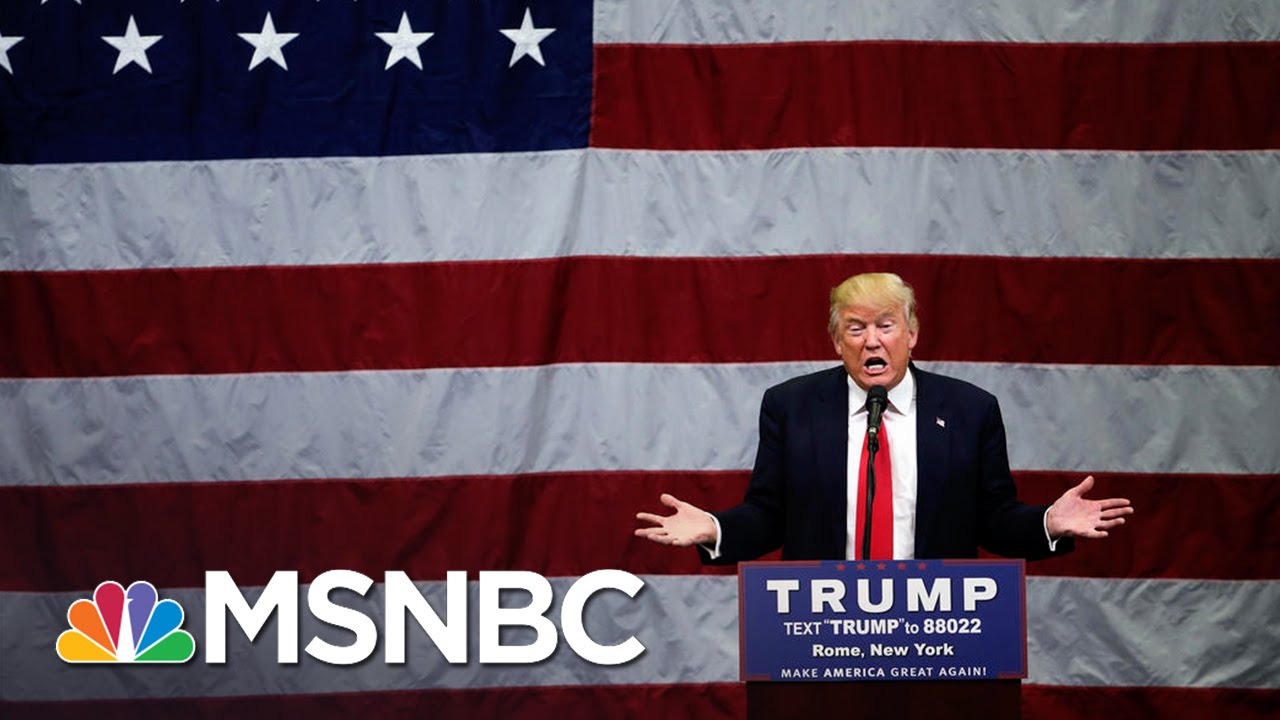 " (2016).
- ^ :{Jump up to::(style="user-select:none;top:-99999px;clip:rect(1px, 1px, 1px, 1px);overflow:hidden;position:absolute !important;padding:0px !important;border:0px !important;height:1px !important;width:1px !important"):}:^a b(https://en.wikipedia.org/wiki/Anand_Giridharadas#cite_ref-OHIO_2-1) "Anand Giridharadas (b. 1981)". Ohio Birth Records. Retrieved April 18, 2016.
- ^ Foley, Dylan (March 20, 2011). "Anand Giridharadas: An interview". NJ.com. NJ Advance Media. Giridharadas, 29, was raised in Ohio and Maryland ... his home in Cambridge, Mass
- ^ Stewart, Jon. January 24, 2011. The Daily Show. Comedy Central. Accessed February 24, 2011.
- ^ Giridharadas, Anand. The anatomy of a conflict: Afghanistan and 9/11(2002) p. vi. ISBN 81-7436-253-3.
- ^ :{Jump up to::(style="user-select:none;top:-99999px;clip:rect(1px, 1px, 1px, 1px);overflow:hidden;position:absolute !important;padding:0px !important;border:0px !important;height:1px !important;width:1px !important"):}:^a b(https://en.wikipedia.org/wiki/Anand_Giridharadas#cite_ref-Plain_6-1) c(https://en.wikipedia.org/wiki/Anand_Giridharadas#cite_ref-Plain_6-2) "For 'India Calling,' former Clevelander Anand Giridharadas writes eloquently of two cultures". The Plain Dealer. January 4, 2011. Accessed February 24, 2011.
- ^ Sehgal, Parul. "Go East, Young Man". Publishers Weekly. December 6, 2010. Accessed March 8, 2013.
- ^ History Honors Symposium. Archived May 4, 2013, at the Wayback Machine University of Michigan Department of History. Accessed March 8, 2013.
- ^ Selection of Giridharadas's India coverage via Google Accessed March 8, 2013.
- ^ Selection of Giridharadas's "Currents" columns and other writings via Google Accessed March 8, 2013
- ^ Giridharadas, Anand. "The Would-Be Prince of Port-au-Prince" July 15, 2011. The New York Times Magazine. Accessed March 8, 2013.
- ^ Giridharadas, Anand. "The Kitchen-Table Industrialists" May 13, 2011. The New York Times Magazine. Accessed March 8, 2013.
- ^ Giridharadas, Anand. "V.S. Naipaul: The Constant Critic, the Lover of Animals" January 4, 2011. The Atlantic. Accessed March 8, 2013.
- ^ "Speakers". Harvard Asian American Alumni Association. Archived from the original on October 5, 2014. Retrieved August 9, 2014.
- ^ 2011 Henry Crown Fellowship Accessed March 8, 2013.
- ^ "Anand Giridharadas - NYU Journalism". NYU Journalism. Retrieved 2018-08-26.
- ^ Anand Giridharadas biography Anand.ly. Accessed March 8, 2013.
- ^ ":{'}:India Calling': The New 'Land Of Opportunity'?". National Public Radio. Retrieved August 9, 2014.
- ^ Bahadur, Gaiutra (January 7, 2011). "Homeland revisited". The New York Times. Retrieved August 9, 2014.
- ^ Akhtar, Ayad (May 8, 2014). "Pledges of allegiance". The New York Times. Retrieved August 9, 2014.
- ^ :{Jump up to::(style="user-select:none;top:-99999px;clip:rect(1px, 1px, 1px, 1px);overflow:hidden;position:absolute !important;padding:0px !important;border:0px !important;height:1px !important;width:1px !important"):}:^a b(https://en.wikipedia.org/wiki/Anand_Giridharadas#cite_ref-Patel_21-1) Patel, Eboo (May 9, 2014). "Book review: 'The True American: Murder and Mercy in Texas' by Anand Giridharadas". The Washington Post. Retrieved August 9, 2014.
- ^ Harrigan, Stephen (May 4, 2014). "Book Review: 'The True American' by Anand Giridharadas". The Wall Street Journal. Retrieved August 9, 2014.
- ^ "Meet the 'Change Agents' Who Are Enabling Inequality". Retrieved 2018-08-25.
External links:{:(style="margin-right:0.25em"):}:[edit:{]}:
- Official website
- *New York Times* writings
- "Daily Show" appearance
- "Anything to Declare at Immigration?" *The Indian Express Limited*. February 19, 2011.
- Anand Giridharadas at TED

- Appearances on C-SPAN
| Authority control |
|
- 1981 births
- Living people
- American male writers of Indian descent
- American columnists
- The New York Times columnists
- University of Michigan alumni
- Alumni of St Edmund Hall, Oxford
- Writers from Shaker Heights, Ohio
- Journalists from Ohio
- American male non-fiction writers
- Henry Crown Fellows
===
Anand Giridharadas
www.anand.ly/
2.
:{ :(style="overflow-wrap:break-word"):}:
:{===:(style="overflow-wrap:break-word"):}:
:{nyt:(style="overflow-wrap:break-word"):}:
[:{ NONFICTION
What to Do When You’re a Country in Crisis
In “Upheaval,” Jared Diamond asks whether countries can draw lessons from how individuals confront personal difficulties.
By Anand Giridharadas
May 17, 2019
When Your Money Is So Tainted Museums Don’t Want It
Nonprofits should not allow themselves to be used by the wealthy to scrub their consciences.
By Anand Giridharadas
May 16, 2019
Deleting Facebook Won’t Fix the Problem
When we tell people to get off the platform, we recast a political issue as a willpower issue.
By Anand Giridharadas
Jan. 10, 2019
Silicon Valley’s Saudi Arabia Problem
Technology companies can no longer turn a blind eye to the human rights abuses of one of their largest investors.
By Anand Giridharadas
Oct. 12, 2018
NONFICTION
What Is Identity?
Francis Fukuyama’s “Identity” and Kwame Anthony Appiah’s “The Lies That Bind” examine the role of personal identity in our modern age.
By Anand Giridharadas
Aug. 27, 2018
Beware Rich People Who Say They Want to Change the World
Society’s winners can seem so generous, until you consider what they’re really selling.
By Anand Giridharadas
Aug. 24, 2018
Besieged Globalists Ponder What Went Wrong
In a time of rising nationalism, those who see the upside of globalism have become a distinct — and often embattled — tribe.
By Anand Giridharadas
Sept. 26, 2016
LETTER FROM AMERICA
Airbnb, a Silicon Valley Titan, Breaks Ranks in Admitting Its Power
A plan by the home-rental site to curb bias among users rejects the logic of networks like Uber and Facebook, which claim to be neutral platforms.
By Anand Giridharadas
Sept. 12, 2016
LETTER FROM AMERICA
When Technology Sets Off a Populist Revolt
If you think globalization, immigration and trade have contributed to political anger, wait until robots take away millions and millions of jobs.
By Anand Giridharadas
Aug. 29, 2016
LETTER FROM AMERICA
For Party Elites, Appeal of Populism Shouldn’t Be a Surprise
Years before the improbable rises of Senator Bernie Sanders and Donald J. Trump, there were signs of a growing dissatisfaction with politics as usual.
By Anand Giridharadas
}:](https://www.google.com/search?q=related:www.anand.ly/+Anand+Giridharadas&tbo=1&sa=X&ved=2ahUKEwje-v_zmrXjAhUIQ80KHZdzDjYQHzAAegQIARAF)
:{ :(style="overflow-wrap:break-word"):}: