14th Amend
==
PROMOTE PRIMARY 3 26
see 5th
see takings
see sludge
SEE COURTS 4
SEE DISQUALIFICATION
SEE BIRTHRIGHT CITZEN miller 4
bak 7/20
===
trump seditious conspiracy? insurrection?!
===
---
---
---
---
AN 4 26
President Donald Trump is facing off against the U.S. Supreme Court as part of his ongoing effort to bully his way into remaking the country in his image. It could also be only the first example.
Speaking about his trip to the Court this week, Emily Bazelon, a staff writer for The Times Magazine, chatted with opinion columnist David French about the proceedings that legal analysts agree did not go well, with Trump looming in the audience.
Bazelon called Trump's flex a provocative political stunt, doubting its legal merit against the 14th Amendment, the Wong Kim Ark case (1898) and longstanding statutes.
"To me, this is the headline: Trump Trolls America. Because I don’t think the administration is making a serious legal argument," she said.
Criticizing Solicitor General D. John Sauer's "revisionist" history, Bazelon pointed to a moment in which the Trump lawyer outright misrepresented a 1921 law review article. Normally, lawyers trying to make a case before the Supreme Court cite the law itself, or conversations around making the law.
"Evan Bernick, a law professor, posted excerpts from that article to show that the solicitor general got it wrong," said Bazelon. While Sauer cited part of the review to justify those who thought the 14th Amendment to have a "domicile requirement." Meaning, if a family has a child in the U.S. they have to be established in the U.S. They can't simply come to the U.S. as part of "birth tourism," he called it.
"Too easy,"Evan Bernick said, chipping away at Sauer's argument. "He literally goes on to say that WKA follows the common law and the common law has no domicile requirement."
"Here’s the transcript. Sauer is just… lying," he added.
At one point, responding to Sauer's claim that it was a "new world," Chief Justice Roberts retorted, "It's a new world, but it's the same Constitution." It indicated skepticism on his part, but it was only the beginning of a very "bad" legal argument, CNN analysts agreed.
French focused on MAGA's outcome-driven approach with the textualists crowd, who believe the law applies to exactly what the text says and means at the time it was written.
Both note Trump's courtroom attendance was outright bullying, akin to his attacks on "rogue judges."
French added that Trump has started to treat the Supreme Court the same way he does with Republicans in Congress.
"He’s trying to insult, mock and bully them into compliance, but it’s not going to work. With precious few exceptions, the judiciary from top to bottom is unmoved. Judges are not so easily intimidated," said French.
Bazelon has another concern, however.
Another piece of "law as politics maneuvering that is eating at me," she said," is Stephen Miller. He "has been suggesting that Texas end public school funding for undocumented kids. A 1982 Supreme Court decision, Plyler v. Doe, requires states to pay for the education of all students, no matter their immigration status. But Miller and his allies would like nothing better than to set up a court challenge that could lead to the reversal of Plyler. It’s all in the service of immiserating immigrants to induce them to leave. I hope this is obvious, but taking away school from children — that is a real betrayal."
It's only one of the many cases that Republicans have their eyes on.
French said that it's time that Congress take the next steps to clarify the vague laws.
---
---
an 3 26
The Trump administration is turning to Civil War-era white supremacists in its challenge to a more than one century-old ruling, based on the 14th Amendment, that states that most children born in the United States are U.S. citizens.
Over a century ago, Confederate officer and Louisiana attorney Alexander Porter Morse “was among a trio of thinkers who spearheaded a failed effort — steeped in anti-Black and anti-Chinese racism — to erase birthright citizenship,” The Washington Post reported. “The Trump administration is reviving their arguments to make its case today, some legal scholars say.”
University of New Hampshire history professor Lucy Salyer told the Post “she was struck that the Trump administration had chosen to elevate those figures and their ideas.”
“If you know the history and the broader context of what they were trying to achieve,” Salyer said, “it does ring alarm bells.”
The Post adds that “Trump administration attorneys cite Morse in their Supreme Court brief to argue the disputed idea that commentators in the 19th century widely agreed that the Constitution ‘exclude[s] the children of foreigners transiently within the United States’ from qualifying for citizenship.”
President Trump is making clear exactly where he stands on the issue of birthright citizenship. On his first day back in office Trump signed an executive order attempting to limit birthright citizenship for certain U.S.-born children of undocumented or temporary-status parents.
On Monday, the president went even further.
“Birthright Citizenship is not about rich people from China, and the rest of the World, who want their children, and hundreds of thousands more, FOR PAY, to ridiculously become citizens of the United States of America,” the president wrote on Truth Social. “It is about the BABIES OF SLAVES!”
“Look at the dates of this long ago legislation – THE EXACT END OF THE CIVIL WAR!” he continued. “The World is getting rich selling citizenships to our Country, while at the same time laughing at how STUPID our U.S. Court System has become (TARIFFS!). ‘Dumb Judges and Justices will not a great Country make!'”
The Post notes that the ACLU calls the administration’s argument “nothing less than a remaking of our Nation’s constitutional foundations.” They say it would apply to tens of thousands of children born in the U.S. every month, and would be “devastating” to families around the country.
“But worse yet, the government’s baseless arguments — if accepted — would cast a shadow over the citizenship of millions upon millions of Americans, going back generations.”
According to the Post, the 1800s campaign against birthright citizenship also relied on prominent legal scholar Francis Wharton, who posited the idea that citizenship be granted to children of European immigrants but not to children of Chinese immigrants.
“Like Wharton, the Trump administration says in its brief a child’s citizenship is dependent on the parents’ nationality, not birth in the United States.”
The Trump administration, also like Wharton, “highlights the 14th Amendment phrase ‘subject to the jurisdiction thereof ,’ saying it disqualifies children of illegal migrants and temporary visitors from becoming citizens because they can’t demonstrate the necessary political allegiance to the United States the phrase evokes.”
The case, which will consider the legality of Trump’s executive order, will be argued before the Supreme Court on Wednesday.
---
---
AN 3 26
New York Times columnist Jamelle Bouie says White House advisor Stephen Miller is cruising to create “subordinate class” by ending public education funding for undocumented children in red states. But this is about more than keeping some kids less learned than others.
Miller spirited Texas lawmakers away to a closed-door meeting in Washington last week, according to two sources in the meeting, where he commenced to challenge a decades-old U.S. Supreme Court precedent. That case, Plyler v. Doe, holds that it was a violation of the equal protection clause for states to deny undocumented children the same free public education state leaders provide to legal immigrants’ children — who are themselves citizens.
According to the Times, Miller wants to take advantage of partisan gridlock in Congress to encourage state lawmakers to pass the attacks on Plyler. But why is Miller so determined to “whittle down the 14th Amendment to essentially nothing,” asked Bouie.
In Bouie’s argument the 14th Amendment is “tied directly to the 13th.”
“The 13th Amendment states that ‘Neither slavery nor involuntary servitude, except as a punishment for crime whereof the party shall have been duly convicted, shall exist within the United States, or any place subject to their jurisdiction.’ It then adds, in section 2, that ‘Congress shall have power to enforce this article by appropriate legislation.’”
But the 13th Amendment was about more than just slavery, said Bouie. To the authors, it was “the foundation for the society they hoped to build” by outlawing “hereditary caste as much as” the end of chattel slavery.” Immediately after ratifying it, anti-slavery forces in Congress used it as an open door to pass the Civil Rights Act of 1866, which established birthright citizenship and nullified the “Black Codes.”
The racist Supreme Court at the time neutered much of that good intent “as part of a larger political project to reconcile the white citizens of the United States” and give the white South the power to manage its own ‘affairs,’ and impose “imperial domination,” Bouie argued.
“Both Miller and the MAGA right are engaged in the same kind of work as their political forebears,” added Bouie. “It is no wonder, then, that they want to gut the 14th Amendment, which was revitalized by the struggles of Black Americans and other groups throughout the 20th century. Theirs is a project of subordination at home and abroad; of the re-inscription of caste and the recreation of tiered citizenship based on race and nationality. And now, as then, the 14th Amendment stands in the way.”
===}:
see trump miller
“person” in 14th key to lots of groups?
new rep
4 25
White House deputy chief of staff Stephen Miller gave an outrageous ultimatum during a rant attacking U.S. federal judges for upholding the rule of law in the face of Donald Trump’s mass deportations.
During an appearance on Fox News’s Hannity Wednesday, Miller railed against federal judges who told Trump that he couldn’t suspend due process in order to deport undocumented immigrants who the government alleged are members of foreign gangs.
“This is the choice facing every American: Either we all side, and get behind President Trump to remove these terrorists from our communities, or we let a rogue, radical left judiciary shut down the machinery of our national security apparatus,” Miller ranted.
Of course, the supposedly “rogue” judiciary is one that acts as a system of checks and balances on the executive branch, and the purported “radical left” lean simply refers to the courts’ independence from Trump’s abhorrent immigration agenda. Miller likes to pretend that he doesn’t understand what due process is, putting him at odds with the courts charged with upholding that, and other rights.
The Supreme Court has ordered the U.S. government to comply with a federal court order to “facilitate” the return of Kilmar Abrego Garcia, a man deported to a notorious prison in El Salvador due to an admitted “administrative error.” On Wednesday, a federal judge ordered the return of another immigrant whose deportation to El Salvador violated a previous court settlement.
Earlier this week, Miller argued that birthright citizenship also presented a threat to national security, claiming that it had been “used by foreign governments to conduct espionage against the United States.” He provided no evidence for this claim but used it to defend Trump’s executive order upending the right outlined in the Fourteenth Amendment. The Supreme Court is expected to weigh the president’s bid to curtail birthright citizenship in May.
---
---
AN 5 25
During a hearing on Thursday morning, May 15, Solicitor General John Sauer was questioned by justices of the U.S. Supreme Court — including Elena Kagan, Sonia Sotomayor, Amy Coney Barrett and Chief Justice Roberts. The hearing involved universal injunctions blocking President Donald Trump's executive order (EO) against birthright citizenship.
Attorneys who are challenging Trump's order stress that it is unconstitutional, as birthright citizenship is protected by the U.S. Constitution's 14th Amendment.
During her questioning, Kagan asked Sauer, "Does every single person that is affected by this EO have to bring their own suit? Are there alternatives? How long does it take? How do we get to the result that there is a single rule of citizenship…. that is the rule that we've historically applied, rather than the rule that the EO would have us do?"
READ MORE: 'Very disappointed': Rhode Island man finds glaring typo on Trump watch he paid $600 for
After Sauer was questioned by Barrett, the conservative justice accused him of being evasive in his responses to Kagan's questions.
Barrett told Sauer, "Are you really going to answer Justice Kagan by saying there's no way to do this expeditiously?"
The questioning is receiving a lot of responses on X, formerly Twitter — some from angry MAGA Republicans, others praising their questions.
Law professor Jonathan Turley tweeted, "are you really going to answer [J]ustice [K]agan by saying, there's no way to do this expeditiously?"
READ MORE:When the sleeping giant awakens, Trump will be toast
David W. Green, a self-described "MAGA patriot," told Turley, " If the conclusion reached is anything other than 'judicial overreach has gone too far,' then we have an unconstitutional judicial branch and a constitutional crisis."
Jim Devine, a self-described "conservative libertarian," said, " I believe we will be seeing some hypocrisy soon."
MAGA user Dave Harvilicz, @DaveHarvilicz posted, "Amy Coney Barrett on universal injunctions is currently showing her intellectual inadequacy. Better diligence on judicial appointments is warranted."
@GulfFLLinda posted, "The 14th amendment was meant to protect the children of slaves. That’s it. Which should have been done. Period. You’re right it will be Barrett and Roberts who choose to interpret the Constitution and make up their own rules."
Eric Daugherty wrote, "The Supreme Court must overturn Birthright Citizenship. Amy Coney Barrett and/or John Roberts will be required. It was not created so foreign nations could implant pregnant mothers into our country to "anchor" themselves here. Even thinking about the fact this is allowed is ludicrous."
X user Amanda Giancana wrote, " Solicitor Gen Sauer is gettin ANNIHILATED by #SCOTUS, he’s an embarrassment [and] so outta his depth. [Barrett] just called him out on his disgraceful response to Kagan — “did u really answer Justice Kagan with “there’s no way to do this expeditiously!"
Journalist Brian Cano Sr. tweeted, "@SCOTUSblog: Justice Kagan questioned the rationale behind bringing Trump v. CASA, Trump v. Washington, and Trump v. New Jersey to the Supreme Court, stating, 'There's no way that I would bring this before the court.' Is D. John Sauer taking one for the team?"
READ MORE:'Blissfully ignorant': Jen Psaki brutally mocks 'simple country lawyer' Mike Johnson
*Watch the full video below or at this link.
---
---
ICN 6 25
A group of 22 young people from across the country accuse the Trump administration in a new federal lawsuit of violating their constitutional rights with a coordinated set of executive orders that prioritize the expansion of fossil fuels and threaten to further destabilize the climate.
The complaint, filed Thursday in the U.S. District Court in Montana, challenges three executive orders: “Unleashing American Energy,” “Declaring a National Energy Emergency” and “Reinvigorating America’s Beautiful Clean Coal Industry.” The lawsuit argues that with the orders, the Trump administration knowingly is advancing an agenda that will increase greenhouse gas pollution that already is stressing the global climate to a dangerous extent.
The litigation argues the situation infringes on the young people’s constitutional rights to life and liberty, as well as falling afoul of other laws approved by Congress that protect public health and the environment. The plaintiffs want the court to declare the executive orders unconstitutional, block their implementation and reaffirm the legal limits on presidential power.
“From day one of the current administration, President Trump has issued directives to increase fossil fuel use and production and block an energy transition to wind, solar, battery storage, energy efficiency, and electric vehicles (“EVs”),” the lawsuit states. “President Trump’s EOs falsely claim an energy emergency, while the true emergency is that fossil fuel pollution is destroying the foundation of Plaintiffs’ lives.”
The complaint was filed on behalf of young people from Montana to Florida, ranging in age from 7 to 25, who have experienced wildfires, floods, hurricanes and extreme heat. Some have been displaced from their homes.
Others have endured health harms, such as a 7-year-old boy, identified by the initials J.K. in the lawsuit because he is a minor, who suffers from frequent respiratory infections. The infections are exacerbated by wildfire smoke and have landed him in the hospital. Greenhouse gas emissions, including those associated with fossil fuels, are heating the global climate, shifting weather patterns and leading to more extreme events such as wildfires and hurricanes.
Many of the plaintiffs are pursuing college degrees and careers in environmental science, and their research and professional goals have been disrupted as the Trump administration has eliminated jobs and funding for clean energy, climate research and decarbonization. Ula Jones, 18, was told by professors that some classes she planned to take may be eliminated. A 17-year-old who is identified by the initials J.M. in the litigation had helped her school secure a $400,000 grant from the Environmental Protection Agency for two electric buses, but the school never received the funding.
Some plaintiffs also have experienced mental anguish over the uncertainty climate change has cast on their futures. Among them is Olivia Vesovich, 21, who lives in Missoula, Montana.
“There are days when Olivia feels paralyzed by the devastation wrought by climate change to her state and community,” the lawsuit states. “Olivia’s climate anxiety is like an elephant sitting on her chest; it feels like a crushing weight, making it hard for her to breathe.”
The plaintiffs are represented by Our Children’s Trust, the Oregon-based advocacy group that previously brought the closely watched case Juliana v. United States, which sought to hold the federal government accountable for an energy system based on fossil fuels. That lawsuit claimed the government knew since 1965 that burning fossil fuels would lead to dangerous climate change.
The U.S. Supreme Court declined this spring to hear the case, ending the 10-year legal effort. But Our Children’s Trust said the legal framework established by Juliana inspired more than 60 youth-led lawsuits worldwide. In 2023 the group celebrated a groundbreaking victory in Montana, the first time a court in the U.S. declared that a government had a constitutional responsibility to protect people from climate change. The next year the group reached a settlement in Hawaii that included a plan to decarbonize the state’s transportation system.
Our Children’s Trust filed the latest litigation over the Trump administration’s executive orders in partnership with the Gregory Law Group, McGarvey Law and Public Justice.
In addition to President Donald Trump, the lawsuit names as defendants multiple administration leaders and departments, including the EPA, Department of Transportation, National Science Foundation and the Department of Health and Human Services.
“The American people are more concerned with the future generations’ economic and national security, which is why they elected President Trump in a landslide victory to restore America’s energy dominance,” said Taylor Rogers, White House assistant press secretary, in a statement provided to Inside Climate News. “Future generations should not have to foot the bill of the lefts’ radical climate agenda.”
A recent report by risk management experts warned that climate change could cut the worldwide gross domestic product in half between 2070 and 2090. And last year, the U.S. was hit by 27 billion-dollar disasters.
Eva Lighthiser, a 19-year-old recent high school graduate living in Livingston, Montana, is one of the plaintiffs. Flooding destroyed roads and bridges near where she lived, forcing her family to relocate to a different town. Wildfire smoke leaves her short of breath and causes other symptoms such as headaches. She plans to study environmental science in college and worries about whether the Trump administration may limit her access to climate science and data.
“It’s incredibly important to stay involved in this,” she said. “These are our futures that we’re inheriting. It’s vitally important that we do our best to preserve those.”
---
AN 2 25
A federal judge in Maryland blocked President Donald Trump’s executive order to ban birthright citizenship on Wednesday, saying the order goes against the Constitution, Supreme Court precedent, and the country’s history.
ABC News reported Wednesday that U.S. District Judge Deborah Boardman ruled in favor of two immigrant rights groups — CASA and Asylum Seeker Advocacy Project — and five pregnant women. They argued that the women’s unborn children could be affected by the order.
"Today, virtually every baby born on U.S. soil is a U.S. citizen upon birth," Boardman said. "That is the law and tradition of our country. That law and tradition are and will remain the status quo pending the resolution of this case,” Boardman said.
READ MORE:Don’t count on the Supreme Court to stop Trump’s new order — or uphold the Constitution
The order, she said, “conflicts with the plain language of the 14th Amendment, contradicts 125-year old binding Supreme Court precedent and runs counter to our nation’s 250-year history of citizenship by birth.”
“No court in the country has ever endorsed the president’s interpretation,” she said. “This court will not be the first.”
Trump signed the order on his first day in office, which instructs agencies to not recognize the citizenship of children who are born on U.S. soil whose parents are not U.S. citizens or lawful permanent residents.
One woman who joined the lawsuit, a doctor from Venezuela, said she is worried about her child’s future. "I'm 12 weeks pregnant. I should be worried about the health of my child. I should be thinking about that primarily, and instead my husband and I are stressed, we're anxious and we're depressed about the reality that my child may not be able to become a U.S. citizen," she said.
READ MORE:Former federal prosecutor reveals why Trump birthright citizenship order is doomed
Trump’s order is “causing real-world confusion, fear, real-world harm, for countless people today,” Joseph Mead, an attorney for the plaintiffs, said at the hearing. “This executive order is such a departure from settled law. It’s so abrupt and such as departure from what we’ve been doing for over a century.”
He added: “People covered by the executive order are parents, people who have lived here for years and decades and are not temporary visitors. They are people we work with, who own the houses down the street, who made America their home. They are entitled to have their children have the same constitutional right to citizenship as every other child born in United States has.”
Another federal judge, John Coughenour, put a temporary block on the order in January, calling it “blatantly unconstitutional.”
"I've been on the bench for four decades,” he said. “I can’t remember another case where the question presented is as clear as this one is. There are other times in world history where we look back and people of goodwill can say, 'Where were the judges? Where were the lawyers?'"
READ MORE:['Boohoo you got a ticket': Trump-backed Arizona senator calls for legislative immunity for speeding
Click here to read ABC's report in its entirety.
---
an 2 25
“Everything faded into mist. The past was erased, the erasure was forgotten, the lie became truth.*“
– George Orwell, “1984”
Birthright citizenship in the United States is guaranteed by the first sentence of the 14^th Amendment. Known as the “citizenship clause,” the provision states:
All persons born or naturalized in the United States, and subject to the jurisdiction thereof, are citizens of the United States and of the State wherein they reside.
Measured against the text of the amendment, Donald Trump’s executive order terminating birthright citizenship for the children of undocumented immigrants is patently unconstitutional. But ultimately that may not matter. With Trump assuming near-dictatorial powers in his second term, we are entering an Orwellian post-constitutional era in which the law is whatever the president and his lackeys on the Supreme Court say that it is at any given moment.
In true Orwellian fashion, the executive order is titled, “Protecting the Meaning and Value of American Citizenship.” It makes no mention of the U.S.-born children it could disenfranchise. According to the Washington Post, more than 150,000 children born in the country each year would no longer qualify for citizenship under the order and could end up stateless.
The order, which takes effect on Feb. 19, begins with a proposition accepted by all constitutional scholars: that the 14th Amendment was adopted in 1868 to override the Supreme Court’s infamous 1857 Dred Scott ruling, which denied citizenship to Black Americans, even those living in non-slave states. From there, however, the order veers sharply from the current academic and legal consensus, asserting, in highly misleading fashion, that “the 14th Amendment has never been interpreted to extend citizenship universally to everyone born within the United States,” and that the amendment “has always excluded from birthright citizenship persons who were born in the United States but not ‘subject to the jurisdiction thereof.’”
We are entering an Orwellian post-constitutional era.
Under the order, citizenship will no longer extend to U.S.-born children whose mothers were unlawfully present in the country at the time of birth if their fathers were not citizens or lawful permanent residents, nor to children whose mothers were lawfully present, but whose fathers were neither citizens nor lawful permanent residents. The latter category includes parents in the country on tourist or student visas, or work permits. Such children will not be issued any federal documents recognizing them as U.S. citizens, such as passports.
Trump has long vowed to end birthright citizenship, accusing the undocumented of “poisoning the blood of our country” and turning the U.S. into “the garbage can of the world.” In 2015, he opened his presidential campaign by accusing Mexico of “sending” drug smugglers and “rapists” into the U.S. Then, as now, he wasn’t simply bemoaning the presence of undocumented immigrants or tapping into our long and sorry traditions of nativist scapegoating; he was accusing Mexico — and later, other underdeveloped nations — of deliberately staging an invasion of the United States.
The invasion thesis operates at the heart of the MAGA movement and the legal theory behind the new executive order. Proponents of the theory, such as Texas Gov. Greg Abbott, assert that the country is facing an “invasion” of illegal aliens akin to a state of war. Other proponents, such as Yale Law School professor Peter Schuck, Heritage Foundation senior legal fellow Hans von Spakovsky and Jan. 6 coup-plotter John Eastman, contend that undocumented immigrants are not “subject to the jurisdiction of the United States” within the meaning of the 14th Amendment because they owe allegiance to foreign powers.
Nothing could be farther from the truth, or our actual history. In addition to contradicting the plain text of the 14th Amendment, the executive order departs from the original intent of the framers of the amendment, as well as the Supreme Court’s precedent decisions on birthright citizenship.
Debates on the 14th Amendment took place in 1866 in both the House and Senate, and were reported in the Congressional Globe, the precursor of today’s Congressional Record.
The citizenship clause was introduced in the Senate by Jacob Howard of Michigan on May 30, 1866, as an add-on to the initial draft of the 14th Amendment formulated by the House. The clause tracked similar language contained in the Civil Rights Act of 1866 and followed the general principles of English common law and the ancient doctrine of jus solis (the “law of the soil’’) — the idea that all those born within the geographic boundaries of a nation are citizens at birth. (More than 30 countries today recognize the doctrine, including the United States, Canada and Mexico.)
In his introductory remarks, Howard noted the phrase “subject to the jurisdiction” of the United States meant that the citizenship clause would not apply to the children of ambassadors or foreign ministers, the children of occupying foreign soldiers, or to the offspring of Native Americans who claimed allegiance to tribal governments, but that the clause would “include every other class of person,” regardless of race or descent.
The citizenship clause, Howard said, “settles the great question of citizenship and removes all doubt as to what persons are or are not citizens of the United States.”
The Supreme Court has endorsed Howard’s reading of the citizenship clause in at least four decisions: United States v. Wong Kim Ark (1898), dealing with the readmission into the country of a Chinese-American man whom the government sought to exclude because he had been born in the U.S. to parents who were subjects of the Chinese emperor at the time of his birth; Plyer v. Doe (1982), concerning the right of undocumented children to attend public schools; INS v. Rios-Pineda (1985), a deportation proceeding; and Hamdi v. Rumsfeld (2004), in which the court’s plurality opinion noted that a Guantanamo Bay inmate held as an “enemy combatant” was still a citizen entitled to due process because he was born in Louisiana.
He is counting on the Supreme Court to come to his rescue again on the birthright issue.
Trump’s legal game plan is to get his executive order to the Supreme Court, which is now firmly in the hands of a six-member MAGA-friendly majority, including three justices nominated by Trump himself. Last year, the court came to Trump’s rescue in two landmark cases. In the first, it overturned Colorado’s decision to deny Trump a place on its 2024 presidential ballot under the 14th Amendment’s insurrectionist clause in Trump v. Anderson; the second accorded him unprecedented immunity from criminal prosecution in Trump v. United States. He is counting on the Supreme Court to come to his rescue again on the birthright issue, either by overruling its prior decisions or holding them inapplicable to the current immigration crisis.
Before the executive order reaches the Supreme Court, it will have to be reviewed by the lower federal courts. To date, six challenges to the order have been filed in federal district courts across the country. On Jan. 23, District Judge John C. Coughenour, who sits in Seattle and was appointed to the bench by Ronald Reagan in 1981, granted an emergency motion for a temporary restraining order filed by the attorneys general of Washington, Arizona, Illinois and Oregon. The order enjoins the Trump administration from enforcing the executive order for 14 days, pending another hearing set for Feb. 6 to determine if a preliminary injunction should be issued.
“I’ve been on the bench for four decades, I can’t remember another case where the question presented is as clear as this one is,” Coughenour said during the Jan. 23 hearing, describing Trump’s order as “blatantly unconstitutional,” and adding, “There are other times in world history where we look back and people of goodwill can say, ‘Where were the judges? Where were the lawyers?’ Frankly, I have difficulty understanding how a member of the bar could state that this is constitutional.”
Coughenour is an old-school jurist who still believes in the words of the Constitution and the past decisions of the Supreme Court. Apparently, he doesn’t realize that, as George Orwell warned, the past can be erased.
===
===
AN 1 25
On Monday night, January 20 — his first night back in the White House — President Donald Trump signed an executive order designed to end birthright citizenship. And a long list of lawsuits quickly followed, including one from the American Civil Liberties Union (ACLU) and attorneys general in 22 different states.
The ACLU and others are arguing that Trump's executive order is blatantly unconstitutional, as birthright citizenship is protected by the U.S. Constitution's 14th Amendment.
ACLU Executive Director Anthony D. Romero, in an official statement on the lawsuit, stressed, "Denying citizenship to U.S.-born children is not only unconstitutional — it's also a reckless and ruthless repudiation of American values. Birthright citizenship is part of what makes the United States the strong and dynamic nation that it is. This order seeks to repeat one of the gravest errors in American history, by creating a permanent subclass of people born in the U.S. who are denied full rights as Americans."
READ MORE:['It’s a free country' — but some White House staffers are facing these new rules: report
In an article published by the conservative website The Bulwark on January 22, writer Philip Jaffa describes the far-right Claremont Institute as a main influence on Trump and the MAGA movement's war on birthright citizenship.
Claremont, founded in 1979, was once a traditional conservative think tank greatly influenced by the late Sen. Barry Goldwater (R-Arizona). But in recent years, it has taken an ultra-MAGA turn and aggressively promoted fringe conspiracy theories.
Jaffa explains, "Let's set aside for a moment the questions of the legality and constitutionality of Trump's action and ask instead: Where did he get this idea? How did eliminating birthright citizenship become a right-wing desideratum? There is no mystery as to where this is coming from. The idea that birthright citizenship is a false interpretation or recent innovation that warps the intended meaning of the 14th Amendment has been pushed into mainstream Republican circles by the tireless work of John Eastman and the Claremont Institute."
In an article published by Claremont's website **The American Thinker on January 22, Eastman — who was a major supporter of Trump's efforts to overturn the 2020 presidential election results — promotes the claim that birthright citizenship isn't really protected by the 14th Amendment. Eastman claims that "the 14th Amendment's Citizenship Clause does not provide automatic citizenship for everyone born on U.S. soil, no matter the circumstances."
READ MORE:**Meet the far-right think tank chair spending millions to defeat 'the woke regime'**
But countless legal scholars disagree with Eastman's views on the 14th Amendment.
Jaffa notes that in his American Thinker article, "(Eastman) lists several of the Claremont scholars who have written on birthright citizenship, and says he hopes the 'Claremont Institute's long-standing view' of the issue will soon be vindicated by the Supreme Court.' Just one problem: All the claims from MAGA and the Trumpians that the 14th Amendment was not intended to extend citizenship to the children of illegal immigrants falter when confronted with the obvious truth that the 14th Amendment, upon its adoption, did extend citizenship to a very large number of children of illegal immigrants."
===
AN 10 24
The U.S. Supreme Court's immunity ruling in Trump v. the United States in early July has inspired so much debate and discussion that it has overshadowed another controversial Trump-related ruling handed down by the justices five months earlier: Trump v. Anderson.
In Anderson, the High Court struck down a Colorado Supreme Court ruling that excluded Trump from the state's ballot based on Section 3 of the U.S. Constitution's 14th Amendment. Under Section 3, one who has engaged in "insurrection" is ineligible to run for office — and the Colorado justices believed that the January 6, 2021 attack on the U.S. Capitol Building disqualified Trump.
But the Roberts Court disagreed, ruling that Trump couldn't be excluded from the Colorado ballot or any others. And two weeks before the 2024 election, Trump has a good chance of being elected president a second time. Polls are showing a very close, nail-biting race between Trump and Democratic presidential nominee Kamala Harris.
READ MORE:**'Endorsing a coup': 3 in 10 Republicans support 'patriot' violence to 'save our country'**
In a biting article published by MSNBC on October 22, legal journalist Jordan Rubin argues that the High Court failed the U.S. miserably in Anderson — and that Trump shouldn't even be on the ballot.
"With former President Donald Trump on the precipice of possibly becoming president again," Rubin laments, "let's recall that he’s on the 2024 ballot thanks partly to the Supreme Court. I'm not talking about the ruling granting him broad criminal immunity, though the Roberts Court's handling of that appeal helped Trump push off a trial in the federal election interference case — possibly forever, if he wins the election and deploys his reacquired presidential power to crush it."
Rubin continues, "I'm talking about another Jan. 6-related appeal from the last Supreme Court term, one that more directly positioned the Republican to take office again: Trump v. Anderson. It was there that the justices reversed the Colorado Supreme Court's decision to keep the former president from the ballot."
Rubin argues that the Roberts Court did the U.S. a huge disservice in Anderson, allowed Trump to stay on the Colorado ballot despite having "engaged in" insurrection on January 6, 2021.
READ MORE:**How Trump could pull off 'a real coup' if he loses to Harris: report**
"Look no further than the Trump-backed violence of Jan. 6," Rubin writes. "So, what about the 'plain consequences,' to use the chief justice's concerned phrase, of an oath-breaking insurrectionist potentially running the country again, this time knowing he'd have broad criminal immunity heading into a second term? That consequence apparently was not 'daunting' enough to move this court."
READ MORE:['I'm out of here': Michael Cohen plans to avoid MAGA reprisal by going abroad if Trump wins
*Jordan Rubin's full MSNBC column is available at this link.
The U.S. Supreme Court today has made a mockery of Section 3 of the Fourteenth Amendment to the U.S. Constitution.
The Supreme Court has ruled that–despite inciting and facilitating a violent insurrection that defeated federal law enforcement, conquered the seat of our national government, nearly assassinated the vice president and key congressional leaders, and blocked Congress from certifying his electoral defeat, thus disrupting the peaceful transfer of power for the first time in our nation’s history–the disgraced ex-president Donald Trump can run for office again because this critical provision of the Constitution, designed to prevent exactly this situation, cannot be enforced.
Under Section 3 of the Fourteenth Amendment, “No person shall . . . hold any office, civil or military, under the United States. . . who, having previously taken an oath, . . . as an officer of the United States. . ., to support the Constitution of the United States, shall have engaged in insurrection or rebellion against the same, or given aid or comfort to the enemies thereof.” Every court and state official that has addressed that issue — in Colorado, Maine, and Illinois — concluded that Trump engaged in insurrection and is disqualified from the presidency.
The Supreme Court did not deny that Trump engaged in insurrection; indeed, during a nearly three hour oral argument on February 8, 2024, neither Trump’s lawyer nor any of the Justices seriously disputed that conclusion. Instead, the Court ruled that states’ power to appoint presidential electors–which the Court has previously described as “far-reaching” and “plenary”–does not allow them to apply this critical provision of the Constitution to presidential candidates. As of today, states can exclude a presidential candidate from the ballot because he did not submit the proper paperwork with the proper number of verified signatures, but notbecause he fomented a bloody insurrection against the U.S. Constitution.
This decision is disgraceful,” said Ron Fein, Legal Director of Free Speech For People, which pioneered the first litigation under Section 3 of the Fourteenth Amendment and co-led the successful Illinois challenge. “The Supreme Court couldn’t exonerate Trump because the evidence of his guilt was overwhelming, so instead the Justices neutered our Constitution’s built-in defense against insurrectionists and said the facts don’t matter.
This dangerous ruling encourages Trump–and those who follow his example–to engage in more insurrections and disregard more broadly the Constitution. As one Senator explained in 1866 when advocating for Section 3, “the man who has once violated his oath will be more liable to violate his fealty to the Government in the future.” The framers of the Fourteenth Amendment learned this lesson in blood, and gave us Section 3 to prevent a repeat. With today’s ruling, the Supreme Court has utterly failed in its duty to uphold this constitutional mandate at this critical moment in history.
===
mta law gp 10 24
Corporate_Hijacking_of_the_14th_Amendment_
===
https://www.triplepundit.com/story/2015/back-basics-when-ben-jerrys-dropped-rbgh/58011
when two childhood friends, Ben Cohen and Jerry Greenfield, started}: Ben & Jerry's in 1978, they operated out of a renovated gas station in Burlington, Vermont. This small company with a big personality served up novelty products with witty names, such as Chubby Hubby, Cow Power and Holy Cannoli. Chubby Hubby was later renamed in 'Hubby Hubby,' to voice support for same-sex marriage.
This is just one of many examples of how Ben & Jerry's has created a rich brand personality by standing by its social and environmental values. The company embraces its three-part mission: to make fantastic ice cream, manage for sustainable financial growth and make the world a better place. This triple-bottom line approach to business allowed Ben & Jerry's to become what Brad Edmondson described as "one of the most iconic mission-driven companies in the world" in his book, "Ice Cream Social: The Struggle for the Soul of Ben & Jerry's." The company even occasionally put financial goals below its commitment to food safety.
The fight against rBGH
In 1989, Ben & Jerry's came out in opposition of recombinant bovine growth hormone (rBGH) or recombinant bovine somatotropin (rBST), developed by the agricultural biotech company Monsanto. This genetically engineered hormone is given to cows to increase milk production by up to 30 percent, but sadly it has numerous known negative effects on cows and humans alike.
Cows treated with rBGH show a significant increase in health problems, including a greater risk of lameness, udder infections (commonly treated with antibiotics) and serious animal reproductive problems. Some studies have also linked rBGH to concerning human health effects, including the development of certain tumors and prostate, breast, colorectal and other cancers.
Even though rBGH brought the price of milk down, Ben & Jerry's didn't want any of it.The ice cream men decided to continue to source milk from St. Albans Cooperative, a co-op with 450 family farmers. The ice creamery paid a premium to exclusively purchase milk from farms that took a pledge not to use rBGH. Ben & Jerry's showed its large personality when it took the bold step of not only sourcing milk without rBGH for its own products, but also publicly opposing its approval and use. The company made these decisions because it was the right thing to do, even if it raised the cost of production.
Stealing headlines with a social mission
But the socially-minded dessert makers wanted to have some fun along the way. The company decided to make a splash with its public opposition, too: "Ben & Jerry's launched their rBGH-free label on the same day that Monsanto made rBGH commercially available, and they basically hijacked the story," Brad Edmondson explained. "They gave reporters a quick and easy way to summarize the anti-rBGH discussion. They stuck to that and were very vocal about it, and the coverage was not what Monsanto hoped it would be."
Consumers bought into the branding so this decision did help to boost sales, despite the increased cost of production. But it wasn't all smooth sailing. The Attorney General of Illinois and several other states initially prohibited Ben & Jerry’s from mentioning rBGH on their product labels, which effectively meant the ice cream couldn’t be sold in those states. But Ben & Jerry’s fought back: they sued and won the right to sell products with the rBGH-free label everywhere. Ben & Jerry's sued the city of Chicago and the state of Illinois, later winning the right to label their products as rBGH-free.
"Ben & Jerry's used their reputation to take a political position that no one else could have taken as effectively," Edmondson said. "It was the use of brand equity to push social change, and it had only had been done a few times before and not on this scale. It was a huge wake-up call to people, and it helped get the socially responsible business movement into gear."
It is consistent with the Ben and Jerry's brand to be vocal and unstoppable when confronting issues the company is passionate about, which likely led to the demise of rBGH sales. By 2007, a mere 17 percent of U.S. cows were treated with rBGH, and the hormone was banned in many countries, including Canada, Japan, Australia and the European Union, showing Monsanto's product was a failure. According to Janice Neitzel, principal of Sustainable Solutions Group and a responsible animal protein consultant, consumer demand is fueling the sales of rBGH-free products.
“For close to a decade, U.S. consumers have said they don’t want growth hormones like rBGH in their milk, as evidenced by the tremendous sales growth of organic milk, which forbids the use of rBGH,” Neitzel said.
New parent company, same long-term sustainability values
Beyond rBGH, Ben & Jerry's food safety story has taken some interesting twists and turns. In 2000, the British-Dutch conglomerate Unilever bought Ben & Jerry's for $326 million, making it a a wholly-owned autonomous subsidiary. However Ben & Jerry's continues to trumpet social causes, even those that conflict with its parent company's position.
For example, Ben & Jerry's supportsVermont's efforts to label genetically modified organisms (GMOs), while its corporate parent does not. The negative PR threat of trying to silence outspoken Ben & Jerry's has allowed the company to maintain its corporate values, despite the difference of opinion.
Now Ben & Jerry's is producing flavors sourced with non-GMO ingredients, and encouraging consumer's right to know with a "labelizing it" campaign. Its sense of humor and values have not faded, and Ben & Jerry's continues to be the poster child for social responsibility, although some activists are skeptical given its corporate parent.
"Ben & Jerry's has recently completed a very extensive and arduous process that get GMOs out of all their ingredients, and there are something like 110 ingredients in their products," Edmondson said. "That was another enormous commitment of resources and time. The effect on the bottom line is debatable, but the effect on the brand is clear."
Ben & Jerry's has led the way as a brand with purpose, showing other companies that it's possible to do the right thing -- even if it isn't always the easiest financial call.
ref
jun 2014
https://www.triplepundit.com/story/2014/big-food-battles-vermont-over-gmo-labeling-law/42906
The recently launched, four-pronged suit against the state of Vermont’s genetically modified organism (GMO)-labeling law comes as no surprise. Last week, a group of the country’s largest grocery organizations filed suit against Vermont for its passage of a law (Act 120) requiring all manufacturers to label those products that contain GMO ingredients.
Big Food four stand up for GMO
The four “Big Food” companies -- the Grocery Manufacturers Association(GMA), the Snack Food Association, the International Dairy Foods Association and the National Association of Manufacturers -- allege that Vermont’s newly minted law contravenes federal law and cites the First and Fourteenth Amendments, the right of free speech and the commerce clause. It also cites the due process clause of the Fifth Amendmentfor Act 120’s “vagueness” in its prohibition of the use of certain words, such as natural, and other descriptors that the Vermont law has deemed confusing to consumers.
The plaintiffs defend their suit based on four counts relating to labeling mandates, alleged marketing restrictions and violations of the commerce clause. They have argued that Act 120 imposes unreasonable requirements on food manufacturing companies, which would be required to amend the labels on thousands of products before the act goes into effect on July 1, 2016.
GMA: The consumer already has the tools
They also assert that the state has acted beyond its capacity and that provisions already exist at the federal level for the consumer to make informed decisions, called the Organic Food Production Act.
“The Act appears not to recognize that the USDA has established the very system that the Act suggests is missing. Under the USDA’s “certified organic” program, food that qualifies for the certified organic label cannot be produced using GE plants or GE derived ingredients,” says the suit. It also suggests thatvoluntary labelingthrough programs like the Non-GMO Project already provides a voluntary method for consumers to select foods that don’t contain GMOs.
The power of commerce
:{
It’s no surprise that the plaintiffs have hinged this suit on the powers of the federal commerce clause. It’s a popular tactic these days, as North Dakota demonstrated last May with its controversial suit against Minnesota’s New Energy Act}:. At the same time that Vermont’s GMO-labeling bill was moving through the state legislature last April, another issue was being fought out in Minnesota district court that would virtually upend the state’s efforts to regulate the purchase of “dirty” coal power. Stating that the New Energy Act regulated issues that were under the purview of the federal commerce clause, U.S. District Court Judge Susan Richards Nelson enjoined the state from enforcing parts of the law, effectively stalling some of the boldest efforts made to date to curb carbon emissions by power companies. In effect: Minnesota’s clean energy law conflicted with the Constitution.
In both situations, the power of the consumer to decide what is sold within his or her state has been placed at odds with federal agencies which many states say are failing to step up to the demands of their constituents – despite voters’ efforts to get federal laws enacted, first. In the case of GMA et al vs. Vermont, the plaintiffs allege that consumer desires and voting bloc expectations aren’t enough reason to provide manufacturing transparency.
Federal organic laws: A chicken-and-egg story
Interestingly, although the suit mentions the “certified organic” program, it fails to mention that federal organic laws were actually the outgrowth of enforced state regulations in California. This leads to a quandary not unlike the chicken-and-egg story: If states don’t have the right to regulate the foods imported and sold within their borders (except when there are proven safety issues at hand), then why has California been successful in regulating food production through laws enacted by the ballot box? And why did the federal government think it was such a great idea to pattern the majority of its regulations after California’s already-enforced laws?
The suit also doesn't mention the fact that a fair number of states have their own organic certification programs and regulations in force, which the USDA points out, "may also add more restrictive requirements due to specific environmental conditions or the necessity of production and handling practices in that State."
Where's Monsanto?
When this suit was announced, a number of advocacy groups jumped on board to alert consumers that “Monsanto had launched a suit against Vermont." Most publications do, in fact, point out that the suit is being launched by four associations, but few advocacy groups or publications have asked why Monsanto’s name is conspicuously absent from the lawsuit.
While advocacy organizations have worked hard over the past few years to link Monsanto to the GMA, the association has worked just as hard – particularly recently – to limit information about its membership, or whether Monsanto is in fact a voting member.
The list of plaintiffs on a court document such as this speaks volumes about the strength that a suit may have, but it also says a lot about just what those who fund its launch is expecting from the public, and what they may feel could be most vulnerable if consumers really don’t agree with their principles. The fact that the four associations are fighting the good fight for Monsanto’s interest but haven’t mentioned Monsanto’s membership unfortunately may not make it any easier for consumers to swallow the concept of GMO engineering.
And, as the suit has boldly pointed out, American consumers are quite adept at finding ways of moving away from products they don’t trust. With a rising number of countries rejecting or restricting GMO food manufacture and/or imports, clear labeling laws may turn out to be the easiest and least expensive compromise for all sides.
violates the rights of white ppl?!
an 10 22
President Joe Biden’s relief plan for student loan debt is facing yet another lawsuit with a legal challenge from an organization in Wisconsin.
According to The Washington Post, the Brown County Taxpayers Association in Wisconsin, alleges that the plan includes “improper racial motive” and"violates the 14th Amendment’s equal protection clause."
“By creating and implementing a federal program with an improper racial motive, Defendants violated the Constitution’s guarantee of equal protection of the laws, which among other things, prohibits federal spending based on race,” states the lawsuit, per documents obtained by the news outlet.
READ MORE: 'Just kidding': Biden Administration yanks student debt relief for millions as GOP states sue
However, the White House insists the plan, which is set to provide up to $20,000 in student loan debt relief for American borrows, will “advance racial equity.”
“Black students are more likely to have to borrow for school and more likely to take out larger loans,” the White House's student loan debt relief fact sheet states. It also adds that “Black borrowers are twice as likely to have received Pell Grants compared to their white peers.”
Per HuffPost, The White House also cited "an Urban Institute study that showed tailoring measures to graduates who were awarded Pell Grants would help make progress on racial equity."
The latest reports about the legal challenge in Wisconsin come days after White House press secretary Karine Jean-Pierre was asked whether or not the flurry of lawsuits will cause delays for student loan debt relief.
READ MORE: 'Keep borrowers in debt': Republicans plotting legal challenges to Biden’s student debt relief plan
On Tuesday, October 4, Jean-Pierre addressed the situation while speaking to reporters. While the press secretary did not offer a definitive answer regarding the possibility of delays, she did offer a critical assessment of Republicans fighting to stop Americans from receiving financial relief.
“It’s a shame that you have Republicans out there — Republican groups, Republican states — that are trying to stop Americans from getting a little bit of a breathing room, a little bit of a break,” Jean-Pierre told reporters.
Biden's student loan debt relief initiative is poised to help reduce the financial strain for more than 40 million Americans.
READ MORE: Red states are lining up to stop Biden’s student loan forgiveness plan
==
https://www.nationofchange.org**/2022/07**/07/opus-dei-supreme-indecency-extreme-deceit/
the current Supreme Court majority that just denied women a legal right to abortion (Dobbs vs. Jackson) consists of religious fanatics whose careers have been fast-tracked (so that young Justices can serve for decades) by ultra-wealthy, like-minded lobbyists and political operatives. The nexus of this activity lies with a powerful arch-conservative organization within the Catholic Church, Opus Dei, that in the U.S. operates out of the Catholic Information Center in Washington D.C.
I am not targeting Catholics but rather the Church’s reactionary, fundamentalist wing. Many Catholic organizations are dedicated to upholding the rights and lives of minorities (and majorities, such as women), victims of pedophilic priests, gays, the poor, immigrants, etc. The fundamentalist wing of any religion has more in common with other creeds’ fundamentalisms than with many of its own co-religionists, whom they often regard as enemies. Catholic fundamentalism is obviously not the only “brand” influencing American politics, but it is the one with a dominant insidious influence on the judiciary.
Opus Dei and its partner organizations have poured tens of millions of dollars into promoting the careers and appointments of Chief Justice Roberts and the five Justices who overturned Roe: Thomas, Alito, Kavanaugh, Gorsuch, and Barrett (Roberts, an arch-conservative, nonetheless dissented on the abortion case).
Opus Dei was founded in Spain by Escriva de Balaguer in 1928 and grew in power, wealth, and influence during the Fascist dictatorship of Francisco Franco who, with significant military help from Nazi Germany, overthrew the legitimate Spanish government and ruled over a police state from 1939-1975.The group extended its power throughout Latin America, supporting Pinochet’s murderous regime in Chile and other terrorizing dictatorships. It consistently opposes gay, sexual, and reproductive rights, and the Catholic liberation movements that champion the poor in Latin America. It has been involved in the Vatican’s banking scandals but still wields enormous influence over Vatican finances, as detailed by Robert Hutchison in his book, Their Kingdom Come.
Opus Dei’s assets as of 2008 were $2.8 billion, but they have undoubtedly grown since. Popes John Paul II and Francisboth elevated Opus Dei officials to the highest Church offices. One of Opus Dei’s core principles, as articulated by its founder, is to engage in “the sphere of public life”, not because they are human or Catholic rights but because “they are God’s rights…May such ‘fanaticism’ for the Faith…become stronger every day.” Opus Dei is not simply a conservative religious group, it is openly dedicated to wielding political and financial power in nations throughout the world. And that often means promoting and aligning itself with the most violent, reactionary regimes and acting in the shadow realms of political influence.
Opus Dei members were prominent in Trump’s White House, including Attorney General William Barr and Pat Cipollone, Trump’s former White House counsel. Opus Dei had access to Trump’s budgetdirector,Mick Mulvaney, along with other noted right-wing lobbyists (Heritage Foundation, Koch Industries), meetings the Trump administrationtried to keep secret. Member Larry Kudlow was Trump’s director of the National Economic Council. It may well be the most powerful political lobby in the world and yet its explicit political agenda is absolutely subservient to its extreme, authoritarian religious agenda.
A key fixer in this effort is Leonard Leo. Leo is on the board of directors of the Catholic Information Center (William Barr was a past director) and Executive Vice Presidentof the Federalist Society, a lobbying group that adheres to an “originalist” interpretation of the Constitution (more on this below). The two organizations are close political allies, as Leo’s dual role suggests. As Trump’s close advisor during his presidency, Leo was responsible for selecting and guiding the Supreme Court nominations of Alito, Barrett, Kavanaugh, and Gorsuch and was instrumental in riddling the lower Federal courts with Trump appointees.
Meanwhile, members of both Opus Dei and The Federalist Society include Alito, Clarence Thomas, and the late Justice Antonin Scalia. Chief Justice Roberts is a Federalist Society member and the Society’s members and supporters are prominent in many of nation’s top law schools and most powerful law firms, which allows it to have an untoward influence over judicial selections. When Clarence Thomas headlined a 2013 Federalist Society fundraiser, guests were seated in proximity to him according to the size of their donations. In effect, the Federalist Society and Opus Dei have become the Supreme Court of the land.
Much of Opus Dei’s influence was exerted via the Wellspring Committee, established and run by Opus Dei members Ann and Neil Corkery in 2008. The Koch brothers were instrumental in providing Wellspring with its first $10 million in seed money. According to Robert Maguire of Citizens for Responsibility and Ethics in Washington, the Corkerys “have been the overseers of massive amounts of money that have gone into federal judicial races.”
Wellspring closed down in 2018 but not before passing its mantle to the Judicial Crisis Network (JCN); in 2017 Wellspring transferred $14,814, 998.00, or 94% of its donations that year, to JCN. JCN was formerly directed by Leonard Leo and now byCarrie Severino, who served as Thomas’s law clerk. (Opus Dei’s Roger Severino, Carrie’s husband, was Director of Trump’s Office for Civil Rights). JCN is a 501(c)(4) organization so its donors can remain secret. JCN poured millions into supporting Bush and Trump’s Supreme Court nominees (Roberts, Alito, Kavanaugh, Gorsuch, and Barrett) and millions blockingObama’s Court nominee, Merrick Garland.
Given Opus Dei’s absolute anti-choice ideology, global power, and influence over the Supreme Court, it is clear the Court’s anti-choice decision was not driven by legal arguments over the right to privacy, strict or “originalist” interpretations of the Constitution, or states rights. These were all just window dressing. The Supreme Court—and much of our judiciary—has been taken over by fanatics with a strictly theologicalagenda: to replace “separation of Church and State” with “the Church runs the state”. It is a narrow, fanatical religious ideology that decided the case.
The so-called “originalist” theory of interpreting the Constitution claims the Constitution only protects rights explicitly mentioned in the text. The Constitution itself rejects the “originalist” idea so central to conservative ideology. The Ninth Amendment reads, “The enumeration in the Constitution, of certain rights, shall not be construed to deny or disparage others retained by the people.” This clearly states that interpreting the Constitution is a living, evolving process, for how else can those “other[s]” rights be “retained by the people”? The Ninth is also a safety valve: “If we left out any important rights, sorry, our bad, it doesn’t mean those rights aren’t protected as well.” The Ninth has been used to uphold such diverse rights as teaching non-English languages, sending kids to private schools, protecting against forced sterilization, and the 1965 Griswold decision overturning bans on contraception, in which privacy was deemed a “penumbra” (also called “unenumerated”) right. The penumbra concept was then applied to abortion in 1973’s Roe decision.
Justice Harry Blackmun wrote the majority decision in Roe v. Wade, citing both the Ninth and Fourteenth Amendments:“This right of privacy, whether it be founded in the Fourteenth Amendment’s concept of personal liberty and restrictions upon state action, as we feel it is, or…in the Ninth Amendment’s reservation of rights to the people, is broad enough to encompass a woman’s decision whether or not to terminate her pregnancy. The detriment that the State would impose upon the pregnant woman by denying this choice altogether is apparent.” The Court also recognized that “When those trained in the respective disciplines of medicine, philosophy, and theology are unable to arrive at any consensus, the judiciary…is not in a position to speculate as to the answer.” Blackmun’s decision includes an overview of the dramatic shifts in cultural and legal attitudes towards abortion, though most views differentiated abortions in the first 12-16 weeks (before the baby is usually felt moving inside the womb) from those occurring later.
The “sanctity of the foetus”, that is, viewing abortion at any stage of pregnancy as equivalent to murder, is the linchpin of the anti-choice position and its driving emotional trigger. However, even the Catholic Church’s historical opposition to abortion had nothing to do with the sanctity of the foetus; it was aimed at the “sin” of sexual pleasure. Church policy varied over the centuries but the foetus’s life was either absent as an issue or secondary to sexual sin and other theological concerns. St. Thomas Aquinas asserted that in its earlier stages a foetus is in a “vegetal” and then “animal” state before achieving person-hood at some point, most likely at the end of the third month.It wasn’t until 1965 that the Church banned abortion on the basis of sanctity of life rather than sexual sin.However, the Bible passages used to justify this claim 1) do not really address abortion (the BIble is much more direct in advising that adulterers be stoned to death); 2) are drawn mostly from the Old Testament, a Jewish document, significant since the Jewish religion allows abortion; and 3) are in the Bible, which has no legal standing in the United States. Or didn’t.
The Court’s decision in Dobbs v. Jacksonis only the beginning, as anti-abortion activists and GOP-led extremists mobilize to assault a wide range of rights. The anti-choice movement was never only about abortion. Abortion was used as the emotional catalyst for a broad attack on the values of tolerance and social commitment embodied in Federal guarantees backed by Constitutional authority. The well-being of Americans and our system of government is now in the hands of religious fanatics on a crusade against all those who do not believe in their degraded, medieval version of truth. They are welcome to their beliefs but are not welcome to impose those beliefs on the rest of us, nor to challenge the fundamental values of the United States, which holds the value of human beings above adherence to extreme and rigid political or religious ideologies.
===
an 2 22
Rep. Madison Cawthorn (R-N.C.) recently expressed concern about a new lawsuit referencing his "Stop the Steal" rhetoric which could subsequently impact his chances of re-election in the 2022 midterm elections. After fighting to push Trump's self-serving agenda, now, according to The Daily Beast, the Republican senator claims he's focused on the will of the American people.
On Monday, February 21, Cawthorn appeared on "The Tucker Carlson Tonight" where he shared his disdain of the critics calling him out in his own state.
“I’m sure that you were as puzzled as I was following Jan. 6 when they started saying that we were insurrectionists, seditionists, traitors. I thought they were just trying to get a flashy headline,” Cawthorn said.
However, the lawmaker also explained how this was part of a so-called “plan.”
Per The Daily Beast, the lawsuit focuses on the 14th Amendment, which includes a clause designed to prohibit former Confederates from holding public office. It states that no individual “having previously taken an oath, as a member of Congress... to support the Constitution of the United States, shall have engaged in insurrection or rebellion against the same.”
“What is going on here is that they are actually very close to being able to subvert the will of over 700,000 Americans,” Cawthorn claimed.
However, Cawthorn appears to believe every constituent in his district is rallying behind him.
“And make no mistake, Tucker: This is not just about a 26-year-old from western North Carolina in a wheelchair," Cawthorn said. "This is about the future of our very nation. If they’re able to set this precedent in North Carolina, they will be able to keep anybody who had valid and legitimate concerns about what happened in the 2020 election from being able to ever hold office.”
Unsurprisingly, Carlson backed Cawthorn's assessment as he attempted to distort Democratic lawmakers' motives.
“I think your analysis is so smart. You’re exactly right,” the Fox News host gushed. “That’s why they called the rioters ‘insurrectionists.’ And so many conservative officeholders and news organizations have ignored it. They’re so embarrassed. They don’t see what this is really about, which is ending democracy.”
===
===
https://www.propublica.org/article/a-colorblind-constitution-what-abigail-fishers-affirmative-action-case-is-r
when the NAACP began challenging Jim Crow laws across the South, it knew that, in the battle for public opinion, the particular plaintiffs mattered as much as the facts of the case. The group meticulously selected the people who would elicit both sympathy and outrage, who were pristine in form and character. And they had to be ready to step forward at the exact moment when both public sentiment and the legal system might be swayed.
That's how Oliver Brown, a hard-working welder and assistant pastor in Topeka, Kan., became the lead plaintiff in the lawsuit that would obliterate the separate but equal doctrine. His daughter, whose third-grade innocence posed a searing rebuff to legal segregation, became its face.
Nearly 60 years after that Supreme Court victory, which changed the nation, conservatives freely admit they have stolen that page from the NAACP's legal playbook as they attempt to roll back many of the civil rights group's landmark triumphs.
In 23-year-old Abigail Noel Fisher they've put forward their version of the perfect plaintiff to challenge the use of race in college admissions decisions.
Publicly, Fisher and her supporters, chief among them the conservative activist who conceived of the case, have worked to make Fisher the symbol of racial victimization in modern America. As their narratives goes, she did everything right. She worked hard, received good grades, and rounded out her high school years with an array of extracurricular activities. But she was cheated, they say, her dream snatched away by a university that closed its doors to her because she had been born the wrong color: White.
The daughter of suburban Sugar Land, Texas, played the cello. Since the second grade, she said, she dreamed of carrying on the family tradition by joining her sister and father among the ranks of University of Texas at Austin alumni.
And the moment for her to lend her name to the lawsuit might never be riper: The Supreme Court has seated its most conservative bench since the 1930s. The Court is expected to issue a decision any week now in what is considered one of the most important civil rights cases in years.
On a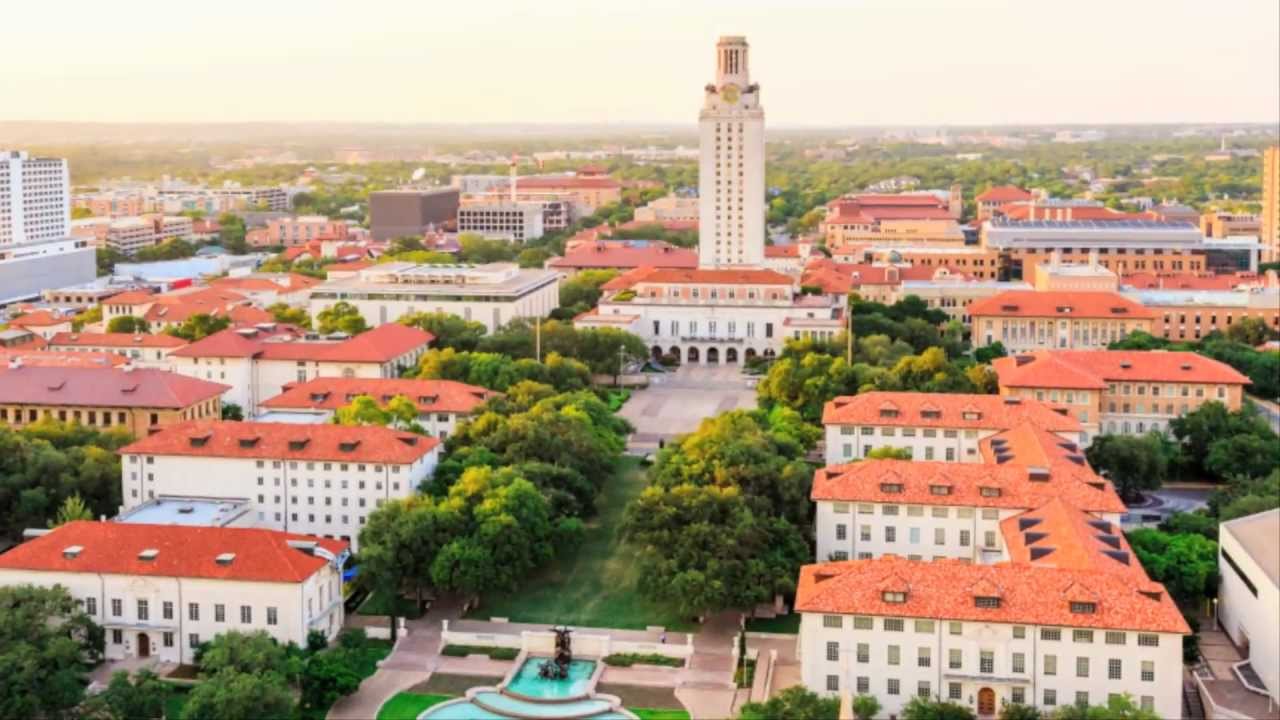 posted by Edward Blum, a 1973 University of Texas graduate whose nonprofit organization is bankrolling the lawsuit, she is soft-spoken, her strawberry blond hair tucked behind one ear. Not even a swipe of lip gloss adorns her girlish face.
"There were people in my class with lower grades who weren't in all the activities I was in, who were being accepted into UT, and the only other difference between us was the color of our skin," she says. "I was taught from the time I was a little girl that any kind of discrimination was wrong. And for an institution of higher learning to act this way makes no sense to me. What kind of example does it set for others?"
It's a deeply emotional argument delivered by an earnest young woman, one that's been quoted over and over again.
Except there's a problem. The claim that race cost Fisher her spot at the University of Texas isn't really true.
In the hundreds of pages of legal filings, Fisher's lawyers spend almost no time arguing that Fisher would have gotten into the university but for her race.
If you're confused, it is no doubt in part because of how Blum, Fisher and others have shaped the dialogue as the case worked its way to the country's top court.
Journalists and bloggers have written dozens of articles on the case, including profiles of Fisher and Blum. News networks have aired panel after panel about the future of affirmative action. Yet for all the front-page attention, angry debate and exchanges before the justices, some of the more fundamental elements of the case have been little reported.
Race probably had nothing to do with the University of Texas's decision to deny admission to Abigail Fisher.
In 2008, the year Fisher sent in her application, competition to get into the crown jewel of the Texas university system was stiff. Students entering through the university's Top 10 program — a mechanism that granted automatic admission to any teen who graduated in the upper 10 percent of his or her high school class — claimed 92 percent of the in-state spots.
Fisher said in news reports that she hoped for the day universities selected students "solely based on their merit and if they work hard for it." But Fisher failed to graduate in the top 10 percent of her class, meaning she had to compete for the limited number of spaces up for grabs.
She and other applicants who did not make the cut were evaluated based on two scores. One allotted points for grades and test scores. The other, called a personal achievement index, awarded points for two required essays, leadership, activities, service and "special circumstances." Those included socioeconomic status of the student or the student's school, coming from a home with a single parent or one where English wasn't spoken. And race.
Those two scores, combined, determine admission.
Even among those students, Fisher did not particularly stand out. Court records show her grade point average (3.59) and SAT scores (1180 out of 1600) were good but not great for the highly selective flagship university. The school's rejection rate that year for the remaining 841 openings was higher than the turn-down rate for students trying to get into Harvard.
As a result, university officials claim in court filings that even if Fisher received points for her race and every other personal achievement factor, the letter she received in the mail still would have said no.
It's true that the university, for whatever reason, offered provisional admission to some students with lower test scores and grades than Fisher. Five of those students were black or Latino. Forty-two were white.
Neither Fisher nor Blum mentioned those 42 applicants in interviews. Nor did they acknowledge the 168 black and Latino students with grades as good as or better than Fisher's who were also denied entry into the university that year. Also left unsaid is the fact that Fisher turned down a standard UT offer under which she could have gone to the university her sophomore year if she earned a 3.2 GPA at another Texas university school in her freshman year.
In an interview last month, Blum agreed Fisher's credentials and circumstances make it difficult to argue — as he and his supporters have so ardently in public — that but for her race Fisher would have been a Longhorn.
"There are some Anglo students who had lower grades than Abby who were admitted also," Blum told ProPublica. "Litigation like this is not a black and white paradigm."
Blum started his one-man nonprofit, the Project on Fair Representation, in 2005. The organization is funded by deep-pocketed conservatives to, according to its website, influence "jurisprudence, public policy, and public attitudes regarding race and ethnicity" in voting, education, contracting and employment. To do so, Blum — who is not a lawyer — helps arrange pro bono representation to fight race-based policies that were meant to address inequalities.
According to a Reuters profile, Blum has brought at least a dozen lawsuits against such programs and laws — including four that made it to the Supreme Court. He has two on the current docket, Fisher and the Shelby County, Ala., case challenging a key provision of the Voting Rights Act.
In the Fisher case, while the young woman may have lent her name to the lawsuit, the case before the Court has very little to do with her. Her name appears just five times in the thousands of words that make up the body of the complaint. She has already gone on to graduate from Louisiana State University, her second choice, and is working in finance at a firm in Austin.
Asked by a news reporter what harm she had suffered, she cited only her inability to tap into UT's alumni network and possibly missing out on a better first job. If she wins, Fisher seeks only the return of her application fee and housing deposit — a grand total of $100 in damages.
So while the Fisher case has been billed as a referendum on affirmative action, its backers have significantly grander ambitions: They seek to make the case a referendum on the14th Amendmentitself. At issue is whether the Constitution's equal protection clause, drafted by Congress during Reconstruction to ensure the rights of black Americans, also prohibits the use of race to help them overcome the nation's legacy of racism.
The Supreme Court has never ruled that the Constitution bars any and all laws and government programs that consider race. But Blum and his supporters, seeing an opening with the current Court, seek to overturn more than a century of precedent.
The true crux of the suit is not Fisher's failed application, but that government officials violate the constitutional rights of white Americans when they consider race in a way that might help African-Americans and Latinos.
"An argument can be made that it is simply impossible to tease out down to the last student who would have been admitted, and who would have not been admitted, had they been a different skin color," Blum said. "What we know is skin color is weighed and ethnicity is weighed by the University of Texas in their admissions process, and that alone is enough to strike down the plan."
Blum and his supporters say the reasoning is simple. The Constitution is colorblind and the equal protection clause of the 14th Amendment prohibits the government from treating people differently because of race.
It's an argument first successfully championed by the NAACP and other civil rights groups, most notably in the landmark Brown v. Board of Education case, in which the Supreme Court declared the notion of "separate but equal" to be a fallacy.
"In its history, colorblindness has this progressive, anti-racist push behind it," said Ian Haney-López, a constitutional scholar at the University of California, Berkeley School of Law.
But following the Brown decision, the very groups that had ardently — and violently — defended laws mandating separation by race used the notion of a colorblind Constitution to challenge court orders to integrate schools.
"They began to say, yes, the Constitution is colorblind, and so the state cannot distinguish between races when it tried to remedy segregation," he said.
As a result of Southern resistance, it would take six years after Brown before 6-year old Ruby Bridges, wearing crisp white socks and black-bowed shoes, became the first black student to attend a white elementary school in the South. The image of the diminutive brown-skinned girl who needed U.S. marshals to protect her from an angry white mob inspired Norman Rockwell to preserve the moment in a painting that now hangs in the White House occupied by the first black president.
Initially, the Supreme Court unambiguously knocked those arguments down. In a 1971 ruling, it said that government could not mandate colorblindness when doing so would defeat the integration requirement of Brown v. Board of Education. A few years later, in a ruling on affirmative action, Justice Harry Blackmun wrote, "In order to get beyond racism, we must first take race into account. There is no other way."
But as the Supreme Court's make-up has grown more conservative, it has taken up a steady stream of so-called reverse discrimination cases, in which white plaintiffs have argued that race-specific measures born of the civil rights movement discriminate against white Americans and violate the 14th Amendment.
Supreme Court decisions have eroded programs and laws that use race to remedy inequalities, but not eliminated them altogether. And in a 2003 opinion written by centrist Sandra Day O'Connor, the justices narrowly upheld affirmative action in college admissions when it is the only means to ensure diversity.
But the Court's make-up changed in what scholars consider a significant way when Samuel Alito, considered the third most conservative Supreme Court justice since 1937, replaced O'Connor in 2006. Since then, several justices have made their constitutional disdain for race-conscious programs known. In a controversial 2007 decision, Chief Justice John Roberts sent a clear message when he used the equal protection argument at play in Brown v. Board of Education to strike down voluntary desegregation plans in schools.
Evoking a colorblind Constitution, Roberts said, "The way to stop discriminating on the basis of race, is to stop discriminating on the basis of race."
And just last month during oral arguments over the constitutionality of a key aspect of the Voting Rights Act, Justice Antonin Scalia derisively called what's considered the most successful civil rights law in history a "racial entitlement."
Public opinion on race has changed over time as well. In the 1950s, surveys show, most white Americans believed that black Americans faced substantial discrimination but that they themselves experienced little. Today, despite gaping disparities between black and white Americans in income, education, health care, homeownership, employment and college admissions, a majority of white Americans now believe they are just as likely, or more likely, to face discrimination as black Americans.
Blum chose the University of Texas to mount what could be a decisive challenge to affirmative action in college admissions because it already had what was regarded as a "race-neutral" process — the Top 10 program. Since many Texas high schools remain segregated, taking the top 10 percent of students from black and Latino high schools ensured a substantial population of students of color at the UT.
As a consequence, Blum believed he could challenge whether the additional use of race to fill out the entering class passed constitutional muster.
To get standing in court, Blum needed a victim. That's when he started looking for a version of the Brown family, someone who could represent the arguable hurt caused when public officials used race.
This approach, too, mirrors an NAACP tactic from half a century ago. Then, knowing the Supreme Court was unlikely to throw out segregation in one fell swoop, the civil rights group brought a narrower challenge to segregated school facilities first.
One of those cases, ironically, targeted the same university as Blum — the University of Texas at Austin. The university, which had been closed to black students since its founding, denied the law school application of Heman Marion Sweatt because the state constitution required that black and white students attend separate schools.
Because Texas had no black law school, the NAACP sued, arguing that the state violated the constitutional mandate to provide equal facilities for black and white students. The Supreme Court ruled that the hastily put together black law school created to avoid admitting Sweatt could not possibly be equal. It ordered Texas to admit Sweatt as its first black student in 1950.
That suit launched the stone that would shatter separate but equal just four years later when the Court struck down segregation in schools in Brown.
Blum and his supporters hope to use the Fisher case, and the 14th Amendment challenge to the Voting Rights Act that Blum is also behind, in the same way.
According to Blum, the Constitution sees affirmative action policies — in college, in contracting, in employment — and Jim Crow laws as twin evils.
"I don't see the distinction," he said.
But several constitutional scholars interviewed for this piece dispute this notion. Neil Siegel of Duke University called this interpretation of the 14th Amendment "perverse." Georgetown law professor Girardeau A. Spann called it "discriminatory."
While the 14th Amendment doesn't mention race, the drafters went on to pass race-specific legislation aimed at helping former slaves and other black Americans overcome more than a century of racial oppression.
Erwin Chemerinsky, founding dean of the University of California, Irvine School of Law, said that the concept of colorblindness holds great rhetorical appeal but that "there is no basis for concluding that the 14th Amendment equal protection clause requires colorblindness." In drafting the 14th Amendment, he said, Congress recognized "an enormous difference between a white majority disadvantaging minorities and a white majority acting to remedy past discrimination."
Conservatives challenging these types of programs purport to champion the legacy of the civil rights movement, Haney-Lopez said, but the historical roots of their efforts are much more cynical.
"I think that is incredibly important that people realize that today's proponents of colorblindness pretend that they are the heirs to Thurgood Marshall and John Marshall Harlan," he said. "But that is a lie. They are the heirs of Southern resistance to integration. And the colorblindness arguments that they use come directly from the Southern efforts to defeat Brown v. Board of Education."
Ilya Shapiro, a senior constitutional studies fellow at the Cato Institute, which filed an amicus brief supporting Fisher, thinks otherwise.
"I am not going to speak to anyone else's motives. It is unfair to paint people with the Jim Crow brush because they have those kinds of arguments," he said. "I don't like people being judged based on the color of their skin." If a program "treats people different because one has a different skin color, I find that offensive and I think the Constitution does as well."
But when asked why the drafters created programs targeted to black Americans if they did not intend the Constitution to allow the government to use race to help minority groups, Shapiro said, "It was a curious period."
At the same time Congress drafted the equal protection clause, he said, it also "voted for segregated schools in the District of Columbia."
That example is the very same one that segregationists Strom Thurmond and Richard Brevard Russell used when they drafted the 1956 Southern Manifesto urging officials to resist the Supreme Court's use of the equal protection clause to overturn school segregation.
The impact of a ruling that bans all racial considerations by universities, employers and governments "could have devastating impact on the ability to overcome past inequalities," Siegel said.
Few experts think Blum and his supporters are apt to win that big a victory in the Fisher case. And so he will likely be on the hunt again for another case, and another perfect plaintiff.
Nikole Hannah-Jones covered civil rights and fair housing for ProPublica. Previously, she covered governmental issues, the census, and race and ethnicity at The Oregonian.
- Nikole.Hannah-Jones@propublica.org
- @nhannahjones
===
==
https://www.kqed.org/forum https://www.kqed.org/forum/2010101887335/reparations-task-force-sheds-light-on-history-of-slavery-in-california**
Perkins case --> dred scot?!14 and 15 not ratif in ca till 1950's CRM?!
14th Amendment was proposed by Congress on June 13, 1866. The issue was not taken up during the legislative sessions of 1867-68 or 1869-70, although they did pass a resolution rejecting the 15th Amendment. It wasn't until 90 years later that the 14th Amendment was finally ratified by California.
Conversations about the history of slavery are often confined to the North and the South, with the West viewed as a free “promised land.” But California passed laws, like the Fugitive Slave Act of 1852, that reinforced the institution of slavery, and otherwise allowed coerced, unpaid labor in the state. And the laws impacted more than just Black people, too. Historian Stacey L. Smith writes in her book “Freedom’s Frontier” that “ diverse forms of American Indian servitude, sexual trafficking in bound women, and contract labor involving Latin Americans, Asians, and Pacific Islanders all kept the slavery question alive in California during the 1850s.” This history has been brought to the fore in recent weeks as the state’s Reparations Task Force continues to hear testimony about the impacts of slavery on African Americans. We take a closer look at this part of California’s past and why it matters.
Guests:
Stacey L. Smith, associate professor of history, Oregon State University; author, "Freedom's Frontier: California and the Struggle over Unfree Labor, Emancipation, and Reconstruction"
Taylor Bythewood-Porter, assistant curator of history, California African American Museum; co-curated the 2018 exhibition "California Bound: Slavery on the New Frontier, 1848-1865"
===
https://www.theunion.com/news/steve-cottrell-it-took-92-years-for-california-to-ratify-the-15th-amendment/
Steve Cottrell: It took 92 years for California to ratify the 15th Amendment
News NEWS | June 26, 2020
Last month, we explained how former Nevada County District Attorney Bill Stewart, as a Republican U. S. senator, came to write the words that in February 1870 were ratified as the 15th Amendment to the Constitution, providing suffrage for black men. This month, let’s look atwhy the Democratic-led 1870 California Legislature rejected the 15th Amendment.
The issue in California was not so much that blacks would be given the right to vote, although that was certainly part of the debate. Of greater concern was a fear by many that Chinese, Native American and Mexican males might eventually be granted suffrage.
Although there were only about 1,700 black males 21 or older in the state in 1870, there were 37,000 potential Chinese male voters, plus thousands of Mexican and Native American males of voting age. But with Democrat Henry Haight serving as governor from 1867-71, and Democrats in solid control of the state Legislature, the 15th Amendment stood no chance for ratification in California.
There were 37 states at that time, so approval from 28 state Legislatures was necessary for final adoption by Congress — a three-fourths threshold reached Feb. 3, 1870, when Iowa voted in favor of ratification.
Three weeks earlier, when the California Legislature had considered the suffrage measure, freshman state Sen. William Gwin, Jr., from Calaveras County, introduced a resolution advising Congress that California was rejecting what Gov. Haight had labeled the“so-called 15th Amendment.” The 21-year-old son of pro-slavery California pioneer politician William Gwin, Sr. said suffrage was a state issue, not federal. “The Constitution confers no power upon Congress to propose to three-fourths of the states such an amendment,” he claimed, “and gives no power to three-fourth of the states to ratify the same.”
RUN FOR OFFICE
Following debate in the Senate, Gwin’s resolution to have California reject the 15th Amendment was adopted 23-8, with Republican Sen. Edmund Roberts, a Grass Valley lawyer and former Nevada County judge, voting with the minority. The next day, Democrat Assemblyman Samuel Oates, a blacksmith from Nevada City, voted to support Gwin’s resolution.
In early April 1870, shortly after the 15th Amendment’s formal adoption by Congress, Nevada County black males of voting age began having their names entered in the Great Register — a list of all registered voters. The first to do so was Nevada City pioneer John Adams, 31, from Illinois, who had arrived here as an 11-year-old boy. Also among the several dozen local black men to register that April were Preston Alexander from Nevada City and Isaac Sanks from Grass Valley.
Alexander, a Nevada City resident since 1853, was a bill poster and janitor. When a circus or entertainer was coming to town and there were announcements to post, or City Hall had legal notices to post, Preston was the one who did it. In addition, he was the Nevada Theatre’s janitor. It seemed most everyone in town knew and respected Mr. Alexander, so it was no surprise when, following his death in 1889, the unnamed alley connecting Main and Coyote streets – where he and his wife, Louisa, raised five children – was officially named Alexander Street, perhaps the first public street in California named for a black man.
As for Sanks, in 1870 he received two votes for the Grass Valley Board of Town Trustees, (now called City Council), becoming one of the first California black men to receive officially tallied votes for public office.
Then, in 1894, Ike Sanks’ son, Isaac T. Sanks, ran for Grass Valley constable as the Republican Party’s designated candidate. Sanks lost and returned to his duties as janitor at the Grass Valley Wells, Fargo & Co. office and two downtown saloons, but left his mark on history by being the first black candidate in California to appear on a major political party ticket.
Meanwhile, years and decades rolled by without California ratifying the 15th Amendment. Nor, for that matter, had it ratified the 14th Amendment — assuring equal protection for all citizens. But in the late 1950s and early ‘60s, as civil liberties and voting rights became hot-button issues nationally, it was time to rectify some 19th century racism here. Two things happened:
The 14th Amendment was unanimously ratified by the state Legislature in May 1959 — 91 years after becoming the law of the land. And in April 1962 — also unanimously and 92 years after its adoption by Congress — the 15th Amendment was finally ratified in California.
As the adage reminds us, “Better late than never.”
Historian Steve Cottrell, a former Nevada City Council member and mayor, can be contacted at exnevadacitymayor@gmail.com.
==
EXXON ASSERTS 1ST 4TH 14TH
http://climatecasechart.com/climate-change-litigation/case/exxon-mobil-corp-v-healey/
Exxon Mobil Corp. v. Healey
Filing Date: 2016
Case Categories:
Principal Laws:
First Amendment, Fourth Amendment, Fourteenth Amendment, Commerce Clause, Supremacy Clause, State Law—Common Law
Description: Action by Exxon Mobil Corporation to bar enforcement of civil investigative demand issued by Massachusetts attorney general and subpoena issued by New York attorney general.
[LONG LIST OF DOCS, OTHER CASES]
=
===
Move to Amend Ohio’s Quarterly Statewide Gathering (Virtual Event)
Guest Speakers
Cynthia Brown, DeEscalate Ohio Now Coordinator
Charles Peterson, Chair of Africana Studies, Oberlin College
Professor Charles Peterson will interrogate the post-Civil War’s Fourteenth Amendment, from its lofty promises of full citizenship and “equal protection of the laws” for all Americans to its hijacking by powerful interests. Providing current context of what this means for Ohioans today, Cynthia Brown, Ohio’s leading advocate for the state’s Repeal Qualified Immunity campaign, will discuss the doctrine that perversely grants immunity to officials who violate citizens’ rights, including those guaranteed by the Fourteenth Amendment.
Background: Within twenty years of the Fourteenth Amendment’s ratification in 1868, Big Money successfully claimed that corporations are people (“constitutional persons”) that likewise deserved constitutional “We the People” rights. Since then, successive Supreme Court rulings have granted corporations other U.S. Constitution rights, all based on the Fourteenth Amendment. This important session will illustrate how powerful forces have subverted its guarantees of full citizenship for emancipated black people to instead legitimize laws that put property rights over black lives.
===
history.com
Originally adopted after the Civil War to protect the rights of formerly enslaved people, the 14th Amendment has exponentially expanded the protection of civil rights for all Americans over the past 150 years. It’s been cited in more litigation than any other amendment to the U.S. Constitution, and has been at the center of many of the most famous Supreme Court decisions, including school desegregation (Brown v. Board of Education), abortion (Roe v. Wade) and same-sex marriage (Obergefell v. Hodges).
Under U.S. law, these essential rights belong not only to American citizens, but also corporations—thanks to a few key Supreme Court cases and a controversial legal concept known as corporate personhood.
So, what is the 14th Amendment again?
Ratified in 1868, it was one of three amendments to the U.S. Constitution designed to grant full citizenship rights to formerly enslaved people. While the 13th and 15th Amendments were relatively limited in scope—the first abolished slavery and the second granted voting rights to black men—the 14th Amendment exponentially expanded the protection of civil rights for all Americans.
The two most important provisions of the 14th Amendment guarantee that states, like the federal government, cannot “deprive any person of life, liberty or property, without due process of law; nor deny to any person within its jurisdiction the equal protection of the laws.”
What is due process and how does it work?
The fundamental principle of due process goes back to the Magna Carta, the 13th century English charter that inspired the framers of the U.S. Constitution. Due process ensures that all levels of government operate within the law and provide fair procedures for everyone. In practice, the Supreme Court has used the Due Process Clause of the 14th Amendment to guarantee some of the most fundamental rights and liberties we enjoy today. It protects individuals (or corporations) from infringement by the states as well as the federal government.
In Griswold v. Connecticut (1965), the Supreme Court ruled that a state ban on the use of contraceptives violated a couple’s right to marital privacy, which according to the Court was an essential liberty protected under the 14th Amendment’s Due Process Clause. The ruling famously drew that right to privacy from the “penumbras” (or shadowy zones) cast by other specific guarantees in the Bill of Rights, including free speech (First Amendment), freedom from forced quartering of troops (Third Amendment), unreasonable searches and seizures (Fourth Amendment), forced self-incrimination (Fifth Amendment) and other unenumerated rights (Ninth Amendment).
Later verdicts would expand this right to privacy, including Roe v. Wade (1973), when the Court found that a woman’s right to an abortion fell within the zone of privacy protected under the 14th Amendment.
===
===
https://theintercept.com/2020/09/23/facebook-sued-over-kenosha-killings/
WHEN 17-YEAR-OLD Kyle Rittenhouse killed two Black Lives Matter protesters (and wounded a third) in late August in Kenosha, Wisconsin, he instantly became a hero among white nationalist circles, in which theSecond Amendment is sacrosanct.
:{
}:
On Wednesday, Rittenhouse and the members of the armed militias that supported him, including the Kenosha Guard and Boogaloo Bois, were named in a federal lawsuit brought under the post-Civil War Reconstruction amendments that aimed to establish Black equality.
The suit also names what it alleges was the militia groups’s most prominent enabler: Facebook. All of the parties, the complaint contends, helped deprive Kenosha Black Lives Matter protesters of their First Amendment right to assemble, thus violating the Black Lives Matter activists’ 14th Amendment right to equal protection.
attorneys Jason Flores-Williams and Jennifer Sirrine filed the case in the Eastern District Court of Wisconsin, which covers Kenosha. Along with a handful of protesters harassed by the militia groups, the plaintiffs include Hannah Giddings, the life partner of 26-year-old Anthony Huber, who was gunned down by Rittenhouse while trying to disarm the teenager.
According to the complaint, the Kenosha Guard, Boogaloo Bois, and Facebook all partook in a conspiracy that resulted in Huber’s death (thus causing harm to Giddings) and deprived the other plaintiffs of their ability to peacefully protest.
Both the First and 13th amendment stipulations were key to Griffin v. Breckenridge, a U.S. Supreme Court case that was decided in 1971 and is cited in the complaint. That case concerned the right to travel, which is also an issue in the Kenosha protests. Some of the plaintiffs had their tires slashed and were otherwise impeded.
The 14th Amendment provided the constitutional basis for federal statutes §1985 and §1986, which prohibit interference by private groups with other’s exercise of their rights. Established under the Ku Klux Klan Act of 1871, the statutes were recently applied in the aftermath of the Charlottesville, Virginia, white supremacist protest in 2017.
In order to recruit foot soldiers for the August 25 protest, the Kenosha Guard created an event page on its Facebook account. Titled “Armed Citizens to Protect Our Lives and Property,” the posting summoned “patriots willing to take up arms … and defend our City from the evil thugs.”
Over 450 Facebook users alerted the platform’s moderators that the Guard’s violent rhetoric violated the company’s policies. According to BuzzFeed News, four Facebook moderators deemed the Guard’s posts “non-threatening.”
In Flores-Williams’s view, Facebook’s actions subsequent to the event — shutting down the Guard’s account and admitting to what CEO Mark Zuckerberg called an “operational mistake” in not heeding the 450 warnings — amounted to a recognition it behaved with negligence.
“Facebook’s negligence enabled the conspiracy here,” said Flores-Williams. He maintains that “this is not a First Amendment issue. It’s a matter of responsibility on the part of Facebook.”
“I would love to see Facebook change their moderation policies and for them to take accountability. One way to do that would be for them to make the moderators work directly for the company instead of outsourcing them,” added Sirrine.
Citing the likelihood of voter intimidation by armed militias on Election Day, and the possibility that those same groups may try to keep Donald Trump in the White House should he lose in November, Flores-Williams hopes that the action in federal court will send the company a message.
“If Facebook won’t change their M.O.,” he said, “then a judge needs to tell them to enforce their own standards and stop allowing violent groups to use their site as a recruiting station.”
A Facebook spokesperson didn’t immediately respond to a request for comment.
===
==
am promise:
...Corporations have extended their “constitutional rights” claim to other amendment rights, as well. For example, corporations have claimed the 4th Amendment right against unreasonable search and seizure to require regulators to obtain a warrant to check for safety violations.
Over the years, corporations have successfully claimed constitutional rights of people—including 4th Amendment rights against unlawful search and seizure, 5th Amendment rights to protect citizens against being unlawfully held for crimes, and 14th Amendment rights—to overturn democratically enacted laws, including worker safety, zoning, tax and other societally beneficial laws. For example, corporations have claimed 14th Amendment equal protection and due process rights to overturn tax and zoning laws meant to encourage locally owned business,restrict multinational big-box stores from developing in small communities, and many others.
==
re clements, who ref
http://blogs.reuters.com/great-debate/2014/10/06/the-fight-for-living-wages-is-for-workers-not-corporations/
ron fein oct 2014
ndustry trade groups are now challenging Seattle’s new minimum wage law as unconstitutional. They claim the city’s $15 an hour rate violates the 14th Amendment. Passed just after the Civil War to ensure equal rights for the newly freed slaves, that amendment says no state may “deny to any person . . . the equal protection of the laws.”
According to the industry lawsuit, the minimum wage law violates this Equal Protection Clause because it phases in the higher wage at a different schedule for franchised companies than for small local businesses.
But the trade groups’ argument twists the real intent of the 14th Amendment. Its drafters had a special interest in whether workers could earn “fair, living wages,” our research has revealed. That phrase was often used by Senator Jacob Howard, a staunch Republican who served as the 14th Amendment’s Senate floor manager in 1866.
During congressional hearings, Howard repeatedly asked witnesses whether employers were paying the newly freed slaves “fair, living wages.”
Howard had reason to emphasize this point. Even before the Civil War ended, the Union Army was deeply concerned about whether freedmen were receiving fair wages. An 1865 Army work plan, for example, instructed officers to assist freedmen in obtaining “fair wages for their labor.”
Sometimes it was a struggle to achieve this. When employers in two recalcitrant South Carolina counties persisted in underpaying the freedmen, one Army general contemplated moving those counties’ entire freed population to areas that would pay them “fair wages.” By 1866, a special military unit established to assist freedmen during the post-Civil War Reconstruction had resorted to distributing standard labor contracts, with fixed labor rates, that would promote “prosperous relations between capital and labor” and be “satisfactory to the freedmen.”
Many Americans viewed “fair, living wages” as an integral part of the struggle from slavery to full citizenship. The influential abolitionist editor Horace Greeley — famous for his 1865 editorial that advised “Go West, young man” — wrote a widely reprinted open letter to “the Colored People of North Carolina” on September 14, 1865. He urged them to take immediate steps to demand “fair, living wages” as part of their larger struggle for equal rights.
So when members of the special congressional committee asked whether freedmen could earn fair or living wages, they understood the issue as intimately connected with the equality that the 14th Amendment ultimately enshrined.
That wasn’t the only concern behind the 14th Amendment, of course. But, unlike protection of the economic advantages that franchised businesses have over small local businesses, it was part of the 14th Amendment’s overall goals.
Given how important obtaining “fair, living wages” was to the 14th Amendment’s authors, industry lawyers have no basis to argue that the Equal Protection Clause protects the companies, rather than the workers. But it’s not surprising. Ever since the 14th Amendment was passed, corporate lawyers have tried to leverage it to strike down laws like Seattle’s.
In 1938, a frustrated Supreme Court justice complained that of the cases in the court in which the 14th Amendment was applied during the first 50 years after its adoption, “less than one-half of 1 percent invoked it in protection of the negro race, and more than 50 percent asked that its benefits be extended to corporations.”
Just this year, the Equal Protection Clause has been invoked on behalf of coal companies and multinational agribusiness conglomerates.
We need to put a stop to this unfounded constitutional argument. The businesses had their opportunity to make their case to the city of Seattle — and they lost. They shouldn’t be allowed to run to court under the banner of the 14th Amendment.
When Abraham Lincoln was just a rookie congressman, he wrote that securing “to each laborer the whole product of his labor, or as nearly as possible, is a most worthy object of any good government.” That’s what Seattle’s law does. Sixteen years after Lincoln wrote that, he vowed at Gettysburg to preserve a “government of the people, by the people, [and] for the people.” That’s what the industry’s lawsuit threatens.
The congressmen of Reconstruction sought to carry forward Lincoln’s legacy with the 14th Amendment. Their vision of full equality is not yet realized. But if they could see what Seattle is trying to achieve, they would be proud.
===
agribiz
syngenta v kauai 2014 p 48 asserts 14th
404 http://maureennandinimitra.com/upload/1_10_14_complaint_Syngenta%20v%20Kauai.pdf#page=48
==
no lnx
Did Lindsey Graham just violate the 14th Amendment during an appearance on Fox News?
U.S. Sen. Lindsey Graham of South Carolina
Written by Matthew Chapman / Raw Story April 10, 2020
On Fox News Thursday in discussion with Sean Hannity, Sen. Lindsey Graham (R-SC) made an extraordinary statement: That he wants the United States to “cancel” some of the national debt held by the Chinese government as punishment for allowing the coronavirus to spread beyond its borders.
“I want to get the medical supply chain back in the United States, and I want to start canceling some debt that we owe to China, because they should be paying us, not us paying China,” said Graham. “So I think you’re going to see a bipartisan pushback against China to punish them so severely to deter them in the future.”
Putting aside the thorny legal question of whether a foreign country can be legally held at fault for the spread of a deadly disease, there is a big problem with what Graham is proposing: the 14th Amendment.
The amendment, one of the three “Reconstruction Amendments” passed in the wake of the Civil War, contained a clause at the end that was designed to prevent Southern politicians — who historically wielded outsized power in Congress — from canceling the U.S. war debt, which could have shielded the white landowners who led the war effort from having to pay taxes: “The validity of the public debt of the United States, authorized by law, including debts incurred for payment of pensions and bounties for services in suppressing insurrection or rebellion, shall not be questioned.”
At a bare minimum, this amendment would appear to make it unconstitutional to “cancel” Treasury bonds held by the Chinese government or businesses. But it might go even further than that — some have interpreted the phrase “shall not be questioned” more literally, to mean that public officials are bound not to say anything that would make creditors “question” the validity of the public debt. If that is the case, then Graham would have violated the Constitution simply by saying he wants debt held by China to be canceled.
Either way, far from the “bipartisan pushback” Graham is predicting, his idea will go nowhere.
Watch below:
Acyn Torabi
@Acyn
Lindsey Graham says he’s going to push to cancel some of the US debt to China
Embedded video
==
Ron Fein 4/15 good
Hi - pleased to hear from you, and keep up the good work.
Our co-founder, Jeff Clements, speaks widely on this, but he was just in SF in February: https://acslaw.secure.force.com/rsvp?id=a0YG0000007sL3zMAE**
I don’t have any plans to be in the Bay Area anytime soon, but I’ll see if I can think of anyone who’s local there who might be good. I’m not sure about Steve Mayer - you’re welcome to try, but the nature of his involvement in the Prop 49 brief was limited to the question of whether ballot measures can contain advisory questions, not the topic of corporate constitutional rights. I honestly have no idea what his thoughts are on that.
In the meantime, just tell these lawyers “associational standing - see NAACP v. Alabama ex rel Patterson.” It’s a decision from before the widespread expansion of corporate constitutional rights that’s strikingly similar to the Planned Parenthood hypo. The Supreme Court held that the NAACP couldn’t raise any constitutional claims of its own against the state’s demand for its membership lists, but it could assert claims on behalf of its members, whose freedom of association was jeopardized by the state’s order. This logic wouldn’t apply to most for-profit corporations: Exxon shareholders aren’t “associating” when they buy Exxon stock.
april 23
==
https://en.wikipedia.org/wiki/NAACP_v._Alabama
National Association for the Advancement of Colored People v. Alabama, 357 U.S. 449 (1958), was an important civil rights case brought before the United States Supreme Court.
Alabama sought to prevent the NAACP from conducting further business in the state. After the circuit court issued a restraining order, the state issued a subpoena for various records, including the NAACP's membership lists. The Supreme Court ruled that Alabama's demand for the lists had violated the right of due process guaranteed by the Fourteenth Amendment to the United States Constitution.
- :{1:(style="display:table-cell;padding-left:0px;padding-right:0.5em"):}::{Facts:(style="display:table-cell"):}:
- :{2:(style="display:table-cell;padding-left:0px;padding-right:0.5em"):}::{Judgment:(style="display:table-cell"):}:
- :{3:(style="display:table-cell;padding-left:0px;padding-right:0.5em"):}::{See also:(style="display:table-cell"):}:
- :{4:(style="display:table-cell;padding-left:0px;padding-right:0.5em"):}::{References:(style="display:table-cell"):}:
- :{5:(style="display:table-cell;padding-left:0px;padding-right:0.5em"):}::{External links:(style="display:table-cell"):}:
Facts
In 1956, the Attorney General of Alabama, John Patterson, brought a suit to the State Circuit Court of Montgomery, Alabama, challenging the National Association for the Advancement of Colored People (NAACP) for violation of a state statute requiring foreign corporations to qualify before doing business in the state. The NAACP, a nonprofit membership corporation based in New York, had not complied with the statute, as it believed it was exempt. The state suit sought both to prevent the Association from conducting further business within the state and, indeed, to remove it from the state.
Referring to the Association's involvement with the Montgomery Bus Boycott in 1955 and its role in funding and providing legal assistance to black students' seeking admission to the state university, the suit charged that the Association was ". . . causing irreparable injury to the property and civil rights of the residents and citizens of the State of Alabama for which criminal prosecution and civil actions at law afford no adequate relief . . . ." On the day this suit was filed, the circuit court agreed to issue an ex parte order restraining the Association from conducting business in the state or taking steps to qualify it to do so.
The Association, represented throughout by Robert L. Carter of the NAACP Legal Defense Fund, responded by moving to dissolve the order on the grounds that its activities within the state did not require its qualification under the statute and that the state's suit was intended to violate its rights to freedom of speech and of assembly as guaranteed by the Constitution of the United States. Before a hearing date was set, the state issued a subpoena for much of the Association's records, including bank statements and leases, but most notably the names and addresses of the "agents" or "members" of the Association in Alabama.
...
Judgment
In an opinion delivered by Justice John Marshall Harlan II, the Supreme Court decided in favor of the petitioners, holding that "Immunity from state scrutiny of petitioner's membership lists is here so related to the right of petitioner's members to pursue their lawful private interests privately and to associate freely with others in doing so as to come within the protection of the Fourteenth Amendment" and, further, that freedom to associate with organizations dedicated to the "advancement of beliefs and ideas" is an inseparable part of the Due Process Clause of the Fourteenth Amendment. The action of the state's obtaining the names of the Association's membership would likely interfere with the free association of its members, so the state's interest in obtaining the records was superseded by the constitutional rights of the petitioners.[1] Harlan said the following.
==
http://www.nyujlpp.org/wp-content/uploads/2013/01/Magpantay-Associational-Rights-and-Standing.pdf
ASSOCIATIONS IN THE COURTS: USES OF AND LIMITATIONS ON THE RIGHT TO PETITION FOR REDRESS
“Americans of all ages, all stations of life, and all types of disposition . . . are forever forming associations.”32
Specifically, Americans often form and enter into associations that advocate for their collective interest in matters of fundamental public importance. Civil rights organizations such as the NAACP, or environmental organizations such as the Sierra Club are classic examples.33 The Supreme Court has recognized that organizations should be allowed to litigate claims on behalf of their members.34
Specifically, the Court has stated that “[t]he only practical judicial policy when people pool their capital, their interests, or their activities under a name and form that will identify collective interests, often is to permit the association or corporation in a single case to vindicate the interests of all.”35
Moreover, allowing associations to litigate collectively held interests is practically beneficial not only to members of organizations, but to the court system as well.36 Associations have the capacity to “draw upon a pre-existing reservoir of expertise and capital”37 and their access to “specialized expertise and research resources”38 may help “sharpen[ ] the presentation of issues upon which the court so largely depends for illumination of difficult . . . questions.”39
Nevertheless, Article III of the Constitution only permits federal courts to hear actual “cases” and “controversies,”40 and the party seeking a federal forum for the adjudication of its claim has the burden of proving that it has the requisite standing to sue.41 In order to demonstrate standing, a plaintiff must show: (1) that he or she has suffered an “injury in fact” that is (a) concrete and particularized and (b) actual or imminent, not conjectural or hypothetical; (2) that the injury is fairly traceable to the challenged action of the defendant; and (3) that it is likely, as opposed to merely speculative, that the injury would be redressed by a favorable decision.42
Once standing is shown, a plaintiff may pursue her action in federal court.43 This legal test works well for determining standing in private litigation, but can present difficulties when organizational plaintiffs sue to defend public rights.44 Indeed, “Although courts acknowledge the existence and advantages of association” there is “tension in the judicial system between acknowledging these benefits and sticking to an atomistic model of interest [that] manifests itself in inconsistent grants of associational standing.”45 This Part expl
{{notes: 32. ALEXIS DE TOCQUEVILLE, DEMOCRACY IN AMERICA 513 (J.P. Mayer ed., George Lawrence trans., Anchor Books 1969) (1840). 33. See Our Mission, NAACP, http://www.naacp.org/pages/our-mission (last visited Oct. 18, 2012) (“The mission of the National Association for the Advancement of Colored People is to ensure the political, social, and economic equality of rights of all persons and to eliminate race-based discrimination.”); see also Sierra Club Policies, SIERRA CLUB, http://www.sierraclub.org/policy/ (last visited Oct. 18, 2012) (declaring, in pertinent part, a mission to “educate and enlist humanity to protect and restore the quality of the natural and human environment; and to use all lawful means to carry out these objectives”). 34. Karl S. Coplan, Is Voting Necessary? Organizational Standing and Non-Voting Members of Environmental Advocacy Organizations, 14 SOUTHEASTERN ENVTL. L.J. 47, 48–49 (2005) (citing Sierra Club v. Morton, 401 U.S. 727 (1972)) [hereinafter Is Voting Necessary?]. 35. UAW v. Brock, 477 U.S. 274, 290 (1986) (quoting Joint Anti-Fascist Refugee Comm. v. McGrath, 341 U.S. 123, 187 (1951) (Jackson, J., concurring)); see also NAACP v. Alabama ex rel. Patterson, 357 U.S. 449, 459 (1958) (stating that an association “is but the medium through which its individual members seek to make more effective the expression of their views”). 36. UAW v. Brock, 477 U.S. 274, 289 (1986).
==
AirB&B 14th?
==
https://ratical.org/corporations/Dartmouth.html
| You've Heard of Santa Clara, Now Meet Dartmouth | by Peter Kellman | By What Authority (Vol. 2, No. 2 - Spring 2000) | from the PROGRAM ON CORPORATIONS, LAW & DEMOCRACY |
The purpose of this article is to introduce our readers to a key Supreme Court case from a working class historical perspective. The Dartmouth College case wrote into the Constitution the propertied class's vehicle, the corporation, for concentrating economic and political power. Since few people today examine the Court's actual decisions (which we will do in future BWAs), what counts is how Supreme Courts that followed Chief Justice Marshall's Court of 1819 interpreted Marshall, and Justice Story's supporting opinion, to foster powerful anti-democratic realities:
- gifts of special privilege for the rich to organize their own economic and political institutions, fostered and protected by "the entire strength of the nation;"
- denials of common people's fundamental right and power to organize their institutions.
WE HAVE A GREAT SYSTEM of government. Amending the Constitution is a very different process for wealthy citizens as opposed to the majority of us. If the common people want to change the US Constitution we lobby Congress and get two-thirds of both houses to propose an amendment which must then be approved by three-quarters of the state legislatures. Interestingly, freedom of speech, freedom of the press, freedom from unreasonable search and seizure, the right to a speedy trial, trial by jury, the ending of slavery, the right to vote, and the requirement that US Senators be elected by the people rather than appointed by state legislatures all came into being through the amendment process.
The wealthy group of white men who gathered in a closed meeting in 1787 to write our Constitution didn't think any of these rights were important enough to be included. It was left to Antifederalists and mass movements of African Americans, Populists, workers and women -- mass movements of the people -- to amend the constitution in ways they hoped would protect the majority of people from a wealthy minority.
There are four ways to change the Constitution: first is by revolution; a second was mentioned above; the third is through a Constitutional convention which can be called by two-thirds of the states; and the fourth is by a process called judge-made law.
A good example of judge-made law is the Santa Clara case of 1886, in which the Supreme Court ruled that a corporation is a person under the law and is therefore entitled to equal protection under the Fourteenth Amendment. [1]
An earlier example of judge-made law is the Dartmouth College case of 1819.[2] The word corporation is not mentioned in the Constitution or in any of its 27 amendments. However, Article 1, Section 10 of the US Constitution, known as the Contracts Clause, declares that no state shall make any "Law impairing the Obligation of Contracts . . ." Chief Justice Marshall, writing for the majority in the Dartmouth case, stated in reference to the corporate status of the college that; "The Opinion of the Court, after mature deliberation, is, that this is a contract, the obligation of which cannot be impaired, without violating the Constitution of the United States." That is, a corporation is a contract and therefore is protected by the Constitution.
- * *
BUT THERE IS MORE TO THE STORY, a story which laid the legal groundwork for the growth of corporate power at the expense of public education and with it the future of our democracy.
In 1816, a class of small property owners and skilled artisans, who believed in the vision of Thomas Jefferson and many other founding revolutionaries that the United States should have a republican form of government, elected a like-minded governor in the State of New Hampshire. Now the basis of Jeffersonian republicanism rests on a society primarily composed of small farmers who own their own land. An important component of republican philosophy is that a republican form of government requires an educated populace. These republicans wanted to insure that a college education would be available for their children and that the content of education would be determined by a public process, not a private one.
However, colleges during that period were mainly private schools such as Yale, Harvard and Dartmouth, holdovers from the colonial days. These schools were linked to the past by class and religion. They were, by design, not republican in nature. Their purpose was to perpetuate the monarchy and class structure of the British Empire, impose Christianity on Native populations, train local clergy to keep the new converts in line, and educate the children of the elite.
Dartmouth College had been chartered by the King of England in 1769 as an Indian Charity School "with a view to spreading the knowledge of the great Redeemer among their savage tribes." [3] It soon evolved into a school "to promote learning among the English, and be a means to supply a great number of churches . . . with a learned and orthodox ministry." [4]
After the defeat of the British, American revolutionaries and Jeffersonian republicans led a movement to turn the colonial colleges into public schools. For example, the Colony of Pennsylvania had granted a charter to the University of Pennsylvania in 1755, under which the university would be run by a self-perpetuating board, similar to the Dartmouth College board. Following the revolution in 1779 the legislature revoked the charter of the private University of Pennsylvania and in its place established the public University of the State of Pennsylvania.
In New Hampshire the newly elected Governor William Plumer, an ally of Thomas Jefferson, introduced "An Act To Amend The Charter And Enlarge And Improve The Corporation of Dartmouth College." The text of the law, passed on June 27, 1816, begins:
"Whereas knowledge and learning generally diffused through a Community are essential to the preservation of free Government, . . . extending the opportunities and advantages of education is highly conducive to promote this end . . ."
The legislature made private Dartmouth College into public Dartmouth University and ordered the new university to set up public colleges around the state.
Governor Plumer promoted the change, arguing that the original provisions of Dartmouth College "emanated from royalty and contained principles . . . hostile to the spirit and genius of free government." [5] However, the trustees of Dartmouth objected to the charter change and took the state to court.
The New Hampshire Supreme Court ruled that the legislature had the authority to change the charter of the college,
"because it is a matter of too great moment, too intimately connected with the public welfare and prosperity, to be thus entrusted in the hands of a few. The education of the rising generation is a matter of the highest public concern, and is worthy of the best attention of every legislature." [6]
The decision was appealed to the US Supreme Court, which reversed the state court. As a result, the corporate form was given Constitutional protection and the formation of public colleges in the United States was halted for 50 years.
- * *
THE US SUPREME COURT was not interested in education. The Court was set up to be the final protector of a propertied class. Think of it from a working class perspective. A group of wealthy white men goes behind closed doors for a couple of months and comes up with a form of government to protect and promote whom? The people they fear most: slaves, women, indentured servants, Native people and people with little or no property? Not likely.
The founders set up a government with a legislature composed of two bodies: the House of Representatives, elected by the people (the people at that time being, for the most part, white men who owned property), and the Senate with members appointed by state legislatures. So, if the "people's house" passed legislation that benefited the common people at the expense of the ruling elite, it could be prevented from becoming law by the Senate. And, should legislation promoting the interests of the majority over the interests of the wealthy minority be passed in both House and Senate, there was a president elected by an electoral college, not directly by the people, who could veto the legislation. If all this failed, and the House, Senate and president or a state legislature passed laws detrimental to the ruling elite, the case against that legislation could be taken to the Supreme Court. The justices of this court are lawyers appointed for life, lawyers who, for the most part, had distinguished careers representing the wealthy.
Imagine how the Supreme Court would have ruled in Dartmouth if it were composed of shop stewards, teachers, homemakers and librarians. But it wasn't. The Supreme Court delivered for the ruling elite, arguing that a corporation is a private contract not a public law. The Court decreed that although the state creates the corporation when it issues a charter, it is not sovereign over that charter but is simply a party to the contract. All of which means that the corporation is protected from state interference by the Contracts Clause of the Constitution because the relationship is a private not a public one. And so Dartmouth University, a public school, once again became private. The republican notion that "We the People" required an education in order to have a truly republican form of government was defeated, at least temporarily.
- * *
TEN YEARS LATER, Pennsylvania workers declared:
"Let the productive classes, then, unite for the preservation of their free institutions, and by procuring for all the children in the Commonwealth Republican Education, . . . Our government is republican; our education should be equally so." [7]
Public education and the ten-hour day were the two goals of the labor movement in the 1830s. These two demands, made by working people, brought to the fore a question we should be asking today: if we have to spend all our hours working to make ends meet, when will we do the work of self-governance?
In 1886 the US Supreme Court ruled in the *Santa Clara v. Southern Pacific Railroad* case that corporations are persons under the law and are therefore entitled to equal protection under the 14th Amendment to the Constitution. This meant that corporate activity to protect and promote the interests of a wealthy minority was protected activity. This is significant because in 1886, women, Native Americans and, once again, most African Americans were denied the right to vote and equal protection of the law.
If there remains any question in your mind as to the role the Courts have played in advancing the preeminence of the Constitutional rights of a propertied class over the human rights of everyone else, consider the following:
- The 14th Amendment specifies, "No state shall make or enforce any law which shall abridge the privileges or immunities of citizens of the United States; nor shall any State deprive any person of life, liberty, or property, without due process of law; nor deny any person within its jurisdiction the equal protection of the laws." This amendment was added to the Constitution in 1868 to protect freed slaves, but as Supreme Court Justice Hugo Black pointed out, "Of the cases in this court in which the Fourteenth Amendment was applied during the first fifty years after its adoption, less than one-half of one percent invoked it in protection of the Negro race, and more than fifty percent asked that its benefits be extended to corporations." For Black, this was undeniable evidence that "the judicial inclusion of the word `corporation' in the Fourteenth Amendment has had a revolutionary effect on our form of government." [8]
- In *Minor v. Happersett* (1975), the women of Ohio argued that under the Fourteenth Amendment's protection of due process, the US Constitution established that their right to vote could not be denied by the state. [9] The US Supreme Court rejected that argument. Women received Constitutional protection for the right to vote 48 years later when a people's movement for equal rights was instrumental in the enactment of the 19th Amendment to the Constitution in 1920. It established that the right to vote could not be denied on the basis of sex and that the Congress had the power to enforce the amendment by passing appropriate legislation.
- While the courts were extending "rights" to corporate "persons" and denying them to women, they had, by 1920, struck down roughly 300 labor laws, laws that were passed by state legislatures for an eight-hour day, laws against requiring people to work on Sunday, and laws against the payment of wages in company scrip.
- More than 1800 injunctions against labor strikes were issued by the Courts between 1880 and 1931. [10] An injunction is a judge's order prohibiting a party from a specific course of action. In the labor cases referred to here, it usually meant that workers would break an injunction if they went on strike. :{Many labor people at the time considered injunctions against striking to be a violation of the 13th Amendment to the US Constitution which states, "Neither slavery nor involuntary servitude . . . shall exist within the United States . . ."
}:
- Of the 118 labor injunctions "heard" in Federal courts between 1901 and 1928, 70 of them were issued ex parte, i.e., without hearing the defendants, never notified of the hearing process. [11] Of course, all defendants in these cases were labor unions, union officials, and union members.
The Dartmouth College case put the corporation on the legal map. Subsequent Supreme Court decisions protected and promoted "rights" for the institutions of the rich and consistently suppressed the rights of all other people, including the right to vote, the right to organize their institutions, and the right to work no more than eight hours a day. So which class had a head start? Why should inequalities today be a surprise?
A future issue of By What Authority will take on later critiques of the Dartmouth case. For those of you who can't wait, go to the nearest law library and dig out The Bank of Toledo v. The City of Toledo and John R. Bond (1853) -- 1 Ohio St. 622. In this case the Ohio Supreme Court took on the Dartmouth decision and how it was interpreted, finding both the decision and its interpretations wanting. This case is a must read for anyone who wants to challenge the legal concept of the corporation.
Endnotes
- *Santa Clara County V. Southern Pacific Railroad* (1886), 118 U.S. 394.
- *The Board of Trustees of Dartmouth College v. Woodward* (1819), 17 U.S. 518.
- Elsie W. Clews, *Education, Legislation and Administration of the Colonial Governments,* New York: Macmillan Company, 1899, p. 171.
- Clews, p. 173.
- Governor Plumer's message to the New Hampshire legislature, June 6, 1816.
- *Reports of Cases Argued and Determined in the Superior Court of Judicature,* State of New Hampshire, 1816-1819, p. 135.
- "Circular to the Working Men of the City and County of Philadelphia," issued by the Working Men's Republican Association of the *Northern Liberties, Mechanics' Free Press,* April 17, 1830.
- *Connecticut General Life Insurance Company V. Johnson, Treasurer of California* (1938), 303 U.S. 77.
- *Minor V. Happersett* (1875), 88 U.S. 162.
- For a listing of the court cases and statistics on labor injunctions, see William E. Forbath, *Law and the Shaping of the American Labor Movement,* Harvard University Press, 1991, Appendix A & B.
- Leon Fink, from the article "Labor, Liberty and the Law: Trade Unionism and the Problem of the American Constitutional Order," Journal of American History, 74 (December, 1987), pp. 904-25.
Copyright © 2000 by Peter Kellman
Reprinted for Fair Use Only.
- * *
By What Authority, the name of our publication, is English for quo warranto. Quo warranto is the sovereign's command to halt continuing exercise of illegitimate privileges and authority. Evolved over the last millennium by people organizing to perfect a fair and just common law tradition, the spirit of By What Authority animates people's movements today.
We the people and our federal and state officials have long been giving giant business corporations illegitimate authority. As a result, a minority directing giant corporations privileged by illegitimate authority and backed by police, courts and the military, define the public good, deny people our human and constitutional rights, dictate to our communities, and govern the Earth. By What Authority is an unabashed assertion of the right of the sovereign people to govern themselves. A publication of the Program on Corporations, Law and Democracy.
POCLAD is a project of the nonprofit Council on International and Public Affairs.
no lnx
https://ccrjustice.org/home/what-we-do/our-cases/al-aulaqi-v-panetta
Al-Aulaqi v. Panetta Historic Case
At a Glance
Date Filed:
July 18, 2012
Current Status
The case was dismissed on April 4, 2014, and the families made the decision not to appeal.
Counsel:
Pardiss Kebriaei
Maria LaHood
Co-Counsel
The American Civil Liberties Union
Client(s)
Nasser Al-Aulaqi, father of Anwar and grandfather of Abdulrahman Al-Aulaqi, and Sarah Khan, mother of Samir Khan
The bigger picture
Drone Killings
Al-Aulaqi v. Panetta is a case challenging the drone killings by the United States of three U.S. citizens in Yemen. In 2010, after reports that Anwar Al-Aulaqi had been placed on CIA and military “kill lists,” the Center for Constitutional Rights and the American Civil Liberties Union filed suit on behalf of his father, Nasser Al-Aulaqi, challenging the government’s authorization for his son’s killing.That case was dismissed by a district court. On September 30, 2011, U.S. drone strikes killed Anwar Al-Aulaqi, along with Samir Khan and two other men.
Two weeks later, the U.S. launched another drone strike at an open-air restaurant in Yemen, killing Anwar Al-Aulaqi’s 16-year-old son, Abdulrahman, and six others, including Abdulrahman’s teenage cousin. CCR and the ACLU filed a second case charging that these killings, undertaken without due process, in circumstances where lethal force was not a last resort to address a specific and imminent threat and where the government failed to take required measures to protect bystanders,violated the deceased Americans’ fundamental rights under the Constitution.This case is part of CCR’s work challenging unlawful drone killings by the United States and other rights violations being committed in the name of national security.
Defendants were former Defense Secretary and CIA Director Leon C. Panetta, former Commander of the U.S. Special Operations Command William H. McRaven, former Commander of the Joint Special Operations Command Joseph Votel, and former CIA Director David Petraeus.
==
winkler
https://kpfa.org/episode/letters-and-politics-may-16-2018/
--> brown v, lgbt
===
ref reuters
‘Living wage’ law is unconstitutional – if you ask lobbyists
By Ron Fein October 6, 2014
Demonstrators rally to raise the hourly minimum wage to $15 for fast-food workers at City Hall in Seattle
Industry trade groups are now challenging Seattle’s new minimum wage law as unconstitutional. They claim the city’s $15 an hour rate violates the 14th Amendment. Passed just after the Civil War to ensure equal rights for the newly freed slaves, that amendment says no state may “deny to any person . . . the equal protection of the laws.”
:{
}:
According to the industry lawsuit, the minimum wage law violates this Equal Protection Clause because it phases in the higher wage at a different schedule for franchised companies than for small local businesses.
:{
}:
But the trade groups’ argument twists the real intent of the 14th Amendment. Its drafters had a special interest in whether workers could earn “fair, living wages,” our research has revealed. That phrase was often used by Senator Jacob Howard, a staunch Republican who served as the 14th Amendment’s Senate floor manager in 1866.
:{
}:
During congressional hearings, Howard repeatedly asked witnesses whether employers were paying the newly freed slaves “fair, living wages.”
:{
}:
Howard had reason to emphasize this point. Even before the Civil War ended, the Union Army was deeply concerned about whether freedmen were receiving fair wages. An 1865 Army work plan, for example, instructed officers to assist freedmen in obtaining “fair wages for their labor.”
Sometimes it was a struggle to achieve this. When employers in two recalcitrant South Carolina counties persisted in underpaying the freedmen, one Army general contemplated moving those counties’ entire freed population to areas that would pay them “fair wages.” By 1866, a special military unit established to assist freedmen during the post-Civil War Reconstruction had resorted to distributing standard labor contracts, with fixed labor rates, that would promote “prosperous relations between capital and labor” and be “satisfactory to the freedmen.”
Many Americans viewed “fair, living wages” as an integral part of the struggle from slavery to full citizenship. The influential abolitionist editor Horace Greeley — famous for his 1865 editorial that advised “Go West, young man” — wrote a widely reprinted open letter to “the Colored People of North Carolina” on September 14, 1865. He urged them to take immediate steps to demand “fair, living wages” as part of their larger struggle for equal rights.
So when members of the special congressional committee asked whether freedmen could earn fair or living wages, they understood the issue as intimately connected with the equality that the 14th Amendment ultimately enshrined.
That wasn’t the only concern behind the 14th Amendment, of course. But, unlike protection of the economic advantages that franchised businesses have over small local businesses, it was part of the 14th Amendment’s overall goals.
Given how important obtaining “fair, living wages” was to the 14th Amendment’s authors, industry lawyers have no basis to argue that the Equal Protection Clause protects the companies, rather than the workers. But it’s not surprising. Ever since the 14th Amendment was passed, corporate lawyers have tried to leverage it to strike down laws like Seattle’s.
:{
}:
In 1938, a frustrated Supreme Court justice complained that of the cases in the court in which the 14th Amendment was applied during the first 50 years after its adoption, “less than one-half of 1 percent invoked it in protection of the negro race, and more than 50 percent asked that its benefits be extended to corporations.”
Just this year, the Equal Protection Clause has been invoked on behalf of coal companies and multinational agribusiness conglomerates.
We need to put a stop to this unfounded constitutional argument. The businesses had their opportunity to make their case to the city of Seattle — and they lost. They shouldn’t be allowed to run to court under the banner of the 14th Amendment.
When Abraham Lincoln was just a rookie congressman, he wrote that securing “to each laborer the whole product of his labor, or as nearly as possible, is a most worthy object of any good government.” That’s what Seattle’s law does. Sixteen years after Lincoln wrote that, he vowed at Gettysburg to preserve a “government of the people, by the people, [and] for the people.” That’s what the industry’s lawsuit threatens.
The congressmen of Reconstruction sought to carry forward Lincoln’s legacy with the 14th Amendment. Their vision of full equality is not yet realized. But if they could see what Seattle is trying to achieve, they would be proud.
http://blogs.reuters.com/great-debate/2014/10/06/the-fight-for-living-wages-is-for-workers-not-corporations/
===
...
A growing number of constitutional challenges to reasonable regulations
In recent years, large corporations have been emboldened to argue that corporate speech rights entitle them to strike down state health care prescription information laws — those forbidding pharmaceutical companies from selling information about the prescribing patterns of individual doctors, for example. They have argued that speech rights forbid certain securities regulations — specifically, those requiring investigation and disclosure of whether a company sells “conflict minerals” from the Democratic Republic of Congo. They have said that the First Amendment gives them a right to decline to say on product labels that the meat they sell comes from foreign countries, or that food products contain genetically modified ingredients.
In a related egregious constitutional expansion, corporations have even attacked minimum wage laws as violating their rights under the 14th Amendment’s equal protection clause — when, as is typical, such laws treat firms differently based on size (or form of organization). The corporate misuse of the First Amendment and the Constitution more broadly, has gone viral. It now might be considered corporate legal malpractice not to take a swing at challenging, on constitutional grounds, any law that gets in the way of the largest corporate profits.
Investigations by public agents, including attorneys general, are a necessary component of law enforcement. Efforts by public agents to ascertain facts in such investigations should not create constitutional controversy, provided the agents respect due process and other constraints on how they perform these duties. If corporations can invoke “free speech” as a way to conceal relevant information about allegedly false statements — if they can effectively create immunity from investigation by playing a constitutional trump card — then we are on a slippery slope to the civic incapacity and relative weakness in both rule of law and economic growth that characterizes Russia and other regimes that collapse the distinction between economic and political power.
That’s why Exxon’s attack on the state investigations says so much about the damage to our constitutional framework wrought by the Supreme Court’s invention of these new corporate rights. In our federal system, attorneys general are the highest law enforcement officers in the state, generally elected directly by people, and charged with protecting the public interest and checking the abuse of corporate power. Yet in the post–Citizens United world, Exxon — with a virtually unlimited budget — can summon any officials with the temerity to do their job into physically distant courts. Trumped-up “civil rights” litigation of this kind has self-evident potential for the harassment and intimidation of would-be investigators.
...
===
ref
http://blogs.reuters.com/great-debate/2014/10/06/the-fight-for-living-wages-is-for-workers-not-corporations/
‘Living wage’ law is unconstitutional – if you ask lobbyists
By Ron Fein
October 6, 2014
Industry trade groups are now challenging Seattle’s new minimum wage law as unconstitutional. They claim the city’s $15 an hour rate violates the 14th Amendment. Passed just after the Civil War to ensure equal rights for the newly freed slaves, that amendment says no state may “deny to any person . . . the equal protection of the laws.”
According to the industry lawsuit, the minimum wage law violates this Equal Protection Clause because it phases in the higher wage at a different schedule for franchised companies than for small local businesses.
But the trade groups’ argument twists the real intent of the 14th Amendment. Its drafters had a special interest in whether workers could earn “fair, living wages,” our research has revealed. That phrase was often used by Senator Jacob Howard, a staunch Republican who served as the 14th Amendment’s Senate floor manager in 1866.
During congressional hearings, Howard repeatedly asked witnesses whether employers were paying the newly freed slaves “fair, living wages.”
Howard had reason to emphasize this point. Even before the Civil War ended, the Union Army was deeply concerned about whether freedmen were receiving fair wages. An 1865 Army work plan, for example, instructed officers to assist freedmen in obtaining “fair wages for their labor.”
Sometimes it was a struggle to achieve this. When employers in two recalcitrant South Carolina counties persisted in underpaying the freedmen, one Army general contemplated moving those counties’ entire freed population to areas that would pay them “fair wages.” By 1866, a special military unit established to assist freedmen during the post-Civil War Reconstruction had resorted to distributing standard labor contracts, with fixed labor rates, that would promote “prosperous relations between capital and labor” and be “satisfactory to the freedmen.”
Many Americans viewed “fair, living wages” as an integral part of the struggle from slavery to full citizenship. The influential abolitionist editor Horace Greeley — famous for his 1865 editorial that advised “Go West, young man” — wrote a widely reprinted open letter to “the Colored People of North Carolina” on September 14, 1865. He urged them to take immediate steps to demand “fair, living wages” as part of their larger struggle for equal rights.
So when members of the special congressional committee asked whether freedmen could earn fair or living wages, they understood the issue as intimately connected with the equality that the 14th Amendment ultimately enshrined.
That wasn’t the only concern behind the 14th Amendment, of course. But, unlike protection of the economic advantages that franchised businesses have over small local businesses, it was part of the 14th Amendment’s overall goals.
Given how important obtaining “fair, living wages” was to the 14th Amendment’s authors, industry lawyers have no basis to argue that the Equal Protection Clause protects the companies, rather than the workers. But it’s not surprising. Ever since the 14th Amendment was passed, corporate lawyers have tried to leverage it to strike down laws like Seattle’s.
In 1938, a frustrated Supreme Court justice complained that of the cases in the court in which the 14th Amendment was applied during the first 50 years after its adoption, “less than one-half of 1 percent invoked it in protection of the negro race, and more than 50 percent asked that its benefits be extended to corporations.”
Just this year, the Equal Protection Clause has been invoked on behalf of coal companies and multinational agribusiness conglomerates.
We need to put a stop to this unfounded constitutional argument. The businesses had their opportunity to make their case to the city of Seattle — and they lost. They shouldn’t be allowed to run to court under the banner of the 14th Amendment.
When Abraham Lincoln was just a rookie congressman, he wrote that securing “to each laborer the whole product of his labor, or as nearly as possible, is a most worthy object of any good government.” That’s what Seattle’s law does. Sixteen years after Lincoln wrote that, he vowed at Gettysburg to preserve a “government of the people, by the people, [and] for the people.” That’s what the industry’s lawsuit threatens.
The congressmen of Reconstruction sought to carry forward Lincoln’s legacy with the 14th Amendment. Their vision of full equality is not yet realized. But if they could see what Seattle is trying to achieve, they would be proud.
==
ref
303 U.S. 77
58 S.Ct. 436
82 L.Ed. 673
CONNECTICUT GENERAL LIFE INS. CO.
v.
JOHNSON, Treasurer of State of California.
No. 316.
Argued Jan. 14, 1938.
Decided Jan. 31, 1938.
Messrs. Wm. Marshall Bullitt, of Louisville, Ky., and B. M. Anderson, of Hartford, Conn., for appellant.
Mr. Neil Cunningham, of San Francisco, Cal., for appellee.
Mr. Justice STONE delivered the opinion of the Court.
1
Appellant is a Connecticut corporation, admitted to do an insurance business in California. In addition to its business conducted within that state it has entered into contracts with other insurance corporations likewise licensed to do business in California, reinsuring them against loss on policies of life insurance effected by them in California and issued to residents there. These reinsurance contracts were entered into in Connecticut where the premiums were paid and where the losses, if any, were payable. The question for decision is whether a tax laid by California on the receipt by appellant in Connecticut of the reinsurance premiums during the years 1930 and 1931, infringes the due process clause of the Fourteenth Amendment.
...
===
==
3 pp
https://money.howstuffworks.com/corporation-person2.htm
What's strange, Hartmann points out, is that the justices hadn't ruled that way at all. Even fishier, the court reporter was a former railroad president source: [Hartmann]. Ultimately, since it was a headnote (a commentary prefix to the court record) written by the reporter, it didn't constitute law. But it did set precedent. Two years later, this idea was upheld in another case: Pembina Consolidated Mining and Milling Co. v. Pennsylvania source: [Aljalian]....404 waybck
{In Santa Clara County v. Southern Pacific Railroad Co.,4 the Court declared that a corporation is protected by the same rights as natural persons for purposes of the Fourteenth Amendment Equal Protection Clause, thus eliminating any uncertainty and providing an anticlimactic end to the debate.42
Chief Justice Morrison R. Waite 3 stated: The court does not wish to hear argument on the question whether the provision in the Fourteenth Amendment to the Constitution, which forbids a State to deny to any person within its jurisdiction the equal protection of the laws, applies to... corporations. We are ... of [the] opinion that it does.4
Two years later, in Pembina Consolidated Silver Mining & Milling Co. v. Pennsylvania,45 the Court reaffirmed corporate personhood under both the Due Process and Equal Protection clauses of the Fourteenth Amendment.46 Did the members of the Court exercise legal reasoning, understanding the purpose and conforming to the spirit of the Fourteenth Amendment? Chief Justice Waite was the very justice who stated that to deny women the right to vote was not a violation of the Fourteenth Amendment,47 and authored opinions which limited the protection of newly-emancipated slaves.48
...48? See United States v. Cruikshank, 92 U.S. 542 (1875) (refusing to allow federal intervention into various state actions that allegedly breached Fourteenth Amendment protection); United States v. Reese, 92 U.S. 214 (1875) (upholding the dismissal of one of two indictments against Kentucky election inspectors for violating...the Fifteenth Amendment by not allowing an otherwise qualified citizen of African descent to vote); see also OXFORD, supra note 43, at 906. }
very long
Fourteenth Amendment personhood: Fact or fiction?
St. John's Law Review, :{Spring :(style="background-color:#ffffff;"):}::{1999:(style="background-color:#ffff66;"):}: by Aljalian, Natasha N
The United States Constitution "has stood the test of over two hundred years [and has] preserved and protected our basic rights and liberties."1 The interpretation of this governing document must be limited to ensure uniformity of law and equality of rights.2 Such limitation becomes crucial, particularly when considering the social, moral, religious, political, and economic evolution of our country since the drafting of the Constitution.3 The United States Supreme Court, and the judicial branch in general, have nevertheless created legal fictions to afford select groups constitutional rights that neither the Constitution nor the amendments thereto specifically guarantee.4
Part I of this Note will explore the original purpose of theFourteenth Amendment. Part II will examine the concept of the legal fiction and the Court's employment of it to grant rights to groups and entities that are not explicitly granted rights under the United States Constitution. Parts III to VII will address corporate and fetal life, provide an overview of the judicial treatment of such lives, and consider the greater concept of life by examining the lack of constitutional protection in the fetal abortion context. Analogies will be drawn between the fetus and the human being, comparing this relationship with that between the corporation and the human being.
This Note does not attempt to argue that the corporate entity should be denied constitutional personhood. Likewise, it does not purport to address the right to choose an abortion, abortions in the context of rape and incest, nor when the mother's health is in jeopardy. The dilemmas raised by abortion are indeed personal and appropriate for another forum. This paper does address the blatantly illogical reality of including a corporation in the definition of personhood and granting it expansive rights while denying a fetus the same treatment. At a minimum, the fetus is due, and must be granted, the same constitutional protections as the corporation.
I. FOURTEENTH AMENDMENT: PURPOSE AND INTERPRETATION
Various interpretations exist for the true purpose of the original enactment of the Civil Rights Amendments and the Fourteenth Amendment.5 It is widely accepted that the Fourteenth Amendment was intended to be "a civil rights amendment,"6 designed to safeguard newly emancipated blacks from unfair governmental treatment.7 Adopted in 1868, the Fourteenth Amendment was enacted to give Congress the power to counter the "black codes" established following the passage of the Thirteenth Amendment-codes aimed at limiting the civil rights of the newly emancipated black slaves.8 Not coincidentally, the Fourteenth Amendment was enacted the year following the culmination of the Civil War "to prevent the South from terrorizing and tyrannizing the new freedmen and the white unionists who had opposed secession in several Southern states."9
The Fourteenth Amendment's Due Process Clause has served as a medium for creating rights not guaranteed by the text of the Constitution.10 As a result, we have witnessed the expansion of the umbrella of constitutional protection to cover groups never originally intended to be guaranteed protection.11 Reflecting this notion, the intent to empower or personify the corporation cannot be found anywhere in the original adoption of the Fourteenth Amendment.1l2 Corporations, notwithstanding that reality, have long used the Fourteenth Amendment as a weapon to secure rights.13 Even more ironic is that "of the cases in [the Supreme] Court in which the Fourteenth Amendment was applied during the first fifty years after its adoption, less than one-half of one per cent [had] invoked it in protection of the negro race."14 This irony is particularly noteworthy as the adoption of the Fourteenth Amendment was completely void of an intent to include corporations within the scope of constitutional protection.15
II. LEGAL FICTIONS
The legal fiction is a tool employed by the courts to create rights and is used both for convenience and to serve the ends of justice.16 This is particularly troublesome when one considers that the judicial branch, which is to interpret laws17 and which was originally described as "the least dangerous to the political rights of the Constitution"18 and the "weakest"19 branch, has come to be described as "an important legal and political institution."20 Employing various tools including the legal fiction, the judiciary is now creating laws, a function that it is performing in a dangerous and alarming manner.21 The courts, which are now seemingly completely unchecked, have created justifications to rationalize this behavior.22 It is posited that, "judicial lawmaking is part of the very constitution of American democracy, albeit an extremely controversial part."23 The Court has manipulated the Constitution and "use[d]. . . constitutional text as a springboard for announcing new rights not expressly mentioned in the text."24
III. CONSTITUTIONAL PERSONHOOD AND RIGHTS
all:
https://scholarship.law.stjohns.edu/cgi/viewcontent.cgi?referer=https://www.google.com/&httpsredir=1&article=1478&context=lawreview
===
ties to corp personhood:
Well, some people, realizing that in the long run local communities prosper withlocally owned businesses, have tried to limit the corporate chain's right unlimited expansion. In the case of Liggett v. Lee[288 U.S. 517 (1933)] the State of Florida had imposed a filing fee for licenses for stores that was progressive: a person opening one store would pay a $5.00 fee, whereas a large chain was required to pay $30.00 per store. J. C. Penny Company challenged the law and the Supreme Court of the U.S. ruled that this law violated the 14th Amendment's principle of equal protection. This was at a time when the Jim Crow system of discrimination against blacks was at its height; blacks were still not considered persons protected by the 14th Amendment, but corporations were. Judge Brandeis's dissentin the case is well worth reading for anyone interested in a critique of the growth of corporate power up to 1933.
If terrorists had tried to bomb independent bookstores out of existence in the 1990's, people would have been demanding police protection for our neighborhood bookstores. Instead the independents, which had survived fairly well against the earlier versions of bookstore chains, were bombed (economically) by Barnes & Noble and Borders. Now independent book publishers, who had long struggled to survive against the big corporate publishing empires, can have their books effectively censored by two "buyers", one working at each of the chains. Now the dream of owning a small bookstore and carrying the books that you love has been replaced by the nightmare of being a low-paid clerk in a chain bookstore. Corporate personhood offers little or no advantage to small, local stores and businesses: it is of advantage only to the national and international corporations.
==
==
Agricultural company plaintiffs claim that a law regarding use and disclosure of pesticides and genetically-modified crops violates their rights under the Equal Protection Clause of the Fourteenth Amendment.2
http://freespeechforpeople.org/sites/default/files/FSFP%20Kauai%20Amicus%20Brief.filed_.pdf
http://www.law360.com/cases/52d3d2593fdd846f1b000001
==
Should McDonald’s & Monsanto Have the Same Rights as People? A Debate on Corporate Personhood
Five years ago, the U.S. Supreme Court handed down its Citizens United v. FEC decision striking down the prohibition on corporate expenditures in federal elections. In a 5-to-4 decision, the Supreme Court ruled that corporations are people, with the same right to influence politics as voters. Meanwhile, many corporations including McDonald’s, Monsanto and Peabody Energy have cited the principle of corporate constitutional rights in recent efforts to fight back against new laws. McDonald’s and other franchises are suing the city of Seattle over its new $15-an-hour minimum wage law, arguing it violates its corporate personhood rights. They are basing their case on the14th Amendment, a constitutional provision written to protect newly freed slaves after the Civil War and ensure equal rights for all people. Monsanto is challenging Vermont’s recently passed GMO-labeling law under the First Amendment, claiming that it forces them to "speak" against their will. We host a debate on the movement to draft a constitutional amendment to overturn the doctrine of corporate constitutional rights with two guests: Ron Fein, legal director at Free Speech for People, and Kent Greenfield,professor of law and Dean’s Research Scholar at Boston College Law School.
http://www.democracynow.org/2015/3/13/should_mcdonalds_monsanto_have_the_same
==
takings:This power is limited in the Fifth Amendment to the United States Constitution, and extends to the states under the Due Process Clause of the Fourteenth Amendment. (The Fifth Amendment prohibits the federalgovernment from taking property for public use without "just compensation," which American courts have interpreted in the usual case to mean "fair market value".) This prohibition is deemed incorporated in the Due Process Clause of the Fourteenth Amendment (which bars state governments from depriving people of their property without due process of law.)
==
5th 14th often work in tandem: eg
With Powell on the bench, after confirmation hearings in which he portrayed
himself as a moderate, the Court turned right inFirst National Bank of Boston v.
Bellotti (1978). Writing for the majority, Powell opined that a bank had a
Fourteenth Amendment right to use its treasury funds to oppose a state
referendum for a state income tax.To limit the political speech of a corporation
would be to violate the First Amendment, because the latter was meant to protect
political speech, whether the speaker was a natural person or a corporation. The
important thing was to protect the listener’s right to hear a vigorous debate. As far
as corporations were concerned, that was what the First Amendment was about."
"Powell did not explain why it was not sufficient to protect the free speech of
corporate officers as ordinary individuals. He did not explain why my listener’s right
to receive information should give a corporate director the right to take from
shareholders the money needed to send me that information.
The dissenters were strong and clear, but only dissenters. Powell and his four
colleagues ignored nearly 200 years of constitutional limits on corporate participation
in elections because they chose to do so. However, they did not go all the way:
They withheld their blessing from corporate interference in the election of
candidates for political office. Referenda were fair game, but candidates taboo.
The Court went back and forth on this issue for several years, until another
election installed another conservative president, who turned the Court hard right
with two new appointments. The president was George W. Bush; the
appointments, John Roberts and Samuel Alito.This new Court headed off toward
the U.S. Chamber of Commerce and its own Lochner era (Constitutional
Accountability Center, 2010). It crossed the line in 2010 with its Citizens United
decision.
The new era started in the 2008 primary season with a video-on-demand
movie against Hillary Clinton. Citizens Unitedwas the corporation that planned to
release the film. The impediment was the Bipartisan Campaign Reform Act (BCRA),
which kept corporations from spending treasury funds on corporate electioneering
ads for broadcast shortly before any federal election. In court, Citizens United asked
that its anti-Hillary film be exempted as a feature-length movie seen only by those
willing to pay. The case made its way to the U.S. Supreme Court.....
==
sludge: Packer Township adopted its ordinance in 2008 to prohibit sludging on farmland, knowing that the law might be challenged. Residents decided that a ban was their only choice. They had seen the impacts of sludging directly, as the ordinance describes:
"In 1994, eleven-year-old Tony Behun from Rush Township, Centre County, Pennsylvania, died from a staphylococcus infection shortly after being exposed to sewage sludge. The following year,seventeen-year-old Daniel Pennock from Reading, Pennsylvania, died from a staphylococcus infection shortly after being exposed to sewage sludge. The U.S. Environmental Protection Agency (EPA) recognizes staphylococcus as a potential pathogenic component of sewage sludge."
The ordinance further states, "The land application of sewage sludge inPacker Townshipposes a significant threat to the health, safety, and welfare of the citizens and environment of Packer Township."
And: "In April 2002, the Inspector General of the Environmental Protection Agency (EPA), which oversees state sewage sludge regulations, issued a report in which it concluded, 'EPA cannot assure the public that current land application [of sewage sludge] practices are protective of human health and the environment.'"
A key piece of the Packer ordinance is found in Section 8.12, which eliminates corporate constitutional "rights" and protections within the township.By taking this step, the township is, in effect, stripping away the waste haulers' court-conferred rights, including Fifth and 14th Amendment rights to due process and equal protection, as well as powers under the Commerce Clause of the U.S. Constitution.
http://celdf.org/article.php?id=410
http://www.celdf.org/section.php?id=199
Packer Township wins Round One of AG's sewer sludge suit | Times ...
https://www.tnonline.com/2010/.../packer-township-wins-round-one-ags-sewer-sludge-s...
Mar 24, 2010 - Round one of Packer Township's fight to regulate the use of sewage sludge within its boundaries has been won by the township, though the ...
Missing: 14th | Must include: 14th
East Penn Twp. prepares for sludge court battle | Times News Online
https://www.tnonline.com/east-penn-twp-prepares-sludge-court-battle
1.
Missing: 14th | Must include:14th
COMMONWEALTH v. PACKER TOWNSHIP | FindLaw
https://caselaw.findlaw.com/pa-commonwealth-court/1623095.html
1.