ca cafe waiver
==
bit belated , see cafe 2
SEE AEA IER
---
:{:{trump chao bradbury liar}:
---
[### President Trump's Justice Department & Transportation ...

Department of Justice (.gov)
https://www.justice.gov › opa › president-trumps-justice...](https://www.justice.gov/opa/pr/president-trumps-justice-department-transportation-department-sue-stop-californias-illegal)
Mar 12, 2026 — President Trump's Justice Department & Transportation Department Sue to Stop California's Illegal EV Mandate ... (CAFE) standards.Read more
[### California Mileage Mandate Lawsuit

Department of Justice (.gov)
https://www.justice.gov › opa › media › inline](https://www.justice.gov/opa/media/1430886/dl?inline)
Mar 12, 2026 — The CAFE program was intended to provide a “single standard” for motor-vehicle fuel economy. S. Rep. No. 93-526 at. 59 (1973). “Fuel economy” is ...Read more
[### DOJ files suit to end California's unlawful climate and auto ...

Competitive Enterprise Institute
https://cei.org › Blog Posts](https://cei.org/blog/doj-files-suit-to-end-californias-unlawful-climate-and-auto-power-grab/)
Apr 2, 2026 — Defendant's claim that “EPCA preemption is not among the factors governing” a CAA § 209(b) waiver proceeding is false. CARB seeks waivers so ...Read more
The Trump administration’s rollback of Obama and Biden administration climate policies keeps rolling along. The latest initiative is a lawsuit filed by the Department of Justice (DOJ) on behalf of the Department of Transportation (DOT) to overturn the California Air Resources Board’s (CARB) tailpipe carbon dioxide (CO2) emission standards and zero emission vehicle (ZEV) sales mandates.
You might ask, “didn’t Congress and President Trump, in June 2025, use the Congressional Review Act (CRA) to rescind CARB’s ZEV mandates?” Yes, the worst of the worst is gone, but much regulatory mischief is still on the books.
The June 2025 CRA resolution of disapproval nullified the December 2024 Environmental Protection Agency (EPA) waiver approving the ZEV mandates in CARB’s Advanced Clean Cars II (ACC II) program. However, the resolution did not expressly disapprove EPA’s March 2022 waiver for CARB’s ACC I program. ACC I has its own ZEV mandates as well as tailpipe CO2 standards for combustion engine vehicles.
DOJ’s suit asks California’s Eastern District Court to invalidate those policies as “preempted, unlawful, and unenforceable” under Section 32919(a) of the Energy Policy Conservation Act (EPCA) and Supremacy Clause of the US Constitution.
Although DOJ is suing in a district court, the case could eventually reach the Supreme Court. A DOJ victory would be a devastating blow to CARB’s ambition to act as the nation’s de facto industrial policy czar for climate and cars.
Regulatory background
Section 209(a) of the Clean Air Act (CAA) prohibits states from adopting or enforcing vehicle emission standards. However, under § 209(b), the EPA “shall” waive preemption for California, unless the Administrator finds the state “does not need such … standards to meet compelling and extraordinary conditions.” Under CAA § 177, other states may adopt vehicle emission standards identical to those for which California has received a 209(b) preemption waiver.
In January 2013, the Obama EPA granted a 209(b) waiver for California’s ACC I program. In September 2019, the Trump administration National Highway Traffic Safety Administration (NHTSA) and EPA adopted the Safer Affordable Fuel Efficient Vehicles Rule Part One (SAFE I). NHTSA, in its portion of SAFE I, determined that EPCA § 32919(a) preempts state policies regulating or prohibiting tailpipe CO2 emissions because they are directly or substantially “related to” fuel economy standards. The EPA, in its portion of SAFE I, determined that those EPCA-preempted policies are not needed to meet California’s compelling and extraordinary conditions because in-state vehicular CO2 emissions have no relevance to the state’s air quality challenges. Accordingly, SAFE I rescinded the 2013 ACC I waiver.
In December 2021, the Biden administration NHTSA withdrew its portion of SAFE I, but without attempting to rebut the rule’s EPCA preemption analysis. NHTSA acknowledged EPCA § 32919(a) preempts state laws or regulations “related to” fuel economy standards but declined to opine on which state policies those might be. Instead, NHTSA determined it had no authority to prescribe regulations clarifying or enforcing EPCA preemption. That cleared the path for the Obama EPA to reinstate the ACC I waiver in March 2022.
ACC II vs ACC I
ACC II expressly requires in-state sales of electric vehicles (EVs) to increase from 35 percent of the new car market in 2026 to 100 percent in 2035. In other words, ACC II effectively bans in-state sales of gas- and diesel-powered cars by 2035.
 Source: California Air Resources Board(CARB, May 2025). Battery electric and fuel cell vehicles are ZEVs. Plug-in hybrid vehicles (PHEVs) are near-ZEVs. “EV” is my shorthand for all vehicles powered solely or chiefly by electricity.
ACC I is less harmful than ACC II to vehicle affordability, consumer choice, and auto-industry competitiveness. Nonetheless, ACC I imposes significant costs on legacy automakers and pressures them to restrict production of many top-selling models.
In model year 2025 and subsequently, ACC I requires 22 percent of new passenger cars sold in California to be EVs.
 Source: Cornell University Law School Legal Information Institute, ACC I minimum ZEV sales as a percent of passenger cars and light-duty trucks.
Notably, ACC I’s 22 percent ZEV sales target continues in perpetuity after 2025, and other states may opt into the ACC I program under CAA § 177.
CARB data indicate that as of May 2022, 16 states plus California had adopted or planned to adopt the ACC I ZEV mandates. At the time, those states accounted for an estimated 35.9 percent of new light-duty vehicle sales. Similarly, 17 states plus California adopted or were planning to adopt the ACC I tailpipe CO2 standards. Those states accounted for an estimated 40.1 percent of new light duty vehicle sales.
Through their collective market power, ACC I states potentially reduce vehicle affordability and choice nationwide, not just within their own borders.
With all the focus these days on ZEV mandates, it is easy to miss the aggressiveness of the ACC I tailpipe CO2 standards. Those standards tighten from 195 grams of carbon dioxide per mile (g CO2/mi) in 2017 to 131 g CO2/mi in 2025 and later, a 33 percent increase in stringency.
 Source: DOJ Complaint for Declaratory and Injunctive Relief, March 12, 2026, ACC I tailpipe CO2 standards.
For perspective, consider the emissions profile of Toyota’s best-performing model year 2026 Prius hybrid.
 Source: www.fueleconomy.gov
Keep in mind tailpipe CO2 standards are fleet-average requirements, and Toyota also manufactures hybrids and non-hybrids with significantly higher emission profiles. For example, the Corolla Crown AWD hybrid is rated at 214 g CO2/mi, while the non-hybrid Corolla (1-mode TM) is rated at 248 g CO2/mi.
Thus, even if Toyota wiped out its entire product line except for its top-performing Prius, the fleet average (155 g CO2/mi) would still fall short of ACC I tailpipe standards for model years 2022-2025. By model year 2025, the hypothetical all-Prius fleet would fall short by 18 percent.
To comply, Toyota would have to do one or more of the following: restrict sales of combustion engine vehicles, boost sales of EVs, or buy compliance credits from EV companies like Tesla. ACC I both expressly and implicitly rigs auto markets in favor of EVs over combustion engine vehicles.
DOJ’s EPCA preemption lawsuit
In regulatory comments, I have urged NHTSA to propose and adopt a new rule interpreting and enforcing EPCA preemption. I now believe DOJ has a better plan.
Instead of promulgating a new SAFE I rule only to see it overturned by another administration that refuses to debate the rule’s preemption analysis on the merits, the Trump administration is suing CARB for violating EPCA § 32919(a). That ensures the statute’s meaning and application are front and center and ultimately subject to review by the Supreme Court. What’s more, instead of debating whether Congress authorized NHTSA to interpret and enforce EPCA preemption, the Trump administration is leaving enforcement to the branch of government with a clear duty to “say what the law is.”
Key points in DOJ’s brilliant brief may be summarized as follows.
- EPCA 32919(a) prohibits states from adopting or enforcing laws or regulations “related to” fuel economy standards. California’s tailpipe CO2 standards are physically and mathematically related to fuel economy standards. An automobile’s CO2 emissions per mile are directly proportional to its fuel consumption per mile. If an agency regulates tailpipe CO2 emissions, it also regulates fuel economy, and vice versa.
- Congress understood that relationship when it enacted the Corporate Average Fuel Economy (CAFE) program. That is why EPCA § 503(d)(1) directs automotive fuel economy to be tested by measuring tailpipe carbon emissions. Carbon dioxide accounts for about 99.9 percent of such emissions by weight in vehicles with catalytic converters.
- California’s ZEV mandates are substantially “related to” fuel economy standards. As ZEV mandates tighten, EV market share increases, boosting fleet average fuel economy. Conversely, if fuel economy requirements tighten beyond a certain point, compliance requires manufacturers to average in sales of zero and near-zero emission vehicles.
- EPCA 32902(h) effectively prohibits NHTSA from forcing automakers to use vehicle electrification as a compliance option. No Clean Air Act provision similarly prohibits the EPA or CARB from compelling vehicle electrification, but that is because Congress never authorized those agencies to regulate fuel economy in the first place.
- Because state policies regulating or prohibiting tailpipe CO2 emissions are directly or substantially “related to” fuel economy standards, they are expressly preempted.
- EPCA also impliedly preempts California’s tailpipe CO2 standards because they interfere with NHTSA’s determination of CAFE standards. EPCA requires NHTSA to weigh and balance four factors when determining CAFE standards: technological feasibility, economic practicability, the effect of other federal vehicle standards on fuel economy, and the nation’s need to conserve energy. Only by sheer improbable accident would CARB strike the same balance as NHTSA. Indeed, CARB is not bound by EPCA’s four factors and gives considerable weight to climate ambition — a factor nowhere mentioned or implied in EPCA.
- Similarly, EPCA impliedly preempts California’s ZEV program because it conflicts with the CAFE program’s basic structure. The ZEV program is technology-prescriptive, compelling automakers to sell vehicles powered by batteries or fuel cells. CAFE is technology-neutral, allowing automakers to choose the types of fuel-saving strategies to deploy for the types of vehicles they choose to sell.
- Preemption statutes derive their authority from the Constitution’s Supremacy Clause. “It is basic to this constitutional command that all conflicting state provisions be without effect” (Maryland v. Louisiana, 451 U.S. 725, 746 (1981)). Preemption occurs ab initio— the moment a conflicting state policy is enacted or adopted, not when a court later declares it so (Cabazon Band of Mission Indians v. City of Indio, 694 F.2d 634 (9th Cir. 1982)).
- Thus, the Obama and Biden administration Clean Air Act preemption waivers did not legalize ACC I. EPCA preemption is non-waivable, and it voided ACC I’s ZEV mandates and tailpipe CO2 standards years before the EPA agreed to review them.
- Defendant’s claim that “EPCA preemption is not among the factors governing” a CAA § 209(b) waiver proceeding is false. CARB seeks waivers so that California and other states may include CARB vehicle emission standards in their National Ambient Air Quality state implementation plans (SIPs). CAA § 110(a)(2)(E) requires each SIP to provide “necessary assurances” that no “portion” of the plan is “prohibited under any provision of federal or state law.” CAA § 110(k)(1)(A) requires the EPA to review plan submissions for compliance with “the provisions of this chapter.” The EPA may not lawfully fail (much less lawfully refuse) to consider whether ACC I is prohibited by EPCA.
I will monitor this case and post updates as it develops.
SAME DAY
Either ignore climate change lunacy or high energy prices will make you wish you had
- By: Ben Lieberman
- 06/11/2026
Congressional Republicans spent four years opposing the Biden administration’s energy policies, asserting that they raised prices from the gas pump to our utility bills. Now…
News Release
SEC seeks end to costly climate-related mandates
The Securities and Exchange Commission today proposed rescinding the costly, Biden-era rules mandating that companies provide climate-related information in registration statements and annual reports. The SEC cited a return to the agency’s core…
Blog
Enemy of affordability: The radical climate agenda
- By: Daren Bakst
- 05/21/2026
For decades, some lawmakers and other proponents of radical climate policies have given little consideration to the adverse effects on consumers and the poor. Often,…
---
EPA incites another Hill fight over California waivers
:{By Alex Guillén | 06/15/2026
The agency sent Congress four more California air pollution rule waivers to repeal.
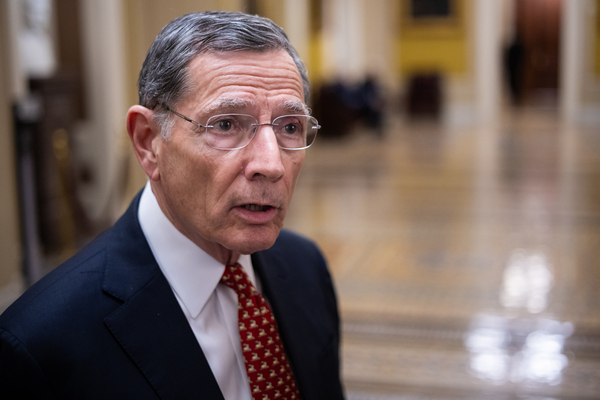
Senate Majority Whip John Barrasso of Wyoming said Republicans would keep opposing "back door attempts by California to impose a nationwide EV mandate.” Francis Chung/POLITICO
EPA on Friday submitted four more California air pollution rule waivers to Congress, where Republicans can use the Congressional Review Act to nullify them.
The repeal of three Biden-era Clean Air Act waivers in Congress last year sparked a intense partisan battle on Capitol Hill that led to Senate Republicans defying their own rules referee.
Now, the administration wants lawmakers to undo federal approval for California air rules dating back to the Obama administration. GOP leaders have yet to say exactly how they will proceed.
A spokesperson for Senate Majority Whip John Barrasso (R-Wyo.) said, “Republicans will continue to fight against back door attempts by California to impose a nationwide EV mandate.”
With EPA having revoked all federal tailpipe greenhouse gas limits earlier this year, ending the newly submitted waivers would free automakers from having to comply with climate standards from California or the more than a dozen other mostly blue states that follow its rules — including New York, Massachusetts, Pennsylvania and Washington state.
Friday’s action comes one year to the day after President Donald Trump signed resolutions of disapproval killing three waivers issued in the final days of the Biden administration, including one that would have required all new vehicles in California emit zero emissions by 2035. The Clean Air Act allows the state to set stricter rules than the federal government with EPA approval.
The Congressional Review Act makes it easier for Congress to kill newly issued rules. Before last year, it was never used to undo EPA Clean Air Act waivers. Senate Republicans maneuvered to bypass the chamber’s parliamentarian to make it happen.
Also, because previous administrations never submitted the waivers as rules, EPA’s move Friday starts the clock for Congress to repeal more of them by simple majority.
“It is important for EPA to fulfill our statutory obligation to submit these California waivers to Congress for their review pursuant to the law,” EPA Administrator Lee Zeldin said in a statement.
It’s unclear who may introduce resolutions of disapproval to nullify the new batch of waivers EPA submitted. It’s also unclear whether supporters will get enough senators on board.
Some Senate moderates were concerned about using the Congressional Review Act against waivers last year, but GOP leaders said action was necessary to prevent California from moving forward with what critics termed an electric car mandate. The auto industry lobbied hard for Congress to act.
Senate Environment and Public Works ranking member Sheldon Whitehouse (D-R.I.), who led the fight against last year’s repeal, said Friday: “The Trump EPA continues to abuse the CRA to go after years-old agency actions. The only possible explanation is payback for President Trump’s fossil fuel donors who will be able to sell more gasoline at a time when gasoline prices are causing real pain for American families.”
In the new batch, three of the waivers cover older greenhouse gas rules for light-duty cars and trucks, including the first greenhouse gas waiver issued to California in 2009 and a subsequent 2013 waiver for what was known as the Advanced Clean Cars rule that covered through model year 2025. The third waiver was the Biden administration’s reinstatement of the ACC rule after it was revoked via rulemaking by the first Trump administration.
The waivers stopped setting increasingly stringent standards with model year 2025. However, their standards carry forward indefinitely, meaning automakers still had to meet those emissions requirements going forward in California and allied states.
The Trump administration in March sued California to stop enforcement of its 2012 ACC standards, the subject of the 2013 waiver now in line for nullification. The state last month moved to dismiss the case.
The fourth waiver EPA sent to Congress on Friday requires new off-highway engines below 25 horsepower — a category including lawn mowers, weed whackers, hedge trimmers, chain saws and gasoline-powered golf carts — to transition to zero-emission options to curb emissions of smog-forming pollutants.
The Outdoor Power Equipment Institute has been fighting that rule in court, arguing there aren’t enough available alternatives and that electrification could hamper relief efforts in the wake of natural disasters.
David Doniger, senior attorney at the Natural Resources Defense Council, said: “It’s ridiculous that EPA would ask Congress to repeal standards that cars across the country have met for more than 15 years. And why? To bring back gas guzzlers at a time when gas prices are through the roof? This is more proof that the Trump administration doesn’t care about your family’s finances and loves inflation.”
California is suing EPA for submitting last year’s scrapped waivers as rules. Republicans and the administration have accused the state of ignoring Congress.
California Air Resources Board Chair Lauren Sanchez vowed to defend the rules, saying, “California’s air quality programs are state law and remain in effect,” in a statement Friday. “These federal attacks create market uncertainty, drive up costs and put public health at risk,” she said, adding that she remains “committed to working with manufacturers.”
*Josh Siegel and Camille von Kaenel contributed to this report.
---
SEE CAFE 2 ANNO
EPA sends more California waivers to the GOP buzzsaw
By Alex Guillén | 06/12/2026 04:37 PM EDT
Automakers would no longer face any federal or state tailpipe standards for greenhouse gases.
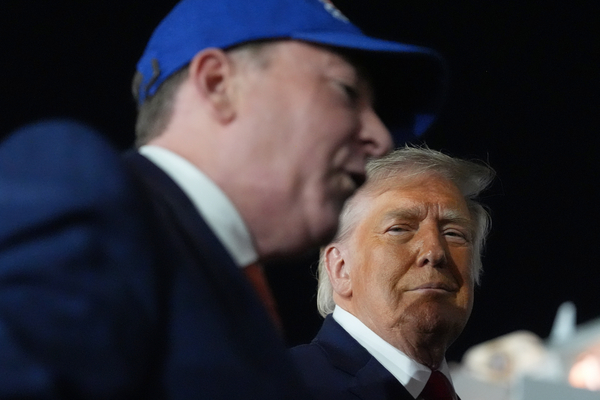
President Donald Trump listening to EPA Administrator Lee Zeldin as he talks with reporters early Tuesday before boarding Air Force One at John F. Kennedy International Airport in New York. Mark Schiefelbein/AP
EPA on Friday submitted four more California air pollution rule waivers to Congress, where Republicans can use the Congressional Review Act to nullify them.
With EPA having revoked all federal tailpipe greenhouse gas limits earlier this year, ending these waivers would free automakers from having to comply with climate standards from California or the more than a dozen other mostly blue states that follow its rules — including New York, Massachusetts, Pennsylvania and Washington state.
Friday’s submission comes one year to the day after President Donald Trump signed resolutions of disapproval killing three waivers issued in the final days of the Biden administration, including one that would have required all new vehicles in California emit zero emissions by 2035. The Clean Air Act allows the state to set stricter rules than the federal government with EPA approval.
The Congressional Review Act makes it easier for Congress to kill newly issued rules. Before last year, it was never used to undo EPA Clean Air Act waivers. Senate Republicans maneuvered to bypass the chamber’s rules referee to make it happen.
Also, because previous administrations never submitted the waivers as rules, EPA’s move Friday starts the clock for Congress to repeal more of them by simple majority.
“It is important for EPA to fulfill our statutory obligation to submit these California waivers to Congress for their review pursuant to the law,” EPA Administrator Lee Zeldin said in a statement.
It’s unclear who may introduce resolutions of disapproval to nullify the new batch of waivers EPA submitted. It’s also unclear whether supporters will get enough senators on board.
Some Senate moderates were concerned about using the Congressional Review Act against three waivers last year, but GOP leaders said action was necessary to prevent California from moving forward with what critics termed an electric car mandate. The auto industry lobbied hard for Congress to act.
A spokesperson for Senate Majority Whip John Barrasso (R-Wyo.) said, “Republicans will continue to fight against back door attempts by California to impose a nationwide EV mandate.”
In the new batch, three of the waivers cover older greenhouse gas rules for light-duty cars and trucks, including the first greenhouse gas waiver issued to California in 2009 and a subsequent 2013 waiver for what was known as the Advanced Clean Cars rule that covered through model year 2025. The third waiver was the Biden administration’s reinstatement of the ACC rule after it was revoked via rulemaking by the first Trump administration.
The waivers stopped setting increasingly stringent standards with model year 2025. However, their standards carry forward indefinitely, meaning automakers still had to meet those emissions requirements going forward in California and allied states.
The Trump administration in March sued California to stop enforcement of its 2012 ACC standards, the subject of the 2013 waiver now in line for nullification. The state last month moved to dismiss the case.
The fourth waiver EPA sent to Congress Friday requires new off-highway engines below 25 horsepower — a category including lawn mowers, weed whackers, hedge trimmers, chain saws and gasoline-powered golf carts — to transition to zero-emission options to curb emissions of smog-forming pollutants.
The Outdoor Power Equipment Institute has been fighting that rule in court, arguing there aren’t enough available alternatives and that electrification could hamper relief efforts in the wake of natural disasters.
California is suing EPA for submitting last year’s scrapped waivers as rules. Republicans and the administration have accused the state of ignoring Congress.
California Air Resources Board Chair Lauren Sanchez vowed to defend the rules, saying, “California’s air quality programs are state law and remain in effect,” in a statement on Friday.
“These federal attacks create market uncertainty, drive up costs and put public health at risk,” she said, adding that she remains “committed to working with manufacturers.”
Senate Environment and Public Works ranking member Sheldon Whitehouse (D-R.I.) said, “The Trump EPA continues to abuse the CRA to go after years-old agency actions. The only possible explanation is payback for President Trump’s fossil fuel donors who will be able to sell more gasoline at a time when gasoline prices are causing real pain for American families.”
*Josh Siegel and Camille von Kaenel contributed to this report.
REF
Congress tears down 3 California pollution, climate rules
Gov. Gavin Newsom (D) and Attorney General Rob Bonta (D) say they'll sue to overturn Congress' action.
Avatar of Timothy Cama
By: Timothy Cama | 05/23/2025 06:39 AM EDT
California Gov. Gavin Newsom and Attorney General Rob Bonta during a press conference.
California Gov. Gavin Newsom (D) and Attorney General Rob Bonta (D) during a press conference Thursday on congressional action against the state's clean car rules. Rich Pedroncelli/AP
E&E DAILY | The Senate took a hatchet to California's transportation emissions standards Thursday with votes blocking the state’s electric vehicle mandate and other related rules.
Final votes Friday against Biden-era EPA waivers allowing the state to set stricter vehicle emissions requirements concluded months of deliberations and partisan acrimony over whether the Senate should — or could — act on the issue.
Democrats focused less on defending California than attacking Republicans for overruling the Senate's rules referee. Republicans, for their part, said they had no other choice.
The dispute is headed back to the courts, with California Gov. Gavin Newsom and Attorney General Rob Bonta saying they would sue to overturn Congress' action.
"The federal government’s overreach is illogical, it’s politically motivated, and it comes at the expense of Californians’ lives and livelihoods," Bonta said.
The California Democrats didn't detail their legal strategy, but they may focus on improper use of the Congressional Review Act, a law allowing lawmakers and the president to repeal recent rules by simple majority within a certain timeframe.
...
---
alex k
the Center for Media and Democracy (CMD) investigation has identified more than two dozen major U.S. companies that are publicly committed to environmental, social, and governance (ESG) principles yet have recently donated large amounts of campaign cash to a group of Republican state attorneys general that is hyper-focused on eroding air and water regulations, promoting fossil fuel companies, and using state governments to punish companies that try to limit their climate-related risks by divesting from oil, gas, and coal.
Republican attorneys general, along with fellow GOP governors and state financial officers, are weaponizing their public offices to prevent action on climate change. Their latest efforts seek to bar companies that divest from fossil fuels or employ other ESG principles from receiving government contracts.
And yet large U.S. companies such as AT&T, Cigna, Citigroup, Lowe’s, Pfizer, T-Mobile, and UPS—all of which publicly promote their commitment to ESG—have recently funded the political prosperity of these Republican AGs.
Contradictory Takes on Climate Change
“Climate change is one of the most pressing global challenges,” the multinational brewing company Anheuser-Busch InBev (AB InBev) acknowledges in its 2021 ESG report for investors. “Our evolved understanding of potential climate-related risks and opportunities across our value chain continues to inform our long-term strategy.”
AB InBev has set an ambitious climate goal for 2025, aiming to reduce its carbon emissions by 25% and purchase 100% of its electricity from renewable sources by then. In joining the international RE100 initiative to switch to 100% renewables, the company intends to achieve net zero greenhouse gas emissions by 2040.
But the beer giant is one of the largest corporate funders of the Republican Attorneys General Association (RAGA), a group of powerful state officials that has long attacked environmental regulations in the U.S. Members of RAGA—which receives substantial funding from fossil fuel companies to support the reelection campaigns of these AGs—have filed legal challenges against Obama-era air and water pollution regulations. Former Oklahoma AG Scott Pruitt is among those who have worked directly with fossil fuel lobbyists to challenge these laws.
Numerous other corporations have given large sums to RAGA for this year’s elections while publicly committing to ESG principles and, in many cases, to direct climate action.
RAGA recently scored a big win in West Virginia v. EPA when the right-wing justices who now dominate the Supreme Court ruled against the agency, preventing the Biden administration from regulating greenhouse gas emissions under the Clean Air Act without going back to Congress for explicit authorization.
Retaliating Against “Energy Discrimination”
As the Right gets more extreme in the U.S., climate-denying Republicans have added a new weapon to their arsenal: attacking financial firms that decrease their investments in fossil fuels.
GOP attorneys general and financial officers are joining state lawmakers in penalizing investment firms that divest from fossil fuel companies. Although they are members of a political party ostensibly committed to a free market, these GOP officials are meddling in corporate decision-making by trying to prevent executives from limiting the enormous financial risk posed by the effects of climate change—likely the biggest economic challenge of the century.
As with their outcry about critical race theory supposedly being taught in American schools, GOP politicians are attempting to cast climate action as a culture war issue, branding routine practices such as ESG disclosures to investors and divesting from a waning fossil fuel industry as “woke.”
In 2021, Texas enacted a law to root out alleged “energy discrimination,” seeking to prevent investment firms that decrease their stakes in oil, gas, and coal from managing the state’s pension and other funds. After the law passed, the energy task force of the ultra-conservative, corporate-funded American Legislative Exchange Council (ALEC) approved a model bill with similar language, directing state treasurers or comptrollers to maintain a list of firms that have divested from fossil fuels and to only issue government contracts to businesses with more than 10 employees that verify their allegiance to fossil fuels.
In the past year or so, similar legislation has been introduced in at least 15 states and has already passed in four. On Aug. 24, Texas released its first list of firms that allegedly “boycott energy companies,” including BlackRock, Credit Suisse, and UBS.
Dubious Claims
On Aug. 4, 19 GOP attorneys general sent a letterto BlackRock CEO Larry Finkaccusing his firm of making ESG investments that “force the phase-out of fossil fuels, increase energy prices, drive inflation, and weaken the national security of the United States.”
Claims like this are histrionic and often baseless. For example, BlackRock has invested more than $108 billion in Texas-based energy companies, and this year it plans to support proportionally fewer ESG shareholder resolutions than it did last year. And while Texas Attorney General Ken Paxton (R) and his allies from other states claim that ESG investing hurts their pension funds, academic studies like a recent one undertaken by researchers at the University of Pennsylvania and the Federal Reserve Bank of Chicago refute this. In fact, since Texas passed its anti-ESG law last year, the UPenn/Fed study indicates that it has already cost the state between $303 and $532 million, as Kate Aronoff points out in The New Republic.
Other evaluations of ESG investing are mixed, but when researchers from the New York University Stern Center for Sustainable Business and Rockefeller Asset Management analyzed over 1,000 relevant research papers from 2015–20, they found that a majority of the studies indicated ESG investing leads to either neutral or improved financial performance. The meta-analysis points out that “improved financial performance due to ESG becomes more marked over longer time horizons.”
Despite these findings, Republican state AGs and other officials have accelerated their attacks on climate action—a central tenet of ESG investing—in the past few years.
In August, Florida’s Gov. Ron DeSantis (R) and the trustees of the State Board of Administration voted to ban its investment managersfrom using ESG considerations in managing its portfolio of roughly $245 billion, primarily from the Florida Retirement System Pension Plan. Florida’s AG Ashley Moody (R) joined the governor in supporting the move.
In May, Kentucky’s AG Daniel Cameron(R) issued an opinion barring investment managers doing government business from employing ESG principles. On Sept. 1, Indiana’s AG Todd Rokita (R) did the same.
Meanwhile, right-wing entrepreneur Vivek Ramaswamy is cashing in on the GOP’s anti-ESG and anti-woke craze, as CMD recently reported. His firm Strive Asset Management (DRLL) is trying to pull business away from the Big Three asset managers in red states. It recently announced that it hasraised $250 million thanks to large investments from far-right tech mogul Peter Thiel and his affiliated groups.
Not only are GOP AGs targeting asset managers that reduce fossil fuel investments, but they’re going after regulators and ratings agencies as well.
In June, Paxton spearheaded a letterfrom a group of 12 Republican AGs to the Securities and Exchange Commission (SEC)opposing its proposed corporate disclosure requirements around sustainability. The rule would require firms to back up their claims of purportedly green or socially aware investments. Twenty-one GOP AGs sent another letter of opposition to the SEC on Aug. 16.
“The woke left is going full throttle in their mission to change every facet of American life… and erode our democratic institutions to suit their liberal agenda,” said West Virginia’s AG Patrick Morrisey (R).
In late July, Missouri’s AG Eric Schmitt (R) launched an investigation into whether Morningstar, a financial research and rating company, violated a state consumer-protection law by evaluating ESG issues. A few weeks later, 18 other AGs joined the probe. Schmitt and 16 other attorneys general are also trying to block California from setting its own vehicle emissions standards.
At the same time, the nonprofit State Financial Officers Foundation (SFOF) and its members are doing all they can to prop up fossil fuel companies and punish firms that divest from oil, gas, and coal. In West Virginia, state Treasurer Riley Mooretold five financial companies—the banks Goldman Sachs, JPMorgan, Morgan Stanley, and Wells Fargo, as well as BlackRock—that they would no longer be eligible for state contracts because they have reduced financing for coal projects.
Corporate Code of Silence ...
==
pyle of shite:
California Returns as Climate Leader, With Help From the White House
Mr. Trump claimed that California's tougher rules made cars more ... toimpose on their citizens,” said Thomas Pyle, the president of the..IER.
.1 month ago
The New York Times
Biden Restores California’s Power to Set Stringent Tailpipe Rules
Mr. Trump's 2019 decision to revoke California's ability to set its own ... of California would be the primary litigants,” said Thomas Pyle,...
---
---
energy citizen of okla
pulled? no links several graphs 2020?
https://energycitizens.org/driving-the-wrong-direction-in-california/
wayback
Issues & Advocacy
Explore Energy
Your Legislators
Join Us
Driving The Wrong Direction In California
Four observations about California Gov. Gavin Newsom’s executive order requiring that by 2035 all new cars sold in the state must be zero-emission vehicles – as well as his push for halting fracking in the state:
- The governor’s executive order could seriously impact middle-class Californians
The zero-emission vehicles (ZEV) parked behind the governor during his announcement (one’s an Audi) underscore the point that the new mandate figures to be tough on middle-class Californians. It’s difficult to see how the mandate won’t make life in California – already among the most expensive in the nation – more costly, hurting people least able to afford it. Middle-class Californians should be able to buy a car that fits their budgets – vs. a price range imposed on them.
The governor’s pledge above – “You can still keep your internal combustion engine car” – sounds like a line from another big public policy debate a few years ago.
Western States Petroleum Association President Catherine Reheis-Boyd:
“Big ideas are only better if they are affordable for us all and can be backed by science, data and needed infrastructure. There are many questions about all of those concerns in the Governor’s orders. Dismantling our oil and natural gas industry right now means betting everything on alternative energy resources that we don’t have in place and a supporting infrastructure that’s far from being at the scale we need.”
AFPMPresident and CEO Chet Thompson:
“[P]ursuing this goal would be among the most inefficient, unpopular, and regressive methods to reduce carbon emissions.Forced electrification would deprive consumers of choice for popular vehicles fueled by affordable, reliable, and readily available gasoline and diesel.It also ignores that today’s vehicles are 99 percent cleaner than they were just a few decades ago and continue to get cleaner every year.”
- Seriously, a zero-emissions mandate in a state that has struggled to keep the lights on?
The state’s renewable energy mandate, requiring 60% of the state’s electricity must come from renewables by 2030, stepped on a rake last month when rolling blackouts were implanted because demand outpaced available electricity during a hot spell. It would seem to undermine confidence that California can pull off Newsom’s zero-emissions vehicle pledge in just 15 years.
The fact is ZEVs make up a small part of the vehicle market currently, and significant recharging infrastructure will need to be built. California had more than 15 million registered vehicles in 2018. That’s a lot of plug-ins that will be needed. The Alliance for Automotive Innovation’s John Bozzella:
“[N]either mandates nor bans build successful markets. What builds successful markets is widespread stakeholder engagement: a combination of efforts by federal, state, and local governments, as well as automakers, dealers, utilities, hydrogen providers, electric infrastructure providers, builders, and others. Currently, electrified vehicles account for less than 10 percent of new vehicle sales in California. While that is the best in the nation, much more needs to be done to increase consumer demand for Zero Emission Vehicles in order for California to reach its goals. It will require increased infrastructure, incentives, fleet requirements, building codes, and much more.”
- There’s rhetoric and there’s reality
California has a history of being good on rhetoric – and not so good on following through, often at great cost and burden to everyday Californians.
Regarding issues with the state’s electricity-from-renewables mandate mentioned above, even Gov. Newsom conceded impacts to state residents, telling reporters last month that millions of Californians had been left in the dark thanks to a significant gap in reliability created by the renewable mandate. Other relevant points:
California has a history of aspirational targets and failed outcomes. Since its inception in 1990, California has been forced to walk back or significantly change parts of its zero emission vehicle mandate no less than seven times as high costs, limited consumer interest and a lack of breakthroughs in battery technology have routinely rendered extremely optimistic goals infeasible.
Overly aspirational mandates have led California residents to pay some of the highest electricity rates in the country. The average price of electricity in the state is 16.6 cents per kWh, nearly 60% higher than the national average, according to the U.S. Energy Information Administration.
As the charts below show, California electricity prices are high, even though the average California home uses about half as much energy as an average American household. In the first chart, state electricity prices (blue line) were about 40% higher than the national average in 2019. In the second, you can see the trajectory of the state’s baseline electricity rates – the minimum billing amount for customers.
Add in past issues with taxes, infrastructure and regulation (see here, here and here) and it’s not surprising Gov. Newsom’s new order could generate some skepticism. While past history on goals, aspirations and rhetoric doesn’t mean California will come up short on this order, it certainly is a strong indicator.
- State natural gas and oil production is being targeted
The natural gas and oil industry is a key driver of California’s economy – second only to Texas in total industry employment – and its oil production ranked sixth in the nation as of June – 392,000 barrels per day. Newsom’s support for a fracking ban, which requires legislation, would impact both. California Independent Petroleum AssociationCEO Rock Zierman:
“Today’s announcement to curb in-state production of energy will put thousands of workers in the Central Valley, Los Angeles basin, and Central Coast on the state’s overloaded unemployment program, drive up energy costs when consumers can least afford it, and hurt California’s fight to lower global greenhouse gas emissions. … Instead of creating our own local energy, each year California relies more and more upon foreign oil, which isn’t produced with our strong environmental protections nor does it generate desperately needed local and state tax revenue. … At a time when Californians pay more for energy while experiencing manmade ‘green outs’, it doesn’t make sense to hurt consumers, our economy, and our environment by banning California production.”
The whole nation watches California because of its size and the sweep of its economy. Unfortunately, Americans living in other states are seeing one government mandate after another that leave too many Californians behind. It’s hardly a model for the rest of the nation.
About The Author
Mark Green joined API after a career in newspaper journalism, including 16 years as national editorial writer for TheOklahoman in the paper’s Washington bureau. Previously, Mark was a reporter, copy editor and sports editor at an assortment of newspapers. He earned his journalism degree from the University of Oklahoma and master’s in journalism and public affairs from American University. He and his wife Pamela have two grown children and six grandchildren.
---
---
Ninth Circuit upholds California's Low Carbon Fuel ...
Sep 18, 2013Ninth Circuit upholds California's Low Carbon Fuel Standard A customer pumps gas at a Chevron gasoline station Friday, Jan. 27, 2006, in San Francisco. Chevron Corp.'s earnings rose 20 percent to a...
---
---
920 icn
in a Bold Move, California’s Governor Issues Ban on Gasoline-Powered Cars as of 2035
BY: DAN GEARINO
The order, issued by Gov. Gavin Newsom on Wednesday, is the first of its kind in the United States. But it is bound to draw legal challenges.
==
---
Great: major automakers and California defy Trump rollback, make an agreement to curb auto pollution
- Ford, Honda, Volkswagen, and BMW “have struck a deal with California to reduce tailpipe pollution,” reports The New York Times, side-stepping the Trump rollback of strong Obama-era standards.
- The deal will create “much-needed regulatory certainty,” the automakers say, and avoid “a patchwork of regulations while continuing to ensure meaningful greenhouse gas emissions reductions.”
- The automakers are referring to two things here:
- The lawsuit that over a dozen states and DC filed last year, charging that Trump arbitrarily and capriciously junked the Obama-era standards.
- The Trump EPA’s stated intention to revoke California’s power (written into the Clean Air Act) to set its own standards, which the state has vowed to fight.
- California is now calling on more automakers to join the deal.
- Under the deal, cars and light trucks sold in California will need to get about 51 miles per gallon by 2026, rather than the 52.5 mpg by 2025 established in the Obama standard.
- “Automakers will also receive additional compliance credits for selling electric vehicles under the plan, among other revisions, the state’s air pollution regulator said,” according to Bloomberg News.
- “Some environmental groups criticized the slower pace and expanded loopholes the deal awarded the automakers,” The Times reports.
- But it’s considerably stronger than what the Trump administration intends: freezing the tailpipe standard at its 2021 level of 37 mpg.
- “The EPA called the deal a ‘stunt,”, reports The Verge, “and said it won’t change the administration’s rollback plans.”
- Background:
- Trump’s EPA and Department of Transportation announced their plan to replace the Obama-era standards a year ago, “with only desultory gestures at justification,” as Vox wrote at the time.
- The auto industry, fearing the regulatory chaos that years of litigation over the rollback will cause, wrote directly to the president to urge him to roll back the rollback, as The Detroit Free Press reported in June.
==
---
https://www.ecowatch.com/dirty-scheme-americans-buy-more-gasoline-2623764478.html
12/18
The Dirty Scheme to Make Americans Buy More Gasoline
By Rhea Suh
It's not often that an industry chieftain brags to investors about picking the pockets of American families with help from the White House.
That's what happened, though, after Big Oil schemed with the Trump administration last summer to ensure higher gasoline consumption—to the tune of $16 billion a year—and more climate-disrupting carbon pollution from our cars, vans and pickup trucks.
An important investigative story by the New York Times lays bare this craven sellout of the public interest and details the hammerlock the oil industry has on domestic policy under President Trump. The article details how the Trump administration bowed to the major oil companies to try and gut commonsense rules that were already saving consumers billions of dollars a year at the pump and helping clean up our dirty tailpipe emissions.
In a cynical confession, Gary Heminger, chairman of Marathon Petroleum, boasted to analysts last week that weakening the clean car rules would boost gasoline sales by up to 16.8 million gallons a day.
At $2.65 a gallon, the national November average, that comes to $44.5 million a day, or more than $16 billion a year, money that American workers won't be able to spend on their families' needs because it will go, instead, to the oil industry. "However," Heminger warned investors, "you have another side who doesn't want to pivot away" from the fuel savings and pollution reductions the rules support. "So we have a lot of work to do to keep this momentum going."
That so-called "work" doesn't come cheap. In the national elections of 2016 and 2018, campaign contributions from the oil and gas industry totaled $176 million, with 87 cents of every dollar going to Trump's party.
It's paying off for the industry—at the country's expense.
In 2012, with the endorsement of the major automakers, the U.S. Environmental Protection Agency and the U.S. Department of Transportation teamed up on a pair of rules that cut tailpipe pollutionfrom our cars, vans, SUVs and pickup trucks. The rules had the industry on track to double gas mileage by 2025, cutting the nation's oil consumption by a staggering 2.4 million barrels per day by 2030.
It's one of the most important steps we've taken, as a country, to protect future generations from the growing dangers of climate change. That's because our cars and light trucks account for about 17 percent of U.S. emissions of carbon dioxide and other greenhouse gases contributing to the problem. Mile for mile, the 2012 rules cut the carbon footprint of driving in half.
The measures have supported a surge in manufacturing jobs, with nearly 300,000 Americans hard at work helping us to get more miles from a gallon of gas or moving us closer to the electric cars and hybrid vehicles of the future. Some 70,000 of those jobs are in Michigan alone, where more than 224 facilities are turning out materials or components to help make our cars run cleaner and more efficiently.
Last August, though, the Trump administration proposed gutting the rules, throwing national support for clean car progress into reverse. Automakers wanted flexibility in meeting the clean car standards. On balance, though, the rules complemented tens of billions of dollars in industry investment in a new generation of automobiles.
So it was something of a mystery as to why the administration turned away from standards that save our families billions of dollars a year at the pump, fight the central environmental challenge of our time, and help create scores of thousands of well-paying jobs. The Times article provides the answer: it's not the automakers but, rather, the oil companies that see the road ahead through the rearview mirror.
We're not going to stand by and watch Donald Trump put our future at risk to pump up oil profits. We're fighting this proposal. We'll make our case in court, if necessary, and we've joined other groups in calling on the EPA and the Transportation Department to come clean about how the administration sold out our environment and our pocketbooks in its fealty to fossil fuels.
As my NRDC colleague Luke Tonachel testified in a federal hearing on the proposed changes last September, "We Americans pay taxes so that the government will serve and protect us, not Big Oil."
Rhea Suh is the president of the Natural Resources Defense Council.
---
ref
no lnx nyt
The Oil Industry’s Covert Campaign to Rewrite American Car Emissions Rules
Marathon, the country’s largest oil refiner, has backed the Trump administration proposal to roll back car efficiency standards.CreditCreditErin Kirkland for The New York Times
Hiroko Tabuchi
By Hiroko Tabuchi
Dec. 13, 2018
Want climate news in your inbox? Sign up here for Climate Fwd:, our email newsletter.
When the Trump administration laid out a plan this year that would eventually allow cars to emit more pollution, automakers, the obvious winners from the proposal, balked. The changes, they said, went too far even for them.
But it turns out that there was a hidden beneficiary of the plan that was pushing for the changes all along: the nation’s oil industry.
In Congress, on Facebook and in statehouses nationwide, Marathon Petroleum, the country’s largest refiner, worked with powerful oil-industry groups and a conservative policy network financed by the billionaire industrialist Charles G. Koch to run a stealth campaign to roll back car emissions standards, a New York Times investigation has found.
The campaign’s main argument for significantly easing fuel efficiency standards — that the United States is so awash in oil it no longer needs to worry about energy conservation — clashed with decades of federal energy and environmental policy.
“With oil scarcity no longer a concern,” Americans should be given a “choice in vehicles that best fit their needs,” read a draft of a letter that Marathon helped to circulate to members of Congress over the summer. Official correspondence later sent to regulators by more than a dozen lawmakers included phrases or sentences from the industry talking points, and the Trump administration’s proposed rules incorporate similar logic.
The industry had reason to urge the rollback of higher fuel efficiency standards proposed by former President Barack Obama. A quarter of the world’s oil is used to power cars, and less-thirsty vehicles mean lower gasoline sales.
In recent months, Marathon Petroleum also teamed up with the American Legislative Exchange Council, a secretive policy group financed by corporations as well as the Koch network, to draft legislation for states supporting the industry’s position. Its proposed resolution, dated Sept. 18, describes current fuel-efficiency rules as “a relic of a disproven narrative of resource scarcity” and says “unelected bureaucrats” shouldn’t dictate the cars Americans drive.
A separate industry campaign on Facebook, covertly run by an oil-industry lobby representing Exxon Mobil, Chevron, Phillips 66 and other oil giants, urged people to write to regulators to support the rollback.
The Facebook ads linked to a website with a picture of a grinning Mr. Obama. It asked, “Would YOU buy a used car from this man?” The site appears to have been so effective that a quarter of the 12,000 public comments received by the Department of Transportation can be traced to the petition, according to a Times analysis.
Gary R. Heminger, Marathon’s chairman and chief executive, said in a statement that the company supported “sound fuel economy standards” and wanted to “help ensure they are achievable and based on existing technology.”
He added, “We appreciate the administration’s willingness to conduct a thorough review in order to ensure future standards are achievable and will actually benefit American consumers.”
Image
Marathon’s chief executive, Gary Heminger, third from right, at the New York Stock Exchange on Dec. 3 to note an acquisition that made the company the nation’s largest refiner.CreditRichard Drew/Associated Press
A spokesman for Koch Industries, the energy conglomerate led by Mr. Koch, said the company had “a long, consistent track record of opposing all forms of corporate welfare, including all subsidies, mandates and other handouts that rig the system.”
The oil industry’s campaign, the details of which have not been previously reported, illuminates why the rollbacks have gone further than the more modest changes automakers originally lobbied for.
The standards that the Trump administration seeks to weaken required automakers to roughly double the fuel economy of new cars, SUVs and pickup trucks by 2025. Instead, the Trump plan would freeze the standards at 2020 levels. Carmakers, for their part, had sought more flexibility in meeting the original 2025 standards, not a categorical rollback.
The Trump plan, if finalized, would increase greenhouse gas emissions in the United States by more than the amount many midsize countries put out in a year and reverse a major effort by the Obama administration to fight climate change.
The energy industry’s efforts also help explain the Trump administration’s confrontational stance toward California, which, under federal law, has a unique authority to write its own clean-air rules and to mandate more zero-emissions vehicles.
California has pledged to stick to the stricter standards, together with 13 other states that follow its lead. But President Trump’s plan challenges California’s rule-writing power, setting up a legal battle that threatens to split the American auto market in two.
That is a prospect automakers desperately want to avoid.
But for gasoline producers like Marathon, a shift toward more efficient vehicles poses a grave threat to the bottom line. In October, the company acquired a rival, Andeavor, making it the biggest refiner in the United States, with sales of 16 billion gallons of fuel a year.
Even while doubling down on gasoline, Marathon has projected an environmentally friendly public image. “We have invested billions of dollars to make our operations more energy efficient,” Marathon said in a recent report. The company’s Twitter account recently highlighted a gardening project and the creation of a duck pond at one of its refineries.
On a conference call with investors last week, Mr. Heminger, the Marathon chief executive, was already counting the extra barrels of fuel a Trump rollback would mean for the industry: 350,000 to 400,000 barrels of gasoline per day, he said.
“However, you have another side who doesn’t want to pivot away” from the stricter rules, Mr. Heminger said. “So we have a lot of work to do to keep this momentum going.”
Marathon’s Early Start
Marathon began its outreach to the Trump administration early, asking to meet with Scott Pruitt at the Environmental Protection Agency soon after he became its administrator in early 2017. Marathon had been a top donor to Mr. Pruitt in Oklahoma, a state where oil is so prominent that a well stands on the grounds of the capitol building.
“Our CEO, Gary Heminger, would be very glad for an opportunity to visit with the Administrator,” a Marathon lobbyist wrote in an email to Mr. Trump’s transition team on May 8, 2017. “I believe this would be a constructive dialogue.” The E.P.A. helps oversee fuel economy rules along with the Transportation Department.
Mr. Pruitt was scheduled to meet with the Marathon chief at least twice — once in June 2017 as part of a meeting with the board of a powerful fuel-industry group, American Fuel and Petrochemical Manufacturers, and again in September for a more private talk, according to emails and schedules released in a lawsuit filed by the Sierra Club.
A Marathon spokesman, Chuck Rice, said Mr. Heminger did not discuss auto-efficiency rollbacks with Mr. Pruitt. An E.P.A. official did not respond to a question about whether the auto rules were discussed.
Marathon then turned its focus to Congress, hiring the firm Ogilvy Government Relations to lobby legislators in Washington on fuel-economy standards, according to Ogilvy’s disclosure forms. The firm did not respond to a request for comment.
Over the summer, Marathon representatives also approached legislators about an industry talking-points letter, according to six people familiar with that effort. The file properties of a Microsoft Word version of one letter, provided by a Congressional delegation, show that it was last edited by a Marathon lobbyist, Michael J. Birsic, on June 11, 2018.
Mr. Rice of Marathon said the company did not write the letter, and the company declined to say who did. It did not offer an explanation for Mr. Birsic’s digital fingerprint on the document file.
Nineteen lawmakers from the delegations of Indiana, West Virginia and Pennsylvania sent letters to the Transportation Department that included exact phrases and reasoning from the industry letter. The lawmakers’ letters, sent in June and July, all make the point that oil scarcity is no longer a concern.
Image
A portion of a letter detailing pro-industry talking points that was later echoed in letters written by lawmakers to regulators, such as the example below.
Image
A letter sent by Pennsylvania’s congressional delegation to regulators used language similar to the industry talking-points note, excerpted above.
The Trump administration’s proposed rollback echoes the post-conservation theme. While energy conservation is significant, the proposal says, the downside of additional petroleum consumption would be dwarfed by the rollback’s benefits.
Representatives from the three state delegations either declined to comment or did not respond to requests.
Senator Tom Carper of Delaware, the top Democrat on the Senate Environment and Public Works Committee, criticized the industry’s campaign. “It appears as though oil interests are cynically trying to gin up support in Congress for the weakest possible standards to ensure that cars and SUVs have to rely on even more oil,” he said.
“If this attempt is successful, the outcome will be a blow to the auto industry, consumers, and our environment.”
The Facebook Campaign
The Facebook ads, featuring Mr. Trump waving alongside the message, “SUPPORT OUR PRESIDENT’S CAR FREEDOM AGENDA!,” appeared the week after the administration made public its fuel economy plan in August. At least 10 times during the two-month public comment period on the plan, the ads, which did not state their oil industry origins, asked people to write to the government to back weaker emissions standards.
Public comments matter in federal rule-making. The law requires that citizens’ views be taken into account before a rule is finalized.
“File an official comment to SUPPORT our President’s plan for safer, cheaper cars that WE get to choose,” read one ad, which ran for seven days in early October. The ad leads to a page that provides basic language to submit.
Image
Facebook ads by Energy4Us prompted more than 3,300 of the 12,000 public comments on the administration’s rollback proposal, a Times analysis showed.
Credit
More than 3,300 of the 12,000 public comments that D.O.T. has made public contain language identical to that petition, an analysis of the files showed.
The campaign was a product of the fuel and petrochemical manufacturers trade group, widely known as AFPM. However, neither the Facebook ads nor the site identified the industry group. Instead they name a group called Energy4US, which describes itself as “a coalition of consumers, businesses and workers” promoting affordable energy.
Energy4US has close ties to the industry group. According to internet domain records, Victor Adams, listed as an AFPM web manager, registered Energy4Us.org in 2015 using his work email address. Energy4US lists the group as a coalition member, along with about 50 other groups including energy interests, labor groups, a sheriff’s association and even a recreational fishing alliance.
The AFPM board includes representatives from Exxon, Chevron, Phillips 66, Marathon and Koch Industries. The companies all referred queries to the group.
Derrick Morgan, a senior vice president at AFPM, said the group “regularly works with policymakers, coalition groups and individuals to promote shared goals,” and also will “lead and join groups like Energy4US.”
The Department of Transportation said it was “generally aware” that there were groups urging the public to make comments through online campaigns, but said it does not regulate them.
Image
Transportation Secretary Elaine Chao at the White House this year.CreditTom Brenner/The New York Times
Taking the Fight On the Road
House bill 1593 is just eight words long: “To repeal the corporate average fuel economy standards.” Koch Industries, a petroleum empire with interests as diverse as gasoline, pipelines, fertilizer and Stainmaster carpets, is the bill’s sole corporate backer.
The measure, which would eliminate fuel standards altogether, is not expected to go far. But it underscores the company’s stance on the matter. And Koch interests are fighting that battle not only in Washington but increasingly in statehouses and even local policy meetings nationwide.
Earlier Investigative Reporting
Taking the fight over climate change to local communities
How the Koch Brothers Are Killing Public Transit Projects Around the CountryJune 19, 2018
In Dearborn, Mich., at a September meeting on the Trump fuel-efficiency rollbacks, Annie Patnaude of Americans for Prosperity, a Koch-funded group, spoke in favor. “This is a step in the right direction to protect consumers and workers against government mandates that would limit choice,” she said.
In Iowa, Americans for Prosperity joined the fight over whether to make it easier for gas stations to install chargers for electric vehicles. In Illinois, it discouraged state officials from considering subsidies for electric vehicles.
And last month an Americans for Prosperity representative trekked to a public hearing in Colorado, where regulators were thinking about becoming the 13th state to follow California’s stricter standards. The representative, Shari Shiffer-Krieger, a field director for the group, argued that people in the rugged state wanted SUVs, not tighter emissions rules. “Coloradans deserve much better,” she said.
The oil industry lost that fight. Colorado allied itself with California.
But Americans for Prosperity said fights like these get to the heart of its free-market philosophy. “We believe in a level playing field so all Americans have the equal opportunity to succeed,” said Bill Riggs, a spokesman for the group, in a statement. The organization will keep fighting “mandates that unfairly pick winners and losers in any industry,” he said.
Drafting Pro-Oil State Legislation
On August 6, a Marathon lobbyist, Stephen D. Higley, emailed a Wisconsin state representative an explainer of American fuel economy law. The memo didn’t mince words.
“It’s a relic,” the memo said, particularly at a time when the United States was “poised to become the largest oil producer in the world.”
The Wisconsin representative, Mike Kuglitsch, participates in the American Legislative Exchange Council, a Koch-funded group that helps companies write model legislation for state lawmakers to use as a basis for their own laws.
Emails obtained by the Times show that Marathon has been working with members of the legislative exchange council to build support for the Trump fuel-efficiency rollback in state legislatures and to denounce California’s power to write its own rules for cars. The emails were made public under Wisconsin’s open records law to Documented, a watchdog group that tracks corporate influence in public policy.
California’s special authority could effectively split the American auto market in two, since 13 other states — representing roughly 35 percent of nationwide car sales — have agreed to follow California’s stricter rules. That means automakers might find themselves making cars to two competing standards.
“Who should decide what cars and trucks consumers should buy, consumers themselves or unelected bureaucrats in Sacramento, California or Washington, D.C.?” the memo sent by Marathon said.
In a statement, Bill Meierling of the legislative exchange council said that mandating fuel economy was a rule that “many state legislators believe doesn’t make sense for working Americans.”
Just days after the emails between Marathon and the Wisconsin lawmaker, some 1,500 state legislators and other officials from across the country gathered in New Orleans to cheer on Elaine Chao, the Secretary of Transportation, at the legislative exchange council’s annual convention. Marathon sponsored the event.
The Transportation Department was determined to cut government regulations, said Ms. Chao, a former fellow at the Heritage Foundation, which has received Koch funding and has long opposed the fuel economy rules.
Mr. Trump’s proposed rollback, she said, “ranks as one of the most significant regulatory reforms that this administration is undertaking.” The room erupted in applause.
Image
Rush hour traffic near Detroit, the nation’s auto capital, on a recent late afternoon.CreditErin Kirkland for The New York Times
For more news on climate and the environment, follow @NYTClimate on Twitter.
Hiroko Tabuchi is a climate reporter. She joined The Times in 2008, and was part of the team awarded the 2013 Pulitzer Prize for Explanatory Reporting. She previously wrote about Japanese economics, business and technology from Tokyo. @HirokoTabuchi • Facebook
A version of this article appears in print on , on Page A1 of the New York edition with the headline: Big Oil Angles, Quietly, to Ease Emissions Cuts
==
---
https://www.desmogblog.com/2018/10/02/climate-science-deniers-trump-admin-happer-wehrum-rollins-wynn-simmons
readfearn
here are five folks spearheading the United States government who think that when it comes to climate change, they know better than all of the world’s main scientific institutions.
There’s Donald Trump himself, of course, who famously tweeted that climate change was a hoax invented by the Chinese, and said that a cold snap in the weather overturns a century or more of scientific inquiry.
Then there’s energy secretary Rick Perry, whose fuzzy logic on the science sees him unconvinced that CO2 is the key driver of climate change.
Ryan Zinke, Secretary of the Interior, is similarly confused and non-committal about the impacts of burning fossil fuels, as is former coal-lobbyist-turned-EPA head Andrew Wheeler. Secretary of Housing and Urban Development Ben Carson said in 2015 that climate change was “irrelevant,” that temperatures were driven by natural cycles and, since then, hasavoided questions about the role of human activity in climate change.
OK, so there are more than five (with Mike Pence, Mike Pompeo, and Jeff Sessions among those who have denied the science in the past), but these five are well positioned to influence the energy and climate policies of the nation.
Wheeler, for example, is driving through cuts to national efficiency standards for motor vehicles and is relaxing pollution rules on coal power plants. Zinke and Perry are aggresively promoting fossil fuel growth with Trump as the climate-wrecker-in-chief. Carson heads an agency that has a role in promoting (or not) climate change adaptation and resilience for homes and properties, particularly after natural disasters.
Remembering not only do these five reject the advice of the world’s major science academies, but also the expertise of the scientists working in their own government agencies.
But while these five might be relative household names with their views well reported, DeSmog presents five lesser-known climate science deniers inside the administration who are also in positions to gut federal action on climate and promote fossil fuel-friendly policies, backed by their own convictions that climate change just isn't much of a problem.
Will Happer
Will Happer, emeritus professor from Princeton University, was once in the running as Trump’s science advisor but has now been appointed to the National Security Council, specializing in emerging technologies.
After news of Happer’s appointment became public, Science, republishing E&E News, characterized the 79-year-old physicist as a “vocal critic of mainstream climate science.”
But Happer is more than a mere critic — he has acted as an enabler and activist against action on climate change for well over a decade.
For years, Happer was chairman at the George Marshall Institute and then, when that was shuttered, he founded the CO2Coalition with former Exxon director, the late Roger Cohen. Both groups took fringe positions on the science of climate change, with Happer claiming that adding more fossil fuel emissions into the atmosphere will be good for humans.
In 2015, Happer was caught in a sting by Greenpeace when he offered to write a report on the “benefits” of CO2 for a fake oil client and then hide the funding, which would be directed to the CO2 Coalition. Since then, that group has received funding from the foundation of Trump backer and hedge fund billionaire Robert Mercer.
In December 2016, Happer attended a conference organized by conspiracy theorist G. Edward Griffin. Now he’s on the National Security Council.
Late in 2017, the Trump administration nixed climate change from a list of global threats to the U.S. in the National Security Strategy.
It's safe to say Happer won't be leading any pushes to add it back in.
Bill Wehrum
Bill Wehrum is the U.S. government’s most senior official on air pollution, as the assistant administrator in the Office of Air and Radiation at the Environmental Protection Agency (EPA).
Wehrum is a long-serving lawyer for the coal industry, as well as petrochemical and petroleum industry groups (such as Koch Industries).
Wehrum’s office is also tasked with looking at regulations to tackle power plant pollution and climate change and recently proposed the Affordable Clean Energy rule as a replacement for Obama's Clean Power Plan.
But as the New York Times reported, Wehrum has been delivering big time for his former fossil fuel industry clients by proposing the new rule, which EPA's own analysis shows would increase premature deaths from pollution.
One former EPA director, Bruce Buckheit, told the New York Times: “They basically found the most aggressive and knowledgeable fox and said, ‘Here are the keys to the hen-house.'”
Over a decade earlier, Wehrum was in the same position at EPA as he is now and back then argued against granting California a Clean Air Act waiver to set more stringent pollution standards for vehicles.
Back in power at the EPA, he ran the agency's midterm review of auto emissions standards, which this year recommended rolling back the stricter standards proposed by the Obama administration.
Under question during his confirmation hearings, Wehrum claimed that CO2 emissions as a main driver of climate change, which the government’s own scientists confirm, was to him an “open question." [vid]
Brooke Rollins
Rollins was an aide to Texas Governor Rick Perry before spending 15 years leading the Texas Public Policy Foundation (TPPF), which she left in early 2018 to become assistant to the president in the Office of American Innovation (OIA), based in the White House (some wonder what the OIA actually does).
During her time at TPPF, Rollins promoted the work of the organization’s Kathleen Hartnett White, a climate science denier and fossil fuel evangelist whose controversial nomination to lead the White House Council on Environmental Quality was ultimately withdrawn.
In August 2018, Rollins appeared at the Heartland Institute’s energy conference alongside that think tank’s new president Tim Huelskamp.
At the conference, Rollins nodded as Huelskamp suggested American schoolchildren’s heads were being “filled with mush” about the dangers of CO2.
When asked if the inner-workings of the White House were as chaotic as some media had claimed, Rollins replied: “Is there chaos? Yes. But I would say it’s like the chaos of my home — having four children in five years.”
Home life was like a “goat rodeo,” she said, and working in the White House wasn’t “much different.”
While at TPPF, Rollins wrote that Trump should exit the Paris climate agreement.
What she's actually doing in her role with OIA remains unclear, but the fact that she appeared at the America First Energy Conference, hosted by a climate science denying think tank, indicates she isn't likely straying from her previous positions on climate and energy.
Todd Wynn
Todd Wynn is director of the Interior Department’s Office of Intergovernmental and External Affairs after spending years in pro-fossil fuel industry think tanks, many with Koch network connections.
On Wynn’s CV is his time working at the American Legislative Exchange Council (ALEC), the corporate bill mill where he led that group’s energy task force.
In that position, he fought against state renewable energy mandates and federal regulation of fracking fluids.
Lisa Graves, co-director of DocumentedInvestigations.org, has described Wynn as an “aggressive fossil fuel insider.”
In his new position with the Department of the Interior, Wynn is responsible for “strengthen[ing] relationships between state and local partners and external stakeholders” with Secretary Zinke's office, which, by the looks of it, has already been quite cozy with fossil fuel stakeholders.
An investigation by HuffPost alleged Wynn may have violated an ethics pledge by continuing to liaise with former associates while in his new job.
“Wynn has been a rising star in the influential network of fossil fuel-funded think tanks that push policies and produce pseudoscientific research to muddle the debate on climate change,” the HuffPost report detailed.
Wynn has himself questioned the role that fossil fuel emissions have on warming the planet, suggesting in 2010 that it was “absolutely ridiculous” to claim CO2 was driving climate change.
Daniel Simmons
Who better to lead the Trump administration's Office of Energy Efficiency and Renewable Energy than a man who once asked for that same office to be closed while barracking for fossil fuels? Daniel Simmons is just that guy.
As reported by DeSmog and others, Simmons spent years working for so-called “free market think tanks,” including the Institute for Energy Research, before joining the Trump transition team and then securing the nomination for the role, located in the Department of Energy.
Simmons has a history of working at organizations that attack programs aimed at encouraging the development of clean energy industries like solar and wind power. But in 2015, the American Energy Alliance (AEA), where he was working, attacked the office Simmons now heads, writing disapprovingly that its role was to “promote and subsidize 'clean energy' as determined by government bureaucrats.”
The office, AEA wrote, “aims to control multiple sectors of the economy, from energy production and transmission to manufacturing and construction.” Cutting the office entirely could “save” the administration more than $9 billion. Simmons himself has claimed that the costs of the Paris climate agreement target of keeping global temperatures below 2 degrees Celsius would be greater than any benefits.
Perfect man for the job? In the Trump administration, the answer is yes.
==
==
on track to 2x by 2025; 17-19 state team blue; what about states's rights and fed overreach?
https://www.alternet.org/news-amp-politics/trump-administration-collision-course-california-over-vehicle-emissions-rules
Trump administration on Aug. 2 formally announced a proposal to freeze fuel economy standards and tailpipe emission standards for new cars. In addition, it is proposing to revoke California’s authority to set more stringent rules.
This move by the Environmental Protection Agency and the National Highway Traffic Safety Administration, while expected for months, is the most significant action yet in rolling back efforts by the Obama administration and California to cut greenhouse gas emissions that contribute to climate change. It also sets up an unprecedented legal battle between California and the federal government while breaking with decades of practice on regulating tailpipe pollution.
In fact, only hours after the announcement California Attorney General Xavier Becerra has indicated he intends to file a lawsuit in conjunction with 19 other state attorneys general to challenge the proposal.
Taking aim at California’s waiver
Under current regulations put in place by the EPA and NHTSA under Obama in 2012, auto manufacturers must make continuing improvements in fuel economy and tailpipe carbon emissions through 2025, up to an average of 54 miles per gallon and 163 grams of CO2 per mile. Built into the Obama-era regulations was a review process to assess manufacturers’ ability to meet those standards. The Obama administration conducted its own midterm reviewin January 2017, concluding the planned increases in fuel economy and more stringent tailpipe standards should remain in place.
In April 2018, the agencies under the Trump administration reversed their earlier position, finding the standards were not feasible. Now, the agencies have finished their review and seek public comment on a proposal to freeze both sets of standards at 2020 levels.
But the EPA and NHTSA’s proposal doesn’t stop at the national standards. The agencies are also attacking California’s ability to set its own, more stringent standards. Because 13 other states and the District of Columbia have chosen to adopt California’s standards, 35 percent of the U.S. population would be impacted by any change.
What legal questions does this showdown between California and the federal government raise? In general, the Supremacy Clause of the United States Constitution provides that federal laws pre-empt, or supersede, conflicting state laws. Some federal laws also contain “express pre-emption clauses” that lay out the exact kinds of state laws Congress intends to pre-empt. The Clean Air Act’s express pre-emption clause generally bars states from setting their own laws relating to motor vehicle emissions.
The EPA and NHTSA have proposed revoking California’s most recent waiver granted in 2013 for its Advanced Clean Cars program, an unprecedented attack against California’s historical authority. The EPA has only once denied California’s request for waiver, and even this was promptly reversed following a change in administration from Bush to Obama. In the 50 years since the Clean Air Act was enacted, the EPA has never revoked an existing waiver. And there is no textual authority in the Clean Air Act’s waiver provision for the EPA to do so.But California has the unique authorityto set its own motor vehicle emission standards due to the state’s notoriously poor air quality and its history of regulation predating congressional action on vehicle emissions. This authority dating back to 1967 is enshrined in a Clean Air Act provision, allowing California to seek a pre-emption “waiver” from the EPA. Other states can then opt in to California’s standards. California has received numerous waivers from the EPA over the years for each new iteration of the state’s vehicle regulations.
Legal arguments
In particular, the Trump administration is seeking to eliminate California’s greenhouse gas tailpipe emission standards and the state’s Zero-Emission Vehicle (ZEV) program, which mandates an increasing percentage of vehicles sold in the state be zero-emission vehicles, such as electric vehicles. The EPA and NHTSA have proposed three possible legal arguments for revoking California’s waiver for these standards.
The first two arguments are based on the Clean Air Act’s criteria for denying a request for a new waiver, which have never before been used to justify revoking an existing waiver.
But this ignores that the ZEV program was originally enacted in the 1990s for the purpose of reducing conventional pollutants like nitrogen dioxides (NOx) and other smog precursors as a necessary part of California’s statutory duty to meet health-based ambient air quality standards for ozone. Indeed, California’s unique smog and ozone problems are the primary reason the Clean Air Act allows California to seek a waiver in the first place. California continues to have the worst ozone problems in the country, and the ZEV program remains a key part of the state’s plan to meet the ozone standards.One of the three criteria that allow EPA to deny a request for waiver is if the state does not need the proposed regulations to meet “compelling and extraordinary conditions.” The Trump administration argues that the greenhouse gas tailpipe standards and the ZEV program are not needed to meet compelling and extraordinary circumstances particular to the state because climate change is a global problem.
Second, the EPA and NHTSA argue California’s greenhouse gas tailpipe standards and ZEV program are technologically infeasible, another basis on which the Clean Air Act allows the EPA to deny a request for waiver. Once again, we find that this argument ignores existing evidence to the contrary. The California Air Resources Board recently concluded that automakers were already over-complying with the state’s greenhouse gas tailpipe standards and exceeding the ZEV program’s annual requirements.
Finally, the EPA and NHTSA argue that California is pre-empted from regulating vehicle greenhouse gas emissions under a different federal law. The Energy Policy and Conservation Act, or EPCA, was enacted in 1975 and set up the framework for NHTSA to issue national fuel economy standards. EPCA expressly pre-empts any state laws “relating to” fuel economy. The EPA and NHTSA argue that California’s Clean Air Act pre-emption waiver to set vehicle emission standards does not extend to greenhouse gas tailpipe standards or the ZEV program because such standards are “related to” fuel economy, and thus pre-empted by EPCA.
As fellow UCLA law scholar Ann Carlson has explained in detail, this argument has already been explicitly rejected by two different federal courts, each of whom concluded that California’s greenhouse gas tailpipe standards are not pre-empted by EPCA because protecting public health by regulating greenhouse gas emissions is not the same thing as increasing energy efficiency by regulating fuel economy.
What comes next
While the announcement was made with great fanfare, it is still at this stage only a proposal. Under federal administrative law, the EPA and NHTSA first publish a proposal for how they intend to regulate. Once it is officially published in the Federal Register, every member of the public – the auto industry, the energy sector, states, environmental groups and everyday citizens – will have an opportunity to submit comments. Public hearings are also being scheduled in Washington D.C., Detroit and Los Angeles. Agencies must consider what the public has to say about the standards before they can be finalized.
Once the new regulations are finalized, the litigation will begin. States and environmental nonprofits are chomping at the bit to sue the Trump administration over its actions to freeze fuel economy and tailpipe emission standards. California has already warned it will challenge any determination that limits its long-standing authority to set more stringent standards.
Judicial review will focus on whether the relevant scientific and technical evidence support the EPA and NHTSA’s final decision. Judges often defer to agencies on these types of questions on the basis that agencies have the necessary technical expertise, but will force agencies to reconsider decisions when they are out of step with the weight of the evidence before them.
 The coming litigation will most likely focus both on the evidentiary question of whether the EPA and NHTSA have adequately supported their determination that the Obama-era standards are infeasible, and the legal questions surrounding California’s authority to regulate vehicle emissions.
Meredith Hankins, Shapiro Fellow in Environmental Law and Policy, University of California, Los Angeles and Nicholas Bryner, Assistant Professor of Law, Louisiana State University
==
Feds: Fuel-Efficient Cars Put People at Risk
The Trump administration is citing safety reasons to justify rolling back Obama-era fuel efficiency standards for cars and light trucks...
==
---